DD
MM
YYYY

PAGES

DD
MM
YYYY

spot_img

PAGES

Home Blog Page 1081

How America Builds – Lesson As Meta Assemblies AI Talent for the Grand AI Battle

0

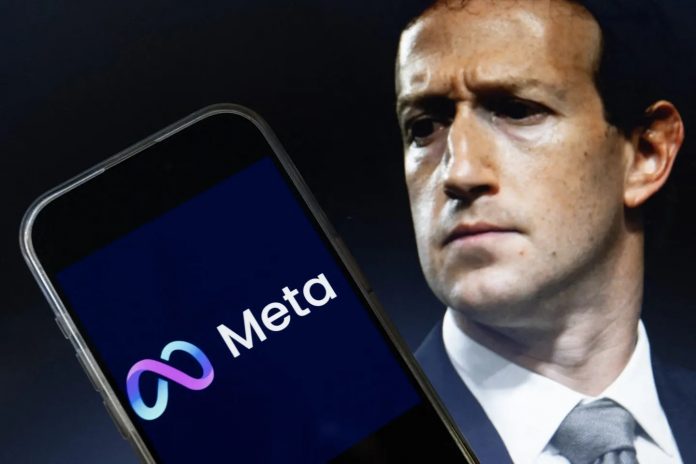
Meta’s Mark Zuckerberg is shopping and assembling the talent for the grand AI battle of the 21st century. After spending $14.3 billion primarily to get the founder of Scale AI, it has also brought another group: “The most recent targets include Daniel Gross, co-founder of Safe Superintelligence—the secretive AI startup launched by former OpenAI co-founder Ilya Sutskever—and Nat Friedman, former GitHub CEO and longtime AI investor.”

The AI talent wars are on, and Meta CEO Mark Zuckerberg is leaving no stone unturned. Meta was in talks to acquire search startup Perplexity, Bloomberg reports, citing anonymous sources, before investing $14.3 billion in Scale AI and hiring founder Alexandr Wang last week. It also made a bid to buy the $32 billion AI startup Safe Superintelligence before successfully poaching CEO Daniel Gross, according to CNBC, citing anonymous sources. Ex-Github CEO Nat Friedman is also joining Meta, which is targeting rival AI talent with massive bonuses.

Good People, I truly admire how Americans run businesses: it is either you win or you go home. That is why none of the sports here has space for silver or bronze. Simply, the only trophy is GOLD. And in this AI age, everyone is looking to win GOLD.

Africa must learn how to build.  I am personally jealous of how Americans (and Chinese) evaluate risks in the way they do in business. How do you pay someone $100 million salary for something you are not sure will work? How do you spend and spend and your investors do not panic?

Safe Superintelligence was launched in 2023 by Sutskever after his dramatic exit from OpenAI. Publicly here, I had asked him to make space for our community for $5m. Unfortunately, you needed at least $100m to join the party. Today, that company is valued at $32 billion, and it has no product yet!

Nigeria and Africa, we must pursue KNOWLEDGE and ensure our own Mark, Sutskever, etc are discovered. We need them for a chance to compete in the future. That is why we must have a university with zero tuition, zero fees, etc so that every genius can be educated with no barrier. I have asked NUC to waive the onerous requirements of a 100 hectare-built campus for a license (do you expect investors to build a campus before a license?).

If they do that, some people will come with specialized campuses (not open learning which is structured for teaching with no research) and deliver impacts.

A Look Into Coinbase’s Payments Framework For Merchants

0

Coinbase has introduced a crypto payments framework for merchants, primarily through its Coinbase Commerce and Coinbase Payments platforms, designed to simplify and enhance onchain payment solutions. Coinbase Commerce is a platform that enables merchants to accept cryptocurrency payments seamlessly.

Key features include: Merchants can accept payments in cryptocurrencies like Bitcoin, Ethereum, DAI, Litecoin, Dogecoin, Bitcoin Cash, USD Coin (USDC), Tether USD, ApeCoin, and Shiba Inu, as well as MATIC and Wrapped Ether (WETH) on Polygon. Payments are instantly converted to USDC to mitigate volatility risks. Funds are received directly in the merchant’s wallet, ensuring fast, error-free transactions with real-time validation for immediate customer assurance.

A 1% transaction fee is charged, with no chargebacks, reducing operational costs compared to traditional payment methods. Offers simplified onboarding and pre-built integrations with platforms like WooCommerce, Shopify, Primer, and Jumpseller. Merchants can start accepting payments in minutes. In 2023, Coinbase updated Commerce with an open-source Onchain Payment Protocol, standardizing payments across Base, Ethereum, and Polygon networks for a seamless, reliable experience.

Supports payments from customers worldwide, eliminating foreign exchange fees and enabling transactions via various wallets (e.g., Coinbase Wallet, MetaMask, Phantom). Announced on June 18, 2025, Coinbase Payments is a stablecoin-focused payment stack built for commerce platforms, with a significant partnership with Shopify. Designed for payment service providers (PSPs), marketplaces, and commerce platforms, it enables instant, 24/7 USDC payments globally without blockchain complexity.

It’s live with Shopify, allowing millions of merchants to accept USDC on Coinbase’s layer-2 network, Base. The platform abstracts blockchain complexities, offering a modular stack with APIs for authorization, capture, refunds, ledgering, and subscriptions. It uses open-source smart contracts for secure, scalable transactions.

Merchants face no additional setup, and payments settle in local fiat currency or USDC with zero fees. Shopify offers 1% cashback to USDC-paying customers in the U.S. (starting later in 2025). Developed with Shopify, this protocol supports features like delayed capture, tax finalization, and refunds, integrating seamlessly with existing order and fulfillment systems.

Initial rollout began with select Shopify merchants in June 2025, with broader access planned later in the year. In December 2024, Coinbase partnered with Triple-A, enabling Coinbase users to pay at Triple-A’s merchant network (e.g., fashion, luxury, travel, gaming), enhancing payment convenience.

Coinbase Business: Set to launch later in 2025, this platform will offer startups and small businesses a crypto operating account for payments, asset management, and automated workflows, further supporting merchant adoption.

Market Impact: Stablecoins processed $30 trillion in settlements last year, with 3x year-over-year growth, signaling rising demand. Over half of Fortune 500 companies are building onchain, and one-third of small businesses use crypto, underscoring the relevance of Coinbase’s framework.

Regulatory Considerations: Coinbase is not registered with the U.S. SEC or CFTC, and merchants are advised to consult advisors before adopting crypto payments due to market volatility and regulatory uncertainties.

Security: Coinbase Commerce exchange uses seed phrase recovery for secure transactions. Merchants can opt for self-managed accounts (non-custodial, using a 12-word seed phrase) or Coinbase-managed accounts.

Limitations: No sandbox/test environment is available for Commerce, and fiat withdrawals to business bank accounts are limited to Coinbase-managed plans.

The Nobitex Attack Amplifies Tensions In An Already Volatile Israel-Iran Relationship

0

The Israeli-linked hacking group Gonjeshke Darande, also known as Predatory Sparrow, claimed responsibility for a cyberattack on June 18, 2025, targeting Nobitex, Iran’s largest cryptocurrency exchange. The attack reportedly drained approximately $81.7 million in assets across multiple blockchain networks, including Tron and Ethereum. The hackers sent the stolen funds to “vanity burn addresses” (e.g., “TKFuckiRGCTerroristsNoBiTEX” and “0xffFFfFFffFFffFfFffFFfFfFfFFFFfFfFFFFDead”), effectively destroying the proceeds to send a message rather than profiting from them.

Gonjeshke Darande accused Nobitex of being used by the Iranian regime to evade sanctions and finance terrorism. They also threatened to release Nobitex’s source code and internal data within 24 hours, urging users to withdraw remaining funds to avoid further losses. This follows their earlier attack on June 17, 2025, which disrupted Iran’s state-owned Bank Sepah, accused of funding Iran’s military and terrorist proxies. The group’s actions are part of a broader escalation in cyberwarfare amid ongoing Israel-Iran hostilities, with no official Israeli government acknowledgment due to its policy of ambiguity in such operations.

Some X posts, like one from an Iranian user (@Saeedshmhmdi), expressed frustration, claiming the attack harmed ordinary citizens trying to earn a living, highlighting the broader impact on Iranian civilians. However, these posts are not verified evidence and reflect individual sentiments. The attack’s scale and the deliberate burning of funds underscore a strategic intent to disrupt Iran’s financial infrastructure, aligning with Gonjeshke Darande’s history of targeting critical Iranian systems, such as gas stations and steel mills, in response to perceived Iranian aggression.

Implications of the Attack

The cyberattack by Gonjeshke Darande on Nobitex, Iran’s largest cryptocurrency exchange, carries significant implications across geopolitical, economic, and societal dimensions. The attack is a bold escalation in the shadow war between Israel and Iran, showcasing Israel-linked groups’ advanced cyber capabilities. It follows a pattern of tit-for-tat cyberattacks, with Iran previously targeting Israeli infrastructure (e.g., water systems) and Israel responding with disruptive operations like this one.

By targeting a financial hub like Nobitex, the attack aims to weaken Iran’s economic resilience, particularly its ability to bypass sanctions via cryptocurrency. This aligns with broader Israeli efforts to counter Iran’s regional influence, including its support for groups like Hezbollah and Hamas. Israel’s lack of official acknowledgment maintains strategic ambiguity, allowing it to avoid direct retaliation while signaling strength. However, Iran may respond with cyberattacks or physical operations, further destabilizing the region.

The loss of $81.7 million in assets cripples Nobitex and undermines trust in Iran’s crypto ecosystem, which many Iranians use to navigate sanctions and hyperinflation. The threat to leak Nobitex’s source code could lead to further vulnerabilities and user withdrawals, potentially collapsing the platform. Iran has relied on cryptocurrencies to circumvent Western sanctions. This attack disrupts that strategy, forcing reliance on less secure or more costly alternatives, which could strain the regime’s financial operations.

While the burned funds were sent to dead addresses, the attack highlights vulnerabilities in crypto exchanges, potentially spooking investors globally and prompting tighter regulations. Many Iranians use Nobitex for legitimate purposes, such as preserving wealth against a devalued rial. The attack’s collateral damage risks alienating ordinary citizens, as seen in X posts like @Saeedshmhmdi’s, which lament the impact on individuals unaffiliated with the regime.

Iran’s government may exploit the attack to rally domestic support, framing it as foreign aggression against civilians. Conversely, the hackers’ claim of targeting a regime-linked platform could resonate with anti-Iranian sentiment in Israel and allied nations. Destroying the stolen assets rather than profiting sets a precedent for ideologically driven cyberattacks, prioritizing disruption over financial gain. This could inspire similar tactics by other state or non-state actors.

The potential release of Nobitex’s internal data could expose user identities, endangering dissidents or ordinary Iranians while providing intelligence to Israel and its allies. The Iranian government’s narrative often paints cyberattacks as foreign plots, but civilians bear the brunt, as seen in user complaints on X. This fuels resentment toward the regime for failing to protect critical infrastructure or for provoking such attacks through its policies.

Iran’s crypto community, which includes tech-savvy youth and middle-class investors, faces losses that may push them toward riskier platforms or black-market alternatives. Meanwhile, regime loyalists may advocate for stricter controls, widening the gap between modernizers and hardliners. Israel’s technological edge in cyberattacks contrasts with Iran’s reliance on proxies and conventional threats. This asymmetry frustrates Iran, as it struggles to respond effectively in cyberspace while facing domestic pressure to retaliate.

Gonjeshke Darande’s claim of targeting regime-linked terrorism financing clashes with Iranian claims of victimhood. Each side uses the attack to reinforce its narrative, alienating any chance of de-escalation. The attack aligns with Western efforts to isolate Iran economically, but risks pushing Iran closer to allies like Russia, who may offer cybersecurity assistance. This deepens the global divide between U.S.-led and anti-Western blocs.

The hack underscores crypto’s dual-use potential (e.g., sanctions evasion vs. legitimate finance), fueling debates over regulation. Pro-crypto advocates argue for decentralization to prevent such attacks, while regulators may push for centralized oversight. The Nobitex attack amplifies tensions in an already volatile Israel-Iran relationship, with risks of retaliatory cyberattacks or kinetic responses.

Economically, it disrupts Iran’s sanction-evasion efforts but at the cost of civilian trust in its financial system. Societally, it widens the gap between Iran’s regime and its people, while globally, it reinforces ideological and technological divides. The burning of proceeds signals a new era of cyber warfare focused on destruction over profit, with unpredictable ripple effects.

Israel Conducted Strike On Nuclear Facilities Near Arak and Natanz

Israel conducted targeted strikes on nuclear-related facilities near Arak and Natanz, aiming to disrupt Iran’s nuclear program. The Arak heavy water reactor, though reported as inactive by the International Atomic Energy Agency (IAEA), is capable of producing plutonium, a potential nuclear weapons material. Natanz, Iran’s primary uranium enrichment site, suffered damage to its above-ground infrastructure, though underground facilities may remain intact.

Israel justified these strikes as preemptive, citing Iran’s progress toward weapons-grade uranium enrichment (reportedly at 60% purity, close to the 90% needed for a bomb) and its perceived existential threat. The IAEA confirmed no radiation leaks at either site, but the strikes have set back Iran’s nuclear capabilities by months, not years.

Iranian Missile Attack on Soroka Hospital: Iran retaliated with a ballistic missile barrage, one of which directly hit Soroka Medical Center in Beersheba, southern Israel, on June 19, 2025. The strike caused extensive damage to the hospital’s surgical wing, though it was preemptively evacuated, resulting in 71 minor injuries and no fatalities. Iran claimed the missile targeted an adjacent Israeli military intelligence site, not the hospital, but Israeli officials condemned the attack as a deliberate war crime. This event has fueled Israel’s narrative of Iran’s intent to harm civilians, intensifying calls for retaliation.

Israel’s Defense Minister, Israel Katz, vowed to intensify strikes on “strategic targets” in Iran, describing Iran’s Supreme Leader Ayatollah Ali Khamenei as a “modern Hitler” who “cannot continue to exist.” This rhetoric, coupled with Prime Minister Benjamin Netanyahu’s commitment to “exact the full price” from Tehran, signals a likely continuation of Israel’s air campaign. Israel’s military has already demonstrated significant capabilities, striking over 100 targets in Iran, including nuclear sites, missile silos, and air defenses, while killing senior military commanders and nuclear scientists.

Israel’s strikes have damaged but not destroyed Iran’s nuclear infrastructure. The underground facilities at Natanz and Fordow remain challenging targets, potentially requiring U.S. assistance (e.g., bunker-busting bombs) to neutralize. Iran’s nuclear ambitions, whether peaceful or military, are a long-standing flashpoint, and these attacks may push Tehran to accelerate its program or harden its defenses.

The conflict risks drawing in Iran’s proxies (e.g., Hezbollah, Houthis) and other regional players. A Houthi missile from Yemen landed in the West Bank, and Iran has threatened to target countries aiding Israel’s defense. Russia’s offer to mediate and the G7’s focus on the crisis at their summit indicate global concern.

President Trump is weighing whether to join Israel’s campaign, with a decision expected within two weeks. While the U.S. has denied direct participation in Israel’s strikes, it has provided defensive support (e.g., intercepting Iranian missiles) and is under pressure to act, given Iran’s nuclear advancements. Diplomatic efforts, including U.S.-Iran talks via Oman, have stalled, with Iran refusing negotiations until Israel halts its attacks.

The Soroka Hospital strike underscores the conflict’s toll on civilian infrastructure. In Iran, strikes have killed 224 people (including civilians) and wounded over 1,200 since June 13, while Israel reports 24 deaths and 390 injuries. The targeting of hospitals, even if unintentional, violates international humanitarian law, escalating moral and political tensions.

The cycle of strikes and counterstrikes benefits hardliners on both sides. Israel’s preemptive strategy assumes Iran’s nuclear program is an imminent threat, yet Iran denies weaponization intent, and the IAEA has not confirmed a weapons program. Meanwhile, Iran’s missile attacks, even if aimed at military targets, risk civilian casualties, reinforcing Israel’s justification for escalation. Both nations’ actions bypass diplomatic channels, undermining efforts like the 2015 JCPOA nuclear deal, which the U.S. abandoned in 2018. External powers, particularly the U.S., face a dilemma: intervene and risk a wider war, or restrain Israel and potentially embolden Iran.

The conflict is poised to intensify unless diplomatic intervention or mutual restraint prevails, both of which seem unlikely given current rhetoric. The Middle East remains a tinderbox, with global powers increasingly drawn into the fray. If you’d like a deeper dive into specific aspects (e.g., military capabilities, nuclear technical details, or U.S. policy), let me know.

Adoption of USDC and BUIDL As Collateral Highlights A Growing Divide

0

Coinbase Derivatives, in partnership with Nodal Clear, is working to integrate Circle’s USDC stablecoin as eligible collateral for US margined futures contracts. This initiative, which is pending regulatory approval from the CFTC, is expected to be implemented in 2026. The integration aims to diversify collateral options, enhance margin efficiency, and leverage Coinbase Custody Trust for asset safeguarding under New York regulatory oversight.

Crypto.com and Deribit have started accepting BlackRock’s USD Institutional Digital Liquidity Fund (BUIDL) as collateral for trading operations, including spot, margin, futures, and options transactions. BUIDL, a tokenized US Treasury fund with $2.9 billion in assets, offers a 4.5% annual yield and is available to institutional traders with a minimum investment of $5 million. This move, facilitated by Securitize, allows traders to earn yield on collateral while deploying it for leveraged positions, reducing dependency on traditional stablecoins like USDC and USDT.

These integrations reflect a broader trend of bridging traditional finance and crypto markets, with tokenized assets like BUIDL and stablecoins like USDC enhancing capital efficiency and risk management for institutional traders. Additionally, Coinbase’s planned acquisition of Deribit for $2.9 billion could further expand BUIDL’s adoption across Coinbase’s ecosystem.

The integration of USDC by Coinbase and BlackRock’s BUIDL token by Crypto.com and Deribit as collateral for futures trading has significant implications for the crypto market, traditional finance (TradFi), and the broader financial ecosystem. Using USDC and BUIDL as collateral allows traders to deploy stable, yield-generating assets in leveraged trading strategies. BUIDL, for instance, offers a 4.5% annual yield, enabling institutional traders to earn passive income on their collateral while using it for futures, options, or margin trading. This dual-purpose functionality enhances capital efficiency, as traders no longer need to lock up non-yielding assets.

For Coinbase, integrating USDC (a stablecoin with a 1:1 USD peg) provides a reliable, low-volatility collateral option, reducing the risk of margin calls driven by crypto market fluctuations. BUIDL, a tokenized US Treasury fund, represents a significant step in merging TradFi with decentralized finance (DeFi). By allowing institutional investors to use a BlackRock-managed, blockchain-based asset for crypto trading, platforms like Crypto.com and Deribit are mainstreaming tokenized real-world assets (RWAs).

This move could attract more institutional capital into crypto markets, as BUIDL’s backing by US Treasuries offers a familiar, low-risk asset class for traditional investors wary of crypto’s volatility. Historically, crypto exchanges have relied heavily on volatile assets like Bitcoin or Ethereum for collateral, exposing traders to significant price risk. USDC and BUIDL provide stable alternatives, reducing counterparty risk and enhancing risk management for futures and derivatives trading.

This diversification could lead to more robust margin systems, potentially lowering liquidation risks during market downturns. Coinbase’s use of USDC, backed by Coinbase Custody Trust and regulated under New York’s strict fiduciary standards, signals a push toward regulatory compliance. This could set a precedent for other exchanges to adopt regulated stablecoins as collateral, improving trust and transparency.

BUIDL’s integration, facilitated by Securitize, leverages blockchain’s transparency while adhering to institutional-grade compliance, further legitimizing tokenized assets in regulated markets. Coinbase’s planned acquisition of Deribit for $2.9 billion (pending regulatory approval) could amplify BUIDL’s adoption across Coinbase’s ecosystem, potentially increasing liquidity for tokenized assets. This consolidation may also strengthen Coinbase’s position as a leading derivatives platform, competing with giants like Binance and CME Group.

The broader acceptance of tokenized assets like BUIDL could drive liquidity in on-chain markets, as institutional investors deploy larger capital pools into crypto trading. BUIDL’s 4.5% yield offers a unique value proposition compared to traditional stablecoins like USDC, which typically do not generate yield unless staked in DeFi protocols. This could incentivize traders to hold BUIDL over other collateral types, potentially shifting market dynamics away from pure stablecoins.

BUIDL’s $5 million minimum investment threshold restricts its use to institutional traders, creating a barrier for retail investors. While USDC is more accessible, its integration into Coinbase’s futures trading (pending CFTC approval) may prioritize institutional clients due to the high capital requirements of derivatives markets. Retail traders, who dominate many crypto exchanges, may lack access to yield-generating collateral like BUIDL or the infrastructure to participate in regulated futures markets. This could widen the gap between institutional and retail traders, with the former benefiting from superior tools and opportunities.

Coinbase’s USDC integration, backed by Coinbase Custody and New York regulations, and Deribit’s BUIDL adoption under institutional-grade compliance, cater to regulated markets. These platforms are likely to attract institutional investors and TradFi players seeking compliance and security. Many offshore exchanges (e.g., Binance, Bybit) may continue relying on volatile crypto assets or less-regulated stablecoins like USDT for collateral. This creates a divide between platforms catering to institutional, compliance-focused markets and those serving retail or less-regulated jurisdictions.

USDC’s widespread adoption and 1:1 USD peg make it a go-to choice for stable collateral across exchanges. Its integration by Coinbase reinforces its position as a leading stablecoin in regulated markets. BUIDL, while innovative, is a specialized product targeting institutions with yield-generating potential. Its adoption may remain limited to high-net-worth or institutional traders, creating a divide between stablecoin-based and tokenized asset-based trading ecosystems.

Coinbase’s USDC integration and Deribit’s BUIDL adoption (post-acquisition by Coinbase) are heavily US-focused, aligning with US regulatory frameworks like the CFTC and New York’s BitLicense. This may limit access for non-US traders due to jurisdictional restrictions. Retail traders in regions with less regulatory clarity or restricted access to US-based platforms may be excluded from these advanced collateral options, deepening global disparities in crypto trading opportunities.

Platforms like Coinbase, Crypto.com, and Deribit, which integrate advanced custodial solutions and tokenized assets, require sophisticated infrastructure. Smaller or newer exchanges may lack the resources to adopt similar systems, creating a technological divide between tier-1 and tier-2 platforms. Retail traders using basic wallets or less-developed exchanges may struggle to access tokenized assets or regulated futures markets, further entrenching the divide.

The integration of USDC and BUIDL as collateral marks a pivotal moment in crypto’s evolution, blending TradFi’s stability with DeFi’s innovation. It enhances capital efficiency, attracts institutional capital, and promotes regulatory compliance, but it also underscores a growing divide between institutional and retail traders, regulated and unregulated platforms, and stablecoin versus tokenized asset ecosystems.

As Coinbase, Crypto.com, and Deribit lead this shift, the broader crypto market may see increased stratification, with institutional players gaining disproportionate access to advanced tools and opportunities. Retail traders and smaller platforms will need to adapt to remain competitive, potentially through partnerships, new technologies, or advocacy for broader access to tokenized assets.

Meta’s Multi-Billion-Dollar AI Coup: Zuckerberg Turns to Safe Superintelligence Cofounder After Poaching Scale AI CEO

0

Mark Zuckerberg is accelerating his plan to dominate the next frontier of technology: artificial intelligence. In a sweeping recruitment offensive that’s rattled Silicon Valley, the Meta CEO is aggressively poaching top minds from rival AI firms and investing billions of dollars to build his “AI empire.”

The most recent targets include Daniel Gross, co-founder of Safe Superintelligence—the secretive AI startup launched by former OpenAI co-founder Ilya Sutskever—and Nat Friedman, former GitHub CEO and longtime AI investor. They had earlier reportedly rejected an acquisition bid for their company, which underscores how deeply Zuckerberg is reaching into the heart of AI’s elite circle.

This hiring attempt follows Meta’s $14.3 billion investment in Scale AI, a fast-rising data-labeling and AI infrastructure company, bringing on board its 27-year-old founder Alexandr Wang and several of his top engineers. Scale AI is now reportedly working closely with Meta’s AI division, with Wang taking on a leading role in developing advanced large language models and data tools.

Zuckerberg’s plan is understood to be – to build the most powerful AI team in the world—fast.

Earlier this year, Zuckerberg attempted to acquire Safe Superintelligence outright. The startup, launched in 2023 by Sutskever after his dramatic exit from OpenAI, had recently been valued at $32 billion. But Sutskever rejected Meta’s offer, refusing both acquisition and a direct leadership role.

Undeterred, Zuckerberg went after the next best thing: Gross and Friedman, Sutskever’s co-founders. Sources say Meta sweetened the deal by also acquiring a stake in NFDG, the venture capital firm jointly run by Gross and Friedman, known for early bets on AI and tech unicorns like CoreWeave, Figma, Perplexity, Coinbase, and Character.AI.

Meta reportedly plans to integrate Gross and Friedman under the leadership of Scale AI’s Wang, signaling a power consolidation of AI expertise within the company.

Talent War Reaches New Heights

This move further escalates the ongoing AI talent war between Meta and rivals like OpenAI, Microsoft, and Google. In a recent episode of the Uncapped podcast, OpenAI CEO Sam Altman disclosed that Meta had offered some of his top engineers signing bonuses of up to $100 million, with lucrative compensation packages aimed at luring them away.

“I’ve heard that Meta thinks of us as their biggest competitor,” Altman said. “Their current AI efforts have not worked as well as they had hoped, and I respect being aggressive and continuing to try new things.”

Though Altman said none of his “best people” had taken the bait, industry insiders say Meta’s cash-heavy offers are shaking up compensation norms across the sector.

Meta declined to comment on Altman’s remarks but acknowledged that more announcements are coming. A company spokesperson said, “We will share more about our superintelligence effort and the great people joining this team in the coming weeks.”

With its Reality Labs bleeding billions and the metaverse still struggling to gain traction, Zuckerberg appears to be shifting Meta’s core bet toward AI, betting that breakthroughs in LLMs, autonomous agents, and eventually artificial general intelligence (AGI) will define the next era of computing.

Scale AI, now a major partner, provides the data infrastructure necessary to train such systems. Wang, its founder, launched Scale at 19 and turned it into a key supplier of high-quality datasets to firms like OpenAI, Nvidia, and the US government. His move to Meta, insiders say, gives the company deep bench strength in both talent and tools.

Gross, meanwhile, has a formidable track record. He sold his search engine Cue to Apple in 2013, helped lead Siri’s evolution, and later joined Y Combinator before diving into AI research and venture investing. Friedman was instrumental in transforming GitHub under Microsoft and has remained a powerful force in open-source and AI investing.

Meta’s new AI target trio—Wang, Gross, and Friedman—represent not just elite engineering minds but strategic operators with deep knowledge of data pipelines, model development, and the investor networks funding the next wave of AI labs.

If Meta succeeds, they will become part of a field of tech giants racing for dominance. Microsoft recently bought its way into AI supremacy by hiring DeepMind co-founder Mustafa Suleyman and absorbing Inflection AI in a $650 million deal. OpenAI has brought on Jony Ive, the legendary Apple designer, in a $6.5 billion creative partnership. Google lured back the founders of Character.AI last year.

But Zuckerberg isn’t just buying startups—he’s buying brainpower.

If Meta’s AI gamble pays off, the company may leap ahead in the competition to build AI systems that surpass human capabilities. If it fails, the costs—both financial and reputational—will be massive.

Either way, the AI war is becoming personal, aggressive, and heavily funded, and Zuckerberg is making clear he intends to win it.