DD
MM
YYYY

PAGES

DD
MM
YYYY

spot_img

PAGES

Home Blog Page 11

What Nigeria’s Talent Debate Gets Right and Wrong

0

When Tosin Eniolorunda, the CEO of Moniepoint, noted that the company’s decision to hire exclusively from Nigeria in 2024 “came at a cost” in 2025, the statement quickly triggered a familiar debate. Some interpreted it as evidence of a talent gap in Nigeria. Others saw it as a commentary on compensation, training investment, and organizational maturity.

Both interpretations miss and reveal something important. The real issue is not whether local talent can meet global standards. It is what it actually takes for any workforce, in any market, to consistently deliver at that level inside fast-scaling organizations.

Talent is rarely the binding constraint

A recurring error in discussions about workforce performance is the assumption that outcomes are primarily determined by talent quality. In practice, performance is a function of three variables: the quality of available talent, the intensity of capability-building investment, and the strength of organizational systems that shape execution.

When companies restrict hiring to a single geography, they do not automatically reduce talent quality. What they do is increase dependency on internal systems to close readiness gaps. If those systems are weak or underdeveloped, the organization will experience predictable friction in onboarding, productivity ramp-up, and consistency of output.

This is likely the underlying meaning of “paid dearly.” It is less about absence of ability and more about the cost of converting potential into performance at scale.

The infrastructure behind high performance

High-performing organizations rarely rely on talent alone. They invest in structured development systems that reduce variability in output over time. This includes onboarding programs, mentorship structures, technical training pipelines, and clear performance architectures.

Historically, several Nigerian institutions demonstrated this approach effectively. Firms such as United Bank for Africa and Zenith Bank built strong internal capability systems that assumed graduates were raw material rather than finished product. Employees were developed through structured rotations, formal training academies, and in some cases international exposure. The outcome was not immediate productivity, but long-term institutional strength.

The shift in modern scaling models

In contrast, many newer technology and fintech companies operate under different constraints. Speed of execution, capital efficiency, and rapid scaling often take precedence over long-cycle capability development. This creates an implicit assumption that the labor market will supply “job-ready” talent.

This assumption works well in mature ecosystems where industry standards are tightly aligned with educational outputs and professional certification systems. In emerging markets, however, the gap between academic preparation and workplace expectations is often wider. When companies do not invest in bridging that gap internally, they absorb the cost through reduced early-stage productivity.

The constraint is therefore not simply talent availability. It is the presence or absence of institutional mechanisms that convert talent into performance at scale.

The compensation and expectation gap

Much of the public reaction to the Moniepoint statement centered on compensation. This is not incidental. Performance expectations cannot be decoupled from the conditions provided to achieve them.

Where organizations expect global-level output, they must also provide globally competitive inputs. These inputs include not only salary structures but also tools, training access, management quality, and career development pathways. When this alignment is weak, performance gaps are often misinterpreted as capability gaps rather than structural misalignment. This misdiagnosis leads organizations to seek better talent externally rather than strengthening the systems that develop existing talent.

The trade-off between speed and capability building

The core tension in the debate is not ideological. It is operational. Organizations must choose how to balance speed of scaling with depth of capability development.

A speed-first model reduces training overhead and accelerates output but increases dependency on precise hiring and immediate readiness. A development-first model increases upfront cost and slows initial output but produces more resilient long-term performance. Both models are valid. The risk arises when organizations attempt to operate a speed-first hiring philosophy while expecting development-first outcomes.

What the debate actually reveals

The public reactions to the Moniepoint statement reflect three competing interpretations of performance reality. One view assumes talent deficiency. Another attributes outcomes to compensation and structural investment. A third emphasizes the erosion of intentional capability-building practices in modern organizations.

The more accurate explanation incorporates elements of all three but assigns causality differently. Nigerian talent is not the limiting factor. Rather, the limiting factor is the degree to which organizations invest in systems that develop, align, and sustain that talent at scale.

Implications for building competitive organizations

The strategic lesson is straightforward but often overlooked. Hiring strategy and capability-building strategy cannot be separated. A locally focused hiring approach is viable only when matched with strong internal development infrastructure. Without that, organizations will repeatedly encounter the same constraint, regardless of how strong individual hires may be.

The question is therefore not whether to hire locally or globally. It is whether the organization is designed to turn the talent it hires into the performance it expects. In that sense, the Moniepoint CEO’s comment is less a verdict on labor markets and more a reflection on organizational design. The cost was not simply in hiring locally. It was in underestimating what it takes to make local hiring perform at global standards without equivalent investment in development systems.

For emerging market companies, that distinction is not semantic. It is strategic.

Traditional Banks and Crypto Companies make Compromise over Stablecoin Yield Provisions

0

The emerging compromise between traditional banks and crypto companies over stablecoin yield provisions in the CLARITY Act marks a pivotal moment in the evolution of digital finance. For years, tension has defined the relationship between these two sectors.

Banks, operating within tightly regulated frameworks, have expressed concern that yield-bearing stablecoins resemble unregulated deposit accounts. Meanwhile, crypto firms have argued that yield is essential to the competitiveness and utility of stablecoins in a decentralized financial ecosystem. The reported agreement suggests that both sides are beginning to recognize the necessity of coexistence rather than confrontation.

At the heart of the debate is the fundamental nature of stablecoins—digital assets typically pegged to fiat currencies such as the U.S. dollar. In crypto markets, stablecoins serve as liquidity anchors, collateral instruments, and transactional mediums.

Offering yield on these assets has been a major driver of adoption, allowing users to earn returns through lending, staking, or reserve-backed mechanisms. However, regulators and banks have long viewed these yield-generating features as functionally similar to interest-bearing bank deposits, which are subject to strict oversight, capital requirements, and deposit insurance frameworks.

The compromise within the CLARITY Act appears to revolve around delineating how and when yield can be offered. Rather than imposing an outright ban—as some earlier regulatory proposals suggested—the framework likely introduces structured limitations. For instance, only certain licensed entities may be permitted to distribute yield, and such offerings may need to be transparently linked to underlying assets like short-term Treasuries.

This approach attempts to preserve innovation while ensuring that systemic risks are mitigated. For banks, this represents a partial victory. By imposing regulatory guardrails, they reduce the likelihood that stablecoin issuers can operate as shadow banks without equivalent oversight. This levels the competitive landscape, particularly as financial institutions explore their own digital asset strategies, including tokenized deposits and blockchain-based payment systems.

It also addresses concerns about financial stability, particularly in scenarios where large-scale redemptions could trigger liquidity stress. For crypto companies, the compromise is equally significant.

It signals that policymakers are not intent on stifling the core economic incentives that drive user participation in decentralized finance. Yield remains a defining feature of crypto-native financial products, and preserving it—albeit in a regulated form—ensures that stablecoins remain attractive relative to traditional financial instruments. More importantly, it provides regulatory clarity, which has been one of the industry’s most pressing demands.

This development also reflects a broader shift in regulatory philosophy. Rather than forcing crypto innovations into legacy frameworks or banning them outright, lawmakers are increasingly adopting a modular approach—one that recognizes the unique characteristics of blockchain-based systems. The CLARITY Act, as its name implies, aims to reduce ambiguity, and this compromise on stablecoin yield is a concrete step in that direction.

The agreement underscores a maturing financial landscape where traditional and digital institutions are learning to negotiate shared ground. While challenges remain—particularly around enforcement, global coordination, and technological risks—the willingness to compromise suggests that the future of finance will not be defined by the dominance of one system over another, but by their integration.

Zcash Overtaking Solana in Hyperliquid Trading Volume Illustrates Dynamics and Unpredictable Nature of Digital Assets

0

The cryptocurrency market is no stranger to sudden reversals and unexpected shifts in momentum, yet the recent development in which Zcash has surpassed Solana in trading volume on Hyperliquid offers a particularly revealing snapshot of current market dynamics.

Accompanied by a 15% weekly gain in ZEC, this underscores how quickly attention and capital can rotate within the digital asset ecosystem, especially when narratives around privacy, utility, and speculative opportunity begin to align. Solana has long been associated with high-throughput decentralized applications, NFTs, and a rapidly expanding developer ecosystem.

It is widely regarded as one of the leading Ethereum alternatives, boasting strong institutional and retail recognition. Zcash, on the other hand, occupies a more niche but increasingly relevant position. As a privacy-focused cryptocurrency, it leverages zero-knowledge proofs to enable shielded transactions, offering users the option of enhanced anonymity—an attribute that becomes particularly attractive in certain market conditions.

The surge in Zcash’s trading volume on Hyperliquid suggests a shift in trader sentiment, at least in the short term. Hyperliquid, known for its fast-growing derivatives market and sophisticated user base, often serves as a bellwether for speculative positioning. When a relatively lower-market-cap asset like ZEC overtakes a heavyweight such as SOL in this environment, it signals not just increased interest, but active leverage-driven trading.

This is rarely accidental; it typically reflects a convergence of technical breakouts, narrative catalysts, and liquidity flows. ZEC’s 15% weekly gain further reinforces the idea that this is not merely a volume anomaly. Price appreciation tends to validate volume spikes, indicating genuine demand rather than wash trading or isolated positioning.

Traders may be responding to several underlying factors. Privacy coins, including Zcash, periodically experience renewed attention when regulatory debates intensify or when broader concerns about financial surveillance emerge. In such climates, assets offering optional anonymity can be perceived as both a hedge and a speculative play.

Another possible driver is the cyclical nature of crypto market rotations. Capital often flows from large-cap assets into mid- and small-cap tokens in search of higher returns, particularly during bullish or indecisive phases. Solana, having experienced substantial growth in prior periods, may currently be in a consolidation phase, prompting traders to seek opportunities elsewhere.

Zcash, with comparatively lower recent performance before this surge, becomes a natural candidate for such rotation. Moreover, derivatives platforms like Hyperliquid amplify these movements. The availability of leverage allows traders to express directional bets more aggressively, increasing both volume and volatility. Once momentum begins, it can feed on itself, as liquidations and trend-following strategies accelerate price action.

ZEC’s outperformance may have been further intensified by short squeezes or rapid repositioning among market participants. However, it is important to interpret this development with a degree of caution. A temporary flip in trading volume does not necessarily indicate a long-term shift in fundamentals or market leadership.

Solana continues to maintain a significantly larger ecosystem, stronger developer activity, and broader adoption. Zcash’s surge, while notable, may reflect a tactical trade rather than a structural revaluation. That said, the highlights an essential truth about the cryptocurrency market: narratives matter, but timing matters more. Assets that align with emerging themes—whether privacy, scalability, or decentralization.

Zcash’s recent performance is a reminder that even well-established hierarchies in crypto are fluid, subject to rapid change driven by sentiment, liquidity, and innovation. Zcash overtaking Solana in Hyperliquid trading volume, coupled with its 15% weekly gain, illustrates the dynamic and often unpredictable nature of digital asset markets.

While it may not signal a permanent reshuffling of rankings, it provides valuable insight into current trader behavior and the enduring appeal of privacy-centric technologies in an evolving financial landscape.

Dubai is Reshaping the Private Sector with Agentic Artificial Intelligence Systems

0

Agentic artificial intelligence—systems capable of autonomous reasoning, planning, and execution—is rapidly reshaping the private sector in Dubai, positioning the emirate as one of the most advanced experimental grounds for next-generation enterprise automation.

Unlike traditional AI models that respond to prompts, agentic AI systems act with a degree of operational independence, orchestrating workflows, interacting with software systems, and making decisions across multi-step processes. In Dubai’s private sector, this shift is not theoretical; it is already embedded in business strategy, infrastructure investment, and competitive differentiation.

The broader United Arab Emirates has deliberately engineered an environment conducive to such transformation. National initiatives aim to transition a significant portion of services and operations toward self-executing AI systems, with some programs targeting up to 50% automation through agentic frameworks within a short time horizon . While these ambitions are often framed in the public sector, their real economic multiplier effect is visible in private enterprises that supply, integrate, and operationalize these technologies.

Government demand effectively acts as a catalyst, creating a downstream market for AI vendors, system integrators, and enterprise adopters. Dubai’s private sector adoption of agentic AI is particularly pronounced in industries characterized by high transaction volumes, regulatory complexity, and multilingual data environments.

Financial services, logistics, real estate, hospitality, and retail are leading adopters. In these sectors, agentic systems are deployed to execute tasks such as automated compliance checks, invoice reconciliation, customer onboarding, supply chain coordination, and dynamic pricing.

These are not isolated automations but interconnected workflows where AI agents interact with enterprise systems like ERP and CRM platforms, execute API calls, and escalate exceptions when necessary. This ability to do work rather than merely assist work marks a structural shift in enterprise productivity models. The ecosystem enabling this transformation is equally important.

Dubai hosts a dense network of AI-focused firms, ranging from global consultancies to specialized agentic AI developers. Companies such as JADA, Accenture Middle East, IBM UAE, Microsoft UAE, PwC Middle East, and G42 are central to enterprise adoption, offering capabilities that span from strategy and governance to full-scale deployment of multi-agent systems.

These firms provide not just technical solutions but also compliance alignment with regional data laws, bilingual deployment (Arabic and English), and integration into local business practices—factors critical for successful implementation in the Gulf context. Another defining feature of Dubai’s private sector is its willingness to experiment with frontier applications of agentic AI.

In retail and digital commerce, for example, autonomous AI agents are already being tested to search for products, negotiate options, and complete transactions on behalf of users, effectively redefining the customer journey into an AI-mediated experience.

Similarly, companies like Verofax are deploying AI-powered digital agents and avatars capable of real-time, multilingual customer engagement across physical and digital environments, enhancing both operational efficiency and personalization at scale.

Adoption rates reinforce this trajectory. A significant proportion of UAE businesses are already using AI, with many accelerating deployment in recent years . However, the transition from conventional AI to agentic systems introduces new operational challenges. These include governance, reliability, auditability, and risk management.

Autonomous systems can propagate errors across workflows if not properly constrained, making human-in-the-loop oversight, robust testing, and continuous monitoring essential components of enterprise deployment. Agentic AI in Dubai’s private sector represents more than technological adoption; it signals a reconfiguration of how businesses operate.

Firms are moving from digitization to autonomy, where decision-making and execution increasingly occur within AI-driven systems. This evolution is supported by strong policy alignment, capital investment, and a growing ecosystem of specialized providers. As a result, Dubai is not merely adopting agentic AI—it is actively shaping its commercial application.

NYSE filing to Enable Tokenized Security Trading Represents a Shift in Rulemaking

0
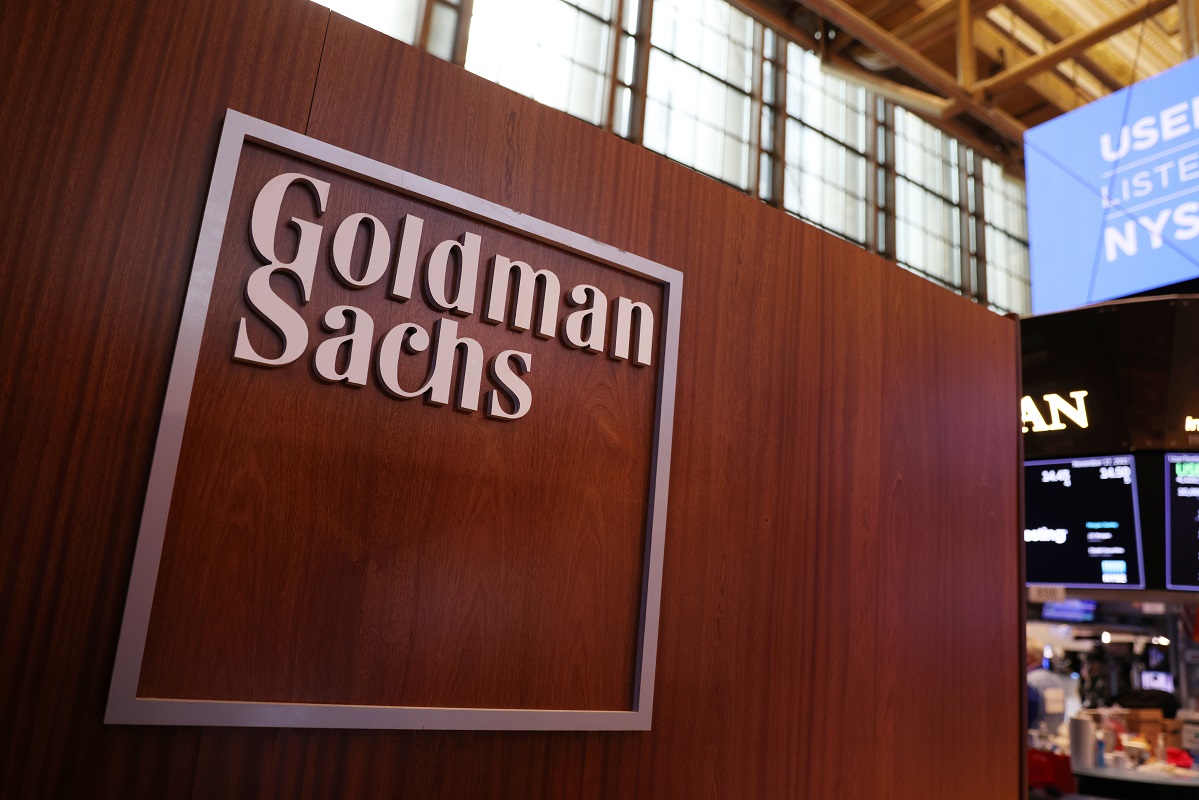
The logo for Goldman Sachs is seen on the trading floor at the New York Stock Exchange (NYSE) in New York City, New York, U.S., November 17, 2021. REUTERS/Andrew Kelly/Files

The filing of a rule change by the New York Stock Exchange (NYSE) to enable tokenized security trading represents a pivotal moment in the evolution of global financial markets. Long regarded as a cornerstone of traditional finance, the NYSE’s move signals a growing convergence between established capital markets and blockchain-based infrastructure.

This development reflects not only technological innovation but also a broader shift in how financial assets are issued, traded, and settled. Tokenized securities are digital representations of traditional financial instruments—such as equities, bonds, or funds—issued and traded on blockchain networks. By leveraging distributed ledger technology, tokenization allows for fractional ownership, near-instant settlement, and enhanced transparency.

Unlike conventional securities trading, which often relies on intermediaries and clearinghouses, tokenized systems can streamline post-trade processes, reducing both cost and operational complexity. The NYSE’s proposed rule change is particularly significant because it introduces regulatory legitimacy to a domain that has largely operated in experimental or fragmented environments.

While blockchain-based trading platforms have existed for years, they have often faced regulatory uncertainty, limiting institutional participation. By formally integrating tokenized securities into its framework, the NYSE is effectively bridging the gap between innovation and compliance, potentially unlocking a new wave of institutional adoption.

One of the most compelling advantages of tokenized security trading is efficiency. Traditional equity markets typically operate on a T+2 settlement cycle, meaning trades are finalized two business days after execution. Tokenization, by contrast, enables near real-time settlement (T+0), reducing counterparty risk and freeing up capital that would otherwise be tied up during the settlement period.

This could have far-reaching implications for liquidity and market dynamics, particularly in volatile conditions. Moreover, tokenization expands access to investment opportunities. By allowing fractional ownership, high-value assets can be divided into smaller, more affordable units. This democratization of finance could enable a broader range of investors—including retail participants in emerging markets—to gain exposure to assets that were previously out of reach.

For global investors, this could also mean more seamless cross-border trading, as blockchain networks are inherently borderless. However, the transition is not without challenges. Regulatory oversight remains a critical concern, especially regarding investor protection, custody solutions, and market integrity. Ensuring that tokenized securities comply with existing securities laws while accommodating the unique characteristics of blockchain technology will require careful calibration.

Additionally, cybersecurity risks and the need for robust technological infrastructure cannot be overlooked. The NYSE’s initiative also places competitive pressure on other major exchanges and financial institutions. As tokenization gains traction, exchanges that fail to adapt may risk obsolescence.

At the same time, partnerships between traditional financial players and blockchain firms are likely to accelerate, fostering innovation across the sector. The NYSE’s rule change proposal to enable tokenized security trading marks a transformative step toward the modernization of financial markets.

By combining the trust and scale of traditional exchanges with the efficiency and flexibility of blockchain technology, this move has the potential to redefine how securities are traded globally. While challenges remain, the direction is clear: the future of finance is increasingly digital, decentralized, and interconnected.