DD
MM
YYYY

PAGES

DD
MM
YYYY

spot_img

PAGES

Home Blog Page 1121

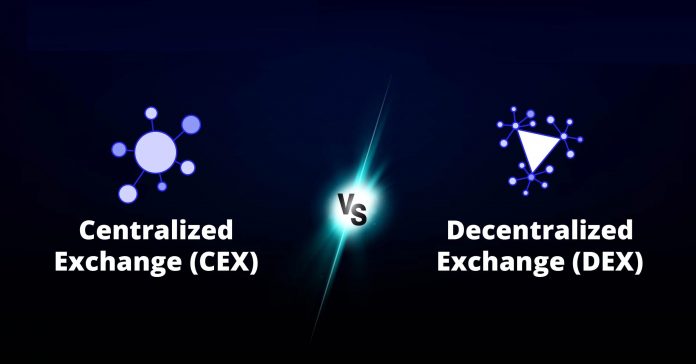
Decentralized exchange (DEX) to Centralized exchange (CEX) Volume Ratio Hits All-Time High

0

The decentralized exchange (DEX) to centralized exchange (CEX) volume ratio recently hit a new all-time high, with posts on X indicating it surged past 30% in early June 2025, a significant jump from the 20% reported in January 2025. This spike reflects growing on-chain activity, driven by improved DEX infrastructure and user preference for privacy and self-custody. Notably, Solana’s DEX volume has been a key driver, with weekly volumes reaching over $56 billion in January 2025, largely fueled by meme coin trading (90-92% of volume), though this raises sustainability concerns.

Uniswap remains the leading DEX, with $106 billion in monthly volume in December 2024, followed by PancakeSwap and Raydium. Meanwhile, CEX spot volumes have declined, dropping to just above $1 trillion in May 2025. The shift toward DEXs is attributed to better liquidity, user experience, and regulatory pressures on CEXs. The all-time high DEX-to-CEX volume ratio, surpassing 30% in June 2025, signals a shift in crypto trading dynamics with significant implications and a deepening divide between decentralized and centralized platforms.

User Preference for Decentralization: The surge in DEX volume reflects growing trust in self-custody, privacy, and non-custodial trading, driven by improved DEX user experience, lower fees, and robust liquidity. Platforms like Uniswap and Solana-based DEXs (e.g., Raydium) benefit from this trend. Stricter global regulations, including KYC/AML requirements, are pushing users to DEXs, which offer anonymity and fewer compliance hurdles. This could challenge CEX dominance long-term.

Market Resilience: Higher DEX volumes indicate a maturing DeFi ecosystem, with on-chain trading proving resilient despite volatility. However, heavy reliance on speculative assets like meme coins (90%+ of Solana’s DEX volume) raises concerns about sustainability.

Innovation and Competition: DEXs are innovating faster with AMM models, cross-chain interoperability, and layer-2 scaling, pressuring CEXs to adapt or risk losing market share. CEXs may counter with hybrid models or DeFi integrations.

Liquidity Fragmentation: Increased DEX activity could fragment liquidity across chains, complicating price discovery and increasing slippage risks, though aggregators like 1inch mitigate this.

DEXs align with crypto’s ethos of decentralization, empowering users with control over funds. CEXs prioritize convenience, speed, and fiat on-ramps, appealing to institutional and novice traders but sacrificing autonomy. DEXs attract tech-savvy, privacy-conscious traders and DeFi enthusiasts. CEXs cater to beginners, high-frequency traders, and those needing fiat gateways or advanced tools like margin trading.

DEXs on Solana, Arbitrum, and Base offer low-cost, high-speed trades, but CEXs still dominate in order book depth and cross-asset trading. Solana’s $56 billion weekly DEX volume in January 2025 highlights its edge, yet CEXs handled $1 trillion in spot trades in May 2025. CEXs face scrutiny from regulators, risking shutdowns or restrictions (e.g., Binance’s past bans). DEXs, being protocol-based, are harder to regulate but may face indirect pressure via stablecoin or wallet restrictions.

DEXs distribute value via governance tokens and fees to liquidity providers, fostering community ownership. CEXs retain profits, creating tension with users over transparency and fairness. The divide is widening as DEXs erode CEX market share, but CEXs remain entrenched due to institutional adoption and fiat infrastructure. The ratio’s rise suggests a tipping point where user priorities—freedom versus convenience—will shape the future of crypto trading.

Nigeria’s Finance Ministry Dismisses Reports of Collapsed $5bn Crude-Backed Loan, Says No Final Decision Yet

0

The Federal Ministry of Finance has refuted widespread media reports claiming that a proposed $5 billion oil-backed loan involving the Nigerian National Petroleum Company Limited (NNPC Ltd.) and Saudi oil giant Aramco has collapsed.

The ministry clarified that no final decision has been taken on the deal, and the reports suggesting its failure are “unfounded.”

In a statement issued on Wednesday by Mohammed Manga, Director of Information and Public Relations, the ministry described the claims as speculative and disconnected from the facts, stating that while the government is exploring various financing strategies, including forward sales of crude, it has yet to reach a conclusive agreement or make a public announcement regarding the proposed deal.

“The Federal Government of Nigeria is aware of recent media reports concerning a potential forward sale of crude oil involving NNPC Ltd. While market speculation is not uncommon in the context of ongoing economic reforms and transactions, no final decision has been announced by the Government, and commentary suggesting the collapse of any such initiative is unfounded,” the statement read.

The statement comes amid reports that negotiations between Nigeria and Aramco for the $5 billion loan had slowed due to a combination of falling global crude prices and concerns over Nigeria’s crude supply capacity. Sources close to the deal told Reuters that international lenders were growing increasingly cautious, fearing Nigeria may not be able to meet the long-term supply commitments required to back the loan.

If finalized, the transaction would mark the single largest crude-backed financing for Nigeria and Aramco’s first major oil-for-cash deal in the country. The facility was designed to help bolster Nigeria’s dollar liquidity at a time when foreign exchange reserves are under pressure and the local currency has faced repeated devaluations.

The federal government insists that it is still actively exploring the initiative as part of a broader strategy to shore up external reserves and support economic reforms introduced under the administration of President Bola Tinubu. Those reforms include the removal of fuel subsidies, the unification of exchange rates, and a renewed push for investment across critical sectors.

In recent years, Nigeria has turned to oil-backed loans to raise quick foreign exchange. One such arrangement was the $3.3 billion facility from Afreximbank, under which the country recently received a final tranche of $1.05 billion in April 2024. That facility is being repaid through crude oil priced at $65 per barrel, with Nigeria committing approximately 90,000 barrels per day for repayment.

However, the Aramco deal represents a far larger commitment and has drawn scrutiny over the sustainability of using future oil output as collateral, particularly amid declining production levels caused by sabotage, theft, and years of underinvestment in the upstream sector.

Responding to the controversy, the Ministry of Finance reiterated the government’s focus on “innovative, transparent, and fiscally responsible” financing mechanisms, stressing that Nigeria’s oil resources remain a critical lever for economic stability and liquidity enhancement.

“The Government remains focused on deploying a range of innovative, transparent, and fiscally responsible financing strategies to optimize Nigeria’s oil assets, improve external liquidity, and strengthen macroeconomic stability,” it said.

However, analysts note that while oil-backed deals offer short-term relief, they also present long-term fiscal risks if not carefully structured. These include potential future revenue shortfalls if oil prices decline further or if production remains below projection.

Stakeholders now await a clearer signal on whether the Aramco negotiations will be revived—or shelved indefinitely. Until then, the Ministry has urged the public and media to rely only on official communications regarding the status of the deal.

The Prospect of Solana ETF Approvals Has Sparked Polarized Views Within Crypto Community

0

Recent reports suggest a strong possibility of Solana exchange-traded funds (ETFs) receiving approval from the U.S. Securities and Exchange Commission (SEC) within the next 3-5 weeks. The SEC has reportedly fast-tracked the process by requesting issuers like Bitwise, 21Shares, VanEck, and Canary to update their S-1 filings by mid-June, with a potential decision timeline as early as July 2025. Bloomberg analysts, including James Seyffart and Eric Balchunas, have raised the approval odds to 90% for Solana ETFs in 2025, with some sources citing a 91% likelihood based on Polymarket data.

The SEC’s openness to in-kind redemptions and limited staking within these ETFs further supports the optimism. However, some analysts, like Seyffart, note that approvals could still extend to early Q4 2025 if the SEC takes the full review period. Solana’s price surged 4-5% to around $164-$165 following these developments, reflecting market enthusiasm. While the timeline looks promising, the SEC’s history of delays on altcoin ETFs, including Solana, suggests caution.

Final decisions could hinge on regulatory clarity and market conditions, with some sources indicating a decision might not occur until October 2025. Solana’s price has already risen 4-5% to ~$164-$165 on ETF approval speculation, and approval could drive further gains due to increased institutional and retail investment. Historical data from Bitcoin and Ethereum ETF approvals suggests potential for significant price rallies, though volatility is expected.

ETFs would provide a regulated, accessible way for investors to gain exposure to Solana without directly holding crypto, likely boosting trading volumes and liquidity. Approval would signal growing regulatory acceptance of altcoins, encouraging institutional capital inflows. Firms like Bitwise, VanEck, and 21Shares are already positioning to capture this demand.

Increased capital could fuel Solana’s ecosystem, known for high-throughput DeFi applications and NFT marketplaces. More funding may accelerate development and adoption. Limited staking in ETFs (as noted in filings) could influence Solana’s staking ecosystem, potentially reducing available tokens for staking while increasing network visibility.

Approval would mark a milestone for altcoin ETFs, potentially paving the way for other cryptocurrencies like XRP or Cardano. It could indicate a shift in the SEC’s stance on crypto, especially under a potentially crypto-friendly administration post-2024 elections. However, regulatory hurdles, such as classification of Solana as a security, could still complicate approvals or lead to legal challenges.

Approval could boost broader crypto market sentiment, reinforcing perceptions of a maturing, regulated industry. Conversely, delays or rejections could dampen enthusiasm, particularly for altcoins. The prospect of Solana ETF approvals has sparked polarized views within the crypto community and financial markets.

ETF issuers (Bitwise, VanEck), Bloomberg analysts, and crypto investors see approval as a game-changer. They argue it validates Solana’s technological edge (high transaction speeds, low costs) and market position (top 5 by market cap). Polymarket’s 91% approval odds reflect this optimism. Solana’s established ecosystem and institutional backing make it a prime candidate post-Bitcoin and Ethereum ETFs.

Fast-tracked SEC processes and political shifts (e.g., pro-crypto sentiment in a Trump-led administration) increase likelihood. In-kind redemption structures align with SEC preferences, reducing regulatory friction.  Some analysts, including cautious voices on X and traditional finance commentators, doubt the 3-5 week timeline, citing the SEC’s history of delaying altcoin ETF decisions (e.g., Ethereum ETF delays in 2023).

Regulatory uncertainty around Solana’s classification as a non-security remains unresolved, potentially stalling approvals until Q4 2025. The SEC may prioritize Ethereum ETFs or face political pressure to slow crypto integration. Market manipulation concerns or insufficient staking clarity could lead to rejections or extended reviews. Posts on X highlight mixed sentiment, with some users warning of “overhype” and potential price dumps post-approval, drawing parallels to Ethereum’s ETF launch.

Many X users, particularly Solana supporters, celebrate the ETF news, predicting a “Solana season” with price targets of $200-$300. They view ETFs as a bridge to mainstream adoption. Others argue Solana’s centralized tendencies (e.g., high validator requirements) and past network outages make it a riskier ETF candidate compared to Ethereum. Some dismiss the timeline as speculative, pointing to SEC’s unpredictable nature.

A 3-5 week approval (by mid-July 2025) could trigger a price rally and broader altcoin enthusiasm, but delays to October 2025 or beyond might lead to short-term sell-offs. Approval would solidify Solana’s position as a leading Layer 1 blockchain, but failure to deliver on ETF-driven expectations could harm credibility. Regulatory reversals, market volatility, or technical issues (e.g., network instability) could undermine ETF success.

There Is Abundance In The Future Which Must Be Unlocked

0

There is an abundance in the future. The possibilities of the future are limited by the finite knowledge of today. Fill your mind with optimism, and a great energy to achieve will come. Greatness comes with awareness and observation.

But a mind chained in hopelessness is lost, seeing darkness even in the brightest rays of the sun. I challenge you to LIFE. For that to happen, find a way to LIVE your Life, not your friend’s, classmate’s or anyone. But it must be purpose-driven, not tossed around like a feather in a river.

Blossom! The future is full of abundance. And that abundance may not be in Abuja, Lagos or the state capitals. We have this startup which goes around buying mainly food stuff in rural areas and shipping to the cities and factories. Just like that, we’re talking about billions of Naira in business with real profit.

It is important to understand that there is no strong requirement that you can only thrive if only the Nigerian economy is doing well. In ancestral Igbo, men held titles like “Ome na unwu” [one who does great things even during famine and scarcity] indicating that even during scarcity, opportunities abound. In other words, no excuses. But that can happen if we keep pushing to unlock that abundance via productive ways.

If Pepe Coin Replaced Cardano in Market Rankings, It Would 5x Your Money, But Little Pepe (LILPEPE) Would Turn You Into a Millionaire

0

Picture waking up one morning to find that your $1,000 investment in Pepe Coin has suddenly become $5,000 overnight, as it has surpassed Cardano in market value.  It sounds like fun. Now, what if we told you that an even tinier, cheekier, and techier frog—Little Pepe (LILPEPE)—is poised to leap even higher?  While PEPE may offer solid 5× returns, LILPEPE is the meme coin that could make you a millionaire, with projections soaring up to 120× from presale levels. And it’s not just hype—it’s tech, timing, and turbocharged tokenomics. Welcome to the future of meme finance and your backstage pass to the year’s biggest meme coin launch.

Why PEPE Coin Is Just the Start of the Meme Madness

PEPE coin significantly impacted crypto Twitter, decentralized exchanges (DEXs), and major exchanges. In record time, it secured a place among the giants. If PEPE’s market value were to surpass Cardano’s $15 billion, early investors may realize a 5% profit, which would be a significant jump. However, if you’re investing tens of thousands of dollars, a 5% return is still considered good.  That’s where Little Pepe (LILPEPE) croaks louder.

LILPEPE: Born to Meme, Built to Moon

Forget generic meme tokens built on bloated Ethereum chains and riddled with gas fees. LILPEPE is the first-ever Layer 2 blockchain designed exclusively for memes—a home where memes can live, breathe, and moon.

Let’s break it down:

  • Layer 2 Built for Speed: Finality faster than Elon Musk tweets. Low fees are so small that they make Polygon look expensive.
  • No Sniper Bots Allowed: LILPEPE is the only blockchain where sniper bots don’t work, there is no front-running, and bots cannot steal your pump.
  • Meme Launchpad Ready: Creators can launch meme tokens directly on the LILPEPE chain—no code, no problem.
  • Backed by Anonymous Meme Masters: Veteran memecoin devs and insiders from some of the most significant meme projects are backing LILPEPE behind the scenes.

This isn’t just a meme. This is an infrastructure for memes, complete with launchpads, DeFi tools, NFT support, and the capacity to accelerate virality through transactions.

LILPEPE vs PEPE vs Cardano: The Meme Throne Match

Feature Cardano PEPE Coin Little Pepe (LILPEPE)
Market Cap $15B $1B <$1M (Presale)
ROI Potential 1.2×–2× 3× – 5× 100× – 120×
Tech Layer Layer 1 ERC-20 Layer 2
Community Energy Low Medium Exploding
Gas Fees High (ETH) High (ETH) Ultra-Low
Transaction Tax N/A Varies Zero
Meme Utility None Viral Token Meme Ecosystem


While Cardano builds universities and blockchains for governments, LILPEPE builds internet culture on-chain and wins hearts and wallets in the process.

The Millionaire Math: Turning Pocket Change into a Lambo

Let’s do the numbers. LILPEPE is in Stage 1 of presale, priced at just $0.001 per token. Here’s what happens if LILPEPE hits just a $0.12 valuation (120× from presale):

  • $100 ? $12,000
  • $500 ? $60,000
  • $1,000 ? $120,000
  • $8,334 ? $1,000,080

LILPEPE Presale: Where and How to Ape In

The LILPEPE presale is now live. In under 24 hours, over $200,000 has already been raised, with 200,983,184 tokens sold. You can still buy in at the $0.001 price before it jumps.

Here’s how to get started:

  1. Download MetaMask or Trust Wallet.
  2. Load ETH or USDT (ERC-20 only).
  3. Go to littlepepe.com and connect your wallet.
  4. Buy your bag of $LILPEPE and wait for the presale to end.
  5. After the presale, revisit the site, connect your wallet, and claim your tokens.

Final Thoughts: Small Frog, Big Dreams

If PEPE surpasses Cardano in value, you could multiply your investment by five. However, it’s essential to acknowledge that you’re not merely seeking a taste. You want the full-course feast. You want 120×. You want to wake up a meme coin millionaire. Little Pepe (LILPEPE) is neither a rug pull nor a clone; it is not late to the market. It’s early. It’s unique. It’s set to launch on two major centralized exchanges (CEXs) with plans to list on the world’s largest exchange shortly after. Therefore, you’ve already surpassed the deadline if you’re reading this. Ape into LILPEPE now—because fortune favors the froggy in the world of memes.

For more information about Little Pepe (LILPEPE) visit the links below:

Website: https://littlepepe.com


Whitepaper: https://littlepepe.com/whitepaper.pdf

Telegram: https://t.me/littlepepetoken

Twitter/X: https://x.com/littlepepetoken