DD
MM
YYYY

PAGES

DD
MM
YYYY

spot_img

PAGES

Home Blog Page 1143

Trying to 20x Your Portfolio Before the Bull Run Ends? This Crypto Competitor to XRP Will Do It in 2 Weeks

0

When the cryptocurrency market prepares for the next bull run, many investors search for high-potential projects to grow their portfolios quickly. Salamanca (DON) is one of the tokens entering the market and getting recognition for outstanding growth potential and further sites. As a competitor of XRP, Salamanca (DON) is positioned to deliver huge returns, with some analysts estimating a 2,000% price increase within two weeks.

Why Salamanca (DON) Could Outperform XRP

While XRP has been showing strong growth, with the coin down by 5.94% over the last twenty-four hours and accumulating 11.48% of value over the week, Salamanca (DON) is speedily gaining value.

The memecoin based on the Binance Smart Chain has established its value, peaking at $0.0060 in early May. Although there has been a slight correction, Salamanca is now gaining more investors, particularly as the altcoin prepares to list on Binance and is expected to increase its value by 2,000%.

Listed on Gate, MEXC, and Pancakeswap, Salamanca has already proven capable of grabbing attention in the market. The Binance listing to come will be a game-changer, as now this coin will get liquidity and institutional support, making it even more visible and promising for its growth.

The Path to a 2,000% Price Surge

The target for Salamanca (DON) is a mind-blowing 2000% growth by the end of 2025. This ambitious goal aims to bring the price to about $0.05, bringing Salamanca to a competitive position on the memecoin market. With XRP still on a bullish trend, Salamanca’s potential is evident, especially given its niche in the meme coin industry and the hype of its listing on Binance.

Such an excellent potential for rapid growth is an attractive proposition for investors looking to capitalize on the upcoming bull run; as such, Salamanca (DON) is a good pick. With its vibrant market actions, increased trading volume, and upcoming listings, the coin is at the top of the meme coins.

Trade $DON now on Gate.io: https://www.gate.io/zh/trade/DON_USDT

Why You Should Consider Salamanca (DON) for Quick Gains

If you want to 20x your portfolio before the next bull run entirely takes off, then Salamanca (DON) is one coin you should look at. With a low market cap of $1.98M and a massive 185.93% increase in trading volume, the token exhibits bullish tendencies that will likely provide rapid profits.

Analysts forecast that Salamanca’s value may skyrocket once it is listed on Binance, positioning it as a strong possibility in the meme coin fight. Should the token reach its target price of $0.05, the early investors might enjoy significant returns.

About Salamanca ($DON)

Salamanca (DON) is a meme coin inspired by the notorious Salamanca cartel from Breaking Bad and Better Call Saul. Built on the Binance Smart Chain (BSC), the token blends pop culture with crypto, aiming to build a strong, community-driven ecosystem backed by strategic exchange listings.

For more information about Salamanca (DON), visit:


Website: https://salamanca.club/

Twitter/X: https://x.com/salamanca_token

Telegram: https://t.me/salamancatoken
Call Between Donald Trump and Vladimir Putin Today Will Give Directions to the Long Standing Peace Negotiations on Ukraine Vs Russia Conflicts

0

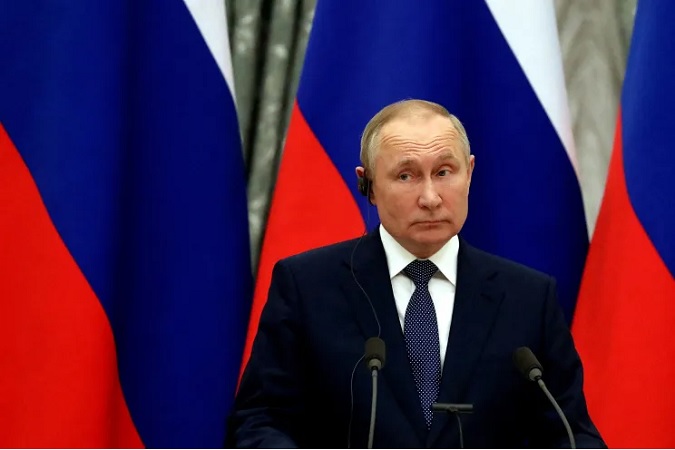
U.S. President Donald Trump is scheduled to hold a phone call with Russian President Vladimir Putin today, May 19, 2025, at 10:00 AM ET (15:00 GMT). The primary focus of the call is to discuss a potential ceasefire and steps toward ending the ongoing war in Ukraine, with Trump emphasizing stopping the “bloodbath” that he claims is killing thousands of Russian and Ukrainian soldiers weekly. Trade is also listed as a topic on the agenda. Following the call with Putin, Trump plans to speak with Ukrainian President Volodymyr Zelenskyy and NATO leaders to further diplomatic efforts.

The Kremlin has confirmed preparations for the call, and Vice President JD Vance indicated Trump will press Putin on his seriousness about achieving peace. However, there is skepticism, with Ukrainian officials and analysts noting Russia’s additional demands, such as halting foreign military aid to Kyiv, could complicate negotiations.

The scheduled call between U.S. President Donald Trump and Russian President Vladimir Putin on May 19, 2025, to discuss a potential ceasefire in Ukraine carries significant implications for global geopolitics, U.S. foreign policy, and the ongoing war. Trump’s initiative signals a potential shift in U.S. policy from the Biden administration’s approach of sustained military support for Ukraine to a more negotiation-driven stance. This aligns with Trump’s campaign promises to end the war swiftly, possibly by pressuring both Russia and Ukraine to compromise.

The call, followed by discussions with Ukrainian President Volodymyr Zelenskyy and NATO leaders, could strain U.S.-NATO relations. Trump’s past skepticism of NATO and his push for a quick resolution may clash with European allies’ commitment to supporting Ukraine’s sovereignty without conceding to Russian demands. A direct dialogue with Putin could thaw U.S.-Russia relations, strained since the war began in 2022. However, any perceived concessions to Russia (e.g., on sanctions or territorial issues) could embolden Putin and signal weakness to other adversaries like China.

Ukraine’s Position

Ukraine may face increased pressure to accept a ceasefire, potentially involving territorial concessions or neutrality, which Zelenskyy has historically resisted. Sources indicate Ukraine is skeptical of Trump’s approach, fearing it prioritizes speed over Kyiv’s interests. Trump’s reported intent to halt or reduce U.S. military aid to Ukraine could weaken Kyiv’s negotiating leverage and battlefield position, especially if Russia’s demands include demilitarization or limits on foreign aid.

Russia’s Calculations

Putin may see Trump’s outreach as an opportunity to secure favorable terms, given Russia’s recent battlefield gains and Trump’s urgency to broker a deal. Kremlin sources confirm Putin’s willingness to engage, but additional demands (e.g., halting aid to Kyiv) suggest Russia aims to maximize concessions. A successful negotiation could bolster Russia’s image as a resilient power, countering Western isolation efforts and potentially weakening sanctions regimes.

The inclusion of trade on the call’s agenda suggests discussions on energy markets or sanctions relief, which could impact global oil and gas prices. A resolution might stabilize markets, but concessions to Russia could alienate energy-dependent European allies. A U.S.-brokered deal could set a precedent for resolving other global conflicts, but failure or perceived appeasement of Russia might encourage authoritarian regimes to pursue aggressive territorial ambitions.

Trump’s approach is divisive within the U.S. Supporters, including Vice President JD Vance and Republican lawmakers, view it as a pragmatic step to end a costly war, aligning with Trump’s “America First” doctrine. Critics, including some Democrats and hawkish Republicans, argue it risks abandoning Ukraine and rewarding Russian aggression. Polls (e.g., Pew Research, 2024) show Americans are split on Ukraine aid, with growing fatigue among some voters but strong support for Kyiv among others. Trump’s push for a quick deal may resonate with war-weary voters but alienate those prioritizing democratic values.

European nations, particularly Poland and the Baltic states, are wary of any deal that compromises Ukraine’s sovereignty or NATO’s unity. The UK and France have emphasized continued support for Kyiv, and European analysts highlight fears of a U.S.-Russia deal sidelining Europe. Ukraine insists on full territorial restoration and reparations, while Russia demands control over annexed regions and limits on Ukraine’s NATO aspirations. This fundamental divide makes a ceasefire challenging, as neither side trusts the other’s intentions.

Countries like India and Brazil have called for peace but avoid condemning Russia, contrasting with Western nations’ strong anti-Russia stance. A Trump-Putin deal could align with Global South preferences for neutrality but risks alienating Western allies. Trump’s approach reflects realist foreign policy, prioritizing U.S. interests and quick results over ideological commitments to democracy. This clashes with idealist views, prevalent in Biden’s administration and among Ukrainian advocates, that emphasize supporting Ukraine as a bulwark against autocracy.

A rapid ceasefire might reduce immediate bloodshed but risks long-term instability if it leaves Russian gains intact or Ukraine vulnerable. Critics argue this could embolden Putin to pursue further aggression. Reports from Reuters, The Wall Street Journal, and Al Jazeera confirm the call’s timing and agenda, noting Trump’s focus on ending the “bloodbath” and Russia’s additional demands. The Washington Post highlights Ukraine’s skepticism and NATO’s concerns.

The war, ongoing since February 2022, has killed tens of thousands and displaced millions. Recent Russian advances in Donetsk and Ukraine’s incursion into Kursk have raised the stakes, making Trump’s intervention a high-stakes gamble. The Trump-Putin call could mark a turning point in the Ukraine war, with potential to reduce hostilities but also to reshape U.S. alliances and global power dynamics.

The divides—between U.S. political factions, Western allies and Russia, and competing visions of peace—underscore the complexity of achieving a lasting resolution. Success hinges on balancing immediate ceasefire goals with long-term stability, a task complicated by deep mistrust and conflicting interests.

Development Bank of Nigeria Targets N1.8tn Loan Portfolio as it Reboots Strategy to Empower MSMEs

0

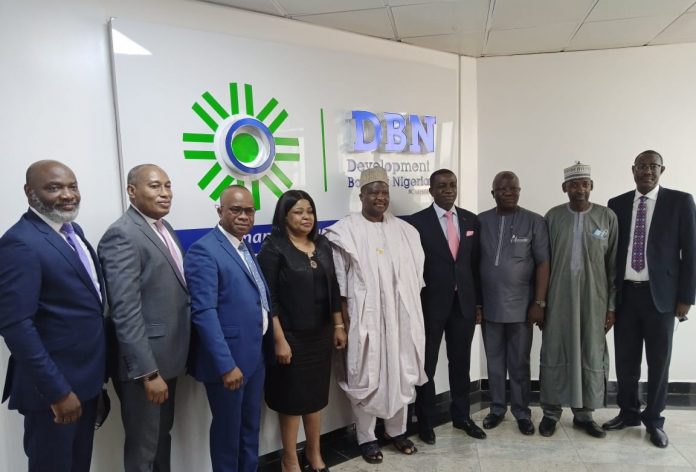
As Nigeria’s economy continues to lean heavily on its informal sector for resilience and recovery, the Development Bank of Nigeria (DBN) is unveiling an ambitious plan to inject renewed life into the country’s micro, small, and medium enterprises (MSMEs), the oft-hailed engine of job creation and grassroots economic development.

The bank is setting its sights on growing its outstanding loan portfolio to over N1.8 trillion within the next five years. It also plans to mobilize N3 trillion in fresh capital, a mix of debt and equity, to deepen access to finance for MSMEs, many of which remain unbanked or underbanked due to structural bottlenecks in Nigeria’s financial system.

Speaking in Lagos, DBN’s Managing Director, Tony Okpanachi, described the new five-year strategic plan as a scale-up of what the institution has achieved since its inception, with a more aggressive posture on financial inclusion, gender equity, and sustainability.

“We want to scale up what we’ve done in the first five years. There’s still a lot to be done in Nigeria, and we are very aspirational in our approach,” Okpanachi said.

Women, Youth, and Disadvantaged Groups at the Centre

While DBN operates as a wholesale development finance institution, channeling funds through 79 participating financial institutions rather than dealing directly with individual businesses, its new strategy places inclusive growth at the core of its operations. The bank aims to allocate 20% of its loan portfolio to women-led businesses, while 40% will go to enterprises owned by economically disadvantaged Nigerians.

This is a notable pivot in a country where women-led businesses are often excluded from formal credit channels despite making up a significant portion of the informal economy. Similarly, many enterprises in Nigeria’s northern and rural regions have historically struggled to access capital due to insecurity, poor infrastructure, and financial illiteracy.

“We’re targeting sectors like manufacturing and agriculture—areas that are labour-intensive and hold the potential to absorb large segments of the workforce,” Okpanachi added.

A Focus on Green Financing and Regional Inclusion

In line with global climate goals and Nigeria’s own Energy Transition Plan, DBN is also tilting its strategy towards green financing. The bank intends to back businesses with environmentally sustainable operations, particularly those in underdeveloped states.

This is not a casual nod to climate targets. Green finance is rapidly emerging as a critical component of sustainable development financing, and Nigerian institutions are under pressure to align their portfolios with climate-resilient investment standards. DBN appears keen to ride this wave.

The Managing Director disclosed that the bank is aiming to create two million jobs, both directly and indirectly, over the next five years—nearly double the 1.2 million jobs it claims to have enabled between 2017 and 2022.

One of the bank’s distinct features is that it does not lend directly to MSMEs. Instead, it works through commercial banks, microfinance banks, and other financial institutions that meet its rigorous credit and impact criteria. This model allows it to multiply its reach while strengthening the broader financial ecosystem.

In a country with more than 40 million MSMEs, according to SMEDAN, this model of wholesale lending has helped bridge the risk perception gap that keeps many banks from lending to small businesses.

“Strategically, we’re working on three fronts—expanding our funding sources, deepening current partnerships, and leveraging existing resources to attract new ones,” Okpanachi said.

To meet its N3 trillion fundraising target, DBN is currently in talks with international development partners and is exploring the local capital markets, including plans for a domestic bond issuance, subject to stable macroeconomic conditions. This step, if realized, would signal a stronger shift toward self-sufficiency and long-term viability.

Despite Nigeria’s current fiscal headwinds, marked by high inflation, volatile exchange rates, and record debt servicing obligations, DBN’s capital-raising ambitions reflect a growing confidence among development finance institutions to navigate the turbulence through blended finance models and public-private partnerships.

A Record of Impact—But Challenges Remain

DBN recently disclosed that it had disbursed over N1 trillion in loans to MSMEs through participating institutions. It noted that 74% of its beneficiaries were women, and 25% were youths—a remarkable demographic tilt that is rarely achieved in mainstream commercial lending.

Also striking is its outreach to conflict-affected and economically excluded states such as Borno, Yobe, Katsina, Zamfara, and Adamawa, where small businesses face not just financial exclusion, but threats from insurgency and insecurity.

In terms of capacity building, the bank said it had trained more than 9,500 MSMEs across Nigeria—an often-overlooked component of development finance, as many small business owners in the country lack the financial literacy needed to scale or formalise operations.

However, DBN’s model has been criticized by some stakeholders, who have noted that because DBN does not lend directly, the intended impact may be diluted if partner banks maintain high interest rates or impose unfavorable conditions. Others have called for the bank to work more closely with informal cooperative groups and fintechs to deepen its reach.

Starlink Outperforms Terrestrial ISPs Across Sub-Saharan Africa, Transforms Broadband Access

0

Starlink, a global internet service using thousands of small satellites in low Earth orbit, has reportedly outperformed terrestrial internet service providers (ISPs) across sub-Saharan Africa, transforming broadband access.

According to the Speedtest intelligence platform for measuring broadband speed and performance, Ookla revealed that Starlink delivered a median download speed exceeding 40 Mbps in Q1 2025 in most African countries where it’s available, significantly outpacing terrestrial ISPs.

Botswana, Eswatini, Rwanda, Burundi, Sierra Leone, Mozambique, and Ghana lead the continent in median download speeds. In Q1 2025, Starlink users in these countries experienced a download speed of around and above 75 Mbps.

East African countries saw a significant leap in Starlink’s upload speeds and latency, likely linked to deploying a new PoP in Nairobi in January 2025. Kenya was reported to have stood out prominently with the highest upload speed, nearing 15 Mbps. Other East African countries experienced more moderate increases in median upload speed, ranging from 25% in Madagascar to nearly 59% in Mozambique.

Ghana and Rwanda were not far behind, both exceeding 13 Mbps. A strong upper tier including Burundi, Nigeria, South Sudan, Eswatini, Mozambique, and Botswana also demonstrated healthy performance, with speeds above 10 Mbps.

In contrast, speeds in Nigeria, Zimbabwe, South Sudan, and Madagascar arguably some of Starlink’s biggest markets, were below 50 Mbps, most likely because the provider faces capacity issues and halts new sign-ups. Nevertheless, these speeds are still much more than double those of terrestrial networks in Q1 2025 in most countries.

Since its launch in 2019, the network has expanded to more than 7,000 satellites, covering most of the globe. The satellite internet’s rapid expansion across Africa began with Nigeria in February 2023, with plans to launch in an additional 26 countries by the end of 2026, potentially covering nearly all 54 African nations. However, regulatory hurdles, like those in South Africa, have delayed progress in some markets.

One of the significant advantages Starlink has over other ISPs is its proximity to Earth, which reduces signal travel distance and results in lower latency. With over 6,000 LEO satellites, Starlink provides near-global coverage (99.7% of U.S. households), requiring only a clear view of the sky. Meanwhile, traditional ISPs rely on ground-based cables or towers, which are uneconomical to deploy in sparsely populated regions.

Notably, the Elon-Musk-owned satellite internet rollout in Africa has rattled the continent’s internet landscape, disrupting traditional ISPs, bridging digital divides, and sparking debates about regulation and economic impact.

While consumers and businesses are eager to adopt the service due to its superior speeds compared to fixed broadband, ISPs are concerned about the competition Starlink poses, given their substantial investments in local network infrastructure.

For example, Starlink’s entry into Kenya in July 2023 sent shockwaves through the country’s telecom sector, particularly rattling Safaricom, Kenya’s dominant ISP with a 65% market share in mobile and broadband services. The rapid adoption of Starlink’s high-speed, satellite-based internet, forced Safaricom into a defensive scramble, reshaping competition, pricing, and connectivity in Kenya.

While some African regions have embraced the service, others have imposed stringent foreign ownership and ISP licensing regulations, delaying Starlink’s deployment. The satellite internet has partnered with local equipment distributors (such as Paratus Group) and ISPs to navigate these challenges, leveraging existing licenses.

Looking Ahead

Starlink’s unique satellite-based model and strategic moves position it as a strong contender to reshape Africa’s connectivity landscape, where only 38% of the population is online compared to a global average of 60%. As it continues to expand and optimize its network, it has the potential to become an even more competitive solution for broadband access in Sub-Saharan Africa.

Saudi Arabia Debuts AI Clinic, A Global First in Healthcare Innovation

0

In a quiet corner of Saudi Arabia’s eastern Al-Ahsa province, a medical revolution is unfolding. Last month, the world’s first artificial intelligence-powered clinic opened its doors, a bold experiment that could reshape how patients receive care.

Here, an AI named “Dr. Hua” takes the lead in diagnosing and treating ailments, while human doctors stand by as overseers, ensuring safety in a system that feels both futuristic and cautiously grounded.

Launched in April 2025 by Shanghai-based Synyi AI and Saudi Arabia’s Almoosa Health Group, this pilot program is testing whether machines can handle the front lines of medicine with precision and reliability.

The clinic, a sleek facility designed to blend technology with patient care, represents a seismic shift in healthcare delivery.

“What AI has done in the past is to assist doctors, but now we are taking the final step of the journey to let AI diagnose and treat the patients directly,” said Zhang Shaodian, CEO of Synyi AI, in a statement that underscores the company’s ambition.

Backed by heavyweight investors like Tencent, Hongshan Capital, and GGV Capital, Synyi AI has poured years of research into creating a system that not only processes medical data but also speaks the language of Saudi patients, literally and culturally.

A New Kind of Doctor’s Visit

Step inside the clinic, and the experience feels deceptively familiar. Patients sit before a tablet, where “Dr. Hua” greets them, not with a stethoscope but with a conversational interface powered by advanced large language models. These models, tailored to include Arabic, regional medical terminology, and cultural nuances, allow the AI to engage patients as a human doctor might. A patient with a persistent cough, for instance, types or speaks their symptoms, and “Dr. Hua” responds with follow-up questions: When did the cough start? Is there fever or fatigue? With the help of human assistants, the AI analyzes clinical data—X-rays, cardiograms, or lab results—before delivering a diagnosis and treatment plan.

The process is swift, often wrapping up in minutes, but it doesn’t end there. Every AI-generated plan passes through the hands of a human doctor, who reviews it for accuracy and appropriateness. These doctors, described by Synyi AI as “safety gatekeepers,” are the system’s fail-safe, ready to step in for emergencies or cases too complex for the AI’s current capabilities.

“AI Clinic is an innovative medical service system where AI doctors independently complete the full-chain medical operations from inquiry to prescription, with human doctors acting as ‘safety gatekeepers’ to review the diagnosis and treatment results,” Synyi AI explained in a press release.

Presently, “Dr. Hua” specializes in respiratory illnesses, tackling about 30 conditions like asthma, bronchitis, and pharyngitis. It’s a focused start, but the company has bigger plans. Within a year, Synyi AI aims to expand the AI’s expertise to 50 diseases, folding in gastroenterological issues like gastritis and dermatological conditions like eczema. The goal is a versatile digital doctor capable of handling a broad swath of common ailments.

A Track Record of Precision

Synyi AI’s confidence in “Dr. Hua” stems from rigorous pre-trial testing, where the system achieved a diagnostic error rate of just 0.3 percent—an impressive feat for a technology stepping into the high-stakes world of medicine. This precision is critical, as even a small misstep could erode trust in AI-driven care. The human oversight layer adds further reassurance, ensuring that patients aren’t left to the whims of algorithms alone.

The clinic’s pilot phase, which is free for patients, is as much about proving the system’s worth as it is about gathering data. Synyi AI is meticulously collecting diagnostic records to submit to Saudi health authorities, with regulatory approval expected within 18 months, potentially by October 2026. If approved, the model could scale rapidly, with plans already in motion to open more AI clinics across Saudi hospitals.

For a country pushing to diversify its economy and lead in technological innovation, this project aligns perfectly with its Vision 2030 ambitions.

AI-powered Medical Future and Its Challenges

The Al-Ahsa clinic has sparked global intrigue, with tech enthusiasts and healthcare experts weighing its implications. Many believe the revolution, if successful, will significantly help to curtail the shortage of doctors across the globe.

Beneath the hope lie thorny questions. Can patients truly trust a machine to diagnose their illnesses? What happens if the AI misses a rare condition or misinterprets a symptom? And what does this mean for doctors, whose roles could shift dramatically as AI takes on more responsibility?

However, Synyi AI is keenly aware of these challenges. So far, by limiting “Dr. Hua” to routine conditions and maintaining human supervision, the company is treading carefully, building trust while refining the technology. The localized language models, which ensure the AI resonates with Saudi patients, are a nod to the importance of cultural sensitivity—a factor that could make or break adoption.

The Al-Ahsa clinic is a test case for the world. Besides its potential to inspire similar models across the globe, it is expected to revolutionize the health sector with benefits such as faster consultations, lower costs, and greater access to care, especially in underserved areas.