DD
MM
YYYY

PAGES

DD
MM
YYYY

spot_img

PAGES

Home Blog Page 1144

Tesla Moves to Limit Shareholder Lawsuits with New Corporate Bylaw After Texas Incorporation

0

Tesla has adopted a new corporate bylaw that significantly restricts shareholders’ ability to sue company leadership for breaches of fiduciary duty, marking a consequential shift in its legal governance following its reincorporation in Texas.

The amendment, disclosed in a regulatory filing on Friday, introduces a 3 percent ownership threshold for initiating or maintaining derivative proceedings—lawsuits brought by shareholders on behalf of the company against directors or executives accused of wrongdoing.

“Tesla has adopted an ownership threshold requiring any shareholder or group of shareholders to hold shares of common stock sufficient to meet an ownership threshold of at least 3% of Tesla’s issued and outstanding shares in order to institute or maintain a derivative proceeding,” the filing stated. The change took effect as of May 15.

Given Tesla’s current market capitalization, which exceeds $1 trillion, a shareholder would need to hold a stake valued at more than $30 billion to meet this threshold, effectively barring all but the largest institutional investors from suing.

The automaker did not respond to requests for comment on the bylaw change.

Legal Experts Warn of Accountability Risks

Corporate law experts have raised concerns about the implications for shareholder rights. Ann Lipton, a securities law professor at Tulane University and former trial attorney, said the change is legally permissible under Texas law but poses a significant hurdle for accountability.

“Obviously, for a company of Tesla’s size, that would be a formidable barrier to anyone bringing a lawsuit for breach of fiduciary duty,” Lipton wrote in an email.

She noted that Tesla’s move leverages a Texas law that allows companies to set minimum ownership requirements for derivative suits. Tesla officially moved its incorporation from Delaware to Texas in June 2024, following shareholder approval and CEO Elon Musk’s strong criticism of Delaware’s judiciary after a major legal setback.

Fallout from Tornetta Ruling

The backdrop to this governance change is the high-profile Delaware case brought by Tesla shareholder Richard Tornetta, who held just nine shares when he sued to void Musk’s 2018 pay package. In January 2024, Delaware Chancery Court Chancellor Kathaleen McCormick ruled in Tornetta’s favor, rescinding Musk’s $56 billion compensation deal.

McCormick found that Musk exercised de facto control over Tesla’s board during the approval process for the pay plan and that the directors failed to negotiate at arm’s length.

“In fact, there is barely any evidence of negotiations at all. Rather than negotiate against Musk with the mindset of a third party, the compensation committee worked alongside him, almost as an advisory body,” leading the court to conclude that the shareholder vote had been tainted by incomplete and misleading disclosures.

Following the decision, Musk responded with a terse post on X: “Never incorporate your company in the state of Delaware.” Within months, Tesla shareholders approved a resolution to reincorporate in Texas, a state whose laws are considered more favorable to executives and boards.

Tesla has since appealed the Tornetta ruling. Delaware’s Supreme Court is expected to decide whether Musk can retain the shares granted through the voided pay package.

Shareholders’ Accountability Concern

Shareholder advocates and governance analysts say the 3% rule, while legally valid in Texas, severely restricts the ability of retail and mid-sized institutional investors to check executive power through the courts.

Some believe the Texas law is being weaponized to entrench corporate power, referencing the growing trend of companies like Tesla and SpaceX shifting to Texas jurisdictions amid public disputes with Delaware courts or federal regulators.

Tesla’s change also underscores broader concerns about the use of state-level legal levers to neutralize shareholder oversight. In Delaware, Tornetta’s lawsuit was permitted despite his minimal stake, highlighting the comparative openness of Delaware’s corporate law to minority shareholders.

By contrast, in Texas, the law now being applied by Tesla permits companies to bar virtually all derivative suits unless initiated by ultra-wealthy investors or coalitions of major funds—a requirement that may be practically impossible to meet in a timely or cohesive manner.

Tesla’s bylaw amendment could prompt similar actions by other Texas-incorporated firms or those considering reincorporation. The company has been at the forefront of challenging regulatory norms across jurisdictions, from environmental policies to labor laws and now corporate governance.

Analysts believe that the ruling of the Delaware Supreme Court will likely shape future shareholder litigation risk, not just for Tesla but for executives at other major corporations eyeing more favorable legal jurisdictions.


Choosing Your YouTube Intro Maker: A Comparison of Wondershare Filmora and FlexClip

0

New to vlogging on YouTube? How would you make your YouTube get noticed? You would be surprised to know that the little intro video at the start is your chance to make a great impression. Now, if you think making that intro video is super hard, then rest assured, it doesn’t have to be. The only thing that can make all the difference is finding the right tool, like a good YouTube intro maker.

To help you in making an informed choice, we’re going to check out and compare two popular options, Wondershare Filmora and FlexClip, to see which one is the easiest way for you to become an awesome YouTube intro creator!

Part 1: Hook Your Audience in Seconds: Your YouTube Intro’s First Impression

When someone clicks on the video you’ve uploaded on YouTube, what’s the very first thing they see after that ad (if you have one)? It’s usually that short intro part, the one with your channel name or some attractive music, that acts like the first handshake when you meet someone new.

On YouTube, where 2.6 million videos are uploaded on a daily basis and where people are scrolling and clicking fast, that intro is your big chance to make people remember you and your channel. If your intro is catchy and interesting, it makes viewers stay and watch the rest of your video.

On the other hand, if it’s confusing or boring, they might just click away before they even see your amazing content. That’s why getting your intro right with a solid YouTube intro maker is a really smart move when you’re building your channel!

Part 2: Wondershare Filmora: Find Your Inner YouTube Intro Creator

So, if you’re serious about making a lasting first impression and want lots of creative control over your intros, let’s talk about Wondershare Filmora. It’s a go-to for many creators because it balances powerful features with an interface that’s much friendlier than super-professional, complicated software. It has a fantastic YouTube intro maker feature that gives you the tools to truly express your channel’s personality.

Key Features of Filmora YouTube Intro Maker:

Lots of Templates: You get access to a huge number of ready-made designs (over 1000 just for YouTube intros!) to help you start quickly.

Free Music and Stock Stuff: It includes music, photos, and videos you can use in your intro without worrying about copyright.

AI Help: There are AI tools that can assist in creating content for your intro, like turning text into video or making music.

Make It Your Way: You can pick a template and change it or build your intro completely from scratch using all the tools.

3D Logo Fun: There’s a special tool to help you create cool 3D animated versions of your logo for your intro.

Extra Creative Bits: You get access to lots of other things like animated titles, stickers, and visual effects to make your intro pop.

With the above-mentioned key features, you have the power to make your intro exactly how you envision it.

However, like any powerful tool, there can be small downsides, like:

You’ll likely see a watermark: When you export videos using the free version, they usually have a Filmora logo (a watermark) on them. To remove this and get clean videos, you’ll need to buy a paid plan.

Works best on a modern computer: As installed software with lots of capabilities, you’ll generally have a smoother and faster experience if your computer is reasonably up-to-date.

How to make a YouTube intro video with Filmora?

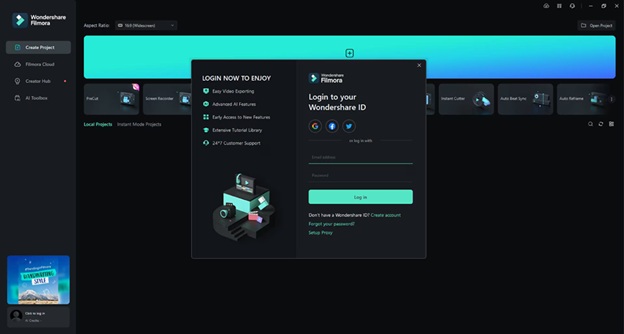
Step 1: First, download and install Wondershare Filmora onto your computer. Once it’s installed, open it up and log in or create your account.

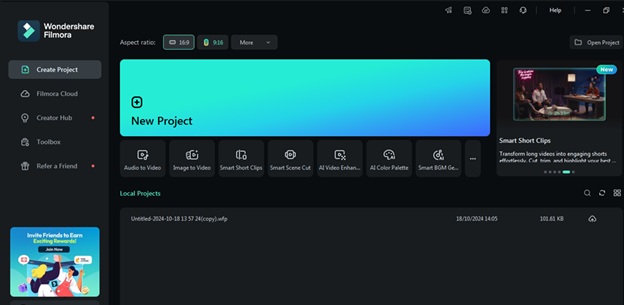
Step 2: You can click to start a New Project if you want to build your intro completely from scratch.

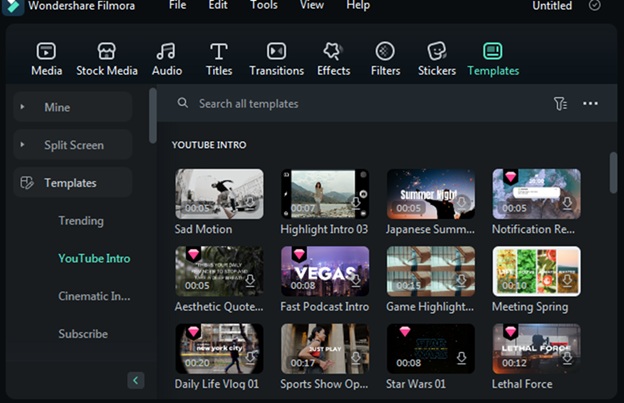
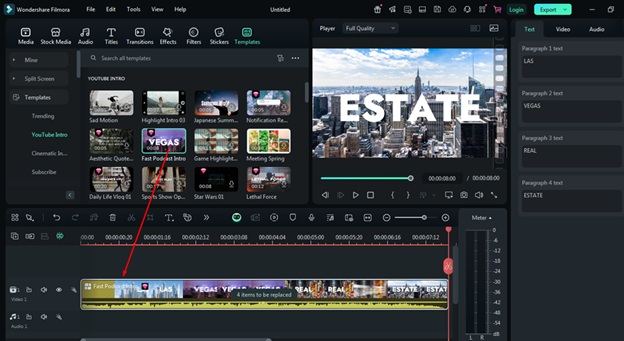
Step 3: Or, if you prefer a head start, go to the Templates section and pick one of the many cool intro designs they have.

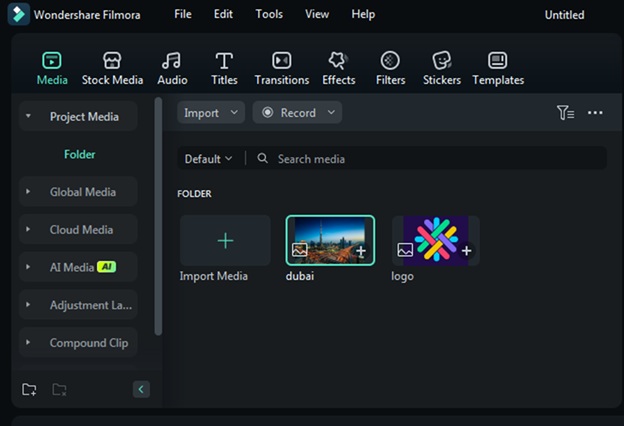
Step 4: Gather anything you want to use from your computer—this could be your channel logo, a quick video clip, or some photos. Import these into Filmora.

Step 5: Drag the template you chose (or just your imported media if starting fresh) onto the timeline at the bottom. This is where you arrange everything in order.

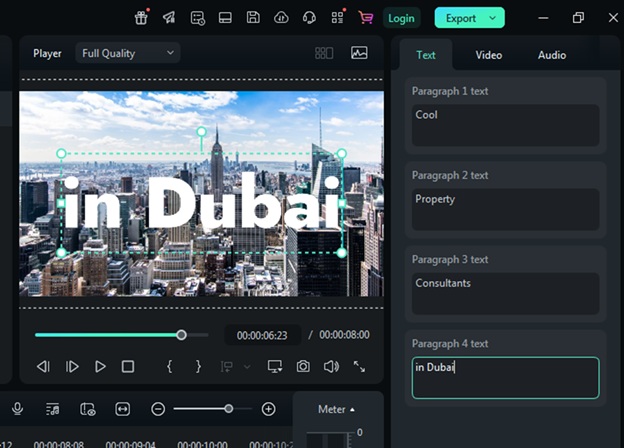
Step 6: Change the text to your channel name or tagline.

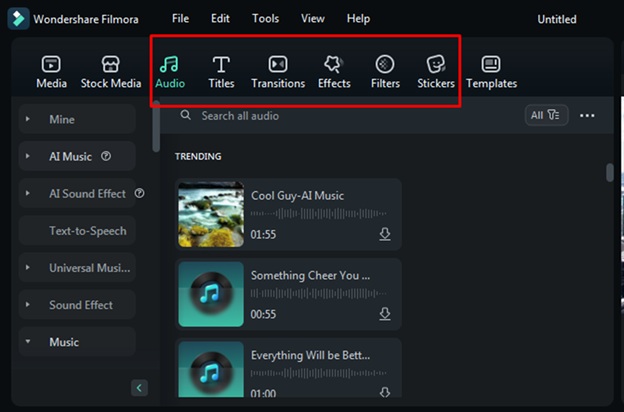
Step 7: Add music from Filmora’s library or your own files. Add effects, transitions, or animated stickers to make it look exciting!

Step 8: Playback your intro from the beginning to see how it flows and sounds. Make sure everything looks just right.

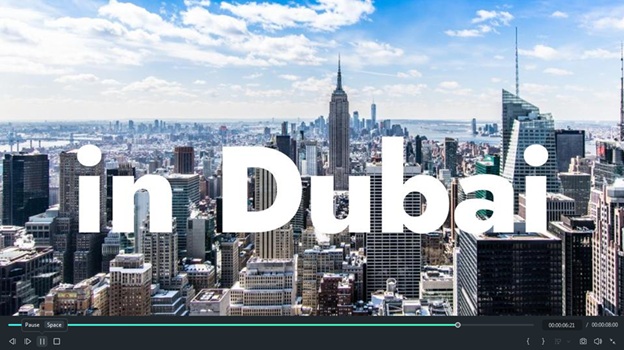
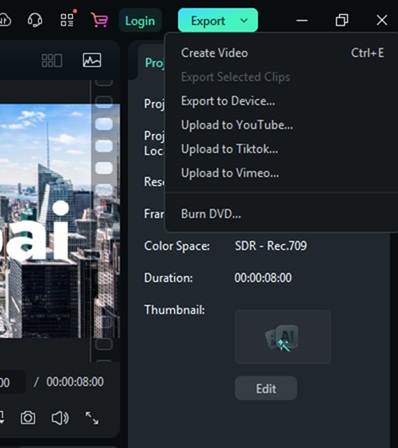
Step 9: When you’re happy with your intro, hit the Export button.

We are done with the catchy intro for your how-to make a YouTube intro for your channel, and your channel is now ready to go viral.

Part 3: FlexClip: A Different Approach to Making a YouTube Intro Quickly

Now, if you want to prefer working directly in your web browser without downloading software, FlixClip can be a good fit. FlexClip is an online video editor that excels at speed and simplicity, making it another great YouTube intro-maker option, especially for quick creations.

FlexClip is designed to be super accessible. You don’t need any installation; you just go to their website and start creating. It’s built around a template-driven workflow, which is a huge help when you want to make a YouTube intro video without starting from scratch. They have a large library of pre-made intro templates that you can simply pick and customize.

However, this simplicity comes with some limitations compared to a desktop program like Filmora.

Less Advanced Customization: While you can customize templates, you don’t have the same level of granular control over animations, effects, and layering that you get with a full-fledged desktop editor. You might be limited by the template’s structure.

Can Have Export Limits: Depending on the FlexClip plan you use, there might be restrictions on things like the maximum length of your video, the quality you can export in (like 720p instead of 1080p or 4K), or how many videos you can download per month.

Requires Internet Connection: As an online tool, you need a stable internet connection to use FlexClip. You can’t work on your intro offline, which could be a drawback if you’re often on the go or have unreliable internet.

Part 4: Filmora vs. FlexClip: A Side-by-Side Look for Your YouTube Intro Needs

To make an informed choice regarding which software’s YouTube intro maker you should choose, have a look at a quick comparison table:

Feature Wondershare Filmora FlexClip
Type Desktop Software Online Editor
Ease of Use User-friendly for desktop software; moderate learning curve Very Easy; Template-driven; Beginner-friendly
Customization High, Full timeline control, detailed effects, keyframing Moderate; Template-based, simpler adjustments
Features Extensive video editing tools, many effects/transitions Focus on templates, stock media, and quick edits
Offline Use Yes No (requires internet)
Best For Creators want maximum creative control and flexibility Creators need speed, simplicity, and quick intros.

Conclusion

So, which YouTube intro maker is right for you? If you crave maximum creative control, want to build unique intros with lots of custom animation and effects, and don’t mind a bit more complexity for that power, Wondershare Filmora is likely your champion YouTube intro creator. Its desktop power gives you incredible flexibility.

If you prioritize speed, ease of use, and getting a professional-looking intro done fast using great templates, then FlexClip is an excellent choice to make a YouTube intro video quickly.

Ultimately, the best way to decide is to give them a try! See which interface clicks with you and which workflow feels most comfortable for creating that perfect first impression for your YouTube channel.

Verizon Gets FCC Approval for $20bn Frontier Deal

0

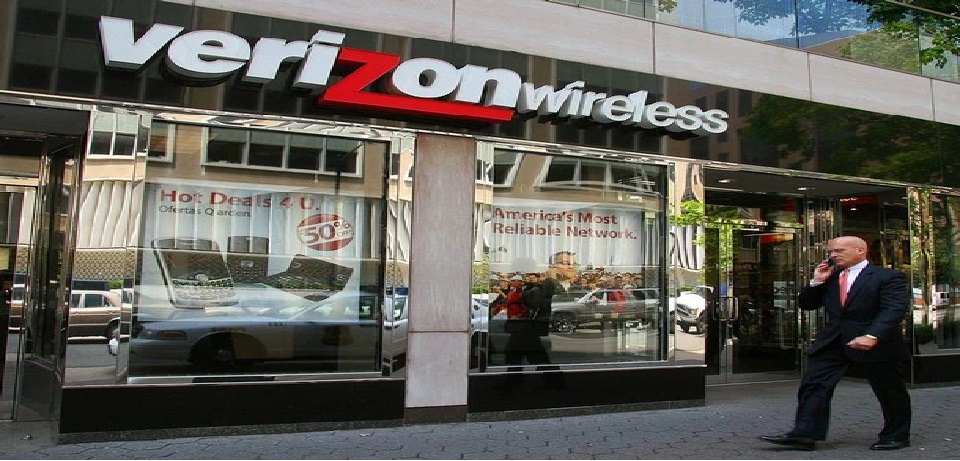
Verizon has secured federal approval for its $20 billion acquisition of Frontier Communications, following a decision to dismantle its internal Diversity, Equity, and Inclusion (DEI) programs—a move that drew direct praise from Federal Communications Commission (FCC) Commissioner Brendan Carr.

In a statement announcing the deal’s approval, Carr emphasized Verizon’s commitment to “end DEI-related practices” as a key component in clearing the regulatory hurdle.

“Verizon’s action marks a strong step towards delivering on the promise of equal opportunity and nondiscrimination,” Carr said.

Verizon CEO Hans Vestberg said at the time of the announcement that the acquisition of Frontier was a “strategic fit” that would help the company be more competitive throughout the U.S.

The FCC’s signoff clears the path for Verizon to take over Frontier’s fiber network assets, a move the company says will allow it to “upgrade and expand” existing fiber infrastructure. Verizon expects to extend fiber internet to one million homes annually after the acquisition.

According to internal documents obtained by The Intercept, Verizon made several changes in response to Carr’s concerns. In a May 15 letter to the commissioner, Verizon’s Chief Legal Officer, Vandana Venkatesh, confirmed that the company would “no longer have any HR roles or teams focused on DEI” and would remove the term entirely from its internal training materials.

“Verizon recognizes that some DEI policies and practices could be associated with discrimination,” Venkatesh wrote, explaining the company’s decision to reverse course. “Verizon’s public messaging is going to remove references to ‘DEI’ or ‘diversity, equity and inclusion.’”

The move includes the elimination of diversity targets in hiring and supplier contracting, as well as internal benchmarks regarding the representation of women and minorities within the company’s workforce.

Carr, a Republican commissioner appointed under the Trump administration, had previously criticized Verizon’s “lack of progress” in removing DEI-related policies and signaled that such programs could become obstacles to regulatory approval. Earlier this year, he warned that the agency may withhold support for future mergers if companies maintained their DEI initiatives.

The Frontier acquisition grants Verizon control of fiber assets across 25 states and marks a return to markets it had previously exited. Verizon had sold parts of its Fios wireline business, including some fiber infrastructure, to Frontier in 2015. Through the deal, Verizon reclaims those assets and says it will accelerate fiber deployments, particularly in underserved rural areas.

FCC Commissioner Carr endorsed the deal not just on DEI grounds but for its technological benefits. He said the merger will “enable the upgrade of legacy infrastructure to high-speed broadband, particularly in rural America.”

This expansion complements the Biden administration’s Broadband Equity, Access, and Deployment (BEAD) program, aimed at bringing high-speed internet to unconnected areas. However, a recent Washington Post report noted delays in BEAD fund distribution, suggesting that private investment like Verizon’s could play a larger role in closing the digital divide.

The deal’s approval came with clear political undertones, as it adds to a growing list of corporate maneuvers prompted by pressure from Republican lawmakers and regulators to scale back DEI initiatives. T-Mobile, for instance, recently adjusted DEI references on its website before completing its acquisition of fiber provider Lumos.

The rollback also aligns with criticisms voiced by right-leaning figures about perceived bias in corporate America.

The ideological clash over DEI has become a flashpoint in U.S. corporate governance, with Republican officials like Carr positioning themselves in opposition to such programs, while many Democratic leaders continue to support them as necessary for addressing systemic inequality.

Against the backdrop of regulatory decisions increasingly hinge on companies’ cultural policies, Verizon’s DEI reversal is expected to set a precedent for how future mergers and acquisitions are negotiated in the United States, stoking concerns that partisan politics will shape the regulatory environment.

House Republicans Introduce Bill to Block State AI Rules Until 2035, Intensifying Partisan Divide Over Regulation

0

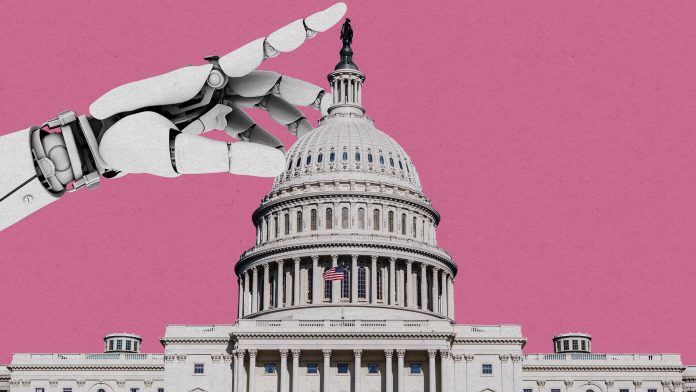
A last-minute addition by House Republicans to a proposed federal budget bill could dramatically reshape the landscape of artificial intelligence (AI) governance in the United States. The controversial provision, buried within the reconciliation package, would prohibit any state or local government from enacting or enforcing laws that regulate AI systems or automated decision-making technologies for the next ten years, unless the law specifically facilitates their deployment or operation.

If passed, the legislation would not only invalidate state-level laws currently aimed at curbing algorithmic bias and discrimination, but it would also prevent states from introducing new rules until at least 2035. That would create a regulatory void at a time when AI is increasingly embedded in housing, hiring, healthcare, and policing decisions, often without transparency or public accountability.

The provision’s insertion—just 48 hours before the bill was marked up by the House Energy and Commerce Committee—has drawn sharp rebukes from consumer advocates, legal experts, and a bipartisan group of state attorneys general. But beyond the legal ramifications, the move underscores a deepening ideological rift in Washington over how to manage a rapidly advancing technology that is transforming everything from job applications to public benefits distribution.

A Republican Vision: Deregulate, Deploy, Dominate

Supporters of the provision, mostly Republicans, argue that a patchwork of state-level AI regulations will stifle innovation, burden businesses, and threaten U.S. competitiveness in the global AI race. To them, federal preemption is a way to ensure a consistent, business-friendly national approach that allows tech firms to innovate without being slowed down by what they see as overzealous or ideologically driven state legislation.

The deregulatory stance is reminiscent of the Trump administration’s early actions to dismantle guardrails placed on AI. Upon returning to the office, President Donald Trump immediately revoked a Biden-era executive order that had established preliminary federal safety guidelines for AI development and deployment. The administration has made it clear that it sees AI regulation, particularly at the state level, as a roadblock, not a necessity.

That viewpoint is heavily influenced by corporate interests and key figures in the tech industry who have either backed Trump or aligned with his agenda. One of the most prominent is Elon Musk, the billionaire entrepreneur and early cofounder of OpenAI, who has publicly railed against what he calls “left-wing bias” in AI models.

Musk, now owner of X (formerly Twitter) and head of several companies heavily invested in AI, including xAI, has accused OpenAI’s ChatGPT and Google’s Gemini of being “woke” and serving a “leftist agenda.” He has repeatedly warned that these AI systems are being trained to push progressive values while censoring conservative viewpoints.

“The most important thing in training AI is that it is rigorously truthful. This is very, very important, essential,” Musk has said, claiming that the leading generative models reflect Silicon Valley’s liberal orthodoxy rather than political neutrality.

Musk’s criticisms have found a receptive audience among Republicans who are increasingly framing AI as another front in the broader culture war, arguing that without limits, AI tools risk becoming vehicles for “leftist indoctrination” rather than neutral technologies.

A Democratic Vision: Regulation, Transparency, Accountability

Democrats, by contrast, have pushed for stronger consumer protections, transparency, and bias mitigation mechanisms as AI systems proliferate. From algorithmic rent-setting tools to hiring software that filters applicants based on unverifiable data, Democrats argue that these systems can replicate and even amplify societal biases—unless regulators step in.

Several states governed by Democrats have already moved to impose guardrails. In California, laws now require companies to inform patients when generative AI is used in healthcare communications. In New York, employers using automated hiring tools must conduct annual bias audits. Illinois has legislation governing how facial recognition can be used in workplace surveillance.

But if the House reconciliation bill passes with the AI preemption clause intact, these state-level laws would become unenforceable, raising alarms among civil rights advocates and state officials.

“This bill is a sweeping and reckless attempt to shield some of the largest and most powerful corporations in the world—from big tech monopolies to RealPage, UnitedHealth Group and others—from any sort of accountability,” said Lee Hepner, senior legal counsel at the American Economic Liberties Project.

AI Harms Are Not Hypothetical

The real-world impact of unregulated AI systems is already being felt. A coalition of state attorneys general recently filed suit against RealPage, a property tech firm accused of colluding with landlords to artificially raise rents using an algorithmic pricing tool. Another company, SafeRent, recently settled a class-action suit filed by Black and Hispanic renters who say they were denied apartments based on secretive AI-generated scores.

Despite these concerns, House Republicans appear determined to block what they see as overreach by liberal states. The bill would not only block future regulations but erase many that are already in place, effectively freezing AI oversight at a time when the technology’s use is exploding across industries.

 A Looming Senate Battle

The battle is far from over as the measure could run into resistance in the Senate, where Democrats hold a slim majority. Given that the provision was added to a reconciliation bill—a legislative vehicle reserved for fiscal issues—Senate rules may prohibit its inclusion. Under the Byrd Rule, non-budgetary provisions can be struck from reconciliation bills if they are deemed extraneous.

“I don’t know whether it will pass the Byrd Rule,” said Sen. John Cornyn, R-Texas, referring to a provision that requires that all parts of a budget reconciliation bill, like the GOP plan, focus mainly on the budgetary matters rather than general policy aims.

“That sounds to me like a policy change. I’m not going to speculate what the parliamentarian is going to do but I think it is unlikely to make it,” Cornyn said.

If the bill becomes law as written, it would create a federal freeze on AI regulation, just as experts say the next decade will determine whether AI serves the public interest or entrenches inequality. Many see the fight over this provision as a litmus test for how the U.S. government intends to manage technological change and who it is willing to protect in the process.

Trump-Brokered Deal Gives UAE Access to Nvidia Chips, To Build Largest AI Campus Outside U.S.

0

The United Arab Emirates has struck a landmark agreement with the United States to build what will be the largest artificial intelligence campus outside US borders — a deal sealed during Donald Trump’s recent visit to the Gulf and hailed as a turning point in US-UAE tech cooperation.

However, it has also sparked concerns in Washington over the possibility of Chinese access to advanced US-origin AI technology.

Central to the agreement is a massive 10-square-mile AI campus in Abu Dhabi, with a 5-gigawatt power capacity dedicated to data centers that will run cutting-edge artificial intelligence workloads. The campus will be constructed by G42, a state-backed Emirati firm, but according to the US Commerce Department, American companies will operate the data centers and deliver US-managed cloud services across the region.

“American companies will operate the datacenters and offer American-managed cloud services throughout the region,” said US Commerce Secretary Howard Lutnick.

The deal also includes US technology companies Qualcomm and Amazon Web Services (AWS), which will partner with UAE entities to develop AI infrastructure, bolster cybersecurity, and accelerate regional cloud adoption. AWS will focus on building secure cloud systems, while Qualcomm is expected to set up an AI-focused engineering hub.

A Major Break From Biden-Era Tech Restrictions

This deal marks a stark departure from the cautious stance adopted under President Joe Biden, whose administration restricted exports of AI chips to countries like the UAE out of concern that such technologies could find their way into Chinese hands.

Under Trump’s leadership, those restrictions are being peeled back. His newly appointed AI czar, David Sacks, speaking in Riyadh earlier this week, criticized the Biden-era controls, stating they were “never intended to capture friends, allies, strategic partners.” He added that a smarter approach involves giving US allies access to key technologies while maintaining oversight.

At the core of the deal is access to Nvidia’s most advanced chips — a prized asset in the AI race. Although the specific models were not disclosed publicly, Reuters reported that the UAE will be permitted to import up to 500,000 of Nvidia’s high-end AI chips annually starting in 2025.

Nvidia CEO Jensen Huang was seen in televised footage with Trump and UAE President Sheikh Mohamed bin Zayed Al Nahyan during meetings at the Qasr Al Watan palace in Abu Dhabi. The optics underscore the level of coordination between tech industry giants and the new Trump administration in shaping global AI infrastructure.

A Win for the UAE, But at What Cost?

For the UAE, the deal is a major breakthrough. The Gulf country has long harbored ambitions to become a global AI powerhouse. It has poured billions into AI investments through state-linked vehicles like G42 and MGX, while courting partnerships with top Western firms.

Until now, its ambitions were curtailed by US export controls, which limited access to the most powerful chips and forced G42 to unwind partnerships with Chinese tech firms. Under pressure from Washington, G42 reportedly began dismantling Huawei’s infrastructure in its systems and sold off some Chinese investments. These actions paved the way for Thursday’s announcement.

“This shift enables [the UAE] to deepen its technology partnership with the US while still preserving trade ties with China,” said Mohammed Soliman, senior fellow at the Middle East Institute.

“It doesn’t mean abandoning China but it does mean recalibrating tech strategy to align with US standards and protocols where it matters most: compute, cloud, and chip supply chains.”

The deal also commits the UAE to building, financing, or investing in AI data centers in the United States that are “at least as large and powerful” as the ones being developed in Abu Dhabi. The White House said this ensures a balance of capabilities while creating tech jobs domestically.

Additionally, the agreement includes “historic commitments” by the UAE to align its national security regulations with the US, according to fact sheets released by the Trump administration. These include “strong protections to prevent the diversion of US-origin technology” — a thinly veiled reference to fears of re-export to China.

Lingering Worries Over China

However, the deal has unsettled some in Washington and among US national security circles, who argue that tech leakage remains a real threat, especially given the UAE’s long-standing ties with China. Huawei and Alibaba Cloud, two of China’s tech giants, still maintain a visible presence in the UAE, raising concerns about potential overlap or backdoor access.

A Reuters investigation earlier this year revealed that AI chips had been smuggled from the UAE, Singapore, and Malaysia into China, bypassing export restrictions meant to cut off Beijing’s access to advanced semiconductors. That report is now being reexamined in light of the new agreement.

National security analysts warn that even with US firms managing operations, risks persist.

Even so, top US tech CEOs — from OpenAI’s Sam Altman to Nvidia’s Huang — have voiced support for the deal. With China developing its own advanced AI models and custom chips, the opportunity to extend US platforms globally through friendly partners is seen as both a strategic and economic win.

The agreement caps months of high-level diplomatic and corporate engagement. AI was a major focus when Sheikh Mohamed bin Zayed visited Washington in December, just days before Biden left office. Since then, Emirati investment firms have increased their exposure to US AI startups, including OpenAI and Elon Musk’s xAI.

Microsoft, another major player in the space, announced a $1.5 billion investment in G42 last year, suggesting a coordinated push to embed American AI technology in the Middle East while curbing Chinese influence.

Trump’s visit to the region and the string of agreements that followed signal a broader strategic reset. It is seen as a recalibration aimed at ensuring the US retains influence in global AI infrastructure while extending its technological reach beyond its borders.