DD
MM
YYYY

PAGES

DD
MM
YYYY

spot_img

PAGES

Home Blog Page 115

OPEC+ Considers Larger-Than-Expected Output Increase for April Amid U.S.-Israeli Strikes on Iran, Nigerian Bonny Light Heads to $80+

0

OPEC+ is weighing a larger-than-planned increase in oil output for April, as the group prepares for peak summer demand, two sources close to the talks told Reuters on Friday.

Saudi Arabia and the United Arab Emirates have already ramped up exports in anticipation of potential supply disruptions following U.S.-Israeli military strikes on Iran carried out on Saturday.

The eight key OPEC+ members — Saudi Arabia, Russia, the UAE, Kazakhstan, Kuwait, Iraq, Algeria, and Oman — are scheduled to meet virtually at 1100 GMT on Sunday to review market conditions and quotas. Delegates had previously signaled a modest hike of 137,000 barrels per day (bpd) for April — the first increase after a three-month pause — but sources now indicate discussions have shifted toward a potentially larger adjustment.

The exact size remains undecided, one source said, declining to be identified. Bloomberg News earlier reported similar expectations of a bigger-than-anticipated increase.

Brent crude futures hit $73 per barrel on Friday, the highest level since July 2025, despite earlier fears of oversupply. Prices have risen steadily this year on escalating concerns that conflict between Iran and the U.S./Israel could disrupt Middle East oil flows through the Strait of Hormuz, which handles roughly 20% of global seaborne crude trade.

The U.S.-Israeli strikes on Iranian targets Saturday, targeting nuclear and military facilities, have heightened fears of retaliatory action or infrastructure damage, adding a significant risk premium to oil markets.

Saudi Arabia and UAE Already Boosting Exports

Evidence suggests the largest Middle East producers are preemptively increasing output. Two trade sources told Reuters that Abu Dhabi plans to export more of its flagship Murban crude in April. Saudi Arabia has also raised production and exports as part of its contingency planning, sources said earlier this week.

These moves appear designed to offset potential supply shocks while positioning compliant OPEC+ members to regain market share from sanctioned or disrupted producers.

Nigerian Bonny Light Surges Toward $80+ on Supply Risk

The escalating Middle East tensions are boosting alternative grades like Nigeria’s Bonny Light crude, which was trading at $73 per barrel Friday. Analysts now expect Bonny Light to surpass $80 per barrel — and potentially climb higher — as buyers seek supplies less exposed to Strait of Hormuz risks.

Bonny Light’s “sweet” (low-sulfur) profile makes it ideal for gasoline and jet fuel production, especially during periods of global volatility. This price surge is particularly significant for Nigeria, where the 2026 federal budget assumes a conservative benchmark of $64.85 per barrel and an ambitious production target of 1.84 million bpd. Actual output in January 2026 averaged around 1.48 million bpd, just below OPEC+ quotas of 1.5 million bpd.

Higher realized prices could provide a substantial revenue windfall, helping narrow the fiscal deficit and support budget implementation.

Nigeria has continued diversifying its crude portfolio to attract buyers. In February 2026, the country launched the Cawthorne grade (API 36.4°), joining newer streams Utapate (2024) and Obodo (2025). These additions aim to broaden market appeal and reduce reliance on traditional grades amid OPEC+ quota constraints and global competition.

OPEC+ Background and Market Fundamentals

The eight OPEC+ members raised quotas by 2.9 million bpd from April through December 2025, equivalent to roughly 3% of global demand, before pausing further increases for January–March 2026 due to seasonal weakness. An April increase would end that freeze and align supply with expected summer demand, particularly the U.S. driving season.

Despite earlier oversupply concerns, oil prices have defied expectations this year, driven by geopolitical risk rather than fundamentals alone. The U.S.-Israeli strikes on Iran — targeting nuclear and military infrastructure — have intensified fears of retaliation or Strait of Hormuz disruptions, outweighing inventory builds in some regions.

A larger-than-expected April hike would signal OPEC+ confidence in demand recovery and willingness to defend market share against sanctioned producers (Russia, Iran) and constrained output (Kazakhstan). However, it also risks adding supply pressure if Middle East tensions de-escalate quickly.

For Nigeria and other non-Middle East producers, sustained high prices offer a critical revenue boost. Bonny Light’s trajectory toward $80+ could significantly outperform Nigeria’s budget assumption, providing fiscal breathing room — though OPEC+ compliance and domestic production challenges remain key risks.

The Sunday OPEC+ meeting will determine the supply strategy. With Brent near $73 and summer demand approaching, the group faces a delicate balance: supporting prices without triggering oversupply fears. The outcome will likely influence oil market direction into Q2 2026.

Berkshire Hathaway Signals Continuity Under Greg Abel in first Shareholder Letter as CEO

0

In his first annual letter to shareholders as chief executive of Berkshire Hathaway, Greg Abel delivered a message of assurance to investors: the conglomerate’s long-standing culture of financial conservatism, capital discipline, and decentralized management will remain intact following the leadership transition from Warren Buffett.

“I am honored by our Board’s decision to appoint me CEO of Berkshire and humbled to succeed Warren as I write my first annual letter to you,” Abel wrote in the annual report released Saturday alongside quarterly earnings. “Warren is obviously a very hard act to follow.”

Abel, 63, formally assumed the CEO role at the start of 2026 after Buffett, 95, stepped down and remained chairman. The tone of the letter, first published by CNBC, emphasized institutional continuity rather than strategic redirection. Abel framed Berkshire’s core principles as enduring: maintaining financial strength, allocating capital with discipline, and preserving the conglomerate’s reputation for integrity.

“We maintain a fortress-like balance sheet, ensuring Berkshire’s foundation is never compromised,” he wrote. “We preserve this financial strength by using debt sparingly and prudently. Our substantial liquidity enables us to meet our obligations even under the most adverse conditions and to respond swiftly when opportunities arise.”

Cash, capital allocation, and portfolio oversight

Berkshire ended 2025 with $373.3 billion in cash and equivalents — a record level that has drawn attention from investors seeking clues about deployment strategy. Abel described the cash pile as strategic flexibility rather than defensive retrenchment, characterizing it as “dry powder” that allows the company to move decisively without jeopardizing resilience.

He pushed back against any interpretation that the size of the cash balance reflects a retreat from investing. Instead, he reiterated that Berkshire’s hurdle remains value creation: retained earnings must generate more than one dollar of market value for each dollar kept inside the company.

“Our approach to cash dividends continues to be that Berkshire will not pay dividends so long as more than one dollar of market value for shareholders is reasonably likely to be created by each dollar of retained earnings,” Abel wrote, noting the board reviews the policy annually.

The new CEO also resolved a key governance question by confirming he will directly oversee Berkshire’s equity portfolio.

“At Berkshire, equity investments are fundamental to our capital allocation activities; responsibility ultimately resides with me as CEO,” he wrote.

Berkshire’s publicly traded holdings remain concentrated in a small group of U.S. companies that Abel said are expected to compound value over decades, including Apple, American Express, Coca-Cola, and Moody’s. Notably absent from that list was Bank of America, which ranked as Berkshire’s third-largest holding at the end of 2025.

Abel reiterated that the portfolio will remain concentrated and turnover limited, though Berkshire would “significantly adjust” a position if long-term economic prospects change. Ted Weschler will continue managing roughly 6% of the equity portfolio, including investments previously overseen by Todd Combs, who recently departed for JPMorgan.

Abel emphasized that the same analytical discipline applies across the capital stack: acquisitions of entire businesses, minority equity stakes, and share repurchases are evaluated under a unified value framework.

“We will assess value carefully, act patiently, and hold for the long term — preferably forever,” he wrote.

Leadership transition and long-term orientation

Internally, Abel has long been viewed as an operationally hands-on executive with deep familiarity across Berkshire’s sprawling subsidiaries. A native of Edmonton, Alberta, he joined Berkshire in 2000 after its acquisition of MidAmerican Energy and later became chief executive of that unit in 2008. His tenure within the conglomerate spans 25 years.

In the letter, Abel underscored his intention to serve as a long-term steward. “Our owners’ time horizon extends beyond the tenure of any individual CEO,” he wrote. “I will not be your CEO for the next 60 years as simple arithmetic makes that – shall we say – an ambitious plan. However, 20 years from now … my intention is that you – or your descendants – will be proud that your company is even stronger.”

He also sought to reassure shareholders that Buffett remains engaged. According to Abel, Buffett continues to come into the office five days a week and provides ongoing input as chairman, reinforcing the sense of continuity during the transition.

In keeping with Berkshire’s long-standing communications philosophy, Abel made clear the company will not adopt Wall Street’s quarterly earnings call model.

“We concentrate on quality, not frequency,” he wrote. “If a significant issue arises, you will hear from me, but it will not be through quarterly commentary, given our long-term horizon.”

Together, the letter positions Berkshire not as an institution entering a new era of experimentation, but as one committed to preserving the structural principles that defined it under Buffett: a fortress balance sheet, concentrated long-duration investments, and a corporate culture built around autonomy, trust, and patient capital.

U.S.-Israel Strikes on Iran Trigger Regional Escalation, Threaten Global Oil Supplies as OPEC+ Weighs Emergency Output Boost

0

The United States and Israel launched coordinated military strikes on Iran on Saturday, targeting senior political and military leaders in an operation that has rapidly expanded into a regional confrontation and injected fresh volatility into global energy markets.

President Donald Trump described the assault as a pre-emptive move to eliminate imminent threats and prevent Tehran from obtaining a nuclear weapon. In a video message, he warned that “bombs will be dropping everywhere” and urged Iranians to seek shelter, adding that once operations conclude, they should “take over your government.”

Israeli Prime Minister Benjamin Netanyahu said the joint operation would create the conditions for Iranians to “take their destiny into their own hands.” Defense Minister Israel Katz called it a pre-emptive strike designed to remove strategic threats to Israel.

Tehran condemned the attacks as illegal and unprovoked. Iranian forces responded with missile launches against Israel and several Gulf Arab states hosting U.S. bases, broadening the theatre of confrontation. Gulf governments reported intercepting missiles, while explosions were heard in parts of the United Arab Emirates and Bahrain, home to the U.S. Fifth Fleet.

Sources familiar with the situation said Iranian Defense Minister Amir Nasirzadeh and Revolutionary Guards commander Mohammed Pakpour were killed in Israeli strikes, alongside other senior commanders. If confirmed, the removal of top-level military leadership would represent one of the most significant blows to Iran’s command structure in decades.

Iran’s Revolutionary Guards said retaliation would continue until “the enemy is decisively defeated,” and warned that all U.S. bases and interests in the region are within range.

The Pentagon named the first phase of the operation “Operation Epic Fury,” focusing initially on high-value leadership and security targets. The strikes followed the collapse of indirect nuclear negotiations mediated by Oman earlier in the week.

Oil markets brace for supply disruption

Beyond the military dimension, the confrontation is reverberating through global commodity markets. Iran is the third-largest producer in the Organization of the Petroleum Exporting Countries and accounts for roughly 4.5% of global crude supply. More critically, a far greater share of global oil shipments transits the Strait of Hormuz, the narrow maritime chokepoint along Iran’s southern coast.

Any sustained military escalation that threatens tanker traffic through Hormuz could remove millions of barrels per day from international markets, either through physical disruption or precautionary shipping suspensions. Even without a formal blockade, heightened insurance costs, rerouted shipping, and suspended cargoes can materially constrain supply.

Energy traders have already priced in geopolitical risk premiums. Analysts warn that, absent rapid de-escalation, oil prices could spike sharply when markets reopen, feeding into global inflation pressures and complicating central bank policy decisions in major economies.

Two sources close to OPEC+ discussions told Reuters that the producer alliance is considering a larger-than-planned output increase at its meeting on Sunday in an effort to stabilize markets. The move would be aimed at offsetting potential supply losses and signaling that spare capacity remains available.

Saudi Arabia and the United Arab Emirates have already raised exports in anticipation of supply stress, according to industry sources. Both countries hold significant spare production capacity within OPEC+, positioning them as primary stabilizers in the event of a prolonged disruption.

The scale of any emergency increase will be closely scrutinized. While Riyadh and Abu Dhabi can ramp up production, sustained conflict affecting Hormuz would present logistical constraints that additional barrels alone may not fully resolve.

Broader economic and geopolitical consequences

A sustained surge in crude prices would ripple across global supply chains. Higher energy costs could lift transportation, manufacturing, and food prices, slowing growth in import-dependent economies while boosting revenues for major exporters.

Airlines have already cancelled or rerouted flights across parts of the Middle East, and some oil majors and trading houses have paused shipments through the Gulf pending further security assessments. Insurance premiums for vessels transiting the region are expected to rise sharply.

Strategically, the confrontation marks once again the fragility of the Gulf security architecture. The region hosts dense concentrations of energy infrastructure, desalination plants, and U.S. military assets within relatively short missile range. Even limited strikes risk triggering cascading economic consequences.

The immediate effect of a military confrontation centered on Iran is a global economic risk, with oil markets once again at the frontline of geopolitical shock. It is hoped it doesn’t escalate into a prolonged conflict affecting energy corridors at scale.

Stablecoins Rapidly Evolving Beyond Trading Tools into Everyday Financial Instruments 

0

Stablecoins are rapidly evolving beyond trading tools into everyday financial instruments, and 2025–2026 data shows this shift accelerating significantly. Stablecoins like USDC and USDT were originally designed for stability in crypto trading, but they’re now powering real-world payments, remittances, payroll, and even merchant spending.

Regulatory progress has boosted institutional confidence, while major players like Visa, Mastercard, and fintechs integrate them into mainstream rails. A global BVNK study found stablecoins are becoming “practical, everyday money.” People use them for paychecks, purchases, and daily needs, especially where traditional systems are slow, expensive, or unreliable.

27% of holders spend them routinely, with average wallet balances around $200 for transactions. Market cap exceeded $300 billion by late 2025 up from ~$205B at the start of the year and ~$30B in 2020, with projections reaching $2–4 trillion by 2030.

Transaction volumes hit record levels: $33–46 trillion in 2025; adjusted figures exclude bots and high-frequency trading, with actual payments estimated at ~$390 billion annually—doubling from 2024. B2B payments lead (60% of volume), followed by remittances and payroll.

Stablecoins cut costs dramatically often to cents vs. 6–8% traditional fees and settle in minutes. They’re dominant in emerging markets (Africa, Asia, Latin America), where they evolve into parallel infrastructure for payroll and cash management. Stablecoin-linked cards via Visa/USDC settlements grew spending to ~$4.5 billion in 2025 up 673% YoY. Institutions like Visa now settle transactions in USDC on chains like Solana 24/7.

Firms like Stripe, PayPal with PYUSD, and others integrate stablecoins. Projections suggest they could handle 5–10% of global payments by 2030 ~$2–4 trillion in value. This isn’t just hype—it’s measurable utility. In regions with high inflation or poor banking access, stablecoins provide dollar-like stability and instant, low-cost transfers.

Even in developed markets, they’re bridging TradFi and DeFi for faster settlements. Challenges remain: regulatory risks, emerging market currency substitution concerns, and scalability. But with volumes growing and infrastructure maturing, stablecoins are transitioning from crypto’s sidekick to a core part of global finance—potentially reshaping payments, lending, and money movement in the process.

Remittances represent one of the most impactful real-world use cases for stablecoins, transforming how people send money across borders—especially from developed countries to emerging markets.

Traditional remittance services like Western Union or bank wires often charge 5–10% or higher in some corridors in fees, take days to settle, and involve multiple intermediaries, FX conversions, and limited availability outside business hours. Stablecoins address these pain points by enabling near-instant, low-cost transfers using blockchain technology.

Transfers settle in minutes versus 1–5 days traditionally, with 24/7 availability. Fees drop dramatically—often to cents per transaction—versus average global rates above 6% in 2025 (well above the G20’s 1% target). This saves senders billions annually as adoption grows. Recipients can receive funds in a dollar-pegged stablecoin to preserve value against local inflation and devaluation, then convert to local currency, cash out, or spend via linked wallets and cards.

Blockchain provides a single, verifiable ledger, reducing fraud risks and eliminating correspondent banking hops. Ideal for unbanked and underbanked populations; many services integrate with mobile wallets or cash pickup points. Stablecoins excel in high-inflation or volatile-currency regions where they act as a “digital dollar” proxy for wealth preservation alongside transfers.

Stablecoin payments overall reached ~$390 billion annualized in late 2025 more than doubling from 2024, with global payroll and remittances including consumer P2P and related flows accounting for about $90 billion annually—still under 1% of the ~$1.2 trillion cross-border remittance market but growing rapidly. Retail and small-value transfers (<$250) hit record highs in 2025, reflecting everyday use.

Projections suggest stablecoins could capture 10–20%+ of remittances by 2030 if regulations continue supporting growth. Migrant workers send earnings home instantly. Latin America. High adoption due to large flows and inflation. Platforms like Bitso processed billions in U.S.-Mexico remittances.

Recipients hold USDC/USDT to hedge volatility or convert to pesos via apps and mobile money. Recipients redeem for cash at branches or hold in-wallet (protecting against peso volatility). This bypasses slow traditional rails. Freelancers, creators, or gig workers receive international earnings. Platforms pay out in stablecoins for instant access; recipients convert or spend.

Remitly integrates USDC for treasury and settlement, enabling 24/7 moves in volatile markets and introducing multi-currency wallets (fiat + stablecoins). Sender pays in fiat ? converts to stablecoin for cross-border hop ? recipient gets local fiat. Used by remittance providers and fintechs to cut FX risk and costs.

Stripe and others highlight this for Latin American corridors: U.S. sender ? USDC on-chain ? instant peso payout in Argentina.

Mobile wallets in emerging markets allow holding stablecoins (for yield or stability) before cashing out via local partners. While volumes grow fast especially in Asia/LatAm corridors, stablecoins remain a small slice of total remittances (~<1% in 2025 data).

Risks include volatility in peg stability (rare for major ones) and local currency substitution concerns in some EMs. Remittances showcase stablecoins’ evolution into practical financial tools—delivering measurable savings and speed where traditional systems fall short, with adoption accelerating in 2025–2026.

Bitcoin Underperforming Traditional Markets Like Stocks and Gold 

0

Bitcoin (BTC) is underperforming traditional markets like stocks and gold, despite relatively stable or positive performance in those areas.

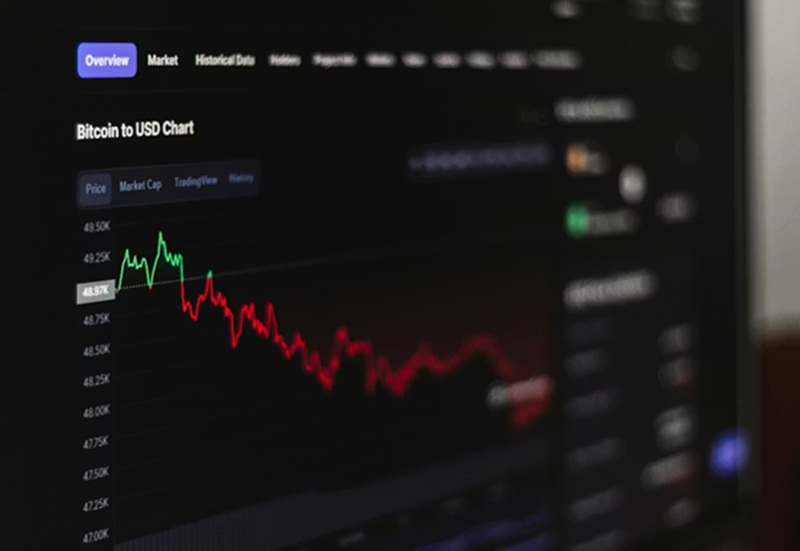
Bitcoin price is hovering around $64,000–$65,000 USD ~$64,800, down roughly 2% in the last 24 hours and showing a broader monthly decline of around 20–25% in February. BTC is down significantly; estimates from reports place it at -20% to -30% from January highs, following a peak around $126,000–$130,000 in late 2025.

Stocks (S&P 500) is up modestly YTD ~0.5–0.7% price return as of late February, with flat to slightly positive performance early in the year and resilience in equities overall.

Gold is strongly outperforming, with surges pushing it toward or past $5,000+ per ounce in some reports; up significantly from 2025 levels, e.g., +30–50% in relative terms in recent periods, driven by central bank buying, safe-haven demand, and macro factors.

Bitcoin has decoupled negatively from its “digital gold” narrative in early 2026:Risk-on behavior: BTC is trading more like a high-beta growth and tech asset (correlated with Nasdaq and tech stocks) than a safe-haven like gold. When equities weaken, BTC sells off harder — often amplified by leverage unwinds, ETF outflows, and liquidations.

Gold benefits from risk-off flows, geopolitical tensions, central bank purchases, and its established role as inflation and store-of-value hedge. Reports highlight gold up massively while BTC lags or drops. Post-2025 highs, BTC has seen deleveraging, ETF outflows, position unwinds, and a broader crypto correction. Volatility has reset lower, but sentiment is in “fear and anxiety” zones per on-chain metrics.

Equities especially broad indices hold steady or rise slightly, the dollar weakens in spots, yet crypto falls — suggesting BTC isn’t capturing “favorable” conditions like a weaker dollar or equity strength as it once did. This isn’t unprecedented in crypto cycles, but 2026 has seen an unusually sharp disconnect.

BTC/Gold ratio at record oversold levels, with some analysts calling it the most extreme underperformance on record. Bulls argue this could set up a reversal (extreme oversold = potential mean reversion), while bears warn of deeper lows.

BTC’s current weakness highlights its maturity as a risk asset rather than a pure hedge — underperforming stable and strong traditional markets amid a liquidity squeeze and shifting investor preferences. If macro risk sentiment improves or BTC-specific catalysts emerge, it could rebound sharply given the oversold signals.

Bitcoin has failed to act as a safe-haven during risk-off periods; geopolitical tensions, tariff uncertainties, AI disruption fears. Gold surged ~21–51% in various periods of 2026 while BTC dropped ~27–30% YTD, with negative correlations. This has led many to question BTC’s hedge status, redirecting flows to physical metals or equities.

With BTC down ~40–48% from late-2025 peaks, leveraged positions faced heavy liquidations, and portfolios heavy in crypto suffered more than diversified ones. Institutional outflows from Bitcoin ETFs reached billions in recent months, signaling weakened conviction.

Over longer periods, BTC’s returns (42%) lagged the S&P 500 (79%) with far higher volatility (55% vs. ~18%) and deeper drawdowns (74% max vs. ~34%). This makes BTC a poor diversifier in downturns—it amplifies losses rather than hedging them.


The weakness is crypto-wide; ETH/SOL down 30–70% in cycles, but BTC’s leadership role means its lag drags the entire market. Miners face balance sheet strain (selling BTC for capex), and narratives shift toward real-world assets (RWAs) or AI-linked plays over pure crypto.

Selloffs appear orderly; deleveraging, not panic, reflecting TradFi integration. Correlations with equities remain elevated in spots but break down during stress, showing BTC behaves more like a high-beta risk asset than an independent hedge. This maturation could reduce extreme volatility long-term but exposes it to macro squeezes.

Bitcoin’s decoupling from gold during “debasement” or inflation-hedge scenarios harms its store-of-value story. Analysts note it’s trading as liquidity-sensitive tech beta, not a permissionless monetary alternative—potentially rerouting capital to gold and silver or equities.

Extreme oversold levels vs. gold suggest mean reversion if macro improves or leverage clears fully. Some see 2026 underperformance as temporary setting up value for later cycles. Advisors highlight BTC’s failure to offset equity risk, favoring gold or broad indices for stability.

In chaotic environments (AI shocks, tariffs), BTC could face deeper lows if risk-off persists. Reduced leverage, clearer regulations, or liquidity rebounds could spark sharp rebounds. However, persistent headwinds may cap upside through 2026.

This divergence underscores Bitcoin’s evolution into a more correlated, risk-on asset—hurting short-term holders and narratives but potentially paving the way for healthier, less hype-driven growth if fundamentals reassert. Extreme setups often precede big turns, but near-term caution prevails amid ongoing macro pressures.