DD
MM
YYYY

PAGES

DD
MM
YYYY

spot_img

PAGES

Home Blog Page 1150

Anthropic Secures $2.5bn Credit Line to Fuel AI Expansion, as Revenue Doubles and Big Tech Bets Deepen

0

Anthropic, one of the fastest-growing artificial intelligence firms and a chief rival to OpenAI, has secured a $2.5 billion revolving credit facility to strengthen its liquidity and reinforce its position in an increasingly capital-intensive AI race.

The deal, spread over five years, is backed by a consortium of global banking heavyweights, including Morgan Stanley, Barclays, Citibank, Goldman Sachs, JPMorgan, Royal Bank of Canada, and Japan’s Mitsubishi UFJ Financial Group.

The new credit facility, announced earlier this week, comes as the generative AI market surges toward a projected $1 trillion in revenue over the next decade. With AI agents, multimodal models, and infrastructure costs ballooning, firms like Anthropic are drawing from both private equity and now corporate credit to accelerate scaling and product development.

“This revolving credit facility provides Anthropic significant flexibility to support our continued exponential growth,” said Krishna Rao, the company’s Chief Financial Officer. “The backing of these global financial institutions is a testament to the strength of our business and the resonance of our mission.”

The infusion of capital comes as Anthropic rides a wave of rapid growth. The company confirmed that its annualized revenue has reached $2 billion as of Q1 2025, double its revenue from the prior period. According to Revenue Chief Kate Jensen, the number of enterprise clients spending more than $100,000 annually has surged eightfold compared to the same time last year. This signals not only the widening adoption of its Claude AI models but also deepening customer reliance.

Anthropic’s flagship chatbot, Claude, launched in March 2023 and is now in its third iteration, Claude 3. The model family, named after Claude Shannon, the father of information theory, has quickly carved out a competitive space in the AI sector dominated by OpenAI’s ChatGPT and Google DeepMind’s Gemini.

The company’s March 2025 funding round pegged its valuation at a staggering $61.5 billion, making it one of the most highly valued AI startups in the world. This latest move to shore up liquidity through credit rather than equity reflects a growing trend in AI where capital needs are outpacing conventional venture funding. It also gives Anthropic financial agility without diluting ownership.

The decision closely mirrors OpenAI’s own financial maneuvering. In October 2024, OpenAI secured a $4 billion revolving credit line, which increased its liquidity pool to over $10 billion. Backers for that facility included JPMorgan, Citi, Goldman Sachs, Morgan Stanley, Santander, Wells Fargo, SMBC, UBS, and HSBC. OpenAI’s base facility came with an option to expand by another $2 billion — a signal of the kind of war chest necessary to remain relevant in an escalating AI arms race.

Big Tech’s Deepening Bets on Anthropic

Anthropic’s credibility isn’t just with the banking sector. It has also attracted major backing from tech giants Amazon and Google, both of whom have a vested interest in shaping the AI ecosystem and embedding next-generation language models into their platforms.

Amazon has committed up to $8 billion in investment to Anthropic, while Google has poured in another $2 billion. These investments underline more than just financial support; they represent strategic alliances. Amazon aims to integrate Claude into its AWS cloud infrastructure to compete with Microsoft Azure’s partnership with OpenAI, while Google’s stake gives it proximity to one of the few viable alternatives to OpenAI’s dominance.

These partnerships also insulate Anthropic from relying entirely on consumer-facing models by embedding it into cloud and enterprise ecosystems. As cloud providers race to become the default platforms for AI deployment, the alignment with AWS and Google Cloud gives Anthropic powerful channels for scaling distribution and enterprise integration.

The broader generative AI market is becoming more aggressive, with dozens of firms announcing new product launches and strategic moves. From Perplexity’s real-time search interface to Meta’s open-source Llama models and Mistral’s European surge, the AI space is no longer a two-horse race.

Anthropic’s focus on alignment and safety — famously promoting “constitutional AI” to train its models with embedded ethics — has helped position it uniquely, especially among enterprise clients concerned about regulatory risk and data compliance.

However, the infrastructure costs remain daunting. Training next-generation models requires massive GPU clusters, custom chips, data center expansion, and engineering talent — all of which come at extraordinary expense. That’s why the credit line is being seen not merely as a cushion, but as a crucial tool to maintain momentum.

Register for Next Tekedia Mini-MBA and Solve Equations of Market

0

Registration for the next Tekedia Mini-MBA is ongoing. Join us to solve the Equations of Market.

Innovation =: invention + commercialization

Great Company =: Awesome Products + Superior Execution

Products =: Integrate(factors of production) d(people, processes & tools)

Differentiate(great products)/d(time) = Good Life

Scaling Momentum = Company Size x Growth Rate

At Tekedia Institute, we solve the equations of market, helping organizations professionals master the mechanics of market. Register here https://school.tekedia.com/course/mmba17/ and let us co-learn, from June 9

U.S. State Department Accused of Pressuring Gambia to Approve Elon Musk’s Starlink as South African Push Sparks Diplomatic Tensions

0

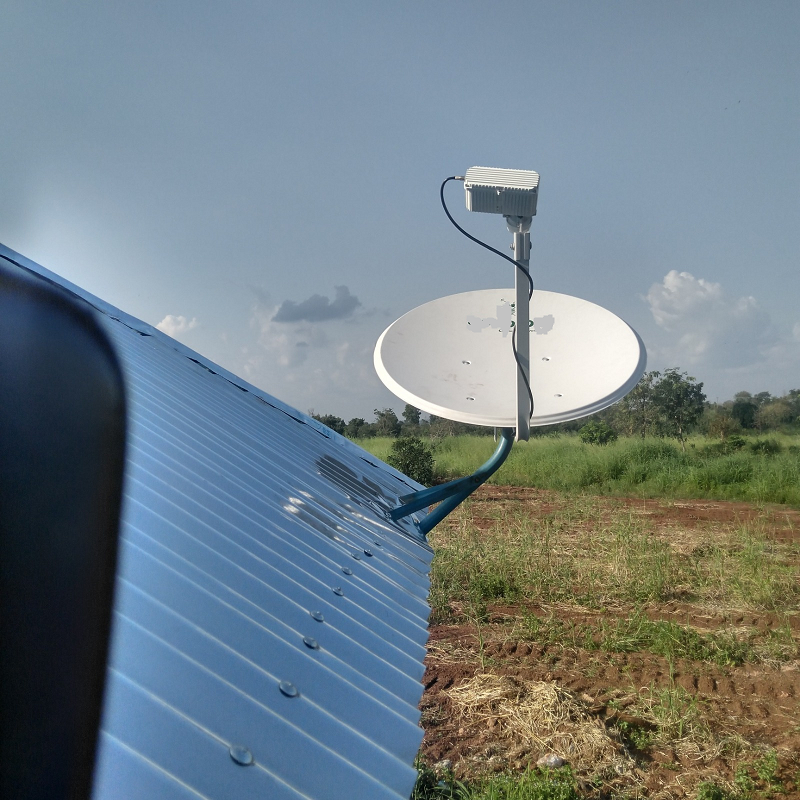
The United States State Department has come under severe criticism following a detailed ProPublica investigation that accuses American diplomats of aggressively pressuring the West African country of Gambia to approve a license for Elon Musk’s satellite internet service, Starlink.

The move, seen as part of a broader push by Washington to promote Musk’s interests abroad, has reignited debates over the role of U.S. foreign policy in advancing private business ventures, particularly those tied to political allies of the current administration.

The report, published Thursday, reveals that officials from both the State Department’s headquarters in Washington and the U.S. Embassy in Banjul have been involved in sustained efforts to convince Gambian authorities to greenlight Starlink’s operations. Musk’s SpaceX, which owns Starlink, has been aggressively expanding across Africa, with 15 countries already issuing operating licenses to the company. But Gambia has so far resisted the pressure, and that resistance has not sat well with Washington.

Allegations of Diplomatic Bullying

One of the most striking revelations in the ProPublica report centers on a February meeting between U.S. Ambassador Sharon Cromer and Gambian Minister of Communications and Digital Economy, Lamin Queen Jammeh (referred to in the report as Lamin Jabbi). During the meeting, Cromer reportedly delivered a subtle yet unmistakable warning: Gambia’s cooperation with the U.S., including aid and development support, was connected to its willingness to accommodate Starlink.

Jammeh’s top deputy, Hassan Jallow, told ProPublica that Cromer’s remarks carried a “thinly veiled threat,” linking America’s financial support to Gambia’s position on Starlink. That tactic, said Jallow, was reiterated during a tense March visit to Washington, when Jammeh and Jallow were invited to a meeting arranged by the State Department. Present was Ben MacWilliams, a former U.S. diplomat now spearheading Starlink’s African expansion, who accused the minister of “kneecapping” Gambia’s development by dragging his feet on the licensing process.

After the meeting ended without a commitment, other scheduled discussions with U.S. officials were abruptly canceled. According to Jallow, Starlink later told the minister there was “no more need” for further engagement — a message that raised eyebrows in Banjul. Shortly thereafter, Cromer bypassed the minister entirely, sending an “important request” directly to Gambian President Adama Barrow, urging him to ignore his own communications minister and fast-track Starlink’s approval.

Musk, Trump, and Business

While U.S. officials have publicly defended their actions as part of a legitimate strategy to support American innovation abroad, it is believed that the campaign is less about digital inclusion and more about rewarding Elon Musk, now seen as a close ally of President Donald Trump.

Since Trump’s return to the White House, diplomatic efforts to promote Starlink have intensified significantly. The company’s rapid licensing gains across Africa are being viewed in some quarters as a deliberate policy shift — one that places Musk’s commercial success at the heart of U.S. diplomacy in the Global South.

Adding to the intrigue is Musk’s recent appearance alongside Trump at an investor summit in Saudi Arabia. There, the two men jointly announced that the Gulf nation had approved Starlink’s operations. In a panel that veered more into corporate promotion than statesmanship, Trump and Musk touted the billionaire’s full suite of ventures — from Tesla to SpaceX to X — signaling the depth of their political and commercial partnership.

Fallout from South Africa’s Starlink Ban

One of the key drivers of Washington’s push appears to be a desire to counterbalance the decision by South Africa, Musk’s birth country, to reject Starlink’s application for a license. South African regulators have so far denied Musk’s company permission to operate, citing local equity rules that require foreign telecom firms to partner with Black-owned South African businesses to qualify for licensing. Starlink refused to comply.

That regulatory standoff has deepened a broader diplomatic rift between South Africa and the United States, particularly since Trump’s reelection. South Africa’s recent posture — from opposing U.S. positions at the United Nations to accusing Washington of attempting to destabilize its institutions — has been read by many analysts as a response to the perceived arrogance of American diplomacy and Musk’s rising political clout.

For critics, the State Department’s aggressive Starlink diplomacy in smaller, more aid-dependent nations like Gambia is part of a calculated strategy to build influence where resistance is weaker. Gambia, with fewer regulatory hurdles and heavy reliance on Western donor funding, presents a more pliable target.

Political Payback and the Tesla Backlash

The current controversy is also unfolding against a backdrop of economic turbulence for Musk. Following Trump’s reelection and Musk’s increasingly visible political alignment with the far right, including posts mocking liberals and minorities on X, Tesla has suffered significant reputational damage. Several surveys show consumer sentiment turning against the automaker, particularly among progressives and environmentally conscious buyers who once made up Tesla’s core customer base.

Tesla sales in the U.S. and Europe have slowed sharply since late 2024, with analysts noting that Musk’s growing politicization of his companies has begun to erode brand loyalty. Many observers believe that the Biden-era tension with Musk has given way under Trump to full-blown political favoritism — and that U.S. agencies are now being deployed to help Musk recover commercially.

A spokesperson for the State Department issued a brief statement in response to the ProPublica investigation, defending the agency’s efforts.

“Starlink is an America-made product that has been a game changer in helping remote areas around the world gain internet connectivity,” the statement read. “Any patriotic American should want to see an American company’s success on the global stage, especially over compromised Chinese competitors.”

Russia and Ukraine Held First Diplomatic Talks in Over Three Years

0

Russia and Ukraine held their first direct peace talks in over three years in Istanbul, Turkey. The negotiations, involving lower-level delegations, lasted less than two hours and ended without significant progress. Russia demanded full control of occupied territories, while Ukraine, led by President Volodymyr Zelenskyy, insisted on a ceasefire as a precondition. Neither Russian President Vladimir Putin nor Zelenskyy attended, with Putin sending a second-tier delegation, which Zelenskyy called “decorative.”

Despite the talks, optimism for a breakthrough remains low, with Russia reportedly demanding Ukraine withdraw from its own territory, echoing failed 2022 talks. A notable outcome was an agreement to exchange 1,000 prisoners of war from each side. The talks followed a U.S.-backed 30-day ceasefire proposal on May 8, supported by European leaders, though Putin has not fully committed.

The talks, though brief and inconclusive, mark a rare diplomatic engagement after over three years of stalled negotiations. They reflect external pressure, particularly from the U.S. and European leaders, to explore de-escalation amid a prolonged military stalemate and global economic fallout from the conflict. The agreement to exchange 1,000 prisoners of war from each side is a tangible, albeit limited, humanitarian outcome, potentially building trust for future negotiations.

Geopolitical Shifts

The U.S.-backed 30-day ceasefire proposal and Turkey’s role as a mediator underscore shifting geopolitical dynamics. Turkey’s neutrality and prior success in brokering deals (e.g., the 2022 grain export agreement) position it as a key player, while U.S. involvement may reflect strategic interests in stabilizing the region ahead of domestic political shifts (e.g., Trump presidency).

Russia’s participation, despite sending a lower-level delegation, suggests a willingness to engage diplomatically, possibly due to economic strain from sanctions or battlefield losses. However, Putin’s absence and demands indicate a strategy to maintain leverage. For Ukraine, Zelenskyy faces domestic pressure to reclaim territory and maintain national morale, limiting his flexibility. The talks may be a way to appease international allies pushing for negotiations while signaling resolve.

Russia faces internal economic challenges and international isolation, which may force Putin to explore talks as a means to ease sanctions or consolidate gains without further military costs. The lack of progress and entrenched positions suggest a high risk of continued fighting if talks collapse. Russia’s reported demand for Ukraine to cede occupied territories could escalate tensions, while Ukraine’s insistence on a ceasefire first aligns with its need to regroup militarily.

The talks’ failure to yield a ceasefire or substantive agreement may embolden hardliners on both sides, prolonging the war and its global impacts (e.g., energy and food crises). Demands full control of occupied territories in eastern and southern Ukraine, including Donetsk, Luhansk, Zaporizhzhia, and Kherson, as a non-negotiable condition. This echoes Moscow’s 2022 stance and aligns with Putin’s goal of securing strategic gains and legitimizing annexations.

Ukraine rejects any territorial concessions, viewing them as a violation of sovereignty. Zelenskyy’s demand for a ceasefire before substantive talks reflects a strategy to halt Russian advances and preserve Ukraine’s claim to all territories, including those occupied since 2014 (e.g., Crimea). Insists on a ceasefire as a prerequisite to negotiations, aiming to freeze the front lines, protect civilian infrastructure, and buy time to strengthen its military position with Western support.

Russia opposes a ceasefire without Ukrainian concessions, particularly on territory and demilitarization. Putin’s delegation reportedly reiterated demands for Ukraine to withdraw from its own territory, a condition Kyiv deems unacceptable. Putin’s decision to send a second-tier delegation, described by Zelenskyy as “decorative,” signals a lack of serious commitment and a tactic to test Ukraine’s resolve or placate international mediators without compromising Moscow’s position.

Zelenskyy’s absence and public skepticism about the talks reflect a balancing act—engaging in diplomacy to maintain Western support while avoiding perceptions of weakness domestically. The divide is exacerbated by differing external pressures. Western allies, particularly the U.S. and EU, push Ukraine toward negotiations to reduce global economic fallout, but their military aid emboldens Kyiv to resist territorial concessions. Meanwhile, Russia’s allies (e.g., China, Iran) provide economic and military support, reducing Moscow’s urgency to compromise.

The divide mirrors the failure of 2022 talks, where similar demands—Russian control of annexed regions versus Ukrainian sovereignty—stalled progress. The prisoner exchange agreement is a small step, but the absence of high-level commitment (Putin and Zelenskyy) and mutual distrust suggest talks are more symbolic than substantive. The U.S.-proposed 30-day ceasefire, not fully endorsed by Putin, remains a potential framework, but its success hinges on bridging the territorial and ceasefire impasse.

In the short term, the talks may reduce immediate escalations, but without a shift in either side’s core demands, a prolonged conflict is likely. Long-term implications include continued global economic strain, NATO-Russia tensions, and the risk of a frozen conflict if partial agreements (e.g., on specific regions) emerge.

Next FTX Distribution of Settlement Amounting to Over $5B is Scheduled for 30th May 2025

0

The next FTX distribution of over $5 billion to eligible creditors is scheduled to begin on May 30, 2025. Payments will be processed through BitGo or Kraken, with funds expected to reach creditors within 1 to 3 business days. The upcoming FTX distribution of over $5 billion, set for May 30, 2025, carries significant implications for creditors, the crypto market, and broader financial ecosystems.

Eligible creditors will receive substantial repayments, with FTX aiming to distribute over $5 billion in this tranche. This follows earlier distributions and could provide significant financial relief to those affected by FTX’s collapse in November 2022. The funds, processed via BitGo or Kraken, are expected to reach creditors quickly, within 1-3 business days. Creditors may face tax liabilities on recovered funds, depending on their jurisdiction and whether the repayments are treated as capital gains or income.

Legal complexities, such as disputes over claim valuations, could also delay or reduce payouts for some. The influx of billions in crypto assets to creditors could increase market liquidity. If creditors sell their distributed assets (e.g., Bitcoin, Ethereum), it might exert downward price pressure. Conversely, if they hold or reinvest, it could bolster market confidence. Platforms like BitGo and Kraken, handling the distribution, may see increased trading volumes, potentially boosting their revenue.

However, they’ll need robust infrastructure to manage the surge in transactions. The FTX case sets a benchmark for handling large-scale crypto insolvencies. The relatively swift distribution (within three years) and high recovery rates (up to 119% of claim values for some creditors) could influence future bankruptcy frameworks. The distribution highlights ongoing debates about crypto regulation. Regulators may push for stricter oversight of exchanges, citing FTX’s mismanagement, while crypto advocates argue the recovery shows the industry’s resilience. Successful repayments could restore some trust in the crypto ecosystem, demonstrating that even major failures can lead to creditor recoveries.

The FTX collapse, tied to fraud by Sam Bankman-Fried, continues to fuel skepticism about centralized exchanges, potentially driving interest in decentralized finance (DeFi) alternatives. Eligible creditors, particularly those with validated claims, stand to recover significant portions of their losses, with some receiving up to 119% of their claim value due to asset appreciation and interest.

Customers with smaller claims or those excluded from the repayment plan (e.g., due to unverified accounts or jurisdictional issues) may receive nothing, deepening their financial losses. This disparity has sparked criticism about the fairness of the bankruptcy process.  Crypto proponents view the distribution as a win, showcasing the industry’s ability to recover from crises. They argue it validates the long-term value of digital assets, especially since rising crypto prices have boosted recovery amounts.

Critics, including traditional finance advocates and regulators, see the FTX saga as evidence of crypto’s volatility and risks. They point to the fraud, mismanagement, and uneven recoveries as reasons for tighter controls. The FTX collapse underscores vulnerabilities in centralized exchanges, where user funds can be misused. The distribution, while a recovery milestone, doesn’t erase the systemic risks of custodial platforms.

The event has fueled interest in decentralized platforms, where users control their assets. However, DeFi’s complexity and regulatory uncertainties create a divide in adoption potential. Creditors in jurisdictions with clear bankruptcy laws (e.g., the U.S.) are more likely to benefit from the distribution. Established financial systems also make it easier to process and tax repayments.

Creditors in less-regulated or crypto-restrictive regions may face delays, legal hurdles, or outright exclusion, highlighting global inequities in crypto bankruptcy resolutions. If creditors sell their distributed assets en masse, crypto prices could dip temporarily, affecting traders and investors. A successful distribution could strengthen the narrative of crypto’s resilience, encouraging institutional investment and mainstream adoption over time.

The FTX distribution is a pivotal moment, offering relief to many creditors while exposing divides in outcomes and perspectives. Creditors will see varied recoveries, the crypto market may face volatility, and the industry’s reputation hangs in the balance. The event underscores tensions between centralized and decentralized finance, regulatory approaches, and global access to justice in crypto bankruptcies.