
DD
MM
YYYY

PAGES

DD
MM
YYYY

spot_img

PAGES

Home Blog Page 1151

The Economist Publishes An Article ‘Crypto Meets The Swamp’, Generating Heated Crypto Sentiment on X

0

The Economist published an article titled “Crypto meets the swamp: Why it won’t end well,” labeling cryptocurrency as the “ultimate swamp asset.” It argues that the U.S. crypto industry has shifted from its decentralized ideals to a tool for rent-seeking, particularly benefiting political figures like Donald Trump and his associates. The piece criticizes crypto for facilitating fraud, money-laundering, and financial crime on a large scale, deviating from its original promise of financial freedom.

The article’s focus on crypto’s ties to political rent-seeking and financial crime could amplify calls for stricter U.S. regulations. This aligns with ongoing debates about balancing innovation with oversight, potentially leading to policies that curb crypto’s growth or reshape its ecosystem. Negative framing from a high-profile outlet like The Economist may erode investor confidence, particularly among institutional players wary of reputational risks. This could trigger short-term price volatility or dampen mainstream adoption.

Industry Reputation: The “swamp asset” label risks cementing crypto’s association with fraud and corruption in the public eye, undermining efforts by legitimate projects to gain credibility. It may also polarize the industry, with some doubling down on decentralization to counter centralized influence. The article’s critique of crypto’s alignment with figures like Trump could deepen partisan divides. Pro-crypto politicians may push back with favorable policies, while critics could leverage the narrative to advocate for crackdowns, especially if tied to broader anti-corruption agendas.

As U.S. regulatory moves often influence global markets, heightened scrutiny could ripple internationally, affecting jurisdictions competing to be crypto hubs. Conversely, it might drive innovation to less regulated regions. Critics (e.g., The Economist’s view): See crypto as a haven for fraud, money-laundering, and political opportunism. They argue it has strayed from its libertarian roots, becoming a tool for insiders to exploit regulatory gaps and enrich themselves.

This camp often includes traditional financial institutions, regulators, and skeptics who view crypto as inherently unstable or socially harmful. Supporters defend crypto as a transformative technology for financial inclusion and decentralization. They dismiss critiques like The Economist’s as establishment bias, pointing to mainstream adoption (e.g., ETFs, corporate treasuries) as proof of legitimacy. Many in this group, active on platforms like X, argue that regulatory overreach, not crypto itself, threatens progress.

Some acknowledge crypto’s flaws—scams, volatility, and illicit use—while advocating for balanced regulation to preserve innovation. This group often includes policymakers and academics who see potential but demand accountability. X posts reflect this divide vividly. Some users call the article “propaganda” from a “dying legacy outlet,” citing crypto’s resilience and growing user base (e.g., Bitcoin’s market cap near $2 trillion). Others agree with the “swamp” label, pointing to high-profile scams and political lobbying as evidence of corruption.

The polarized reactions underscore a broader cultural clash between crypto’s anti-establishment ethos and traditional finance’s push for control. The “swamp asset” narrative could catalyze regulatory and market shifts, depending on how stakeholders respond. The divide—between crypto’s promise of freedom and its perceived descent into opportunism—will likely intensify, shaping its trajectory as either a mainstream asset or a cautionary tale.
Mubadala Investment Company Disclosed $408.5M Investment In BlackRock’s iShares

0

Abu Dhabi’s sovereign wealth fund, Mubadala Investment Company, disclosed a $408.5 million investment in BlackRock’s iShares Bitcoin Trust (IBIT) ETF, as per a 13F filing with the SEC. This stake, comprising 8.7 million shares as of March 31, 2025, positions Mubadala as one of the largest holders of IBIT, reflecting growing institutional adoption of cryptocurrency.

Some reports suggest the investment may have increased to around $461 million, elevating Mubadala to the seventh-largest IBIT holder. This move signals a significant shift, as sovereign wealth funds rarely invest directly in crypto assets, potentially influencing broader market confidence.

Mubadala’s investment signals growing acceptance of Bitcoin among conservative, high-profile institutional investors like sovereign wealth funds, which typically prioritize stability and long-term returns. This could encourage other institutional players to explore crypto exposure. The move may boost investor confidence, potentially driving Bitcoin’s price higher as it reinforces the asset’s credibility.

Sovereign wealth funds rarely invest directly in volatile assets like Bitcoin. Mubadala’s stake could pave the way for other state-backed funds to allocate to crypto, reshaping global investment strategies. Abu Dhabi’s investment reflects a strategy to diversify beyond traditional oil-based revenue streams, hedging against energy market volatility with digital assets.

The UAE has been fostering a crypto-friendly environment with progressive regulations. This investment strengthens its position as a regional leader in blockchain and digital finance. The move may pressure other nations’ funds (e.g., Saudi Arabia’s PIF or Norway’s NBIM) to consider similar allocations to avoid missing out on crypto’s growth, intensifying competition for digital asset exposure.

Impact on BlackRock’s ETF

Mubadala’s significant stake enhances the iShares Bitcoin Trust (IBIT)’s liquidity and appeal, potentially attracting more institutional and retail investors. The investment underscores the rising popularity of spot Bitcoin ETFs as a regulated, accessible way for institutions to gain crypto exposure without direct custody risks.

While institutional backing may stabilize Bitcoin’s price long-term, short-term volatility could increase as markets react to such high-profile entries. Large sovereign investments may draw attention from global regulators, potentially leading to stricter oversight of crypto markets or ETFs. Critics highlight concerns that institutional involvement could centralize Bitcoin ownership, countering its decentralized ethos.

Crypto enthusiasts view this as a game-changer, with some calling it a “watershed moment” for Bitcoin’s mainstream adoption. They argue it validates Bitcoin’s role as a store of value and inflation hedge. Supporters believe Mubadala’s move will trigger a domino effect, with other funds rushing to allocate to Bitcoin to avoid missing out on potential gains. Some downplay concerns about centralization, arguing that ETFs provide a regulated on-ramp for institutions without undermining Bitcoin’s core principles.

Crypto purists argue that institutional investments via ETFs undermine Bitcoin’s decentralized ethos, concentrating ownership among wealthy entities. With some expressing fears of “Wall Street co-opting” Bitcoin. Critics warn that institutional inflows could amplify price swings, especially if funds like Mubadala exit positions during market downturns. There’s concern that institutional dominance in Bitcoin could exacerbate wealth gaps, as retail investors may be priced out of significant gains.

Some analysts see this as a natural evolution of Bitcoin’s maturation, balancing institutional adoption with its decentralized roots. They argue ETFs democratize access while providing stability. Others frame it as a strategic move by Abu Dhabi to assert influence in the digital economy, neither inherently positive nor negative for crypto’s ethos.

The divide reflects tension between Bitcoin’s original vision as a decentralized, anti-establishment asset and its growing role as a mainstream investment vehicle. To address concerns: Clear communication about how ETFs function could alleviate fears of centralization, emphasizing that Bitcoin’s blockchain remains independent.

Balanced regulations that protect retail investors while fostering institutional participation could mitigate risks of market manipulation or exclusion. Continued development of decentralized finance (DeFi) alongside institutional products could preserve Bitcoin’s ethos while accommodating diverse investors.

Russia’s Central Bank Reporting Bitcoin As Top Performing Investment Asset is Pivotal Moment for Crypto

0

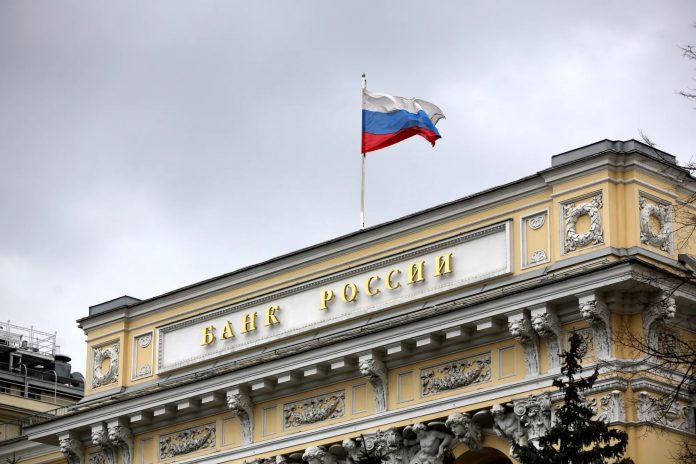
The Central Bank of Russia has reported Bitcoin as the top-performing investment asset in 2025, with a 38% return over the past 12 months, outperforming traditional assets like gold, stocks, and bonds. Since 2022, Bitcoin’s cumulative return has reached 121.3%. Its year-to-date performance in 2025 shows a 17.6% return, and in April 2025 alone, it gained 11.2%. This recognition marks a shift in Russia’s stance, as the Central Bank has also included Bitcoin in its financial overview and plans to launch a crypto exchange for qualified investors. However, Bitcoin’s volatility remains notable, with a reported 17.6% drop in Q1 2025.

The Central Bank of Russia’s acknowledgment of Bitcoin as a high-performing asset signals a growing acceptance of cryptocurrencies within traditional financial systems. This could encourage other central banks and financial institutions globally to consider Bitcoin as a legitimate investment vehicle, potentially reducing regulatory hostility in some regions. Russia’s plan to launch a crypto exchange for qualified investors further integrates cryptocurrencies into its financial ecosystem, potentially attracting institutional investment and fostering a regulated crypto market.

Russia’s embrace of Bitcoin aligns with its efforts to diversify away from traditional financial systems, particularly amid Western sanctions and exclusion from global systems like SWIFT. Bitcoin could serve as a hedge against geopolitical risks and currency devaluation, especially for a country facing economic isolation. By promoting Bitcoin, Russia may position itself as a hub for crypto innovation, attracting capital and talent in the blockchain space, while challenging the dominance of Western financial markets.

The Central Bank’s endorsement could boost Bitcoin’s global market perception, potentially driving further price appreciation as investor confidence grows. This is particularly significant given Bitcoin’s 38% return in the past 12 months and 121.3% since 2022. However, Bitcoin’s volatility (e.g., a 17.6% drop in Q1 2025) may deter risk-averse investors, and the Central Bank’s report could amplify speculative trading, increasing price swings.

Russia’s move suggests a softening of its historically cautious stance on cryptocurrencies, which previously included proposals to ban crypto trading and mining. This could lead to clearer regulations, encouraging adoption among retail and institutional investors. However, the focus on “qualified investors” indicates a controlled approach, likely limiting retail participation to mitigate financial risks for the broader population.

Russia’s pivot contrasts with countries like China, which maintain strict bans on crypto trading, and others like the U.S., where regulatory clarity remains elusive. This creates a fragmented global landscape, with some nations embracing crypto as an economic tool and others viewing it as a threat to financial stability. The Central Bank’s involvement in a crypto exchange underscores tension between centralized control (state-regulated platforms) and Bitcoin’s decentralized ethos, potentially alienating purist crypto advocates who oppose government oversight.

By limiting crypto exchange access to qualified investors, Russia risks widening the wealth gap, as only high-net-worth individuals or institutions may benefit from Bitcoin’s high returns. Retail investors, who face higher risks due to volatility, may be excluded from regulated platforms. Russia’s adoption of Bitcoin could deepen the divide between sanctioned economies (e.g., Russia, Iran) and those integrated into global financial systems. Sanctioned nations may increasingly turn to cryptocurrencies to bypass restrictions, while others rely on traditional assets.

Within Russia and globally, Bitcoin’s rise fuels debates between crypto enthusiasts, who see it as a hedge against inflation and government overreach, and traditional investors, who prioritize stability and trust in fiat-based systems. The Central Bank’s report may embolden the former while alarming the latter. Bitcoin’s pseudonymous nature clashes with Russia’s likely desire for oversight on its crypto exchange, creating tension between user privacy and state surveillance.

Russia’s Central Bank reporting Bitcoin as its top-performing investment has far-reaching implications, from legitimizing crypto in a major economy to reinforcing Russia’s strategic shift amid geopolitical tensions. However, it also underscores divides—between regulatory approaches, economic access, ideological perspectives, and risk appetites.

In AI Era, Every Worker Must be A “Manager”

0

Over the last few days I have noted that AI will commoditize intelligence as it uses computing power to scale the acquisition and deployment of intelligence. Now, the question becomes: if AI does commoditize intelligence, where can we play the career playbook?

It is simple: we need to become better MANAGERS at operational, tactical and strategic levels. What that means is this: we need to have capabilities to manage an amalgam of AI agents which would be given to us to manage and get our jobs done. In other words, we need to be above “intelligence” and operate at the level of knowledge, managing machines to accomplish tasks: “They will be replacing Labourers even as they pile resources on knowledge.  What is Labour? Forget what Adam Smith wrote decades ago since in his era there was no Knowledge as a factor.”

To get a job or thrive at your current one, you must demonstrate besides everything how you are a better manager, knowing that you may not just be managing humans but AI agents assigned to you!

So, as AI scales, we will get into an age of MANAGEMENT. Yes, we will not have many entry-level jobs and internships because AI agents will do what those interns and new grads currently do. That is scary for the future of markets since  today’s new grad is the executive of tomorrow. That would be sorted out. But right now, the issue is that everyone must be a MANAGER to thrive in this AI era. Improve your management playbook because companies will hire people who can manage machines to execute business objectives!

Saudi Central Bank Reportedly Disclosed Investment In MicroStrategy Stocks

0

The Saudi Central Bank reportedly disclosed an investment in MicroStrategy ($MSTR) stock, with posts on X claiming a purchase of 25,656 shares. Given MicroStrategy’s significant Bitcoin holdings, this move is widely interpreted as indirect exposure to Bitcoin. The investment aligns with growing institutional interest in crypto but has sparked debate, with some viewing it as a strategic diversification and others as a risky bet with public funds.

The Saudi Central Bank’s reported $10M investment in MicroStrategy ($MSTR) stock, equivalent to roughly 25,656 shares, carries significant implications due to MicroStrategy’s role as a major Bitcoin holder.  MicroStrategy holds over 252,000 BTC, making it one of the largest corporate Bitcoin holders. The Saudi Central Bank’s investment is seen as a proxy for gaining Bitcoin exposure without directly holding cryptocurrency, potentially signaling cautious but growing institutional acceptance of crypto assets.

This could position Saudi Arabia as a forward-leaning player in the Gulf region, where crypto adoption has been uneven, aligning with the Kingdom’s Vision 2030 push for economic diversification. The investment may reflect a strategic move to diversify the central bank’s reserves, traditionally dominated by U.S. Treasuries and oil-linked assets. Bitcoin’s uncorrelated nature could serve as a hedge against inflation or geopolitical risks.

However, MicroStrategy’s stock is highly volatile, tied closely to Bitcoin’s price swings, which introduces significant risk to a traditionally conservative institution. As a G20 member and a key OPEC player, Saudi Arabia’s move could encourage other central banks, particularly in emerging markets, to explore similar investments. This could accelerate mainstream crypto adoption. It may also intensify competition in the Gulf, where the UAE and Bahrain have already embraced crypto-friendly policies.

Regulatory and Political Signals

The investment suggests a potential softening of Saudi Arabia’s historically cautious stance on cryptocurrencies, which have faced restrictions due to concerns over speculation and illicit use. It could foreshadow regulatory changes to support crypto infrastructure, such as exchanges or custody solutions, within the Kingdom.

The investment has sparked polarized reactions, particularly evident in discussions on X and broader crypto communities. Supporters argue this is a bold, forward-thinking move aligning with global trends toward digital assets. They see it as a hedge against fiat currency devaluation and a step toward modernizing Saudi Arabia’s financial system.

Some analysts speculate the investment could boost MicroStrategy’s stock and Bitcoin’s price, as it signals institutional confidence. They view it as validation of Bitcoin’s staying power. Advocates believe this positions Saudi Arabia as a crypto pioneer in the Middle East, potentially attracting blockchain startups and investment. Critics highlight the volatility of MicroStrategy’s stock, which often amplifies Bitcoin’s price swings. They argue a central bank should prioritize stability over speculative investments, especially with public funds.

Some questioned the transparency and decision-making process behind the investment, raising concerns about whether it serves national interests or benefits specific elites. Traditionalists within and outside Saudi Arabia view Bitcoin as a speculative bubble, arguing that tying a central bank’s portfolio to it undermines financial credibility. Some take a wait-and-see approach, noting that $10M is a small fraction of the central bank’s reserves (estimated at over $400B).

They argue the investment is experimental and unlikely to shift broader policy without further evidence. Others call for clarity on whether this is a one-off move or part of a larger crypto strategy, urging official confirmation to counter X-driven speculation.