DD
MM
YYYY

PAGES

DD
MM
YYYY

spot_img

PAGES

Home Blog Page 1153

U.S. Justice Department is Advancing Its Case Against Tornado Cash Co-founder and 12 Defendants

0

The U.S. Department of Justice (DOJ) is advancing its case against Tornado Cash co-founder Roman Storm, charging him with conspiracy to commit money laundering, sanctions evasion, and operating an unlicensed money-transmitting business. While some charges related to unlicensed money transfers have been partially trimmed, the core allegations remain, and Storm is set to face trial.

The DOJ alleges that Tornado Cash, a non-custodial privacy protocol, facilitated illicit crypto transactions, though Storm and supporters argue he is being unfairly targeted for developing open-source software that enables private transactions. Separately, the DOJ has indicted 12 defendants in a $263 million cryptocurrency theft and home burglary scheme. The group faces charges including RICO conspiracy, wire fraud, money laundering, and obstruction of justice.

Described as a sophisticated crime ring, some members allegedly posed as law enforcement to steal cryptocurrency, targeting victims through digital and physical means. Several suspects have been arrested, with the DOJ linking the operation to significant financial and personal harm. These cases are distinct but reflect the DOJ’s broader focus on combating crypto-related crime. Storm’s case raises questions about software developer liability, while the theft ring indictment highlights efforts to dismantle organized crypto scams.

The U.S. Justice Department’s actions against Tornado Cash co-founder Roman Storm and the 12 defendants in the $263 million crypto theft ring highlight significant implications for the cryptocurrency industry, privacy rights, and law enforcement’s approach to digital assets. These cases also underscore a growing divide between crypto advocates and regulators. The DOJ’s case against Storm centers on his role in developing Tornado Cash, a privacy tool that mixes cryptocurrency transactions to obscure their origins.

The prosecution argues that Storm facilitated money laundering by enabling illicit actors, including North Korean hackers, to use the platform. This case sets a precedent that could hold software developers criminally liable for how their tools are used, even if they lack control over the software once it’s released. Open-source developers, particularly in DeFi (decentralized finance), may face increased legal risks, potentially stifling innovation.

Crypto advocates argue that targeting developers for user actions is akin to blaming a highway builder for a bank robber’s getaway. They see this as an attack on free speech and privacy-focused technology. Regulators, however, view tools like Tornado Cash as enablers of crime, prioritizing enforcement over innovation. Tornado Cash was designed to enhance user privacy in blockchain transactions, which are typically transparent. The DOJ alleges it was disproportionately used for illicit purposes, citing $1 billion in laundered funds.

The case could lead to stricter regulations on privacy-focused crypto tools, limiting their development or forcing them underground. It also raises questions about balancing individual privacy with law enforcement’s need to track illicit funds. Privacy advocates argue that financial privacy is a fundamental right, and tools like Tornado Cash protect legitimate users from surveillance. Regulators and law enforcement counter that unchecked privacy tools enable terrorism, sanctions evasion, and money laundering, necessitating oversight.

Global Impact on Crypto Protocols

Tornado Cash operates on Ethereum, a decentralized network beyond U.S. jurisdiction. The DOJ’s sanctions on Tornado Cash smart contracts in 2022 and Storm’s indictment signal an attempt to regulate decentralized systems. International developers and projects may avoid U.S. markets to evade similar prosecutions, fragmenting the global crypto ecosystem. It also tests the limits of enforcing U.S. law on borderless technologies.

The crypto community sees this as regulatory overreach, arguing that decentralized protocols can’t be “shut down” or controlled like traditional companies. Governments assert their right to enforce laws, even in decentralized systems, to protect national security and financial stability. The 12 defendants allegedly used sophisticated methods, including impersonating law enforcement and conducting home burglaries, to steal $263 million in cryptocurrency. The DOJ’s use of RICO and other charges signals a robust response to organized crypto scams.

High-profile indictments deter future crypto-related crimes and demonstrate law enforcement’s growing expertise in tracking blockchain transactions. Victims may gain confidence in seeking justice, but the case also highlights vulnerabilities in crypto custody (e.g., private key security). While the crypto community supports cracking down on theft, some argue that law enforcement unfairly paints the industry as a haven for crime, ignoring similar issues in traditional finance.

Regulators emphasize the need for accountability, given crypto’s appeal to criminals due to its pseudonymous nature. The violent and audacious nature of the theft ring (e.g., home invasions) fuels narratives of crypto as a “Wild West” for criminals. Negative publicity could slow mainstream adoption and invite harsher regulations, such as mandatory KYC (Know Your Customer) for all crypto platforms. It may also push users toward centralized exchanges with stronger security, undermining DeFi’s ethos.

Crypto advocates argue that the technology isn’t inherently criminal and that education, not regulation, is the solution. Critics, including regulators, use such cases to justify tighter controls, claiming the industry’s libertarian streak enables bad actors. The theft ring exploited weak security practices, such as poorly stored private keys. This underscores the risks of self-custody in crypto, where users bear full responsibility for their assets.

The case may drive demand for better security solutions (e.g., hardware wallets, multi-signature setups) and educate users on best practices. However, it could also deter less tech-savvy individuals from engaging with crypto. Some in the crypto space embrace self-custody as a hallmark of financial sovereignty, blaming victims for poor security. Others, including regulators, argue that the industry needs user-friendly safeguards to protect consumers, potentially at the cost of decentralization.

Regulators/Law Enforcement prioritize public safety, financial stability, and compliance with existing laws. They argue that crypto’s anonymity and lack of oversight make it a magnet for crime, requiring intervention to protect society. Crypto Community believes technology should remain neutral, with developers free to innovate without fear of prosecution. They argue that misuse of tools (e.g., Tornado Cash) is a user problem, not a developer one.

Regulators view technology through the lens of its impact. If a tool enables significant harm (e.g., money laundering or theft), they argue it must be regulated or restricted, regardless of its neutral design. Crypto community distrusts centralized institutions (governments, banks) and sees crypto as a way to empower individuals. They resist KYC, AML (Anti-Money Laundering), and other controls as invasions of privacy.

Regulators distrust unregulated systems that operate beyond their reach. They seek to impose traditional financial controls on crypto to ensure accountability, even if it means clashing with the industry’s ethos. Compromise seems unlikely. The Storm case may galvanize the crypto community to push for clearer legal protections for developers, while regulators will likely double down on enforcement as crypto adoption grows. The theft ring case may spur bipartisan support for anti-crime measures, but these could inadvertently harm legitimate crypto users.

Long-term dialogue could lead to nuanced regulations that target actual crimes without stifling innovation. For example, privacy tools could incorporate voluntary compliance mechanisms, or regulators could focus on end-user accountability rather than developer liability. Industry-led security standards could also reduce thefts, easing pressure for heavy-handed laws.
Trump says the US is ahead of China in the crypto war, and cloud mining has become the next new capital outlet

0

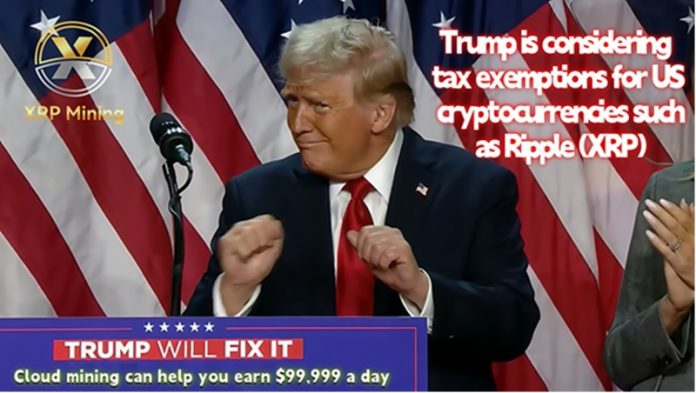
At a time when the global cryptocurrency landscape is accelerating, former US President Donald Trump has once again pushed the topic of crypto to the forefront. In a public speech, he said: “The United States is beating China in the field of cryptocurrency, and we must stay ahead.” This statement quickly caused a strong response in the financial and blockchain fields, and once again focused people’s attention on the future direction of the crypto industry.

The United States has increased its support, and policies have gradually warmed up

In the past few years, the United States has had a tough regulatory attitude towards cryptocurrencies. However, with the successful implementation of the Bitcoin spot ETF and the entry of more and more financial giants, the United States is re-embracing the blockchain revolution with a more open attitude. Trump’s statement this time not only highlights the importance of digital assets at the political level, but also indicates that future policies may continue to develop in a favorable direction.

In contrast, although China has maintained its lead in the development of blockchain underlying technology, due to strict supervision of cryptocurrency transactions and mining activities, private capital participation is limited, which has weakened its dominant position in the global crypto ecosystem to a certain extent.

Cloud mining becomes a new trend, and capital competes for layout

With the revaluation of crypto assets, traditional investment methods are also changing. More and more users are beginning to abandon high-risk short-term transactions and pursue long-term, stable passive income models. Against this background, cloud mining, that is, mining through remote rental of computing power, has rapidly risen.

Cloud mining not only solves the problems of high mining machine costs, complex operations, and limited power resources, but also greatly reduces the participation threshold for ordinary investors. Users do not need to have professional skills or deploy physical equipment. They only need to activate computing power contracts on the platform to obtain real income from mainstream cryptocurrencies every day.

XRP Mining: Leading global users into the era of passive income

As the world’s leading artificial intelligence cloud mining platform, XRP Mining is standing out in this wave. The platform integrates global green energy mines and intelligent scheduling systems to provide users with an efficient, safe, and stable mining environment.

Recently, XRP Mining officially launched the BTC position mining function. Users can directly participate in the computing power contract with Bitcoin, without having to bear the uncertainty brought by price fluctuations, and obtain potential returns of up to $99,999 per day.

The future of encryption belongs to capital and the public

Behind Trump’s statement and the positive signals released by policies is the gradual acceptance of the decentralized financial era by the global market. Cloud mining, as the most realistic and operational carrier in this process, is receiving unprecedented attention and capital favor.

For ordinary investors, this is not only an opportunity to catch up with the trend, but also an entrance to truly participate in the new order of future wealth.

  1. From zero to mining hero – in just minutes

Join XRP MINING in less time than it takes to get a cup of coffee.

Visit https://xrpmining.com/xml/index.html#/

Sign up (free and easy)

Get $15 in free mining now

  1. Contract package

You can also choose the appropriate cloud mining package according to your budget needs and earn more income. A variety of contract options are provided.

?New User Experience Contract??Investment Amount: $100?Total net profit: $100 + $10.

?Bitcoin Miner S19 XP??Investment Amount: $1100?Total net profit?$1100+$138?
?ANTRACK & Bitcoin Miner S19??Investment Amount: $4500?Total net profit?$4500+$1224?
?Bitcoin Miner S21 XP??Investment Amount: $8800?Total net profit?$8800 + $3450?
?ANTRACK & BitcoinMiner S19 XP??Investment Amount: $13000?Total net profit?$13000 + $6825?
?Avalon Air CoolingMining Box??Investment Amount: $28000?Total net profit?$28000 + $18816?

For more contract plans, please log in to the XRP Minig official website.

  1. Recharge channel

Multi-currency compatibility: support USDT-TRC20, BTC, XRP, ETH, LTC, USDC, BNB, USDT-ERC20, BCH, DOGE, SOL and other stablecoins.

  1. Start mining

After completing the recharge on the platform and successfully selecting the appropriate mining package, the system will automatically start mining immediately. During the entire mining process, you can view the income in real time and intuitively through our platform, so that every income is clearly visible and under your control.

  1. Withdraw income

Mining income is distributed to your account every day, and users can withdraw to their wallets at any time.

Summary:

The XRP MINING cloud mining platform has taken the lead in leading the new trend of BTC cloud mining with its unique miner model, flexible and diverse mining packages, and extensive global influence. As the market develops, XRP MINING will continue to strive for excellence and provide better services to help users dig wealth in the field of cryptocurrency and reach the other side of value-added.


For more information, please visit the official website: https://xrpmining.com/

Fear and Greed Index for Equities Has Reached Highest Level Since October 2024

0

The Fear and Greed Index, which measures market sentiment for equities, has reached its highest level since October 2024, with recent posts on X indicating it hit 71, firmly in “Greed” territory. This is a significant shift from a month ago when the index was at 19, reflecting “Extreme Fear.” The index was reported at 61.6 on May 11, 2025, and climbed to 67 by May 12, 2025, before reaching 71 on May 14, 2025.

This rapid swing from fear to greed aligns with a strong market rally, as the S&P 500 (tracked by SPY) has risen approximately 17% from its April 7, 2025, low, adding about $400 billion in market cap per trading day over 18 days. SPY’s current price is $587.232, up from $516.05 on April 21, 2025, reflecting this bullish sentiment. Historically, high greed readings, like those above 70, can signal overbought conditions, prompting caution among investors. For context, the index hit a low of 4 in early April 2025, the lowest since the 2022 bear market, before this sharp reversal.

Some market observers suggest this greed level, especially if it approaches 80+, could indicate a potential peak in bullish sentiment, urging traders to stay vigilant. The Fear and Greed Index uses indicators like market momentum, put/call options, and volatility, but it’s not a perfect predictor. If you’re trading or investing, weigh this alongside other factors like SPY’s year-high of $613.23 and current technicals.

The Fear and Greed Index hitting 71, its highest since October 2024, signals strong bullish sentiment in equities, with several implications for investors and markets. A reading of 71 (Greed) suggests markets may be overextended, as seen in the S&P 500’s 17% rally since April 7, 2025. Historically, readings above 70 often precede pullbacks or consolidations, as sentiment may be overly optimistic. SPY’s price at $587.23, near its year-high of $613.23, reinforces this risk.

High greed can lead to rapid sentiment shifts. If negative catalysts (e.g., economic data, geopolitical events) emerge, markets could see sharp corrections, especially after such a steep climb. The VIX (volatility index) tends to spike when greed flips to fear. Traders may lock in gains after a $400 billion/day market cap surge over 18 days. This could cap upside in the near term, particularly if the index approaches “Extreme Greed” (80+).

Greed often drives capital into riskier assets (e.g., tech, small caps). Investors might shift from defensive sectors (utilities, consumer staples) to growth-oriented ones, but overcrowding in these areas could amplify downside risks if sentiment sours. High greed readings can signal a contrarian sell signal for disciplined investors. Those with a bearish outlook might consider hedging via puts or reducing exposure, though timing is critical.

The swing from Extreme Fear (4 in April 2025) to Greed reflects renewed confidence, possibly tied to economic optimism or policy expectations. However, without fundamental support (e.g., strong earnings, stable rates), this rally could falter. Monitor upcoming data like CPI, Fed decisions, or Q2 earnings.

Actionable Considerations

Watch for reversal signals (e.g., SPY failing to break $613.23 or a spike in put/call ratios). Consider tightening stop-losses. Stay diversified; don’t chase the rally blindly. High greed doesn’t always mean an immediate crash but warrants caution. Hedge with options or allocate to safer assets (bonds, gold) if overexposed to equities.

Nvidia Reclaims $3 Trillion Valuation as AI Chip Demand, Trade Easing, and Global Expansion Drive Surge

0

Giant AI chipmaker Nvidia, has seen it market capitalization surged past the $3 trillion mark once again, fueled by a powerful rally in Big Tech and a confluence of positive global developments.

The stock jumped to $129.93, rising 5.6% on Tuesday alone and briefly surpassing Apple in market value. The rally continued on Wednesday, positioning Nvidia among the most valuable and actively traded companies in the world.

The renewed momentum comes on the back of a 90-day suspension of U.S.–China tariffs, bullish investor sentiment around artificial intelligence, and a major international deal with Saudi Arabia. Analysts are calling Nvidia the “clear winner” from the easing of trade tensions, with its dominance in the AI semiconductor space growing ever stronger.

The stock’s surge has made the company one of the top performers on both the S&P 500 and Nasdaq 100 indexes.

Following the recent increase in Nvidia’s market cap, CEO Jensen Huang was handsomely rewarded with his pay package rising by 46% to nearly $50 million reflecting investor confidence in his leadership and the company’s strategic direction. The broader semiconductor sector got a boost from a 90-day agreement between Washington and Beijing to pause tariff escalation. 

Recall that Nvidia market cap first crossed the $3 trillion valuation price in June 2024, which saw it surpass Apple to become America’s second most valuable company. The company’s surge in recent years has been powered by the tech industry’s need for its chip which are use to develop and deploy big AI model.

The company’s recent market cap, has soothed fears of prolonged supply chain disruptions and rekindled optimism about global chip demand benefits that Nvidia, with its global customer base, is well-positioned to capture.

Adding to the optimism is Nvidia’s deepening partnership with Saudi Arabia’s sovereign wealth fund-owned AI startup Humain. The company recently announced the sale of advanced semiconductors to the kingdom, which is accelerating its AI initiatives through the state-backed Humain project.

The partnership was announced on Tuesday as part of the kingdom’s plans to develop artificial intelligence and strengthen cloud computing infrastructure with the help of foreign investment. One of Humain’s key moves is a strategic partnership with U.S. tech giant Nvidia to enhance the kingdom’s AI capabilities, particularly in GPU cloud computing.

The collaboration reflects Saudi Arabia’s broader economic diversification strategy focused on high-tech innovation, and Nvidia is becoming a critical partner in building the nation’s AI infrastructure.

Investors are also bullish ahead of Nvidia’s upcoming earnings report, anticipating continued growth driven by its data center and AI businesses. The company dominates the AI chip landscape, particularly in GPUs used for training large language models like ChatGPT and Claude.

Estimates suggest Nvidia controls over 80% of the AI data center chip market, reinforcing its position as a cornerstone of the global AI revolution. While several American firms are attempting to challenge Nvidia’s dominance, China’s Huawei is emerging as the most formidable competitor.

Nvidia CEO Jensen Huang has described Huawei as China’s “single most formidable” tech company. Reports indicate Huawei is rapidly closing the gap in AI chip capabilities. Sanctions by both the Trump and Biden administrations have restricted shipments of even lower-powered GPUs to China, inadvertently accelerating Huawei’s push to build domestic alternatives.

Analysts believe new restrictions being floated by the Trump camp are unlikely to significantly slow China’s AI ambitions. This intensifying competition could eventually reshape the global semiconductor landscape but for now, Nvidia remains at the summit, unrivaled in scale and influence.

Bill for Compulsory Voting Passes Second Reading, Sparks Uproar Amid Widespread Distrust in Nigeria’s Electoral System

0

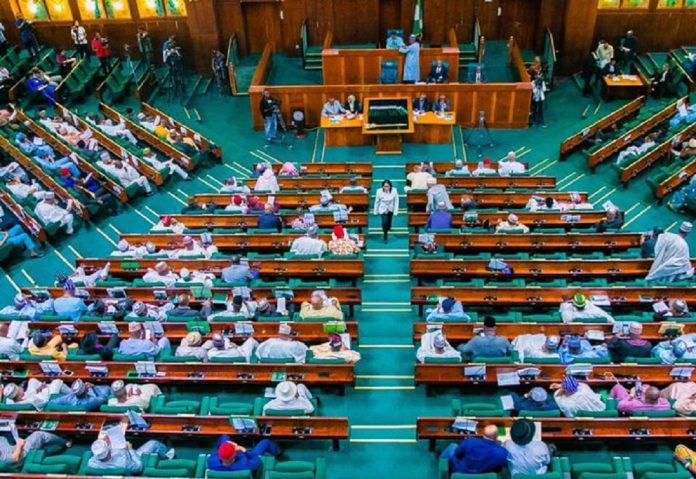
The Nigerian House of Representatives has advanced a bill that seeks to make voting compulsory for eligible citizens, sparking debate and criticism across the country.

The proposed legislation, which passed its second reading on Wednesday, May 15, 2025, introduces stiff penalties, including a fine of up to N100,000 or a six-month jail term for any eligible Nigerian who fails to vote in an election.

Sponsored by the Speaker of the House, Hon. Tajudeen Abbas, alongside Hon. Daniel Ago, the bill is framed as an amendment to the 2022 Electoral Act. According to its proponents, the measure is intended to address Nigeria’s persistent problem of voter apathy and low turnout during elections, and to “deepen civic responsibility.”

Deputy Speaker Benjamin Kalu, while supporting the bill, said, “Compulsory voting is a norm in several democracies such as Australia. We need to ensure that citizens understand that rights come with responsibilities.” He added that the move would strengthen the credibility of elected governments by increasing participation.

A Law in the Wrong Political Climate

However, the bill has provoked a backlash, largely because of the enduring flaws in Nigeria’s political system — a system many believe is plagued by corruption, electoral manipulation, and judicial interference.

By this bill, it is believed that the government is attempting to coerce civic participation in a deeply flawed electoral environment where, for many Nigerians, votes appear to have little or no consequence.

In Nigeria, elections are routinely followed by allegations of ballot stuffing, result manipulation, and voter intimidation. The 2023 general elections presented a glaring example. After months of legal battles, the Supreme Court ended up deciding the outcomes of several gubernatorial, senatorial, and House of Representatives races, as well as the highly contested presidential election.

The presidential tribunal, and later the Supreme Court, ruled in favor of President Bola Tinubu, despite opposition parties contesting the integrity of the electoral process and the credibility of the results announced by the Independent National Electoral Commission (INEC).

Analysts say that in such a context, criminalizing non-participation is a misplaced priority.

Public Reaction and Backlash

Outside the chambers of the National Assembly, the bill has met even stiffer resistance. Former senator and human rights activist Shehu Sani dismissed the proposal entirely.

“The Bill to jail Nigerians who refused to vote is unnecessary,” he said.

Sani’s criticism underscores the broader national disillusionment with electoral institutions, especially INEC, which has struggled to shake off perceptions of partisanship and inefficiency. The electoral commission faced widespread criticism over the handling of the 2023 elections, especially for failing to transmit results electronically in real-time — a promise that had been central to its credibility push.

Against this backdrop, many believe that what the lawmakers need to focus on is making the votes count.

“If we fix the system, the government don’t have to make the voting mandatory,” Anas Abdullahi Dukamaje said.

Civil society groups have also voiced opposition against the bill, with a threat to sue if the bill becomes a law.

“Following reports today that a repressive bill seeking to jail or fine eligible Nigerians who fail to vote has scaled second reading, we’re again calling on Mr Akpabio and Mr Abbas to immediately withdraw the bill. We’ll see in court if the bill is ever passed into law, the Social-Economic & Accountability Project (SERAP) warned.

Where the Bill Goes from Here

Despite the heavy criticism, the bill has now been referred to the House Committee on Electoral Matters for further legislative work. Its fate remains uncertain, especially as public pressure mounts against its progression. If passed, it will still require the concurrence of the Senate and the President’s assent to become law.

However, the controversy surrounding the bill has exposed a deeper crisis — the widening chasm between Nigeria’s political class and its electorate. While lawmakers push for mandatory participation, citizens are demanding an electoral system that guarantees transparency, accountability, and true representation.