DD
MM
YYYY

PAGES

DD
MM
YYYY

spot_img

PAGES

Home Blog Page 1160

The U.S.-Saudi $600 Billion Investment Deal is a High-Stake Move

0

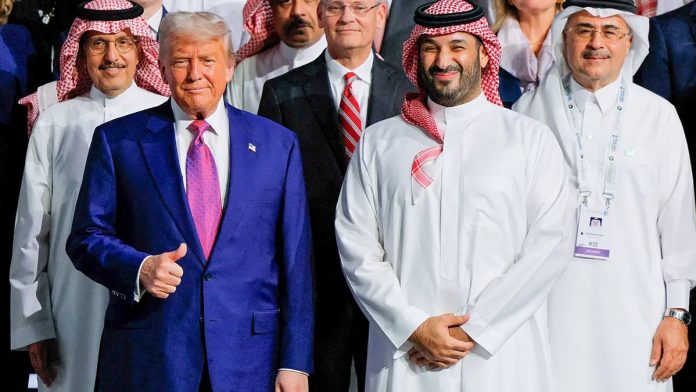
On May 13, 2025, the United States and Saudi Arabia signed a $600 billion investment deal, described as a “strategic economic partnership.” The agreement, announced during President Donald Trump’s Gulf tour, includes a $142 billion defense package for Saudi Arabia to purchase advanced U.S.-made weapons and services.

The deal also covers investments in energy, technology, AI, aerospace, and critical minerals, aimed at boosting U.S. economic growth. However, some reports suggest the total value of finalized deals may be closer to $283 billion, less than the $600 billion pledged by Saudi Crown Prince Mohammed bin Salman. The White House and Saudi state media have highlighted the agreement as a historic step to strengthen bilateral ties.

The $600 billion U.S.-Saudi Arabia investment deal, signed on May 13, 2025, carries significant economic, geopolitical, and social implications, while also highlighting divides in perception and impact. The deal promises to create thousands of American jobs, particularly in defense, technology, AI, aerospace, and energy sectors. The $142 billion defense package alone involves companies like Lockheed Martin and Boeing, boosting U.S. manufacturing and innovation.

Saudi Arabia aims to diversify its oil-dependent economy under Vision 2030. Investments in AI, tech, and critical minerals align with this goal, enhancing its global economic competitiveness. The deal could stabilize energy markets by deepening U.S.-Saudi cooperation, but it may also intensify competition in tech and AI with other global powers like China.

The agreement solidifies the U.S. as Saudi Arabia’s primary strategic partner, countering China’s growing influence in the Middle East. It reinforces Saudi Arabia’s role as a key U.S. ally in countering Iran. The massive arms deal could escalate tensions with Iran and its proxies, potentially fueling an arms race in the Gulf. It may also affect U.S. relations with Israel, given Saudi Arabia’s push for a Palestinian state.

The deal signals a U.S. pivot back to the Middle East under the Trump administration, potentially at the expense of focus on Asia-Pacific or Europe. The $142 billion defense package equips Saudi Arabia with advanced U.S. weaponry, including fighter jets, missile defense systems, and cybersecurity tools, enhancing its deterrence capabilities. The deal ensures long-term U.S. military presence and influence in the Gulf, securing access to strategic bases and intelligence-sharing.

Saudi Arabia’s human rights record, including its involvement in Yemen and domestic repression, raises ethical questions about U.S. support. Critics argue the deal prioritizes profit over principles. While the deal includes clean energy initiatives, Saudi Arabia’s heavy reliance on fossil fuels and the environmental cost of arms production could undermine global climate goals.

The Trump administration and its allies view the deal as a triumph of economic diplomacy, strengthening U.S. industry and countering adversaries like China and Iran. They emphasize job creation and national security.
Progressive Democrats and human rights advocates criticize the deal for empowering Saudi Arabia’s authoritarian regime. They argue it risks entangling the U.S. in Middle Eastern conflicts and overlooks Saudi Arabia’s human rights abuses, such as the Yemen war and journalist crackdowns.

Some lawmakers may push to review or block parts of the arms deal under the Arms Export Control Act, citing Saudi Arabia’s use of U.S. weapons in Yemen. However, Trump’s veto power and Republican support could limit opposition. Polls (e.g., Pew Research, 2024) show mixed views on U.S.-Saudi ties. Many Americans support economic deals that create jobs but are wary of arming nations with questionable human rights records.

Saudi state media portrays the deal as a win for modernization, but public sentiment (hard to gauge due to censorship) may be skeptical of foreign influence or the pace of reforms under Vision 2030. U.S. allies like the UK and UAE may welcome the deal as stabilizing the Gulf, while rivals like China and Russia could see it as a challenge to their regional ambitions. Iran has already condemned the arms deal as destabilizing.

Some Global South countries view the deal as reinforcing U.S. dominance, potentially sidelining their own economic partnerships with Saudi Arabia. The deal pits economic pragmatism against moral concerns. Proponents argue that economic and security benefits outweigh ethical drawbacks, while critics warn that ignoring Saudi Arabia’s human rights record sets a dangerous precedent.

Reports suggest only $283 billion in deals are finalized, raising questions about whether the full $600 billion will materialize. The arms deal could either deter Iran or escalate conflicts, depending on how Saudi Arabia deploys its new capabilities. Congressional pushback or public backlash could limit the deal’s scope, especially if tied to Yemen or human rights concerns.

The U.S.-Saudi $600 billion investment deal is a high-stakes move with far-reaching economic and geopolitical benefits, but it deepens divides over ethics, human rights, and regional stability. It strengthens the U.S.-Saudi alliance and counters rival powers, yet risks entangling the U.S. in Middle Eastern conflicts and alienating critics at home and abroad. The deal’s success hinges on navigating these divides and delivering on its ambitious promises.

5 Best Meme Coins to Invest in May 2025— Future Millionaires Start Here

0

Are meme coins still worth it in 2025? With some generating explosive gains and transforming early investors into crypto millionaires, this once-joke category has become a serious contender in digital assets. From mainstream powerhouses like Dogecoin to rising stars like Popcat and Pepe Coin, meme coins captivate global audiences with humor, community power, and massive ROI potential. But among these viral tokens, Arctic Pablo Coin, Neiro, Dogecoin, Popcat, and Pepe Coin are making the most noise this May.

Now, here’s where it gets interesting. While each coin brings something unique, Arctic Pablo Coin is stirring up something truly special. Not only is it gathering intense investor attention, but it’s also positioning itself as one of the most profitable meme coin opportunities this year. With a powerful staking mechanism, a one-of-a-kind presale journey, and a staggering return potential, Arctic Pablo Coin is one of the Best meme coins to invest in May 2025—and the reasons couldn’t be more compelling.

1. Arctic Pablo Coin Delivers 66% APY – A Powerful Feature for Passive Crypto Gains

Looking for a meme coin that pays while you wait? Arctic Pablo Coin is setting a new standard with an exceptionally high APY of 66% during its presale. Investors can stake their tokens and earn substantial passive rewards, which are unheard of in most meme coin ecosystems. This unique feature isn’t just a gimmick—it’s a core part of Arctic Pablo Coin’s strategy to build strong investor loyalty and generate long-term token holding. While most meme coins rely solely on hype, Arctic Pablo Coin is backing its buzz with actual financial incentives that deliver.

Notably, staking during the presale means users don’t have to wait until launch to grow their investments. Arctic Pablo Coin generously rewards its earliest supporters, ensuring they get a head start before the coin goes public. With passive income baked into the presale phase, Arctic Pablo Coin is already delivering value, long before it hits major exchanges.

Arctic Pablo Coin’s Penguin Paradise Presale Promises Over 4,748% ROI Potential

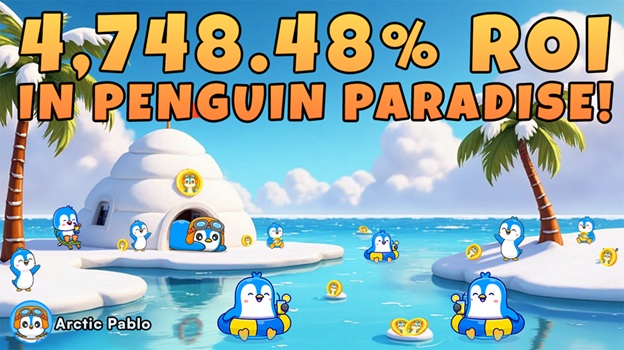
Let’s talk numbers—real, exciting numbers. Arctic Pablo Coin has reimagined the meme coin presale model with a location-based journey instead of stages. This imaginative format tracks the coin’s travel through icy-themed “locations,” each with new pricing and investor opportunities. The coin is currently in the 23rd presale location: Penguin Paradise, where the price is just $0.000165.

Here’s the jaw-dropper: the launch price is $0.008, offering a whopping 4,748.48% ROI for early backers. Let that sink in—investing just $500 today gives 3,030,300 APC tokens, and when listed, this could potentially grow to $24,242.40. With over $2.51 million already raised, momentum is building fast. The window of opportunity is shrinking quickly, and as Arctic Pablo Coin is in the Best meme coins to invest in May 2025, delays could mean missing out on one of the year’s top crypto gains.

What if this is the next meme coin that 100Xs before June? What if Penguin Paradise is the last low-price stop? Act now—or risk looking back in regret.

2. Neiro: AI-Powered Utility Meets Meme-Driven Virality

Can artificial intelligence meet meme coin mania? That’s the question Neiro answers with a confident yes. Combining advanced AI tech with a meme-worthy branding strategy, Neiro stands out from traditional meme tokens. It’s not just another coin—it’s built around a robust ecosystem of AI utilities like chatbots, content tools, and intelligent data analytics.

The crypto community has taken notice. With solid growth on decentralized platforms and increasing chatter among Telegram and Twitter influencers, Neiro is attracting users who want both utility and entertainment. As AI continues to trend globally, Neiro is well-positioned to ride higher this year.

3. Dogecoin: The OG Meme Coin That Refuses to Slow Down

Does Dogecoin have staying power? One glance at its community should clear all doubts. Backed by major celebrity endorsements, including Elon Musk, Dogecoin has cemented itself as the original meme coin. It’s not just surviving—it’s evolving.

With regular upgrades and a massive user base, Dogecoin remains highly liquid and widely accepted for payments, tipping, and retail purchases. The loyal Doge community keeps this coin relevant, and its strong meme branding means it regularly attracts new investors.

4. Popcat: Viral Internet Culture Turned Crypto Rocket

If the internet had a coin for its favorite meme, Popcat would be it. Popcat captures viral energy better than most meme tokens on the market. Built around a hilariously addictive clicker-style meme, this coin surged quickly thanks to coordinated online support and Gen Z momentum.

Its tokenomics are community-friendly, and its branding is instantly recognizable. With recent listings on top decentralized exchanges and influencer-driven campaigns, Popcat is pouncing toward higher market caps. The token is a perfect storm of meme energy and market momentum.

5. Pepe Coin: From Internet Legend to Meme Coin Marvel

Can Pepe stay relevant in a sea of copycats? Absolutely. Pepe Coin takes one of the internet’s most enduring meme characters and wraps it into a well-designed crypto project. With a strong focus on meme nostalgia, low supply, and fast-moving trading communities, Pepe has established a cult-like following.

Its chart history shows surprising strength during altcoin seasons, and traders often revisit Pepe when hunting for quick gains. Pepe Coin is holding its own amid fierce competition thanks to its cultural significance and market-friendly structure.

Final Thoughts: Arctic Pablo Coin Leads the Pack of the Best Meme Coins to Invest in May 2025

Based on the latest research, the Best meme coins to invest in May 2025 are Arctic Pablo Coin, Neiro, Dogecoin, Popcat, and Pepe Coin. While each of these cryptos holds unique value and appeal, Arctic Pablo Coin rises as the top contender. Its unbeatable 66% APY staking rewards, imaginative travel-based presale, and staggering 4,748.48% ROI potential set it far apart from its competitors.

Want to turn $500 into over $24,000? That’s not a dream—a calculated opportunity with Arctic Pablo Coin. Every day, more investors enter the Penguin Paradise phase, pushing the price upward and decreasing the supply. Timing is everything, and hesitation could mean missing the most lucrative meme coin launch of 2025.

Arctic Pablo Coin is one of the Best meme coins to invest in May 2025, and those who recognize the signs early will be the ones telling success stories tomorrow.

For More Information:

Arctic Pablo Coin: https://www.arcticpablo.com/

Telegram: https://t.me/ArcticPabloOfficial

Twitter: https://x.com/arcticpabloHQ

Frequently Asked Questions

  1. What makes Arctic Pablo Coin different from other meme coins?
    Arctic Pablo Coin stands out with its 66% APY staking, location-based presale journey, and a calculated path to 4,748.48% ROI, all backed by strong community traction.
  2. How does the location-based presale of Arctic Pablo Coin work?
    Instead of traditional stages, Arctic Pablo Coin “travels” through virtual Arctic destinations. Each new location offers a different price point, creating a gamified and exciting buying experience.
  3. How much can I earn by investing $500 in Arctic Pablo Coin during the presale?
    At the current price of $0.000165, a $500 investment yields 3,030,300 APC tokens, which could be worth $24,242.40 at launch price—if bought before the current phase ends.
  4. Is staking available during Arctic Pablo Coin’s presale?
    Yes! Investors can stake their tokens at 66% APY, making it one of the most rewarding meme coin staking options even before the official launch.
  5. Why is Arctic Pablo Coin considered one of the best meme coins to invest in May 2025?
    Because of its innovative features, high ROI potential, staking rewards, and viral meme character, Arctic Pablo Coin is one of the Best meme coins to invest in May 2025—a rare gem in a crowded space.

Power Minister Says Nigeria Needs $200bn to Achieve Stable Supply, Raising Eyebrows Amid Poor Investment Record

0

Nigeria will need to spend at least $10 billion annually over the next two decades, roughly $200 billion in total, to achieve stable and reliable electricity, Minister of Power Adebayo Adelabu said on Tuesday.

“For us to achieve functional, reliable and stable electricity in Nigeria, we need not less than $10 billion annually for the next ten to twenty years,” Adelabu told journalists after the event. He acknowledged that foundational challenges—ranging from outdated infrastructure to policy misalignment—must be addressed to make such spending effective.

The comments arrive at a time when faith in Nigeria’s power sector management is already low. Despite investing more than $29 billion in the sector since the 1999 return to democracy—including a $16 billion investment under the administration of President Olusegun Obasanjo—power supply remains erratic, with less than 4,500 megawatts reliably reaching homes and businesses out of an installed generation capacity of over 13,000MW. Transmission and distribution losses, technical inefficiencies, and corruption have continued to cripple progress.

Adelabu’s proposed $10 billion per year over 20 years, amounting to over N290 trillion at today’s exchange rate, is already being called excessive by energy analysts and economists, especially when viewed against Nigeria’s shrinking revenue base and ballooning debt profile.

With a population estimated at over 200 million, Nigeria certainly requires significant investment in generation, transmission, and distribution infrastructure. But experts say the core issue isn’t funding—it’s mismanagement.

“The problem is not getting the investors, the challenge is that investors do not see a clear line of sight for them to recover their money back and generate an alpha from the hurdle rate,” said energy analyst, Kelvin Emmanuel.

He attributed the situation to “improper pricing of tariff, improper pricing of gas, commercial losses from theft and estimated billing, technical losses from grid shutdown, lack of adequate transmission infrastructure, lack of guarantees in the commercial design of contracts and DisCo owners that are over-leveraged and are only skinning the cow to pay back debt.”

That fear is not unfounded. Nigeria is currently embroiled in a multi-million-dollar legal battle at the International Chamber of Commerce (ICC) in Paris over the Mambilla Hydroelectric Power Project, a $6 billion – 3,050MW project that was supposed to be Nigeria’s largest.

The contract, originally awarded to Sunrise Power and Transmission Company Limited, has become the subject of fraud allegations and counter-litigation between the Nigerian government and Sunrise. At the center of the controversy is Olu Agunloye, the former Minister of Power and Steel under President Obasanjo, who unilaterally awarded the over $6 billion contract to Sunrise in 2003 without following due process or securing Federal Executive Council approval.

The scandal has not only stalled progress on a project that could have significantly bolstered Nigeria’s generation capacity but also threatens to saddle the country with additional billions in damages if Sunrise wins its claims at the ICC.

In addition to Mambilla, Nigeria’s power sector is littered with abandoned or underperforming projects, from the Zungeru Hydroelectric Plant, still struggling with delays despite Chinese funding, to dozens of gas-powered plants built under the National Integrated Power Projects (NIPP) that remain underutilized due to poor transmission infrastructure and gas supply issues.

The privatization of power generation and distribution assets in 2013, hailed as a transformative reform, has largely failed to meet expectations. Distribution companies (DisCos) remain financially insolvent, with poor collection rates and weak service delivery. Many rely on government bailouts to remain operational, with the Federal Government still paying electricity subsidies to the tune of over N600 billion annually.

Adelabu, while highlighting the recent Electricity Act signed by President Bola Tinubu as a major step forward, acknowledged these systemic issues. He said decentralization now allows states to play active roles in power generation, transmission, and distribution, breaking from a federal monopoly that had long stifled innovation.

“This bill has achieved liberation and decentralization of the power sector to enable all levels of government—federal, state and local—to legally and morally play roles in the power sector,” the minister said.

Already, over eleven states have taken steps to develop independent electricity markets within their borders, with more expected to follow. But critics argue that legal autonomy alone won’t fix the power problem unless it’s matched with institutional accountability and execution capacity.

The Stark Contrast of Egypt’s Electrification Success

Adelabu’s proposed investment plan comes against the backdrop of a regional example that has achieved far more with less. Between 2014 and 2019, Egypt invested approximately $39 billion to double its electricity output and deliver a consistent power supply across the country.

Central to that investment was a landmark $4.4 billion deal with Siemens AG to construct three natural gas-fired power plants, completed in just 27 months. The plants—located in Beni Suef, Burullus, and New Capital—collectively added over 14,000MW to Egypt’s national grid, helping the country end frequent blackouts and even begin exporting electricity to neighboring countries.

In parallel, Egypt also took bold steps to gradually eliminate subsidies on electricity tariffs, helping to reduce fiscal pressure on the government while promoting efficiency. The reform-driven approach attracted private sector confidence and enabled rapid project execution—something Nigeria has struggled with for decades.

The Solar Push is Symbolic but Limited

The commissioning of the 2.5MW solar hybrid plant at NDA—part of the Energizing Education Programme (EEP) Phase II—is part of efforts by the Rural Electrification Agency (REA) to provide clean, off-grid energy to critical institutions. Abba Aliyu, REA’s Managing Director, described the project as “a national mission” aimed at enhancing academic performance, national security, and innovation.

But while the plant will reduce NDA’s reliance on diesel generators, its scale is a reminder of how small Nigeria’s renewable efforts are relative to the larger national challenge. Rural electrification accounts for less than 10% of Nigeria’s power mix, with limited contributions from solar, wind, or biomass.

Until large-scale generation and grid distribution systems are overhauled, and until fraud-ridden projects like Mambilla are tackled, analysts say symbolic efforts won’t yield the kind of transformational change Nigerians have waited decades for.

US April CPI Data Reported at 2.3% YoY Marked Lowest Inflation Rate Since February 2021

0

The April 2025 Consumer Price Index (CPI) data, reported at 2.3% year-over-year, came in below the expected 2.4%, marking the lowest inflation rate since February 2021. Core CPI, excluding food and energy, was 2.8%, also below forecasts. This cooler-than-expected inflation has shifted market expectations, with prediction markets like Polymarket now pricing in two Federal Reserve rate cuts for 2025, likely in September and October, totaling 50 basis points. This aligns with reports indicating traders are adjusting to a lower probability of aggressive rate cuts, influenced by steady economic indicators and tariff uncertainties.

The April 2025 CPI data (2.3% headline, 2.8% core) coming in below estimates signals cooling inflation, closer to the Federal Reserve’s 2% target. With prediction markets pricing in only two rate cuts (50 basis points) for 2025, likely in September and October, several implications arise. The Fed may maintain higher interest rates longer, as inflation remains above 2% and economic growth holds steady (e.g., Q1 2025 GDP growth at 2.5% annualized). This reduces the urgency for aggressive easing.

The Fed’s cautious approach, as echoed in recent FOMC statements, suggests rate decisions will hinge on incoming data, particularly inflation and employment. Cooling CPI could ease pressure, but persistent core inflation (2.8%) may limit cuts. Bond yields, like the 10-year Treasury (around 4.3% per recent data), may stabilize or rise slightly, reflecting expectations of sustained higher rates. Equity markets could face volatility, especially in growth stocks sensitive to interest rates.

Lower inflation supports real wage growth (wages up 3.9% year-over-year), potentially boosting consumption. However, higher rates could temper borrowing for big-ticket items like homes or cars. Mortgage rates (hovering near 7%) are unlikely to drop significantly with only two cuts, potentially keeping housing affordability constrained.

Higher borrowing costs may delay capital expenditures, particularly in rate-sensitive sectors like tech and real estate, though stable inflation could encourage long-term planning. Fewer rate cuts could bolster the U.S. dollar, impacting emerging markets with dollar-denominated debt and U.S. exports. Posts on X highlight concerns about tariff policies (e.g., proposed 10-20% tariffs) potentially reigniting inflation, which could complicate the Fed’s calculus and limit further cuts.

The CPI data and reduced rate cut expectations reveal a divide in economic outlooks, evident across markets, policymakers, and public sentiment. Fed hawks, like Governor Waller, argue for maintaining higher rates to ensure inflation doesn’t resurge, especially with tariff risks and a tight labor market (unemployment at 3.8%). They view two cuts as sufficient to balance growth and price stability.

Doves, including some regional Fed presidents, advocate for more cuts to support employment and prevent overtightening, citing cooling inflation and moderating wage growth. They worry two cuts may be too conservative if growth slows. Equity investors optimistic about a “soft landing” see lower inflation as positive for corporate margins, especially in consumer-driven sectors. They expect markets to adapt to a higher-rate environment.

Fixed-income traders and bearish equity investors warn that sticky core inflation and tariff risks could force the Fed to pause cuts entirely, squeezing valuations in rate-sensitive sectors like tech (e.g., Nasdaq P/E ratios near 30). Public sentiment reflect mixed views—some celebrate lower inflation as relief for household budgets, while others express frustration over high borrowing costs and housing unaffordability.

Progressive groups push for more cuts to ease economic burdens on lower-income households, while conservative voices, citing tariff-driven growth, argue for tighter policy to curb potential inflation spikes. Goldman Sachs and JPMorgan revised 2025 forecasts to two or three cuts, aligning with prediction markets, but warn of upside inflation risks from trade policies. Morgan Stanley, however, sees a case for three cuts if global demand weakens.

The cooler CPI strengthens the case for a measured Fed approach, with two rate cuts reflecting a balance between growth and inflation control. However, the divide—hawks vs. doves, bulls vs. bears, and public vs. policy priorities—underscores uncertainty. Tariff policies and global economic trends could tip the scales, either toward tighter policy or a more accommodative stance. Markets will likely remain volatile as these tensions play out, with the Fed’s December 2025 meeting and updated dot plot providing critical clarity.

PumpSwap Launched Revenue Sharing Aimed at Incentivizing Creators

0

PumpSwap, the decentralized exchange developed by Solana-based meme coin launchpad Pump.Fun, launched a revenue-sharing model on May 12, 2025, distributing 50% of its trading revenue to token creators. Creators earn 0.05% (5 basis points) in Solana (SOL) per transaction for eligible tokens. PumpSwap’s fee structure includes a 0.25% fee per trade, with 0.2% allocated to liquidity providers and 0.05% retained as protocol revenue, though some sources suggest total fees may reach 0.3% due to an additional creator vault fee.

Based on April 2025’s $11.2 billion trading volume, creators could have shared approximately $5.6 million. The move aims to incentivize long-term project development but has faced criticism on X for potentially rewarding developers of abandoned or “rug-pulled” tokens, with users like 0xRiver arguing it may discourage community-driven projects. The revenue-sharing model, distributing 0.05% per transaction to token creators, aims to encourage developers to build and maintain sustainable projects on PumpSwap.

By tying creator earnings to trading volume, it aligns their interests with the platform’s success, potentially fostering higher-quality tokens and reducing speculative “pump-and-dump” schemes. With PumpSwap’s April 2025 trading volume at $11.2 billion, the 50% revenue split could yield significant payouts—around $5.6 million shared among creators monthly. This could attract more developers to the platform, increasing token diversity and trading activity, but the actual distribution depends on individual token volumes.

The model strengthens PumpSwap’s position in the competitive DeFi space, particularly against rivals like Raydium or Uniswap. By rewarding creators, it may drive liquidity and user adoption, as projects gain incentives to promote their tokens actively. Critics highlight the potential for abuse, as creators of low-effort, abandoned, or “rug-pulled” tokens could still earn revenue if their tokens maintain trading volume. This could dilute the quality of projects and reward bad actors, undermining trust in the platform.

The Divide in Perspectives

Many, particularly developers and traders, view the revenue share as a game-changer. Posts praise PumpSwap for empowering creators with a passive income stream, potentially stabilizing meme coin ecosystems. Some argue it could reduce reliance on ICOs or pre-sales, democratizing funding. CryptoBanter called it “a bold move to keep creators in the game,” suggesting it could spark a wave of innovative projects.

Critics like 0xRiver on X argue the model inadvertently rewards developers of failed or scammy projects, as revenue is tied to trading volume, not project quality. They fear it disincentivizes community-driven tokens where developers relinquish control post-launch. Some posts criticize the model for favoring creators over decentralized governance, potentially concentrating influence among a few high-volume projects. DefiDegenerate noted, “This feels like a step back from true DeFi principles.”

Fee Structure Debate: Confusion over PumpSwap’s fees (0.25% vs. reported 0.3% with a creator vault fee) has fueled distrust. Users question transparency and whether the additional fee burdens traders. The revenue share creates tension between incentivizing creators and preserving decentralized, community-led projects. Critics argue it prioritizes developers over token holders or liquidity providers.

While some see the model as a way to curb meme coin volatility, others believe it may fuel speculative trading without addressing underlying project fundamentals. PumpSwap’s revenue-sharing model could reshape the meme coin and DeFi landscape by attracting creators and boosting platform activity, but it risks rewarding low-quality projects and alienating advocates of decentralization.

The divide reflects broader tensions in DeFi between incentivizing innovation and maintaining equitable, transparent ecosystems. Monitoring trading volume and creator behavior in coming months will clarify whether the model drives sustainable growth or exacerbates existing flaws.