DD
MM
YYYY

PAGES

DD
MM
YYYY

spot_img

PAGES

Home Blog Page 1161

Airtel Africa Launches $55m Share Buy-Back Tranche After Profit Turnaround

0

Airtel Africa Plc has commenced the second tranche of its ongoing $100 million share buy-back programme, valued at $55 million, days after releasing a significantly improved financial result that marked a sharp turnaround from last year’s losses.

The telecoms and mobile money operator confirmed the start of the new tranche in a disclosure filed with the Nigerian Exchange on Tuesday, the same day the buy-back resumed. This follows the successful completion of the first tranche worth $50 million in April, a component of the broader $100 million programme announced in December 2024.

The company said Barclays Capital Securities Limited has been engaged to execute on-market purchases of its shares in this second leg of the programme. Acting as a riskless principal, Barclays will make trading decisions independently, with no direct influence from Airtel Africa.

The company reiterated that the sole objective of the buy-back is to reduce its outstanding share capital, noting that all repurchased shares will be cancelled. The $55 million tranche is expected to be completed on or before 19th November 2025.

Capital Restructuring and Balance Sheet Strengthening

While the company stated the buy-back is strictly a capital reduction measure, analysts say it aligns with Airtel’s broader aim to strengthen its balance sheet and increase shareholder value following a volatile year dominated by currency shocks.

Reducing the company’s outstanding shares not only boosts earnings per share in future reporting periods but also minimizes future dividend payouts and other cash obligations tied to capital maintenance. It also signals confidence in the company’s valuation at a time when its stock has come under pressure across multiple exchanges where it is listed.

The share buy-back is unfolding amid improving macroeconomic conditions in some of Airtel Africa’s key markets, notably Nigeria, where currency instability had previously wiped off much of the group’s gains.

Background to the Programme

The current $100 million buy-back initiative, first unveiled in December 2024, was designed to be executed in two tranches.

The first tranche of $50 million began immediately after the announcement and concluded in April 2025. The newly announced tranche will take up the remaining $55 million, with Barclays overseeing the entire execution period.

This is Airtel Africa’s second share repurchase initiative. The first, also worth $100 million, was executed in 2024 as the company began deploying surplus capital to manage its share capital structure more efficiently.

Financial Recovery and Tariff Boost

The buy-back announcement comes as Airtel Africa basks in the glow of a robust financial turnaround. The company reported a pre-tax profit of $661 million for the year ending 31st March 2025, reversing a pre-tax loss of $63 million in 2024. After-tax profit stood at $328 million, compared to a $89 million loss last year.

The reversal was driven in large part by easing currency headwinds, especially in Nigeria, which had weighed down earnings in the previous fiscal year through massive foreign exchange and derivative losses.

According to the company’s latest earnings report, revenue grew by 23.2% in constant currency terms in the fourth quarter of the 2025 fiscal year and 17.8% in reported currency, underscoring the impact of strong operational execution and improved tariff frameworks in Nigeria.

“Our Q4 performance demonstrates the effectiveness of our strategy, with the recent tariff adjustment in Nigeria contributing significantly to revenue growth,” said Chief Executive Officer Sunil Taldar. “An improving operating environment and focused execution contributed to strong momentum in our financial results.”

Airtel Africa operates in 14 countries across sub-Saharan Africa and is one of the region’s leading providers of telecoms and mobile money services. The company has consistently positioned itself as a low-cost, high-growth operator despite facing persistent macroeconomic volatility, especially in its largest market, Nigeria.

With strong results, a leaner capital structure on the horizon, and shareholder confidence appearing to return, Airtel Africa’s strategic moves are expected to boost its stock performance in the coming quarters.

While the company hasn’t ruled out further buy-back programmes, the current one reflects its optimism about future earnings and the firm’s desire to return value to investors following a year marred by economic turmoil and FX crises in its core markets.
Musk Pitches Tesla’s Robotaxi to Saudi Arabia As Growth-Driven Global Expansion Heats Up

0

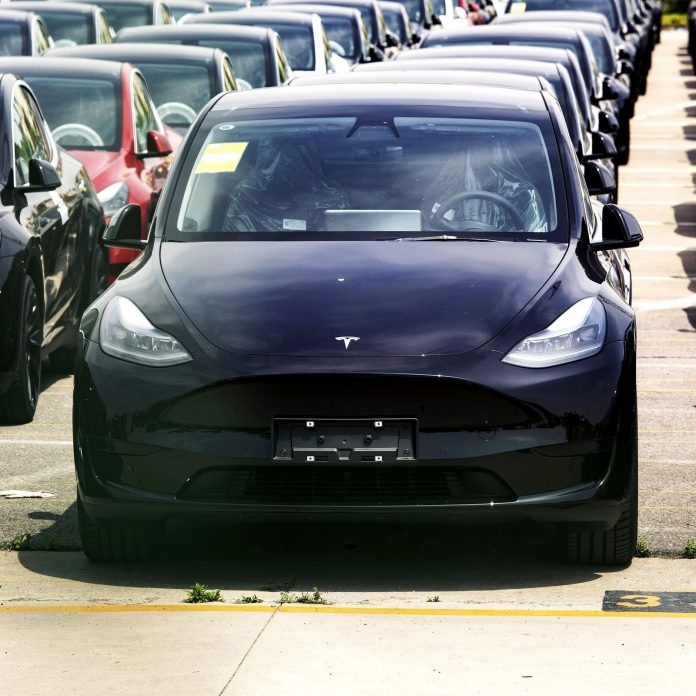
Tesla CEO Elon Musk is looking to bring the company’s highly anticipated robotaxi service to Saudi Arabia, a move that aligns with the Kingdom’s Vision 2030 plan and Tesla’s broader strategy to reignite growth through global expansion.

Musk made the pitch during the U.S.-Saudi Investment Forum in Riyadh, telling Saudi Minister of Communications and Information Technology, Abdullah Alswaha, that the Kingdom would be an ideal market for autonomous vehicles.

“Really, you can think of future cars as being robots on four wheels, and I think it would be very exciting to have autonomous vehicles here in the Kingdom if you’re amenable,” Musk said during a panel session at the forum.

Robotaxi as Tesla’s Recovery Bet

Musk did not give a timeline for the rollout in Saudi Arabia, but Tesla is set to pilot its robotaxi service in Austin, Texas, this June. The launch will mark the beginning of what Musk hopes will be a rapid global deployment of autonomous vehicles — a central pillar in Tesla’s next growth phase.

Tesla’s push into robotaxis is not just about innovation — it’s a calculated business move amid intensifying competition in the U.S. electric vehicle market. As sales slow globally and rivals such as Ford, Rivian, and Chinese automakers eat into Tesla’s share, the company is under pressure to find new revenue streams and growth frontiers.

Tesla has described the robotaxi service as a revolutionary model that can turn its cars into income-generating assets for owners. In a post from Tesla’s official account, the company said: “With the Robotaxi Network, your Tesla will be able to earn money while you’re not using it, essentially paying for itself — it will go to work, just like you.”

This concept is aimed at increasing the appeal of Tesla vehicles by offsetting their high purchase price with potential income from autonomous ride-hailing services — a game-changing pitch that no other automaker is currently offering at scale.

Dan Ives, a longtime Tesla bull and analyst at Wedbush Securities, reinforced the importance of this strategy.

“I disagree that the Waymo/Toyota is a groundbreaking deal and a threat to Tesla. Tesla will own the autonomous market in my view and no one can compete with their scale and scope. It starts in Austin in June then the autonomous journey begins. Key chapter of growth,” Ives said in a recent note.

Why Saudi Arabia?

Saudi Arabia is aggressively investing in cutting-edge technologies to reduce its dependence on oil. Vision 2030, the Kingdom’s economic diversification blueprint, has earmarked tech and mobility as priority sectors. The country has already released a regulatory framework for autonomous vehicles and is welcoming partnerships to accelerate their adoption.

On the same day Musk spoke in Riyadh, Saudi Arabia’s Transport General Authority announced a memorandum of understanding with Uber to launch robotaxis in the country. Uber plans to roll out autonomous vehicles with onboard safety operators in 2025, working in collaboration with Chinese tech firm Pony.AI. The MOU signals intent but does not yet guarantee deployment.

Uber is already a dominant player in Saudi Arabia’s ride-hailing market, operating both under its brand and through its regional subsidiary Careem, which serves 26 cities across the Kingdom. Pony.AI, however, carries some baggage. Its U.S. operations were suspended after California revoked its permit in 2022 over multiple safety violations.

Tesla, by contrast, has a global reputation and an integrated approach to autonomy, controlling both hardware and software development. That full-stack model — something competitors like Waymo, Uber, and Apple do not offer — positions Tesla to scale faster, according to analysts.

A High-Stakes Global Race

Tesla’s international ambitions for robotaxis are heating up at a time when global regulatory momentum around self-driving vehicles is beginning to shift. Countries like Saudi Arabia are opening up to autonomous technologies, seeing them as integral to smart cities and next-generation mobility.

If successful, the Saudi venture could serve as a launchpad for Tesla into the broader Middle East and North African markets, where public transportation infrastructure is still developing and tech-savvy populations are open to disruptive innovation.

Tesla’s competitors are not standing still. Alphabet’s Waymo and Toyota are teaming up to expand their robotaxi services in select U.S. cities. Apple is also quietly developing autonomous tech. But unlike Tesla, most of these players rely on third-party vehicle platforms or lack the end-to-end integration that gives Tesla control over production costs, software updates, and data.

However, the success of Musk’s pitch depends much on what happens in Austin. If Tesla successfully rolls out its robotaxi pilot next month, it could pave the way for international deals like the one Musk is seeking in Saudi Arabia. The company still faces regulatory scrutiny, public skepticism, and unresolved safety concerns, but the economic logic of autonomous fleets — vehicles that work around the clock, generate income, and reduce congestion — is too compelling to ignore.

Musk, never short on ambition, believes Tesla will not only dominate the EV space but also lead the future of transportation through autonomy. Saudi Arabia, with its big tech appetite and strategic need to diversify, may prove to be an ideal partner in that journey.

eToro’s IPO Priced at $52 Per Share, Begins Trading on NASDAQ

0

eToro, the Israel-based stock and cryptocurrency trading platform, priced its upsized initial public offering (IPO) at $52 per share, surpassing its initial target range of $46 to $50. The IPO raised approximately $620 million, with 11.92 million Class A common shares offered, valuing the company at around $4.2 to $4.4 billion. Trading began on the Nasdaq Global Select Market on May 14, 2025, under the ticker symbol ETOR. The strong pricing and upsized offering reflect significant investor confidence in eToro’s digital asset and trading services.

The successful IPO of eToro at $52 per share, valuing the company at $4.2–$4.4 billion, carries significant implications for the fintech and trading industry, as well as broader market dynamics. The upsized IPO and above-range pricing signal strong investor confidence in eToro’s business model, which blends social trading, cryptocurrency, and traditional stock trading. This could spur further investment in fintech platforms catering to retail investors.

eToro’s platform, known for its user-friendly interface and social trading features, democratizes access to financial markets. Its Nasdaq listing may attract more users globally, reinforcing the trend of retail investors participating in markets traditionally dominated by institutions. With eToro’s significant focus on cryptocurrencies, the IPO underscores the growing acceptance of digital assets in mainstream finance, potentially encouraging other crypto-focused platforms to go public.

eToro’s $620 million raise provides capital to expand its offerings, improve technology, and compete with rivals like Robinhood, Interactive Brokers, and Coinbase. This could lead to increased innovation but also consolidation in the crowded fintech space. The company’s global presence (regulated in regions like the EU, UK, and Australia) positions it to challenge U.S.-centric platforms, potentially reshaping market dynamics.

The influx of capital could fuel eToro’s expansion, creating jobs in technology, customer support, and compliance, particularly in Israel and other operational hubs. High-profile IPOs like eToro’s can influence market sentiment. A strong debut could lift fintech stocks, while any post-IPO volatility (common in tech IPOs) might dampen enthusiasm.

As a platform offering both stocks and cryptocurrencies, eToro operates in a heavily regulated space. Its public status may invite closer scrutiny from regulators like the SEC, especially regarding crypto trading and investor protections. The IPO could set a precedent for how regulators view hybrid trading platforms, influencing future fintech listings.

eToro’s platform aims to democratize trading, but participation still requires disposable income and financial literacy. Wealthier individuals or those in developed markets may benefit more, potentially widening wealth gaps. The IPO itself is a wealth-creation event for eToro’s founders, early investors, and institutional backers like SoftBank, ION Group. Retail investors, while able to trade ETOR shares, may not see comparable gains, reinforcing the divide between institutional and individual investors.

eToro operates in over 100 countries, but its services are more accessible in regions with robust internet infrastructure and regulatory frameworks (e.g., EU, U.S.). Users in developing nations may face barriers like high fees, currency conversion costs, or limited access to certain assets. eToro’s social trading feature allows users to copy experienced traders, but success depends on understanding markets. Those with limited financial education may take undue risks, leading to losses and reinforcing socioeconomic divides.

eToro’s user base skews younger and tech-savvy, potentially excluding older or less digitally inclined individuals. This could widen generational wealth gaps as younger traders leverage platforms like eToro to build portfolios. Studies show men are more likely to engage in active trading than women. eToro’s growth may disproportionately benefit male users unless it actively addresses gender imbalances in its marketing and education efforts.

eToro’s platform requires reliable internet and devices, which may exclude individuals in rural or underdeveloped regions. This digital divide limits who can benefit from eToro’s services or the broader fintech boom. eToro’s use of technology (e.g., analytics, social trading algorithms) gives an edge to users who can navigate these tools. Those without tech proficiency may lag, creating a skill-based divide. While eToro promotes crypto trading, the technological complexity of blockchain and wallet management may deter less tech-savvy users, concentrating crypto wealth among early adopters or tech enthusiasts.

eToro’s IPO is a milestone for fintech, signaling robust growth in retail trading and cryptocurrency adoption. However, it also underscores economic, social, and technological divides that could widen without deliberate efforts to promote inclusion. By leveraging its capital and platform, eToro has an opportunity to bridge these gaps, but systemic challenges like wealth inequality and digital access will require broader industry and policy collaboration.

U.S. Securities and Exchange Commission (SEC) Delays Decisions on Over 70 ETFs Applications

0

U.S. Securities and Exchange Commission (SEC) has delayed decisions on several cryptocurrency exchange-traded fund (ETF) proposals, extending review periods for assets like Solana, Litecoin, Dogecoin, XRP, Polkadot, Hedera, and Bitcoin. On May 13, 2025, the SEC postponed rulings on proposals from firms including Grayscale and BlackRock, with final decisions now expected between June and October 2025, and some potentially delayed until Q3-Q4 2025.

This affects over 70 crypto ETF applications currently under review. The delays align with expectations of no approvals before late 2025, as the SEC navigates a complex regulatory landscape under new Chair Paul Atkins. The postponements may impact the crypto market, as ETFs are seen as key to mainstream adoption, though investor demand for altcoin ETFs remains low.

The SEC’s postponement of crypto ETF reviews carries significant implications for the cryptocurrency market and highlights a deepening divide in regulatory and investor perspectives. Delays in ETF approvals could dampen short-term market enthusiasm, as ETFs are viewed as a bridge for institutional and retail investors to gain exposure to crypto without direct ownership. The absence of approved altcoin ETFs (e.g., Solana, XRP, Polkadot) may limit price catalysts for these assets, potentially capping upside momentum.

Bitcoin and Ethereum ETFs, already approved in some forms, may see sustained interest, but the lack of diversification into other crypto assets could concentrate market activity, increasing volatility in these dominant coins. some investors see delays as a bearish signal, while others view them as a prudent step toward robust regulation, potentially boosting long-term confidence.

Institutional investors, such as hedge funds and pension funds, often rely on regulated products like ETFs for crypto exposure. Continued delays may slow capital inflows, as firms await clearer regulatory frameworks. This could hinder the mainstreaming of crypto as an asset class. Conversely, firms like BlackRock and Grayscale, with pending proposals, may use the extended timeline to refine their offerings, potentially strengthening future approvals.

The SEC’s cautious approach under new Chair Paul Atkins reflects ongoing concerns about market manipulation, investor protection, and the classification of crypto assets (securities vs. commodities). Delays signal a preference for comprehensive due diligence over rushed approvals. However, prolonged uncertainty may frustrate market participants and push innovation to jurisdictions with clearer crypto regulations, like the EU or Singapore.

Retail investors may turn to unregulated or riskier alternatives (e.g., direct crypto purchases, DeFi platforms) in the absence of ETFs, increasing exposure to scams or volatility. Low demand for altcoin ETFs, as noted in recent analyses, suggests investors remain skeptical of non-Bitcoin/Ethereum assets, potentially limiting the impact of delays on broader market sentiment.

Regulators prioritize investor safety and market stability, viewing many crypto assets as speculative and poorly understood. The SEC’s delays reflect skepticism about the readiness of altcoins for mainstream financial products. Crypto advocates, including firms like Grayscale, argue that ETFs would enhance transparency and accessibility, accusing the SEC of stifling innovation.

Bitcoin and Ethereum benefit from established ETF approvals and perceived legitimacy, widening the gap with altcoins like Dogecoin or Hedera, which face higher regulatory scrutiny due to their novelty or perceived lack of utility. This divide may reinforce a two-tiered market, where Bitcoin and Ethereum dominate institutional interest, while altcoins struggle for legitimacy.

Institutional and risk-averse retail investors favor ETFs for their regulatory oversight and ease of access, but delays may push them toward established assets or traditional markets. Speculators, active on platforms like X, often embrace altcoins for their high-risk, high-reward potential, viewing ETF delays as irrelevant to their strategies. This split drives divergent market behaviors, with long-term investors awaiting clarity and short-term traders fueling volatility.

The SEC’s postponement of crypto ETF reviews signals a cautious regulatory approach that may temper market growth but aims to ensure stability. While delays could stifle altcoin adoption and frustrate industry players, they may also pave the way for more robust products. The divide between regulators and the crypto industry, Bitcoin/Ethereum and altcoins, and investors and speculators will likely persist, shaping market dynamics through 2025.

ETH Flips Bullish? Ethereum Price Prediction and 3 Altcoins Set to Climb as Risk Appetite Grows

0

ETH has flipped bullish, showing signs of life again. After a choppy few months, ETH has rebounded from key support levels and is gaining momentum. Technical analysts are watching closely, suggesting that if the token breaks above critical resistance, a rally toward $2,000—or even $3,000—could be ahead.  That kind of move would likely attract the attention of other high-potential altcoins. As investor confidence returns, so does risk appetite. Below, we explore three well-positioned altcoins that could benefit if Ethereum keeps pushing higher.

Ethereum (ETH) Price Prediction: A Potential Rally to $3,000 if Momentum Holds

ETH might finally be ready to turn bullish after a rough patch that saw the coin dip nearly 20% in a single month. ETH shows signs of life, bouncing back with a 9% weekly gain. It’s now trading around $1,585, comfortably above the $1,500 support zone. If ETH holds this level, bulls might finally get some breathing room. Analysts like Carl Moon believe ETH is trying to break out of a descending price channel. However, it must first clear $1,600. Meanwhile, Captain Faibik is also optimistic. He sees ETH pushing toward $2,150 if it breaks out of a broadening wedge pattern. He believes the ETH bottom might be in.  Ali Martinez adds that ETH is already breaking out of that triangle pattern. Bulls may regain momentum if the coin retests and holds the $1,500 level again. If it breaks the $1,600 ceiling, $2,150 or even $3,000 is possible.

Rexas Finance (RXS): The Tokenization Titan Set to Explode After Launch

With Bitcoin gaining strength and investors exploring high-upside opportunities again, RXS is becoming a strong contender with real-world use cases and long-term potential. Rexas Finance is focused on solving a major issue in traditional finance—accessibility. It’s doing this by turning real-world assets (RWAs) like real estate and artwork into digital tokens that can be bought and traded on the blockchain. This process is called tokenization, and it breaks down high investment barriers. Hence, small-scale investors can own fractions of valuable assets that they once couldn’t because of the high cost. In short, you no longer need to be rich to invest in real estate—Rexas is opening the door for everyone. One of its standout features is the Rexas Token Builder, which allows users to tokenize assets without technical skills. It also includes QuickMint Bot, which lets users launch tokens from messaging apps like Telegram or Discord.

Its Rexas Estate is a dedicated platform for fractional real estate investing. All of these point to a user-first approach that makes the ecosystem easy to use while still offering powerful tools. Another factor making Rexas Finance attractive is its early-stage momentum. The project has already raised over $48 million in its presale and is in its final phase at $0.20 per token. The official launch date is June 19, when RXS will list on major exchanges at $0.25. Considering its utility and growing demand, many analysts predict a steep rally shortly after launch. With the tokenization industry projected to reach $16 trillion by 2030, Rexas is aiming for a massive slice of the pie. As more investors seek exposure to projects with real utility and upside potential, RXS stands out as both a tech-forward and community-driven solution. With a clear roadmap and industry relevance, Rexas Finance could climb fast as confidence returns to the crypto market.

Dogecoin (DOGE): Whale Moves and Bullish Patterns Hint at Explosive Comeback

Dogecoin is back on the radar as a mysterious whale just moved 478 million DOGE, worth nearly $73 million. Top traders like Master Kenobi and Ali Martinez are sounding the alarm. They believe DOGE could rocket to $0.29 or even hit $0.8 in the coming weeks. Whale accumulation has recently been strong. Over 800 million coins were also scooped up in 48 hours. On-chain data shows long-term holders are growing in confidence, backing up whale activities.  DOGE is also forming classic bullish patterns like falling wedges and symmetrical triangles. With the rising ETF approval odds also fueling bullish sentiment, DOGE could be one of the biggest comeback stories of this cycle.

Fartcoin: Meme Coin Madness With Room to Run?

FARTCOIN has surged over 220% since mid-March, outperforming most major tokens. Its current price of $0.87 is brushing against the $1 mark. The $1 milestone is a psychological barrier that could signal a big breakout. Trader Altcoin Sherpa, who has over 240,000 followers on X, believes Fartcoin could climb much higher. However, he warns that a dip to $0.70, a key Fibonacci level, might come first. Similarly, other analysts are seeing bullish signs. Completing a “cup and handle” pattern and strong bounce from the $0.85 zone suggests this coin has serious momentum. If FARTCOIN can break past $0.95 with volume, $1 could be next.

Conclusion

As Ethereum attempts a bullish breakout, the broader market is showing early signs of a rebound, and that’s when high-upside altcoins tend to shine.  Dogecoin is riding a wave of whale accumulation and strong technical signals. Fartcoin is capitalizing on meme-fueled momentum with real chart structure behind it. Meanwhile, Rexas Finance could be the biggest winner of them all. With a real-world use case and a fast-growing presale that’s already attracted over $48 million, RXS is heading for new highs.


For more information about Rexas Finance (RXS) visit the links below:

Website: https://rexas.com

Win $1 Million Giveaway: https://bit.ly/Rexas1M

Whitepaper: https://rexas.com/rexas-whitepaper.pdf

Twitter/X: https://x.com/rexasfinance

Telegram: https://t.me/rexasfinance