DD
MM
YYYY

PAGES

DD
MM
YYYY

spot_img

PAGES

Home Blog Page 1164

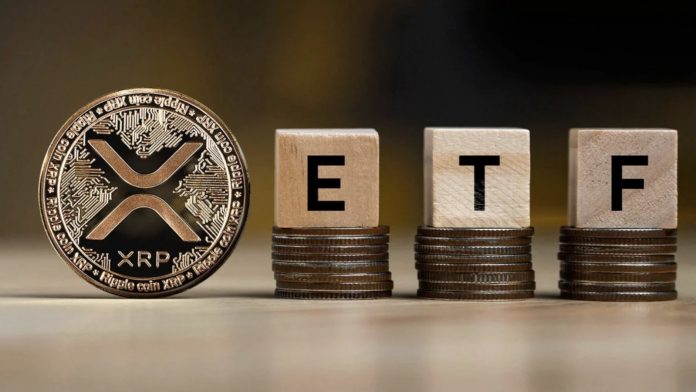
CME Group is Set to Launch Cash-Settled XRP Futures

0

CME Group is set to launch cash-settled XRP futures on May 19, 2025, pending regulatory approval. These futures will allow investors to speculate on XRP’s price without holding the asset, using the CME CF XRP-Dollar Reference Rate, calculated daily at 4:00 p.m. Two contract sizes will be available: micro (2,500 XRP) and standard (50,000 XRP), catering to both retail and institutional traders.

This move expands CME’s crypto derivatives suite, following Bitcoin, Ethereum, and Solana futures, and reflects growing institutional interest in XRP amid improved regulatory clarity post-Ripple’s SEC settlement. The launch of CME Group’s cash-settled XRP futures on May 19, 2025, carries significant implications for the cryptocurrency market, institutional adoption, and XRP’s role in finance.

CME’s XRP futures provide a regulated, cash-settled product for institutional investors to gain exposure to XRP without the complexities of custody or direct ownership. This lowers barriers for hedge funds, asset managers, and banks. The futures align with CME’s existing crypto derivatives (Bitcoin, Ethereum, Solana), signaling growing mainstream acceptance of XRP as a legitimate asset class.

Post-Ripple’s SEC settlement, improved regulatory clarity reduces legal risks, encouraging institutions to engage with XRP derivatives. Futures contracts enable hedging, which can reduce XRP’s price volatility—a common barrier to institutional investment. The availability of micro (2,500 XRP) and standard (50,000 XRP) contracts broadens market participation, increasing trading volume and liquidity.

The CME CF XRP-Dollar Reference Rate, used for settlement, provides a transparent benchmark, fostering trust in pricing. Futures allow investors to bet on XRP’s price movements, potentially amplifying bullish or bearish sentiment. This could drive short-term price swings, especially around the launch. Positive sentiment from institutional entry may boost XRP’s market perception, reinforcing its utility in cross-border payments via Ripple’s network.

Ripple’s Ecosystem Growth

XRP futures validate Ripple’s efforts to position XRP as a bridge currency for global payments, potentially accelerating adoption by financial institutions using RippleNet. The launch may spur further development of XRP-based financial products, such as ETFs or structured products, pending regulatory approval. The launch, subject to regulatory approval, underscores a maturing crypto regulatory environment in the U.S., particularly after Ripple’s legal clarity. It may pressure regulators to define clearer guidelines for other altcoins, shaping the broader crypto derivatives market.

The introduction of XRP futures creates a divide among stakeholders, reflecting differing priorities, access levels, and views on centralization. Benefit from regulated access to XRP exposure, with tools for hedging and risk management. Large players may dominate standard contracts (50,000 XRP), influencing market dynamics. Micro contracts (2,500 XRP) make futures accessible to smaller traders, but retail investors may lack the capital or expertise to compete with institutions. This could widen the gap in market influence.

Institutions gain sophisticated tools and liquidity, while retail traders face barriers like high margin requirements or limited understanding of futures, potentially exacerbating wealth disparities. View futures as validation of XRP’s utility and Ripple’s vision, especially for cross-border payments. They see institutional backing as a step toward mass adoption. Criticize XRP’s centralized nature (Ripple’s significant XRP holdings and control) and argue futures legitimize a less decentralized asset over Bitcoin or Ethereum.

The launch may deepen ideological tensions within the crypto community, with XRP’s corporate backing clashing with the ethos of decentralization. XRP’s use in Ripple’s international payment solutions (e.g., Asia-Pacific) may see boosted credibility, but futures are primarily U.S.-centric due to CME’s regulatory framework.

The launch caters to U.S. institutions, potentially sidelining markets where XRP has stronger real-world adoption (e.g., Japan, Middle East). Non-U.S. participants may feel excluded from the futures market due to regulatory or access barriers, creating a U.S.-centric bias in XRP’s financialization. Futures attract traders focused on price movements, potentially overshadowing XRP’s intended use case in payments.

Ripple and XRP proponents emphasize real-world applications, worrying that speculative trading could distort XRP’s value proposition. The futures market may prioritize short-term profits over long-term utility, creating tension between speculative and fundamental value drivers.

CME’s XRP futures launch is a pivotal step toward mainstreaming XRP, enhancing liquidity, and attracting institutional capital. However, it also highlights divides between institutional and retail investors, ideological factions within crypto, global and U.S.-centric markets, and speculative versus utility-driven agendas. These dynamics will shape XRP’s trajectory, with the potential to either bridge gaps through broader adoption or widen them if access and priorities remain uneven.

Jumia Launches Delivery Service in Nigeria, Aiming to Transform Logistics Across Africa

0

Jumia, Africa’s leading e-commerce platform, has launched Jumia Delivery in Nigeria, expanding its logistics service following a successful rollout in Côte d’Ivoire.

Backed by one of the largest delivery fleets on the continent and a logistics network that spans hundreds of cities, Jumia Delivery is set to transform last-mile logistics in Nigeria. Customers can now seamlessly send parcels nationwide, leveraging Jumia’s trusted infrastructure and partnerships with third-party logistics providers.

The service offers individuals and businesses a fast, secure, and cost-effective parcel delivery solution, leveraging Jumia’s extensive fleet and distribution network across hundreds of cities.

Africa’s growing digital economy demands robust and efficient delivery services, and we are excited to introduce Jumia Delivery as a reliable solution to improve last-mile logistics. The introduction of Jumia Delivery in Nigeria, following our success in Côte d’Ivoire, is a major step forward in addressing logistics challenges and meeting the evolving needs of both individuals and businesses,” said Francis Dufay, CEO of Jumia.

Jumia Delivery is a logistics and shipping service launched by Jumia, to extend its robust logistics infrastructure to third-party sellers, informal merchants, small and medium enterprises (SMEs), and potentially other businesses requiring efficient delivery solutions.

This service leverages Jumia’s extensive network of warehouses, distribution centers, and last-mile delivery capabilities to provide a reliable and scalable shipping option across multiple African markets. The concept of Jumia Delivery emerged as a natural extension of Jumia’s logistics expertise. Recognizing that many small businesses and informal sellers in Africa struggle with reliable and affordable shipping, Jumia launched Jumia Delivery as a standalone service to cater to these needs.

The service was first piloted in Côte d’Ivoire in late 2024, targeting SMEs and informal merchants who needed cost-effective shipping solutions for their customers. Following a successful pilot, Jumia expanded the service to Nigeria in May 2025, with plans to roll it out to Kenya, Ghana, and Senegal by the end of 2025 or early 2026.

By opening its logistics network to external users, Jumia aims to address the challenges of fragmented and costly logistics in Africa, empower local businesses, and diversify its revenue streams beyond traditional e-commerce.

Key Features and Benefits

Jumia Delivery offers several advantages that make it a compelling option for businesses in Africa. 

Extensive Reach: Jumia’s logistics network spans urban centers and remote regions, enabling sellers to reach customers in areas where traditional couriers may not operate. For example, in Nigeria, Jumia delivers to rural areas that are often underserved by other logistics providers.

Scalability: The service caters to businesses of all sizes, from informal traders shipping a few packages weekly to SMEs with high order volumes. This flexibility supports Africa’s diverse business ecosystem.

Cost Efficiency: By leveraging Jumia’s existing infrastructure, sellers benefit from economies of scale, reducing shipping costs compared to standalone courier services or in-house logistics.

Reliability and Transparency: Real-time tracking, predictable delivery windows, and professional handling enhance customer trust and satisfaction.

Support for Social Commerce: With the rise of social media-driven commerce in Africa, Jumia Delivery enables informal sellers to professionalize their operations by offering reliable shipping without the need for a formal e-commerce store.

Sustainability Initiatives: Jumia has explored eco-friendly practices, such as optimizing delivery routes and using electric vehicles in select markets, which could appeal to environmentally conscious businesses.

The rollout of Jumia Delivery in Nigeria is part of a broader strategy to scale the company’s logistics capabilities continent-wide. This expansion puts Jumia in direct competition with logistics and delivery platforms like Uber, Bolt, Sendbox, and GIG. However, Jumia is differentiating itself by opening up its proprietary fulfillment infrastructure, aiming to boost efficiency and lower costs at scale, particularly in the crucial last-mile segment.

With this strategic move, Jumia is reinforcing its role as a core enabler of Africa’s e-commerce ecosystem, continuing to build a logistics infrastructure that meets the evolving demands of digital commerce across the continent.

Looking for the Best Cryptos for 100x Potential? Don’t Miss These 4 Hidden Gems

0

As crypto markets gain renewed momentum in 2025, the spotlight is shifting to purpose-built projects with scalability, real-world adoption, and strong technical roadmaps. Large-cap tokens have shown resilience, but it’s the infrastructure-focused altcoins and rapidly evolving utility tokens that many community members now believe carry the greatest upside. Tokens that offer modularity, speed, cross-border integration, and ecosystem-wide utility are being watched closely by early buyers anticipating the next parabolic run.Qubetics ($TICS) has emerged as a breakout project in this context—filling critical usability gaps left by earlier protocols.

With enterprise-grade toolsets, seamless multi-chain access, and a major emphasis on secure cross-border functionality, Qubetics is positioning itself not just as a decentralized network, but as a real-world solution layer. For participants looking to enter early, the project’s active crypto presale remains one of the most compelling value-entry points in the market right now.

1. Qubetics ($TICS): Enabling Seamless Cross-Border Transactions with Institutional Tools

At its core, Qubetics is tackling the real-world problem of fragmented payment and compliance networks. Through its infrastructure, users can send assets, settle payments, and manage documents across borders using a decentralized framework that avoids the bottlenecks of traditional banking and legacy crypto systems. The Qubetics IDE and QubeQode together deliver a suite of tools that allow businesses to launch scalable apps handling secure cross-border interactions with just a few lines of code.

An export company in Texas can automate customs documentation while receiving real-time payments from a buyer in Germany—executed over both Ethereum and BNB Chain without additional middleware. Freelancers in Nigeria can receive stablecoins for services rendered to clients in Canada, all while maintaining full custody over their funds via the Qubetics multi-chain wallet.

These workflows are supported by smart contract templates, real-time conversion layers, and tokenized compliance protocols—all part of the Qubetics modular design.

In May 2025, Qubetics announced SDK support for third-party integrations with enterprise ERP systems. Partnerships with two financial networks in Latin America were also revealed, targeting cross-border microfinancing for SMEs. Simultaneously, their decentralized VPN beta went live in test environments across Southeast Asia, allowing journalists and professionals in restricted markets to securely access decentralized tools.

Crypto Presale and ROI Forecasts

The Qubetics crypto presale is now in Stage 34. Over 512 million $TICS tokens have been purchased by more than 26,300 holders, raising upwards of $16.9 million. At $0.2532 per token, the price remains accessible for early-stage participation. Analysts point to a wide range of upside outcomes:

If $TICS reaches $1 post-presale, that represents a 294% ROI. A rise to $5 would yield 1,874%, and $6 would bring 2,269%. Should it climb to $10, the return hits 3,848%, and a $15 valuation after the mainnet rollout would lock in 5,822% gains for presale participants.

Why did this coin make it to this list? Qubetics is combining multi-chain interoperability with enterprise-ready features, offering unmatched potential for early adopters positioning for 100x returns.

2. Cardano (ADA): Scaling a Multichain Future with Institutional-Grade Upgrades

Cardano continues to build slowly but strategically. Its latest updates have reinforced its role as one of the most technically sound blockchains in the space. The addition of native Bitcoin support via the Lace wallet expands its cross-chain capabilities and positions it for a future of multichain DeFi. Cardano’s focus on formal verification and sustainability has also made it a preferred choice among developers building in regulated environments.

With projects like Midnight (a privacy-focused sidechain) and the expansion of its Hydra Layer-2 solution, Cardano is clearly moving toward scalable, low-latency applications. ADA now plays a role in not just DeFi and NFTs but also identity, supply chain transparency, and on-chain compliance.

Cardano whales accumulated over 410 million ADA during April, according to on-chain data. Meanwhile, rumors of ETF filings and Cardano’s growing market share in Africa are driving renewed enthusiasm. Lace wallet is now available as a Firefox extension and is expanding support for Lightning Network integration.

Why did this coin make it to this list? Cardano’s continued evolution toward multichain architecture, formal governance, and real-world integrations places it among the best cryptos for 100x potential.

3. Stellar (XLM): Powering Borderless Finance and Tokenized Payments

Stellar is built for borderless asset transfers, offering a fast, low-fee solution for moving stablecoins and digital assets across geographies. It’s widely used by fintech firms, NGOs, and digital remittance platforms to bridge underbanked users into the blockchain space. With strong compliance rails and API-ready infrastructure, Stellar has remained highly relevant in institutional-grade cross-border use cases.

The Stellar Development Foundation (SDF) has prioritized expanding into tokenized real-world assets (RWAs), a space that’s drawing increasing attention in 2025. From e-money licensing to stablecoin interoperability and programmable payments, Stellar is positioned as a lean, purpose-driven blockchain for financial utility.

The protocol has partnered with major African and Southeast Asian mobile networks to facilitate tokenized airtime and digital identity. Stellar is also working on integrations with Circle and the UN’s WFP to enable instant fund disbursement in humanitarian programs. These developments have broadened XLM’s presence across payment rails that serve real-world needs.

Why did this coin make it to this list? Stellar’s streamlined approach to tokenized finance and real-world inclusion makes it one of the best cryptos for 100x potential in the next bull run.

4. Celestia (TIA): Modular Data Availability for a Scalable Blockchain Stack

Celestia represents a major evolution in blockchain design. Unlike monolithic chains, Celestia focuses solely on data availability and consensus. This modular approach enables developers to launch their own rollups or sovereign blockchains without needing to bootstrap security or consensus from scratch. It’s changing how blockchains scale by offering an a la carte infrastructure option.

TIA tokens power this data availability layer, giving builders access to a plug-and-play backend for decentralized applications and new networks. With Ethereum Layer-2 rollups like Eclipse and Sovereign already adopting Celestia’s stack, the ecosystem is gaining traction fast.

Celestia has launched its Mainnet Beta, allowing for real-world deployment of modular chains. Over $2 billion in assets are now secured via Celestia-supported rollups. In April, it announced an integration with EigenLayer for data re-staking—blending modular security with yield opportunities. The development of Blobstream for simplified data access is also underway, aimed at reducing developer friction.

Why did this coin make it to this list? Celestia’s modular approach solves blockchain bloat at scale, and its early adoption by top-tier rollups positions it for explosive upside and 100x potential.

Final Thoughts

From cross-border scalability in Qubetics to the composability of Cardano, Stellar’s global remittance integrations, and Celestia’s modular innovation—these four cryptos are building the infrastructure, tools, and connectivity that define the next generation of digital assets.

Among them, Qubetics stands out for those seeking an early-stage entry with real-world utility and tangible market traction. With its presale still active at just $0.2532, participants can secure a high-upside position before further stages unlock higher prices. For community members tracking the best cryptos for 100x potential, this may be the most strategic point of entry available right now.


For More Information:

Qubetics: https://qubetics.com

Presale: https://buy.qubetics.com/

Telegram: https://t.me/qubetics

Twitter: https://x.com/qubetics


FAQs

  1. How can someone participate in the Qubetics crypto presale?

Participants can access the Qubetics presale directly through the project’s official platform during Stage 34, priced at $0.2532 per token.

  1. What makes Celestia different from other Layer-1 blockchains?

Celestia is not a smart contract platform—it’s a modular data availability layer that helps scale blockchains by decoupling execution from consensus.

  1. Is Cardano still considered undervalued?

Yes. With growing adoption in Africa, enterprise-focused updates, and new integrations like Bitcoin support, ADA is seen as a long-term growth token.

  1. What role does Stellar play in financial infrastructure?

Stellar enables fast, low-fee, compliant asset transfers and is widely adopted in emerging markets and humanitarian finance.

  1. What’s the long-term price forecast for Qubetics?

Analysts predict that $TICS could hit $10 to $15 post-mainnet, translating into over 5,800% ROI for early adopters.

Foreign Investors Pull Out N420bn from Nigerian Equities in Q1 2025, Despite Record Surge in March Trades

0

Foreign investors withdrew N420.37 billion from Nigeria’s equities market in the first quarter of 2025, a steep 251% increase over the N119.81 billion recorded during the same period in 2024, according to new data released by the Nigerian Exchange Group (NGX).

The sharp rise in capital outflows comes amid sweeping macroeconomic reforms by the Trump administration and heightened investor uncertainty, particularly around the Nigeria’s volatile FX market.

The increase in foreign exits, despite an uptick in inflows, underscores the unstable confidence in Nigeria’s long-term economic stability. Although foreign inflows also rose significantly—climbing by 322% from N93.37 billion in Q1 2024 to N393.68 billion in Q1 2025—the quarter ended with a net deficit of N26.69 billion. Total foreign portfolio transactions for the period surged to N814.05 billion, nearly four times the N213.18 billion recorded a year earlier.

Foreign Trades Explode in March, Dominated by Block Transactions

Foreign interest reached an inflection point in March 2025, when trading by foreign investors accounted for 62.74% of the total N1.115 trillion in transactions. This was a dramatic rise from just 8.37% in February and 11.78% in January. The NGX attributes this surge to a spate of block trades—privately negotiated, large-volume transactions commonly executed by foreign institutional players.

According to the NGX’s Domestic and Foreign Portfolio Investment Report for March, both foreign inflows and outflows were almost identical—N349.97 billion and N349.92 billion, respectively—indicating a round-trip of capital rather than sustained investments.

In contrast, February had seen foreign inflows of only N18.05 billion and outflows of N24.60 billion, while January was only slightly higher with N25.66 billion in inflows and N45.85 billion in outflows.

This suggests that many foreign players may have entered the market with short-term positions, perhaps to exploit exchange rate volatility or capitalize on brief windows of naira stability before pulling out again.

March Pushes Total Transactions Above N1 Trillion

March 2025 marked a milestone for Nigeria’s capital markets, recording over N1 trillion in total equity transactions for the first time in the year—driven largely by foreign block trades. The total value of transactions hit N1.115 trillion, more than double February’s N509.47 billion and well ahead of January’s N607.05 billion.

Year-on-year, the figure is up 107.14% from N538.54 billion recorded in March 2024.

At the NAFEM official exchange rate of N1,536.82/$1 in March, the total volume translates to about $725.86 million—an increase from $341.36 million in February.

Domestic Investors Pull Back Amid Foreign Surge

Interestingly, domestic investors retreated in March despite the overall market rally. Total domestic trades declined 10.98% from N466.82 billion in February to N415.62 billion in March. January had seen stronger domestic activity at N535.54 billion.

Retail investors accounted for N197.12 billion in March, down from N214.51 billion in February and N267.35 billion in January. Institutional investors contributed N218.50 billion—also a drop from N252.31 billion in February and N268.19 billion in January.

While domestic investors still made up the majority of total Q1 2025 transactions, N1.41798 trillion or 63.53%, their share is declining. In Q1 2024, domestic trades accounted for a dominant 86.23% of total market activity.

A Shift in Market Dynamics

The data suggests a potential turning point in Nigeria’s capital market, with March 2025 being the first time in over a year that foreign trades surpassed domestic trades in monthly value. This shift aligns with Nigeria’s broader efforts to court international capital, including FX liberalization and interest rate hikes initiated in mid-2023.

Between 2007 and 2024, domestic investors dominated the Nigerian stock market. Domestic transactions grew from N3.556 trillion in 2007 to N4.735 trillion in 2024, while foreign trades increased more modestly from N616 billion to N852 billion. But March’s developments hint at a rebalancing—albeit one that might be temporary.

Despite the government’s push for liberal reforms, investor sentiment remains fragile. Exchange rate volatility continues to pose a risk. The naira depreciated from N1,492.49/$1 in February to N1,536.82/$1 in March, a trend that could discourage sustained foreign interest.

Meanwhile, inflation ticked up in March to 24.23%, reversing a brief slowdown to 23.18% in February following the Consumer Price Index rebasing. The rise was largely due to increases in food and transport prices, driven by higher logistics costs and FX pressures.

The inflation spike compounds the challenge for monetary policy authorities. Although the Central Bank of Nigeria has tightened interest rates to make local assets more attractive, the accompanying cost-of-living crisis and the naira’s instability complicate policy transmission.

Analysts believe the March surge in foreign transactions was driven by speculative capital rather than renewed long-term confidence. The near-equal inflows and outflows underscore a cautious strategy by foreign investors—entering when conditions appear favorable, only to exit quickly when risk levels rise.

Have you read my “The Dangote System: Techniques for Building Conglomerates”?

0

Have you read my “The Dangote System: Techniques for Building Conglomerates”? This book will shape your perspectives on markets and why the accumulation of capabilities is foundational to become a category-king. If you thrive, you can extract a conglomerate tax.

Yes,  as you solve problems governments want solved but unable to solve them, you can tax any economy. When you register for Tekedia Mini-MBA, ask for a free copy … chapters here https://www.tekedia.com/dangote-book/