DD
MM
YYYY

PAGES

DD
MM
YYYY

spot_img

PAGES

Home Blog Page 1172

Poor Labour as Microsoft Fires 6,000 Workers!

0

America reminds that you are nobody’s kid when you see how they hire and fire: “Microsoft has begun laying off about 3% of its global workforce, amounting to thousands of jobs across different levels, teams, and geographies — even as the company continues to post strong earnings and sees its share price climbing to historic highs.” That is 6,000 strong humans! That is coming after they recently cut 10,000 people.

Two centuries ago, land was catalytic as a factor of production. A century later, labour had a moment. Today, they have invented Knowledge which rules everything. Capital and Enterpreneur’s positions remain unchanged for centuries. In this age of AI, we must keep updating our skills because it is now one AI agent away from the pink slip. All those affected, our best wishes as the future has abundance.

Deepen your skill and be ahead of employers and that can only come if you move from Labour to Knowledge within the factors of production. They will be replacing Labourers even as they pile resources on knowledge.  What is Labour? Forget what Adam Smith wrote decades ago since in his era there was no Knowledge as a factor.

Labour-level factor of production will go even as Knowledge-level factor will become extremely valuable. Machines like robots and AI will do Labour-level work. So, we need to evolve to become the knowledge species. Take time and study the career module of Tekedia AI in Business Masterclass and be ready for the future https://school.tekedia.com/course/aibusiness/

Microsoft Lays Off 3% of Global Workforce Despite Soaring Profits, Record Share Price

0
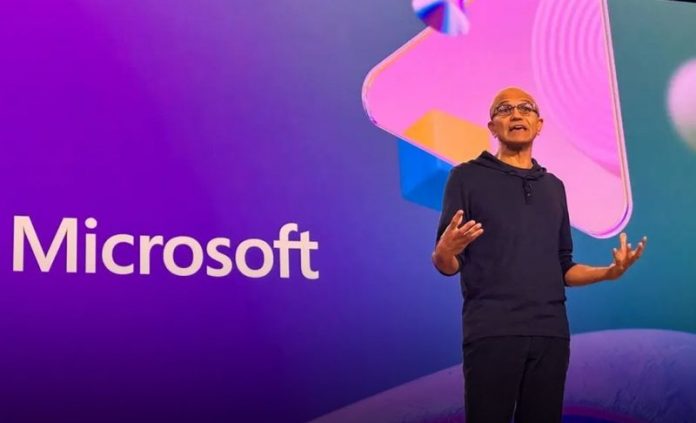
Microsoft CEO

Tech giant Microsoft has begun laying off about 3% of its global workforce, amounting to thousands of jobs across different levels, teams, and geographies — even as the company continues to post strong earnings and sees its share price climbing to historic highs.

The company, which had 228,000 employees worldwide as of the end of last June, confirmed the decision on Tuesday, calling it a strategic move to streamline operations and “position the company for success in a dynamic marketplace.”

“We continue to implement organizational changes necessary to best position the company for success in a dynamic marketplace,” a Microsoft spokesperson said in a statement to CNBC.

Although the company did not disclose the exact number of roles being cut, 3% of its workforce suggests that nearly 7,000 employees will be affected. The layoffs are not performance-related, the spokesperson added, distinguishing them from a smaller round of cuts announced earlier this year that were based on employee performance.

This marks Microsoft’s largest layoff since January 2023, when the company eliminated 10,000 roles in response to what it then described as shifting economic realities and customer demand patterns.

Layoffs Amid Record Profits and Market Performance

What makes this latest wave of job cuts particularly notable is that it comes amid strong financial performance. Microsoft reported a $25.8 billion quarterly net income in April, surpassing analysts’ expectations, and issued an upbeat forecast for its future performance, especially in its AI-powered cloud services.

In fact, Microsoft’s stock closed Monday at $449.26, the highest price so far in 2025. This comes after a previous record close of $467.56 in July 2024, underlining the company’s continued strength on Wall Street.

Analysts say this latest restructuring is not driven by financial stress, but rather by organizational recalibration. A company spokesperson said that reducing layers of management is one of the primary objectives of the layoffs.

Nadella’s Push for Structural Reforms and AI Shift

The decision reflects a broader trend in Microsoft’s internal restructuring efforts. In January, CEO Satya Nadella indicated during an earnings call that the company would begin implementing sales execution changes, especially around Azure — Microsoft’s cloud platform. He noted that revenue growth outside of AI services had slowed, partly due to strategic shifts in sales incentives.

“How do you really tweak the incentives, go-to-market?” Nadella asked. “At a time of platform shifts, you kind of want to make sure you lean into even the new design wins, and you just don’t keep doing the stuff that you did in the previous generation.”

This aligns with Microsoft’s ongoing strategy to aggressively invest in artificial intelligence and consolidate operations that support this next-generation platform push. AI-driven services, particularly through Azure, have outperformed internal projections, while more traditional areas of the business face tightening margins and slower growth.

Part of a Broader Tech Sector Realignment

Microsoft’s announcement adds to a growing list of tech companies trimming their workforce this year, often despite strong balance sheets. Just last week, cybersecurity firm CrowdStrike announced that it would cut 5% of its workforce, citing efficiency realignment rather than poor performance.

This signals a continuing pattern of proactive restructuring among top-performing tech firms — one where profitability no longer guarantees job security, and the focus is shifting toward leaner operations tailored to new technologies like AI.

Microsoft, which remains at the forefront of enterprise cloud and generative AI solutions, appears to be doubling down on this direction. Analysts say the layoffs suggest a move to consolidate non-AI divisions, while aggressively reallocating resources toward AI, cloud, and future-facing products.

For a company that’s been consistently outperforming the market and driving the AI narrative in Silicon Valley, Microsoft’s layoffs point to a paradox shaping the tech economy: while innovation booms, the jobs behind older or less profitable segments are quietly being retired.

This restructuring may improve Microsoft’s margins and investor confidence in the short term, but it also echoes a familiar refrain from recent years, where tech employees, once shielded by boom cycles, are now vulnerable even when business is good.

Apple’s $95m Siri Settlement Opens the Door for Users to Claim Payouts — But It’s One of Many Privacy Lawsuits the Company Faces

0

Apple’s carefully cultivated image as a champion of consumer privacy is once again facing a dent. The tech giant has agreed to pay $95 million to settle a class-action lawsuit accusing its Siri voice assistant of eavesdropping on private conversations and sharing them with third parties for targeted advertising.

With this case, Apple is now grappling with a growing number of legal battles over alleged breaches of user privacy, raising questions about whether the company’s public stance on data protection matches its behind-the-scenes operations.

The Siri lawsuit, filed in 2021 by California resident Fumiko Lopez and other consumers, accused Apple of allowing its voice assistant to be activated unintentionally, during what users believed were private or confidential conversations. The plaintiffs claimed that these conversations were recorded without consent and were then allegedly accessed by third-party companies such as restaurants and retail brands, which used the data to serve targeted ads via Apple’s Safari browser and its search platforms.

Although Apple denies the allegations and insists it did nothing wrong, it agreed earlier this year to resolve the lawsuit through a multimillion-dollar settlement, without admitting liability. Now, consumers who used Siri-enabled devices between September 17, 2014, and December 31, 2024, and who experienced unintentional Siri activation during a private conversation, can file a claim for financial compensation.

Eligible Apple products include the iPhone, iPad, MacBook, iMac, Apple Watch, HomePod, iPod touch, and Apple TV. The settlement caps payouts at $20 per device, up to a maximum of five devices per person, meaning a consumer could receive as much as $100 depending on how many qualified devices they owned.

Some Apple users have already received email or postcard notifications about the settlement, with instructions and claim codes. However, those who didn’t receive a notice can still file a new claim by submitting details such as their name, device information, and proof of purchase. The deadline to submit claims is July 2, 2025, and payments will only be processed after a final approval hearing scheduled for August 1, 2025, unless delayed by appeals.

Not Apple’s First Privacy Scandal

While Apple continues to promote itself as a privacy-first company, touting slogans like “Privacy. That’s iPhone.” — the Siri case is only one of several legal troubles the company is currently navigating over data protection and surveillance concerns.

In 2019, Apple came under fire after The Guardian reported that Siri audio recordings were being reviewed by human contractors. The whistleblower in that case revealed that contractors had access to audio snippets that included intimate or highly sensitive personal moments, such as confidential medical discussions, drug deals, and even couples having sex, all without the users’ knowledge or consent. Following the backlash, Apple temporarily halted the program and later rolled out an option for users to opt out of having their Siri recordings reviewed.

More recently, Apple has been hit with lawsuits tied to its AirTag tracking devices. Several women filed suit against the company in 2022, alleging that their former partners had used AirTags to track and stalk them. The lawsuit, filed in a federal court in San Francisco, argued that Apple’s failure to build adequate safeguards into the device made it an ideal tool for abuse. Although Apple introduced safety updates, like alerts for unfamiliar AirTags moving with users, the case highlighted the fine line between innovation and potential privacy violations.

In Europe, Apple is also under pressure. In Germany, the consumer group Verbraucherzentrale NRW sued the company in 2021 for allegedly misleading users about how their data was used for advertising. That case focused on Apple’s App Tracking Transparency framework, which critics argued gave Apple a competitive advantage by restricting third-party tracking while still allowing Apple to collect user data for its own targeted ads within the App Store and Apple News.

These privacy-related lawsuits add to the legal complexity Apple faces as it expands its business into new areas like health tracking, financial services, and AI-enhanced features. Legal experts warn that as Apple continues integrating voice and sensor technologies deeper into users’ daily lives, the risk of further legal exposure only grows, especially in jurisdictions with strong privacy laws like the EU or California.

A Shift in Public Perception?

The Siri settlement and other lawsuits come at a time when consumer trust in Big Tech is already faltering. Once praised for its tough stance on user data, especially in contrast to data-driven advertising giants like Meta and Google, Apple now finds itself embroiled in the same types of surveillance allegations it once claimed to avoid.

While the company maintains that data collected via Siri is processed anonymously and primarily on-device, multiple reports and whistleblower accounts have challenged that narrative. Privacy advocates have noted that even anonymized data can be deanonymized, particularly when cross-referenced with other sources, turning “anonymous” into a false comfort.

For consumers, the Siri settlement is a modest payout — $20 or less per device — but it carries larger symbolic weight. It suggests that even industry leaders who position themselves as privacy guardians are not immune to the messy, often intrusive consequences of data-driven technologies.

Although the Siri case is now heading toward a financial resolution, its implications could ripple across the industry. If the court grants final approval and no appeals are filed, claimants may receive payments by late 2025. But Apple’s broader legal challenges are far from over.

With regulators in the U.S. and Europe paying closer attention, and a growing number of lawsuits scrutinizing Apple’s ecosystem, the company faces increasing pressure to align its privacy rhetoric with actual practice.

3 Altcoins to Buy, Ride the Momentum, and Become a Millionaire as Cardano’s Charles Hoskinson Says Bitcoin Will Hit $250,000 in 2025

0

Cardano founder Charles Hoskinson predicts Bitcoin could hit $250,000 in 2025, signaling a big crypto bull run ahead. If you are an investor seeking returns that can change your life, now is the time to look for potential altcoins. While Bitcoin leads the rally, altcoins like Rexas Finance (RXS), Dogecoin (DOGE), and XRP generate serious buzz for their growth prospects. Each brings a unique use case, strong momentum, and investor interest. As capital flows into the crypto space, these three altcoins stand out as top contenders for those aiming to ride the wave to millionaire status.

Rexas Finance (RXS): The Most Undervalued Altcoin Before the 2025 Bull Run

Rexas Finance is emerging as a standout contender in the altcoin market, capturing attention as a high-potential asset amid the growing bullish sentiment across the crypto landscape. With Charles Hoskinson projecting Bitcoin to reach $250,000 in 2025, investors are actively seeking altcoins poised to deliver exponential returns during the anticipated bull run—and Rexas Finance (RXS) is increasingly being viewed as that “one altcoin to buy before the market takes off.”Currently priced at $0.20 and in its final presale stage, Rexas Finance has already raised over $48 million of its $56 million target, selling more than 460 million RXS tokens. Rexas enables fractional ownership of real-world assets like real estate, gold, art, and IP. The platform’s ecosystem extends beyond tokenization. It includes DeFi services, AI-generated NFTs, a multi-chain launchpad, and a yield-generating treasury—all built with accessibility and transparency in mind. Rexas has also undergone a comprehensive audit by CertiK, boosting investor confidence in its security and smart contract integrity. Unlike speculative meme coins, Rexas Finance provides financial infrastructure for the digital age. Its use case, strong tokenomics, and early-stage pricing make it a compelling buy, especially for investors seeking to replicate the kind of outsized gains seen in past bull markets with coins like SHIB and DOGE. As momentum builds and presale availability narrows, RXS positions itself as a potential breakout star. For those aiming to ride the wave of crypto’s next bull cycle, Rexas Finance stands out as an opportunity and a strategic investment in the future of real-world asset digitization.

Dogecoin (DOGE): Whale Accumulation Signals Potential Surge

Dogecoin (DOGE) is making headlines once again as bullish momentum builds. Whales have scooped up 1.83 billion DOGE—worth over $640 million—in just two days, signaling major accumulation. Now trading above $0.16, DOGE has surged 3.18% in the past 24 hours. With open interest rising to $1.52 billion and options volume spiking nearly 387%, traders are eyeing big moves ahead.  The launch of the Dogecoin ETP by 21Shares and the rise of the House of Doge projects are fueling optimism, with a $0.50 target in sight. If prices triple, DOGE could hit $0.48—still below its all-time high but a significant gain. As investors look for breakout opportunities, DOGE joins the ranks of altcoins riding renewed interest, aligning with Cardano founder Charles Hoskinson’s prediction that Bitcoin will reach $250,000 in 2025. In this environment, the right altcoins could turn smart investments today into million-dollar holdings next year.

XRP: Bullish Momentum Builds as Price Climbs

XRP shows renewed strength, trading at $2.17 after reclaiming the $2.00 mark. According to Bitcoin News, this uptrend is reinforced by a “golden cross” on hourly charts—a classic bullish indicator. Analysts now see $2.25 as the next resistance, potentially moving toward $2.60 if momentum continues.  Fueled by optimism over a potential XRP ETF and the SEC pausing its appeal, trading volume has surged to $3.65 billion. If Bitcoin does reach $250,000 by 2025, as Cardano’s Charles Hoskinson predicts, XRP might emulate its parabolic 2017 rally, with price forecasts between $5 and $45. All this and XRP’s increasing utility as a payment processor make XRP compelling. Still, macroeconomic headwinds like tariffs or hawkish Fed policy could challenge progress, potentially pulling the price to $1.70. Yet, for investors willing to ride the wave, XRP remains one of the most compelling altcoin bets of the upcoming bull market.

Conclusion

The road to crypto wealth in 2025 could begin with today’s strategic choices. With Charles Hoskinson’s bold Bitcoin prediction fueling optimism, altcoins are expected to mirror or even outperform BTC’s gains. Rexas Finance offers real-world asset tokenization with proven presale success. Dogecoin continues to draw whale interest and mainstream adoption. XRP, riding on legal clarity and utility in cross-border finance, is reasserting itself as a market heavyweight. These altcoins aren’t just speculative plays—momentum, strong narratives, and community support back them. For investors looking to turn modest capital into substantial wealth, Rexas Finance, Dogecoin, and XRP are compelling choices to watch.


For more information about Rexas Finance (RXS) visit the links below:

Website: https://rexas.com

Win $1 Million Giveaway: https://bit.ly/Rexas1M

Whitepaper: https://rexas.com/rexas-whitepaper.pdf

Twitter/X: https://x.com/rexasfinance

Telegram: https://t.me/rexasfinance

Off-Grid Solar Market Secured $299M in 2024, Signaling Robust Investor Interest

0

In 2024, the off-grid solar market attracted $299 million across 158 global deals, signaling robust investor interest amid a year of operational discipline, model refinement, and consolidation.

Scale-up companies continued to dominate the funding, securing $229 million, with 77% through securitizations, reflecting a shift toward structured, risk-aligned financing. A key move was Ignite Power’s acquisition of Engie Energy Access in Africa, highlighting strategic realignment among market leaders.

The Mid-tier start-ups faced challenges, raising $48 million across 16 companies—a 69% drop from the three-year average. Operational missteps, including overestimations of consumer demand and premature scaling, led to acquisitions or exits. These setbacks have fostered more realistic growth strategies and a sharper focus on sustainability.

Seed-stage companies remained vibrant, with 67 ventures raising $19 million, maintaining stability. Locally owned African firms led innovation, making this segment a hotspot for high-impact early-stage investments.

Across all categories, Productive Use Renewable Energy (PURE) dipped from 2023 highs; however, the segment remains fundamentally strong. Innovations in agri-energy, cold chains, and rural income generation keep entrepreneurial momentum alive, especially in underserved regions where access to reliable power is transformative.

The off-grid solar market is a fast-evolving space that can transform the lives of millions. Capital flows into the sector have grown considerably over the past seven years. This means more and more people and businesses are putting their money into the off-grid solar sector.

The sector has seen growing investment and involvement from global energy players, and
strategic investors from other sectors, taking steps towards creating customer-centric utilities that go beyond electricity connection. These include appliances, financial products, and internet connectivity.

Some of the current market drivers include: – Rising incomes of households, falling product prices driven by technological innovation, improving infrastructure enabling better distribution networks, Population growth in off-grid and unreliable grid access areas- Increased availability of consumer finance1

Four Drivers of Optimism for the Off-Grid Solar Market in 2025

Political Convergence and Subsidy Support

The M300 Coalition is aligning public and private stakeholders around universal access goals, unlocking subsidies, and dramatically expanding affordability critical for scaling commercial off-grid solutions.

Led by the World Bank Group (WBG) and the African Development Bank (AfDB), Mission 300 is a unique initiative that brings together African governments, the private sector, and development partners to deliver affordable power, expand electricity access, boost utility efficiency, attract private investment and improve regional energy integration that drives economic transformation.

Recognition as Core Infrastructure

With nearly 50% of unserved populations expected to be reached through off-grid solutions, off-grid solar is now recognized as essential infrastructure. Governments are updating policies accordingly, further legitimizing the sector.

New Equity Flows

Instruments like the IFC’s Zafiri Fund are revitalizing early and growth-stage equity funding. These tailored, flexible capital sources are essential for companies transitioning through critical scaling phases.

Climate Alignment and Strategic Value

Global climate finance institutions, including the Green Climate Fund, are embracing off-grid solar as a pillar of adaptation and resilience positioning the sector as both an environmental and economic investment.

Looking Ahead

The off-grid solar industry is maturing. Business models are being tested and refined, innovation is vibrant, and the enabling environment is improving. While early-stage capital is tighter, scale-ups are attracting more sophisticated financing like securitizations. Demand signals from both consumers and governments are stronger than ever. With aligned policy, advancing innovation, and tested business models, the sector is primed for sustainable impact and scalable returns.