DD
MM
YYYY

PAGES

DD
MM
YYYY

spot_img

PAGES

Home Blog Page 1191

Google Says It Will Appeal Court Ruling Labeling It ‘Monopolist’ in Search Market

0

Google has announced plans to appeal a U.S. court ruling that found it guilty of maintaining an illegal monopoly in the online search market, a decision that threatens to upend the company’s dominance in the digital economy.

The appeal comes amid intensifying legal and regulatory challenges confronting the tech giant across several fronts, as it seeks to protect its business model and the powerful grip it holds over the internet’s most lucrative entry points.

In a post on X on Saturday, Google said it “still strongly believes the Court’s original decision was wrong” and expressed confidence in overturning the ruling on appeal. The statement follows a Friday hearing where the Justice Department laid out proposed remedies that would reshape how Google operates—chief among them a call to break off its Chrome browser and prohibit exclusivity deals that keep Google Search as the default on devices.

The landmark case, which began in 2020 and culminated in a ruling in August 2024 by U.S. District Judge Amit Mehta, concluded that Google’s tactics to secure search dominance—such as paying billions to phone manufacturers and browser developers—constituted unlawful monopolization. The ruling marked one of the most significant antitrust victories against a tech company since the Microsoft case over two decades ago.

But the Justice Department is not stopping at a legal win. It is pressing for structural remedies that would significantly curb Google’s control of the search and browser markets. These include forcing Google to divest from Chrome, banning exclusive deals with smartphone makers, and compelling the company to share data that powers its search engine—data it gathers through users of Chrome and Android.

In response, Google has argued that the DOJ’s proposals are overreaching and lack justification grounded in consumer welfare.

“While we heard a lot about how the remedies would help various well-funded competitors (with repeated references to Bing), we heard very little about how all this helps consumers,” the company said on Saturday.

Google has instead proposed what it calls “targeted” remedies. These would allow smartphone manufacturers to pre-install the Google Play Store without being required to include Google Search or Chrome. The company insists that its services are chosen because of their quality, not because of coercive arrangements.

The trial also explored how Google’s dominance could affect future developments in artificial intelligence. Judge Mehta acknowledged that while Google currently leads in online search, AI is emerging as a disruptive force. However, the Justice Department has raised alarms that Google’s existing dominance may allow it to extend that control into the AI space as well, stifling potential rivals before they gain traction.

Google is not only under fire in the United States. Similar legal scrutiny is playing out globally, from the European Union to India, where regulators are increasingly challenging Google’s bundling of services, its ad-tech practices, and the sheer scale of user data it commands.

In Europe, the company has already been fined billions for anti-competitive behavior involving Android and shopping search features. In India, the competition regulator has ordered Google to decouple its mobile apps from Android, echoing concerns raised in the U.S. case.

Despite the mounting legal pressure, Google remains defiant and determined to preserve its sprawling ecosystem, which includes not just Search and Chrome, but Android, YouTube, and the Google Play Store. The company has maintained that any forced break-up would undermine the seamless integration users value, and instead of fostering competition, could damage innovation and consumer experience.

A final decision on the penalties and remedies in the U.S. case is expected by August. But regardless of the outcome, the case signals a shift in how governments confront Big Tech. The stakes have never been higher for Google— the giant, not only must convince the courts but must also fend off a rising tide of global regulators eager to curtail its dominance.


Moody’s Upgrades Nigeria’s Sovereign Credit Rating to B3, Citing FX Reform and Fiscal Stability

0

Global credit ratings agency Moody’s has upgraded Nigeria’s long-term foreign currency rating from Caa1 to B3, citing meaningful improvements in the country’s external and fiscal positions following key macroeconomic reforms introduced under President Tinubu’s administration.

The outlook has been adjusted from “positive” to “stable,” signaling renewed global confidence in Nigeria’s economic direction but also a cautious view on the pace of progress ahead.

The upgrade, announced late Thursday, follows similar sentiment expressed by Fitch Ratings in April, which moved Nigeria’s outlook from “negative” to “stable.” Both agencies point to recent fiscal discipline and overhauls in foreign exchange management as pivotal to Nigeria’s improved credit standing.

“The recent overhaul of Nigeria’s foreign exchange management framework has markedly improved the balance of payments and bolstered the CBN’s foreign exchange reserves,” Moody’s noted in its statement.

The Central Bank of Nigeria (CBN) introduced sweeping changes in 2024, including a new FX matching platform and FX code to facilitate price discovery and reduce volatility in the official exchange window. This came after a 40 percent depreciation of the naira in 2023, which sparked fears of an unstable macroeconomic environment. However, the reforms have significantly narrowed the gap between the official and parallel market rates and restored investor confidence in FX liquidity.

Although the rating has improved, Moody’s revised the outlook to “stable” from “positive,” reflecting concerns that the current momentum might not be sustained at the same pace — especially if global oil prices, a key revenue source for Nigeria, decline sharply.

“The stable outlook reflects our expectations that external and fiscal improvements will decelerate but will not reverse entirely,” the agency said.

Moody’s also emphasized that continued success will depend on Nigeria’s ability to sustain gains made so far and protect its fiscal discipline against political and global market headwinds.

Key Drivers Behind the Upgrade

A combination of inflation control, better fiscal management, and improved investor sentiment has helped shift the narrative around Africa’s largest economy. Moody’s cited Nigeria’s steps to stabilize borrowing costs and reduce inflationary risks — despite the economic hardship caused by earlier reforms such as fuel subsidy removal and deficit monetization.

This sentiment echoes Fitch’s earlier report that praised the Tinubu administration’s market-oriented approach. Reforms such as exchange rate liberalization, tighter monetary policy, and the halting of central bank financing of budget deficits have been credited for reducing economic distortions and enhancing the country’s resilience to external shocks.

“We are seeing clear signs of increased commitment to market-based reforms under President Tinubu’s administration,” Fitch noted in April. “While challenges remain, Nigeria’s trajectory has shifted toward stability and greater investor confidence.”

The World Bank has also taken note of Nigeria’s rebound, reporting that the country posted its fastest growth in nearly a decade in 2024. The acceleration was driven by a strong fourth-quarter economic expansion, underpinned by improved oil production, stronger fiscal management, and greater policy transparency.

Inflation Still a Major Risk

Despite the positive outlook, analysts warn that inflation remains a serious concern. Food prices continue to soar and wage growth has not kept up, threatening to undo recent gains if not addressed with targeted and sustained policy interventions. The CBN is under pressure to balance interest rates with measures that promote real sector growth without reigniting inflationary pressures.

Cysic, ZK Layer-1 And Hardware Provider Announce Launch of ComputeFi

0

Cysic, the zero-knowledge (ZK) proof generation and verification layer-1, announces ComputeFi, a hardware tokenisation model enabling developers and users to access high-performance computing power through on-chain assets. With the cost of GPUs and specialised chips rising sharply, and infrastructure dominated by large players, ComputeFi aims to make computing power more affordable and decentralised for developers and users.

Cysic is the first full-stack compute network, purpose-built for AI/ZK and mining workloads. By vertically integrating from silicon to blockchain, Cysic achieves unmatched control over performance, cost, and scalability. It serves as foundational infrastructure for Web3 and decentralised computing at scale.

ComputeFi is designed to unlock real-world utility in crypto, said Leo Fan, Co-Founder of Cysic. We wanted to ease the cost of scaling real-time applications, and help to generate sustainable yield for the biggest crypto use cases today: crypto mining, AI inference, and zero-knowledge proving.

With Nvidia reportedly raising GPU prices by up to 15%, and the chip market projected to grow at a 7.26% CAGR through 2033, access to computing power is becoming unaffordable. Smaller developers and projects are being priced out of infrastructure, limiting their ability to build scalable, real-time applications. ComputeFi addresses this by lowering the entry cost for compute access and giving users a share of infrastructure-backed rewards.

ComputeFi tokenises real computing hardware (GPUs, ZK chips, mining rigs) into digital assets that anyone can invest in or earn from—without needing to buy or store physical machines. These tokens are managed by smart contracts that track performance, automate reward distribution, and record activity on-chain.

What is the Gap Cysic is trying to Bridge with Respect to Scalability Onchain Economic Reliability?

Cysic is bridging the gap between the rising demand for scalable, real-time blockchain applications and the limited, often centralised access to the compute power required to run them. Today, high-performance computing—critical for AI, zero-knowledge proofs, and mining—is expensive and concentrated in the hands of a few players. This bottlenecks the reliability and growth of the on-chain economy. ComputeFi decentralises access to this infrastructure by turning real-world computing hardware into tokenised assets that are accessible, programmable, and yield-generating, enabling broader participation and reducing costs for developers and users.

Will Cysic Propagate ComputeFi in the tent of Bootstrapping InfoFi and RWAs?

Absolutely. ComputeFi is our core thesis—it’s about turning raw compute into financial assets. The ComputeFi platform functions by tokenising RWAs (Real World Assets): real computing hardware, including GPUs, ZK chips, and mining rigs. These tokens become assets that anyone can earn from, without needing to manage or store the machines directly.

We’re building ComputeFi products that directly plug into these markets, enabling transparent, on-chain compute power as collateral or as data verifiers. And when it comes to InfoFi—the idea of financialising information itself—ComputeFi becomes the infrastructure layer that enables verifiable computing to transform raw data into trustworthy, tradable insights.

How Will ZK Stack Validium Help Make Cysic ComputeFi Progress Meaningful?

Validium gives us the best of both worlds: scalability and verifiability. In the context of ComputeFi, this means we can run massive amounts of compute-intensive tasks off-chain—think ZK proofs, AI inference, data indexing—but still commit proofs of correctness on-chain. It makes the whole system transparent, auditable, and secure without killing performance. That’s how we make ComputeFi a foundation for credible, verifiable assets—ZK tech ensures the system isn’t just fast, but trustworthy.

Will Users Be Incentivised Through Compute2Earn Mechanism?

Yes. ComputeFi introduces a Compute2Earn model where users who hold or stake tokenised compute assets—such as NFTs representing GPU or mining hashpower—can earn yield generated by the underlying hardware. For example, in the mining context, users receive DOGE rewards based on actual output. Over time, this model may expand to include staking or routing compute power for ZK proofs or AI workloads, allowing users to earn based on real economic activity powered by their fractional ownership in the compute layer.

The movement towards ComputeFi gives developers and everyday users a practical way to access the compute resources needed for blockchain, AI, and privacy technologies. By bridging the gap between hardware providers and those building real-time applications, Cysic’s model ensures that compute power doesn’t remain locked in the hands of a few large players, but becomes a shared, usable asset for the entire crypto ecosystem.

Most people can’t afford to buy and operate high-end compute hardware,” said Leo. ComputeFi bridges this gap. It connects those who need compute with those who have it, and allows anyone to generate yield from the infrastructure that powers blockchain, AI, and mining technologies.

One of ComputeFi’s first proposed applications is Dogecoin and Litecoin mining, which is currently being developed and will be rolled out in the coming months. Cysic plans to create NFTs representing multi-million hashes per second of mining power. Token holders would earn DOGE rewards based on the actual output of the equipment, bringing mining profits to a wider pool of users. This model removes the barriers of hardware ownership while ensuring transparency and verifiable payouts.

Tesla Faces Steep Sales Decline in Canada as Political and Policy Pressures Mount

0

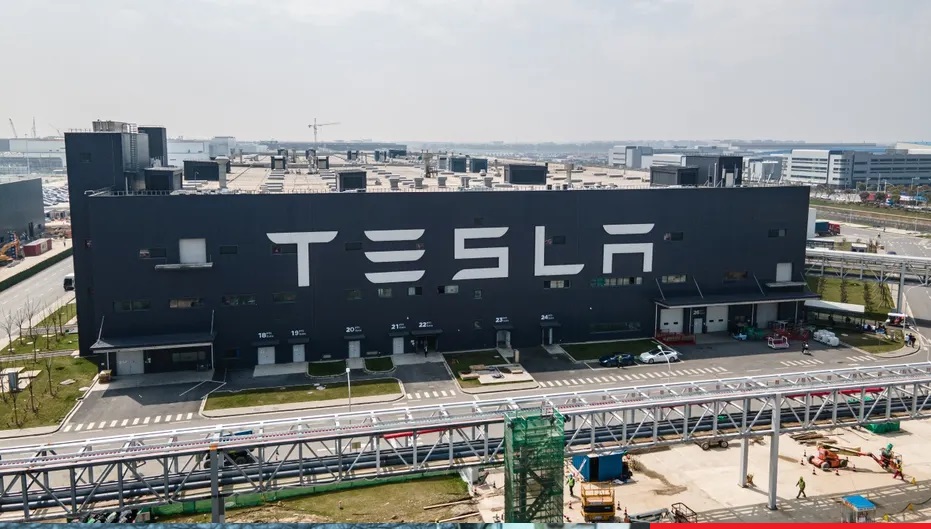
Tesla’s sales problems have taken a sharp turn in Canada, with new data showing an over 85% collapse in vehicle registrations in Quebec in the first quarter of 2025—a dramatic reversal for what has been one of the province’s most popular EV brands.

Between January and March, just 524 new Tesla vehicles were registered in Quebec, a sharp plunge from the 5,097 units recorded in the last quarter of 2024. The Model Y, Tesla’s flagship SUV and global bestseller, accounted for the largest drop—falling from 3,274 units to 360. Meanwhile, the Model 3, Tesla’s entry-level sedan, nosedived by 94%, with just 96 units registered.

While auto sales tend to taper off in the first quarter of any year, the scale of Tesla’s decline in Quebec points to problems far beyond seasonal norms. The crash in numbers aligns with similar declines in European markets, where Tesla’s sales fell nearly 50% in April, even as EV demand rose across the board.

In both regions, industry analysts suggest the issue is no longer the market but the brand itself.

In China—Tesla’s second-largest market after the United States—the company has been steadily losing ground to domestic EV manufacturers like BYD, Nio, and Li Auto. BYD, in particular, overtook Tesla in global EV sales at the end of 2023 and has continued to extend its lead in 2024 and 2025.

Chinese carmakers, buoyed by government support and lower production costs, are offering better range and pricing, undercutting Tesla in a market where affordability and nationalism now drive consumer decisions. Tesla has also had to reduce production at its Shanghai Gigafactory due to sluggish local demand and intensified competition.

Rebate Freeze and Trade Fallout

At the heart of Tesla’s troubles in Canada is a sweeping rebate freeze imposed by the federal government. Transport Minister Chrystia Freeland halted all federal EV rebates to Tesla buyers in March after a sudden surge in claims, from an average of 300 to nearly 5,800 per day, raised red flags over possible manipulation or bulk-buying schemes.

Freeland also confirmed that Tesla will be excluded from future incentives for as long as U.S. President Donald Trump’s 25% tariffs on Canadian goods remain in place. Tesla, being an American manufacturer, is caught squarely in the crossfire of the escalating trade tensions between Ottawa and Washington.

Adding to the blow, several provinces—British Columbia, Prince Edward Island, and Manitoba—have also delisted Tesla vehicles from their local EV incentive programs, effectively stripping the brand of much of its affordability appeal in key Canadian markets.

Now, Tesla’s crisis has spread to Canada, right on the doorstep of the United States, where it remains the dominant EV maker. The sharp decline in Quebec, Tesla’s most robust Canadian market, marks a significant erosion of its North American stronghold.

Brand Trouble From Musk’s Politics

Tesla’s fall in Quebec isn’t just economic—it’s political. The company is navigating a growing global backlash fueled by its controversial CEO Elon Musk. His public endorsements of European far-right parties, including Germany’s AfD and Britain’s Reform UK, have alienated many progressive-leaning buyers, especially in regions like Quebec where liberal politics dominate.

In North America, Musk’s brief tenure as head of the U.S. Department of Government Efficiency (DOGE) has further stirred controversy. Though he announced last month that he was stepping down from the role—citing the federal law that limits government service for “special employees” to 130 days per year—Tesla dealerships across a dozen U.S. states had already been targeted by protestors and vandalized during his stint.

Musk’s heavy involvement in U.S. politics, including nearly $300 million in donations during the 2024 presidential race, has not only put him at the center of partisan fights but is increasingly seen as a liability for Tesla’s global consumer brand.

Turning the Page?

Tesla shares began to rebound in April after Musk announced he would step back from political engagements and “spend 24/7 at work” on his businesses. In recent interviews—including one with Bloomberg at the Qatar Economic Forum—he signaled that his days of bankrolling U.S. politics are behind him, calling his 2024 spending spree a “mistake.”

But reversing the damage may take more than a few press statements. With rebates frozen, regulatory scrutiny rising, and brand sentiment dipping in regions where Tesla once thrived, the company faces a tough road to win back both governments and consumers.

However, some analysts and investors believe Tesla’s fundamentals remain strong and that the current troubles are temporary. The company has a vast charging infrastructure, a technological lead in battery software, and an expanding footprint in energy storage and AI. But confidence hinges on one variable: Elon Musk’s ability and willingness to step away from politics.

In other words, Tesla’s rebound will depend not only on correcting its sales figures but also on restoring its image with customers disillusioned by politics.

PSG Crush Inter Milan 5–0 to Win First Champions League Title, Complete Historic Treble

0

Paris Saint-Germain have finally secured their long-coveted place among Europe’s elite, thrashing Inter Milan 5–0 in the UEFA Champions League final to lift the trophy for the first time in the club’s history.

The victory, achieved at Munich’s Allianz Arena, also sealed a treble for PSG, who had earlier claimed the Ligue 1 title and the Coupe de France.

The five-goal margin is the largest ever recorded in a European Cup or Champions League final since the competition began in 1956, surpassing the 4–0 wins recorded by AC Milan in 1994 and 1989, and Bayern Munich in 1974.

Achraf Hakimi opened the scoring in the 12th minute with a tap-in against his former club after a smart assist from 19-year-old Désiré Doué. The teenager then scored twice himself—his first deflecting in off Federico Dimarco before calmly slotting in a second just after the hour mark. Khvicha Kvaratskhelia, another of PSG’s young stars, added a fourth, and 17-year-old substitute Senny Mayulu put the icing on the cake with a fifth in the 86th minute.

“I have no words,” Doué said, still overwhelmed by the magnitude of his contribution. “That was just incredible. Simply incredible.”

A Bitter Irony for Mbappé

The win could not have come with more dramatic irony. Kylian Mbappé, who departed PSG for Real Madrid at the end of last season in pursuit of the Champions League title, watched from Spain as his former club reached the pinnacle without him—defeating the very Inter Milan side that had knocked Madrid out in the semifinal.

PSG’s triumph, long viewed as inevitable given the billions invested since Qatar Sports Investments took over in 2011, had eluded the club through years of heartbreak. Big-money signings like Zlatan Ibrahimovic, Edinson Cavani, Neymar, Lionel Messi, and Mbappé himself had been brought in to win the Champions League, only to fall short of their goal.

But this first European crown came not in an era defined by superstars, but rather through a shift in philosophy. Two years ago, PSG changed course, opting to phase out their expensive galáctico project and focus on young, dynamic talents. In their very first season without Mbappé, the results of that gamble have stunned Europe.

“We have made history, we have written our names in the history of this club,” Hakimi said. “For a long time, this club deserved it, we are very happy. We have created a great family.

Enrique Makes Coaching History

Manager Luis Enrique has now entered rarefied territory. The former Barcelona coach, who led the Catalan club to a treble in 2015, has become only the second manager in football history to win a treble with two different clubs—joining Pep Guardiola, who achieved the feat with Barcelona in 2009 and Manchester City in 2023.

“He is the man who has changed everything at PSG,” said Hakimi. “Since he came here, he’s changed the way football is seen in Paris. He deserves this more than anyone.”

Under Enrique, PSG have abandoned the individualistic play of past years for a fast, aggressive, collective style. His trust in youth—starting the likes of Doué, Warren Zaïre-Emery, and Kvaratskhelia in a Champions League final—was vindicated in the most spectacular fashion.

For veteran PSG defender Marquinhos, the night was as much about vindication as celebration.

“It’s a mix of joy, of all the emotions we’ve spent together,” PSG defender Marquinhos said. “I’ve suffered, but I’ve grown up with this team. I think of all the players who have come through and not succeeded. My idol Thiago [Silva], Lucas, Zlatan, [Edinson] Cavani, [Angel] Di Maria.

“So many players who have come through here who deserved this and didn’t succeed. Now we’re here and we’re bringing it home. I’m thinking of all the supporters who have been with us, those at the Parc des Princes and those around the world. I love you, enjoy it and we’re going to enjoy it here. This is the best day of my life.”

The last time PSG reached the final, in 2020, they fell to Bayern Munich in a hauntingly quiet stadium closed to fans due to the COVID-19 pandemic. This time, the Allianz Arena—again the stage—was filled with thousands of PSG supporters waving flags and lighting flares as they watched their team finally fulfill its promise.

With this win, PSG became only the second French club to lift Europe’s most prestigious trophy, following Marseille’s success in 1993. But whether this is the beginning of a PSG dynasty or a fleeting triumph will depend on whether the club stays the course.