DD
MM
YYYY

PAGES

DD
MM
YYYY

spot_img

PAGES

Home Blog Page 1192

Fitch Downgrades Afreximbank’s Credit Rating to One Notch Above Junk, Flags Weak Risk Management and Sovereign Debt Exposure

0

Fitch Ratings has downgraded the African Export-Import Bank (Afreximbank) to BBB-, placing the Pan-African lender just one notch above speculative grade, as concerns grow over its exposure to distressed sovereign borrowers and the credibility of its risk management policies.

According to Reuters, the U.S. rating agency also assigned a negative outlook, signaling the potential for further downgrades.

The downgrade places Afreximbank in a precarious position, with Fitch citing “high credit risks” and “weak risk-management practices” as primary concerns. A major trigger for the downgrade was the bank’s exposure to sovereign debt restructurings in countries such as Ghana, Zambia, and Malawi, where Fitch said the bank’s insistence on its multilateral preferred creditor status may not hold up under pressure.

Fitch estimated Afreximbank’s non-performing loan (NPL) ratio to be 7.1% at the end of 2024, a figure that starkly contrasts with the 2.44% reported by the bank itself in its first-quarter financials. The agency attributed the discrepancy to differences in accounting standards, pointing out that the bank’s adoption of flexibilities under IFRS 9 allows it to classify certain at-risk loans as performing—an approach Fitch considers too opaque when compared with other multilateral development banks.

“The revision of risk management to ‘weak’ reflects low transparency in the recent reporting of loan performance,” Fitch said in its statement. “This also reflects that Fitch’s definition of NPLs differs from the bank’s approach, which makes use of flexibilities offered by IFRS 9.”

The negative outlook indicates Fitch is placing Afreximbank on effective downgrade watch, a reflection of the growing possibility that some of the bank’s loans may be included in sovereign debt restructuring deals. Should this happen, Fitch warned, it could lead to a reassessment of the bank’s overall policy importance and increase concerns about its strategic direction.

Reuters had reported earlier that Afreximbank had privately assured investors that Ghana remains current on its loan obligations and that it would not participate in any restructuring efforts involving member states. However, Ghanaian authorities contradicted this claim, stating the country had not made debt service payments to the bank in two years and is now seeking to restructure its loans, including those owed to Afreximbank.

Fitch said such conflicting signals about the status of repayments and restructuring intent put the bank’s risk controls and policy standing under fresh scrutiny.

“Inclusion in sovereign debt restructurings would likely lead us to revise our currently ‘low risk’ assessment of the bank’s policy importance,” the agency said.

Afreximbank has yet to respond to the downgrade, but the silence has done little to calm investor anxiety. The institution, whose shareholders include African governments, central banks, and private investors, has positioned itself as a critical source of funding for African countries shut out of international capital markets. Its role has only grown more prominent as rich nations scale back foreign aid and concessional lending.

However, the downgrade comes at a time when the bank is expanding its lending profile in fragile economies and entering strategic sectors like energy and infrastructure, where repayment risks are notably higher. Analysts warn that a further downgrade could significantly raise borrowing costs for Afreximbank, limit its access to favorable international credit lines, and dampen its ability to provide urgently needed capital across the continent.

The development also underscores a broader concern over transparency and governance among African multilateral lenders, especially as traditional donors tighten fiscal support. With sovereign defaults and restructurings now more frequent across the continent, banks like Afreximbank face mounting pressure to reconcile their policy ambitions with financial prudence.

Now the spotlight remains on how Afreximbank will respond to the mounting scrutiny, whether it will revise its risk classifications to align more closely with global standards, and how it will navigate the delicate balance between maintaining its preferred creditor status and supporting sovereign borrowers under financial distress.

Apple Loses Bid to Delay Court-Ordered App Store Reforms as Epic Games and Developers Score Major Win

0

Apple on Wednesday suffered a significant legal setback after a U.S. federal appeals court denied its bid to delay enforcement of a court order that threatens to upend the company’s grip over its App Store ecosystem.

The 9th U.S. Circuit Court of Appeals rejected Apple’s request to pause key provisions of a ruling by U.S. District Judge Yvonne Gonzalez Rogers, ordering the iPhone maker to immediately allow more competition within the App Store.

The order, which Apple must now comply with while its appeal moves forward, forces the company to eliminate practices the court found were designed to circumvent an earlier injunction issued in its antitrust fight with “Fortnite” developer Epic Games.

Apple responded by expressing disappointment with the decision, saying: “We are disappointed with the decision not to stay the district court’s order, and we’ll continue to argue our case during the appeals process.”

However, the appellate court’s refusal to freeze the lower court’s ruling means Apple must now begin allowing developers to direct users to alternative payment systems outside the App Store—something it had long resisted.

A Battle Years in the Making

The legal clash between Apple and Epic dates back to 2020 when the game developer filed suit accusing Apple of monopolistic practices. Epic challenged Apple’s longstanding rules that force iOS developers to distribute their apps exclusively through the App Store and use Apple’s payment system, which carries a commission of up to 30%. Epic argued that these rules harmed developers and inflated prices for consumers.

The lawsuit escalated after Epic intentionally bypassed Apple’s in-app payment system for “Fortnite,” prompting Apple to remove the game from the App Store. That act set off a high-stakes courtroom drama with broader implications for the tech industry.

In 2021, Judge Gonzalez Rogers ruled that Apple did not hold an illegal monopoly but nonetheless ordered the company to allow developers to direct users to alternative purchasing options—a move aimed at ending what she described as anticompetitive conduct.

Rather than fully complying, Apple introduced a 27% “steering” fee on developers who encouraged users to pay outside the App Store. It also placed strict limits on where and how developers could include external payment links. In April 2024, the court found Apple in contempt of the original order.

Judge Gonzalez Rogers, in her April 30 ruling, said Apple “defied” the earlier injunction in order to protect billions of dollars in App Store revenue. She further accused Apple of misleading the court about its efforts to comply and referred the company and one of its executives to federal prosecutors for possible criminal contempt.

The appeals court’s refusal to block the ruling compels Apple to reverse the contested practices and open its platform in ways it has long resisted.

A Major Win for Epic—and Developers

The court’s decision marks a major win for Epic Games and other developers that have fought Apple’s tight control over iOS app distribution and payment flows. Epic CEO Tim Sweeney celebrated the outcome, posting on X: “The long national nightmare of the Apple tax is ended.”

Epic argued that Apple’s resistance to meaningful reform was simply a continuation of its efforts to suppress competition and extract excessive fees from developers. Since Judge Gonzalez Rogers’ April ruling, Epic noted, developers had already started updating apps with more competitive payment methods, offering users better deals and choices.

While Apple maintains that its rules are necessary for platform integrity and security, critics say they’ve enabled the company to extract unjustified revenue from a closed marketplace. Developers have increasingly voiced frustration with what they see as exploitative policies and the legal ruling is now seen as a breakthrough in leveling the playing field.

What Comes Next?

Apple’s appeal is still underway, and the legal battle is far from over. But for now, the ruling significantly weakens Apple’s ability to enforce App Store exclusivity and marks a pivotal moment in the broader debate over digital marketplaces.

The decision could have ripple effects across the tech industry, as regulators in the U.S., Europe, and other jurisdictions scrutinize app store policies, and developers push for more freedom in how they reach and transact with users. Apple will now have to deal with the pressure from a developer community emboldened by the latest ruling.

Why A $22 Billion Tariff Revenue Spike Could Bolster US Coffers

0

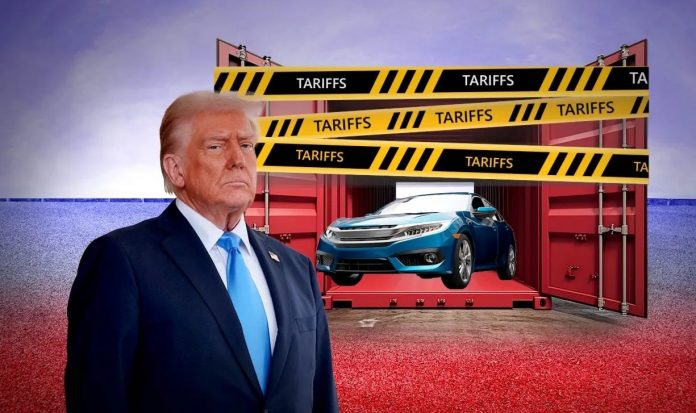
Historically, tariff revenue has fluctuated, with $80.3 billion collected in FY2023. Recent reports indicate April 2025 customs revenue reached $16.3 billion, a record at the time, driven by Trump’s tariffs. Projections suggest tariffs could raise significant revenue—potentially $2.7 trillion to $5.2 trillion over a decade, depending on the model—but these are estimates, not actuals, and account for dynamic effects like reduced trade volumes.

The $22 billion figure may stem from speculative calculations or misinterpretations of daily or projected revenue, as seen in claims about $2 billion daily tariff collections, which were debunked as exaggerated. Actual daily collections in April 2025 averaged around $180.94 million to $283.91 million. Without official monthly data for May 2025, the $22 billion claim remains unverified.

A $22 billion monthly tariff revenue figure, if sustained, could translate to roughly $264 billion annually, a significant jump from the $80.3 billion collected in FY2023 or the $16.3 billion record for April 2025. This could reduce federal deficits, projected to exceed $1 trillion in 2025, or fund initiatives like tax cuts or a proposed U.S. sovereign wealth fund. However, dynamic effects—reduced imports due to higher prices—could lower revenue over time, with estimates suggesting $2.4–$5.2 trillion over a decade depending on tariff rates and retaliation.

The revenue benefits high-income groups and corporations if used for tax cuts (e.g., extending the Tax Cuts and Jobs Act), but tariffs themselves are regressive, disproportionately burdening lower-income households who spend a larger share of income on goods. A $22 billion monthly collection implies significant price increases, with households facing $1,200–$4,900 annual losses, hitting the bottom income quintile hardest ($1,300–$2,200).

Inflation and Consumer Prices

Tariffs, especially at rates like 10–145% (e.g., 145% on Chinese imports), raise prices for imported goods and domestic substitutes. The Budget Lab at Yale estimates a 1.7–3% short-run price level increase, with apparel (14–65%) and textiles (11–45%) hit hardest. This could add $2,800–$4,900 per household in costs, with low-income families facing a heavier burden due to reliance on essentials like food and clothing.

Low- and middle-income consumers face a sharper erosion of purchasing power, as they allocate more income to necessities. Wealthier households, with more discretionary spending, are less affected. Posts on X highlight this, noting low-income families are hit hardest as essentials’ prices rise faster than wages. Tariffs aim to protect domestic industries (e.g., steel, autos) but reduce GDP by 0.4–8% long-term, per various models, due to higher input costs and reduced trade. Unemployment could rise by 0.4% (456,000 jobs lost), particularly in manufacturing-heavy states.

Manufacturing workers may see short-term job protection in sectors like steel, but downstream industries (e.g., auto manufacturing, construction) face higher costs, leading to layoffs. For example, 60–80 jobs are affected per steel job saved. Rural and industrial regions benefit unevenly compared to urban or service-based areas. Tariffs act as consumption taxes, inherently regressive because lower-income households spend a larger share of income on goods.

The Budget Lab notes short-run losses of $1,300–$2,200 for low-income households, versus $2,800–$4,900 average losses, exacerbating income inequality. The tax burden shifts from high-income earners (who benefit from progressive income taxes) to low- and middle-income families, worsening wealth gaps. X posts emphasize this regressive impact, noting tariffs as a “hidden tax” hitting Main Street harder than Wall Street.

Consumer confidence has plummeted, with the University of Michigan’s Consumer Sentiment Index dropping 11% in March 2025. Businesses face uncertainty, with manufacturing orders declining and small businesses reporting lower optimism. This could curb investment and hiring. Small businesses and consumers bear more uncertainty than large corporations, which can absorb costs or shift supply chains. Rural communities, reliant on agriculture and manufacturing, face greater disruption than urban centers with diversified economies.

High tariffs (e.g., 145% on China, 25% on Canada/Mexico) have sparked retaliation, with China imposing 125% tariffs on U.S. goods and Canada targeting U.S. exports. This escalates trade wars, potentially reducing U.S. exports by $15–$20 billion annually, as seen in 2018–2019. Export-dependent states (e.g., Texas, New Mexico) and sectors (e.g., agriculture, energy) face significant losses, while non-exporting sectors or states less tied to trade (e.g., service-based economies) are insulated. Canada and Mexico, with economies more trade-dependent (70% of GDP), suffer disproportionately compared to the U.S.

The OECD cut its 2025 global growth forecast to 2.9% from 3.1%, citing U.S. tariffs as a drag, with the U.S. itself facing the largest hit. This risks global recession, especially if trade wars escalate. Developing nations and trade-heavy economies (e.g., Canada, Mexico) face sharper downturns than less trade-dependent regions like the EU or UK, which may even see slight GDP gains. Within the U.S., industries tied to global supply chains (e.g., tech, autos) face disruption, while domestic-focused sectors are less affected.

Tariffs disproportionately burden low-income households, increasing costs for essentials and widening inequality. High-income groups may benefit from potential tax cuts funded by tariff revenue. Manufacturing and agriculture may see short-term protection, but downstream industries and consumers face higher costs and job losses. Rural and industrial areas are more exposed than urban, service-based economies.

The U.S. leverages its economic size against trade-dependent partners like Canada and Mexico, but risks long-term alliances and global stability. China’s retaliation further strains U.S. exporters. Rural communities, reliant on agriculture and manufacturing, face retaliatory tariffs and supply chain disruptions, while urban centers with diversified economies are less impacted.

The $22 billion figure, if accurate, may reflect a short-term surge from stockpiling before tariffs hit (e.g., April’s $16.3 billion record). Long-term revenue could fall as imports decline due to higher prices or trade deals. Frequent tariff changes (e.g., 90-day pauses, China’s rate dropping to 10%) create volatility, deterring investment and complicating supply chains.

While a $22 billion tariff revenue spike could bolster federal coffers, it exacerbates economic divides by disproportionately harming low-income households, trade-dependent industries, and U.S. allies like Canada and Mexico. The regressive nature of tariffs, combined with risks of inflation, job losses, and trade wars, underscores the need for careful policy design to mitigate these divides.

Venmo Reinvents Itself as a Full-Service Commerce Platform with Revamped Debit Card and New Checkout Options

0

Venmo, widely known for helping friends split dinner bills and birthday gifts, is shifting its identity from a peer-to-peer payments app to a full-service commerce platform.

The PayPal-owned service rolled out several key updates aimed at embedding itself into consumers’ daily spending habits both online and in-store.

The overhaul includes a major upgrade to the Venmo Debit Mastercard, expanded checkout availability across major retailers, and a rebranding campaign that signals the company’s ambition to compete more aggressively in the fintech space.

“We’re transforming from a payments app into a full-service commerce experience for users to spend their balance on everything, in-store and online,” said Diego Scotti, Executive Vice President and General Manager of PayPal’s Consumer Group.

The redesigned debit card now offers users up to 15% cash back when shopping at top retailers including Walmart, Sephora, McDonald’s, Walgreens, and Lyft. Offers can be activated directly within the app. The card also supports tap-to-pay transactions, international purchases without foreign transaction fees, and automatic reload when a user’s balance drops below a set threshold.

This is part of Venmo’s broader effort to evolve from its roots in peer payments and catch up with competitors like Cash App, which has gained a stronghold in the space. While Venmo’s debit card penetration remains in the single digits, Cash App has reached 44% of its users with its card, a sharp contrast highlighted in recent market analysis.

Despite those numbers, Venmo has made strides. Transaction volume from its debit card hit $13 billion in 2024, and total payment volume climbed to $75.9 billion. Use of the “Pay with Venmo” feature surged by 50%, and active debit card users rose by around 40%. Monthly active accounts on the platform also grew by 30% year-over-year.

The company has also made its checkout option available at an expanded slate of merchants, including TikTok Shop, Uber, Instacart, and Domino’s. Major brands such as DoorDash, Starbucks, and Ticketmaster already accept Venmo as a payment option. The company hopes that this growing merchant network and increased cashback incentives will encourage more users to treat Venmo as a default payment method, not just a transfer tool.

PayPal CEO Alex Chriss has made monetizing acquisitions like Braintree and Venmo a top priority. He recently noted that over 45% of U.S. branded checkout volume now goes through PayPal’s updated interface — a number expected to increase with the company’s expansion in Europe. He also highlighted growing debit card momentum, with nearly two million people using a PayPal or Venmo debit card for the first time last quarter, marking a 90% increase year-over-year.

While Venmo and Cash App have both lost ground in the U.S. peer-to-peer payment market as Zelle’s share rose to 66%, Venmo is betting on its loyal user base, brand recognition, and social features to fuel the next phase of its growth.

By integrating everyday rewards, broadening merchant partnerships, and updating the user experience, Venmo is making a clear play to move from a casual utility to a primary financial tool—especially for younger, mobile-first users looking for convenience, perks, and flexibility in how they manage and spend their money.

Trump Says Xi Is “Extremely Hard” to Make A Deal With, Dampening Hopes of Trade Breakthrough

0

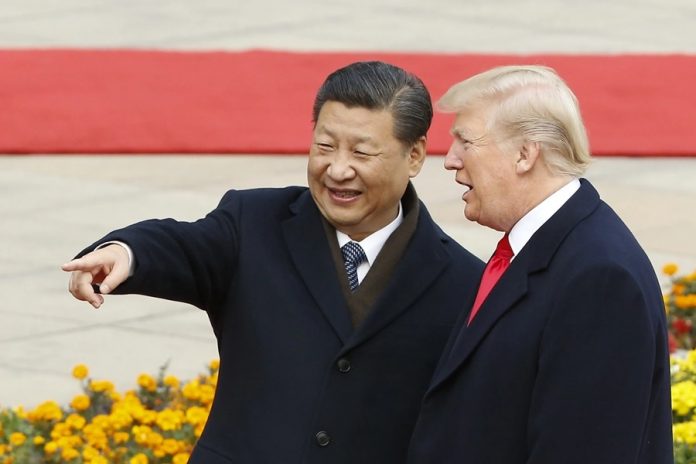
President Donald Trump on Wednesday voiced frustration over stalled trade negotiations with China, describing Chinese President Xi Jinping as “extremely hard to make a deal with.”

His remark comes at a delicate moment, as the White House signals openness to a leader-to-leader call aimed at resolving rising tariff tensions between the world’s two largest economies.

“I like President XI of China, always have, and always will, but he is VERY TOUGH, AND EXTREMELY HARD TO MAKE A DEAL WITH!!!” Trump posted on Truth Social, casting doubt on the likelihood of meaningful progress if the two leaders eventually connect.

The statement marked a stark contrast to the more optimistic tone from White House officials earlier in the week, who said a call between Trump and Xi could happen soon. But as of Wednesday, there was no confirmation that such a conversation had been scheduled.

Trump’s comments are believed to be a reflection of growing pessimism in Washington about the prospects of breaking the deadlock. His public expression of doubt has also cast a shadow over expectations that direct talks with Xi might help untangle the web of tit-for-tat tariffs and retaliatory measures that have rattled global markets.

On May 12, the two sides reached a temporary agreement in Switzerland to suspend most tariffs for 90 days and roll back China’s countermeasures, offering a brief window of relief. However, that truce has all but collapsed. The Trump administration accuses China of failing to honor its commitments, including a promise to ease restrictions on rare earth exports—key materials in electronics and defense industries.

Meanwhile, Beijing has not backed down from its position. Chinese officials have repeatedly stated that they will not yield to pressure from Washington. Foreign Minister Wang Yi reinforced that message during his meeting this week with U.S. Ambassador to China David Perdue, saying the Trump administration’s actions have been based on “groundless reasons” and violate China’s legitimate interests.

While Beijing did acknowledge Trump’s “respect” for Xi—according to the Chinese readout of the meeting—there is no indication that China is preparing to make major concessions.

American business leaders, too, are under no illusion that China will backpedal under U.S. pressure. JPMorgan Chase CEO Jamie Dimon, in a recent comment, said: “China is a potential adversary. They’re doing a lot of things well. They have a lot of problems. But they’re not scared, folks. This notion that they’re going to come bow to America—I wouldn’t count on that.”

Dimon’s assessment mirrors the broader view among U.S. industry insiders that China’s negotiating posture remains firm and strategic. As the two countries navigate this increasingly tense terrain, many agree the tariff dispute is far from resolution.

Even as Trump continues to express interest in speaking with Xi, something he has repeated in recent weeks, analysts believe China will only agree to a high-level call if there’s confidence that it won’t be followed by sudden reversals or inflammatory rhetoric from the White House.

Trump and Xi last spoke in January, just before Trump was inaugurated for his second term. Since then, the atmosphere has shifted significantly, with Washington ramping up export restrictions on Chinese access to advanced technologies and revoking visas for some Chinese students.

Presently, the hope that a phone call between the two leaders could break the deadlock appears dim. As Trump’s own words suggest, any breakthrough—if it happens at all—will be a long and uncertain walk through a minefield of competing interests, unresolved grievances, and strategic mistrust.