DD
MM
YYYY

PAGES

DD
MM
YYYY

spot_img

PAGES

Home Blog Page 12

Japan’s Chip-Chemical Champions Feel the Heat as China Opens Anti-Dumping Probe, Fueling Rally in Domestic Rivals

0

Shares of Japan’s leading chemical manufacturers slid on Thursday after China’s commerce ministry announced an anti-dumping investigation into imports of key chipmaking chemicals from Japan, a move that rattled investors and sent Chinese rivals sharply higher.

The market reaction underscored both the strategic importance of semiconductor materials and the growing role of geopolitics in shaping winners and losers across Asia’s technology supply chain.

In Tokyo, Shin-Etsu Chemical fell 3.4%, marking one of its sharpest single-day declines in recent months. Mitsubishi Chemical slipped 0.5%, broadly tracking the Topix index but still under pressure amid uncertainty over potential fallout from the probe.

A spokesperson for Shin-Etsu said the company was investigating the issue and stressed that any impact on revenue or expenditure was unlikely to be significant.

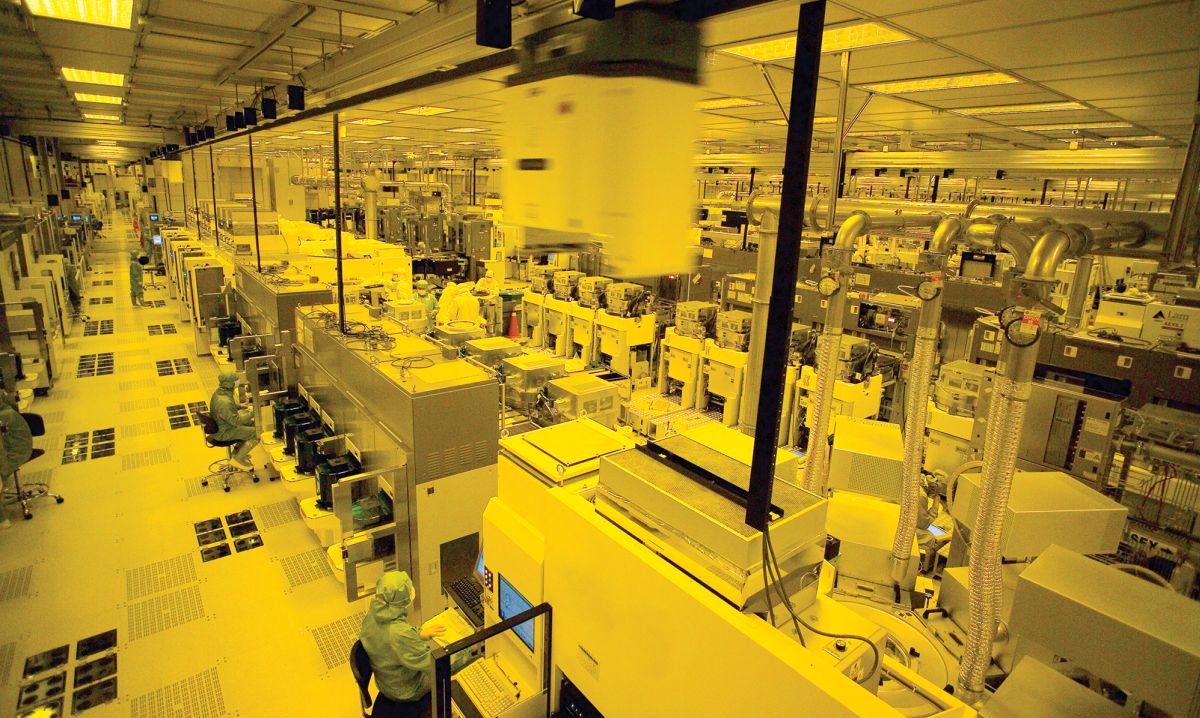
Japanese firms have long dominated the global market for high-purity materials used in semiconductor manufacturing, including specialty gases, silicon wafers, and advanced precursor chemicals. Their strength lies not in volume, but in precision, reliability, and decades of accumulated process know-how. For chipmakers, especially at advanced nodes, consistency in materials such as dichlorosilane is critical, as even minor impurities can affect yields and performance.

That dominance is precisely what China has been trying to erode as it seeks to build a more self-sufficient semiconductor ecosystem. Beijing’s decision to open an anti-dumping probe into dichlorosilane imports fits squarely into that strategy. Dichlorosilane is a key precursor used in thin-film deposition processes, an essential step in producing semiconductors for logic, memory, and power devices.

According to China’s commerce ministry, the investigation was launched following complaints from domestic producers. These companies argue that imports from Japan rose steadily between 2022 and 2024, while prices fell by a cumulative 31%, undercutting local suppliers and harming their operations. If the probe ultimately results in duties or other restrictions, it could tilt the competitive landscape in favor of Chinese manufacturers, at least in the domestic market.

Investors moved quickly to price in that possibility. In mainland China, shares of Tangshan Sunfar Silicon Industries surged by their daily limit of 10%. Hubei Heyuan Gas, which produces silicon-based functional materials used in chipmaking, also jumped 10%. Jiangsu Nata Opto-Electronic Material gained 3%, extending a broader rally in stocks linked to semiconductor self-sufficiency.

The sharp divergence in share price performance highlights how trade actions are increasingly being read not just as regulatory measures, but as industrial policy signals. For Chinese materials makers, the probe reinforces expectations of policy support and reduced foreign competition, while it introduces another layer of risk for Japanese exporters in a market that has been both lucrative and strategically sensitive.

The investigation comes amid visibly strained relations between China and Japan, and at a moment when technology, security, and trade issues are becoming ever more intertwined. Earlier this week, Beijing announced a ban on exports of certain dual-use items to Japan, further heightening tensions. While Chinese authorities frame the dichlorosilane probe as a standard trade remedy case, markets are clearly viewing it through a geopolitical lens.

Political frictions have intensified since Japanese Prime Minister Sanae Takaichi said in November that a Chinese attack on Taiwan threatening Japan’s survival could trigger a military response. Beijing condemned the remarks as “provocative,” and relations have since cooled. Against that backdrop, trade actions affecting strategically important sectors such as semiconductors are unlikely to be seen as isolated events.

For Japan’s chemical giants, the immediate financial impact may be limited, particularly given their diversified global customer base and strong pricing power at the high end of the market. Analysts note that replacing Japanese suppliers entirely would be difficult for many chipmakers, given the stringent quality requirements involved. Still, the probe raises longer-term questions about market access and the pace at which Chinese competitors could close the technology gap with policy backing.

More broadly, the episode illustrates the shifting fault lines in the global semiconductor supply chain. As China accelerates efforts to localize critical inputs and reduce dependence on foreign suppliers, companies that once seemed insulated by technical complexity are finding themselves exposed to trade and political risk. The development sends a clear message to investors in the chip industry that materials are no longer just a niche segment of the value chain, but a frontline in economic and strategic competition.
SABIC Sells European Petrochemical and Engineering Thermoplastics Units for $950m as Prolonged Industry Slump Forces Strategic Reset

0

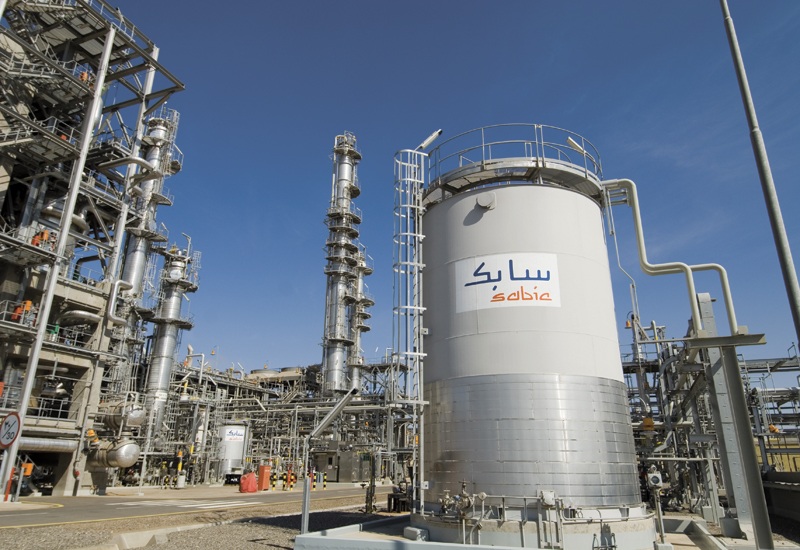
Saudi Arabia’s SABIC has agreed to sell its European petrochemical business and its Engineering Thermoplastics operations across Europe and the Americas for a combined enterprise value of $950 million, stepping up a restructuring effort as the global chemicals industry struggles with weak demand, compressed margins and persistent overcapacity.

The announcement triggered a sharp market reaction. SABIC shares slid as much as 4.8% to 48.2 riyals ($12.85) in early trading in Riyadh on Thursday, touching their lowest level in nearly 17 years. The stock has lost about 26.4% over the past 12 months, marking investor anxiety over the company’s earnings outlook and the depth of the downturn facing petrochemical producers worldwide.

Under the transactions, SABIC will divest its European petrochemical (EP) business to Munich-based investment firm AEQUITA for an enterprise value of $500 million. The unit includes manufacturing assets in the United Kingdom and Germany and is exposed to some of the most challenging operating conditions in the global chemicals market, including high energy costs, tighter environmental regulations, and subdued industrial demand.

Separately, SABIC will sell its Engineering Thermoplastics (ETP) business in Europe and the Americas to German holding company Mutares for $450 million. That business operates production sites in Canada, the United States, Brazil, and Spain, supplying specialty plastics used in sectors such as automotive, electronics, and industrial applications. While engineering plastics typically offer higher margins than basic chemicals, the segment has also faced demand softness and pricing pressure as global manufacturing activity slowed.

The divestments form part of a wider restructuring as the chemicals industry contends with one of its most prolonged slowdowns in years. Demand from key end markets such as construction, automotive, and consumer goods has remained weak, particularly in Europe and China, while years of aggressive capacity expansion — especially in Asia and the Middle East — have left the market oversupplied. This has squeezed margins and forced producers to reassess asset portfolios and capital allocation.

SABIC said it is divesting lower-return operations to focus more tightly on its core chemical businesses, where it believes it can generate more resilient margins and stronger cash flows over the cycle.

“These transactions represent a continuation of our portfolio optimization program, which started in 2022 and included previous actions, such as the divestment of Functional Forms, Hadeed and Alba,” chief executive Abdulrahman Al-Fageeh said.

The moves also reflect broader pressures from SABIC’s majority shareholder. The company is 70% owned by Saudi oil giant Aramco, which has been pursuing cost discipline and selective asset sales as it balances capital expenditure plans with lower oil prices and large shareholder distributions. Analysts say Aramco’s emphasis on returns and cash generation has sharpened the focus on SABIC’s underperforming assets, particularly those exposed to Europe’s structurally higher costs.

SABIC said the latest disposals are expected to improve overall core profit margins and enhance free cash flow generation over time, even though they reduce the company’s international footprint. The group added that it is committed to ensuring a seamless separation of the businesses and minimizing disruption to customers, employees, and ongoing operations — a key concern given the complexity of carving out integrated manufacturing assets.

The transactions also fit into a broader strategic review underway at SABIC. Last year, the company said it was exploring strategic options for its National Industrial Gases Company, including a potential initial public offering, signaling that further portfolio changes remain possible as management reshapes the group for a more challenging operating environment.

From the buyers’ perspective, the deals highlight continued interest from European investment firms in acquiring industrial assets at depressed valuations during the downturn. Firms such as AEQUITA and Mutares often specialize in carve-outs and turnarounds, betting that operational improvements, restructuring, or an eventual recovery in demand can unlock value over the medium term.

Advisory roles were split across the transactions. Goldman Sachs advised SABIC on the sale of the European petrochemical business, while J.P. Morgan advised on the Engineering Thermoplastics deal. Lazard acted as an independent financial adviser on both transactions.

Despite the strategic rationale, the sharp fall in SABIC’s share price suggests investors remain cautious. Markets appear concerned that asset sales alone may not be enough to offset weak global demand, rising competition, and structural challenges in petrochemicals.

With earnings under pressure and the industry recovery still uncertain, SABIC’s ability to stabilize profits and restore investor confidence will likely depend on both disciplined execution of its restructuring plan and a broader upturn in the global chemicals cycle.

Nvidia Demands Full Upfront Payment for H200 Chips as China Approval Uncertainty Shifts Risk to Buyers

0

Nvidia has tightened its sales terms for Chinese customers seeking its H200 artificial intelligence chips, requiring full upfront payment as the U.S. chipmaker moves to shield itself from regulatory uncertainty surrounding Beijing’s approval of the shipments, according to two people briefed on the matter who spoke to Reuters.

Under the new conditions, Chinese buyers must pay the entire order value in advance, with no option to cancel, seek refunds, or change chip configurations after orders are placed. In limited cases, customers may substitute cash payments with commercial insurance or asset-backed collateral, one of the people said. The sources spoke on condition of anonymity because the policy is not public.

While Nvidia has long required advance payments from Chinese clients, the H200 terms mark a sharp tightening. Previously, some customers were allowed to secure orders with deposits rather than full payment. For the H200, Nvidia has enforced stricter conditions due to uncertainty over whether Chinese regulators will ultimately approve the imports, one of the people said.

The tougher stance comes as demand in China for the H200 has surged. Chinese technology firms have placed orders for more than 2 million of the chips, priced at about $27,000 each, according to a Reuters report last month. That volume far exceeds Nvidia’s current inventory of roughly 700,000 units, highlighting the scale of unmet demand.

The H200 has become a focal point for Chinese companies racing to build and train large AI models. Domestic alternatives, including Huawei’s Ascend 910C, have made progress, but their performance still trails Nvidia’s H200 in large-scale AI training tasks, making Nvidia’s hardware highly sought after among China’s internet and technology giants.

Regulatory uncertainty on the Chinese side remains a key obstacle. Bloomberg reported on Thursday that Beijing plans to approve some H200 imports as early as this quarter, allowing purchases for selected commercial uses while barring the military, sensitive government agencies, critical infrastructure operators, and state-owned enterprises due to security concerns. In the meantime, Chinese regulators have asked some tech firms to temporarily pause H200 orders while officials determine how many domestically produced chips each buyer must purchase alongside each Nvidia order, one of the sources said. The Information first reported that pause earlier this week.

Nvidia’s payment structure effectively transfers the risk of regulatory delays or rejections from the seller to the buyer. Chinese customers are being asked to commit significant capital without certainty that approvals will be granted or that the chips can be deployed as planned. For large orders, that can mean billions of dollars tied up while regulators deliberate.

The company’s caution is shaped by recent experience. Last year, Nvidia wrote down $5.5 billion in inventory after the Trump administration abruptly banned sales of its H20 chip to China, then the most powerful product it was permitted to sell there. Although that U.S. restriction was later reversed, China subsequently banned H20 shipments, leaving Nvidia exposed. That episode appears to have informed the company’s decision to harden its commercial terms for the H200.

The policy shift also unfolds against a rapidly changing geopolitical backdrop. The Biden administration had imposed sweeping restrictions on advanced AI chip exports to China. President Donald Trump reversed that stance last month, allowing H200 sales to China subject to a 25% fee payable to the U.S. government. While that opened the door for renewed trade, it left final approval squarely in Beijing’s hands.

Nvidia chief executive Jensen Huang said on Tuesday that demand for the H200 was “quite high” and that the company had “fired up our supply chain” to increase output. Huang added that he did not expect China’s government to issue a formal declaration approving the chips.

“If the purchase orders come, it’s because they’re able to place purchase orders,” he said, underscoring the informal nature of the approval process.

The company plans to fulfil initial Chinese orders from existing stock, with the first batch of H200 chips expected to arrive before the Lunar New Year holiday in mid-February, Reuters reported previously. Nvidia has also approached Taiwan Semiconductor Manufacturing Co about ramping up H200 production, with additional manufacturing expected to begin in the second quarter of 2026 to meet Chinese demand.

Expanding capacity, however, is not straightforward. Nvidia is in the midst of transitioning from its current flagship Blackwell architecture to the more advanced Rubin platform, while competing with customers such as Alphabet’s Google for cutting-edge production slots at TSMC. That competition for manufacturing capacity adds another layer of complexity as Nvidia tries to balance global demand with political and regulatory risk.

Currently, Nvidia’s strict upfront payment requirement signals its determination to pursue Chinese sales while insulating itself from sudden policy reversals.

Anthropic Seals Term Sheet for $10bn Raise at $350bn Valuation

2

Anthropic has signed a term sheet for a $10 billion funding round that would value the artificial intelligence startup at about $350 billion, CNBC confirmed on Wednesday, underscoring the breakneck pace at which capital is still pouring into the most prominent developers of large language models.

The agreement marks one of the largest private capital raises ever for an artificial intelligence company, underlining both the intensity of investor appetite for AI and the escalating costs of competing at the frontier of the technology.

The round is being led by Coatue and Singapore’s sovereign wealth fund GIC, according to a source familiar with the matter, with the discussions remaining confidential. Anthropic declined to comment, while the Wall Street Journal first reported the deal. If completed, the transaction would cement Anthropic’s position among the world’s most valuable private technology firms, narrowing the valuation gap with rivals such as OpenAI, whose valuation has reportedly climbed to around $500 billion.

Founded in 2021 by former OpenAI research executives, including chief executive Dario Amodei, Anthropic has built its reputation around the Claude family of large language models. The company has consistently positioned itself as a safety-focused alternative in the AI race, arguing that reliability, controllability, and alignment will be decisive differentiators as AI systems become more deeply embedded in businesses, governments, and daily life.

The scale of the proposed funding reflects the brutal economics of cutting-edge AI development. Training state-of-the-art models now requires massive clusters of advanced GPUs, long-term access to cloud infrastructure, and the ability to absorb multibillion-dollar research and operating costs before meaningful profits emerge. Investors backing Anthropic are effectively wagering that only a small number of companies will have the capital, talent, and infrastructure to survive this phase — and that those survivors will command enormous strategic and commercial power.

Anthropic’s deepening ties with major technology players illustrate this dynamic. Amazon has already invested billions of dollars in the company and integrated Claude models into its cloud and consumer offerings, strengthening AWS’s position as a key platform for AI workloads. In November, Microsoft and Nvidia announced plans to invest up to $5 billion and up to $10 billion, respectively, moves that align Anthropic with both a dominant cloud provider and the world’s leading supplier of AI chips.

Those relationships also highlight a broader shift in the AI ecosystem, where model developers, cloud operators, and chipmakers are increasingly intertwined. Nvidia’s involvement signals confidence that Anthropic will be a major long-term customer for high-end GPUs, while Microsoft’s interest reflects its strategy of backing multiple AI players even as it remains closely tied to OpenAI.

Product momentum remains central to Anthropic’s pitch. Late last year, the company released Claude Sonnet 4.5, Claude Haiku 4.5, and Claude Opus 4.5, expanding its lineup to address a wide range of use cases, from fast, lightweight tasks to more complex reasoning, coding, and enterprise applications. The releases were aimed at keeping pace with rapid advances from competitors such as Google and OpenAI, which continue to roll out more capable and specialized models.

The funding talks also come at a moment when enterprises are moving from experimentation to deployment. Demand for AI tools that can be embedded into workflows, customer service, software development, and data analysis is accelerating, driving sustained usage and inference costs. That shift strengthens the investment case for leading model providers, but it also raises the stakes: companies that fall behind on performance or scale risk being locked out of lucrative long-term contracts.

At the same time, the eye-watering valuation underscores growing questions about concentration and power in the AI sector. With a handful of firms attracting the vast majority of capital, compute, and talent, policymakers and regulators are increasingly scrutinizing how AI markets are forming and who controls critical infrastructure. While Anthropic has emphasized safety and responsible development, its rising valuation places it firmly among the dominant players shaping the future of the technology.

For Coatue and GIC, the deal represents a bet that AI will continue to reshape the global economy and that Anthropic will emerge as one of the core platforms underpinning that transformation. For Anthropic, the $10 billion raise would provide a formidable war chest to expand computing capacity, attract top researchers, and accelerate partnerships, while signaling to customers and rivals alike that it intends to remain at the very top of the AI race.

Although the transaction has not yet closed and terms could still change, the signed term sheet alone sends a clear message: investor confidence in elite AI developers remains strong, valuations continue to surge, and the battle to define the next era of computing is far from over.

U.S. Treasury Yields Slightly Higher as Markets Brace for Key Jobs Data and Watch Geopolitical Risks

0

U.S. Treasury yields ticked modestly higher on Thursday as investors positioned ahead of crucial employment data and continued to monitor geopolitical developments that could influence risk sentiment and monetary policy expectations.

The benchmark 10-year Treasury yield rose more than 2 basis points to 4.163%, while the 2-year note increased by less than a basis point to 3.478%. The yield on the 30-year bond climbed about 3 basis points to 4.845%. Because bond prices and yields move in opposite directions, these upticks suggest some selling pressure in long-dated government debt.

Traders have turned their focus toward a slate of economic indicators expected to shape views on the Federal Reserve’s next policy decisions. Thursday’s calendar includes weekly initial jobless claims, and markets are looking ahead to Friday’s U.S. Bureau of Labor Statistics nonfarm payrolls report, due at 8:30 a.m. ET. The payrolls release will be the first on-time jobs report since the 43-day U.S. government shutdown last year, which disrupted data collection and delayed several key releases. The Bureau of Labor Statistics has cautioned that data collected around the shutdown may carry higher margins of error.

Economists surveyed by Dow Jones forecast the U.S. economy added around 73,000 jobs in December, up from 64,000 in November, and expect the unemployment rate to edge down to 4.5%. While headline figures remain well below historical norms, they would mark a modest improvement in the context of the slowing labor market momentum observed in recent months.

Market participants are also eyeing weekly jobless claims, which provide a more immediate, though volatile, snapshot of the labor market. These figures are often watched for early signs of weakening or strengthening that precede the monthly payrolls. Recent data showed unexpected volatility in claims, with economists noting that seasonal adjustment challenges and holiday distortions can obscure trends.

Implications for the Federal Reserve

Market pricing reflects expectations that the Federal Reserve may ease policy this year, with traders anticipating around 61 basis points of rate cuts, according to data compiled by LSEG. The pace of expected cuts has been shaped by slowing employment gains and rising unemployment — data points that could influence the Fed’s assessment of economic conditions at its next policy meeting.

Ian Lyngen, head of U.S. Rate Strategy at BMO Capital Markets, emphasized the importance of employment figures in this context, noting that even with seasonal distortions, the approaching payrolls report will provide valuable insight into labor market dynamics as 2026 begins. Further clarity on job growth could tilt expectations on the timing and magnitude of future rate moves.

Labor Market Trends and Data Challenges

The broader employment picture has shown signs of weakening, with job openings declining more than expected in November and ADP private payroll data pointing to softer-than-expected hiring. These trends suggest that labor demand has cooled relative to earlier in 2025, amid both structural and cyclical pressures.

Data disruptions from last year’s shutdown — which forced the Bureau of Labor Statistics to skip publishing an October unemployment rate — add complexity to interpreting recent figures and assessing the true health of the U.S. jobs market. The November unemployment rate was reported at 4.6%, a four-year high, partly influenced by the prior data gap.

Beyond domestic data, investors are monitoring geopolitical developments for potential risk-off impacts. Continuing uncertainty in Venezuela and high-profile U.S. discussions around acquiring Greenland have kept geopolitical risk premiums elevated in some asset classes, including bonds. Such tensions can drive demand for safe-haven securities like Treasuries, even as yields adjust to economic data.

Movements in Treasury yields reflect a balance between economic indicators, policy expectations, and broader global capital flows. Slight rises in yields can signal modest selling pressure or repositioning, as traders hedge rate cut expectations against signs of persistent inflation or resilient growth. The 10-year yield’s relative stability near current levels also suggests that markets are not anticipating abrupt policy shifts ahead of the jobs reports.

Longer-term yields, such as the 30-year, are sensitive not only to Fed policy forecasts but also to inflation expectations and fiscal outlook. A steepening yield curve — where long-term rates rise faster than short-term ones — can reflect market expectations for future growth or shifting risk premiums.

Investor Positioning Ahead of Data

With major economic releases due this week, investors are likely to remain cautious in their trading strategies. Much of the yield movement reflects positioning ahead of Friday’s nonfarm payrolls, which will likely be central to assessing the pace of labor market softening and its implications for Federal Reserve policy.

In markets where every basis point matters, even marginal moves in Treasury yields can have outsized effects on related financial instruments, including mortgage rates, corporate borrowing costs, and equity valuations. How the labor market data ultimately compares with expectations will be a key driver of market direction in the coming days.