DD
MM
YYYY

PAGES

DD
MM
YYYY

spot_img

PAGES

Home Blog Page 12

Tether Names KPMG as First Audit Firm Since 12 Years of Operation 

0

Tether, the issuer of the world’s largest stablecoin USDT with a market cap exceeding $184–185 billion, has taken a significant step toward greater transparency by engaging KPMG—one of the Big Four accounting firms—for its first-ever full independent financial statement audit.

Tether announced it had selected a Big Four firm through a competitive process for a comprehensive audit of its financial statements, including assets, liabilities, reserves backing USDT, digital assets, tokenized liabilities, and internal controls.

The company initially did not name the firm, describing the effort as potentially the biggest ever inaugural audit in the history of financial markets due to its scale and complexity. Reports from the Financial Times and others later identified KPMG as the auditor. Tether has also brought in PwC to help prepare its internal systems and controls ahead of the review.

This goes beyond Tether’s previous quarterly attestations; limited point-in-time confirmations of reserves, previously handled by firms like BDO Italia. A full audit involves a more rigorous, ongoing examination of the company’s overall financial health and operations. Tether has faced years of scrutiny and criticism over the quality and transparency of its reserves backing USDT; historically including questions about commercial paper, loans, and other holdings.

It was fined $41 million by U.S. regulators in 2021 for misleading claims about full backing by fiat currencies. For over a decade, it relied on narrower attestations rather than a complete Big Four financial statement audit. Tether’s new CFO, Simon McWilliams, has been credited with strengthening internal readiness for this process.

A clean full audit from KPMG could help dispel long-standing FUD about USDT’s backing and reserves. Institutional and regulatory angle: It aligns with Tether’s reported ambitions for U.S. expansion including a new GENIUS Act-compliant stablecoin, USAT, issued via Anchorage Digital and potential fundraising at a high valuation.

Setting a higher bar could pressure other stablecoin issuers to enhance disclosures. Tether has not yet disclosed a timeline for completion or publication of the audit results. As with any major audit, the final report’s details and any footnotes or qualifications will be key to assessing its implications. This development reflects broader maturation in the stablecoin sector amid growing regulatory expectations for accountability.

After 12+ years of relying on narrower quarterly attestations often criticized for being point-in-time snapshots, a clean full audit could validate reserves backing the ~$185 billion USDT supply, including U.S. Treasuries, cash equivalents, and other assets. This might dispel lingering doubts from past regulatory fines and improve trust among users and counterparties.

The process is driving internal improvements via PwC, including stronger controls, risk management, and readiness for rigorous scrutiny. Recent moves, such as parting ways with ex-HSBC gold traders amid the audit, suggest house cleaning to streamline operations and minimize risks during review.

It positions Tether better for U.S. expansion, including its GENIUS Act-compliant USAT stablecoin issued via Anchorage Digital and potential fundraising at a high valuation; reports mention $15–20 billion raise targeting ~$500 billion valuation. A positive outcome could ease institutional investor concerns tied to Tether’s regulatory history.

This sets a new standard, potentially pressuring other issuers including competitors to pursue similar full audits rather than limited attestations. It could accelerate maturation of the industry amid growing regulatory expectations.

Circle; USDC issuer saw its stock drop sharply ~17–20% around the initial Big Four audit announcement, with some analysts attributing part of the reaction to fears that a strengthened Tether could challenge USDC’s position in regulated U.S. markets. However, outcomes depend heavily on the final audit details.

Bitcoin Trading Within An Ascending Channel Since February

0

Bitcoin (BTC) has been trading within an ascending channel since early February 2026, following a sharp correction from highs near $98,000 down to around $60,000. This pattern—defined by higher lows and higher highs—initially suggested a recovery phase with bullish structure.

However, recent price action has triggered multiple warning signs of a potential breakdown. BTC has been fluctuating in the $65,000–$72,000 range, recently trading around $66,000–$67,000 after dropping from local highs near $73,000–$76,000 earlier in the month. It has tested or broken below the lower boundary of the ascending channel around $66,400–$71,500 depending on the timeframe and exact drawing.

A notable drop on/around March 27, including closes below the channel’s lower trendline on shorter timeframes. Head-and-shoulders patterns and other bearish formations have been noted on daily/12-hour charts, with breakdowns below necklines around $67,700.

The channel formed after a ~40% decline from January highs, and such post-correction ascending channels can sometimes act as continuation patterns i.e., bearish resolution lower rather than a full reversal higher. Price has slipped below the median or lower parallel line multiple times recently, with some analysts calling a structural breakdown or fracture.

A confirmed daily close below the lower trendline around $66,400 in recent views would validate a bearish shift. Failure to reach upper boundary: Repeated rejection at resistance near $71,500–$73,000+, with diminishing momentum on rallies. Hidden bearish divergence on indicators like RSI, suggesting weakening upside momentum despite the channel.

Fading HODLer conviction, spikes in long liquidations; over $3B potentially at risk below certain levels, and contrary indicators like high bullish bets on platforms such as Bitfinex. Geopolitical tensions, thin order books, and absorption of buyers at key levels have added pressure. Some see this as a danger zone with risks of a 15%+ correction.

If the breakdown holds, common targets discussed include: Near-term: $64,000–$62,000 (Fibonacci levels, demand zones, or channel projection). Retest of $60,000 or lower e.g., $56,000–$58,000 in more bearish scenarios, which could trigger cascading liquidations.

Not everyone is fully bearish—channels can produce false breakdowns, and BTC has shown resilience with bounces from lower boundaries or key supports like the 200-day MA around $69,000 recently, though it’s been tested.

A decisive daily close below the lower channel boundary; recently tested around $66,400–$68,000 depending on exact drawing often projects a move toward the channel’s measured downside or key support zones. Common levels discussed include $62,000–$64,000 (demand/liquidity zones, Fibonacci retracements) as an initial flush, with deeper risk toward $60,000 (psychological and prior accumulation area) or even $56,000–$58,000 in more aggressive scenarios.

Over $3.5 billion in leveraged long positions sit vulnerable below ~$64,100. A breakdown could trigger forced selling, amplifying volatility and accelerating the drop through thin order books. Post-correction ascending channels frequently act as bearish continuation patterns rather than bullish reversals.

The recent hidden bearish RSI divergence and failure to sustain above the median and upper lines reinforce this view for many analysts. A reclaim above $71,500 could invalidate the breakdown and target higher channel resistance or $73,000–$75,000. Longer-term cycle views still see potential for new highs later in 2026, depending on macro liquidity and adoption.

The ascending channel’s integrity is under serious pressure, and the recent downside breach has shifted short-term structure bearish for many traders. Volatility remains high, so risk management like stops, position sizing is key—crypto often sees quick reversals on news or liquidity shifts. This is not financial advice; always do your own analysis and consider multiple timeframes. Markets can change rapidly.

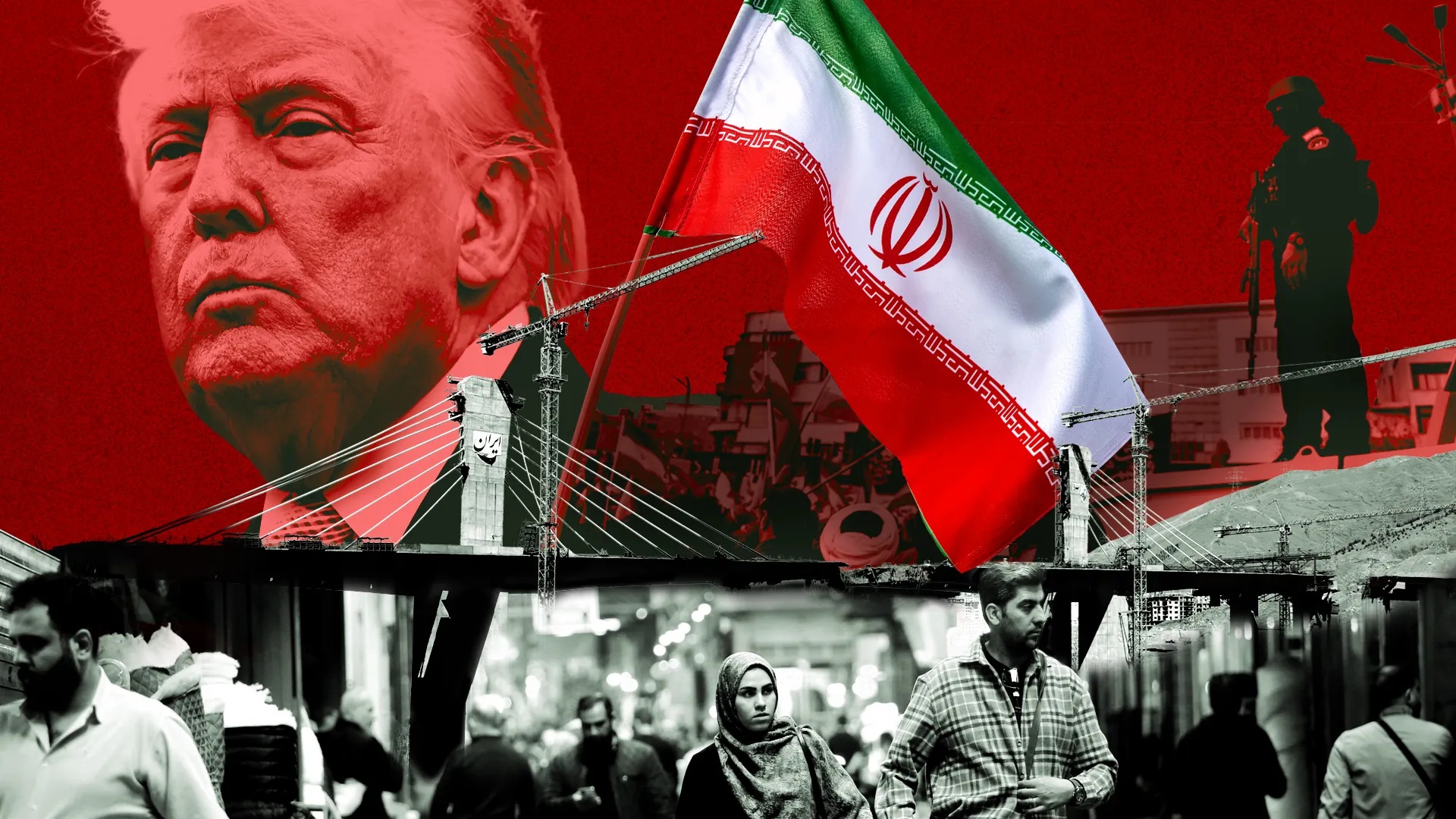
Trump’s Iran Exit Timeline Leaves Markets in Uncertainty as White House Sends Mixed Signals

0

President Donald Trump’s latest declaration that U.S. forces could leave Iran within “two or three weeks” has added a new layer of uncertainty to an already volatile geopolitical and market environment, with investors now forced to price not peace, but ambiguity.

Speaking at the White House on Tuesday, Trump said: “We leave because there’s no reason for us to do this.”

He added, “We’ll be leaving very soon.”

The remarks marked his most definitive public indication yet that Washington may be preparing to wind down direct military operations after more than a month of conflict. Yet the statement has done little to provide clarity on what exactly happens within that two-to-three-week window.

That is the central issue confronting markets.

There is, at this stage, no clear roadmap for whether the timeline points to a full troop withdrawal, a reduction in air operations, a transition to regional allies, or a renewed diplomatic push with Tehran.

Instead, the White House has continued to project two sharply different messages: one of imminent de-escalation and another of sustained military pressure.

On Tuesday, even as Trump spoke of a near-term exit, he also underscored the intensity of ongoing strikes.

“Look what’s happening in Iran,” he said. “I mean, we’re totally unchecked. Everything’s been bombed out.”

He added, “We’re hitting them very hard. Last night, we knocked out tremendous amounts of missile-making facilities.”

That language sits uneasily beside the withdrawal timeline. Over the past several weeks, Trump has repeatedly oscillated between signals of peace and escalation. Earlier this month, he said operations could continue for “four to five weeks” and even warned that the United States had the capacity “to go far longer than that.”

At another point, he hinted that the war was “winding down,” only for additional U.S. Marines to be deployed to the region shortly afterward.

In separate remarks, he threatened fresh strikes on critical Iranian infrastructure, including oil assets and power facilities, while simultaneously saying Washington was in serious discussions with Iranian officials.

This pattern of contradictory messaging is precisely why financial markets, especially energy markets, are likely to remain trapped in uncertainty.

For oil traders, the issue is not simply whether U.S. forces leave Iran. The more immediate question is what happens to the Strait of Hormuz.

Even if Washington begins withdrawing troops within weeks, the physical disruption to shipping routes and the risk of further attacks on Gulf energy infrastructure remain unresolved. Trump himself has added to the uncertainty by saying that securing the Strait is “not for us,” effectively suggesting that other nations may need to shoulder the responsibility for protecting maritime flows.

“All of those countries that can’t get jet fuel because of the Strait of Hormuz, like the United Kingdom, which refused to get involved in the decapitation of Iran, I have a suggestion for you: Number 1, buy from the U.S., we have plenty, and Number 2, build up some delayed courage, go to the Strait, and just TAKE IT,” he wrote on Truth Social Tuesday.

That creates a dangerous disconnect between political rhetoric and market fundamentals. Oil does not respond to withdrawal headlines alone. It responds to whether tankers can move safely, whether insurers are willing to underwrite shipments, and whether producers in the Gulf can restore normal export operations.

Until those questions are answered, crude markets are likely to continue pricing in a substantial geopolitical risk premium. Even on days when Trump’s rhetoric appeared to soften, oil prices have remained elevated because traders are not yet convinced that a military wind-down automatically means restored supply.

This uncertainty is spilling into broader markets as well. Higher crude prices are feeding inflation expectations, complicating the outlook for interest rates and increasing concerns about stagflation risks across major economies.

Equities may welcome any sign of de-escalation, but as long as the White House continues to alternate between peace signals and threats of further strikes, relief rallies are likely to remain fragile.

In effect, Trump’s latest statement may have offered a timeline, but not a strategy. A stated exit in two to three weeks without clarity on the conditions for withdrawal, the status of Hormuz, or the shape of any diplomatic settlement means uncertainty remains the defining market theme.

For now, oil traders are likely to remain focused less on what Trump says about leaving and more on whether the region’s energy arteries can reopen without fresh disruption.

Emirates Hills vs Dubai Hills Estate: Which Luxury Community Wins in 2026?

0

Dubai in 2026 offers some of the most refined residential experiences anywhere in the world, yet one question continues to surface among serious buyers. Emirates Hills vs Dubai Hills Estate is more than a simple comparison, it is a choice between legacy prestige and modern lifestyle design. Having spent time in both communities and spoken with residents, I can confidently say each offers a distinct vision of luxury living. This guide will help you decide which community aligns with your lifestyle goals and investment strategy.

Emirates Hills, Dubai’s Most Prestigious Address

Emirates Hills stands as the ultimate symbol of status in Dubai. Developed by Emaar as a response to Beverly Hills, this gated community features custom built mansions overlooking the Montgomerie Golf Course. Villa prices typically start around 15 million USD and can exceed 100 million USD for landmark estates with expansive plots and lake views.

Residents include royalty, global business leaders, and influential families who value privacy above all else. Walking through the area, you immediately notice the silence and space. Homes sit behind landscaped gardens, with private security ensuring complete discretion. The combination of exclusivity, architectural freedom, and limited inventory has secured Emirates Hills its reputation as the most elite residential address in the city.

Dubai Hills Estate, Modern Luxury Meets Family Living

Dubai Hills Estate offers a very different experience, one that blends luxury with accessibility and community life. Also developed by Emaar, this master planned district features villas, townhouses, and high end apartments set around green spaces and a championship golf course.

Villa prices range from approximately 3 million USD to 25 million USD depending on location and size. The presence of Dubai Hills Mall, international schools, and advanced healthcare facilities creates a complete ecosystem for residents. Its central location between Downtown Dubai and Dubai Marina makes commuting effortless. I often see young professionals and international families choosing this area because it offers both comfort and connectivity in one place.

Lifestyle Comparison, Old Money Prestige vs Modern Elegance

The lifestyle contrast between these two communities becomes clear the moment you step inside them. Emirates Hills delivers unmatched privacy. Neighbors rarely interact unless invited, and daily life revolves around personal space and quiet luxury. It suits buyers who want a trophy home where exclusivity defines the experience.

Dubai Hills Estate feels more vibrant and social. Parks, cycling tracks, and retail spaces bring residents together regularly. Families enjoy outdoor activities, community events, and a sense of belonging that is harder to find in ultra private enclaves. Buyers from London and New York often lean toward Dubai Hills Estate for its lifestyle balance, while clients from Riyadh or Karachi sometimes prefer the seclusion of Emirates Hills.

Investment Potential in 2026

From an investment perspective, both communities perform strongly but serve different objectives. Emirates Hills benefits from extremely limited supply and consistent demand from ultra high net worth buyers. Prices have shown steady appreciation over the years, though rental yields typically range between 3 and 5 percent.

Dubai Hills Estate offers higher rental returns, often between 5 and 8 percent annually. Its growing population and ongoing development pipeline continue to attract tenants and investors alike. Both communities qualify buyers for the UAE Golden Visa when purchasing above 2 million USD. In my experience, Emirates Hills suits those focused on capital preservation and long term prestige, while Dubai Hills Estate appeals to investors seeking both income and growth.

Which Community Should You Choose in 2026?

Choosing between these two communities ultimately depends on your priorities. If you want the most exclusive address in Dubai with complete privacy and a statement residence, Emirates Hills remains unmatched. It represents legacy wealth and timeless appeal.

If your focus leans toward a balanced lifestyle with modern amenities, strong rental potential, and a family friendly environment, Dubai Hills Estate stands out as the smarter option. Both communities rank among the most exclusive neighborhoods in Dubai. I always advise clients to visit each location personally before making a final decision, as the experience of walking through them often provides the clearest answer.

Frequently Asked Questions

What is the difference between Emirates Hills and Dubai Hills Estate?
Emirates Hills focuses on ultra private luxury with custom mansions and limited availability. Dubai Hills Estate offers a broader range of properties with a strong community atmosphere and modern amenities.

Which community has higher property prices in Dubai?
Emirates Hills has significantly higher property prices, with villas reaching over 100 million USD. Dubai Hills Estate remains more accessible, with luxury villas starting from around 3 million USD.

Is Dubai Hills Estate good for families?
Yes, Dubai Hills Estate is designed with families in mind. It offers schools, parks, healthcare facilities, and recreational spaces within a well planned community environment.

Can foreigners buy property in Emirates Hills or Dubai Hills Estate?
Foreign buyers can purchase freehold properties in both communities. This allows full ownership rights in designated zones, making Dubai highly attractive for international investors.

Which Dubai community gives better rental returns in 2026?
Dubai Hills Estate generally offers higher rental yields due to strong tenant demand and diverse property options. Emirates Hills focuses more on capital appreciation than rental income.

Conclusion

Emirates Hills and Dubai Hills Estate each represent a different expression of luxury living in Dubai. One offers unmatched prestige and privacy, while the other delivers modern living with strong investment potential. As Dubai continues to evolve, both communities will remain at the forefront of global luxury real estate. Explore current listings or connect with a trusted advisor to find the perfect fit for your lifestyle and goals.

The Appeal of Playing High-Stakes PLO on Online Poker Sites

0

Pot Limit Omaha (PLO) has developed a reputation as one of the most exciting types of poker that can be played online. The four hole cards, as opposed to the two that are used in most other variants, create a game with many possible hand combinations, leading to bigger draws and larger pots. This is good news for the high-stakes gambler, as it means that the game has many possible strategic paths as well as the possibility of significant rewards. The rise of cryptocurrency is transforming the world of online gaming, prompting many PLO players to explore the emerging realm of crypto poker.

The growing popularity of digital currencies has made it easier than ever for poker players to find a competitive environment. When seasoned players look for the best PLO poker sites, they want things like good action at high limits, quick payouts, and a safe environment that does not cause delays with their large bankrolls.

Why High-Stakes Players Prefer PLO

Pot Limit Omaha stands out from other poker games in that it is a complex and volatile game. With four cards in hand, there is a higher chance that a player will connect with the board, and this increases the pot sizes. The aggressive nature of the game is one of the main reasons that it is so popular with high-stakes players. Unlike Texas Hold’em, where tight play is often at a premium, in Omaha, equity is king.

Crypto poker platforms enhance this experience by allowing players to move funds quickly and efficiently. For high-stakes Omaha games, where large sums of money are constantly in play, swift transactions are a major advantage.

Key Features of the Best PLO Poker Platforms

Not all poker sites are created with high-stakes Omaha gameplay in mind. Here’s what high-stakes players should look out for:

Deep Cash Games

Players looking to play high-stakes Omaha games need access to games with significant buy-ins. The best poker sites offer games with high stakes and the level of competition that goes with them.

Fast and Secure Transactions

Time is of the essence when you are dealing with large sums of money. Crypto poker sites provide the quick transactions needed by high-stakes Omaha players.

Active Player Pool

Omaha requires a high volume of players to ensure the high-stakes gameplay that players seek. The best poker sites provide high-stakes Omaha players with access to an active player pool.

Advanced Security Measures

Players looking to make high-stakes bets need access to secure sites with advanced security measures to protect player funds.

The Crypto Advantage for Omaha Players

Cryptocurrency has brought in a new level of convenience when it comes to online poker, as the transaction process happens much quicker than it would with the traditional methods.

Another advantage of using cryptocurrencies in online poker is that transaction fees are much lower because there are no intermediaries involved, which is especially important when the stakes are higher.

It also allows players to maintain some level of privacy, as some of the poker sites that use cryptocurrencies ensure players can fund their accounts without having to provide too much financial information.

Finally, some of the best crypto casinos also offer poker and its many variants, so players can try other games as well.

Choosing the Right PLO Poker Site

The type of platform that you choose may prove to have a significant impact on your overall experience. The first thing that you should consider is the reputation of the site in the poker community.

You may also want to consider the competition that is available on the site. There are some platforms that are known for having tougher competition, while others may have softer competition.

Another thing that you may want to consider is the variety of games that the site has to offer, even if your main focus is on PLO. You should also think about the software that the site uses, especially if you plan on playing for long periods of time. Assess these factors carefully before making your decision.