DD
MM
YYYY

PAGES

DD
MM
YYYY

spot_img

PAGES

Home Blog Page 1209

Tether Could Redefine AI Accessibility and Financial Integration

0

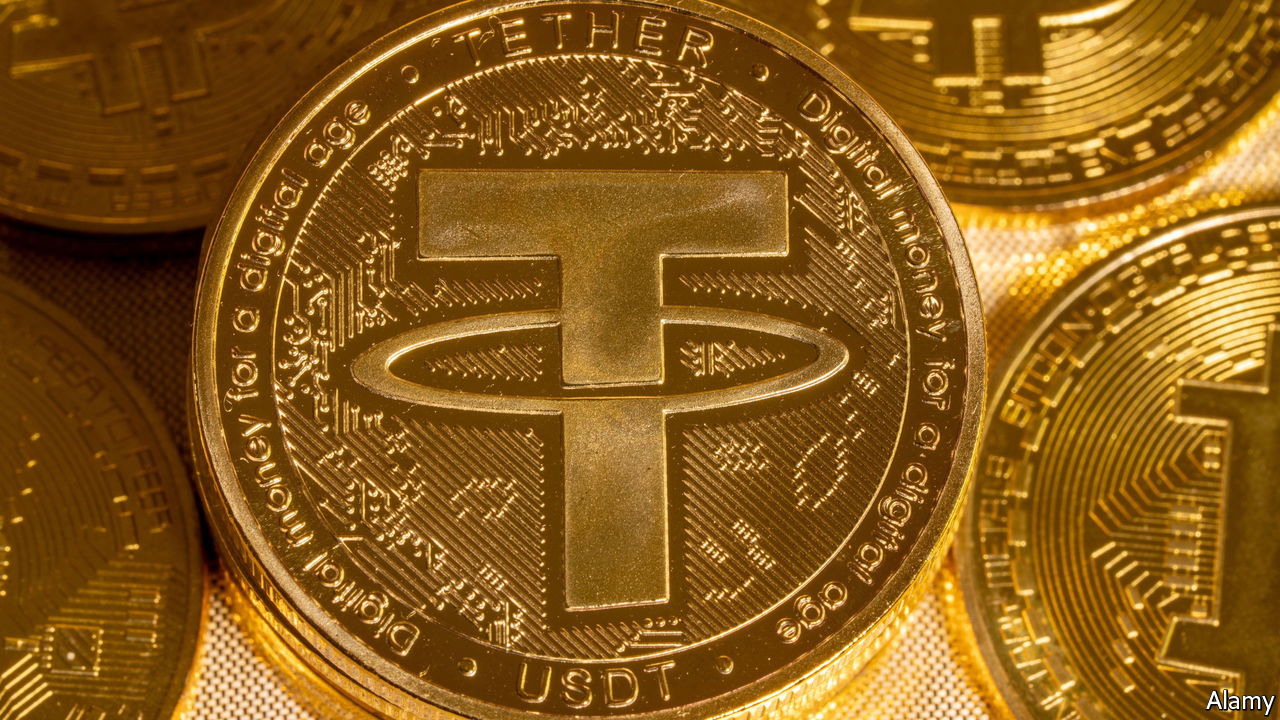
Tether, the company behind the USDT stablecoin, has announced the development of “Personal Infinite Intelligence,” an open-source AI platform designed to operate on any device without centralized control, API keys, or central failure points. The platform, part of Tether.ai, will feature a modular AI runtime and integrate USDT and Bitcoin payments via WDK, aiming to merge AI with blockchain technology. The page is tether.ai.

We envision a digital ecosystem powered by seamless, secure peer-to-peer connections without forced and unnecessary intermediaries.

Our technology empowers governments, businesses, and individuals alike, setting the foundation for a world where digital sovereignty is the norm.

CEO Paolo Ardoino highlighted its decentralized approach, emphasizing billions of AI agents in a peer-to-peer network. This move is seen as a step to enhance Tether’s dominance in the stablecoin market, which boasts a $150 billion market cap and $43 billion daily transaction volume. Tether.ai’s “Personal Infinite Intelligence” is a decentralized, open-source AI platform with key features.

Universal Hardware Compatibility: Runs on any device, from smartphones to laptops and servers, using Bare, a JavaScript runtime by Holepunch, ensuring broad accessibility.

Decentralized Architecture: Operates without centralized servers or API keys, eliminating single points of failure and enhancing resilience via a peer-to-peer (P2P) network of billions of AI agents.

Modular and Composable Design: Allows developers to customize and adapt the AI runtime by adding, removing, or modifying components, fostering flexibility for diverse applications.

Supports direct USDT and Bitcoin transactions through the Wallet Development Kit (WDK), enabling seamless in-app purchases and subscriptions without traditional payment processors. Processes data locally on users’ devices, ensuring full privacy and self-custody of both data and funds, addressing concerns about centralized data misuse.

It’s more than a P2P chat app; it’s a gateway to privacy and freedom in the digital space. Today the world is relying heavily on centralised communication systems owned by big tech corporations. Entire governments and their populations are running and trusting, with their most sacred information, a small group of centralised foreign communication infrastructures. It works until it suddenly doesn’t. Keet solves this by empowering every individual, group, organisation and country to be fully independent, truly sovereign.

AI Application Suite: Includes tools like AI Translate for contextual language translation, AI Voice Assistant for voice-based interactions, and AI Bitcoin Wallet Assistant for autonomous crypto transactions. Incorporates technologies like Keet (P2P chat) and Pear (P2P app framework), enhancing interoperability within Tether’s decentralized infrastructure. These features aim to merge AI with blockchain, offering a privacy-respecting, crypto-native platform that could transform industries like finance, healthcare, and education by enabling decentralized, intelligent applications. The development of Tether.ai’s “Personal Infinite Intelligence” carries significant implications across technology, finance, and society.

Running on any device with an open-source model lowers barriers, enabling individuals, developers, and small businesses—especially in underserved regions—to leverage AI without expensive hardware or subscriptions, fostering global innovation. Local data processing and a P2P network reduce reliance on centralized tech giants, mitigating risks of data breaches, censorship, or service outages. This aligns with growing demands for user sovereignty over data and digital assets.

Integrating USDT and Bitcoin payments via WDK creates a crypto-native AI ecosystem, potentially mainstreaming cryptocurrency for everyday transactions. This could accelerate adoption in DeFi, e-commerce, and micropayments, strengthening Tether’s $150B stablecoin dominance. Modular AI and crypto payments enable new business models, like decentralized marketplaces or autonomous AI-driven services, challenging traditional industries (e.g., finance, translation, customer support). However, it may disrupt jobs reliant on centralized platforms.

Combining AI with stablecoins could attract stricter oversight, especially given Tether’s past regulatory challenges and USDT’s systemic role in crypto markets. Governments may question privacy features or unregulated financial flows. A P2P network of billions of AI agents raises concerns about vulnerabilities, such as malicious nodes or resource constraints on low-end devices, potentially limiting reliability or adoption.

By offering a decentralized alternative to Western-dominated AI platforms, Tether.ai could appeal to regions seeking tech sovereignty, reshaping global tech dynamics but also risking tensions with major powers. Overall, Tether.ai could redefine AI accessibility and financial integration but faces hurdles in scalability, security, and regulatory compliance that will shape its real-world impact.
EU Pushes Back Against U.S. Tariff Demands, Moves to Diversify Trade as China Seeks Closer Ties

0

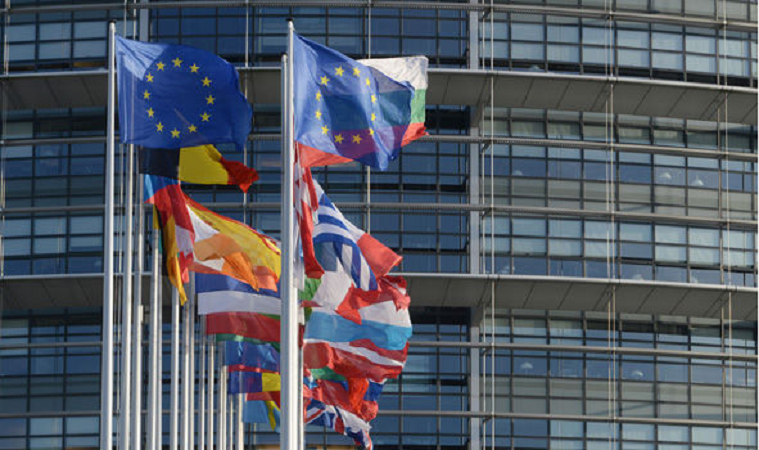
The European Union has drawn a clear line in its fraught trade negotiations with the United States, insisting it will not succumb to pressure to accept a skewed deal, even as the clock ticks down on a fragile tariff truce set to expire in early July.

European Commissioner for Trade and Economic Security, Maros Sefcovic, told lawmakers at the European Parliament on Tuesday that the EU would not agree to a trade arrangement that undermines its interests.

“We do not feel weak. We do not feel under undue pressure to accept a deal which would not be fair for us,” Sefcovic declared, making it clear that Brussels is not willing to be strong-armed into economic concessions.

The standoff comes as the EU faces persistent U.S. tariffs of 25 percent on key exports, including steel, aluminum, and cars. A 90-day pause in trade penalties, meant to give both sides time to reach a compromise, is set to expire on July 8. Without a breakthrough, tariffs could jump further, triggering retaliation from the EU and escalating an already volatile transatlantic trade relationship.

Sefcovic hinted that talks with Washington, while ongoing, have hit roadblocks despite the EU putting “tested and forward-looking” proposals on the table. “It’s not easy,” he said, acknowledging that the negotiations might ultimately collapse.

Europe Ready to Retaliate

The European Commission appears to be preparing for that scenario. Sefcovic said the bloc is “getting ready” to reintroduce rebalancing measures—retaliatory tariffs that were suspended as a goodwill gesture when talks resumed. He emphasized that such tariffs would only return if negotiations fail, but made clear that the EU would not sit idly by should the U.S. hike its levies unilaterally.

Moreover, Sefcovic signaled Brussels might revive its case against the U.S. at the World Trade Organization, calling the tariffs “simply unjust, unfair, and in total breach of international commercial law.” The EU has long criticized the U.S. approach as an act of economic aggression cloaked in the language of national security.

Looking Beyond Washington

While EU-U.S. trade tensions simmer, the bloc is actively deepening ties elsewhere, a move that could significantly alter the global trade map. Sefcovic stressed the need to tap into the “87 percent of global trade that does not involve the United States,” underscoring Europe’s drive to reduce its strategic dependency on Washington.

In recent months, the EU has sealed or advanced trade pacts with Mercosur, the UAE, and Canada—part of a broader push to diversify partnerships and de-risk its economic outlook. Trade officials say this shift is not simply about hedging against U.S. volatility, but also about building resilience amid rising protectionism and supply chain fragmentation.

China Steps In

Beijing, watching the transatlantic discord closely, has seized the moment to re-engage Europe with diplomatic overtures. On Tuesday, Chinese President Xi Jinping called for deeper EU-China cooperation, marking 50 years since diplomatic ties were established between the two powers.

Speaking through state media outlet Xinhua, Xi stressed mutual openness and dialogue as a path to “jointly safeguard fairness and justice” and oppose “unilateral bullying”—thinly veiled language aimed at Washington’s tariff-heavy trade doctrine under President Donald Trump.

Xi’s remarks omitted any direct mention of the United States, but they aligned with Beijing’s long-standing strategy to position Europe as a counterweight in global trade, particularly as China struggles to offset the impact of sweeping U.S. tariffs on its exports.

Chinese Foreign Ministry spokesperson Lin Jian confirmed that high-level dialogues between Beijing and Brussels are in the works. The agenda will span economic policy, green development, digitalization, and strategic cooperation. Beijing has also extended invitations to top EU leaders, including Council President Antonio Costa and Commission President Ursula von der Leyen, for a new round of leadership meetings.

Notably, China recently agreed to lift sanctions imposed on members of the European Parliament and its subcommittee on human rights, restrictions introduced in 2021 in retaliation for Western criticism of China’s treatment of Uyghur Muslims in Xinjiang. The move is widely interpreted as an olive branch, aimed at clearing diplomatic hurdles and restoring trade dialogue.

Lin said both sides see the renewed exchanges as “very important” under current global conditions.

“We believe this dialogue will inject new momentum into China-EU relations,” he added.

A Global Shift

The developments point to a larger realignment in global trade diplomacy. Europe, traditionally caught between the world’s two largest economies, is beginning to assert greater autonomy. That’s visible not only in its tough posture toward Washington but also in its cautious engagement with Beijing, one that seeks economic opportunity while hedging against geopolitical risks.

However, analysts warn that Europe’s balancing act remains delicate. The EU is deeply integrated with the U.S. economy and shares strategic ties through NATO and other institutions. Yet its exposure to rising tariffs and politicized trade measures is prompting a rethink of how it negotiates its global economic future.

Nigeria Bans Agencies from Importing Foreign Goods, As Experts Warn It May Worsen Inflation

0

President Bola Tinubu has announced a sweeping directive barring all Ministries, Departments, and Agencies (MDAs) from procuring foreign goods and services where local alternatives exist.

The policy, dubbed the Nigeria First Policy, was one of the resolutions adopted at Monday’s Federal Executive Council (FEC) meeting and announced by Sunday Dare, the President’s Special Adviser on Media and Public Communication, via his official X account. It mandates all MDAs to prioritize Nigerian-made goods in procurement, unless a waiver is granted by the Bureau of Public Procurement (BPP).

According to President Tinubu, the goal is to “invest in our people and our industries by changing how we spend, procure, and build.” He added: “Going forward, Nigerian industry will take precedence in all procurement. Where local supply falls short, contracts will be structured to build capacity here. Contractors will no longer serve as intermediaries sourcing foreign goods while local factories lie idle.”

The new rules include:

  • A ban on foreign goods for government procurement where local options exist.
  • Mandatory procurement audits by all MDAs to align their budgets with local content rules.
  • Sanctions for breaches, including cancellation of contracts and disciplinary actions.
  • A new Local Content Compliance Framework to be enforced by the BPP.

While the Presidency insists this marks the start of a new era of “enterprise, self-reliance, and national pride,” some economists and industry leaders have raised concerns that the policy may be premature and could worsen existing inflationary pressures.

Echoes of Food Import Ban

The policy has drawn comparisons to the Central Bank of Nigeria’s restriction on forex for food and agricultural imports during the previous administration, a move that was also intended to boost local production. However, instead of spurring food security, the decision exacerbated food scarcity and helped fuel runaway inflation. A similar trajectory, analysts fear, could unfold if the government fails to address the deep-rooted challenges confronting domestic manufacturers before enforcing such a ban.

At the heart of the criticism is the condition of Nigeria’s manufacturing environment, which industry players say is anything but enabling. Businesses continue to battle erratic electricity supply, poor infrastructure, multiple taxation, foreign exchange volatility, and low access to credit.

Manufacturers have consistently decried the cost of running diesel generators, the difficulty of importing machinery due to forex constraints, and the bottlenecks at ports and customs that delay production timelines.

The Manufacturers Association of Nigeria (MAN) has frequently called on the government to fix these structural issues before attempting to implement protectionist policies. In its most recent industry outlook, MAN noted that capacity utilization remains low, and local manufacturers are already shedding jobs in response to rising costs.

Calls for a Phased, Capacity-Building Approach

Against the backdrop of an unfriendly business environment, critics of the Nigeria First directive are urging the Federal Government to rethink the timeline and implementation strategy. Some experts note that instead of imposing an immediate ban, the government should first commit to fixing the electricity, improving access to finance, and reducing bureaucratic red tape. Only then, they say, should it begin to phase in restrictions on foreign procurement.

Tinubu’s directive also comes at a time when Nigerians are already grappling with the impact of past economic reforms. Since the removal of fuel subsidy and the unification of the naira exchange rate in 2023, inflation has soared, food prices have jumped, and household incomes have plummeted.

While the government defends the reforms, arguing that these painful decisions were necessary to stabilize the economy and attract investment, many Nigerians say they have yet to see the promised benefits. This procurement policy, many believe, may end up transferring more cost burdens to the public, especially if it leads to increased pricing for government contracts that rely on inefficient local supply chains.

A Better Alternative?

Policy watchers say the government’s procurement plan could still succeed—if coupled with urgent investments in power, industrial infrastructure, and business credit. The National Sugar Master Plan II, which ties industry quota allocations to demonstrated local investment, was cited in the Presidency’s statement as a model. However, the scale and urgency required to replicate such a structure across all sectors remain daunting.

There’s also concern that the government has failed repeatedly to practice what it preaches, as most government’s goods, including cars, are sourced from abroad. Political leaders are also notorious of medical tourism, which negates the Nigerian health system.

“The man [President Tinubu, his] official car is a Cadillac Escalade SUV made by an American company. We have Innoson motors, he didn’t buy from them. We have Nord Motors, he didn’t buy that to use. But he’s telling others to buy ‘made in Nigeria’,” Olufunmilayo, a concerned Nigerian, said.

Ultimately, while the Nigeria First policy may be framed as a patriotic shift, experts insist that slogans alone will not drive industrial development. The groundwork—electricity, capital, infrastructure and a good example from the government—must come first.

Tesla Beaten By Little-Known Chinese EVs in The UK, As Europe Sales Continue to Tumble

0

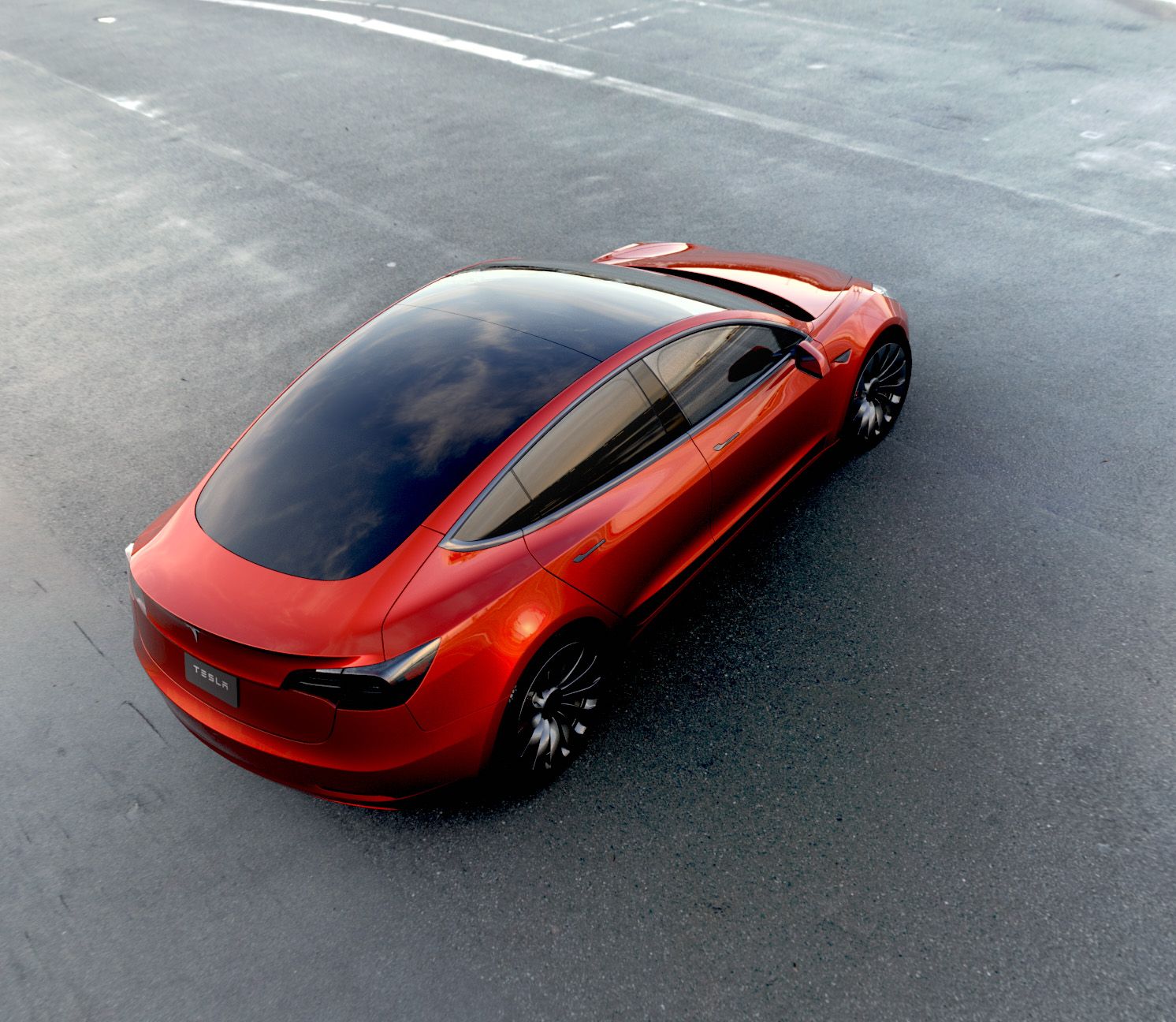
Tesla’s troubles in Europe have taken a dramatic turn for the worse. The electric vehicle giant, once the symbol of futuristic mobility, has been overtaken by two little-known Chinese brands in the UK, a market once considered friendly ground for EV expansion.

According to the Society of Motor Manufacturers and Traders (SMMT), Tesla sold just 512 vehicles in Britain in April, down from more than 1,300 the previous month. This represents not only a dramatic month-on-month slump but a symbolic collapse of the brand’s dominance in one of its most important overseas markets.

By contrast, Chinese auto powerhouse BYD surged past Tesla with 2,511 cars sold, a staggering 650% increase, while Chery-owned upstarts Jaecoo and Omoda, which only entered the UK market last year, sold 1,053 and 910 units, respectively.

The fact that Jaecoo and Omoda, barely recognized names in the UK, have now overtaken Tesla underscores the scale of the automaker’s reputational and competitive crisis across Europe. These brands offer a combination of electric, hybrid, and gas-powered vehicles, allowing them to cater to a broader segment of the market, unlike Tesla, which remains EV-only.

But the dismal sales figures are more than a reflection of shifting product preferences. Tesla is being punished by European consumers not just for what it builds, but increasingly for who leads it.

Musk’s Politics Continues to Fuel a Consumer Backlash

Tesla’s shrinking footprint across Europe comes amid a growing backlash against Elon Musk’s public alignment with far-right political causes. His endorsement of the Alternative für Deutschland (AfD) party in Germany, as well as his advisory role under President Donald Trump, has sparked protests in some cities and, in some cases, acts of vandalism and suspected arson targeting Tesla showrooms and vehicles.

While Tesla’s American fan base has largely weathered Musk’s political evolution, European buyers — particularly in liberal-leaning countries like Germany, France, and the UK — appear less tolerant of his entanglements. The result is a brand hemorrhaging not just sales but public goodwill.

European car registration data for April show that Tesla suffered double-digit sales declines across several key markets, with the updated Model Y, its most important product in the region, failing to reverse the downward trend. In a bid to slow the slide, Tesla has begun offering up to two years of free supercharging in the UK, a generous perk that underlines the urgency of the crisis.

Chinese Brands Capitalize on Tesla’s Fall

Meanwhile, Chinese automakers — once dismissed as minor players — are now capitalizing on the vacuum Tesla is leaving behind. BYD, which is already the world’s largest EV maker by volume, has expanded its UK footprint with aggressive pricing, government-aligned incentives, and rapid dealership growth.

But it’s the rise of Jaecoo and Omoda, both part of Chinese conglomerate Chery, that has startled the industry. Their quick entry and strong early performance suggest British consumers are open to exploring Chinese alternatives, especially when packaged with features that Tesla still resists, such as petrol-hybrid options and tactile interior controls.

Chery has also smartly sidestepped Tesla’s recent customer service controversies by emphasizing local partnerships and support networks, a strategy that seems to be paying off in markets where Tesla has struggled to maintain after-sales satisfaction.

Europe’s EV Market Shifts Without Tesla

Tesla’s predicament is also part of a broader shift in the European EV market, where local legacy automakers are clawing back territory after early disruption by Musk’s firm. Volkswagen, Mercedes, and BMW have stepped up EV offerings with locally tailored models and dealer incentives, while startups like Nio and XPeng, both Chinese, are plotting expansions into Western Europe despite tariff barriers.

The European Union last year imposed tariffs on Chinese EV imports in a bid to protect the domestic industry, but the policy has yet to slow China’s march. Instead, companies like BYD have begun exploring manufacturing in Europe to avoid duties — a move that could further intensify competition.

Tesla, which once had first-mover advantage and a cult-like following, now finds itself squeezed on all sides: undercut by cheaper Chinese models, outclassed by European legacy marques in customer care and localization, and bruised by a PR crisis of Musk’s own making.

An Eroding Global Image

Tesla’s European brand crisis fits within a broader global pattern where Musk’s politics and business decisions are increasingly alienating partners. His feud with regulators, advocacy for far-right speech policies on X, and coziness with Donald Trump have led to regulatory scrutiny in Brazil, uproar in Germany, and declining brand favorability ratings worldwide.

All of this marks a shift from Tesla’s earlier status as a disruptor with mass appeal. Today, it’s increasingly a lightning rod, both for praise and protest.

In Britain, the drop from over 1,300 units in March to just over 500 in April is not a blip; it’s a warning. Despite new perks like free supercharging and updates to the Model Y, UK consumers appear to be voting with their wallets, and the verdict so far is clear: Tesla’s aura is fading.

Europe Lures Scientists with €500m Super Grant After Trump’s DEI Ban, Marking a Wider Shift Away from U.S. Influence

0

The European Union on Monday launched a sweeping initiative to position itself as a global refuge for scientists and researchers, offering €500 million in new “super grants” and legal protections for academic freedom.

The move comes in direct response to U.S. President Donald Trump’s latest crackdown on federal research funding tied to diversity, equity, and inclusion (DEI) — a decision that has prompted outrage in the academic community and growing unease among America’s allies.

The new EU program, unveiled at the “Choose Europe for Science” summit in Paris, is more than a pitch for top talent — it’s a geopolitical signal. French President Emmanuel Macron and European Commission President Ursula von der Leyen took the stage at Sorbonne University to declare Europe open to those being sidelined elsewhere.

“A few years ago, no one would have imagined that one of the biggest democracies in the world would cancel research programs under the pretext that the word diversity was in this program,” Macron said. “No one would have thought that one of the biggest democracies in the world would delete with a stroke the ability of one researcher or another to obtain visas. But here we are.”

Von der Leyen followed with an equally pointed message: “We can all agree that science has no passport, no gender, no ethnicity, no political party. We believe that diversity is an asset of humanity and the lifeblood of science. It is one of the most valuable global assets and it must be protected.”

A $566 Million Bet on Global Talent

Under the new plan, the European Commission will inject €500 million ($566 million) into the European Research Council between 2025 and 2027. The goal is to provide long-term, stable funding for researchers, including those now being pushed out of U.S. institutions, while removing the bureaucratic bottlenecks that often hamper scientific work in Europe.

Von der Leyen, a former German defense minister and trained physician, said the EU will also introduce new legislation to enshrine the freedom of scientific research into law — a direct contrast to growing political interference in the United States. She also vowed to tackle other known obstacles to innovation in the EU, such as excessive red tape and limited collaboration with private industry.

“The threats rise across the world,” she said. “Europe will not compromise on its principles.”

The offer to global scientists, especially those affected by recent U.S. policy shifts, is part of a much broader pivot by the EU and its allies away from Washington’s sphere of influence, a slow but deepening rupture set in motion by Trump’s America First doctrine.

Trump’s War on DEI Sparks Global Fallout

Trump’s executive order in March to terminate all federal funding for DEI-related research has already resulted in the cancellation of more than 380 grant projects by the National Science Foundation (NSF). Among the defunded initiatives were efforts to combat misinformation, track climate change in Alaska’s Arctic with Indigenous communities, and fight online censorship in countries like China and Iran.

Some projects were aimed at simply broadening the demographics of people pursuing careers in science, engineering, and technology — a goal many experts argue is essential to sustaining innovation.

The White House defended the move as an effort to end what it called “inherently discriminatory policies.”

“If the European Union wants to embrace policies that divide, rather than focus on real scientific discovery, they should not be surprised when U.S. innovation continues to outpace Europe,” said Trump spokesperson Anna Kelly.

But while Trump frames DEI initiatives as a political liability, much of the world views them as fundamental to a healthy and competitive research environment. The backlash among U.S. and EU academics has been swift. Scientists, researchers, and medical professionals have staged protests in major cities and accused the administration of ideological censorship.

“To undermine free and open research is a gigantic miscalculation,” von der Leyen said.

The Long Arc of Transatlantic Drift

The EU’s pivot on science policy fits into a larger pattern that has been unfolding quietly over the past eight years, one that sees U.S. allies rethinking their reliance on Washington.

Since taking office in January, Trump has reignited a trade war, imposed tariffs on key European imports, and refused to endorse multilateral cooperation on issues ranging from climate change to pandemic preparedness. His previous term saw the U.S. withdrawal from the Paris Agreement and the World Health Organization, alienating even close partners.

Many in Europe now believe the old transatlantic compact cannot survive a second Trump presidency intact. What once looked like a temporary rift has matured into a fundamental reassessment of the West’s internal alliances. The EU is now pursuing trade deals independently, increasing defense collaboration without NATO, and — in this latest move — building its own scientific ecosystem no longer reliant on U.S. institutions.

Von der Leyen’s speech reflected that thinking. By making Europe “a magnet for researchers,” she is not only reacting to the U.S. policy vacuum but exploiting it.

A Message to U.S. Scientists: Come to Europe

Macron, who has sought to style himself as a global statesman amid the Western power shift, issued a direct appeal to American researchers.

“To those who feel under threat elsewhere: the message is simple,” he said. “If you like freedom, come and help us to remain free, to do research here, to help us become better, to invest in our future.”

Macron also announced that France would soon unveil new policies to ramp up investment in science and research at the national level, although no details were provided.

For both leaders, the campaign is not just about scientific output. It’s about values. The EU is betting that it can win over disillusioned scientists by offering not only money but also the moral high ground.

However, while the move marks a major step in breaking away from the U.S.-led scientific research order, it is believed that the success will depend on how fast European institutions can reform their own flaws, including slow visa processes, fragmented national funding, and poor industry linkages.