DD
MM
YYYY

PAGES

DD
MM
YYYY

spot_img

PAGES

Home Blog Page 1212

Dangote Says Nigerians Pay 55% Less for Petrol as Refinery Cuts Import Dependence

0

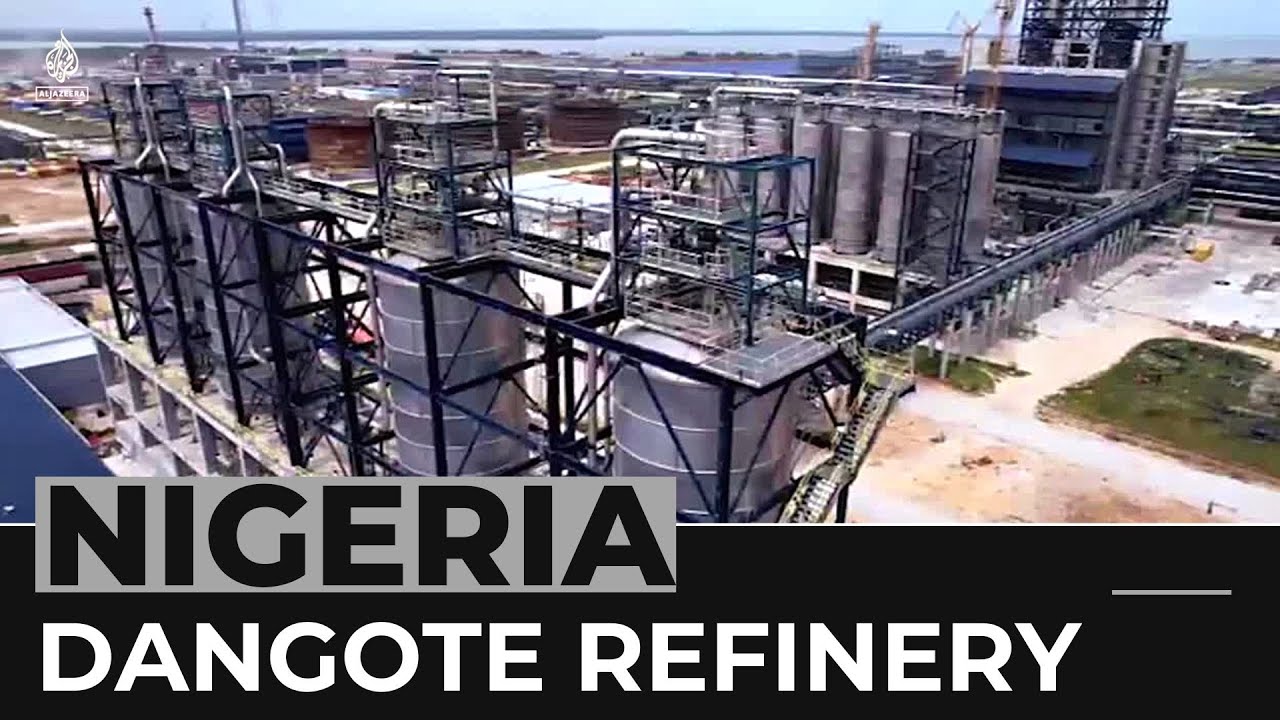
Aliko Dangote, president of the Dangote Group, says Nigerians are paying nearly half of what their West African neighbors spend on petrol, thanks to local refining at his multi-billion-dollar refinery.

Speaking during a visit to the refinery by Omar Touray, president of the Economic Community of West African States (ECOWAS) Commission, Dangote said: “In neighboring countries, the average price of petrol is around $1 per liter, which is about N1,600. But here at our refinery, we’re selling at between N815 and N820.”

“Many Nigerians don’t realize that they are currently paying just 55% of what others in the region are paying for petrol,” he said, insisting that the price gap is a direct benefit of domestic refining, which cuts transport, importation, and demurrage costs.

But while the announcement has been welcomed, it has also reignited the conversation around the enduring pain caused by the removal of fuel subsidy, as current pump prices remain far above pre-subsidy levels.

The remarks come months after the Dangote Refinery began rolling out diesel and aviation fuel and distributing petrol. The facility was long-touted as Nigeria’s solution to crushing import costs and a key buffer in the aftermath of President Bola Tinubu’s decision to end the petrol subsidy in May 2023, which sent fuel prices soaring from under N200 per liter to over N600 — and later above N1,000 in some parts of the country.

Since then, Nigerians have looked to the Dangote Refinery to help ease the burden. While the company has made a series of downward adjustments to diesel and now petrol, many say the reductions still fall short of expectations.

When compared to prices in neighboring countries, Dangote’s N815–N820 pricing is in a relatively better position. But within Nigeria, this level still represents a more than 300% increase from what Nigerians were paying before the subsidy was scrapped.

Though Dangote did not mention a timeline for further price cuts, he hinted at “a much larger initiative in the pipeline” that he says will deliver “maximum benefit” to Nigerians.

“This refinery is built for them,” he said.

But with household incomes stretched and inflation pushing basic necessities out of reach, any relief offered by local refining is yet to bridge the gaping hole left by the end of government-backed fuel discounts.

“We Must Stop Importing What We Can Produce”

Dangote argued that the refinery is more than just a business venture. He framed it as a symbol of economic self-reliance, saying: “As long as we continue importing what we can produce, we will remain underdeveloped.”

He also addressed widespread doubts over the refinery’s capacity.

“Some people have said we don’t even produce enough to meet Nigeria’s needs. But now, they are here to see the reality for themselves — and more importantly, to encourage other nations to embark on similarly large-scale industrial projects,” he said.

Citing the diesel market, he noted that prices fell sharply from N1,700 to N1,100 when local production started, and have since declined further.

“This reduction has made a significant impact across various sectors,” he said, including agriculture, manufacturing and mining.

ECOWAS: Dangote Refinery Key to Regional Standards

Touray, who led the ECOWAS delegation, praised the refinery’s ability to meet the 50 parts per million (ppm) sulfur standard — something he said many imported fuels still fail to meet.

“We are still importing products below our standard when a regional company such as Dangote can meet and exceed these requirements,” Touray said. He called on the private sector to take the lead in West Africa’s industrialization, saying the region can no longer make decisions for businesses “from a distance.”

He also pledged ECOWAS’ full support for companies like Dangote to access broader markets across the region and urged African countries to emulate Nigeria by developing infrastructure that serves regional economies.

“As we mark 50 years of ECOWAS, we are more committed than ever to bringing the private sector to the table,” Touray said, pointing to industrial development as key to reducing youth unemployment, poverty, and insecurity.

While Dangote’s refinery has finally begun supplying petrol — after several delays — and has introduced measurable cost relief relative to regional markets, the relief is tied to international oil prices. This means that the refinery could increase the price if the oil price, currently trading around $60 per barrel, goes up.

Tekedia Capital Welcomes Circlemind, a maker of General AI agents

0
Tekedia Capital welcomes Circlemind, a maker of general AI agents. We believe that in the next few years, one person can build a billion-dollar company and big enterprises could be managed and run by just dozens of people. What will happen is clear: when you are hired, you will be assigned AI agents to work with you.
 
One of the leading companies building that future is Circlemind. It creates general AI agents which can do many things including helping your sales team find new leads, summarizing your GitHub open issues, researching people you are scheduled to meet or speak with, finding B2B supplies, and many more things. If you look at the whole enterprise spectrum, Circlemind has the pieces to enable you run a business with mainly AI agents, as it has engineering, IT, marketing, sales, operations capabilities.
 
Circlemind’s Zero is engineered to think deeply, execute complex tasks, and maintain a personalized memory of your company knowledge. With one click, it anchors integrations to over 300 popular apps from Slack to Salesorce, and can operate browsers like humans. More so, Zero integrates seamlessly with your custom MCPs servers, allowing you to connect your internal systems with smart automation.
 
Tekedia Capital welcomes Antonio and Luca, wishing them great luck as they build systems to remake the nature of firms. To learn more about Circlemind, visit https://circlemind.co/ ; for Tekedia Capital, go to capital.tekedia.com

Trump, Xi Call Expected Amid Escalating Trade Rift—But Hopes for Breakthrough Remain Dim

0

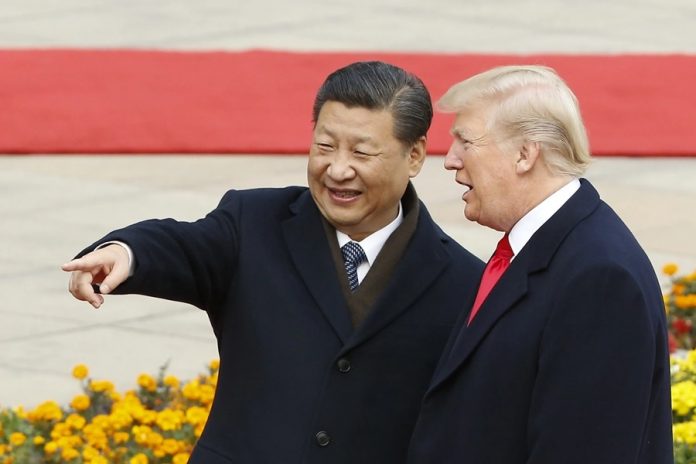
A long-anticipated call between President Donald Trump and Chinese President Xi Jinping could happen this week, as both countries face deepening hostilities over trade, technology, and diplomatic posturing.

A senior White House official told CNBC on Monday that the two leaders could speak “very soon,” although not immediately. The conversation, which follows the fragile agreement reached in Geneva in mid-May, comes as both countries ramp up accusations of betrayal and backtracking on the terms of their three-month tariff truce.

The mood between the two sides has soured rapidly. China on Monday forcefully rejected U.S. claims that it had violated the trade agreement. “China firmly rejects these unreasonable accusations,” the country’s Commerce Ministry said in a statement. It listed export controls on artificial intelligence chips, curbs on the sale of chip design software, and even the revocation of student visas for Chinese nationals as evidence of Washington’s antagonism.

“We urge the U.S. to meet China halfway, immediately correct its wrongful actions, and jointly uphold the consensus from the Geneva trade talks,” the ministry added.

Trade Deal on the Brink

In April, Trump stunned markets when he raised tariffs on Chinese goods to 145%, a sweeping move that effectively erased months of negotiation. Though both sides agreed weeks later to roll back most of those tariffs temporarily, the detente has not held.

Instead, accusations of sabotage are flying. Washington says Beijing is deliberately delaying exports of rare earth minerals and critical tech components. China, in turn, accuses the U.S. of engaging in economic containment, including its warning to allies against using Chinese-made chips and tightening export restrictions on advanced semiconductors.

Trump, visibly frustrated, wrote on Truth Social last Friday, “CHINA, perhaps not surprisingly to some, HAS TOTALLY VIOLATED ITS AGREEMENT WITH US… So much for being Mr. NICE GUY!”

High Stakes, Low Expectations

Despite the anticipation surrounding a possible Trump-Xi call, many observers doubt it will produce meaningful results. The tone from Beijing suggests hardening positions, not conciliation.

China’s posture has been one of defiance, underscored by a belief that it will not be bullied into making concessions. Even top global financiers agree. Speaking at a recent event, JPMorgan Chase CEO Jamie Dimon said the assumption that Beijing will bow to Washington is mistaken.

“China is a potential adversary. They’re doing a lot of things well. They have a lot of problems,” Dimon said. “But they’re not scared, folks. This notion that they’re going to come bow to America—I wouldn’t count on that.”

This sentiment reflects a growing consensus that Beijing is unlikely to compromise, even if Xi agrees to a direct conversation with Trump. The call, while diplomatically important, may be more symbolic than strategic.

The Impact of the Economic Fallout on Markets

The uncertainty is weighing heavily on markets. U.S. stocks opened lower Monday, rattled by fears that a new phase of economic confrontation may be on the horizon. Analysts warn that without a clear path forward, the current truce could unravel completely, unleashing another wave of trade shocks.

Before tensions escalated, trade between the U.S. and China exceeded $600 billion annually, making the partnership one of the most economically significant in the world. But with both governments now clamping down on each other’s technology sectors and intensifying national security restrictions, the relationship is rapidly deteriorating.

Xi-Trump Call May Be Final Attempt

The coming call, if it happens, could serve as a last attempt to revive the Geneva consensus. But even within Trump’s own team, there’s acknowledgment that only direct intervention from the two leaders might save the process.

Treasury Secretary Scott Bessent said last week that talks have stalled, and that progress will “require both leaders to weigh in with each other.” But even that seems a long shot.

However, it’s becoming increasingly clear that the Trump-Xi call may carry more symbolism than substance—a reflection of the widening gulf between two nations whose rivalry is no longer confined to trade, but to the future balance of global power.

Solana Price Prediction: Meet the Monster Token Expected to Crush SOL in 2025 – Projected to Soar 300% in 48 Hours

0

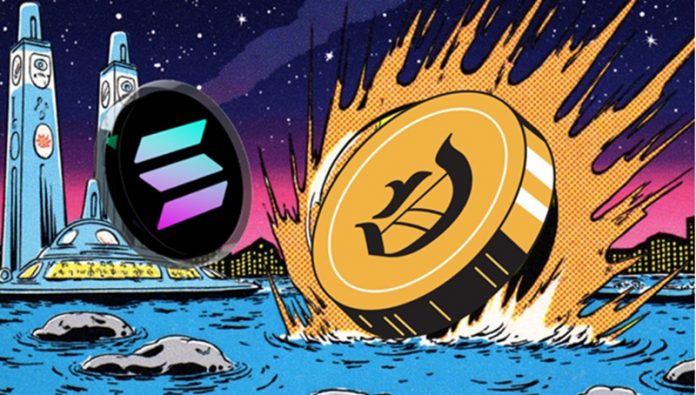
In the context of increased market activity and a renewed interest in blockchain assets, the token Salamanca ($DON) has emerged as a noteworthy competitor. This press release outlines how $DON is positioned as a “monster token” with the potential to outperform Solana (SOL) in 2025. With a projected 300% price surge over the next 48 hours, Salamanca is gaining traction through a combination of community-driven growth, strong exchange listings, and a strategic branding approach.

Centralized Exchange Interest Fuels $DON Momentum

Currently, $DON is listed on Gate.io, MEXC, PancakeSwap, and many others. As one of the most impressive top-tier Global Cryptocurrency Exchanges, Gate.io offers $DON with the highest visibility and international liquidity. We’ve had an average daily trading volume of $20 million so far, with consistency across both CEX and DEX platforms.

While writing at a current price of $0.0009842 $DON sits in a zone where the cost for growth is competitive. Further market expansion is possible based on additional ongoing evaluations by additional centralized exchanges. And this listing momentum is going to be so important for that momentum to carry forward, obviously, in what is becoming a time in the market that is receptive to broader trends related to Bitcoin reaching another all-time high. Investor interest, liquidity, all of that stuff.

Narrative Branding and Community Engagement

What sets Salamanca apart from many other meme coins is its narrative-driven identity. The token draws thematic inspiration from the fictional Salamanca cartel portrayed in a well-known television series. This approach has resulted in a unique brand presence that departs from the typical humor-based meme coin model.

The community surrounding $DON has grown rapidly, producing a wide range of user-generated content inspired by cartel culture, anime, and narrative storytelling. This level of organic engagement continues to amplify the token’s visibility across social platforms. The community’s involvement is not only promotional but integral to the asset’s evolving digital culture.

Forecasts indicate that $DON may experience a 300% surge within the next 48 hours, supported by high trading volumes, market exposure, and user activity. The project’s roadmap includes new features to enhance its ecosystem and facilitate smoother token utility. Discussions with Binance and other major platforms may further elevate its market standing.

Among meme tokens operating on the Binance Smart Chain, $DON has shown one of the fastest growth trajectories in 2025. Its alignment with entertainment IPs and blockchain functionality presents a distinctive offering in the saturated crypto landscape. The combination of narrative identity and practical utility offers $DON multiple growth pathways that could outpace Solana in performance metrics.

For more information about Salamanca (DON), visit:

Website: https://salamanca.club/

Twitter/X: https://x.com/salamanca_token

Telegram: https://t.me/salamancatoken

South African Billionaire Patrice Motsepe Boosts Fortune by $200 Million in May, Driven by Mining And Digital Banking Success

0

South African billionaire Patrice Motsepe increased his net worth by $200 million in May, reaching $3.2 billion, as reported by Forbes’ real-time billionaire tracker.

The recent rise in his fortune is tied to African Rainbow Minerals (ARM), the mining company he founded and chairs. ARM’s stock gained 2% in May, climbing from ZAR 155.27 to ZAR 158.46, with a year-to-date increase of 5.37%, outperforming many peers on the Johannesburg Stock Exchange.

Between February and May, over 64 million ARM shares were traded in 173,000 deals, with a total value of ZAR 9.64 billion, signaling strong investor confidence. ARM has pursued growth through diversification, strategic investments, and operational improvements. Despite challenges from a cyclical downturn in commodity prices, its strong balance sheet and focus on high-level demand minerals provide a foundation for long-term growth.

Beyond mining, Motsepe’s wealth is bolstered by his stake in Tyme Group, a Singapore-based digital banking firm that recently achieved a $1.5 billion valuation, becoming Africa’s ninth unicorn. Patrice Motsepe, through his investment vehicle African Rainbow Capital (ARC), has significantly invested in TymeBank, South Africa’s first majority Black-owned digital bank. Motsepe’s ARC remains the majority shareholder, driving TymeBank’s growth to over 9.5 million customers in 2024, with deposits growing 59% to R6.5 billion.

The bank achieved its first profitable month in December 2023, positioning it as one of the world’s fastest-growing digital banks. Following a $250 million Series D funding round led by Nubank’s $150 million investment, Tyme is expanding its reach in emerging markets.

Primary Sources of His Wealth

1. African Rainbow Minerals (ARM):

Motsepe’s primary wealth driver is his 40.37% stake in ARM, a Johannesburg Stock Exchange-listed diversified mining company with interests in iron ore, manganese, platinum, nickel, chrome, and coal. His stake, held directly and through family trusts, was valued at approximately $1.2 billion in 2025, per Forbes.

2. Harmony Gold:

A significant contributor to Motsepe’s wealth growth in 2025 was a 40% surge in Harmony Gold’s stock price, elevating the value of his stake to $913 million. Harmony Gold, one of South Africa’s largest gold producers, benefited from rising global gold prices, which hit record highs above $2,500 per ounce in 2025, driven by geopolitical tensions, inflation fears, and demand for safe-haven assets.

3. African Rainbow Capital (ARC):

Through ARC, a private equity firm he co-founded, Motsepe has diversified his investments beyond mining into financial services, technology, and telecommunications. ARC’s portfolio includes significant stakes in:
-TymeBank: A digital bank valued at $1.1 billion in 2025, with ARC holding a 54.7% stake.

-Rain: A South African data-only mobile network, valued at over $1 billion, where ARC holds a 90% stake. Rain’s growth in the 5G and broadband sectors has strengthened its position in South Africa’s competitive telecom market.

ARC’s investments also span agribusiness, renewable energy, and property, with a focus on empowering black entrepreneurs, aligning with Motsepe’s commitment to economic transformation.

Motsepe, who achieved a groundbreaking milestone in 2008 by becoming the first black African billionaire on the Forbes list, saw his net worth estimated at USD 3 billion, as of 2025, equivalent to approximately R54 billion ZAR. This reflects a $300 million increase from $2.7 billion in February 2025, driven largely by a 40% rise in Harmony Gold’s stock, boosting his stake to $913 million, despite a 49% earnings drop for African Rainbow Minerals (ARM) in the first half of 2025.

The South African billionaire became the first African to join Bill Gates and Warren Buffett’s Giving Pledge, donating at least half of his money to charity in 2013. His influence as a business leader, and philanthropist, underscores his role in shaping Africa’s economic and social landscape.