DD
MM
YYYY

PAGES

DD
MM
YYYY

spot_img

PAGES

Home Blog Page 1214

10/12 People who may shed light on who is really Satoshi Nakamoto

0

With the comparative value of Bitcoin against the US Dollar on the rise, different scenarios are being sensationalized about what will happen if large institutional or sovereign holders liquidate their BTC.

We see mention of Coinbase, Blackrock and Microstrategy. We see mention of the US and China.

But at a 1.1 Million Bitcoin holding, few speak about the elephant in the room – Satoshi Nakamoto, who still, nobody knows much about.

Here is a list of people who are candidates for the pseudonym ‘Satoshi Nakamoto’:

David Chaum

David Chaum is a Cryptographer who first proposed a blockchain-like protocol in his dissertation “Computer Systems Established, Maintained, and Trusted by Mutually Suspicious Groups” His system involved blockchain-like cryptography. It enforced trustlessness, and introduced a means whereby individuals could stay unknown to each other and transact safely, irrespective of if one or more of them had ill-intent. This earned him a Doctorate from California Berkeley in 1982.

He founded  International Association for Cryptologic Research (IACR) and launched ‘DigiCash’ in 1990. He has a plethora of academic honours. He’s considered the ‘father of ZKP’ (Zero Knowledge Proof), some say Blockchain.

Gavin Andresen

Gavin Andresen was born Gavin Bell in Melbourne, Australia. He moved to the US, studied Computer Engineering in Princeton and worked on 3D Graphics Hardware with Silicon Graphics Computer Systems (SGI). He also developed the loan management platform Prosper.

Andresen built up a relationship with Nakamoto and soon became the dominant contributor of code over ‘Bitcoin Talk’ surpassing that of other contributors such as Hal Finney and the now discredited Craig Wright.

Andresen also launched ClearCoin, a bitcoin exchange based on an escrow system.

In December 2010, Nakamoto left his last publicly known message, naming Andresen as his successor.

Beyond Nakamoto, he took the reins of the project and shaped it into what we know today. This earned him the nickname “the man who built Bitcoin.”

 

Stuart Haber, Scott Stornetta  and Dave Bayer

Stornetta was a Theoretical Physicist who became obsessed with the ‘problem of immutability of digital records’ while at Bell Labs. There he met Haber who is a cryptographer and they began to work together. Their initial solution was based on hash functions and digital certificates.

At the end of 1991 they met Bayer.

Bayer had earned his Ph.D. at Harvard in 1982 under the direction of Heisuke Hironaka with a dissertation entitled The Division Algorithm and the Hilbert Scheme He’s a Professor of Mathematics at Columbia.

By 1992 with Bayers’ lead, the three incorporated Merkle trees into the design.  This improved efficiency by allowing several document certificates to be collected into one block.

All three were cited in the white paper published by Nakamoto describing the technological underpinnings of Bitcoin. Some suspect ‘Satoshi Nakamoto’ was invented as a label to anonymously present their work collectively.

Stornetta is known to speak fluent Japanese.

 

Joseph Poon

Joseph Poon was a lead core dev on Bitcoin. He went on to lead on The Lightning Network, and was Lead Founding Creator on the Handshake Blockchain. He also co-built Plasma with Vitalik Buterin.

Handshake is a fork/copy of Bitcoin sharing its’ DNA to the point BIPs (Bitcoin Improvement Protocols) can (and are) implemented on it.

While Andresen won the ‘contribution war’ on ‘Bitcoin Talk’, securing the ‘Nakamoto Mantle’ over Hal Finney and Craig Wright, Poon wasn’t on there at all. He didn’t have to be. If he isn’t/wasn’t Nakamoto then he had a direct line to him and should know who he is/was. Was Poon just a ‘backend resource’ of Nakamoto or is he actually Satoshi Nakamoto himself?

Handshake came to decentralize Internet (Domain) Names along an exact parallel to Bitcoins’ aims in decentralizing money. Code for a Handshake Name is buried in a block on the blockchain and the process of authoring the names is integrated through the Urkel (Merkel) Tree.  There are no smart contracts.

Decentralization Advocate and ‘Handshake Director’ ‘Godfather’ aka rahulsutariya who intermittently appears on X, Telegram, BlueSky and Discord, frequently makes the simple post:

‘…First he (SN) decentralized money. Next, he started decentralizing the internet – starting with DNS (Domain Name Service). Satoshi moved to Handshake $HNS’

Some may take this to mean Poon is Nakamoto

Wei Dai

Wei Dai was an active member of the Cypherpunk movement, as was Satoshi Nakamoto. The Cypherpunk movement advocates for the use of strong cryptography and privacy-enhancing technologies to promote individual rights and resist government surveillance.

Dai graduated with a computer focused BSc. From Washington and went to work for Microsoft.

He became heavily involved in cryptography, first identifying critical Cipher Block Chaining (CBC) vulnerabilities affecting SSH2 and the browser exploit against SSL/TLS known as BEAST (Browser Exploit Against SSL/TLS)

He moved on to release ‘Crypto++’ and ‘VMAC’ but his singular offering which moved the needle was b-money in 1998.

The goal was “money which is impossible to regulate” , and the solution required a specified amount of computational work (since known formally as ‘Proof of Work’ [PoW]).

Wai described it as ‘…a scheme for a group of untraceable digital pseudonyms to pay each other with money and to enforce contracts amongst themselves without outside help‘

Sound familiar?

Wei Dai and Adam Back were the first two people contacted by Satoshi Nakamoto as he was developing Bitcoin. Nakamoto referenced b-money in the subsequent Bitcoin whitepaper.

Nevertheless, it’s already novel that Nakamoto as a pseudonym could carry out online conversations with himself. It sounds even less likely the two people had a shared alter ego, and the perceived dynamic between both of them doesn’t make it believable Satoshi could be just one of them.

 

Ross Ulbricht

Ross William Ulbricht (US) developed a ‘darknet market’ known as ‘Silk Road’ under the pseudonym ‘Dread Pirate Roberts’. It began in 2011 and halted in 2013 due to his arrest. Silk Road was an unregulated online marketplace making anonymous trustless trade possible using Bitcoin. It became a honeypot for trade in goods and services which couldn’t happen lawfully.

Ulbricht’s sentencing brought more outcry than the actual arrest. Researchers  Tim Bingham and Monica Barratt published that Silk Road created a stigma-free, supportive community that enabled drug users to learn from each other rather than rely on pushers. They were able to secure drugs without the logistical challenges, legal hazards, and personal safety risks associated with buying drugs on the street.

Many agreed ‘Silk Road’ made scaling criminal trade easier and made its owner morally ‘wrong’, but most rebelled when Manhattan US attorney Preet Bharara led a prosecution ending with life imprisonment without parole. This was in line with the sentencing of drug kingpins.

Ulbricht pioneered early Bitcoin use but there is a big difference between the wherewithal for the first blockchain and the first DAO Market, so his Nakamoto candidacy is an outsider.

Ulbricht was pardoned by Donald Trump and his prison clothes were put on display at Bitcoin 2025

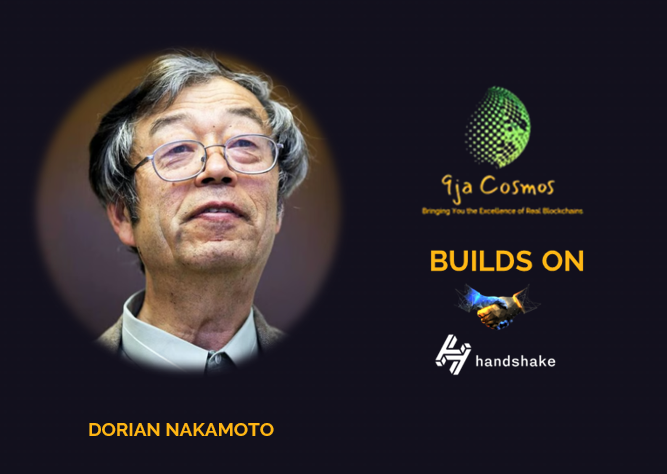
Dorian Nakamoto

Dorian Nakamoto as a choice is somewhere between a distraction and a spoof. It is included for the sole purpose of being dispelled.  Dorian graduated in physics from California Polytechnic and worked on classified defence projects.

Hungry for readership eyes, in 2014, Newsweek carried an article claiming him to be Satoshi. Dorian quickly countered the claim, saying that his involvement with bitcoin was never more than curiosity and a small retail investment.

He fully refuted things Newsweek claimed he said about being involved in Bitcoin. Newsweeks’ basis seemed only a vague similarity with Satoshi’s liberal life views, and of course the last name and Japanese background.

The online chatter found traction with the meme brigade and floods of memes arose irreversibly cementing his image in online content and social media forever.

Novice researchers and Bitcoin enthusiasts, rushing their searches, frequently discover his photo online and wrongly perpetuate the myth.
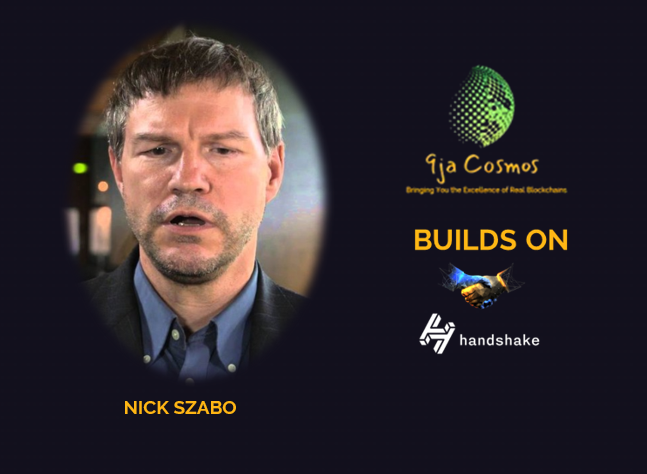
Nick Szabo

Nick Szabo has a number of strange similarities with Wei Dai. He also attended Washington, and in 1998 he released ‘Bitgold’, the same year Dai released ‘b-money’. He also lived suspiciously close to the home of Dorian Nakamoto, but there is no evidence that at any point they knew each other.

He also got accused of being Satoshi Nakamoto the very same year, though not by Newsweek. In response to British journalist Dominic Frisbee, he replied: “I’m afraid you got it wrong doxing me as Satoshi, but I’m used to it.”

Szabo was also a ‘cypherpunk’ and technically, ‘Bitgold’ seems much further down the road to Bitcoin, than ‘b-money’ is.

Nakamoto’s writings contain some linguistic mannerisms that have appeared in the writings of Szabo. Are they reflective of Szabos’ Hungarian heritage, or is it simply an organic adoption of an influencers’ traits?

Of Szabo, Musk said: ‘Obviously I don’t know who created Bitcoin … it seems as though Nick Szabo is probably more than anyone else responsible for the evolution of those ideas. He claims not to be Nakamoto … but he seems to be the one more responsible for the ideas behind it than anyone else.’

YouTuber Ben Armstrong, highlighted a point at which Szabo said ‘When I made Bitcoin’, when he meant to say something about working on Bitcoin BIPs, and claimed it was a Freudian slip.

Contrarily, Szabo formed the notion of a Smart Contract in 1994. Later, Szabo began to get involved with Ethereum to the point, Buterin made efforts to limit his influence.  Ethereum denominations are even called (G) Wei, Szabo and Finney.  This seems against the cryptographic ideologies and culture of Satoshi Nakamoto. Although Szabo later moved position saying: ‘Sadly, yes, Ethereum, which once sounded so promising, has become a shitcoin as a result of devolving into a centralized cult.’
 

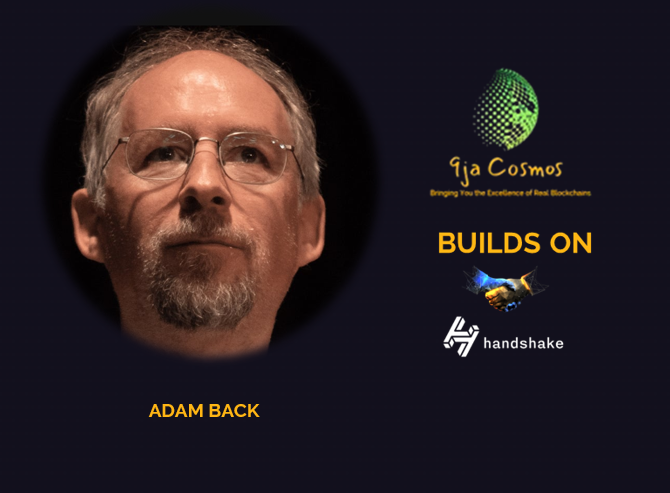
Adam Back

Like many of those with ideological values that match that of Satoshi Nakamoto, Adam Back is a Cypherpunk. With Wei Dai, Back was one of  the first two people contacted by Satoshi Nakamoto as he was developing Bitcoin.

Back has a PhD in distributed systems from Exeter.

In 1997, Back invented Hashcash, which is used in the Bitcoin mining process.

In 2016, the Financial Times cited Back as a potential Nakamoto candidate. The YouTube channel Barely Sociable repeated the claim in 2020.

In 2024, a UK court ruled that Wright was in contempt for persistent, false claims to be Satoshi. During those proceedings, Back released a series of emails he had with Satoshi Nakamoto during 2008 and 2009. Back and Satoshi discuss the Bitcoin whitepaper, and Back refers Satoshi to the work of Wei Dei. The series ends in January 2009 with Nakamoto announcing Bitcoin is launched.

Adam Back is the founder/CEO of Blockstream, – blockchain solutions based on the Bitcoin infrastructure. The companys’ lead product  is the Liquid Network, which is a Layer 2 Bitcoin sidechain.

The exposed emails make it extremely difficult to consider either Back or Dai as Satoshi candidates.
Peter Todd

Peter Todd was named as the real-world identity of Satoshi Nakamoto by Cullen Hoback, HBO.

In 2008, Todd was just finishing a fine arts degree He wasn’t even in the cryptography world yet.  There’s no reason he would have needed a pseudonym – he wasn’t a known figure, and didn’t become involved with Bitcoin until 2012.

In April 2012, Todd submitted ‘OP_CHECKLOCKTIMEVERIFY (BIP 65)’

OP_CHECKLOCKTIMEVERIFY allows ‘post-dating’, so Bitcoin sent, can’t be used by the recipient until the future date specified by the transaction.

“For the record, I am not Satoshi,” he responded. “I think Cullen made the Satoshi accusation for marketing. He needed a way to get attention for his film.”

The Aston University Centre for Forensic Linguistics analysed the writing style of 13 Nakamoto candidates. It found Nick Szabo the closest match.

Todd is a born Canadian and uses British English. Some of his writings use indigenous spelling, common with Nakamoto; such as colour and cheque. But that’s not enough proof to establish him as the inventor of Bitcoin.

In an interview after the HBO Documentary was released, Todd told Kevin T. Dugan, staff writer at Intelligencer: Seems like Hoback avoided easily sourced information that could discount me being Nakamoto. It’s not hard to do a bit of research on my life, including talking with my friends and family about me circa 2008, the time when Nakamoto was known to be developing the bitcoin idea.

A check of bips.xyz – a mirror of the official BIPs repository shows BIPs from 2011 to todays date. There is only one BIP with Todd as owner, as compared to Gavin Andresen, mentioned earlier, who has 11.

It appears unlikely Todd is Nakamoto.

I’ve discounted Hal Finney and Craig Wright who are common in similar articles. They, along with Gavin Andresen, were individually engaging with Nakamoto on Bitcoin Talk. As Satoshi named Andresen his successor, it devalues the likelihood of the other two. Separately, early collaborators were floated as the real Satoshi by Financial Times. Adam Back publicly responded that none were, a list which included both himself and Wright. None of the group had a problem with the response except Wright, who sued Back, but dropped it later.  Separately a London High Court Judge sentenced Wright to 12 months in prison, suspended for two years. The court was satisfied claiming to be Nakamoto was lying, and ordered him to cease in a previous case, an order he continued to disobey. Wright’s actions were described in court as “legal terrorism” that “put people through personal hell” in his campaign to be recognised as Bitcoin’s inventor.

Who do you think Nakamoto could be? Is it none of the above? Did he pass away from some terminal condition in 2010? And what is to become of that 1.1 Million Bitcoin holding, big enough to topple empires?

Sources:  Bitcoin Wiki, Bitstamp.net  BBC.com  , Ben Armstrong Podcast.  Curiousmatrix  Forbes,  Investor Place   Wired, ‘Falling in and Falling out: A Brief Study of the Shifts in Nick Szabo’s Attitude towards Ethereum’ – Chester.  Wikipedia,

9ja Cosmos is here…

.9jacom Domains

.det0x Domains

Detoxant 3 Tokenized Artworks

Detoxants – FiendYard Fruit & Veg

Opaque Emotion Pathways Tokenized Artworks

Preview our Sino Amazon/Sinosignia releases (Ente)

Visit 9ja Cosmos LinkedIn Page

Visit 9ja Cosmos Website

Follow 9ja Cosmos on X

Ghana Signs $1bn UAE Deal to Build Africa’s Largest Innovation Hub in Ningo-Prampram

0

Ghana has sealed a landmark $1 billion memorandum of understanding (MoU) with the United Arab Emirates to establish a cutting-edge technology and innovation hub in Ningo-Prampram, Accra, setting the stage for what is poised to become Africa’s largest digital transformation base.

The deal was signed by Ghana’s Minister of Communication, Digital Technology and Innovations, Samuel Nartey George, and Sultan Ahmed Bin Sulayem, Chairman of the Ports, Customs and Free Zone Corporation (PCFC) of Dubai. The UAE is expected to fully fund the hub, while Ghana will provide the land—25 square kilometers in Ningo-Prampram—for the first phase of development.

Minister Samuel George described the deal as the culmination of three months of behind-the-scenes negotiations and a major step in Ghana’s ambition to lead Africa’s digital future.

“This partnership speaks to the vision of H.E. John Dramani Mahama, President of the Republic of Ghana, and the potential the One Million Coders Programme holds for Ghanaians,” George said.

He described the initiative as a launchpad for tech giants like Microsoft, Oracle, Meta, IBM, and Alphabet to set up African headquarters in Ghana, along with over 11,000 companies under the PCFC umbrella.

The hub will serve as a base for AI engineering, business process outsourcing (BPO), knowledge process outsourcing (KPO), and machine learning data generation tailored to African needs. George noted that it will reinforce the government’s One Million Coders Programme, which aims to train young Ghanaians in fields such as AI, cybersecurity, data protection, and digital governance.

“To Ghana’s vibrant community of tech entrepreneurs, innovators, and digital talents, this is your platform,” George said. “We are creating the conditions for a digital renaissance, led by Ghanaians for Ghanaians. Our goal is not to catch up with the digital age, but to help shape it.”

UAE’s Long-Term Bet on Digital Africa

Sultan Ahmed Bin Sulayem emphasized that in today’s world, wealth is increasingly defined by intellectual capacity rather than natural resources.

“National wealth is defined not by gold or oil but by the ability to generate, implement, and scale ideas,” he said, citing Apple’s transformation of a simple idea into a trillion-dollar enterprise.

Drawing from DP World’s automated port in Rotterdam, Sulayem argued that digital transformation is not eliminating jobs but redefining them.

“Jobs are being transformed. Workers are now managing smarter processes and customer relationships,” he said.

He also noted that as global supply chains shift, Ghana is well-positioned to become a leading production and distribution hub in West Africa.

A New Front in the Africa Tech Race

The Ghana-UAE deal places Ghana in direct competition with Nigeria, which has been advancing its own artificial intelligence (AI) and tech ambitions. Nigeria launched its National Artificial Intelligence Strategy in April, focusing on infrastructure, ethical adoption, and economic development. It also established the Nigerian Artificial Intelligence Collective (NAIC) to coordinate strategy implementation.

Major players have responded. Google pledged N2.8 billion to develop AI talent across Nigeria and earlier committed N100 million to Nigeria’s National Centre for Artificial Intelligence and Robotics (NCAIR). Microsoft, for its part, announced a $1 million investment to equip one million Nigerians with AI skills.

Despite these initiatives, experts warn that much of Africa remains unprepared to fully harness the AI revolution. Critical infrastructure challenges—such as erratic electricity supply, poor broadband access, and weak digital policy frameworks—continue to slow adoption and investment.

However, Africa’s scramble for digital dominance is intensifying. While Nigeria’s push is centered on AI and capacity building, Ghana’s $1 billion project in partnership with Dubai sets a broader tone: establishing not just local talent pipelines but creating a continental base for global tech giants.

Ghana’s strategy, rooted in infrastructure and public-private collaboration, is expected to offer a more holistic blueprint, blending foreign investment, innovation ecosystems, and skills development. The UAE’s involvement adds credibility and muscle, potentially transforming Ghana into a critical node in global digital supply chains.

In the words of Sultan Ahmed Bin Sulayem, “This is no longer about building tech parks; it’s about reshaping nations through technology.”

However, experts note that as Africa’s two tech powerhouses chart parallel paths, the success of these ambitious plans will depend not only on the billions pledged but also on the ability to overcome local structural challenges, attract long-term investment, and create inclusive digital economies that serve their populations.

DBN Disburses Over N1tn to Nigerian MSMEs, Supports 1.2m Jobs Amid Calls for Broader Access to Credit

0

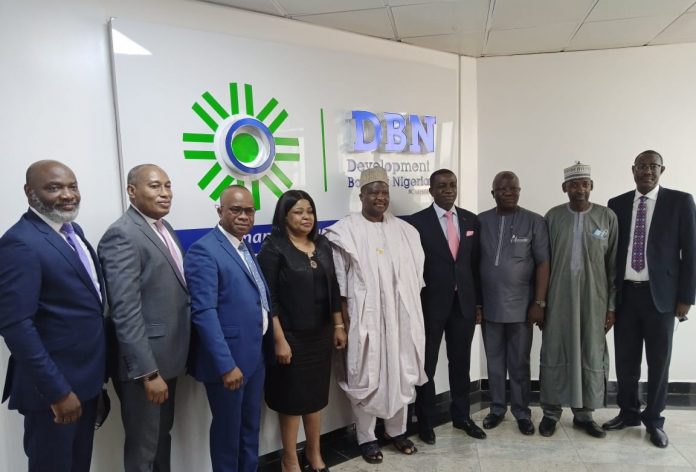
The Development Bank of Nigeria (DBN) says it has disbursed over N1 trillion to Micro, Small, and Medium Enterprises (MSMEs) across Nigeria, a significant milestone that the bank says has supported more than 1.2 million jobs nationwide.

The bank’s Managing Director, Tony Okpanachi, disclosed this while speaking to the News Agency of Nigeria (NAN) on the sidelines of the African Development Bank (AfDB) Annual Meetings in Abidjan, Côte d’Ivoire.

The DBN boss described the feat as a landmark in the institution’s mission to deepen access to finance for Nigeria’s small businesses, which form the backbone of the country’s economic activity. He attributed the bank’s impact to its wholesale lending model that disburses funds through commercial banks and microfinance institutions, which then provide credit to MSMEs across different sectors.

“We are proud to report that at the end of 2024, DBN had disbursed over N1 trillion to MSMEs through our partner financial institutions. The support has helped to stimulate economic activity and improve livelihoods, especially at the grassroots. In terms of job creation, we have been able to support over 1.2 million jobs directly and indirectly,” Mr Okpanachi said.

While the progress is notable, the DBN chief admitted that Nigeria’s MSME financing gap remains vast. According to a report by the International Finance Corporation (IFC), over 40 million MSMEs operate in Nigeria, but less than 5% have access to adequate credit. The World Bank estimates Nigeria’s MSME credit gap to be more than $158 billion, a figure that underscores the magnitude of the challenge.

In a country where unemployment officially stands at 5% (using the NBS rebased methodology) but underemployment and informal employment remain widespread, MSMEs provide jobs for over 80% of the workforce and contribute nearly 50% of Nigeria’s GDP. However, their growth is often hindered by a lack of access to affordable capital, poor infrastructure, regulatory red tape, and limited technical capacity.

Mr Okpanachi noted that the DBN is addressing these challenges not only through funding but also through capacity-building programs for MSMEs, including financial literacy, entrepreneurship training, and digital tools to help formalize businesses and prepare them for credit.

“The need is massive and we are not resting on our oars. There is still much more to be done to close the access gap and expand our reach,” he said.

He also called for more policy reforms, public-private collaboration, and innovative financing models such as blended finance to crowd in private investment into the MSME ecosystem.

The experience of other economies underscores the critical role that targeted credit support for MSMEs can play in national development. In South Korea, government-backed credit guarantee schemes and development banks like the Industrial Bank of Korea (IBK) helped small businesses scale during the post-war industrialization era, contributing to the country’s emergence as a global manufacturing powerhouse.

In Germany, the KfW Development Bank continues to provide billions of euros annually in subsidized loans to small businesses, a strategy that has helped maintain its strong Mittelstand (medium-sized enterprises) sector—considered the engine of the German economy.

Similarly, in China, MSMEs contribute more than 60% of GDP and 80% of urban employment. The Chinese government, through state-owned banks and a robust credit system, has facilitated massive lending to small businesses, enabling innovation, job creation, and export competitiveness.

Nigeria’s case is different due to structural challenges, including a volatile currency, high interest rates, weak credit reporting systems, and a trust gap between lenders and informal businesses. However, institutions like DBN are attempting to bridge that divide by partnering with financial institutions and offering partial credit guarantees to reduce lenders’ risk exposure.

Okpanachi also used the platform to commend the outgoing AfDB President, Dr Akinwumi Adesina, for a decade of transformation at the multilateral institution.

“Under Adesina, AfDB has nearly tripled its capital base and disbursed more in ten years than it did in its first 50 years. That is no small feat,” he said.

DBN was established in 2014 and became operational in 2017 as a wholesale development finance institution focused on providing long-term financing to MSMEs through eligible financial intermediaries. It is backed by the Nigerian government in partnership with the World Bank, African Development Bank, European Investment Bank, and other development partners.

Though the bank’s N1 trillion milestone is commendable, it only scratches the surface of what is needed to unlock the full potential of MSMEs in Nigeria. Analysts and business leaders believe that further scaling of DBN’s interventions, complemented by broader economic reforms, could be key to creating jobs, reducing poverty, and fostering inclusive growth in a country with one of the world’s fastest-growing populations.

As inflation and operating costs continue to squeeze small businesses, stakeholders say that ensuring affordable credit remains accessible is not just a development objective—it is a necessity for economic survival.

Why Viral Dogecoin (DOGE) Replacement is Expected to Soar 12040%, from $0.20 to $24.28 in 8 Weeks

0

Rexas Finance’s core token RXS has emerged as a promising candidate to replace Dogecoin as it gains traction across the crypto market. The crypto space shows great enthusiasm because analysts expect RXS to soar by 12400% from its current price of $0.20 to hit $24.28 in only eight weeks. The intense market demand drives this explosive growth because the presale has almost reached completion and RXS already has more than 52,000 token owners. Investors keep a close eye on RXS as it prepares for its $0.25 listing date on June 19, 2025 because they believe it may become the next major digital asset.

The Powerhouse Behind RXS: Rexas Finance’s Role

Rexas Finance emerges as an industry-leading organization which specializes in turning conventional real-world assets (RWA) into digital tokens. The platform focuses on uniting blockchain efficiency with tangible assets such as real estate and commodities and gold through its core mission. Through its conversion system for physical assets into digital tokens Rexas Finance creates opportunities for investment accessibility that traditional wealthy and institutional investors controlled before. RXS has emerged as the key component behind expected RXS token price growth of 12,040% by providing worldwide access and liquidity to markets typically characterized by low liquidity.

Fractional Ownership and Unmatched Accessibility

Rexas Finance provides its users with a revolutionary feature that enables them to split ownership of assets into smaller portions. The RXS platform enables investors to acquire pieces of valuable real estate or metallic assets at a fraction of the required capital. The platform serves retail investors by reducing their entry requirements and it simultaneously improves asset owner liquidity. The decentralized exchange system allows investors to trade asset-backed tokens which provides them with an easy and accessible marketplace for buying and selling or swapping their holdings.

Website: https://rexas.com

Whitepaper: https://rexas.com/rexas-whitepaper.pdf

Twitter/X: https://x.com/rexasfinance

Telegram: https://t.me/rexasfinance

Security, Transparency, and Ecosystem Trust

The Rexas Finance platform ensures the highest standards of security together with complete transparency in all its operations. The Rexas Finance system uses audited smart contracts to control all transactions which ensures complete security for user funds together with their data at all times. The platform maintains regulatory compliance through strict KYC and AML procedures which strengthens trust among retail and institutional investors. The investment trust of RXS grows stronger because it is listed on CoinMarketCap and CoinGecko alongside undergoing a rigorous Certik audit.

Presale Momentum and Market Dynamics

The RXS presale has achieved high success rates as it has reached 92.47% completion and raised $48,472,762 from investors who purchased 462,361,519 out of 500,000,000 available tokens. The RXS token has received immense market support because investors believe in its utility values and project vision. The upcoming $0.25 official listing on June 19, 2025 will follow the conclusion of the presale period during which anticipation keeps rising. RXS shows strong potential to reach its predicted 12,040% growth as the presale finishes quickly while its holder base exceeds 52,000 and continues to grow.

The Future of RXS

RXS advances crypto into a new period by delivering real-world functionality with DeFi functionality and comprehensive security features. The ability to access previously inaccessible assets through innovative financial tools and unlock new opportunities has made RXS emerge as a strong Dogecoin replacement which forecasts an 12,040% growth in eight weeks. All attention focuses on RXS as it prepares to transform digital asset capabilities because the presale has reached near completion while the listing date approaches June 19, 2025.


Website: https://rexas.com

Whitepaper: https://rexas.com/rexas-whitepaper.pdf

Twitter/X: https://x.com/rexasfinance

Telegram: https://t.me/rexasfinance

Implications of SEC’s Guidance on Crypto Staking and Memecoins

0

The SEC’s Division of Corporation Finance issued a statement clarifying that “Protocol Staking Activities,” such as staking crypto assets in a proof-of-stake blockchain, do not require registration under the Securities Act, as staking rewards are viewed as compensation for services provided by node operators, not profits derived from the entrepreneurial or managerial efforts of others, as defined by the Howey Test.

SEC Commissioner Hester Peirce supported this guidance, noting it provides “welcome clarity for stakers and staking-as-a-service providers in the United States,” addressing previous regulatory uncertainty that discouraged participation in network consensus and decentralization. However, Commissioner Caroline Crenshaw dissented, arguing the guidance lacks a robust framework for determining whether staking services constitute investment contracts under existing laws.

Separately, the SEC’s Division of Corporation Finance issued guidance on February 27, 2025, stating that memecoins—crypto assets inspired by internet memes, characters, or trends—are not securities but are akin to collectibles. This aligns with comments from Commissioner Hester Peirce, who, in a February 11, 2025, Bloomberg interview, stated that “many of the memecoins out there probably do not have a home in the SEC under our current set of regulations.”

The SEC clarified that memecoins typically lack utility or functionality and do not meet the Howey Test criteria for securities, as they do not involve an investment in a common enterprise with an expectation of profits from others’ efforts. Instead, their value is driven by speculative trading and market sentiment, similar to collectibles. However, the SEC noted that memecoins designed to evade securities laws by disguising products that would otherwise be securities could still face enforcement action.

These developments reflect a shift under the SEC’s current leadership, led Chairman Paul Atkins and supported by Peirce’s Crypto Task Force, toward providing clearer regulatory frameworks for crypto assets, moving away from the enforcement-heavy approach of the prior administration. The SEC’s guidance that staking activities on proof-of-stake (PoS) blockchains are not securities transactions provides regulatory certainty for node operators and staking-as-a-service providers. This could encourage broader participation in blockchain networks, fostering decentralization and innovation in the U.S. crypto ecosystem.

By classifying staking rewards as compensation for services rather than securities-derived profits, the guidance may reduce compliance costs for staking providers, who previously faced uncertainty about registration requirements under the Securities Act. This could attract more institutional and retail participation in PoS networks like Ethereum. The clarity may help the U.S. compete with jurisdictions like the EU, which have clearer crypto regulations (e.g., MiCA). Previously, regulatory ambiguity drove some staking operations offshore.

Commissioner Crenshaw’s dissent highlights a risk that the guidance may be too permissive, potentially allowing some staking arrangements to evade securities laws if structured to exploit loopholes. This could lead to future enforcement actions if the SEC perceives abuse. Classifying memecoins as collectibles, not securities, removes them from SEC oversight under current regulations, potentially spurring innovation and trading in this niche. This could boost speculative markets, as memecoins like Dogecoin or Shiba Inu thrive on community-driven hype and market sentiment.

The lack of SEC oversight for memecoins may expose retail investors to heightened risks, as their value is driven by speculation rather than fundamentals. Pump-and-dump schemes or fraudulent promotions could proliferate without regulatory guardrails. The SEC’s stance that memecoins resembling securities could face enforcement action creates a gray area. Projects must carefully design memecoins to avoid characteristics of investment contracts, which could lead to legal disputes if the SEC deems a memecoin’s structure evasive.

Peirce’s comparison to collectibles aligns memecoins with cultural artifacts like NFTs or trading cards, potentially legitimizing their role in digital culture while distancing them from traditional financial instruments. The guidance reflects a philosophical split within the SEC. Commissioners like Hester Peirce and Acting Chairman Mark Uyeda advocate for innovation-friendly policies, emphasizing the need for clear rules to support the crypto industry’s growth. Peirce’s Crypto Task Force, established under Atkins ’s leadership.

Commissioner Caroline Crenshaw’s dissent on the staking guidance underscores a cautious approach, prioritizing investor protection and robust legal frameworks. She argues that staking arrangements could still meet the Howey Test in certain contexts, reflecting concerns that broad exemptions might undermine securities laws. The divide highlights a transitional phase at the SEC under new leadership.

The shift toward guidance over enforcement contrasts with the Gary Gensler era’s aggressive actions against crypto firms, signaling a potential softening of regulatory scrutiny but with lingering disagreements on scope. Crypto industry players, including blockchain developers and exchanges, welcome the clarity, as it reduces compliance burdens and encourages U.S.-based innovation. However, consumer protection advocates worry that looser oversight, especially for memecoins, could expose investors to fraud or market manipulation.

The guidance aligns with a broader political shift post-2024 U.S. elections, where pro-crypto sentiment has grown. Congressional efforts to pass crypto-specific legislation (e.g., FIT21) and the influence of crypto-friendly lawmakers may have pressured the SEC to adopt a more permissive stance. The U.S. risks falling behind jurisdictions with established crypto frameworks (e.g., EU’s MiCA, Singapore’s regulations) if internal SEC disagreements delay cohesive policy. The divide could slow progress toward comprehensive crypto regulation, leaving gaps in investor protection and market stability.

The SEC’s guidance is a step toward regulatory clarity, but the internal divide suggests ongoing debates about how to balance innovation with investor safety. Future guidance or rulemaking will likely face scrutiny from both pro-crypto advocates and traditional financial regulators. For staking, expect increased adoption but potential challenges if enforcement actions target edge cases.

For memecoins, speculative trading may surge, but high-profile scams could prompt the SEC to refine its stance or Congress to intervene with targeted legislation. This split within the SEC mirrors broader tensions in the crypto space: fostering innovation while mitigating risks in a rapidly evolving market.