DD
MM
YYYY

PAGES

DD
MM
YYYY

spot_img

PAGES

Home Blog Page 1216

Anthropic Revenue Soars to $3bn as Enterprise Demand for Generative AI Surges

0

Artificial intelligence startup Anthropic is now generating about $3 billion in annualized revenue, according to two CNBC sources familiar with the company’s financial performance — a stunning leap from the $1 billion run-rate it posted just five months ago.

The surge is being viewed as one of the strongest signs yet that generative AI is rapidly transitioning from experimental hype to a commercial engine driving enterprise transformation.

Founded in 2021 by former OpenAI researchers, Anthropic has become a dominant player in enterprise-grade AI models, particularly in the code generation space. The company’s recent growth, according to one source, accelerated after its run-rate crossed $2 billion at the end of March, hitting $3 billion by May — an unprecedented pace among software-as-a-service companies.

At the heart of this growth is Claude, Anthropic’s generative AI platform, which businesses are adopting to build custom AI tools, automate tasks, and support internal development. While Claude trails OpenAI’s ChatGPT in consumer popularity — drawing just 2% of ChatGPT’s web traffic in April, according to Similarweb — it has become the go-to model for many large companies looking for reliable and secure AI infrastructure.

Enterprise AI is Heating Up

Anthropic’s enterprise-first approach is beginning to pay off. While OpenAI, valued at around $300 billion, has capitalized heavily on consumer subscriptions, especially through ChatGPT, Anthropic is securing recurring revenue from corporate clients by integrating its AI directly into their operations. Its backers include Amazon, which has committed up to $4 billion, and Alphabet, which has also invested billions to ensure the integration of Claude into cloud platforms.

The company’s $3.5 billion fundraising round earlier this year valued it at $61.4 billion, reinforcing investor belief that Anthropic is a viable long-term leader in the AI race.

According to Meritech Capital General Partner Alex Clayton, Anthropic’s growth is exceptional by any measure.

“We’ve looked at the IPOs of over 200 public software companies, and this growth rate has never happened,” he said.

Clayton, who is not an investor in Anthropic, compared it favorably with Snowflake, which took six quarters to scale from $1 billion to $2 billion in annualized revenue — a pace Anthropic surpassed in a single quarter.

AI Market Could Exceed $1.3 Trillion by 2030

The growth of firms like Anthropic and OpenAI is feeding into a broader AI market explosion. According to estimates by Bloomberg Intelligence, the global generative AI industry is projected to grow into a $1.3 trillion market by 2032, up from just $40 billion in 2022. PwC, meanwhile, projects that AI could contribute up to $15.7 trillion to the global economy by 2030, with $6.6 trillion expected from increased productivity and $9.1 trillion from consumption effects.

But some analysts now believe even those numbers might understate the impact. With the flood of investor capital, rapid enterprise deployment, and governments betting big on AI innovation, the industry’s growth may exceed current forecasts within the next five years. Anthropic, OpenAI, Cohere, Mistral, and others are all drawing in multi-billion-dollar investments at record-breaking valuations. The tech sector’s race to integrate AI into everything from logistics to legal work is accelerating faster than even bullish projections had anticipated.

However, while both Anthropic and OpenAI offer tools for business and public use, their strategic priorities are diverging. OpenAI is increasingly shaping itself as a consumer-centric AI company, with millions of ChatGPT Plus subscribers contributing the bulk of its revenue. In May, the company reported that paying enterprise seats for ChatGPT had grown from 2 million to 3 million, with T-Mobile and Morgan Stanley among its enterprise users.

Anthropic, however, is becoming the AI supplier of choice for enterprises seeking safer, more specialized models. Unlike ChatGPT, which aims for broad public engagement, Claude is being tailored for integrations in finance, healthcare, legal services, and coding — areas where companies are more cautious and require guardrails and interpretability.

The AI Arms Race Is Just Beginning

As investment pours in and adoption widens, AI firms are not just reshaping the tech sector but also remaking global economic trajectories. Countries are competing to establish national AI champions, and industries are being forced to retool around AI capabilities or risk obsolescence.

Anthropic’s surge to a $3 billion run-rate, just three years after launch, is a watershed moment, not just for the company but for the entire sector. With generative AI still in its infancy, the current figures may be just the beginning.
IATA Says Global Sustainable Aviation Fuel Production to Double to 2m Tons in 2025, but Impact Still Marginal

0

Global production of Sustainable Aviation Fuel (SAF) is projected to double to 2 million tons in 2025, the International Air Transport Association (IATA) has said, though the industry body warns that the figure still represents less than 1 percent of aviation’s total fuel consumption.

IATA’s Director General, Willie Walsh, made the disclosure during the association’s 81st Annual General Meeting in New Delhi. He acknowledged the progress but stressed that the scale remains far too small to make a meaningful dent in aviation’s carbon emissions.

“While it is encouraging that SAF production is expected to double to 2 million tons in 2025, that is just 0.7 percent of aviation’s total fuel needs,” Walsh said. “And even that relatively small amount will add $4.4 billion globally to the fuel bill. The pace of progress in ramping up production and gaining efficiencies to reduce costs must accelerate.”

The aviation industry has been under mounting pressure to decarbonize, with countries introducing net-zero targets as part of their energy transition goals. SAF—produced from sustainable feedstocks like used cooking oil and agricultural waste—has been identified as a critical lever to cut aviation emissions without needing to overhaul current aircraft technology.

However, its limited supply and high cost remain major bottlenecks.

Call for Policy Reform and Renewable Energy Access

According to IATA, the success of SAF hinges on two critical needs: increasing global renewable energy production and securing dedicated access for SAF producers.

“Advancing SAF production requires an increase in renewable energy production from which SAF is derived,” IATA said. “Secondly, it also requires policies to ensure SAF is allocated an appropriate portion of renewable energy production.”

Walsh further emphasized the need for coordinated government policy, saying, “Sufficient government measures, including the implementation of effective policies, are needed to meet decarbonization efforts.”

He also pointed to the importance of the Carbon Offsetting and Reduction Scheme for International Aviation (CORSIA), an initiative launched by the International Civil Aviation Organization (ICAO). Under CORSIA, international airline operators are required to purchase and cancel emissions units to offset growth in carbon emissions above 2019 levels.

Revenue Blockages Add to Industry Pressure

Aside from fuel-related concerns, IATA also raised concerns over the continued blocking of airline funds by several governments. As of the end of April 2025, $1.3 billion in airline revenues remain stuck in various countries, down from $1.7 billion reported in October 2024—a 25 percent improvement, but still a significant strain on airline liquidity.

“These blockages violate international treaties and compromise the financial stability of airlines,” Walsh said. “Ensuring the timely repatriation of revenues is vital for airlines to cover dollar-denominated expenses and maintain their operations.”

He warned that the delays increase exchange rate risks and threaten airlines’ ability to maintain vital air connectivity, particularly in economies that depend heavily on international air transport.

“Economies and jobs rely on international connectivity. Governments must realize that it is a challenge for airlines to maintain connectivity when revenue repatriation is denied or delayed,” he added.

The Regional Divide

While Walsh praised parts of the Middle East for their aviation progress, he cautioned that conflicts, sanctions, and closed airspace in the broader region continue to undermine industry recovery.

“Conflicts, sanctions & closed airspace don’t just ground planes — they stall economies,” he said in a statement shared via IATA’s social media handle.

As the aviation world convenes in New Delhi, the SAF conversation remains a top agenda item. IATA is urging global stakeholders to harmonize regulatory frameworks, enhance safety oversight, and tackle economic policies that continue to choke airline growth and sustainability efforts.

Although the doubling of SAF output offers a glimpse of hope, the road to aviation decarbonization remains steep. However, IATA’s message is that governments must act faster, producers must scale up, and the industry cannot afford to move at its current pace.

JPMorgan CEO Says China Not Scared & Won’t Bow to America

0
JP Morgan Chase puts contents through its CEO account, it goes viral. But the same content via JPMC account, no one cares (WSJ)

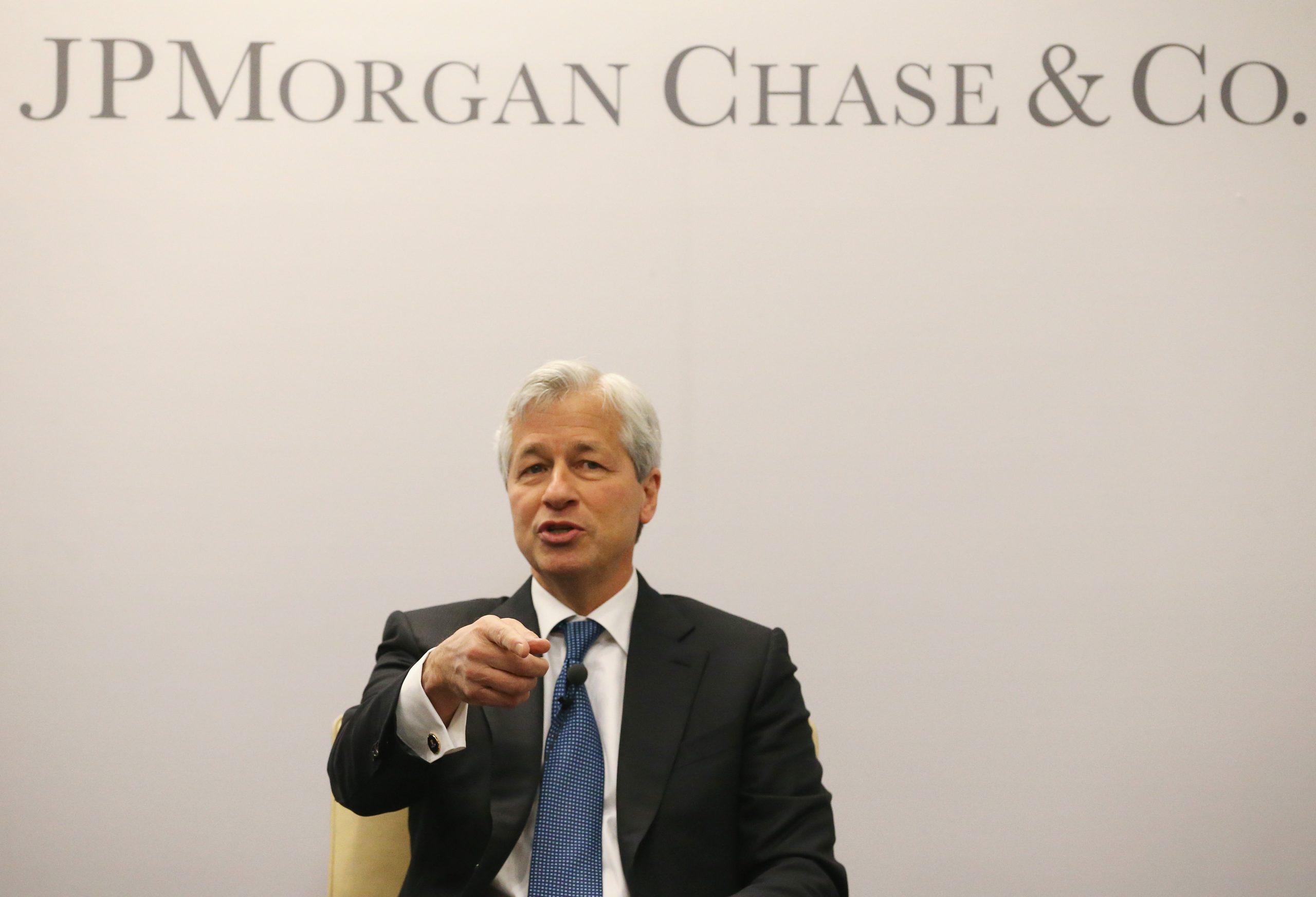
JPMorgan Chase CEO Jamie Dimon is sounding the alarm over America’s direction, urging swift domestic reforms while challenging the logic behind President Donald Trump’s renewed threats against China.

Dimon’s warning—issued at the Reagan National Economic Forum on Friday—was not just a call for internal course correction but a sharp critique of the illusion that the U.S. can strong-arm its way through a complex global trade landscape.

“We have problems and we’ve got to deal with them,” Dimon said during a fireside chat at the summit. He spoke of “the enemy within”—America’s inability to modernize outdated systems, from permitting and taxation to education and healthcare.

“What I’m really worried about is us,” Dimon added. “Can we get our own act together? Our own values, our own capabilities, our own management?”

Dimon said the U.S. must fix its internal weaknesses and focus on preserving its military alliances and global influence.

“China is a potential adversary. They’re doing a lot of things well. They have a lot of problems,” he acknowledged. “But they’re not scared, folks. This notion that they’re going to come bow to America—I wouldn’t count on that.”

His observations echo a growing chorus of business leaders and analysts who say Washington’s posture of threats and economic pressure is unlikely to break China’s resolve. Executives across the financial, tech, and manufacturing sectors have expressed concern that America is misreading China’s willingness to withstand economic pain in the face of hostile trade policy.

Dimon’s blunt remarks came just hours after President Trump reignited tensions with Beijing, accusing China of breaching a temporary trade truce struck earlier this month.

“China, perhaps not surprisingly to some, HAS TOTALLY VIOLATED ITS AGREEMENT WITH US,” Trump wrote on Truth Social, referring to a deal brokered in mid-May in Geneva. The 90-day agreement had seen both nations agree to ease triple-digit tariffs while broader negotiations resumed.

“So much for being Mr. NICE GUY!” Trump added.

As part of his retaliation, Trump announced plans during a rally near Pittsburgh to double tariffs on steel imports from 25% to 50%, claiming it was necessary to protect the American steel industry from what he called unfair Chinese practices. “Nobody’s going to get around that,” he said.

Trump continues to tout his aggressive tariff strategy as a victory. He maintains that his previous tariffs “devastated” China’s economy and claims he only agreed to the May deal to prevent civil unrest in the country—not to benefit the U.S.

But analysts are questioning that narrative, warning that the impact of such policies could boomerang. Peter Schiff, Chief Economist and Global Strategist at Euro Pacific Capital dismissed Trump’s framing and warned that if the deal collapses and tariffs surge again, it won’t be China that suffers the most.

“Trump claims that his tariffs devastated China and he made a deal purely to save the Chinese from civil unrest, not to help us. He also claims that China is violating that agreement, and as a result, it’s no more Mr. Nice Guy,” Schiff said. “If so, it’s the U.S. economy that will be devastated.”

Economists have long warned that tariffs function as taxes on domestic consumers and businesses, with rising input costs, market uncertainty, and retaliatory measures from trading partners. Despite Trump’s claims, several studies conducted during his first term revealed that American importers bore the brunt of the levies, and industries ranging from agriculture to manufacturing suffered significant losses.

As the White House signals its readiness to return to full-blown tariff warfare, Dimon is serving a timely counterweight. Rather than blaming foreign adversaries, he is calling for introspection.

“If the United States is not the preeminent military and preeminent economy in 40 years, we will not be the reserve currency. That’s a fact,” Dimon warned, emphasizing that economic power must rest on strong foundations—not just threats.

His position is increasingly shared by others in the business world, many of whom see the current strategy as short-sighted. While China certainly faces its own headwinds, including debt concerns and a sluggish property market, the belief that Beijing will capitulate under pressure is proving flawed.

Ultimately, Dimon is urging the U.S. to shift focus—to invest in itself, reform what is broken, and lead by example rather than intimidation. His message is that the future won’t be secured by saber-rattling, but by rebuilding the domestic systems that underpin America’s global influence.

SERAP Drags NNPCL to Court Over Missing N500bn Oil Revenue

0

The Socio-Economic Rights and Accountability Project (SERAP) has filed a lawsuit against the Nigerian National Petroleum Company Limited (NNPCL) over its alleged failure to remit N500 billion in oil revenues to the Federation Account between October and December 2024.

The lawsuit, filed at the Federal High Court in Lagos and marked FHC/L/MSC/553/2025, seeks an order of mandamus compelling the NNPCL to explain the whereabouts of the missing funds, identify those responsible, and hand over suspects to relevant anti-corruption agencies. It also seeks a directive for the NNPCL to invite the Economic and Financial Crimes Commission (EFCC) and the Independent Corrupt Practices Commission (ICPC) to investigate and recover the money.

SERAP, in a statement on Sunday, said it was acting on the heels of World Bank findings, which revealed that although the NNPCL generated N1.1 trillion from crude oil sales and related income in 2024, it remitted only N600 billion to the Federation Account. This leaves a gaping shortfall of N500 billion, which the national oil company has yet to explain.

The group also cited a recent Supreme Court judgment affirming that the Freedom of Information Act applies to all public records, including those held by the NNPCL, despite its transformation into a limited liability company in July 2022. According to SERAP, the ruling invalidates NNPCL’s persistent refusal to disclose key financial details under the guise of being a commercial entity.

“The NNPCL has a responsibility to comply with the Nigerian Constitution 1999 [as amended], the Freedom of Information Act, and the country’s international human rights and anticorruption obligations in the exercise of its statutory functions,” SERAP said.

The missing N500 billion forms part of a longstanding pattern of financial opacity and unremitted funds by the NNPCL, which has been repeatedly flagged by federal audit reports, civil society, and international financial institutions.

“The missing oil revenue reflects a failure of NNPCL accountability more generally and is directly linked to the institution’s continuing failure to uphold the principles of transparency and accountability,” SERAP said.

Nigeria’s Auditor-General has repeatedly flagged the NNPC for non-remittance of significant oil revenues. In its 2016 audit report, the Auditor-General’s office revealed that the NNPC failed to remit over N3.2 trillion to the Federation Account between 2010 and 2015. Another 2019 report by the Nigeria Extractive Industries Transparency Initiative (NEITI) indicated that NNPC withheld N2.6 trillion in revenues that were due to the government.

  1. In 2021, NEITI again reported that NNPC did not remit $4.07 billion and N620 billion in revenues from oil and gas sales in just one year. The agency raised concern over what it described as “deductions at source,” a controversial accounting practice used by NNPC to withhold revenues from the Federation Account before statutory remittances. NEITI demanded a forensic audit of NNPC’s revenue handling practices.

SERAP, in its May 17, 2025, Freedom of Information (FOI) request signed by Deputy Director Kolawole Oluwadare, demanded that NNPCL CEO Bayo Bashir Ojulari disclose how the funds were spent and identify those involved. It stressed that oil revenue is a public asset meant for national development and not for discretionary management by a single institution.

“The missing oil revenues have further damaged the already precarious economy in the country and contributed to high levels of deficit spending by the government and the country’s crippling debt crisis,” it said.

The World Bank and International Monetary Fund (IMF) have also expressed concern over the lack of transparency in how NNPC manages oil revenues. While welcoming the removal of fuel subsidies in 2023, they have cautioned that savings from the subsidy must be accounted for transparently. The IMF noted that unremitted oil proceeds continue to fuel Nigeria’s fiscal crisis, which has been worsened by growing debt obligations now estimated at over N101 trillion.

In 2023 alone, the Nigerian government paid N7.3 trillion in debt servicing, a record figure that dwarfs combined spending on education and health. Economists say failure to recover missing oil revenues is forcing the government to rely heavily on borrowing, worsening inflation and weakening the naira.

Despite its transition into a private company under the Petroleum Industry Act, the NNPCL still holds exclusive control over crude sales and upstream contracts, with little public oversight. The company’s opaque operations have persisted even after its corporate rebranding, raising doubts about the government’s sincerity in pursuing transparency in the oil and gas sector.

With no hearing date fixed yet, the court will now determine whether NNPCL can be compelled to account for the missing N500 billion and whether its commercial status shields it from the constitutional duty of accountability.

African Air Cargo Demand Grows 4.7% in April, But Surge in Capacity May Undercut Margins

0

African airlines recorded a 4.7 percent year-on-year increase in air cargo demand in April 2025, according to new data from the International Air Transport Association (IATA).

The region also experienced a 9.7 percent year-on-year increase in cargo capacity, which, although signaling strong investment in logistics infrastructure, raises concerns about potential overcapacity and declining yields.

The data reflects a broader trend of recovery in global air freight, with IATA reporting a 5.8 percent global increase in demand for the month. This builds on the 4.5 percent growth recorded in March 2025, indicating a continued rebound after years of volatility in the cargo sector. For international cargo operations specifically, demand grew 6.5 percent while capacity expanded by 6.9 percent.

“Air cargo demand grew strongly in April, with volumes up 5.8 percent year-on-year, building on March’s solid performance,” the IATA report stated.

Willie Walsh, IATA’s Director General, attributed the rise in global volumes to several market forces. Key among them was a surge in seasonal shipments of fashion and consumer goods, driven by front-loading activities as companies braced for possible tariff hikes by the U.S. on Chinese imports. At the same time, a sharp decline in jet fuel prices helped carriers cut costs and boost margins. Jet fuel prices were down 21.2 percent compared to April 2024 and 4.1 percent lower than in March 2025, offering a crucial financial cushion for airlines amid lingering macroeconomic uncertainty.

However, Walsh also cautioned that while cargo volumes and capacity are both expanding, forward indicators such as export order volumes remain weak, raising questions about the sustainability of the current growth trend.

African airlines’ 4.7 percent gain in cargo demand in April placed them behind their Latin American and Asia-Pacific counterparts, which recorded 10.1 percent and 10.0 percent growth respectively. North American carriers saw a 4.2 percent increase, while Europe’s demand grew 2.9 percent. Middle Eastern carriers had the weakest growth at 2.3 percent.

While Africa’s performance appears respectable, the 9.7 percent rise in capacity signals that supply is growing faster than demand. This imbalance could pressure freight rates, especially if export volumes slow. Some trade routes involving Africa already experienced contraction in April. The Africa–Asia corridor, a key route for raw materials and electronics, saw traffic decline, a reversal from previous months of steady gains.

IATA’s data also noted that Africa’s freight sector has been gradually improving due to increased investment in logistics hubs such as Addis Ababa Bole International Airport and Johannesburg’s OR Tambo International Airport, both of which serve as strategic points for intra-African and intercontinental cargo operations.

In addition, several African governments have been modernizing customs and port logistics to reduce delays and cut trade costs. However, challenges remain, including infrastructure bottlenecks, high operating costs, and limited cold-chain facilities, especially for agricultural and pharmaceutical shipments.

Several macroeconomic conditions shaped cargo performance in April. World industrial production rose by 3.2 percent year-on-year in March 2025, pointing to improved manufacturing output. Global goods trade jumped 6.5 percent month-on-month, driven largely by Asia’s export activity and the recovery of consumer markets in the U.S. and Europe. The global manufacturing Purchasing Managers’ Index stood at 50.5—just above the expansion threshold. However, the PMI for new export orders dropped to 47.2, staying below the 50 mark for the fourth consecutive month, signaling ongoing softness in forward demand.

Trade performance across regions was mixed. IATA reported growth in North America–Asia and Europe–North America trade lanes, fueled by tech and consumer electronics shipments. But traffic declined on several corridors, notably Middle East–Europe, Africa–Asia, and intra-European routes. These declines highlight growing volatility in global trade, influenced by geopolitical tensions, supply chain reconfigurations, and continued disruptions in the Red Sea and Suez Canal zones.

While current demand growth is encouraging, the widening gap with capacity suggests a need for cautious fleet planning and route management. Experts have noted the need for Airlines to focus on improving efficiency and developing more diversified trade routes to hedge against shocks in any one corridor.

Furthermore, with competition intensifying from Middle Eastern and Asian mega-hubs offering lower handling costs and faster turnaround times, African carriers are expected to double down on operational improvements and public-private partnerships to remain competitive.

However, with the African Continental Free Trade Area slowly taking shape and cargo-friendly initiatives such as the Single African Air Transport Market gaining traction, the long-term fundamentals remain strong—if they are matched with timely investment and policy reforms.