DD
MM
YYYY

PAGES

DD
MM
YYYY

spot_img

PAGES

Home Blog Page 13

Bitwise Onchain Solutions Launches AVAX ETP with over $2.5M Trading Volumes in its First Hours

0

Bitwise Asset Management has launched its spot Avalanche ETF (ticker: BAVA) on the NYSE. The fund provides direct exposure to AVAX while incorporating in-house staking through Bitwise Onchain Solutions, targeting roughly 5.4% annualized staking rewards.

Bitwise plans to stake ~70% of the fund’s AVAX holdings (keeping ~30% in a liquidity reserve) to participate in Avalanche’s proof-of-stake validation. Rewards (in additional AVAX) are expected to be distributed periodically to shareholders as net investment income, after Bitwise retains a portion (reportedly ~12% in some coverage) for operational costs.

Fees: 0.34% sponsor fee, waived to 0% for the first month or until the fund reaches $500 million in assets, whichever comes first. This is positioned as competitive and lowest among existing AVAX ETPs. The ETF debuted with modest initial assets reports of ~$2.5 million and saw hundreds of thousands in trading volume in its first hours/days. It started trading around $25.50 in some mentions.

This is the third U.S.-listed AVAX ETP, following products like VanEck’s. Bitwise with ~$11B in client assets as of early 2025 highlights in-house staking for transparency, oversight, and liquidity management as a differentiator. The launch adds a yield component to regulated AVAX exposure, which could appeal to traditional investors seeking passive crypto access plus passive income without direct wallet and staking management.

Bitcoin ETFs have seen positive streaks in 2026, including multi-day inflows like hundreds of millions in a recent week and a March monthly net of ~$1.32B after prior outflows. Daily flows fluctuate—some days positive, others flat or negative—but overall institutional interest has returned at times. Ethereum, Solana, XRP, etc showed mixed results; some days show inflows; ETH seeing notable single-day figures, but not universally positive every day across all products.

Existing U.S. spot AVAX products have recorded zero net inflows since around March 17, 2026, with total assets under management remaining low ~$17M across funds, a tiny fraction of AVAX’s market cap. The new BAVA launch is too recent for meaningful flow data, and early indicators don’t suggest an immediate reversal of that apathy.

Crypto ETF flows aren’t uniformly positive daily; they vary by asset, market sentiment, macro factors, and product-specific appeal. Bitcoin often dominates, while altcoin-linked ETFs like those for AVAX have seen muted demand recently. Trading in the low $9–$10 range around the launch with mentions of resistance near $10. The ETF could provide incremental institutional inflows and liquidity over time, but existing AVAX ETPs haven’t driven big capital yet.

This is another step in crypto’s mainstreaming via ETFs and ETPs, especially with yield-bearing features for proof-of-stake assets. It builds on Bitwise’s broader lineup, they offer multiple crypto products. However, staking in ETFs involves risks e.g., slashing, liquidity trade-offs, regulatory and tax nuances—rewards may be treated as income.

Single-asset ETFs are volatile. Staking yields aren’t guaranteed, they fluctuate with network participation, and the fund warns of potential substantial losses. Early volume is encouraging but doesn’t guarantee sustained flows. Bitwise’s BAVA is an innovative product blending spot exposure with on-chain yield in a regulated wrapper—potentially attractive for yield-seeking allocators—but it launches into a period of subdued demand for AVAX ETFs specifically.

Broader crypto ETF momentum remains uneven, led more by Bitcoin than alts. Keep an eye on upcoming flow reports and AVAX network metrics like staking participation, DeFi/RWA activity for how this plays out.

South Korea’s Ministry of Economy and Finance Announces Pilot Project for Digital Currency 

0

South Korea’s Ministry of Economy and Finance (MOEF) has announced that it has selected a pilot project titled Pilot Project for Treasury Fund Execution Based on Blockchain Digital Currency as part of the 2026 targeted regulatory sandbox program.

The initiative will test blockchain-based deposit tokens; digital representations of bank deposits issued on a distributed ledger to handle certain government operational expenses, specifically replacing traditional government procurement and credit cards used for business promotion and official spending.

The pilot is set to launch in Sejong City during the fourth quarter of 2026 (Q4), with potential gradual expansion afterward. Tokens can be designed with built-in restrictions, such as: Preset spending limits, Allowed time periods, Restricted industries or merchants. This programmability aims to boost transparency, minimize misuse or fraud, simplify audits, and lower transaction fees by reducing or eliminating intermediaries in settlements.

This pilot builds on earlier blockchain and digital currency experiments in South Korea’s public finance:In March 2026, the government in coordination with the Bank of Korea advanced Project Hangang (Phase 2), incorporating nine major commercial banks to test deposit tokens for distributing government subsidies, starting with a ~30 billion KRW project for mid-speed electric vehicle (EV) charging infrastructure.

The government has outlined plans to channel up to 25% of its national budget roughly $499 billion/728 trillion KRW through digital assets and deposit tokens by 2030, beginning with targeted subsidies like those in the EV sector. Deposit tokens differ from a full retail CBDC (central bank digital currency) but are backed by commercial bank deposits and leverage blockchain infrastructure.

They represent one piece of South Korea’s ongoing exploration of programmable money for fiscal efficiency, alongside potential legal amendments to the Bank of Korea Act and National Treasury Act later in 2026. Officials highlight improvements in: Fiscal oversight — Real-time tracking and conditional spending reduce administrative burdens. Faster settlements and lower costs for small businesses and merchants accepting the tokens.

Programmable constraints make it harder to divert funds. This fits into South Korea’s broader push toward digital innovation in public services while maintaining oversight through a regulatory sandbox approach. The project is still in the planning and pilot stage, so outcomes will depend on testing results. It reflects growing global interest in blockchain for government treasury management, focusing here on controlled, deposit-backed tokens rather than volatile cryptocurrencies.

Programmable tokens allow preset rules like spending limits, time windows, permitted industries and merchants. This enables automated compliance instead of after-the-fact manual reviews or justification reports, making it harder to divert or misuse public funds. Real-time tracking on blockchain simplifies audits, reduces paperwork, and eliminates the need for officials to justify certain expenses

Removing intermediaries like card networks in settlements is expected to lower transaction fees for merchants accepting government payments. Faster settlements, programmable money for conditional spending, and better fiscal control. This builds on earlier subsidy pilots and supports the longer-term goal of routing up to 25% of the national budget through digital assets by 2030.

Successful results could lead to permanent legal changes and gradual national expansion beyond operational expenses. Technical integration with existing systems, adoption by government departments and merchants, and ensuring seamless participation from the nine major banks involved. Greater reliance on blockchain and digital infrastructure could introduce new security risks in handling public funds.

While intermediaries are removed, banks issuing the tokens might still charge fees—outcomes will depend on pilot testing. Starts small in Sejong City for specific operational expenses replacing procurement cards; full impacts on the broader ~$499 billion national budget remain to be seen. The pilot aims to modernize public finance by making spending more traceable, controllable, and efficient while testing programmable deposit tokens as a practical bridge between traditional banking and blockchain.

Dangote at FUTO for 37th Public Lecture: A Gathering of Enterprise, Leadership, and Service

0

Good People, Alhaji Aliko Dangote will deliver the 37th Public Lecture of my alma mater, Federal University of Technology, Owerri, on Saturday, April 25, 2026. And when he is done, a peerless icon of Africa’s entrepreneurial capitalism will be honoured with the Ikenga, FUTO’s enduring symbol of strength, excellence, and citizenship (two of mine in photo).

In the Igbo tradition, it takes the killing of one leopard to be called a killer of leopards. In the marketplace of enterprise, Dangote has brought many business leopards home. We warmly welcome him to our University and look forward to him sharing from his vast experience, elevating minds and inspiring the next generation.

Seventeen years ago, I had the privilege of standing on that same podium to deliver FUTO’s 15th Public Lecture, the first by an alumnus in the University history. It remains one of the highest honours because it is the Public Lecture. As an undergraduate, I attended one delivered by late HRM Prof. Joseph Chike Edozien, the former Asagba of Asaba. It was an intellectual festival chaired by Prof. Oba, then Vice Chancellor of FUTO.

On April 25, Dangote will speak under the academic chairmanship of Prof. Mrs. Nnenna N. Oti, our distinguished Vice Chancellor and leader of our University.

Good People, the road leads to Owerri. Come and experience what makes FUTO Africa’s finest technical university. To all the students, Dangote will solve “ODE – o di egwu” but here instead of calculus, it will be the “mystical” calculus of markets. Enjoy the lecture.

Airline Operators of Nigeria Warns about Suspension of All Flight Operations Due to Unsustainable Surge in Jet A1 

0

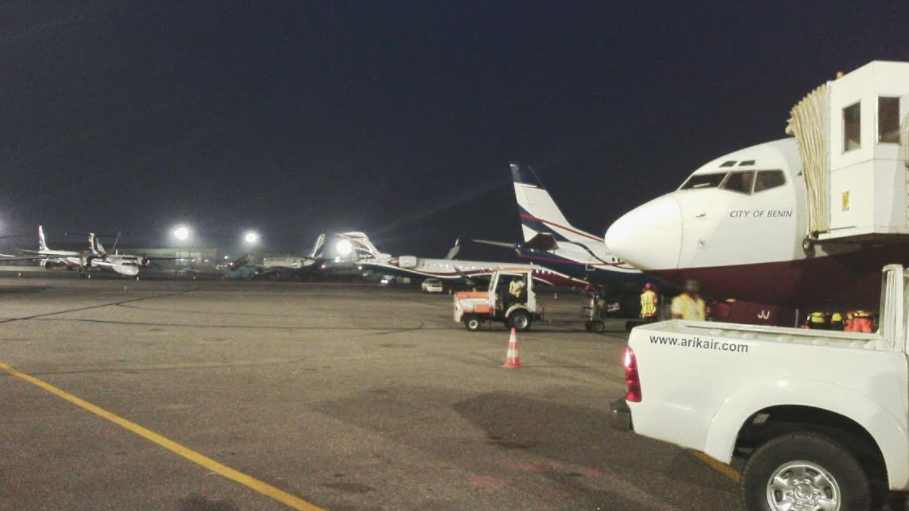
The Airline Operators of Nigeria (AON) has issued a formal warning that domestic airlines may suspend all flight operations nationwide starting Monday, April 20, 2026, due to the unsustainable surge in aviation fuel (Jet A1) prices.

Jet A1 has risen from around ?900 per litre as of late February 2026 to ?3,300 per litre now — a more than 300% increase in just weeks. Airlines argue this far outpaces global crude oil price movements and involves unfair/local pricing practices by marketers. At least one airline has already grounded its entire fleet since March 13, 2026.

Operators say fuel costs alone now exceed ticket revenues, making continued operations unviable without major changes. In a letter dated April 14, 2026, to the Major Energies Marketers Association of Nigeria (MEMAN), AON President Dr. Abdulmunaf Yunusa Sarina described the situation as astronomical and unsustainable.

They are urging immediate intervention to align prices with international realities, or they will halt flights from April 20. This is currently a threat and ultimatum rather than a confirmed shutdown — it depends on whether fuel marketers or the government; the letter was copied to the presidency, aviation minister, NCAA, etc. step in quickly with relief or price adjustments. No final confirmation of a full grounding has been reported as of April 16.

Aviation fuel typically accounts for 40%+ of airline operating costs in Nigeria. Geopolitical factors have contributed to broader price volatility, but operators are pointing to significant local markups. Passengers could face major disruptions to domestic routes if it proceeds, with knock-on effects for business, cargo, and the wider economy.

The surge in Nigeria’s aviation fuel (Jet A1) prices—from around ?900 per litre in late February 2026 to ?3,300 per litre by mid-April 2026 (a >300% jump in under two months)—stems from a mix of global geopolitical shocks, domestic economic vulnerabilities, and market structure issues. Airlines via AON describe the local increase as artificial and disproportionate, noting that global crude oil prices rose only ~30% in the same period.

The sharp escalation traces back to the US-Israel-Iran conflict that intensified around late February 2026. This led to disruptions in the Strait of Hormuz, a critical chokepoint for ~20% of global oil and LNG supplies and ~70% of Africa’s jet fuel and kerosene imports. Shipping and refined product flows from Middle Eastern refineries nearly halted, causing global supply shortages and price volatility.

International crude prices climbed reaching above $100–$112 per barrel at peaks but Jet A1; a refined kerosene derivative saw amplified spikes due to refining margins, processing costs, and logistics. In the US, for example, Jet A1 averaged $8.63 per gallon in April 2026 up ~$2 from March. Africa, heavily reliant on imports via Hormuz routes, faced compounded effects like thinner physical stocks and higher delivered costs.

MEMAN cite these tensions—especially potential Strait of Hormuz closures—as the core driver, dismissing airline claims of extreme local markups. Nigeria’s situation worsened due to structural weaknesses, even as the Dangote Refinery ramped up production and began exporting Jet A1 including cargoes to Europe and West Africa: Heavy reliance on imports and forex constraints: Despite Dangote’s capacity, domestic supply chains still involve significant importation or dollar-denominated costs.

Naira volatility and limited foreign exchange access inflate landed costs. Aviation fuel often requires forex for components, shipping, or blending. Post-subsidy removal, prices fully reflect supply and demand. With limited local refining historically and ongoing debates over crude feedstock to Dangote, marketers pass on global shocks plus local costs. High inland transport costs, airport delivery variations, and infrastructure gaps add premiums. Prices reportedly vary by airport and volume purchased.

Airlines accuse a few major marketers of arbitrary and unilateral hikes and exploitation of the crisis, claiming local prices far exceed international benchmarks adjusted for the ~30% crude rise. MEMAN disputes the exact figures quoted but acknowledges upward pressure. New airlines entering the market have kept ticket prices relatively stable despite fuel now comprising 40–45%+ of operating costs. This squeezes margins further, as operators absorb costs rather than fully passing them on.

Dangote’s role adds nuance: The refinery has helped Nigeria become a net petrol exporter in some months and a Jet A1 supplier to Europe amid global shortages. However, domestic Jet A1 prices have still surged—partly due to export prioritization, crude supply challenges to the refinery, and the fact that local distribution and pricing remains market-driven rather than fully insulated.

Jet fuel isn’t crude; it involves refining yields, transportation especially when routes are disrupted, storage, and quality specs. In Nigeria, layering on naira depreciation, import duties and logistics, and thin competition in marketing magnifies the effect. Fuel costs can exceed ticket revenue on many routes, leading to grounded fleets and the April 20 shutdown threat.

The crisis highlights Nigeria’s vulnerability to both global shocks and domestic bottlenecks in a key sector. If you’re planning travel in or out of Nigeria around or after April 20, consider flexible tickets or alternatives in the short term. The situation is developing rapidly — any intervention could still avert or delay the suspension.

World Liberty Financial Proposes Unlocking 62.28B Locked WLFI Tokens, as BTC Enters Post Rejection Consolidation Zone 

0

World Liberty Financial (WLFI), the Trump family-backed DeFi project, posted a governance proposal, to restructure the unlocking of approximately 62.28 billion locked WLFI tokens.

The plan differentiates between two main groups of locked tokens: Early supporters about 17.04 billion WLFI tokens: These would shift to a 2-year cliff, no tokens unlock for the first 2 years followed by a 2-year linear vesting period. Holders keep 100% of their allocation with no burn required. If they do not opt in, the tokens remain locked indefinitely under the original terms.

Founders, team, advisors, institutions, and partners about 45.24 billion WLFI tokens: These would face stricter terms: a 2-year cliff + 3-year linear vesting (total 5-year schedule), with a mandatory 10% burn upon opting in. This burn could permanently destroy up to 4.52 billion WLFI tokens. The proposal aims to provide a structured, predictable unlock schedule instead of indefinite locks, while emphasizing long-term governance alignment.

WLFI stated that passing it would keep billions of tokens committed to governance for at least 2 years and signal strong ecosystem commitment through burns and extended vesting. This comes amid broader discussions about token liquidity in the project, which has faced criticism over its tokenomics and governance. Some community members and figures like Justin Sun have pushed back, calling aspects of the proposal unfair or coercive, while others see the burn and vesting as positive for reducing supply pressure and demonstrating alignment.

The official WLFI governance forum post outlines the full details, and it is currently open for community discussion before a potential on-chain vote. Crypto proposals like this can evolve, and token values are highly volatile—always review the latest official sources and do your own research before engaging with governance or investments. The project has highlighted this as a move toward greater transparency and long-term stability.

Up to 4.52 billion WLFI ~10% of the 45.24B founder, team, advisor and partner allocation could be permanently burned if they opt in. This reduces total supply (100B max) and removes a large potential overhang. Replaces indefinite locks with predictable schedules — no meaningful unlocks for at least 2 years (cliff period). This significantly lowers near-term sell pressure on the circulating supply.

Early supporters ~17B tokens get a 4-year total schedule (2y cliff + 2y linear vest) with no burn. Insiders get a stricter 5-year schedule (2y cliff + 3y linear) + mandatory burn. Early investors gain a defined though delayed path to liquidity starting in ~2 years potentially post-Trump term in 2029, but face extended illiquidity compared to hopes for quicker unlocks.

Opt-out keeps tokens locked indefinitely.
Founders/team/advisors/partners: Must accept a 10% haircut (burn) for any vesting schedule; otherwise, tokens stay locked forever while retaining governance rights. Signals stronger skin-in-the-game alignment.
Existing open-market holders: Generally bullish in theory — reduced future dilution and clearer tokenomics could support price stability or upside.

WLFI saw short-term pops (1-7%) on the news in some reports, though the token trades near all-time lows. Project frames it as one of the strongest long-term alignment moves in DeFi, emphasizing commitment over quick exits. Community reaction is mixed — praise for the burn and structure from some less dumping risk; criticism from others including Justin Sun calling it punitive, coercive, or a hostage situation due to the opt-in-or-stay-locked dynamic and ongoing lockup frustrations.

Proposal still needs community discussion + on-chain vote. If it fails or faces low turnout, uncertainty lingers. Broader WLFI challenges remain. Short-term positive for supply discipline and perceived team commitment; medium-term introduces clarity but extends illiquidity for many. Crypto is volatile — check the official governance forum for the latest and do your own research before any decisions.

Bitcoin Sitting Comfortably in Post Rejection Consolidation Zone

Bitcoin is trading right around $75,215 sitting comfortably in that post-rejection consolidation zone after testing higher levels recently. It’s showing a modest +2.7% over the past 24 hours and +7.4% on the week, but nothing dramatic—classic hovering behavior while the broader crypto mood stays glued to Extreme Fear.

The Crypto Fear & Greed Index is locked at 23 (Extreme Fear), unchanged from yesterday and still down from last week’s 14. It’s been grinding in deep fear territory for a while now; last month averaged around 28/Fear, which historically tends to be a contrarian signal when sentiment bottoms out this hard.

Ethereum is outperforming BTC relatively. The ETH/BTC ratio has climbed to around 0.0313–0.0315, marking its highest level since January 2026 recovering from a February low near 0.028, though still well below the January peak closer to 0.038. ETH itself is trading near $2,320–$2,360, up roughly 4% over the past week versus BTC’s ~3.9%.

On-chain drivers are helping: Ethereum added a ton of new users in Q1, trading volume hit records, and total stablecoin supply on the network just crossed an all-time high of $180 billion. This ETH/BTC strength is one of the brighter spots in an otherwise cautious market—it’s the kind of rotation that often hints at capital starting to rotate into alts when BTC dominance pauses.

That said, the overall macro backdrop (high fear, BTC still ~40% off its Oct 2025 ATH of $126k) keeps things tense. Classic fear while price holds setup—capitulation vibes without the full meltdown. Thinking this is the bottoming process, or waiting for a cleaner BTC breakdown before the next leg.

Deep Extreme Fear (unchanged at 23) while price holds above recent lows ~$74,500 often marks capitulation zones. Historically, such sentiment extremes precede rebounds as weak hands exit and accumulation builds. Consolidation near $75k resistance suggests indecision; a clean break above could spark short-covering and momentum shift. Failure to hold $74k–$72k support risks deeper correction toward $70k or lower.

Still 40% off 2025 ATH ($126k) — implies room for recovery if macro conditions ease, but high fear reflects ongoing caution, possible liquidity tightness or risk-off flows. ETH outperforming BTC; ratio up, network metrics strong with rising users, volume, and stablecoin supply,  hints at early capital shifting from BTC into alts. This is a classic precursor to broader altcoin rallies once BTC stabilizes.

Could benefit more from any risk-on turn in 2026, driven by Ethereum-specific upgrades, DeFi/RWA growth, and ETF flows. Short-term: ETH may continue to hold or gain ground vs. BTC even if overall market stays choppy. Overall market fear while holding setup — often a bottoming process rather than full meltdown. Low sentiment + sideways action can lead to sharp relief rallies on positive triggers like ETF inflows resuming, macro easing.

Prolonged fear could amplify downside on any bad news; BTC dominance pausing favors selective alt plays but doesn’t guarantee a bull run yet. High-conviction holders see opportunity in the fear (buy-the-dip mentality), while cautious traders wait for sentiment improvement or clearer breakout.

Volatility likely stays elevated near these levels. In short: Cautiously constructive for patient bulls, especially on ETH relative value, but no strong directional conviction until fear eases or BTC claims $76k+.