
DD
MM
YYYY

PAGES

DD
MM
YYYY

spot_img

PAGES

Home Blog Page 13

Firstbank Says Nigeria’s Economy Needs to Move Beyond Stabilization to Improved Living Standards

0

Nigeria has entered a new phase of its economic reform journey where the challenge is no longer restoring macroeconomic stability but converting recent policy gains into stronger private-sector investment, higher productivity and tangible improvements in living standards, according to FirstBank of Nigeria Limited.

In its “Reading the Signals | The Next Half” Mid-Year Economic & Market Outlook 2026, published in July, the bank said two years of sweeping economic reforms have largely succeeded in stabilizing key macroeconomic indicators. The next test, however, will be whether that stability translates into sustained economic expansion that benefits businesses and households.

The report notes that Nigeria’s economic narrative is gradually evolving from crisis management to growth execution, with policymakers now facing the more complex task of ensuring that improved foreign exchange stability, stronger external reserves and recovering investor confidence lead to higher investment, job creation and increased industrial productivity.

According to FirstBank’s Economic Research team, reforms implemented over the past two years have strengthened the country’s macroeconomic fundamentals, creating conditions that are more supportive of long-term economic growth.

Among the clearest indicators of that progress is the continued improvement in Nigeria’s external position.

The bank noted that external reserves rose to $51.46 billion as of June 30, 2026, providing the Central Bank of Nigeria (CBN) with a stronger buffer against external shocks while improving confidence in the country’s foreign exchange market.

Improved liquidity in the official foreign exchange market has also reduced pressure on the naira, narrowed distortions across currency markets and strengthened investor confidence, developments that have encouraged higher foreign capital inflows during the first half of the year.

According to the report, these improvements suggest that recent policy reforms are beginning to produce measurable outcomes in financial markets.

“Following two years of significant policy adjustment, the macroeconomic environment has become more stable. However, the central question is no longer the restoration of macroeconomic stability, but the extent to which that stability begins to strengthen productive economic activity, stimulate private investment and deliver broader improvements across the real economy,” FirstBank said.

The bank added that the first half of 2026 provided further evidence that economic reforms are increasingly being reflected in market outcomes through stronger external buffers, improved foreign exchange market conditions and recovering investor confidence.

Stability Alone Is Not Enough

While acknowledging the progress made, FirstBank cautioned that macroeconomic stability has yet to translate fully into broad-based economic improvements.

Inflation remains elevated, financing conditions are still restrictive, and borrowing costs continue to weigh on business expansion and consumer spending. Although foreign exchange reforms have reduced currency volatility and strengthened confidence, the bank said many businesses and households have yet to experience the full benefits of those gains.

As a result, policymakers must now focus on improving the transmission of macroeconomic improvements into the real economy.

“Increasingly, attention is shifting towards translating that stability into stronger investment, higher productivity, improved competitiveness and broader improvements in living standards.

“The second half of the year is therefore likely to be defined less by the direction of policy and more by the effectiveness with which recent macroeconomic gains are converted into stronger and more inclusive economic outcomes,” the bank said.

The assessment adds to a broader consensus among economists that macroeconomic stabilization is a necessary foundation for growth but not an end in itself. Sustained improvements in employment, industrial output and household incomes will depend on stronger private-sector investment, increased manufacturing capacity and productivity gains across key sectors of the economy.

Domestic Refining Reshapes Nigeria’s Trade Balance

One of the report’s strongest indicators of structural economic change is the transformation taking place in Nigeria’s petroleum trade.

According to FirstBank, refined petroleum exports increased by 20.3% quarter-on-quarter to $2.37 billion during the first quarter of 2026. At the same time, imports of refined petroleum products fell sharply by 87.5% to $310 million, compared with $2.48 billion in the previous quarter.

The dramatic reversal contributed to a significant improvement in Nigeria’s external trade position, with the country’s goods account surplus widening to $5.95 billion. The bank said the figures demonstrate that expanding domestic refining capacity is beginning to fundamentally alter Nigeria’s trade profile.

For decades, Nigeria exported crude oil while importing most of its refined fuel requirements, creating persistent pressure on foreign exchange reserves and exposing the economy to international fuel price volatility.

That pattern is now beginning to reverse.

FirstBank attributed much of the improvement to the operations of the 650,000-barrel-per-day Dangote Refinery, which has significantly expanded exports of gasoline, diesel and aviation fuel to African and European markets.

The refinery also benefited from stronger regional demand during the first half of the year as geopolitical tensions involving Iran disrupted global fuel supply chains and tightened international refined product markets.

The bank noted that increasing domestic refining capacity is reducing one of Nigeria’s largest historical sources of foreign exchange demand while creating new export earnings that strengthen the country’s external accounts.

Capital Inflows Show Improving Investor Confidence

The report also points to stronger investor sentiment as evidence that recent reforms are gaining credibility. Nigeria has recorded increasing foreign capital inflows as improvements in exchange rate transparency and macroeconomic stability have encouraged international investors to return to the market.

Earlier data showed capital importation rose to $10.37 billion during the first quarter of 2026, representing an 83.8% year-on-year increase, highlighting renewed foreign investor interest in Nigeria’s financial markets and broader economy.

Sustaining those inflows, according to FirstBank, will require continued policy consistency, stronger export performance and reforms that encourage long-term productive investment rather than short-term portfolio flows.

Looking ahead, the bank expects the second half of 2026 to be shaped less by new policy announcements and more by how effectively existing reforms translate into stronger economic activity.

Maintaining foreign exchange inflows, expanding non-oil exports, improving domestic value addition and attracting long-term investment will remain critical to sustaining economic momentum.

According to the report, the next phase of Nigeria’s reform programme should focus on strengthening productive sectors of the economy, increasing industrial competitiveness and improving household welfare.

“Macroeconomic stabilization is the foundation, but our collective focus must now shift to strengthening productive activity, accelerating private investment and delivering broad-based improvements that create lasting prosperity for Nigerians,” the report said.

For much of the past two years, policy discussions centered on stabilizing the naira, rebuilding foreign exchange reserves, removing long-standing market distortions and restoring investor confidence. While those objectives remain important, the conversation is increasingly moving toward whether the reforms can generate sustained improvements in productivity, employment and living standards.
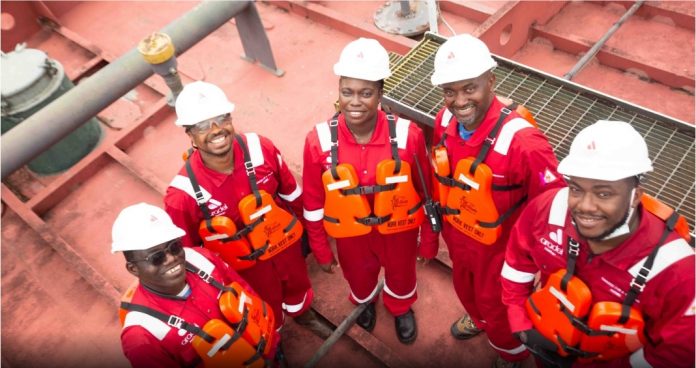

Aradel Holdings’ H1 Pre-Tax Profit Jumps 293% to N752.7bn As Oil Production Surge Drives Revenue Above N2.4tn

0

Aradel Holdings Plc posted a pre-tax profit of N752.71 billion for the six months ended June 30, 2026, representing a 293% year-on-year increase from N191.31 billion recorded in the corresponding period of 2025, as higher crude oil production and expanded operations lifted revenue to a record level.

The result, contained in the company’s unaudited financial statements filed with the Nigerian Exchange (NGX) on Friday, underscores the transformative impact of Aradel’s recent upstream acquisitions and increased production capacity, cementing its position among Nigeria’s fastest-growing indigenous energy companies.

Key Highlights (H1 2026 vs H1 2025)

  • Revenue: N2.49 trillion, up 577% from N368.08 billion
  • Gross profit: N1.44 trillion, up 807% from N163.16 billion
  • Operating profit: N1.06 trillion, up 790% from N118.62 billion
  • Pre-tax profit: N752.71 billion, up 293% from N191.31 billion
  • Profit after tax: N191.04 billion, up 30% from N146.39 billion
  • Finance costs: N326.14 billion, up 2,843% from N11.08 billion
  • Earnings per share: N35.37, up 6% from N33.26

Aradel’s first-half performance was overwhelmingly driven by its upstream oil business, which accounted for nearly four-fifths of total revenue. Crude oil sales generated N1.98 trillion, representing approximately 79% of group revenue, while natural gas contributed N512.10 billion and refined petroleum products generated N129.44 billion. The crude oil segment remained the company’s principal earnings engine, delivering N545.70 billion in pre-tax profit.

The extraordinary revenue growth reflects Aradel’s expanded production base following the acquisition of additional upstream assets and increased hydrocarbon output. Those transactions have significantly altered the company’s earnings profile, allowing it to benefit from both higher production volumes and elevated global crude oil prices during the period.

Export markets continued to dominate sales, with international revenue reaching N1.94 trillion, accounting for nearly 78% of total turnover. The strong export mix positions Aradel to benefit directly from dollar-denominated oil sales while providing a natural hedge against naira volatility.

Costs Surge But Margins Remain Exceptionally Strong

Higher production inevitably translated into higher operating costs. Cost of sales rose more than fivefold to N1.05 trillion, compared with N204.92 billion a year earlier.

The largest cost components included:

  • Royalties and statutory expenses of N415.49 billion
  • Depreciation and amortization of N319.73 billion
  • Operational and maintenance expenses of N212.73 billion

Despite the sharp increase, revenue growth significantly outpaced cost expansion, allowing gross profit to soar to N1.44 trillion and demonstrating the scalability of the company’s upstream operations.

The results suggest that Aradel continues to enjoy robust operating margins even as production expands, highlighting the strong cash-generating characteristics of its enlarged asset portfolio.

Finance Costs and Underlift Losses Weigh On Bottom Line

One of the few areas of pressure was financing costs. Finance expenses surged to N326.14 billion, almost thirty times the previous year’s level, largely reflecting higher interest expenses on acquisition-related borrowings as well as the unwinding of decommissioning obligations.

The increase illustrates the capital-intensive nature of Aradel’s recent expansion strategy, although operating earnings were sufficiently strong to absorb the higher financing burden.

Another significant drag came from other losses, including an underlift position of N489.42 billion alongside foreign exchange-related losses. Underlift occurs when a partner in a joint venture lifts less crude oil than its production entitlement during a reporting period. While such positions are often timing differences that reverse over subsequent lifting cycles rather than permanent losses, they can materially affect reported earnings in a given period.

Even after absorbing these sizeable charges, Aradel still generated more than N1 trillion in operating profit, showing the strength of its underlying operations.

However, Aradel’s financial position continued to strengthen alongside earnings growth. Total assets increased to N10.88 trillion, making the company one of the largest indigenous energy firms on the NGX by asset base.

Cash and cash equivalents rose to N1.72 trillion, providing substantial liquidity to support ongoing investments, debt servicing and shareholder distributions. Operating activities generated N975.61 billion in cash during the six-month period despite tax payments of N429.88 billion, highlighting the company’s strong cash conversion.

Importantly, Aradel also reduced its external borrowings, with total debt declining 10% to N1.81 trillion from N2.00 trillion at the end of 2025. The combination of rising cash balances and lower debt points to improving financial flexibility following the company’s acquisition-driven expansion.

Balance Sheet

  • Total assets: N10.88 trillion, up 10% from N9.90 trillion in December 2025
  • Cash and cash equivalents: N1.72 trillion, up 14% from N1.50 trillion
  • External debt: N1.81 trillion, down 10% from N2.00 trillion

Aradel Holdings shares closed at N1,526.80 on Friday, July 31, unchanged from their level since July 10. The stock has nevertheless delivered an exceptional 127.9% year-to-date return, rising from N670 at the close of 2025 and making it one of the Nigerian Exchange’s strongest-performing large-cap energy stocks.

The share price performance indicates growing investor confidence in the company’s transformed earnings capacity, stronger cash generation and expanded upstream portfolio.

Outlook

Aradel’s first-half performance builds on an already outstanding 2025 financial year, during which pre-tax profit rose 163.6% to N835 billion from N316.8 billion in 2024.

That performance was supported by stronger operating earnings and non-recurring gains associated with the company’s ND Western and Renaissance transactions, which significantly expanded its production base.

The H1 2026 results indicate that the benefits of those acquisitions are now being reflected in core operating performance rather than one-off gains.

Looking ahead, analysts believe Aradel appears well positioned to sustain earnings momentum, supported by increased production capacity, strong export revenues, improving operational cash flows and continued deleveraging. However, investors will continue to monitor finance costs, underlift positions and foreign exchange exposure, which remain important variables capable of influencing reported earnings even as the company’s underlying operating performance continues to strengthen.

YouTuber Hank Green Apologizes for AI Use, Says Reliance on ChatGPT Left Him ‘Disconnected’ From His Audience

0
A picture shows a You Tube logo on December 4, 2012 during LeWeb Paris 2012 in Saint-Denis near Paris. Le Web is Europe's largest tech conference, bringing together the entrepreneurs, leaders and influencers who shape the future of the internet. AFP PHOTO ERIC PIERMONT (Photo credit should read ERIC PIERMONT/AFP/Getty Images)

Popular author, science communicator, and YouTuber Hank Green has apologized to his audience after acknowledging his growing reliance on artificial intelligence tools during the production of his videos, saying the experience made him realize he had become disconnected from both his creative process and his viewers.

Green, whose educational content has attracted millions of subscribers across several YouTube channels, said he plans to reduce his publishing schedule while reassessing how he incorporates AI into his work. The decision follows criticism from viewers who questioned whether he had become overly dependent on chatbots such as ChatGPT in producing his content.

The controversy began after Green uploaded a video on the educational YouTube channel Complexly that included the phrase, “I appreciate the pushback.” The wording struck many viewers as unusual in context, prompting speculation that it had been accidentally copied from a conversation with an AI chatbot rather than written as part of the script itself.

The incident quickly fueled online debate about transparency in AI-assisted content creation and whether creators should disclose the extent to which generative AI contributes to their work.

In a post on X that was later deleted, Green explained that the video had been produced while he was under significant time pressure and acknowledged using ChatGPT during the research process.

He maintained, however, that the disputed phrase was not generated by the chatbot but was instead a response directed toward the guest featured in the episode.

Seeking to address the criticism more fully, Green later published a lengthy statement on Reddit in which he described himself as “mortified” by the reaction and said he understood why many viewers felt disappointed.

He reiterated that ChatGPT had primarily been used to locate academic papers and other research materials rather than to generate the video’s arguments or narrative.

According to Green, the words, opinions, and creative perspectives presented in his videos have remained his own, even though AI had become part of his research workflow.

Still, he acknowledged that relying too heavily on the technology may have diluted his creative voice.

“I’ve been moving so fast that my own process isn’t actually clear to me,” Green wrote, adding that he wants viewers to be certain that “my words are mine.”

A Broader Reflection on AI And Creativity

Beyond the immediate controversy, Green’s apology evolved into a broader reflection on the growing role of artificial intelligence in creative work.

He rejected the characterization that he is fundamentally opposed to AI, describing himself as “not a pure AI-hater.” At the same time, he outlined several concerns about the technology, including its environmental impact, the concentration of economic power among leading AI companies, and the personal effects of prolonged interaction with large language models.

Green said he had become increasingly motivated by the rapid feedback and productivity gains AI systems provide, comparing the experience to an unhealthy dopamine cycle that encouraged him to produce more content at an unsustainable pace.

He concluded that the pattern had begun affecting both his judgment and his relationship with his audience.

“Ultimately, what I am most scared of is ruining myself for people,” he wrote. “I have not been managing my impulses well.”

He added that his increasing reliance on AI had become “careless” and had “disconnected me from where people are on this.”

As part of his response, Green said he intends to slow the pace of production across his YouTube channels while rethinking his creative process.

He plans to produce more content that relies on direct personal writing and unscripted commentary, pointing to a recent reflective video that he said felt more authentic because “the writing was the whole thing.”

Green also suggested viewers should expect more informal videos filmed directly to camera, allowing him to reconnect with the style that originally helped build his audience. The temporary reduction in uploads, he said, is intended to ensure that future work reflects a clearer separation between AI-assisted research and his own creative expression.

Many writers, educators and video producers now use AI to summarize research, organize information, brainstorm ideas or edit drafts. However, audiences remain divided over where to draw the line between legitimate assistance and content that is substantially AI-generated.

The controversy has exposed how even limited use of AI can raise questions about authenticity when creators have built their reputations on their personal expertise and distinctive voices. Unlike traditional editing tools, generative AI systems can contribute directly to research, structure and language, making it more difficult for audiences to determine how much of a finished work originated with the creator.

Hank Green is widely recognized as one of YouTube’s most prominent educational creators and is known for producing science, history and culture-focused content alongside his brother, John Green. Through channels including Complexly, SciShow and Crash Course, he has helped popularize educational programming for millions of viewers while also building a career as an author, entrepreneur and public speaker.

Trump Media Launches Premium Truth API, Offering Real-Time Access to Trump’s Posts Amid Regulatory Scrutiny

0

Trump Media & Technology Group has launched a paid data service that provides institutional clients with faster, licensed access to posts published on Truth Social, marking the company’s latest effort to diversify revenue beyond advertising.

The launch has drawn renewed scrutiny over the commercial use of U.S. President Donald Trump’s social media activity.

The new service, called Truth API, became available on August 1 and is designed to deliver a direct, real-time feed of posts from high-profile Truth Social accounts to financial institutions, data vendors, trading firms and other commercial users that rely on rapid information flows to make investment decisions.

In announcing the launch, interim Chief Executive Kevin McGurn said the application programming interface (API) gives subscribers access to “a direct, licensed, real-time feed of the platform’s most market-moving Truths,” positioning the product as a premium financial data service capable of generating recurring subscription revenue.

Although the company did not specifically reference President Trump, his @realDonaldTrump account is by far the platform’s most influential profile, with approximately 13 million followers, and has frequently served as the first venue for major policy announcements covering tariffs, foreign policy, trade negotiations and military developments.

The launch is seen as a part of Trump’s media company’s broader strategy of transforming proprietary content into subscription-based products with higher profit margins than traditional digital advertising. Rather than relying solely on advertising revenue, Trump Media is seeking to commercialize exclusive access to information that can influence financial markets.

Market participants have been monitoring President Trump’s Truth Social posts because they have often preceded official White House announcements on subjects ranging from tariffs and trade policy to military operations and sanctions. Such posts can trigger immediate movements in equities, currencies, commodities and government bond markets.

By offering institutional investors a licensed, low-latency feed, Trump Media is attempting to position Truth Social alongside other premium financial information providers that monetize speed and exclusivity.

It is similar to what is seen across financial markets, where hedge funds, quantitative traders and institutional investors routinely pay substantial fees for faster access to news, corporate disclosures and market-sensitive information.

Political and Regulatory Concerns Intensify

The launch has also intensified ethical and regulatory questions surrounding the intersection of President Trump’s public office and his family’s financial interests.

Earlier this week, Democratic Senators Adam Schiff and Elizabeth Warren urged the U.S. Securities and Exchange Commission to investigate whether the service violates securities laws or raises conflicts of interest.

In a letter addressed to SEC Chairman Paul Atkins, the lawmakers noted that the product could provide paying Wall Street clients with privileged access to presidential communications that have the potential to move financial markets.

The senators wrote that the arrangement “appears to be an outrageous abuse of the President’s office for his personal benefit” and argued that it could undermine investor confidence and market integrity while benefiting sophisticated financial firms.

The scrutiny is heightened by the Trump family’s substantial ownership interest in Trump Media.

The family remains the company’s largest shareholder, meaning commercial success of products such as Truth API could indirectly benefit individuals closely connected to the president.

The launch therefore raises broader governance questions about the commercialization of presidential communications, particularly when official policy announcements are disseminated through a privately owned social media platform before appearing through traditional government channels.

Legal experts have long debated whether social media accounts used by sitting presidents function primarily as personal platforms or official government communication channels, especially when policy announcements originate there.

Many see the Truth API as another attempt for Trump Media to build recurring enterprise revenue as the company expands beyond its consumer-facing social media business.

Enterprise data services generally generate higher margins than advertising because institutional customers often subscribe under long-term contracts and place a premium on reliability, speed, and direct access.

The company has increasingly emphasized developing products that leverage Truth Social’s unique content rather than competing solely with larger social media platforms for advertising dollars. If institutional adoption proves strong, Truth API could become an important source of predictable subscription revenue while strengthening the company’s position in the market for real-time financial information.

Background

  • Truth Social was launched in 2022 following President Trump’s suspension from major social media platforms after the January 6, 2021, attack on the U.S. Capitol. Since returning to office, Trump has continued using the platform as his primary communications channel, frequently announcing policy decisions, commenting on geopolitical events and responding to financial market developments before official government statements are issued.
  • Those posts have become closely monitored by investors because of their demonstrated ability to influence asset prices, particularly in sectors affected by tariffs, trade policy, energy markets and national security decisions. The introduction of Truth API seeks to monetize that influence by selling faster, licensed access to market-sensitive information, even as lawmakers question whether such commercialization creates conflicts between the president’s official duties and the financial interests of a publicly traded company controlled by his family.

Audi Prioritizes 2027 Formula One Power Unit Over Short-Term Gains

0

Audi has confirmed that it will not introduce any further upgrades to its Formula One power unit for the remainder of the current season, choosing instead to redirect its engineering resources toward the all-new package planned for the 2027 campaign.

The decision reflects a calculated balance between financial discipline and long-term competitiveness, highlighting the growing influence of Formula One’s cost-control era. Formula One has entered a period where every investment must be justified.

While technological innovation remains at the heart of the sport, teams are now operating under strict financial regulations that limit annual spending. As a result, manufacturers can no longer pursue endless development programs without considering their broader strategic impact.

Audi’s decision demonstrates that the company believes preserving resources for future gains offers greater value than chasing incremental improvements this season.

Power unit development is among the most expensive aspects of Formula One. Engineers work continuously to extract more horsepower, improve energy recovery systems, increase thermal efficiency, and enhance reliability.

Even relatively small performance gains can require months of research, extensive simulation, and countless hours on specialized test benches. These efforts consume significant financial and technical resources, making every upgrade a substantial investment.

By halting development for the remainder of the year, Audi is effectively accepting that its current power unit has reached a performance level that justifies maintaining stability rather than pursuing costly refinements. Instead of allocating additional funding to short-term upgrades.

The company intends to channel its engineering expertise into designing a more competitive package for 2027, when another evolution of Formula One technology is expected to reshape the competitive landscape. This approach is not without precedent.

Several manufacturers have previously sacrificed immediate competitiveness to prepare for major regulatory changes or future seasons. When rule changes approach, teams often find greater returns by focusing on next-generation designs instead of maximizing the outgoing platform.

Audi appears to be following a similar philosophy, recognizing that a breakthrough in 2027 could provide far greater rewards than marginal improvements during the current championship. The decision also highlights the changing economics of Formula One.

Historically, major manufacturers could outspend rivals in pursuit of every available advantage. However, the sport’s financial regulations have significantly altered competitive dynamics. Success now depends not only on engineering excellence but also on effective resource allocation.

Choosing when not to develop has become nearly as important as deciding where to innovate. This strategy aligns with its broader corporate objectives.

As one of the world’s leading automotive manufacturers, the company must balance its Formula One ambitions with shareholder expectations and wider investments in electrification, digital technologies, and future mobility.

Concentrating development on a longer-term project enables the company to maximize the return on every engineering dollar while maintaining a sustainable motorsport program. There are, however, potential risks.

Rival manufacturers that continue introducing upgrades throughout the season could widen the performance gap, potentially affecting race results and valuable technical data gathered under competitive conditions.

Fans and stakeholders may also question whether sacrificing short-term performance could impact team morale or brand perception. Nevertheless, Audi appears confident that the benefits of focusing on 2027 outweigh these temporary disadvantages.

Audi’s decision illustrates the strategic evolution of modern Formula One. Victory is no longer determined solely by who spends the most or develops the fastest. Instead, success increasingly depends on disciplined planning, efficient budgeting, and long-term technological vision.

By freezing power unit upgrades this season, Audi is signaling that its ultimate objective is not merely to compete today but to build a stronger foundation for sustained success when the next chapter of Formula One begins in 2027.