
DD
MM
YYYY

PAGES

DD
MM
YYYY

spot_img

PAGES

Home Blog Page 13

Trump Threatens Ban on Dividends and Buybacks for Defense Giants, Shares Tank

0

President Donald Trump on Wednesday dramatically raised the stakes in his confrontation with the U.S. defense industry, warning that major military contractors will be barred from issuing dividends or conducting stock buybacks until they significantly accelerate weapons production, expand manufacturing capacity, and fix what he described as persistent failures in equipment maintenance and delivery.

In a lengthy and unusually blunt post on his Truth Social platform, Trump accused defense companies of putting shareholder returns and executive compensation ahead of national security priorities. He argued that capital currently being paid out to investors should instead be redirected into new factories, machinery, and supply chains capable of meeting rising military demand.

“Defense Companies are not producing our Great Military Equipment rapidly enough and, once produced, not maintaining it properly or quickly,” Trump wrote.

He added that “massive” dividends and share repurchases were taking place “at the expense and detriment of investing in Plants and Equipment.”

The president also took aim at executive pay, calling compensation packages at major contractors “exorbitant and unjustifiable.” Until companies invest in new production plants, Trump said, “no Executive should be allowed to make in excess of $5 Million Dollars,” effectively proposing a cap on top management pay linked directly to industrial expansion.

Markets reacted swiftly to the remarks, underscoring investor unease about political intervention in corporate financial decisions. Shares of General Dynamics, Lockheed Martin, and Northrop Grumman each fell about 3% following Trump’s post, wiping billions of dollars off their combined market capitalization.

Trump later singled out Raytheon, accusing the company of being “the least responsive to the needs of the Department of War, the slowest in increasing their volume, and the most aggressive spending on their Shareholders rather than the needs and demands of the United States Military.” He warned that the Pentagon would sever business ties with Raytheon unless it sharply increases investment in plants and equipment, and said that “under no circumstances” should the company carry out any further stock buybacks in the interim.

That warning triggered another sell-off. Shares of RTX, Raytheon’s parent company, slid an additional 2% in after-hours trading after closing down 2.5%. RTX is a cornerstone of the U.S. defense industrial base, manufacturing advanced air-to-air missiles and key components for the F-35 fighter jet, making it deeply embedded in both U.S. and allied military programmes.

Trump framed his intervention as a reallocation of existing resources rather than a call for more government spending. Military equipment, he said, “must be built now with the Dividends, Stock Buybacks, and Over Compensation of Executives, rather than borrowing from Financial Institutions, or getting the money from your Government.” He ended the post with a stark warning to the industry to “BEWARE,” signaling that further action could follow if companies fail to comply.

The legal and practical impact of Trump’s announcement remains unclear. It was not immediately evident whether the restrictions he outlined would be enforced through executive orders, changes to Pentagon contracting rules, or legislation. The White House did not immediately respond to requests for clarification, leaving defense firms and investors uncertain about the scope, timing, and enforceability of the proposed measures.

The comments come at a sensitive moment for the defense sector. U.S. and allied militaries have been drawing down stockpiles of missiles, ammunition, and other equipment amid ongoing global conflicts, exposing limits in production capacity built for peacetime demand. Contractors have repeatedly pointed to supply chain disruptions, shortages of skilled labor, and the long lead times required for specialized components as obstacles to rapidly scaling output.

Trump’s remarks suggest growing impatience with those explanations and a willingness to apply direct pressure on contractors’ balance sheets. His focus on buybacks and dividends taps into a broader debate in Washington over whether defense companies have prioritized financial engineering over long-term industrial investment.

Recent disclosures highlight the scale of shareholder payouts in the sector. Northrop Grumman spent $1.17 billion on stock buybacks in the nine months ended September 30 and paid $964 million in dividends over the same period. Lockheed Martin repurchased $2.25 billion of its own shares in the nine months ended September 28, alongside $2.33 billion in dividend payments.

While such payouts are common across corporate America, Trump’s intervention introduces a new layer of political risk for an industry that has historically enjoyed stable, if closely scrutinized, relations with Washington. Any sustained restrictions on dividends, buybacks, or executive pay could force defense companies to rethink their capital allocation strategies, potentially shifting more cash toward factories, tooling, and workforce expansion.

The episode, for investors, raises questions about how defense stocks should be valued in an environment where shareholder returns could be subordinated to strategic and political priorities. For the companies themselves, Trump’s warning signals that production speed and industrial capacity may now carry consequences that extend well beyond contract awards, reaching deep into boardroom decisions on pay and capital returns.

However, the sharp market reaction suggests it is being taken seriously, and it underscores a clear message from the White House: faster weapons production and expanded manufacturing capacity are no longer just contractual expectations, but conditions that could determine how freely defense companies are allowed to reward their shareholders and executives.

TPG Eyes Minority Stake in IIFL Capital as Foreign Investors Deepen Push Into India’s Financial Services Boom

0

U.S. private equity firm TPG Capital is in talks to acquire a minority stake of up to 20% in Indian securities firm IIFL Capital Services, according to two sources familiar with the matter, cited by Reuters.

The development highlights the accelerating interest of global investors in India’s expanding financial services ecosystem.

The sources said due diligence is ongoing and that the transaction, if concluded, would position TPG as a strategic investor with a say in management decisions. Such an outcome would mark another high-profile foreign entry into India’s capital markets at a time when rising household wealth, deeper retail participation, and strong equity market performance are reshaping the sector.

TPG Capital’s parent, U.S. buyout group TPG, declined to comment, while IIFL Capital Services did not respond to requests for comment.

Earlier on Wednesday, local newspaper the Economic Times reported that TPG was nearing a deal to acquire a significantly larger stake of between 30% and 40% in IIFL Capital Services, with the transaction valued at between 36.36 billion rupees and 48.48 billion rupees, or about $404 million to $539 million. Both sources, however, said the proposed investment would be smaller, at least at the initial stage, capped at around 20%. The final size and valuation of the deal could not be independently confirmed.

Investor reaction was swift. Shares of IIFL Capital rose as much as 5.3% to 411.30 rupees in early trade before trimming gains to close about 1.4% higher in the afternoon session. The stock gained roughly 11% last year, supported by steady earnings and optimism around India’s broader capital market growth.

The talks come at a pivotal moment for IIFL Group, which has been signaling ambitions to move beyond traditional brokerage services. Founder Nirmal Jain has said the group intends to enter newer businesses such as alternative investment funds and private credit, one of the sources said. These segments have gained traction in India as companies and high-net-worth individuals seek flexible financing and higher-yield investment options outside conventional banking channels.

Wealth management is also emerging as a strategic priority for the firm, according to the second source. This focus aligns with structural shifts in India’s financial landscape, where rising incomes, financialization of savings, and a growing population of affluent investors are driving demand for advisory-led investment products.

Industry data points to the scale of the opportunity. Assets under management in India’s wealth management industry are projected to more than double to $2.3 trillion by the 2028–2029 financial year, up from $1.1 trillion in 2023–2024, according to a Deloitte report released last year. That growth outlook has drawn increasing interest from global private equity firms looking to secure early positions in platforms with nationwide reach and diversified offerings.

A stake in IIFL Capital would add to TPG’s exposure to India’s financial services sector, where foreign investors have been actively backing brokerage firms, asset managers, and non-bank lenders. Such investments are often aimed at tapping long-term growth tied to domestic capital formation rather than short-term market cycles.

For IIFL Capital, bringing in a global investor like TPG could offer more than capital. Strategic backing, governance input, and access to international best practices could support its push into higher-margin businesses and strengthen its competitive position in a crowded market.

While the talks remain at an early stage and could still change, the discussions underline how India’s financial firms are increasingly becoming focal points for global capital as the country’s markets deepen and its investor base broadens.

Goldman Reclaims Dealmaking Crown in 2025 as Mega-Mergers Surge and Trump-Era Antitrust Shift Reshapes M&A

0
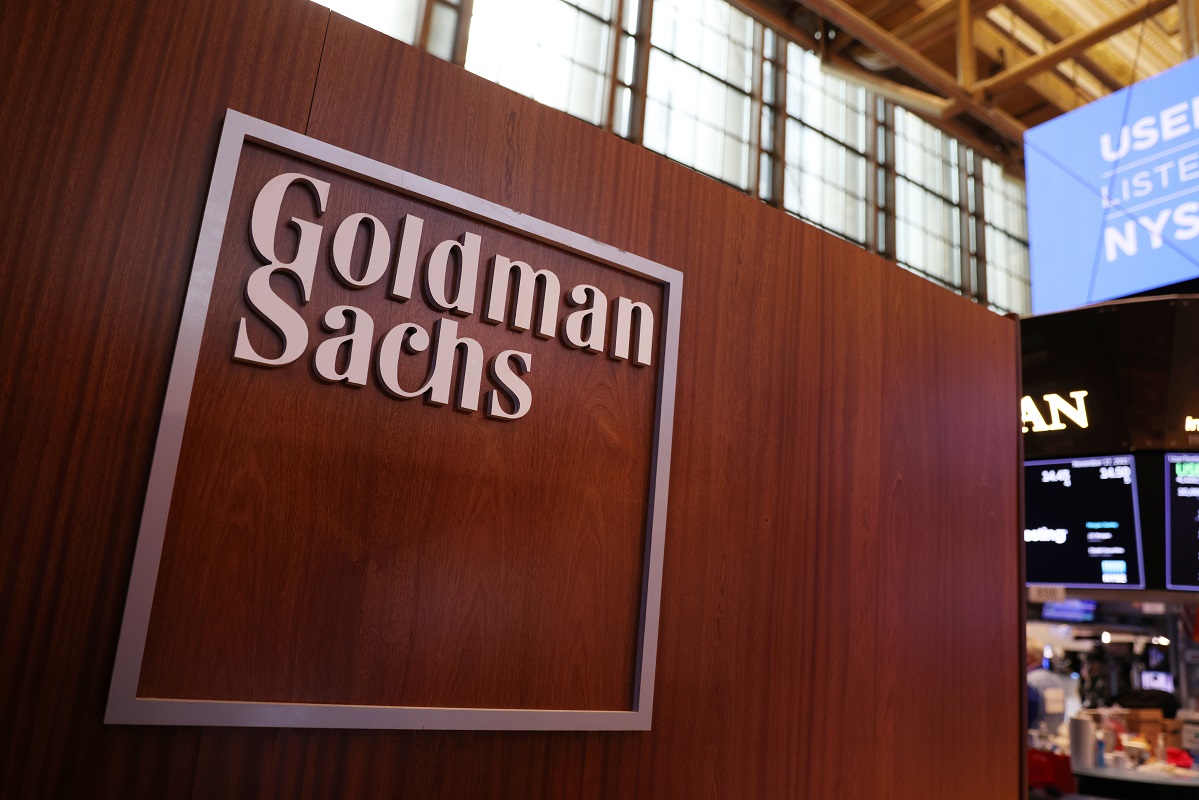
The logo for Goldman Sachs is seen on the trading floor at the New York Stock Exchange (NYSE) in New York City, New York, U.S., November 17, 2021. REUTERS/Andrew Kelly/Files

Goldman Sachs once again sat atop the global dealmaking league tables in 2025, tightening its grip on the world’s biggest mergers as a sharp rise in mega-deals and a more permissive regulatory climate transformed the M&A landscape.

According to LSEG data reported by Reuters, Goldman advised on $1.48 trillion worth of transactions last year, accounting for roughly 32% of the global market and securing its position as the No. 1 investment bank by both deal value and M&A fee revenue. The firm earned $4.6 billion in advisory fees, well ahead of JPMorgan at $3.1 billion and Morgan Stanley at $3 billion, followed by Citi and Evercore.

The standout feature of 2025 was the explosion of so-called mega-deals. Transactions valued at $10 billion or more jumped to 68 last year, with a combined value of $1.5 trillion, more than double the number recorded a year earlier. Goldman advised on 38 of those deals, more than any rival, benefiting from what LSEG described as the strongest period for mega-deals by number since records began in 1980.

Goldman itself described the environment as unusually fertile. In its 2026 M&A outlook, Global Co-Head of M&A Stephan Feldgoise called 2025 an “exceptional M&A year,” telling clients it was driven by a “ubiquity of capital” and a willingness by corporate boards to pursue transformative combinations rather than incremental growth.

That confidence was reinforced by politics. President Donald Trump’s more permissive antitrust posture lowered barriers that had previously stalled large-scale consolidation, giving executives cover to pursue deals that once might have drawn regulatory pushback. As a result, consolidation accelerated well beyond technology, spilling into railways, consumer goods, media, and other sectors.

Goldman’s dominance was particularly pronounced outside the United States. For announced M&A involving Europe, the Middle East, and Africa, the bank captured a 44.7% market share in 2025, a level surpassed only once before, during the dot-com boom of 1999.

Yet even in a year it dominated, Goldman did not advise on the two single largest transactions. Those were Union Pacific’s $88.2 billion acquisition of Norfolk Southern and the sprawling, high-profile battle for Warner Bros Discovery, which drew bids valued at up to $108 billion, including debt. Those deals were shared among Bank of America, Barclays, Wells Fargo, and a cluster of boutique advisers, highlighting how the biggest mandates are increasingly syndicated as boards seek a broader range of perspectives.

JPMorgan, while trailing Goldman in pure M&A rankings, still emerged as the highest-paid global investment bank overall once equity and debt capital markets fees were included. LSEG data showed JPMorgan earned $10.1 billion in total investment banking fees in 2025, compared with $8.9 billion for Goldman. JPMorgan advised Warner Bros in its sale process and guided Kimberly-Clark through its $50.6 billion purchase of Kenvue, the bank’s two largest deals of the year.

“The strategic desire to grow and find scale is high,” JPMorgan’s global head of advisory and M&A, Anu Aiyengar, said. “That has driven boardrooms and C-suites to be more proactive. People are not waiting for a company to be put up for sale to initiate M&A activity.”

The Warner Bros contest, in particular, reshuffled the league tables. Competing bids from Paramount Skydance and Netflix lifted the profiles of advisers such as Wells Fargo, Moelis, and Allen & Co, as well as law firms including Latham & Watkins. Wells Fargo, which advised on ten deals above $10 billion, including Netflix’s bid, jumped eight places from 2024 to rank ninth in 2025.

Boutique bank Moelis also gained ground, finishing the year at No. 16 after advising on five transactions worth more than $5 billion, including the $20 billion sale of Essential Utilities. Smaller firms such as RedBird Capital Partners and M. Klein & Co. briefly vaulted into the top 25 thanks to their roles advising Paramount, underscoring how a single mega-deal can dramatically alter rankings.

Those standings remain fluid. LSEG data show that advisers to both Warner Bros bidders are currently credited in league tables, but that will change once a winner is selected. If Paramount withdraws its offer, Wells Fargo would move up two more places, while advisers tied solely to Paramount would drop out of the rankings.

Legal advisers also benefited from the scale of transactions. Charles Ruck, global chair of the corporate department at Latham & Watkins, the top-ranked M&A law firm, said the growth in deal size reflected “size creep,” driven partly by rising equity markets.

The S&P 500 rose 16.39% in 2025, and the Nasdaq gained 20.36%, pushing valuations higher and making transactions larger by default. Latham advised on the Paramount bid, the $55 billion leveraged buyout of Electronic Arts, and the $40 billion sale of Aligned Data Centers.

Looking ahead, dealmakers say the conditions that powered 2025 have not yet dissipated. Interest rates are edging lower, corporate balance sheets are flush with cash, and the IPO market remains less robust than many companies would prefer, keeping M&A the primary route to growth and exits.

“The pipeline is full,” Ruck said. “Interest rates are coming down, which helps private equity. There is a lot of cash on corporate balance sheets. The IPO market is still not where people want it. And you’ve got a basically friendly regulatory environment navigating the winners and losers.”

Bitcoin Top Investors Loaded up $40Billion Worth of BTC in 2025

2
Blazpay – AI crypto presale

Bitcoin’s biggest players made bold moves in 2025, significantly increasing their positions, underscoring strong long-term confidence in the digital asset.

According to new data from River, the top 21 Bitcoin holders accumulated a staggering 476,000 BTC worth $40 billion, boosting their collective stake to 2.57 million BTC, or 13.1% of the supply.

This massive wave of accumulation comes amid shifting macroeconomic conditions, growing institutional interest, and rising expectations for Bitcoin’s long-term value, raising fresh questions about what this means for the broader crypto market.

The data, sourced from Bitcointreasuries.net, Arkham Intelligence, and BitMEX Research, paints a picture of strategic buying by corporations, governments, and high-profile individuals, even as retail investors grappled with timing the market.

The report, visualized in a detailed infographic shared by Cointelegraph on X, highlights not just the scale of accumulation but also the evolving landscape of Bitcoin ownership.

New entrants like Japan’s Metaplanet and Trump Media & Technology Group (TMTG) made their debut on the list, while established players like MicroStrategy dominated the gains. Meanwhile, notable declines, such as Binance’s reduction, signal potential strategic pivots in the exchange sector.

However, the data underscores sustained whale accumulation as a bullish indicator, contrasting retail focus on market timing in replies. This substantial accumulation reflects sustained interest from major market participants, even amid evolving regulatory landscapes, macroeconomic uncertainty, and shifting investor sentiment.

The move highlights Bitcoin’s growing role as a strategic asset among high-net-worth individuals and institutions alike.

Below is a breakdown of the Top 21 Bitcoin Holders in 2025:

The River report ranks the top 21 holders based on their verified Bitcoin treasuries, excluding unconfirmed or speculative wallets.

Here’s a detailed look at the list, including their holdings, year-over-year changes in 2025, and percentage of total supply (assuming Bitcoin’s supply neared 19.6 million BTC by year-end, accounting for ongoing mining):

1. Satoshi Nakamoto – 968,000 BTC 

The pseudonymous creator of Bitcoin remains the undisputed top holder. These holdings are attributed to early-mined coins that have remained dormant since Bitcoin’s inception in 2009. While Satoshi’s identity is unknown, their untouched stack symbolizes Bitcoin’s decentralized origins and serves as a reminder of the network’s scarcity.

2. MicroStrategy – 672,000 BTC

Leading the charge in corporate adoption, MicroStrategy under the guidance of Executive Chairman Michael Saylor added a staggering 226,000 BTC in 2025. This Virginia-based business intelligence firm has treated Bitcoin as its primary treasury asset since 2020, financing purchases through debt offerings and equity sales.

3. United States Government – 328,000 BTC

The U.S. government’s holdings stem primarily from seizures related to criminal activities, such as the Silk Road takedown and other illicit operations.

The 130,000 BTC addition in 2025 likely reflects increased enforcement actions against crypto-related crimes. This positions the U.S. as a major player, though debates rage over whether these assets should be auctioned or held as strategic reserves.

4. Block. one – 164,000 BTC 

The company behind the EOS blockchain, Block. one holds a significant Bitcoin reserve from its ICO proceeds and investments. No changes in 2025 suggest a stable, long-term holding strategy amid their focus on other blockchain projects.

5. Tether – 98,000 BTC

As the issuer of the world’s largest stablecoin (USDT), Tether added modestly to its Bitcoin reserves. This move diversifies their backing assets and underscores confidence in Bitcoin as a hedge against fiat volatility.

6. Mt. Gox Hacker – 80,000 BTC 

These holdings trace back to the infamous 2014 Mt. Gox exchange hack, where hundreds of thousands of BTC were stolen. The wallet’s inactivity suggests the perpetrator(s) are either lying low or have lost access, but it remains a shadowy entry on the list.

7. Winklevoss Twins – 70,000 BTC 

Cameron and Tyler Winklevoss, founders of the Gemini exchange, have been Bitcoin advocates since the early days. Their unchanged holdings reflect a buy-and-hold philosophy, bolstered by their ventures in crypto custody and regulation.

8. United Kingdom Government – 61,000 BTC 

Similar to the U.S., the UK’s stash comes from law enforcement seizures. No additions in 2025 indicate steady management rather than active accumulation.

9. MARA (Marathon Digital Holdings) – 53,000 BTC 

As one of the largest Bitcoin mining companies, MARA increased its holdings through mining operations and strategic buys, capitalizing on energy-efficient mining in North America.

10. Twenty One Capital – 44,000 BTC

This newcomer, a crypto-focused investment firm, burst onto the scene with a full 44,000 BTC acquisition, signaling aggressive entry into Bitcoin as an asset class.

11. Metaplane – 35,000 BTC

Japan’s Metaplanet, often dubbed the “Japanese MicroStrategy,” adopted Bitcoin as a treasury reserve in 2025 to combat yen inflation. Their rapid accumulation reflects growing corporate interest in Asia.

12. BSTR – 30,000 BTC 

Details on BSTR are emerging, but it appears to be a Bitcoin-focused entity or fund that entered the market aggressively in 2025.

13. Tim Draper – 30,000 BTC 

The venture capitalist and early Bitcoin buyer (famous for purchasing seized Silk Road BTC) held steady, focusing on long-term value.

14. Riot Platforms – 19,000 BTC 

Another major miner, Riot expanded modestly through operations in Texas, emphasizing sustainable energy sources.

15. Michael Saylor – 18,000 BTC 

Separate from MicroStrategy’s corporate holdings, Saylor’s personal stack underscores his personal commitment to Bitcoin maximalism.

16. Chinese Government – 15,000 BTC

Despite China’s crypto bans, these holdings are from past seizures, with no activity in 2025.

17. Coinbase – 15,000 BTC 

The leading U.S. exchange added to its reserves, possibly for custody services or balance sheet strength.

18. Hut 8 – 14,000 BTC

This Canadian miner grew its holdings through expansion in North America.

19. CleanSpark – 13,000 BTC 

Focused on green energy mining, CleanSpark’s gains highlight the sector’s push toward sustainability.

20. Binance – 13,000 BTC

The world’s largest exchange reduced its holdings significantly, possibly due to user withdrawals, regulatory pressures, or portfolio rebalancing sparking questions in the community about internal strategies.

21. Trump Media & Technology Group (TMTG) – 12,000 BTC

Associated with former U.S. President Donald Trump, TMTG’s entry into Bitcoin holdings aligns with pro-crypto rhetoric and could signal political integration into the space.

Key Trends and Shifts in 2025

The standout trend last year was institutional accumulation. MicroStrategy alone accounted for nearly half of the total additions, reinforcing Bitcoin’s role as “digital gold” for corporations hedging against inflation.

Newcomers like Metaplanet and TMTG illustrate geographic and sectoral diversification Japan’s entry counters its historical fiat reliance, while TMTG’s move ties into U.S. political narratives.

Conversely, Binance’s 35,000 BTC reduction stands out as a red flag. This reflects concerns over exchange liquidity or strategic sales. Governments (U.S., UK, China) represent about 2% of the supply collectively, raising questions about nation-state adoption.

Implications for the Bitcoin Market

This accumulation is a bullish indicator, suggesting whales anticipate further price appreciation despite short-term volatility. With Bitcoin’s supply capped at 21 million, controlling 13.1% means these holders wield significant influence over liquidity and market sentiment.

However, risks abound as regulatory scrutiny on corporate holdings, potential hacks,  and macroeconomic factors could alter the landscape. The contrast between aggressive buyers and sellers like Binance highlights a maturing market where strategies diverge.

Conclusion

The report underscores Bitcoin’s transition from a niche asset to a mainstream treasury staple.

As institutions stack sats amid global uncertainty, the message is clear, accumulation isn’t just a trend, it’s a strategy.

Motorcycle Shipping Costs and What Influences Them

0

Are you about to move or buy a bike online?

Before you go, let’s talk about motorcycle shipping costs.

Most riders get these quotes without realizing what’s hidden in the cost and why.

Here is the reality about motorcycle shipping…

Motorcycle shipping costs can vary from a few hundred dollars to more than $1,000.

The thing is:

Riders overpay most of the time.

They are not aware of factors that lead to an increase in motorcycle shipping costs.

If you take some time to find out the cost of shipping a motorcycle…

You will realize that when it comes to making the right decisions, you have everything in your hands.

In this article, you will discover…

  1. Factors That Influence Motorcycle Shipping Prices
  2. The Types Of Transport
  3. The Impact of Distance on your Quote
  4. Tips on How To Lower Your Shipping Costs

Factors That Influence Motorcycle Shipping Prices

Motorcycle shipping prices range from $300 to $1,200.

As you can see, that is a fairly big price range.

Prices could be different because a motorcycle shipping service provider uses several elements to calculate your final quote.

Understanding the influence of these factors gives you the power of your decisions when working with a motorcycle shipping service.

Here are the top five influencing factors:

  • Distance of the bike shipping
  • The size of your bike
  • The type of transport
  • Location of pick-up and delivery
  • Season

The number of motorcycles in the U.S. has increased by 35% between 2013 and 2022. This means more people are looking for a reputable motorcycle shipping service company.

As demand goes up…

The prices during the peak riding season rise with the increase in demand.

How The Distance Affects Your Quote

Distance is the first and main factor that affects the motorcycle shipping cost.

Shipping charges typically range from $0.40 to $1.00 per mile.

Although that is true…

You will pay more per mile for a shorter distance than a longer one.

Why? Easy, transport companies have a fixed cost regardless of the distance.

Shipping a motorcycle for 500 miles could cost $2.20 per mile.

The 2,000 miles shipping may cost you as low as $0.25 per mile. When you ship your motorcycle through a reliable motorcycle shipping service, you will better understand how pricing will affect your budget.

This is the general price:

  • For shipping under 500 miles, the cost is from $200 to $700
  • For 500 miles to 1,500 miles, the price is from $350 to $800
  • Shipping above 1,500 miles, the cost is $700 to $1,200 and more.

The pricing mentioned above makes long-distance motorcycle shipping cost effective than moving a motorcycle over a short distance.

The Types Of Transport

As a biker, it is important to know the different modes of transport available.

After careful consideration of these transport types, you will easily save some money from your total shipping budget.

Open Transport

This is the most common and the cheapest mode of transporting your motorcycle.

Your motorcycle is placed on an open trailer with other motorcycles. Although the cost is low, your motorcycle is exposed to road dust, rains, and other elements.

You may consider it the cheapest way of transporting your motorcycle.

Enclosed Transport

The most prominent way of transporting your motorcycle is enclosed transport.

Your motorcycle is boxed and protected. So it will be safe from the weather. However, the cost will be much higher (about $150 to $300).

A closed transporter comes in handy if you are shipping premium and classic motorcycles.

If you have a custom-made Harley Davidson, transporting it through enclosed shipping is worth it.

Other Modes of Transport

  • This transport type will cost you around $200. It is only available in some states.
  • It will cost you $400 to $800. If you are shipping in an emergency, this is the most appropriate type.

Most bikers use transporters by trucks. This is the most convenient and cost-effective way.

The Impact of Bike Size and Weight on the Total Price

The size of your motorcycle may have a greater impact on the shipping cost.

Bigger motorcycles will occupy more space in the trailer. A Harley-Davidson will cost you about $1,000 to ship from point A to point B.

Shipping a lightweight cruiser may cost you around $500. Bear in mind that weight also matters.

The more weight the motorcycle has, the more it costs.

The Importance of the Location and Accessibility

Location matters a lot.

If your motorcycle is in an urban area, you will be charged with a small amount than if it is in a rural area.

Transport companies typically have a collection and delivery schedule from the big cities. If your location or destination is off this major highway, this might increase your cost.

The following are likely to increase the cost:

  • If the pick-up or the delivery is at a remote point.
  • If your area of pick-up or delivery is not accessible.
  • Door-to-door costs more than terminal to terminal.

Terminal to terminal delivery is the best and most cost-effective way of moving your motorcycle.

Seasonal Fluctuations

Shipping your motorcycle during winter is one of the best shipping times.

The shipping industry moves fast during spring, early fall, and summer.

During this period, most riders want their motorcycles to be shipped early. This high demand increases the rates charged.

The best time to ship your motorcycle is…

Winter is the best time of the year to ship your motorcycle.

Shipping companies would like their trailers to move. The absence of business will force most transporters to lower their shipping charges.

Advance booking:

If you want to get the best quotes, consider booking your shipment at least two weeks in advance.

If you book your shipment at the last minute, expect an expensive quote from most transport companies.

Insurance Coverage

Motorcycle shipping companies are all covered by basic insurance.

Shipping companies are likely to cover motorcycle damage during shipping. Some companies will offer $100,000 insurance, while some companies will cover a lower amount.

Before shipping your motorcycle to any company, always ensure to confirm the following information:

  • How much is the coverage amount?
  • How much deductible is there?
  • How can you file for a claim?

As a motorcycle rider, it is good to always inspect your motorcycle. If you find any sort of scratches, make sure you take a photo.

Tips on How To Lower Your Shipping Costs

Planning is one of the most important aspects you should consider before shipping your motorcycle.

  • Always compare your quote from at least three companies. Comparing quotes will let you choose the best.
  • Choose a different date to ship your motorcycle. If you can be flexible with your date, you are likely to get cheaper rates.
  • Ship your motorcycles at the same time. If two or more motorcyclists are planning to move in the same direction, group your motorcycles.
  • Make sure you prepare your motorcycle well. Following the right preparation process will help lower your total cost.
  • Choose terminal to terminal. The total cost will be much lower than door to door.

Wrap Up

Motorcycle shipping costs are relatively easy to understand.

As a motorcycle rider, if you follow the right procedures, you can get a satisfying quotation for shipping a motorcycle.

Shipping costs of your motorcycle depend on distance, size, transport type, location, and timing.

The average price range for shipping a motorcycle is between $300 and $1,200.

The motorcycle transportation market has increased dramatically in recent years because the number of motorcyclists has continued to grow.

As a result, it is easy to find a reputable motorcycle shipping company.