DD
MM
YYYY

PAGES

DD
MM
YYYY

spot_img

PAGES

Home Blog Page 13

Bitcoin Holds $80K Despite Fed Rate Hike as Grayscale Downplays Policy Risk

0

Bitcoin has reclaimed the $80,000 level as the crypto market digests the Federal Reserve’s latest rate decision, with a sharp squeeze in bearish positions helping to accelerate the rebound.

More than $218 million in crypto shorts were liquidated as Bitcoin strengthened, while several major altcoins recorded gains exceeding 20% during the day.

The move highlights a familiar feature of digital-asset markets: when positioning becomes heavily skewed toward downside, even a relatively modest change in sentiment can produce an aggressive repricing.

The rally arrives against a monetary backdrop that might ordinarily be considered unfavorable for risk assets. The Federal Reserve delivered a quarter-point rate increase on Wednesday, raising questions about whether tighter monetary conditions could undermine Bitcoin’s recovery.

Yet Grayscale head of research Zach Pandl argued that the latest move should not be interpreted as the beginning of another prolonged tightening cycle. Pandl described the increase as a “mid-cycle adjustment, not a cyclical change,” pointing to the Federal Reserve’s March 1997 rate hike as a historical comparison.

At that time, a one-off increase did not prevent the Nasdaq’s broader bull market from continuing. The more important comparison, he argued, is the tightening cycle that began in 2022, when the Fed raised rates by 550 basis points.

That sustained increase materially lifted the opportunity cost of holding assets that generate no traditional yield, including Bitcoin. The distinction matters because markets respond not simply to whether rates rise, but to expectations surrounding the path of monetary policy.

If investors believe the latest increase is isolated rather than the beginning of another aggressive tightening campaign, Bitcoin can potentially remain supported despite higher nominal rates.

Institutional derivatives activity is adding another dimension. JPMorgan has argued that Bitcoin could receive greater incremental support than gold if hedging activity surrounding BlackRock’s iShares Bitcoin Trust, or IBIT, begins to unwind.

Such positioning can create additional demand for Bitcoin when derivative hedges are reduced, illustrating how the growing institutional market can influence spot-market dynamics. Meanwhile, the rally is extending beyond Bitcoin.

Hyperliquid’s HYPE token climbed above $90 to establish a new all-time high, underscoring the appetite for higher-beta crypto assets during the rebound. Institutional investment activity has accompanied the move: 21Shares reportedly purchased approximately $2.4 million worth of HYPE, while Bitwise added about $1.9 million.

The significance of these purchases extends beyond their absolute size. Institutional allocations can function as signals of growing interest in crypto infrastructure and decentralized trading ecosystems, particularly when they coincide with price discovery in a major token. Still, the latest rally does not eliminate the market’s underlying risks.

Liquidations can amplify short-term advances, but they can also reverse quickly when leverage rebuilds. Likewise, a single Federal Reserve decision does not establish a durable monetary trend.

For Bitcoin, the immediate question is therefore less about whether $80,000 can be reclaimed and more about whether the market can sustain the move without relying on excessive leverage. If institutional demand, improving liquidity expectations and continued participation in altcoins reinforce one another.

The rebound could mark a broader shift in market positioning. For now, the crypto market remains caught between monetary-policy uncertainty and renewed risk appetite—a tension reflected in Bitcoin’s recovery and HYPE’s explosive ascent.


SEC Opens Five-Year Path for Tokenized Securities as Congress Reconsiders CLARITY Act

0

The U.S. securities market is entering a period in which the distinction between traditional finance and blockchain infrastructure is becoming increasingly difficult to maintain.

On September 17, the Securities and Exchange Commission took a significant step toward that convergence, granting conditional, five-year exemptive relief to certain tokenized securities venues and liquidity providers.

At almost the same moment, the legislative effort to establish a broader federal framework for digital assets remained procedurally alive after Senator Thom Tillis filed a motion to reconsider the Senate’s failed CLARITY Act vote.

The SEC’s new “Innovation Exemption” is designed to allow qualifying Tokenized Securities Venues to facilitate trading in tokenized National Market System stocks without being treated as traditional exchanges under the Securities Exchange Act.

The venues can use permissioned automated market makers and liquidity pools operating on public, permissionless blockchains. Certain liquidity providers also receive temporary relief from the statutory definition of a dealer.

The importance of the decision lies in what it attempts to accomplish without rewriting securities law. Rather than declaring blockchain markets outside the existing regulatory framework, the SEC is creating a controlled environment in which tokenized securities can operate under defined conditions.

The exemption lasts five years, giving regulators and market participants a substantial testing period while the Commission gathers data and considers whether permanent regulatory changes are appropriate.

The conditions are substantial. Tokenized stocks must generally provide holders with the same rights and privileges as their conventional counterparts. Issuers must receive an opportunity to object to third-party tokenization.

Smart contracts must be public, auditable and deployed on public permissionless distributed ledgers. Trading must also stop when trading in the underlying stock is halted on its primary exchange.

The framework further imposes limits on eligible securities and trading volumes.  That structure makes the exemption less a free pass for crypto markets than a regulatory experiment.

The SEC is effectively allowing blockchain-based market infrastructure to demonstrate whether automated liquidity, onchain settlement and transparent transaction records can coexist with securities-market protections.

Yet the regulatory experiment arrives while Congress remains divided over how digital-asset markets should be governed. On September 15, the Senate voted 49-50 on a procedural motion to advance the CLARITY Act, falling short of the 60 votes required for cloture.

Senator Thom Tillis voted against the motion and subsequently filed a motion to reconsider. The Senate Daily Press records that Tillis voted no specifically so he could make that motion.  The maneuver does not itself advance the legislation, but it preserves a procedural avenue for another vote. That distinction matters.

The CLARITY Act is intended to establish a federal framework for digital assets, including a clearer division of regulatory responsibilities between the SEC and Commodity Futures Trading Commission.

Its failure to clear the procedural hurdle therefore leaves a significant portion of the industry’s long-term regulatory architecture unresolved. The developments illustrate a striking feature of the current U.S. crypto-policy landscape: regulatory experimentation is moving faster than comprehensive legislation.

The SEC has opened a five-year pathway for tokenized equities, while Congress continues negotiating the rules governing the wider digital-asset economy. For blockchain markets, the next phase will therefore involve both experimentation and legislation.

The SEC’s exemption can generate practical evidence about tokenized securities, while the CLARITY Act remains a potential route toward statutory certainty. Neither development settles the future of digital assets, but both demonstrate that the architecture of American finance is increasingly being tested onchain.

We Begin at Tekedia Mini-MBA to Solve the Equations of Markets

0

We begin tomorrow at Tekedia Mini-MBA to solve the equations of markets:

Great Company = Awesome Products + Superior Execution

Innovation = Invention + Commercialization

For the next twelve weeks, from Oriendu Market in Ovim to the trading floors of Wall Street, we will explore the mechanics of firms. Together, we will examine how businesses create value, how markets reward excellence, and how leaders can build category-king companies.

Go here and join us https://school.tekedia.com/course/mmba21/ and get your Zoom link as we begin at 7pm WAT on Saturday. This is the best school!

Saudi Aramco to Ship 60m Barrels of Gulf Crude Via Oman as Hormuz Disruptions Reshape Oil Flows

0

Saudi Arabia has sold about 60 million barrels of crude from its Ras Tanura export terminal inside the Strait of Hormuz for loading through ship-to-ship transfers at Oman’s Sohar port this month and next, according to multiple trade sources cited by Reuters, providing Asian refiners with an alternative route for securing Saudi oil amid disruptions to the kingdom’s normal export flows.

The shipments indicate that Saudi Aramco is maintaining a significant flow of crude from its Gulf terminals despite the disruption to exports from its Red Sea port of Yanbu following an attack on the East-West pipeline.

Aramco’s Gulf exports have recovered to an average of about 1 million to 1.5 million barrels per day, according to the sources. That is broadly in line with, or slightly above, August levels and has helped ease pressure in global oil markets by replacing some of the barrels affected by the slowdown at Yanbu.

Chinese and South Korean refiners are among the largest buyers of the spot cargoes, while additional supplies are heading to India and Japan, the sources said.

The increased availability of Saudi crude contributed to a decline in oil prices on Friday, with global futures falling by more than $1 a barrel. Traders were also responding to reports that Saudi Arabia could restore about half of the East-West pipeline’s capacity within days and was offering additional crude cargoes to Asian refiners through ship-to-ship transfers near Sohar.

The developments point to a rapid adjustment in the physical oil market as producers, refiners and shipping companies seek alternative ways to move crude around infrastructure and security constraints.

Sohar Becomes An Important Transfer Point

Sohar, outside the Strait of Hormuz, has emerged as an important point for transferring Saudi crude from larger Gulf shipments onto vessels bound for Asian customers.

The arrangement allows Saudi oil to continue reaching major Asian markets even as the disruption to the kingdom’s pipeline infrastructure changes the normal balance between its Red Sea and Gulf export routes.

Asia is the main market for Saudi crude, making the additional Gulf supplies crucial for refiners in China, South Korea, India and Japan. Japan’s refiners, in particular, say they have been able to maintain adequate supplies through November because of the alternative shipping arrangements.

The Petroleum Association of Japan said Friday that the country’s oil refiners had secured sufficient crude supplies through November, pointing to ship-to-ship transfers taking place outside the Gulf.

“In some cases, oil passes through the Strait of Hormuz at Saudi Arabia’s risk before being transferred to us outside the Gulf. For that reason, supplies from Saudi Arabia have not ceased entirely,” PAJ President Shunichi Kito said in Tokyo.

The comments reveal the logistical complexity of maintaining Saudi crude flows under current conditions. Oil can still leave Ras Tanura, but the route to Asian refiners involves additional transfers and exposure to risks around the Strait of Hormuz.

Higher shipping costs add to the disruption

The alternative supply routes are helping prevent a larger loss of Saudi crude from the Asian market, but they are also increasing transportation costs.

Supertanker freight rates reached record levels this week as demand for alternative crude routes increased. The rate to charter a very large crude carrier capable of carrying about 2 million barrels from Fujairah to Asia in early October reached 800 Worldscale, according to a shipbroking firm.

Higher freight costs could become an important part of the oil-market equation if the alternative shipping arrangements continue for an extended period. Even where crude remains physically available, more expensive and complicated transportation can raise the delivered cost for refiners.

The immediate market response, however, has focused on the additional Saudi barrels reaching Asia and the prospect of restoring part of the East-West pipeline’s capacity.

The reported 60 million barrels of crude scheduled for ship-to-ship loading in September and October represent a substantial flow of oil into a market that has been concerned about supply disruptions. Combined with the potential restoration of the pipeline, the additional shipments have reduced some of the immediate supply concerns that had pushed oil prices higher.

But the situation remains dependent on the security of Saudi export infrastructure and shipping routes. For Asian refiners, the ability to receive Saudi crude through Sohar provides an alternative channel, but the arrangement also demonstrates how disruptions to one part of the world’s oil infrastructure can quickly alter shipping patterns, freight costs and the pricing of crude across the region.

BOJ Raises Rates to 1.25%, 31-year High, as Split Vote Sends Yen to Two-Week Low

0

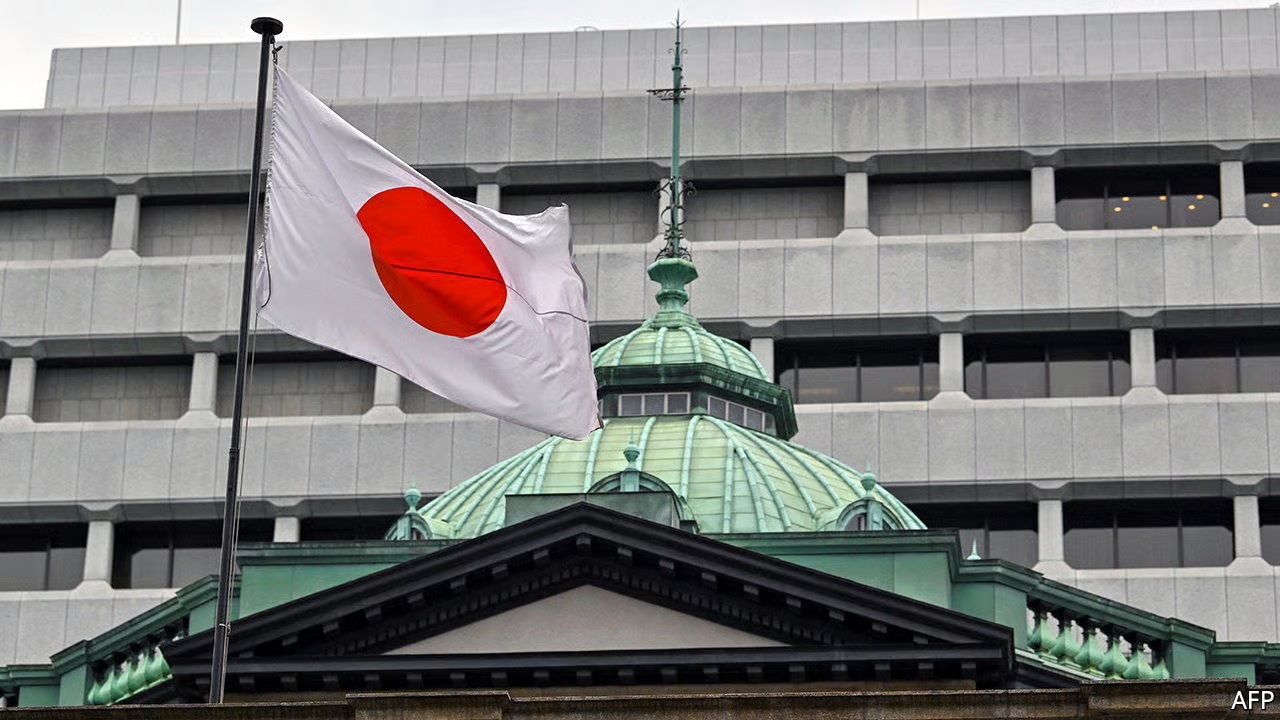
The Bank of Japan raised its policy rate by 25 basis points to 1.25% on Friday, taking borrowing costs to their highest level since 1995, but a split decision and limited guidance on further tightening sent the yen sharply lower.

The increase was widely anticipated, with nearly 90% of economists surveyed by CNBC expecting the BOJ to deliver a quarter-point hike. The decision nevertheless unsettled currency markets because two of the central bank’s nine policymakers voted against it, raising questions about how much support there is within the board for maintaining an accelerated pace of monetary tightening.

The vote was 7-2, with Toichiro Asada and Ayano Sato dissenting. Both were appointed by Prime Minister Sanae Takaichi earlier this year and are viewed as reflationists. Asada argued that core inflation was below the BOJ’s 2% target and that the economic situation might not be sufficiently strong to justify another increase, while Sato said economic and price developments had not accelerated substantially from their previous pace.

The hike marks a faster pace of normalization for the BOJ since it began dismantling its long-running ultra-loose monetary policy in March 2024. The latest increase came only three months after the previous hike, compared with a six-month interval before that.

In its policy statement, the BOJ said it acted because of the risk that inflation could deviate upward beyond its 2% target. The central bank said it wants underlying inflation to stabilize at around 2%, arguing that a sustained overshoot could eventually have adverse consequences for the Japanese economy.

The decision comes against a complicated backdrop for Japan’s policymakers. Inflation remains close to the BOJ’s target, while the yen continues to trade at historically weak levels against the dollar. Japan and the United States have also undertaken coordinated action aimed at supporting the currency.

Yet the immediate market reaction was the opposite of what a rate increase might normally imply.

The dollar climbed 1.2% against the yen to 157.84, its highest level in two weeks. The move put the Japanese currency on track for its biggest daily decline against the dollar since December and its strongest weekly loss since September 2024.

“They’ve just clearly underwhelmed versus expectations here,” said Ray Attrill, head of FX strategy at National Australia Bank in Sydney.

“And I think that one of the more staggering aspects of it was that they couldn’t even get the unanimous vote for that,” he added. “That really raised eyebrows in the market.”

The yen had strengthened sharply earlier in September, reaching its strongest level since February as investors increased bets that the BOJ would embark on a series of rate increases. Friday’s decision has complicated those expectations.

The issue for currency traders was not the 25-basis-point increase itself, which had been largely priced in, but what the decision said about the path ahead.

“The statement offered little additional hawkish guidance to support bullish Japanese yen positions,” said Frantisek Taborsky, a currency strategist at ING.

“The dissent from [Toichiro] Asada and [Ayano] Sato points to resistance against the fastest pace of rate increases in more than three decades and suggests they may increasingly act as a brake on further tightening,” he said.

The market reaction also highlights the difficulty facing BOJ Governor Kazuo Ueda as the central bank tries to balance inflation risks against concerns about economic growth and financial conditions.

Japan’s core inflation remained close to the BOJ’s target in August. The core measure stood at 1.7%, down from 1.8% in July, while headline inflation was 1.9%. Asada specifically pointed to the core reading in arguing for a pause.

The BOJ’s decision therefore leaves policymakers confronting two competing pressures. Inflation is sufficiently persistent for the central bank to worry about an upside deviation from its target, but some policymakers believe the underlying economy and price trends do not yet justify a faster tightening cycle.

For the yen, the uncertainty is growing larger because interest-rate expectations have become an important driver of the currency. Investors had been betting that Japan’s move away from decades of ultra-low rates would narrow the interest-rate gap with the United States and other major economies, supporting the yen.

That trade has become less straightforward as markets reassess the speed at which Japanese rates can rise.

The possibility of currency intervention remains another constraint on yen traders. Finance Minister Satsuki Katayama said Tokyo would not hesitate to conduct further coordinated action to support the currency, following a joint U.S.-Japan move in late July.

The warning means traders must weigh the BOJ’s monetary-policy trajectory against the government’s willingness to intervene if yen weakness becomes excessive.

The benchmark 10-year Japanese government bond yield fell 4.9 basis points to 2.947% after the decision, another indication that markets did not interpret the BOJ’s latest move as a clear signal of substantially faster tightening ahead.

For the central bank, the challenge now is communicating how much further rates can rise without creating unnecessary volatility in the economy or financial markets. The 1.25% rate is the highest Japan has seen since 1995, marking a significant shift from the negative-rate and ultra-loose monetary-policy era that defined the country’s financial system for decades. But Friday’s dissent means the next stage of normalization could be more contested within the BOJ than the headline rate increase suggests.

The data will now take on greater importance. With core inflation below 2% in August and the yen again under pressure, policymakers will need to determine whether price pressures are persistent enough to justify another increase or whether the economy requires a longer period at the current rate.