DD
MM
YYYY

PAGES

DD
MM
YYYY

spot_img

PAGES

Home Blog Page 1310

Starting New Companies, Why Most Fail and How to Prevent That – Ndubuisi Ekekwe

0

In the dynamic landscape of entrepreneurship, startups play a pivotal role in driving innovation and reshaping industries. These newly established companies, often rooted in the tech sector, embody the spirit of creativity and risk-taking that underpins entrepreneurial capitalism.

Today, join me at Tekedia Mini-MBA Live, as we discuss how to start new companies and how to make sure they thrive. Drawing lessons from Tekedia Capital, we share some lessons we have identified that separate startups that succeed from those which do not. In all elements, the number #1 enabler for success is making products and services that customers want. If you can make your customers fans, you will win their wallets, and if you can win their wallets, you have succeeded.

Yes, when customers LOVE your products, most problems in your startup will disappear because you are growing; everyone becomes a star. (Our goal is to provide you with knowledge systems to ensure your company thrives.) Indeed, the best investors are CUSTOMERS!

Thriving as a startup goes beyond ideas; it is all about execution and nothing but execution. And that means, delivering on the products, designed to fix frictions in the markets. We have these equation:

Innovation := invention + commercialization

Great Company := Awesome Product + Superior Execution

(Note, we did not say “idea’ because idea means nothing. It is execution which enables ideas to become products, and that is what brings the wins).

Sat, Apr 26 | 7pm-8.30pm WAT | Starting New Companies, Why Most Fail and How to Prevent That – Ndubuisi Ekekwe | Zoom link https://school.tekedia.com/course/mmba17/

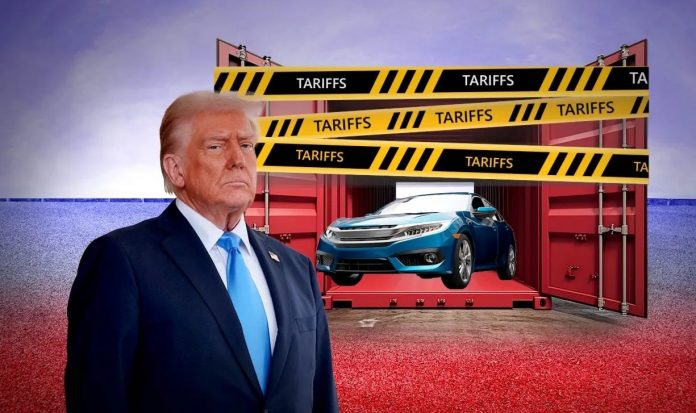
Trump Considering Temporary Exemptions Pause on 25% Tariffs on Automotive Imports

0

President Donald Trump has been considering temporary exemptions or pauses on the 25% tariffs he imposed on imported vehicles and auto parts, particularly to give U.S. automakers time to adjust their global supply chains. These tariffs, which took effect on April 3, 2025, for vehicles and are set to apply to auto parts by May 3, 2025, aim to boost domestic manufacturing but have raised concerns about higher car prices and supply chain disruptions.

Trump has signaled potential relief for automakers, particularly for vehicles and parts compliant with the United States-Mexico-Canada Agreement (USMCA). For instance, a one-month exemption was granted on March 5, 2025, for USMCA-compliant autos from Canada and Mexico after discussions with Ford, General Motors, and Stellantis. This reprieve was extended to include auto parts and other supplier products.

As of April 23, 2025, the White House confirmed Trump is considering further exemptions, potentially sparing some auto parts from tariffs, following intense lobbying by industry groups. The Financial Times reported that while the 25% tariff on imported vehicles would remain, certain auto parts might be exempt, though the 25% duty on parts is still expected to proceed.

The tariffs have already disrupted the auto industry, with companies like Jaguar Land Rover and Audi pausing exports to the U.S. and Stellantis idling factories in Canada and Mexico. Experts warn that short-term pauses, like the one-month exemption, are insufficient for reconfiguring complex supply chains, and tariffs could increase car prices by $3,000 to over $10,000, depending on the model.

Ford, GM, and Stellantis have expressed gratitude for the exemptions but emphasized the challenges of rapidly shifting production. Some automakers, like Ford and Stellantis, have offered temporary employee pricing programs to mitigate price hikes, while Hyundai and Genesis pledged to hold prices steady for two months.

Critics, including some analysts and Tesla CEO Elon Musk, argue the tariffs will raise costs across the board, as no vehicle is 100% U.S.-made. However, the United Auto Workers union and Trump supporters like Senator Bernie Moreno back the tariffs, claiming they protect American jobs.

The exemptions reflect Trump’s flexibility amid economic and political pressures, but the lack of a formal process for tariff relief keeps the industry uncertain. Automakers continue to lobby for parts exemptions to avoid compounding costs, especially with additional tariffs on steel and aluminum looming. Tariffs on vehicles and parts are projected to increase car prices by $3,000 to over $10,000, depending on the model. Exemptions could temporarily limit these hikes, but without long-term relief, consumers may face higher costs, potentially reducing demand and impacting auto sales.

Broad tariffs risk fueling inflation, as higher production costs ripple through supply chains. Exemptions may mitigate this in the short term, but sustained tariffs could still drive up costs for goods reliant on imported components. Higher vehicle prices could dampen consumer spending, a key driver of U.S. GDP. Exemptions might preserve some economic stability, but prolonged uncertainty could deter investment in the auto sector.

Industrial Implications

The auto industry relies on complex global supply chains, with many parts crossing borders multiple times. Exemptions, especially for USMCA-compliant goods, could ease immediate disruptions, but short-term pauses (e.g., one month) are insufficient for reconfiguring supply chains, which could take years. Tariffs aim to boost U.S. production, and exemptions may encourage automakers to shift some operations stateside. However, the high cost and time required to build new plants limit rapid change, and parts tariffs could still raise costs for U.S.-assembled vehicles.

Foreign automakers like Jaguar Land Rover and Audi have paused U.S. exports, and others may follow without exemptions. This could reduce competition but also strain U.S. dealers and limit consumer choice. Tariffs on Canada and Mexico strain USMCA ties, despite exemptions for compliant goods. Retaliatory tariffs from these allies (e.g., Canada’s proposed $3.6 billion in duties) could escalate tensions and harm cross-border trade.

Broad tariffs, even with exemptions, signal protectionism, potentially prompting other nations to impose counter-tariffs. This could disrupt global trade flows and isolate the U.S. in automotive markets. While Trump’s tariffs target Chinese vehicles (with a 100% duty), exemptions for USMCA partners may shift focus to countering China’s growing auto export influence, though higher costs could inadvertently make Chinese EVs more competitive globally.

Social and Political Implications

Tariffs are supported by unions like the United Auto Workers for protecting American jobs, but factory idling (e.g., Stellantis in Canada and Mexico) risks layoffs. Exemptions could stabilize employment temporarily but not address long-term shifts. Trump’s tariff policy, with selective exemptions, strengthens his negotiating power with automakers and trade partners. However, criticism from industry leaders and figures like Elon Musk could erode support if economic fallout grows.

Rising car prices could frustrate consumers, especially middle-class households, potentially undermining Trump’s economic agenda. Exemptions may soften this blow, but ongoing uncertainty could fuel public discontent. Automakers face uncertainty in planning long-term investments due to unpredictable tariff policies. Exemptions provide short-term relief but don’t resolve the broader risk of fluctuating trade rules.

Tariffs could slow the shift to electric vehicles (EVs) by raising costs for imported components critical to EV production. Exemptions for parts could support EV manufacturing but may not offset broader tariff impacts. Over time, tariffs may force a restructuring of global auto supply chains, with more production moving to the U.S. or USMCA countries. However, this shift requires significant capital and time, and exemptions may only delay the inevitable cost increases.

While exemptions could provide temporary relief for automakers and consumers, they don’t fully address the broader economic and industrial challenges posed by tariffs. The policy’s success hinges on balancing domestic manufacturing goals with minimizing disruptions, but prolonged uncertainty risks long-term damage to the auto industry and U.S. trade relations.

US Federal Reserve Announces Withdrawal of Its 2022 Supervisory Letter on Banks Processing Crypto

0

The Federal Reserve announced the withdrawal of its 2022 supervisory letter (SR 22-6 / CA 22-6), which had required state member banks to notify the Fed in advance of engaging in crypto-asset-related activities. It also rescinded a 2023 supervisory letter (SR 23-8 / CA 23-5) that outlined a nonobjection process for banks engaging in dollar token (stablecoin) activities. Additionally, the Fed, alongside the FDIC and OCC, withdrew two 2023 joint statements cautioning banks about crypto-related risks.

This shift eliminates the prior notification and approval requirements, allowing banks to handle crypto transactions under standard supervisory processes. The move aligns with evolving risk assessments and aims to foster innovation, reflecting a more permissive stance under the Trump administration. Banks are still expected to manage risks like volatility, cybersecurity, and compliance with laws, but the regulatory burden has been significantly reduced, potentially enabling broader crypto adoption in banking.

Banks no longer need prior Federal Reserve notification or nonobjection for crypto-asset or stablecoin activities. This reduces bureaucratic hurdles, enabling faster integration of crypto services like transaction processing, custody, or stablecoin issuance. Lower regulatory friction may encourage more banks, especially smaller state member banks, to engage with crypto markets. This could lead to broader mainstream adoption of cryptocurrencies and stablecoins in traditional finance.

The move signals a pro-innovation stance, likely influenced by the Trump administration’s crypto-friendly policies. Banks may explore new products, such as crypto payment systems or tokenized asset services, fostering competition and technological advancement. Despite deregulation, banks must still address crypto-related risks (e.g., volatility, cybersecurity, AML/KYC compliance). Supervisors will monitor these under standard frameworks, meaning banks need robust risk controls to avoid regulatory scrutiny.

Easier bank access to crypto could enhance liquidity and stability in crypto markets, as institutional involvement grows. It may also drive demand for stablecoins and other digital assets, potentially impacting their valuation and use cases. The U.S. is positioning itself as more crypto-friendly, potentially competing with jurisdictions like the EU or Singapore. However, it risks falling behind if comprehensive crypto legislation lags, as regulatory clarity remains incomplete.

Reduced oversight could expose banks to crypto market volatility or illicit finance risks if risk management is inadequate. This might lead to future regulatory tightening if incidents occur. Overall, this shift fosters a more permissive environment for banks to engage with crypto, likely accelerating its integration into traditional finance, but it hinges on banks’ ability to manage risks effectively.

With reduced regulatory barriers, banks may more readily engage with DeFi protocols, such as by facilitating transactions, providing custody for DeFi-related assets, or integrating with stablecoin ecosystems (e.g., USDC, USDT). This could create on-ramps for traditional finance users to access DeFi. Banks processing crypto transactions could funnel institutional capital into DeFi platforms, increasing liquidity in decentralized exchanges (DEXs), lending protocols, and yield farming pools.

Stablecoin Adoption in DeFi

The removal of the nonobjection process for dollar token activities may encourage banks to issue or support stablecoins, which are critical to DeFi’s ecosystem (e.g., for trading pairs, lending, and collateral). This could enhance stablecoin reliability and trust, driving DeFi adoption. Banks might develop their own stablecoins or partner with existing issuers, integrating them into DeFi protocols, which could reduce reliance on non-bank issuers and align DeFi with regulatory standards.

Centralized vs. Decentralized Services: As banks offer crypto services (e.g., custody, trading, lending), they may compete directly with DeFi platforms, which provide similar functions without intermediaries. Banks’ regulatory compliance and trust could draw users away from DeFi, especially for institutional or risk-averse clients. Some banks might integrate DeFi protocols into their offerings (e.g., using DEXs for liquidity or yield farming for client portfolios), blurring the line between centralized and decentralized finance.

As banks engage with DeFi-related assets or protocols, regulators may focus more on DeFi’s risks (e.g., smart contract vulnerabilities, money laundering). This could lead to future regulations targeting DeFi, potentially stifling innovation or forcing protocols to adopt compliance measures. Bank involvement could lend credibility to DeFi, encouraging regulators to create clearer frameworks rather than outright bans, fostering a more stable environment for DeFi growth.

Bank participation could spur DeFi protocols to innovate, offering more sophisticated products to compete with bank services (e.g., advanced yield strategies, cross-chain interoperability). Banks acting as gateways could make DeFi more accessible to retail users unfamiliar with wallets or blockchain interfaces, expanding DeFi’s user base.

Bank involvement might undermine DeFi’s decentralized ethos, as institutions could prioritize permissioned or semi-centralized systems. This could fragment the DeFi ecosystem between purist protocols and bank-friendly hybrids. Increased institutional capital could amplify volatility in DeFi markets, as banks’ large-scale transactions impact token prices or liquidity pools.

The policy shift aligns the U.S. with crypto-friendly jurisdictions, potentially attracting DeFi developers and projects to operate domestically. However, without comprehensive crypto legislation, DeFi’s regulatory uncertainty persists compared to regions like the EU with MiCA frameworks. The Fed’s deregulation could bridge DeFi with traditional finance, boosting liquidity, stablecoin use, and user access while fostering competition and innovation. However, it may also introduce regulatory scrutiny, centralization risks, and competition from banks, challenging DeFi’s decentralized principles.

North Korean Hacker Group Reportedly Established Two LLCs in The United States to Target Developers

0
North Korean leader Kim Jong Un and his daughter Kim Ju Ae visit the Ministry of National Defense on the occasion of the 76th anniversary of the founding of the Korean People's Army in Pyongyang, North Korea in this picture released on February 9, 2024 by the Korean Central News Agency. KCNA via REUTERS

The North Korean hacker group, specifically a subgroup of the Lazarus Group tied to the Reconnaissance General Bureau (RGB), has been reported to have established two U.S.-based shell companies, Blocknovas LLC in New Mexico and Softglide LLC in New York, to target cryptocurrency developers with malware. These companies, set up using fake personas and addresses, violated U.S. Treasury and United Nations sanctions.

The hackers posed as recruiters, offering fake job interviews to lure developers into downloading malicious software, aiming to steal cryptocurrency wallets and credentials. The FBI seized the Blocknovas domain, and cybersecurity firm Silent Push confirmed multiple victims, noting the campaign’s sophistication. A third entity, Angeloper Agency, is also linked but not registered in the U.S. This tactic marks a rare instance of North Korean operatives creating legal U.S. entities to facilitate cyberattacks.

Sanctions Evasion refers to actions taken by individuals, entities, or governments to circumvent or bypass economic, financial, or trade restrictions imposed by countries or international bodies, such as the United States, United Nations, or European Union. These sanctions are typically designed to pressure targeted regimes, organizations, or individuals to change behavior, such as halting nuclear proliferation, human rights abuses, or illicit activities, by limiting access to financial systems, trade, or resources.

North Korean operatives established Blocknovas LLC and Softglide LLC in the U.S. using fake personas and addresses. These shell companies appear legitimate but have no real operations, serving as fronts to obscure the true actors’ identities and evade sanctions scrutiny. U.S. state-level business registration processes often require minimal identity verification, allowing bad actors to set up companies without disclosing their true affiliations. This enables sanctioned entities to operate under the radar.

By registering LLCs, the hackers could potentially open U.S. bank accounts, process transactions, or engage in activities that would otherwise be blocked due to sanctions on North Korean entities. The LLCs were used to pose as legitimate businesses (e.g., recruitment agencies) to target developers with malware, masking their true purpose of stealing cryptocurrency to fund North Korea’s regime, which is restricted under sanctions.

The hackers employed fake personas, such as “Robert Davis” or “Henry Wilson,” and used virtual or rented addresses to register the companies, further distancing their activities from North Korea’s Reconnaissance General Bureau (RGB). Sanctions evasion in this case violates U.S. Treasury Department and UN Security Council restrictions, which prohibit North Korean entities from engaging in financial or commercial activities due to the country’s nuclear ambitions and cybercrime activities. By setting up U.S.-based LLCs, the Lazarus Group, coul launder stolen cryptocurrency and can finance North Korea’s weapons development or other sanctioned activities. Evading sanctions weakens international efforts to curb North Korea’s destabilizing actions. It highlights gaps in corporate registration and anti-money laundering frameworks, prompting calls for stricter oversight.

The use of legitimate U.S. entities demonstrates a high level of operational sophistication, allowing hackers to blend into legitimate business ecosystems, evade detection, and exploit trust in U.S.-based companies. Targeting developers with malware to steal cryptocurrency wallets and credentials poses a direct threat to the security of blockchain networks, decentralized finance platforms, and individual investors, potentially leading to significant financial losses.

By posing as recruiters, the hackers undermine confidence in remote job opportunities, particularly in the tech sector, making developers wary of legitimate offers and complicating hiring processes. The ability to establish shell companies highlights weaknesses in U.S. corporate registration processes, which lack stringent identity verification. This enables sanctioned entities to exploit legal loopholes, potentially prompting calls for tighter regulations.

North Korea’s use of cyberattacks to fund state activities, including its nuclear program, through stolen cryptocurrency underscores the intersection of cybercrime and geopolitical threats, necessitating stronger international countermeasures. The FBI’s domain seizure shows proactive response, but the global nature of these operations, combined with North Korea’s state-backed hacking, complicates attribution, prosecution, and prevention efforts.

This tactic may inspire other threat actors to adopt similar strategies, increasing the need for enhanced cybersecurity awareness, developer training, and robust vetting of business entities to prevent malware dissemination.


Tekedia Crypto and Blockchain Weekend Roundup

0

On April 15, 2025, ZKsync, an Ethereum Layer-2 scaling solution, confirmed a security breach where a compromised admin account led to the theft of approximately $5 million in unclaimed ZK tokens from its June 2024 airdrop. The attacker exploited the sweepUnclaimed() function in three airdrop distribution contracts, minting 111 million ZK tokens, which increased the circulating supply by 0.45%.

The compromised account was identified as wallet address 0x842822c797049269A3c29464221995C56da5587D. ZKsync emphasized that the breach was isolated to the airdrop contracts, with no impact on user funds, the core protocol, ZK token contract, or governance systems. The team is conducting a full investigation, collaborating with cybersecurity experts and exchanges for recovery efforts, and has urged the attacker to negotiate to avoid legal consequences. The incident caused a sharp 20% drop in ZK token price, later recovering slightly to around $0.046.

Charles Schwab, a leading U.S. brokerage managing over $10 trillion in assets, plans to launch spot cryptocurrency trading by April 2026, as announced by CEO Rick Wurster during the company’s 2025 Spring Business Update. The move will allow clients to directly buy and sell cryptocurrencies like Bitcoin and Ethereum through their Schwab accounts, marking a significant shift for the firm, which currently offers crypto exposure through ETFs, futures, and closed-end funds.

The decision is driven by a 400% surge in traffic to Schwab’s crypto-related web content, with 70% from non-clients, signaling strong public interest. Wurster highlighted an evolving U.S. regulatory environment as a key enabler, with anticipated clarity under new leadership potentially facilitating the launch. Schwab’s entry into spot crypto trading aims to meet rising client demand and compete with platforms like Coinbase, Fidelity, and Robinhood, which already offer similar services.

Russia’s Ministry of Finance and Central Bank are developing a cryptocurrency exchange targeting “super-qualified investors” as part of a three-year experimental legal regime (ELR). Announced by Finance Minister Anton Siluanov on April 23, 2025, the platform aims to legalize and regulate crypto transactions for high-net-worth individuals, bringing operations “out of the shadows.”

Initially proposed requirements for “super-qualified investors” include assets of at least 100 million rubles ($1.2 million) or an annual income exceeding 50 million rubles ($600,000). These thresholds are not finalized and may be adjusted following discussions, as noted by Osman Kabaloev, Deputy Director of the Finance Ministry’s Financial Policy Department.

SOL Strategies, a Canadian investment firm focused on the Solana blockchain, has secured a $500 million convertible note facility from ATW Partners to acquire and stake SOL tokens, marking the largest financing of its kind in the Solana ecosystem. The capital will be used exclusively to purchase SOL tokens, which will be staked on validators operated by SOL Strategies, with staking yields (up to 85%) covering interest payments.

The deal includes an initial $20 million tranche, with up to $480 million available in future drawdowns, and aims to enhance network security and decentralization while positioning SOL Strategies as a leading institutional staking platform. The firm’s shares surged 25.3% following the announcement, reflecting market optimism. This move follows similar strategies by firms like Upexi and DeFi Development Corp, signaling growing institutional interest in Solana.

Jack Mallers, the CEO of Strike, has indeed launched Twenty One Capital, Inc., a Bitcoin-native company focused on acquiring and holding Bitcoin, with an initial treasury of over 42,000 BTC, valued at approximately $3.6 billion based on a Bitcoin spot price of $84,863.57 as of April 21, 2025. The company is backed by major players like Tether, SoftBank Group, and Bitfinex, and is set to go public via a SPAC merger with Cantor Equity Partners, trading under the ticker $XXI on Nasdaq.

Twenty One aims to maximize Bitcoin ownership per share, offering investors direct exposure to Bitcoin through a public company structure, and plans to develop Bitcoin-native financial products, such as lending and capital market instruments. Mallers, who will continue his role at Strike, positions Twenty One as a vehicle to accelerate Bitcoin adoption, comparing its strategy to MicroStrategy but claiming greater flexibility for capital raises. The venture has raised $585 million through convertible notes and equity financing to support further Bitcoin purchases and operations.

Tesla’s Q1 2025 earnings report confirms they held steady with their 11,509 Bitcoin, valued at around $951 million at the end of March 2025, despite a 12% price drop in the quarter. With Bitcoin rebounding to $93,000, their stash is now worth over $1 billion. Tesla’s decision to hold their 11,509 Bitcoin in Q1 2025 likely stems from a mix of strategic and market factors. Elon Musk has historically been bullish on Bitcoin, viewing it as a hedge against inflation and a potential long-term store of value, aligning with Tesla’s innovative, risk-tolerant ethos.

The company’s past behavior—buying $1.5 billion in Bitcoin in 2021 and holding through volatility—suggests confidence in its future upside, especially after Bitcoin’s rebound to $93,000 post-quarter. Selling during Q1’s 12% price dip would’ve locked in losses, which Tesla may have wanted to avoid, particularly as their $951 million valuation at quarter’s end was still below their initial investment.