DD
MM
YYYY

PAGES

DD
MM
YYYY

spot_img

PAGES

Home Blog Page 1351

Global Debt Hits Record $324tn in Q1 as Emerging Economies Face $7tn Maturity Wall

0

Global debt surged by $7.5 trillion in the first quarter of 2025 to a record $324 trillion, according to data released Tuesday by the Institute of International Finance (IIF).

The staggering increase, driven largely by China, France, and Germany, underscores the scale of global reliance on borrowed capital—even as countries struggle to manage rising interest costs, slowing growth, and mounting economic uncertainty.

The increase was more than four times the average quarterly rise of $1.7 trillion since 2022, the IIF noted, pointing to a combination of foreign exchange factors and new borrowing. The depreciation of the U.S. dollar against major currencies also contributed to the higher dollar value of non-dollar denominated debt, but analysts say the sheer volume of new issuance reflects deeper structural pressures.

In emerging markets, total debt jumped over $3.5 trillion to a new high of $106 trillion in Q1 alone. China accounted for over $2 trillion of that increase, pushing its government debt-to-GDP ratio to 93%, with projections suggesting it could cross 100% by the end of the year. Brazil, India, and Poland also recorded significant increases. However, despite these sharp rises, the overall debt-to-GDP ratio for emerging markets excluding China actually fell below 180%, down from previous highs, thanks in part to stronger nominal GDP growth in some regions.

The global debt-to-output ratio remains just above 325%, edging slightly downward. But the headline figure masks more troubling signs. Emerging markets are now staring down a $7 trillion wall of maturing bonds and loans for the remainder of 2025. For developed economies, that number is closer to $19 trillion, both historic highs that threaten to test the resilience of global capital markets.

Who is The World Owing?

The rise in global debt has once again raised an old but persistent question: who is the world actually indebted to? While the record $324 trillion in global debt sounds like a singular burden, the answer lies in a complex and layered financial ecosystem, where countries, banks, investors, and institutions are simultaneously creditors and debtors in a tightly wound web of obligations.

In many developed economies, debt is increasingly held domestically. For example, much of Japan’s government debt is owed to its own citizens, banks, and institutions. The same is true to a lesser degree in Italy, where local banks and pension funds are heavily invested in government bonds. This internalized structure can provide short-term stability, since creditors are unlikely to flee en masse, but it also means that debt distress could trigger wider domestic financial crises.

In contrast, emerging markets are far more exposed to foreign lenders. Governments and companies in these regions often rely on borrowing from international investors, development banks, and hedge funds. This opens them up to the whims of global capital flows. A shift in sentiment, triggered by rising U.S. interest rates or geopolitical instability, can prompt capital flight, currency crashes, and debt-servicing difficulties.

The dominance of private creditors has added another layer of risk. Over the last decade, the share of developing country debt held by private entities—such as hedge funds, institutional investors, and foreign banks—has expanded rapidly. These lenders are far less patient than traditional multilateral institutions. When things go wrong, they are quicker to demand repayment or initiate legal action, as seen in the drawn-out debt restructuring battles in Argentina and Zambia.

Meanwhile, multilateral lenders like the IMF and World Bank continue to play a critical role, particularly in times of crisis, but their influence has waned. Their loans now make up a shrinking share of the total debt landscape, especially as developing nations turn to faster, albeit more expensive, sources of private credit. This shift has weakened global coordination in times of debt distress and diluted efforts to implement long-term fiscal reforms.

Another important but often overlooked creditor class includes foreign governments. The U.S. Treasury market, for instance, is heavily financed by overseas buyers—most notably China and Japan, which remain among the largest foreign holders of U.S. debt. However, even this dynamic is evolving. China’s appetite for Treasuries has waned in recent years as it seeks to insulate its economy from Western financial pressure and diversify its reserves.

Ultimately, global debt is less about nations owing money to external entities and more about a fragile network of cross-border interdependence. The global economy, in essence, owes itself, though unevenly. Some countries, mostly advanced economies, lend far more than they borrow. Others, particularly developing nations with current account deficits and weaker institutions, are net debtors—vulnerable to shifts in global financial conditions they cannot control.

However, this intricate web comes with real consequences. If emerging markets begin to default in large numbers, the impact won’t stay local. Defaults can undermine confidence across asset classes, trigger contagion in global bond markets, and provoke recessionary pressures in economies already dealing with tight monetary conditions. Similarly, a surge in U.S. debt issuance, driven partly by Trump’s renewed push for tax cuts, could force yields higher globally, increasing borrowing costs everywhere from Lagos to London.

Tariffs, pitched by the Trump administration as a fix for America’s fiscal gap, have only added to the challenge. While a weaker dollar has temporarily cushioned some emerging markets, the IIF warns that prolonged policy unpredictability could prompt foreign retaliation and reduce global trade volumes, further straining public finances.

US SEC Has Postponed Decision on Canary Capital’s Litecoin Spot ETF

0

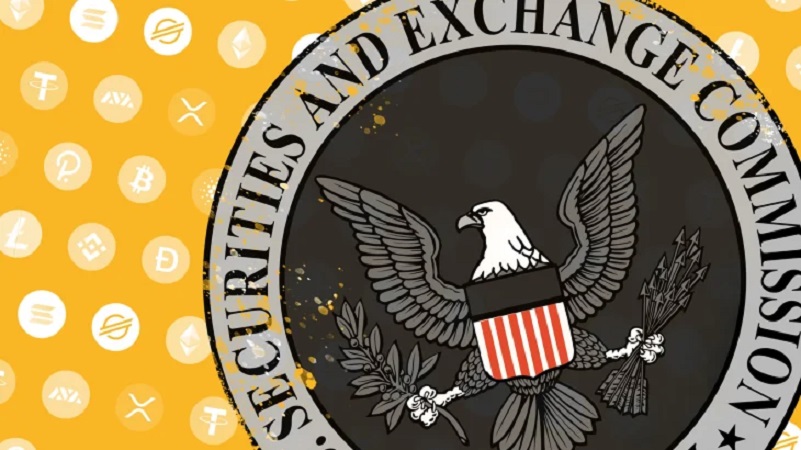
U.S. Securities and Exchange Commission (SEC) has postponed its decision on Canary Capital’s proposed spot Litecoin (LTC) exchange-traded fund (ETF), as announced on May 5, 2025. The regulator is seeking public comments until May 26, 2025, with a rebuttal period open until June 9, 2025, to assess whether the ETF meets standards for preventing fraud and market manipulation.

The new deadline for the SEC’s decision is set for June 17, 2025. This delay aligns with similar postponements for other crypto ETF proposals, including those for XRP, Hedera, and Dogecoin, reflecting the SEC’s cautious approach to altcoin-based financial products.

Despite the delay, analysts like Bloomberg’s James Seyffart estimate a 90% chance of approval by the end of 2025, citing Litecoin’s strong positioning among altcoins. The announcement led to a market reaction, with Litecoin’s price dropping nearly 8% to around $81.29. Canary Capital, founded by Steven McClurg, filed the ETF application in October 2024, aiming to offer investors regulated exposure to Litecoin, which has a market cap of approximately $6.6 billion.

The SEC’s cautious approach to approving spot cryptocurrency ETFs, like Canary Capital’s Litecoin ETF, stems from its mandate to protect investors and ensure market integrity. The SEC prioritizes ensuring that financial products are resistant to fraud and manipulation. Cryptocurrencies like Litecoin, while established, operate in relatively unregulated markets compared to traditional assets.

The SEC is evaluating whether Litecoin’s underlying market has sufficient safeguards, such as robust surveillance mechanisms, to prevent manipulative practices like wash trading or pump-and-dump schemes. Cryptocurrencies are volatile, and altcoins like Litecoin can experience significant price swings, as seen with the 8% drop following the delay announcement. The SEC aims to ensure retail investors are not exposed to undue risk through regulated products like ETFs, which could amplify losses if the underlying asset is unstable or poorly understood.

Regulatory Uncertainty: The crypto industry lacks clear, comprehensive regulations in the U.S. The SEC is navigating a complex landscape where cryptocurrencies are sometimes classified as securities, commodities, or something else entirely. Litecoin, often viewed as a commodity like Bitcoin, still faces scrutiny to clarify its legal status and how an ETF would comply with securities laws.

The SEC’s approval of Bitcoin and Ethereum spot ETFs in 2024 set a precedent, but altcoins like Litecoin are less liquid and have smaller market caps ($6.6 billion for Litecoin vs. $1.2 trillion for Bitcoin). The SEC is cautious about extending approvals to altcoins without thorough analysis, as a misstep could undermine confidence in the broader ETF market.

Public and Industry Input: By delaying decisions and opening comment periods (e.g., until May 26, 2025, for the Litecoin ETF), the SEC gathers insights from market participants, exchanges, and the public. This helps assess whether proposed ETFs, like Canary’s, align with investor interests and market stability, especially given concerns about custody, liquidity, and exchange reliability.

The SEC has a history of delaying or rejecting crypto ETF proposals. Bitcoin spot ETFs took years to gain approval due to similar concerns about market manipulation and investor safety. The agency is applying the same rigorous standards to altcoin ETFs, ensuring they meet the high bar set for traditional financial products.

This cautious approach reflects the SEC’s balancing act: fostering innovation in financial products while mitigating risks in a rapidly evolving crypto market. Delays, like the one until June 17, 2025, for the Litecoin ETF, allow the SEC to conduct thorough due diligence, potentially paving the way for approvals if concerns are adequately addressed.

Beyond Payments: Why Instant Payout is the New Standard For Business Success, And How Stitch is Powering 24/7 Payouts

0

In today’s fast-paced digital economy, the ability to move money is no longer a differentiator, rather, it has become a baseline.

As businesses scale and competition intensifies, instant payouts are emerging as the gold standard, not just for operational efficiency, but for customer trust, brand loyalty, and long-term growth.

A survey revealed that 60% of businesses now prioritize quicker access to funds, as they explore and adopt emerging open banking money movement methods like pay-by-bank. As traditional payout systems are often plagued with delays, failed transactions, and manual bottlenecks, which are gradually becoming obsolete, customers and employees alike, expect instant payouts and real-time access to their funds. The reality is that customers want faster payouts, and they are willing to switch platforms to get them.

What separates leading businesses today from the rest, is their capacity to make instant payouts. Data from giant payment platforms like Stripe and PayPal shows that businesses offering instant payouts see higher retention rates and faster growth, particularly in the gig economy, e-commerce, and SaaS sectors. Therefore, adopting this standard positions companies as competitive, agile, and customer-centric in a market where speed is a differentiator.

Use Cases Across Key Industries

  • Insurance: With 56% of consumers saying payout speed influences their choice of provider, instant claims settlement can improve retention and brand loyalty.

  • Gaming & Betting: A Stitch survey shows that 78% of punters value fast withdrawals when choosing where to place bets, making seamless payouts critical to user trust and platform reputation.

  • Logistics: Instant disbursements ensure smooth operations, enabling timely vendor and staff payments without delays that could impact delivery timelines.

  • Forex Brokers: In an industry where trust and liquidity are essential, 24/7 payout capabilities give brokers a competitive edge by allowing traders to withdraw funds without delay.

  • Remittances: With money often needed urgently across borders, instant local payouts increase peace of mind for both senders and receivers.

  • Real Estate: The ability to pay suppliers, contractors, and sellers on time can make or break a deal.

Benefits of instant payouts

When businesses pay out funds faster, there are considerable benefits related to the business health, customer experience, and overall company success. Below are some;

1. Improved Cash Flow Management

Instant payouts ensure that vendors, suppliers, and contractors are paid on time, helping businesses maintain healthy relationships and avoid delays in operations.

2. Enhanced Customer Satisfaction

Customers today expect instant gratification. Whether it’s a refund, insurance claim, gaming win, or marketplace sale, fast access to funds builds trust and improves retention.

3. Operational Efficiency

Automated, real-time payouts reduce manual processing, lower administrative costs, and minimize the risk of human error. Finance teams can focus on strategic tasks rather than reconciliation.

4. Competitive Advantage

Speed matters. In industries like betting, travel, and remittances, users choose platforms that offer quick withdrawals. Offering real-time payouts helps businesses stand out in crowded markets.

5. Reduced Fraud and Chargebacks

With real-time verification tools and automated disbursements, instant payout systems help mitigate fraud, failed payments, and the administrative burden of chargebacks.

6. 24/7 Availability

Businesses are no longer bound by banking hours. With 24/7, 365 capabilities, companies can disburse payments anytime—ensuring continuity even during holidays and weekends.

How Stitch is Powering 24/7 Instant Payouts

Recognizing the importance of instant payouts in today’s competitive business landscape, Stitch, a leading South African fintech infrastructure provider, that helps businesses seamlessly connect to the financial system, enabling them to deliver a better user experience, has emerged with a robust payout solution designed to meet these evolving demands.

Stitch Payouts empowers enterprise businesses to process disbursements to any South African bank account at scale, operating 24/7, 365 days a year. With a multi-bank, multi-rail infrastructure, Stitch ensures payout reliability through built-in fallbacks and redundancies. This innovation supports use cases such as customer withdrawals, vendor payments, staff disbursements, and insurance claim settlements, executed seamlessly over API from a float account.

Depending on business needs, companies can prioritize instant payouts which offer immediate transaction settlement at a slightly higher cost or opt for same day disbursements, to manage expenses more tightly. Stitch also simplifies financial operations by removing manual processes often associated with accounts payable.

Notably, security remains a top priority. To minimize fraud and reduce failed transactions, Stitch integrates a Bank Account Verification Service (BAVS), allowing businesses to verify recipient account details in real-time before processing payouts.

Emerging Technologies Shaping the Future of Payouts

As instant payouts become the norm, the next wave of payout innovation will be powered by three key technologies, each bringing unique capabilities to the instant payout ecosystem:

1. Open Banking

Open banking is breaking down traditional barriers in the financial sector, allowing for seamless integration between financial systems and new tech trends. Direct bank-to-bank transfers can reduce processing times and costs while improving transparency.

Open banking APIs (application programming interfaces) let businesses offer more flexible payout options, verify account information instantly, and provide real-time payment status updates to recipients. For example, a gig platform can instantly verify a new worker’s bank account and send payouts immediately after each completed job.

2. Alternative Payment Methods

Alternative payment methods are rapidly gaining traction worldwide driven by growing expectations for instant access to funds. These methods simplify cross-border transactions, reduce fees, and ensure recipients have immediate access to their earnings. For instance, freelancers and gig workers increasingly demand real-time payment options, pushing businesses to adopt these technologies to stay competitive and meet global needs.

3. Artificial Intelligence

Artificial Intelligence (AI) is transforming global payouts by ensuring payments are delivered accurately, efficiently, and cost-effectively. Several platforms use AI to optimize payment routing, selecting the best rails based on speed, cost, and compliance. These systems also enhance security by identifying fraudulent patterns in real time and automating compliance checks for AML and KYC standards. For example, AI-powered orchestration ensures that payments reach contractors or employees in the most efficient way possible, aligning with both business needs and recipient expectations.

Looking Ahead

The future of payouts is undeniably growing, powered by emerging technologies that make real-time payouts more accessible, secure, and efficient than ever before. As instant payouts are becoming the new standard for business success, companies that embrace this evolution will be better positioned to meet the rapidly evolving needs of customers, giving it a competitive edge.

Innoson CinC for Nigeria’s Commander in Chief

0

I like this Atiku’s line to Mr. President: “We challenge President Tinubu to stop the noise and trade in his beloved Escalade for an Innoson. That single act will do more to promote local industry than a thousand policy memos” because I have some recommendations for Mr. President. Mr. President, go with Innoson G80. There are more options here from the Innoson showroom. Of course, Innoson can create a new breed – Innoson CinC – for the commander in chief.

I support the President’s Nigeria First Policy. And I also support ex-VP Atiku Abubakar’s comment that it must involve every person. If we buy Nigerian products, Nigeria will rise again. So, this new government policy should be supported even as the nation deepens its electricity capacity to power it.

“The government has announced a sweeping directive barring all Ministries, Departments, and Agencies (MDAs) from procuring foreign goods and services where local alternatives exist. The policy, dubbed the Nigeria First Policy, was one of the resolutions adopted at Monday’s Federal Executive Council (FEC). It mandates all MDAs to prioritize Nigerian-made goods in procurement, unless a waiver is granted by the Bureau of Public Procurement (BPP).” –

Nigeria must work; yes, it must. And leaders must lead.

Innoson Vehicle Motors – Brand Photos with Prices

SEC’s May 12 Roundtable Underscores the Growing Convergence of TradFi and DeFi

0

U.S. Securities and Exchange Commission (SEC) has announced the agenda and panelists for its fourth Crypto Task Force roundtable, titled “Tokenization — Moving Assets Onchain: Where TradFi and DeFi Meet,” scheduled for May 12, 2025, at its headquarters in Washington, D.C.

The event, part of the SEC’s “Spring Sprint Toward Crypto Clarity” series, will feature prominent financial institutions and crypto industry players, including BlackRock, Fidelity, and Robinhood, among others. The roundtable aims to explore the regulatory implications of tokenization, a process that could transform financial markets by moving real-world assets onto blockchain-based systems.

Key Details

Date and Time: May 12, 2025, from 1:00 p.m. to 5:30 p.m. ET. Location: SEC Headquarters, 100 F Street, N.E., Washington, D.C. The meeting is open to the public and webcast live on www.sec.gov; no registration is required for online viewing. Keynote Speaker: SEC Chair Paul Atkins will deliver the keynote address.

The roundtable will include two main panels, featuring executives from traditional finance (TradFi) and decentralized finance (DeFi) sectors. From BlackRock Robert Mitchnick, From Fidelity: Cynthia Lo Bessette. From Robinhood: Representative not named in the agenda. Other Notable Participants, Eun Ah Choi (Nasdaq), Will Geyer (Invesco), Sandy Kaul (Franklin Templeton), Christine Moy (Apollo Management), Christian Sabella (DTCC), Johnny Reinsch (Tokenized Asset Coalition), Alex Zozos (SuperState), Representatives from Securitize, Maple Finance, Blockchain Capital, and Chia Network.

The meeting focuses on how traditional capital markets are integrating blockchain technology. Likely to discuss tokenized securities trading, custody requirements, and market infrastructure changes, with insights from BlackRock, Fidelity, and Nasdaq.

Topics includes; The Future of Tokenization which explores long-term technological and regulatory developments, with a focus on real-world assets (RWAs). It also feature Robinhood, Securitize, and others advocating for RWA tokenization. Commissioner Hester M. Peirce, who leads the Crypto Task Force, emphasized that tokenization could “substantially change many aspects of our financial markets” by enhancing efficiency and access to assets like real estate or private equity.

The market for tokenized real-world assets is currently valued at $18.85 billion. The SEC is seeking input to develop a balanced regulatory framework for digital assets. Discussions will address compliance challenges, market structure issues (e.g., trading venues and settlement systems), and investor protections. The announcement of the roundtable has already influenced crypto markets, with Bitcoin prices rising 2.3% and AI-related tokens like Fetch.ai gaining 4.2% on May 5, 2025, reflecting optimism about regulatory clarity.

The participation of major firms like BlackRock and Fidelity signals growing institutional adoption of blockchain technology, potentially driving capital inflows into crypto assets and related ETFs. BlackRock’s iShares Bitcoin Trust saw an 8.2 million share trading volume on May 5, 2025, up 10% from the prior day.

The Crypto Task Force, launched on January 21, 2025, under Ex Acting Chairman Mark T. Uyeda, aims to provide clear regulatory guidelines, realistic registration paths, and sensible disclosure frameworks. Previous roundtables covered security status (March 21), crypto trading (April 11), and custody issues (April 25). The series reflects a shift from enforcement-driven policies under the Biden administration to a more collaborative approach.

The next roundtable, “DeFi and the American Spirit,” originally set for June 6, has been rescheduled to June 9, 2025. Crypto enthusiasts expressed excitement about the participation of “big dogs” like BlackRock, Fidelity, and Robinhood, with some optimistic about bullish market implications. However, skepticism persists, with some calling the SEC’s frequent meetings a “nothing burger” with “zero results.” Traders are advised to monitor Bitcoin’s support level and Ethereum’s support, as well as ETF volume changes, for signals post-roundtable.

The SEC’s May 12 roundtable underscores the growing convergence of TradFi and DeFi, with BlackRock, Fidelity, and Robinhood playing key roles in shaping the regulatory landscape for tokenization. Outcomes from this event could influence market volatility, institutional adoption, and future SEC rulemaking, making it a critical moment for the crypto industry.