DD
MM
YYYY

PAGES

DD
MM
YYYY

spot_img

PAGES

Home Blog Page 1377

Coinbase Bitcoin-Backed Loans Highlight and Deepen Divides Between TradFi and DeFi

0

Coinbase has rolled out Bitcoin-backed loans, allowing U.S. users excluding New York to borrow up to $1 million in USDC using Bitcoin as collateral. The service, launched in partnership with Morpho Labs on Coinbase’s Base blockchain, initially capped loans at $100,000 in January 2025 but expanded to $1 million by April 30, 2025.

Users’ Bitcoin is converted to Coinbase Wrapped Bitcoin (cbBTC) and held in a Morpho smart contract. Loans have no fixed repayment schedule, with variable interest rates starting as low as 5%, set by Morpho’s open market.

Borrowers must maintain a loan-to-value (LTV) ratio below 86% to avoid liquidation, which incurs a penalty fee. The program has seen over $130 million in loan originations backed by $227 million in collateral. Coinbase plans to support more collateral assets and expand globally.

Offering loans backed by Bitcoin makes it easier for holders to access liquidity without selling their assets, encouraging long-term holding and mainstream use of crypto as collateral. This could drive broader adoption, especially among high-net-worth individuals.

DeFi-Blockchain Integration: Built on Coinbase’s Base blockchain with Morpho Labs, the service bridges centralized finance (CeFi) and decentralized finance (DeFi). It leverages DeFi’s transparency and smart contracts while maintaining Coinbase’s user-friendly interface, potentially attracting traditional finance users to DeFi ecosystems.

The variable interest rates (starting at 5%) and 86% LTV threshold mean borrowers face risks from Bitcoin’s price volatility. Sharp price drops could trigger liquidations, leading to losses (including penalty fees), which may deter risk-averse users or create market instability during downturns. Coinbase’s move intensifies competition with platforms like BlockFi, Ledn, or Aave, which offer similar crypto-backed lending. This could lead to better rates and terms for users but may pressure smaller players or force innovation across the sector.

Operating in the U.S. excluding New York highlights ongoing regulatory challenges. The exclusion of New York suggests compliance hurdles with state-specific laws like the BitLicense. As loan volumes grow, regulators may impose stricter oversight on crypto lending, especially concerning consumer protection and systemic risks.

With over $130 million in loans and $227 million in collateral already, the program could stimulate economic activity by unlocking capital for borrowers. However, it also raises concerns about over-leveraging in a volatile market, potentially amplifying financial risks. Coinbase’s plan to support more assets and expand globally could position it as a leader in crypto lending, but it will need to navigate diverse regulatory frameworks, which may delay or complicate rollout in some regions.

This move strengthens Coinbase’s position in crypto finance, promotes Bitcoin’s utility, and accelerates CeFi-DeFi convergence, but it also introduces risks tied to market volatility and regulatory uncertainty. Coinbase’s Bitcoin-backed loans, built on the Base blockchain with Morpho Labs, merge the accessibility of centralized platforms with DeFi’s decentralized infrastructure. Users get a familiar Coinbase interface while interacting with smart contracts and variable-rate lending markets.

This reduces the technical barrier for TradFi users entering DeFi, narrowing the gap between the two systems. However, it also highlights a divide: DeFi purists may criticize Coinbase’s custodial role (e.g., converting BTC to cbBTC), seeing it as less decentralized than native DeFi protocols like Aave. The program could pull TradFi users toward DeFi but risks alienating those who prioritize full decentralization, reinforcing a philosophical divide in the crypto community.

Loans up to $1 million democratize access to liquidity for Bitcoin holders, allowing them to leverage assets without selling. However, the service is limited to U.S. users excluding New York with significant Bitcoin holdings, as collateral requirements favor wealthier individuals. This widens the socioeconomic divide. High-net-worth individuals or crypto whales benefit most, while smaller retail investors with limited Bitcoin may find the collateral thresholds or liquidation risks prohibitive. The exclusion of New York further underscores regional disparities in access.

While the program promotes financial inclusion for some, it primarily serves those already crypto-wealthy, deepening the divide between crypto haves and have-nots. The program’s U.S.-only rollout excluding New York reflects varying regulatory environments. New York’s strict crypto regulations (e.g., BitLicense) create barriers that other states don’t face, and global expansion will encounter further regulatory hurdles.

This creates a geographic divide in access to innovative financial products. Users in permissive regions benefit, while others are excluded, potentially pushing them to unregulated or riskier platforms. Regulatory fragmentation could slow the global adoption of crypto lending, entrenching a divide between jurisdictions with progressive versus restrictive policies.

The loans involve complex mechanics—variable interest rates, LTV ratios, and liquidation risks tied to Bitcoin’s volatility. Sophisticated users familiar with crypto markets are better equipped to navigate these risks than newcomers. This exacerbates the knowledge divide. Experienced crypto users can optimize borrowing strategies, while less-informed users risk losses from liquidations or mismanaged loans, discouraging participation.

Without robust education efforts, the program may widen the gap between crypto-savvy and novice users, limiting its mass-market appeal. Coinbase’s entry into large-scale crypto lending strengthens its dominance in the crypto ecosystem, competing with DeFi protocols and smaller CeFi platforms. Its infrastructure and brand give it an edge over less-established players.

This widens the divide between large centralized exchanges and smaller DeFi or CeFi platforms. Smaller protocols may struggle to match Coinbase’s scale, user base, or marketing, consolidating market power. While users benefit from Coinbase’s reliability, reduced competition could stifle innovation or lead to higher fees over time, affecting the broader ecosystem.

Coinbase’s Bitcoin-backed loans highlight and, in some ways, deepen divides in the crypto and financial worlds: between TradFi and DeFi, wealthy and retail users, permissive and restrictive jurisdictions, knowledgeable and novice participants, and large platforms versus smaller competitors. While the program bridges some gaps (e.g., TradFi-DeFi integration), it also reinforces inequalities in access, risk exposure, and market influence.

To mitigate these divides, Coinbase could prioritize broader geographic access, lower collateral thresholds, user education, and partnerships with smaller DeFi protocols, but regulatory and market dynamics will continue to shape the extent of these divides.

Truth Social is Exploring Introduction of A Utility Token

0

Truth Social, owned by Trump Media & Technology Group (TMTG), is exploring the introduction of a utility token as part of a digital wallet system to facilitate payments within its ecosystem. According to a shareholder letter dated April 29, 2025, the token would initially be used to pay for Truth+ subscription costs, the platform’s streaming service offering conservative content.

TMTG plans to expand the token’s use to other products and services in the “Truth ecosphere,” such as the Truth Social network and Truth.Fi financial services. This move aligns with TMTG’s broader push into blockchain technology, including a trademark application for digital wallet software filed in November 2024 and a partnership with Crypto.com to launch cryptocurrency-focused ETFs.

The token is intended to enhance user engagement through a rewards program, potentially covering in-platform purchases, exclusive content, or advertising. However, details like the token’s name, launch date, and distribution structure remain undisclosed, and the initiative awaits regulatory approval. Market reaction has been tepid, with TMTG’s stock (DJT) dropping 0.52% in after-hours trading following the announcement.

The introduction of a utility token by Truth Social (TMTG) carries several implications across financial, operational, and market dimensions. The token could incentivize user participation through rewards, driving retention and activity on Truth Social and Truth+. Exclusive content or premium features tied to the token may attract a loyal user base, particularly among its conservative audience.

A digital wallet system could streamline transactions, enhancing user experience and encouraging spending within the ecosystem (e.g., subscriptions, in-platform purchases, or advertising). By enabling token-based payments for subscriptions and services, TMTG could reduce reliance on traditional revenue streams like advertising, which has been volatile. This aligns with their push into Truth.Fi and crypto-related ETFs.

The token could generate additional revenue through transaction fees or token sales, depending on its structure. Positioning Truth Social as a blockchain-integrated platform could appeal to crypto-savvy users and align with the “anti-establishment” ethos of its audience, especially given the platform’s ties to Donald Trump and the MAGA movement.

However, the niche focus on conservative users may limit broader market adoption, as the token’s utility is confined to TMTG’s ecosystem. The token’s launch hinges on regulatory approval, particularly from the SEC, given the scrutiny on cryptocurrencies. Missteps in compliance could lead to legal challenges or delays, impacting TMTG’s timeline and investor confidence.

If classified as a security rather than a utility token, it could face stricter regulations, increasing compliance costs. The token could bolster TMTG’s valuation by signaling innovation, but the lukewarm stock response (0.52% drop post-announcement) suggests investor skepticism about execution or near-term profitability.

TMTG’s high market cap ($7 billion+) despite minimal revenue ($4.1 million in 2023) makes it vulnerable to volatility. A successful token launch could stabilize its stock, but failure or delays could exacerbate declines, especially given its “meme stock” status. Competing with established platforms like X, which has broader reach and crypto-friendly features, may be challenging. The token’s success depends on TMTG’s ability to scale its user base and ecosystem utility.

Partnerships like Crypto.com could provide technical credibility, but TMTG must differentiate its token from other crypto projects to avoid being seen as speculative. Developing and maintaining a secure blockchain-based system requires significant investment and expertise. Any technical issues (e.g., hacks, outages) could erode user trust.

User adoption of the token may face hurdles if the platform’s interface or value proposition isn’t compelling, especially for non-crypto-native users. While the utility token could strengthen Truth Social’s ecosystem and appeal to its core audience, its success depends on regulatory navigation, technical execution, and user adoption. Failure to deliver could harm TMTG’s credibility and stock performance, while success could solidify its niche in the conservative digital and financial space.

Warren Buffett Says Greg Abel Will Take Over as CEO of Berkshire Hathaway by Year-End

0

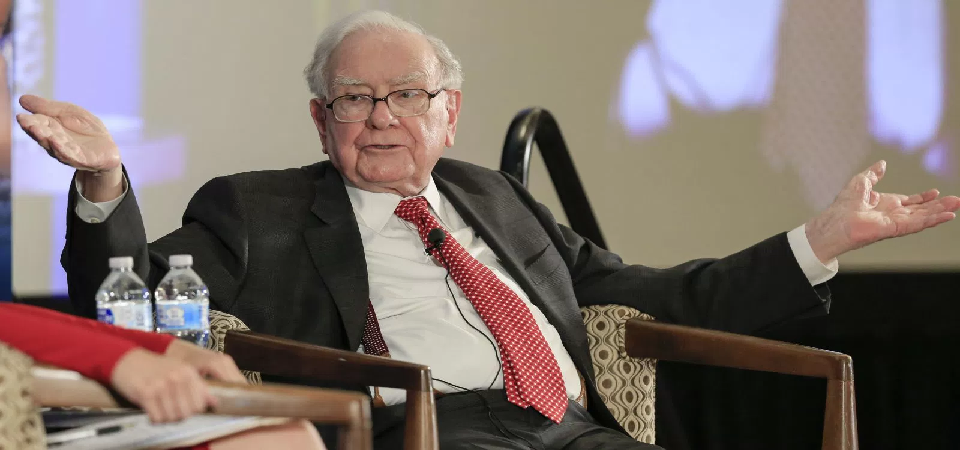
A seismic shift is underway at Berkshire Hathaway, as Warren Buffett, arguably the most celebrated investor of the modern era—formally announced Saturday that he will step down as CEO by the end of this year, handing the reins to Greg Abel, the company’s vice chairman of non-insurance operations.

The moment, though long expected, landed with weight and poignancy during Berkshire’s annual shareholders meeting in Omaha. Buffett, 94, made the announcement with his signature humility, addressing the thousands of loyal shareholders who had gathered from around the world to witness what has now become a historic farewell.

“Tomorrow, we’re having a board meeting of Berkshire, and we have 11 directors. Two of the directors, who are my children, Howie and Susie, know of what I’m going to talk about there. The rest of them, this will come as news to, but I think the time has arrived where Greg should become the chief executive officer of the company at year end,” Buffett said during the final minutes of the meeting.

Though he had named Abel as his successor in 2021, Buffett’s decision to publicly confirm the timeline caught even some board members off guard—including Abel himself, who appeared surprised by the timing.

The announcement marked the formal close of an era that began in 1965 when Buffett purchased a struggling New England textile mill and transformed it into one of the most successful conglomerates in American history. Today, Berkshire Hathaway is a $1.2 trillion behemoth, with more than 60 subsidiaries across insurance, railroads, utilities, manufacturing, retail, and consumer goods.

Buffett Celebrated, Abel Endorsed

The response from the business world has been swift and emotional. Executives, investors, and admirers have poured out tributes to Buffett while expressing confidence in Abel’s ability to preserve and grow the Berkshire legacy.

“There’s never been someone like Warren, and countless people, myself included, have been inspired by his wisdom,” Apple CEO Tim Cook said in a statement. “It’s been one of the great privileges of my life to know him. And there’s no question that Warren is leaving Berkshire in great hands with Greg.”

A Canadian at the Helm

Born in Edmonton, Alberta, Abel joined Berkshire in 2000 when it acquired MidAmerican Energy, where he eventually rose to CEO. He earned Buffett’s trust over the years through his steady leadership, operational rigor, and deep commitment to the company’s decentralized philosophy.

In 2018, he was named vice chairman overseeing all non-insurance businesses, a role that positioned him to succeed Buffett. Abel now stands at the center of the conglomerate’s future, tasked with steering a vast and complex web of businesses, from BNSF Railway to Dairy Queen and Geico.

Buffett himself offered resounding praise for his successor, describing Abel as a hands-on leader who works harder than he ever did.

“It’s working way better with Greg than with me,” Buffett said to laughter and applause. “Because, you know, I didn’t want to work as hard as he works. I could get away with it because we’ve got a very good business.”

Capital Strategy Will Remain

One of the most pressing questions among shareholders has been whether Berkshire’s patient, value-oriented approach to investing will change. Abel answered that directly, promising continuity in the company’s capital allocation strategy.

“It’s really the investment philosophy and how Warren and the team have allocated capital for the past 60 years,” Abel said. “Really, it will not change. And it’s the approach we’ll take as we go forward.”

Abel will also inherit the stewardship of Berkshire’s massive cash reserve, which now stands at $347 billion—an enormous war chest that gives the company power to seize opportunities, particularly during market downturns.

Buffett’s Future Role

Although Buffett will step down as CEO, he indicated he will still be available in an advisory role, especially in times of crisis or major opportunity. What remains undecided is whether he will also step down as chairman of the board. That matter is expected to be discussed at the board meeting scheduled for Sunday.

Buffett has previously said his son, Howard Buffett, would take on the role of non-executive chairman in the event of his death, to help preserve the company’s unique culture. It remains unclear whether the current transition alters that succession plan.

“I think they’ll be unanimously in favor of it,” Buffett said of the board’s expected support for Abel as CEO.

Director Ron Olson, who serves on Berkshire’s board, described the moment as both surprising and inspiring.

“It surprises me, but it impresses me,” Olson said. “I am very anxious to see Warren become the Charlie Munger for Greg Abel.”

As Buffett stood before the sea of investors—many of whom have built careers, fortunes, or philosophies around his teachings—he received one final standing ovation. It was a symbolic handoff, a moment that closed a chapter in corporate America while beginning another, with Abel at the helm and Buffett, for now, still watching closely from the wings.

Who is Greg Abel?

Berkshire Hathaway is preparing for its first leadership change in 60 years after 94-year-old Warren Buffett announced that he will step down as CEO at the end of 2025. Canadian Greg Abel, confirmed as Buffett’s intended successor in 2021, assumed a broader role at the company in 2018 thanks to a promotion that tasked him with supervising Berkshire’s non-insurance businesses. Now, pending board approval, the 62-year-old will oversee a conglomerate with nearly 400,000 employees.

  • A native of Edmonton and former hockey player, Abel has worked closely with Buffett since 2000 when Berkshire acquired MidAmerican, where he was president. He rose steadily through the ranks, most recently as vice chairman, and was worthan estimated $484 million in 2021.

  • Buffett has praised Abel’s business acumen and leadership, saying in 2023, Abel “does all the work and I take all the bows.”

  • Abel plans to uphold the company’s core investment philosophy and maintain its “fortress of a balance sheet” to avoid outside financial reliance.

Warren Buffett Denounces Trump’s Tariffs as ‘Big Mistake,’ at Berkshire Hathaway’s 2025 Meeting

0

Warren Buffett, the 94-year-old chairman of Berkshire Hathaway, opened the conglomerate’s 60th annual shareholders meeting with a forceful critique of President Donald Trump’s tariff policies, warning that weaponizing trade risks global backlash and economic turmoil.

Speaking to 40,000 attendees at the CHI Health Center, Buffett declared, “It’s a big mistake in my view when you have 7.5 billion people who don’t like you very well, and you have 300 million who are crowing about how they have done.”

As economists echo his fears of a tariff-driven U.S. and global recession, Buffett revealed Berkshire’s $347.7 billion cash reserve, citing scarce investment opportunities amid market volatility. The meeting, a magnet for investors worldwide, also intensified focus on Buffett’s succession as he nears 100, with shareholders grappling with the future of a $1 trillion empire without its legendary leader.

Addressing the top shareholder concern, Buffett denounced Trump’s tariffs, including a 10% universal import duty imposed on April 2 and 145% levies on Chinese goods by April 9, which have unsettled global markets.

“We should be looking to trade with the rest of the world. We should do what we do best and they should do what they do best,” he urged, advocating for cooperative trade rooted in comparative advantages.

He warned that antagonizing other nations undermines global stability.

“The world will be safer if more countries are prosperous,” he said.

While acknowledging the goal of balanced trade, Buffett criticized the execution, noting widespread tariffs are not the solution. His remarks, aired live by CNBC, responded to questions curated by reporter Becky Quick, reflecting investor anxiety over trade disruptions impacting Berkshire’s businesses, from BNSF railroad to Shaw Industries.

Economists Amplify Recession Concerns

Buffett’s warnings resonate with economists sounding alarms over the tariff war’s economic toll. The levies, effectively a tax on importers, have spiked consumer prices—apparel by 17%, vehicles by 8.4%, food by nearly 3%—slashing household purchasing power by $2,100 annually, per JPMorgan estimates. Inflation is forecast to reach 4% by summer, with core PCE potentially hitting 4.7%, threatening the 70% of U.S. GDP driven by consumer spending.

The S&P 500 shed $6 trillion in early April, including a 4.8% drop on April 3, reflecting market jitters. Goldman Sachs pegs recession odds at 45%, Reuters at nearly 50% within a year, with global growth projected at a mere 1.4% for Q4 2025, the weakest since 2008 outside the pandemic, per the World Bank.

Globally, the tariffs are dragging economies like Japan, South Korea, and Canada toward recession, with China’s GDP growth expected to slip to 4.4%. China’s retaliatory 84% tariffs on U.S. goods and restrictions on rare earth exports have escalated tensions, while allied nations face duties like 24% on Japan. Brookings Institution analysts estimate a $400 billion annual hit to U.S. economic output, with Moody’s Analytics warning of stagflation—high inflation paired with sluggish growth—as unemployment could climb to 4.5%.

The Federal Reserve, projecting -2.4% GDP growth for Q1 2025, may hold rates at 4.25–4.50%, compounding pressures. These risks amplify Buffett’s call for trade collaboration, aligning with academic and economic consensus on the dangers of protectionism.

Berkshire’s Cash Fortress and Investment Pause

Buffett disclosed that Berkshire Hathaway holds $347.7 billion in cash, a record sum fueled by $158 billion in stock sales over two years, including trimmed stakes in Apple, and robust cash flows from subsidiaries.

“I just don’t see many attractively priced investments that I understand these days, but I predict that one day Berkshire will be ‘bombarded with opportunities that we will be glad we have the cash for,’” he told attendees, per Morningstar.

The stockpile reflects Buffett’s disciplined value investing ethos, wary of overpaying in a market warped by tariff uncertainty and elevated valuations. Shareholders, questioned by Quick alongside vice chairmen Greg Abel and Ajit Jain, pressed for insights on deploying this capital, particularly for Berkshire’s trade-sensitive businesses like retail and logistics.

The Succession Question

The meeting, Buffett’s 60th leading Berkshire, sharpened focus on succession as he approaches his centennial. At 94, Buffett remains sharp, engaging the crowd with humor despite using a cane and shortening the Q&A by two hours.

“I enjoy figuring out where to invest Berkshire’s money too much,” he has long insisted, signaling no retirement plans unless incapacitated, as noted by CNBC. Greg Abel, 62, was named Buffett’s CEO successor, and Ajit Jain, 73, overseeing insurance, taking prominent roles.

Shareholders expressed confidence in Abel’s operational acumen and Jain’s insurance expertise but acknowledged Buffett’s irreplaceable presence. Haibo Liu, a Chinese investor at his second meeting, camped overnight to honor Buffett,

“He has helped me a lot. I really want to express my thanks to him,” he said, fearing this could be his final appearance.

Linda Smith, 73, attending her 20th meeting, predicted resilience, saying, “I think even if he dies, these businesses will retain their value,” but foresaw a temporary stock dip. “Good businesses and good people will come back,” she added, eyeing the exhibit hall’s displays of Geico, Pilot truck stops, and Duracell.

Despite tariff concerns, Buffett reiterated his confidence in America’s future.

“America has been going through revolutionary changes ever since its birth and the promise of equality for all, which wasn’t fulfilled until years later,” he reflected, adding, “Nothing that is going on today has changed my long-term optimism about the country.”

His quip, “If I were being born today, I would just keep negotiating in the womb until they said, ‘You could be in the United States,’” drew laughter, encapsulating his belief in the nation’s resilience.

Let’s talk about vibe coding

6

Do you know that one can now build a mobile app (end-end) in just one hour? Thanks to AI.

I’m here to tell you all about it.

Meet Tolu, a 26-year-old fashion and wellness blogger with zero programming background. One night, she sketched out an idea for a digital platform called GlowGrid, a tool to help Gen Z and millennial women track skincare progress with AI and community support. She pitched the idea to a developer friend who quoted her $12,000 and a 3-month timeline.

Discouraged but not defeated, Tolu dove into the world of vibe coding. Within two weeks, using a mix of LovableGlide, and Notion, she had a working prototype. Three months later, she had 500+ beta users and her first investor call. Wild.

She never wrote a line of code—but she built something real. Now that’s vibe coding.

Imagine constructing a stunning website, a functional mobile app, or a compelling prototype simply by dragging, dropping, and visually configuring elements. That’s the essence of vibe coding – to translate your ideas directly into tangible digital products. It’s about the sentiments of creation, the satisfaction of seeing your vision materialise without being bogged down by lines of code.

What we know as the ideal thing to do before a product is built is to survey the market and build what the users want. Product teams in the past spend months engaging logic and syntax to build products tailored to solve their problems and sometimes, at the end of the six months or eight months, they launch and discover that they have over-exaggerated the user’s feedback. So, what do you do in a situation where the users do not know what they want and you have to think for them? This appears to be how the genius Apple products came into being and that’s what traditional vibe coding is all about – Building products according to one’s “vibes” and with whatever helps the developer’s creativity.

Vibe coding is a term that has been thrown around in the tech world for sometime now but has recently started gaining traction especially among solopreneurs, product builders and startup founders. More than just a no-code development — it’s a mindset.

At its core, vibe coding is about building tech-powered experiences without obsessing over syntax or long dev cycles. It’s intuitive. It’s visual. It’s about skipping all the preliminaries and protocols and getting your ideas into the world quickly—whether that’s a landing page, an app prototype, or a full-fledged SaaS product. Vibe coding focuses on the ‘feel’ of the product—the user journey, the storytelling, the flow—not just the logic. It’s where design, tech, and creativity collide without the gatekeeping of traditional programming.

Forget the rigid syntax and complex algorithms for a moment, in the dynamic world of digital creation, this is the new current emerging, one that emphasizes intuition, flow, and the sheer joy of building.  Vibe coding is about tapping into your creative energy and bringing your digital vision to life with remarkable speed and accessibility, primarily through harnessing the intuitive power of no-code tools.

 Popular Tools in the Vibe Coding Movement


No/Low-code tools Description Why it’s a vibe Power users
Lovable A sleek no-code platform designed to build websites with emotional intelligence and brand storytelling at its core. Drag and drop meets aesthetic story-telling. Perfect for portfolios, story-telling sites and personal brands. Creators, storytellers and indie artists.
Bolt A rapid MVP builder that lets you go from idea to functional app without writing a single line of code. Bolt combines design thinking with Backend logic. You can set up databases, user flows and launch all pages visually. Founders, Startups, Hackathon projects.
Replit A collaborative cloud-based coding environment. It’s technically not a no-code tool, but it plays a major role in low-code workflows. Replit now supports Ghostwriter AI. You write partial thoughts and it completes them with full logic. Beginners who want to learn coding while building apps.
Cursor An AI-enhanced code editor designed for building full-stack apps in minutes with natural language. Cursor lets you talk to your editor like a co-founder. Say “create a login flow with Supabase” and it does it! Developers, Product designers dabbling in dev and builders wanting AI in their workflow.
Glide A no-code platform that turns spreadsheets into apps. Data = design. Perfect for CRMs, community platforms or internal tools. Managers, creators, entrepreneurs who live in google sheets.
Framer A design-code tool that converts your designs directly into interactive websites. It’s where UI/UX meets deployment. Literally drag your idea into reality. Designers, startup founders needing prototypes fast
Bubble A comprehensive no-code app builder with a visual data base, API connectors and logic. Think of it like building with LEGO blocks. If you can map it in your mind, your can build it in Bubble. Best for Saas tools, marketplaces, internal tools.
Webflow A design tool cum CMS cum hosting platform all in one. Designs responsive websites visually. No templates necessary – You design it exactly how you imagine it. Agencies, brands, designers with no Dev team.


 You’ve got to catch your own vibe

The world of no-code is constantly evolving, with new tools and features emerging regularly. To embrace vibe coding, explore the platforms that resonate with your project goals and creative style. Experiment, learn, and most importantly, enjoy the process of bringing your digital visions to life with the intuitive power of no-code. So, plug in, tune in, and let the creative vibes flow!