DD
MM
YYYY

PAGES

DD
MM
YYYY

spot_img

PAGES

Home Blog Page 14

Information Finance (Info Fi) Ends As X Updates Policy, Banning Reward-based Posting

0

Nikita Bier, X’s Head of Product, announced a major policy update revising the platform’s developer API rules. X will no longer permit apps that reward users for posting content on the platform—specifically calling out “InfoFi” (Information Finance) models.

These apps incentivize posting often with crypto tokens or points to drive engagement, but Bier cited them as the root cause of a massive surge in AI-generated slop (low-quality automated content) and reply spam, which has degraded the user experience.

In his post, Bier stated that X has already revoked API access for these apps, predicting improvements soon “once the bots realize they’re not getting paid anymore.” He also offered assistance to affected developers in transitioning their businesses to alternatives like Threads or Bluesky.

This crackdown directly impacts the InfoFi sector, a Web3 niche where platforms reward social activity on X to promote crypto projects, communities, and narratives. Popular examples include tools that track “yaps” (posts) for points or tokens.

The most prominent fallout hit Kaito and its $KAITO token, a crypto analytics and AI-powered search platform heavily tied to InfoFi via its “Yaps” reward program. Kaito’s founder, Yu Hu, quickly responded by announcing the sunset of Yaps and incentivized leaderboards.

The project is pivoting to a more selective creator agency and marketing model under “Kaito Studio”—focusing on curated, high-quality partnerships with creators and brands across platforms including non-X ones like YouTube and TikTok, emphasizing performance metrics over permissionless rewards.

The market reacted sharply: $KAITO dropped roughly 17-20% from around $0.70 to $0.55-0.57 in hours, with increased trading volume signaling heavy selling pressure. Related assets, like Kaito’s Yapybaras NFTs, saw floor prices collapse over 50%.

Other InfoFi-linked tokens like $COOKIE fell 15-18%, and some projects like Cookie DAO halted reward features entirely. Reactions across X and crypto media are mixed: Supporters praise it as a cleanup of spam and bots, restoring authentic discourse.

Critics argue it’s overly broad, hurting legitimate tools and creators reliant on these models, and question why X didn’t target spam more surgically. This marks a turning point for InfoFi, shifting away from open, volume-based rewards toward curated, quality-focused approaches.

Kaito’s pivot strategy, announced by founder Yu Hu shortly after X’s January API policy update banning reward-based posting apps, involves sunsetting the permissionless Yaps program along with incentivized leaderboards and launching Kaito Studio as the new core direction.

This shift moves away from open, volume-driven “InfoFi” rewards that incentivized mass posting often leading to spam and low-quality AI-generated content toward a more curated, professional, and sustainable creator marketing and agency model.

Brands and projects will selectively partner with vetted creators who meet specific quality criteria, rather than open participation for anyone. Creators are chosen based on defined standards e.g., relevance, audience quality, past performance. Partnerships involve clear scopes of work, deliverables, and performance benchmarks.

Leverages Kaito’s existing AI-powered tools for sentiment analysis, attribution, relevance scoring, and performance tracking to ensure measurable ROI for brands and fair rewards for creators. No longer limited to X. Campaigns will span YouTube, TikTok, and other platforms, allowing broader distribution and reach.

Moving beyond crypto Twitter (CT) and the crypto niche into finance, AI, and the wider creator economy estimated at over $200 billion. This positions Kaito to capture a larger market share outside its original bubble.

Benefits emphasized for high-quality creators — Top and emerging creators who already produce relevant, high-impact content stand to gain more under this model, as it prioritizes quality, consistency, and analytics over sheer posting volume or mass incentives.

Core products unaffected — Kaito Pro (AI search and dashboards), API services, Launchpad, and ongoing work like Kaito Market (prediction markets) continue as normal. The $KAITO token retains utility in the new ecosystem.

Yu Hu described the change as a necessary evolution after discussions with X, noting that fully permissionless systems are no longer viable or aligned with high-quality brands, serious creators, or platform goals. The pivot happened rapidly—within hours of Nikita Bier’s announcement—suggesting Kaito had anticipated regulatory and API risks and prepared contingencies.

This positions Kaito more like a professional influencer marketing agency with strong data and AI edges, aiming for long-term sustainability over short-term hype. While it addresses spam concerns and opens bigger opportunities, it reduces accessibility for casual participants and contributed to the immediate ~20% drop in $KAITO amid the sector shakeout.

The full transition is unfolding in 2026, with more specifics likely to emerge as Kaito Studio rolls out partnerships and features. If you’re holding $KAITO or involved in creator and content spaces, this reframes the project from “post-to-earn” toward “perform-and-earn” in a more mature creator economy.

It highlights the risks of building heavily on centralized platforms’ APIs—changes can wipe out models overnight.

West Virginia Proposes Legislation to Form Strategic Reserve which Includes Bitcoin and Gold

0

West Virginia has recently proposed legislation to establish a form of strategic reserve that includes Bitcoin and gold along with other precious metals.

This development emerged in mid-January 2026, with State Senator Chris Rose introducing Senate Bill 143 (SB143), titled the Inflation Protection Act of 2026. The bill would authorize the West Virginia Treasury or Board of Treasury to invest up to 10% of certain public funds or state reserves in.

Qualifying digital assets specifically those meeting a high market capitalization threshold—currently set at an average of over $750 billion in the prior year, which effectively limits eligibility to Bitcoin as the only cryptocurrency that qualifies.

Precious metals like gold, silver, and platinum. Approved stablecoins. The rationale is positioned as a hedge against inflation and currency debasement, treating Bitcoin alongside traditional hard assets like gold as “sound money” or inflation-resistant stores of value.

Storage and custody rules would apply, potentially allowing holdings via qualified custodians, exchange-traded products (ETPs), or secure on-chain methods.

It does not mandate immediate purchases but grants the treasury discretionary authority to allocate in this way, with some mentions of minimum allocations e.g., not less than 1% in certain reserve funds in related discussions.

This aligns with a broader trend among U.S. states exploring Bitcoin as a treasury asset, following examples in states like Texas, New Hampshire, Arizona, and others that have introduced or passed similar measures in recent years.

West Virginia’s proposal joins this growing wave, framing Bitcoin not as speculation but as a legitimate reserve component similar to gold. The bill was introduced very recently and has been referred to committee for review. Its passage is uncertain, as political support and final outcomes depend on legislative processes.

No earlier versions like SB465 from 2025 appear to have advanced to enactment based on available updates, but this 2026 bill represents the current active proposal. This reflects increasing state-level interest in diversifying reserves beyond traditional assets amid ongoing economic discussions around inflation and digital assets.

As of mid-January 2026, the bill remains in early stages—referred to the Banking and Insurance Committee then potentially Finance—with no passage yet, so outcomes depend on legislative support, debates, and the full session.

The bill frames Bitcoin and precious metals like gold, silver, platinum as “sound money” alternatives to fiat currency, aiming to protect state reserves from inflation and dollar debasement. Up to 10% of certain public funds e.g., treasury-managed accounts could be allocated, providing a discretionary tool for the Treasury Board to preserve purchasing power amid economic uncertainty.

The $750 billion average market cap threshold over the prior year restricts digital assets to essentially Bitcoin alone currently. This acts as a safeguard for liquidity and maturity but limits broader crypto exposure. Investments could occur directly via secure custody/on-chain, through qualified custodians, ETFs/ETPs, or even staking/loans for yield.

Proponents see upside from Bitcoin’s historical performance as a scarce asset. However, volatility could expose state funds to short-term losses, though the cap and no-mandatory-buy provision mitigate this. Stablecoins add another low-volatility option.

West Virginia’s treasury and public funds aren’t massive compared to larger states, so even 10% might represent hundreds of millions to low billions in potential allocation—modest nationally but meaningful locally for signaling fiscal innovation.

This joins a wave of U.S. states e.g., Texas, New Hampshire, Arizona, Florida, and others exploring or enacting Bitcoin reserves. If passed, West Virginia would reinforce Bitcoin’s shift from speculative asset to strategic reserve infrastructure akin to gold. It could spark competitive “race” dynamics—states avoiding being left holding only depreciating cash.

Some backers including state figures view it as enhancing state financial independence from federal overreach or potential central bank digital currencies (CBDCs), treating Bitcoin as a decentralized, non-seizable in self-custody alternative.

Amid federal discussions, state actions build bottom-up legitimacy for Bitcoin as a macro tool. Success here could encourage more states, increasing aggregate demand and normalizing BTC in public portfolios. The proposal has generated buzz in crypto communities, with X posts highlighting it as “massive” or part of accelerating adoption.

It contributes to narratives around sovereign BTC accumulation alongside federal seized holdings or other states. As a proposal with no mandated purchases, direct market impact is limited. Bitcoin’s price reflects broader trends, but cumulative state/federal interest could support long-term demand.

Skeptics note volatility, regulatory hurdles, or opportunity costs vs. traditional bonds. Passage isn’t guaranteed—similar prior bills stalled. This reflects growing institutional recognition of Bitcoin as digital gold for reserves, especially in inflation-conscious environments.

It’s a low-risk step for the state but a high-signal move in the evolving landscape of public-sector crypto adoption. Watch committee progress in the 2026 session for updates.

Key Impacts of Interactive Brokers’ Stablecoin Integration

0

Interactive Brokers (IBKR) announced that eligible clients of Interactive Brokers LLC can now fund their brokerage accounts using USDC (USD Coin), a stablecoin backed 1:1 by the US dollar.

This enables 24/7 account funding, including weekends and holidays, with near-instant processing—often within minutes—allowing clients to deposit funds and start trading across over 170 global markets quickly.

Clients send USDC from their personal crypto wallet to a secure wallet address generated via a partnership with Zerohash; a B2B crypto infrastructure provider. The stablecoin is automatically converted to USD and credited to the brokerage account.

At launch, transfers are available on Ethereum, Solana, and Base. This multi-chain support leverages faster, lower-cost networks like Solana for efficiency. Interactive Brokers charges no deposit fees, but Zerohash applies a 0.30% conversion fee minimum $1.00, plus standard blockchain network fees.

This eliminates delays from bank wires which can take days, especially cross-border, offers lower costs, and provides true 24/7 liquidity without banking hour restrictions. Support for additional stablecoins—Ripple’s RLUSD and PayPal’s PYUSD—is planned to go live in the coming weeks as early as next week from the announcement date.

This move bridges traditional finance (TradFi) with blockchain, making it easier for global investors to move capital seamlessly. It’s part of IBKR’s broader crypto integration efforts, though note that this is specifically for funding brokerage accounts converting to fiat USD, not for holding or trading USDC directly in the account.

Zerohash plays a crucial backend role as the regulated crypto infrastructure provider and partner enabling Interactive Brokers’ (IBKR) new 24/7 stablecoin funding feature. Zerohash acts as the intermediary that bridges the blockchain world with traditional brokerage accounts.

When an eligible IBKR client wants to fund their account with USDC or soon RLUSD/PYUSD, they log into the IBKR Client Portal, select “Fund with Stablecoin,” and choose a supported blockchain (Ethereum, Solana, or Base).

Zerohash generates a unique, secure wallet address and QR code specifically for that transaction. The client then sends USDC from their personal crypto wallet to this Zerohash-provided address. Once the stablecoin arrives on the blockchain, Zerohash receives it, automatically converts the USDC to fiat USD at a 1:1 peg, minus fees, and credits the equivalent USD amount to the client’s IBKR brokerage account—often within minutes.

This process enables true 24/7 availability including weekends/holidays, near-instant processing, and avoids the delays/costs of traditional bank wires. IBKR itself charges no deposit fees for this, but Zerohash applies a conversion fee of 0.30% per deposit with a $1.00 minimum.

Clients also cover any standard blockchain network/gas fees. Zerohash is a B2B crypto and stablecoin infrastructure platform often described as “the operating system for digital money”. It provides regulated, compliant tools for banks, brokerages, fintechs, and other financial platforms to integrate onchain money movement, including: Fiat on/off-ramps.

Stablecoin payments, payouts, funding, and remittances. Custody, tokenization, and instant cross-border capabilities. They hold various licenses like money transmission in multiple U.S. states, BitLicense from NYDFS, and recent MiCAR compliance in Europe), which allows them to handle these services compliantly for partners like IBKR.

This partnership is a key example of how Zerohash helps traditional finance (TradFi) players like Interactive Brokers offer seamless crypto-enabled features without building the entire blockchain infrastructure themselves. It’s similar to their work with other platforms for account funding, payouts, and crypto trading integrations.

This launch marks a significant step in making stablecoins practical for everyday brokerage funding, note that availability is primarily for eligible Interactive Brokers LLC clients (U.S.-based entity).

The Tech Billionaires Behind Trump’s Arctic Greenland Obsession

0

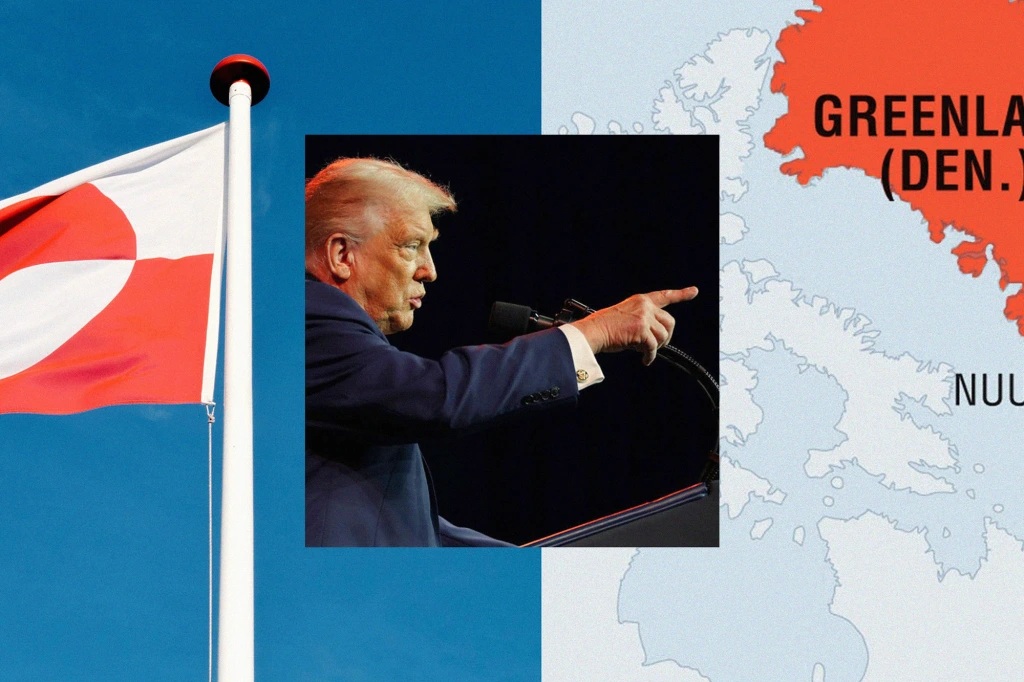
U.S. President Donald Trump’s renewed push to acquire or control Greenland—framed officially as a national security issue—is intertwined with the private interests of major American tech billionaires.

Trump has repeatedly described Greenland as strategically vital for U.S. defense, citing threats from Russia and China in the Arctic, access to rare earth minerals critical for technology and batteries, potential new shipping routes due to melting ice, and military positioning.

He has escalated rhetoric, suggesting the U.S. could pursue it “the easy way or the hard way,” even floating military options, though this has drawn sharp rebukes from Denmark which controls Greenland’s foreign affairs and Greenlandic leaders, who reject any sale or takeover.

Beneath the public narrative, reports highlight how Trump’s 2024 campaign received significant funding from tech sector figures, and several have made investments in Greenland-linked ventures that could benefit enormously from greater U.S. influence or control—potentially easing regulations, mining access, or experimental projects.

Key players and their reported ties include: Peter Thiel; Backed libertarian initiatives like Praxis, which envisions building unregulated “freedom cities” or tech hubs in Greenland—low-regulation zones for AI, crypto, autonomous tech, and more, free from environmental or labor rules.

Praxis is a startup founded by Dryden Brown (and others) that aims to build new cities as part of the “network state” movement—a concept popularized by thinkers like Balaji Srinivasan, involving highly aligned online communities that crowdfund physical territory and seek eventual diplomatic recognition.

Praxis describes itself as an “internet-native nation” focused on “restoring Western Civilization” through techno-libertarian principles: minimal regulation, blockchain/crypto governance, rapid innovation in AI, autonomous tech, and experimental urban development.

The project has raised significant funding—over $525 million announced in late 2024 released in tranches tied to milestones—from investors including: Pronomos Capital (backed by Peter Thiel, a key early supporter via his libertarian “seasteading” and anti-democratic governance interests).

Thiel’s associate Ken Howery, former PayPal colleague and Trump’s ambassador to Denmark has reportedly engaged in related discussions. Jeff Bezos, Bill Gates, Michael Bloomberg, and Sam Altman invested in KoBold Metals since 2019–2022, an AI-driven exploration company hunting rare earth minerals in Greenland essential for electronics, EVs, batteries, and AI hardware.

These investments ramped up after Trump’s initial 2019 interest in buying Greenland. Ronald Lauder (Estée Lauder heir, longtime Trump confidant): Credited by sources including John Bolton with first suggesting the Greenland idea to Trump in 2018.

Lauder has since invested in a Greenlandic water bottling company and other local stakes, sometimes tied to politically connected figures, raising conflict-of-interest questions.

Other reports mention overlaps with investors in mining firms like Critical Metals Corp tied to Trump administration figures and broader Silicon Valley interest in Greenland as a “laboratory” for deregulated experiments or resource extraction to counter China’s dominance in rare earths.

Critics portray this as a “circle of grift,” where campaign support translates to policy favoring private profits—potentially at the expense of Greenland’s environment, indigenous communities, and international norms. Supporters frame it as smart resource strategy amid global competition.

Turning Greenland into a deregulated frontier for minerals and experimental governance. This aligns with Trump’s second-term actions, like pushing mining deals and Arctic focus, amid tensions with NATO allies like Denmark.

Greenland’s leaders and Denmark continue to firmly oppose any forced change in status. Praxis initially eyed locations like the Mediterranean but pivoted toward Greenland around 2019, coinciding with Donald Trump’s first public interest in acquiring the island from Denmark.

Brown visited Greenland reportedly in late 2024, met with local politician like Pele Broberg, and posted enthusiastically on X about it as an “actual frontier” and “sandbox for terraformation experiments”—framing it as practice for Mars colonization e.g., prototyping a “Terminus”-style city like Elon Musk’s vision, while tying it to mining and industrial potential.

Reports from Reuters in 2025 describe Silicon Valley investors promoting Greenland for a so-called “freedom city”—a libertarian utopia with low/no corporate regulation, environmental and labor rules, and focus on tech hubs for AI data centers, autonomous vehicles, space launches, micro nuclear reactors, and high-speed rail.

This aligns with Praxis’s vision, and sources linked it to Thiel’s circle though Thiel has denied direct involvement in Greenland plans. Other backers reportedly include Marc Andreessen, with ties to Trump’s ambassador pick Ken Howery.

Trump’s renewed push for U.S. control and ownership of Greenland, framed as national security against Russia and China, plus rare earth access has amplified these ideas. Critics call it neo-colonialism or grift: using U.S. leverage for private tech experiments and resource extraction, potentially bypassing Greenlandic and Danish sovereignty, indigenous rights, and environmental protections.

Greenland leaders and Denmark have rejected such proposals, emphasizing self-determination. Praxis remains speculative—no built city yet exists similar projects like Prospera in Honduras have struggled.

Brown has floated ideas like charter cities and states with opt-in contracts, but Greenland’s harsh climate, sparse population ~57,000, existing communities, and legal barriers make it a long shot. Supporters see it as innovative frontier development; detractors view it as elite escapism detached from reality.

TikTok Tightens Age Detection Across Europe as Australia’s Under-16 Social Media Ban Raises the Stakes

0

TikTok has made a decision to roll out a new age-detection system across Europe, reflecting a recalibration by the platform as governments move from warning shots to hard regulation on children’s access to social media, Reuters reports.

The move follows Australia’s enactment of a landmark law restricting children under 16 from using social media, a policy shift that has already forced platforms to shut out large numbers of young users and sharpened pressure on regulators elsewhere to act.

The ByteDance-owned company said the new system, which will be deployed in the coming weeks, is designed to better identify accounts belonging to children under 13, TikTok’s global minimum age. Unlike traditional age gates that rely on self-declared birthdays, the technology analyzes a mix of profile information, posted videos, and behavioral signals to assess whether an account is likely underage.

Accounts flagged by the system will not be automatically removed but sent to specialist moderators for review, a step TikTok says is meant to reduce errors while complying with Europe’s strict data-protection rules.

The rollout builds on a year-long pilot in Britain that resulted in the removal of thousands of additional underage accounts. The UK trial offered TikTok both evidence that the approach could work and a template that could be adapted for the rest of Europe, where regulators have long complained that platforms are failing to enforce their own age limits.

Australia’s under-16 social media law, the most far-reaching of its kind globally, has altered the regulatory conversation. By placing the burden squarely on platforms to prevent children from accessing social networks, the law has effectively cut off millions of minors from mainstream social media services and demonstrated that governments are willing to accept disruption in the name of child safety. European policymakers have taken note. The European Parliament is pushing for clearer age limits, while countries such as Denmark are openly discussing bans for children under 15.

Against that backdrop, TikTok’s Europe-focused system looks less like a voluntary upgrade and more like a pre-emptive response to the risk of tougher mandates. European authorities are increasingly skeptical of approaches they view as either ineffective or overly invasive, and age verification sits at the center of that tension. Demanding identity documents from all users raises privacy concerns under the General Data Protection Regulation, yet self-reporting has proved easy to circumvent.

TikTok says its solution is designed to thread that needle. The company argues there is no globally agreed method for confirming age while preserving privacy, and that inference-based systems offer a middle ground. For users who appeal a ban, TikTok will still rely on more explicit checks, including facial age estimation from verification provider Yoti, credit card verification, and government-issued identification. Meta also uses Yoti to verify ages on Facebook, pointing to a broader industry shift toward layered verification rather than a single gatekeeping tool.

The regulatory pressure is not abstract. On Friday, a judge in Delaware was scheduled to hear TikTok’s bid to dismiss a lawsuit filed by the parents of five British children who died while allegedly attempting online challenges. The lawsuit alleges that TikTok’s algorithms promoted dangerous content to children, including the so-called “blackout challenge.”

TikTok has expressed sympathy for the families and said it strictly prohibits content that encourages harmful behavior, but the case underscores the legal exposure platforms face when underage users slip through enforcement gaps.

TikTok has emphasized that the new technology was built specifically for Europe and developed in consultation with Ireland’s Data Protection Commission, its lead privacy regulator in the EU. European users will be notified as the system goes live, the company said, a nod to transparency requirements under EU law.

However, it is not clear whether the approach satisfies regulators. Inference-based systems risk false positives that could lock out legitimate users, as well as false negatives that allow underage accounts to persist. There are also unresolved questions about how transparent platforms will be about the signals they use and how consistently human moderators apply standards at scale.

What is clear is that the regulatory climate has shifted. Australia’s under-16 ban has shown that governments are willing to impose blunt restrictions if they believe platforms are not acting fast enough. TikTok’s European rollout suggests the company is betting that smarter detection, rather than outright bans, can convince regulators that tougher measures are unnecessary. The coming months will test whether that bet holds as Europe weighs its next steps on child safety online.