DD
MM
YYYY

PAGES

DD
MM
YYYY

spot_img

PAGES

Home Blog Page 14

The AI Promise And The Mistake of “Fear”

0

Many people are predicting doom because of artificial intelligence (AI). My message is simple: we must not fear AI, even as we insist on its responsible development, deployment and use. AI holds extraordinary promise, including possibilities we cannot yet imagine or conceptualize.

Over a sufficiently long but finite period, humanity may even approach forms of physical longevity that appear impossible today. Many limitations in medicine arise from our incomplete understanding of the human body. If AI helps us understand human anatomy, physiology, genetics and disease at far greater levels of precision, breakthroughs will follow, and healthcare will advance in ways previously considered unattainable.

As AI becomes more capable, it will open new vistas for humanity across virtually every dimension of life. Pythagoras proposed that the universe is fundamentally expressed through numbers. AI may help humanity realize that profound insight by enabling us to understand ourselves and our universe at their most fundamental atomic, mathematical and informational levels.

The promise of AI is not that machines will diminish humanity. It is that they can expand the boundaries of what humanity can understand, create and achieve. Our responsibility is to govern this technology wisely, not to retreat from its possibilities in fear.

I wrote this for IEEE Institute of Electrical Electronics Engineers USA in 2008: “Imagine a world where those with ear problems could buy electronic cochleas and those with eye problems, electronic retinas on Amazon and eBay. Imagine a world where all problematic human organs can be electronically replaceable to push humans toward the grail of immortality. All this might not be just imagination years from now if neuromorphic circuits continue to advance. Neuromorphs, or artificial neural microcircuits, capture the biological neural computational properties into mixed-signal VLSI (very large scale integration). These circuits are inspired by the function, structure, and plasticity of biological nervous systems by emulating their efficient inherent computational capabilities. They mimic the algorithmic behavior of the biological systems utilizing similar organizing principles through efficient adaptive and intelligent control processes in parallel. Adaptation, learning, and memory are implemented locally within each processing stage of these systems.”

Yes, do not fear AI!

Nonco Expands Institutional Collateral Toolkit from Tokenized Money Market Funds to Secured Sovereign Debt

0

Nonco, an institutional digital asset firm with businesses spanning derivatives, lending, OTC liquidity, market making and institutional execution, today announced that it will accept USDM1 as collateral from eligible counterparties and post USDM1 across its derivatives, financing and institutional trading activities.

The adoption marks the latest expansion of Nonco’s institutional collateral toolkit. The firm, which has surpassed $100 billion in bilateral OTC trading volume and onboarded more than 900 institutional counterparties.

Was an early participant in the use of tokenized money market fund shares as collateral in live derivatives transactions, including the use of Superstate’s USTB in a bilateral BTC/USD options trade.

Where payment stablecoins are generally structured as corporate obligations and tokenized money market funds represent interests in investment funds, USDM1 is a natively issued, secured sovereign bond – with different legal rights, economic characteristics and applications across 24/7 institutional markets.

USDM1 is a USD-denominated sovereign bond secured on a 1:1 basis by short-dated US Treasuries pledged to a US trust company in a bankruptcy-remote structure. Its issuance, collateral and redemption arrangements are governed by New York law, with an explicit customary waiver of sovereign immunity.

As a dual-recourse instrument, holders maintain enforceable rights to par redemption against a sovereign issuer and a first-priority perfected security interest in Treasury collateral under Articles 8 and 9 of the Uniform Commercial Code.

Cleary Gottlieb Steen & Hamilton LLP advised as issuer’s counsel. M1X Global serves as coordinating agent. Sovereign securities have long served as foundational collateral assets across global institutional financing markets, with roles spanning derivatives margin, repo, secured financing and liquidity management.

USDM1 pays a sovereign coupon and, when unencumbered, has been structured to support look-through to HQLA1 with 24/7, T+0 settlement. It is compatible with industry-standard ISDA, GMRA and GMSLA documentation, benefiting from robust US close-out netting protections.

For institutional trading firms, the legal and financial characteristics of collateral can directly affect financing flexibility, counterparty exposure, liquidity management and the amount of balance sheet capacity required to support trading activity.

“Nonco was early in demonstrating that tokenized fund interests could become productive collateral rather than simply investment products,” said Jeffrey Howard, Head of North America and Partner of Nonco”.

Natively issued sovereign debt adds another important building block to our toolkit. Institutional markets have always optimized among different forms of high-quality collateral depending on the transaction.

As markets move onchain, the same principle applies. “Tokenization is a technology, not an asset class,” said Jordan Goldman, President and COO of M1X Global. “A payment stablecoin, a fund share and a sovereign bond can all move onchain, but they remain fundamentally different financial instruments.

Two assets with the same dollar value can have very different collateral economics depending on their legal rights, eligibility, netting treatment and financing characteristics.”

Institutional custody and settlement infrastructure supporting USDM1 includes Anchorage Digital Bank, BitGo Bank & Trust, N.A., and tZERO’s regulated broker-dealer custodian. USDM1 is also offered through Tradeweb and accepted by FDIC-insured Bank of Guam.

Most recently, USDM1 served as the sovereign securities collateral leg in the first fully onchain repo transaction with Virtu Financial through Tradeweb, demonstrating its use within established institutional financing frameworks.

ECOWAS Orders Fresh Push to Fast-Track ECO Single Currency Ahead of 2027 Launch

0

The Economic Community of West African States has ordered an urgent meeting of its Presidents’ Task Force to accelerate preparations for the ECO, as the regional bloc seeks to keep its planned single-currency launch on track for July 1, 2027.

The directive followed the 14th Session of the ECOWAS Convergence Council, held by videoconference on September 7, where member states reviewed economic performance, progress toward meeting macroeconomic convergence requirements and the remaining technical and institutional conditions for introducing the regional currency.

ECOWAS said the Council had considered the report of the 68th Meeting of the Committee of Governors of ECOWAS central banks, which met on September 4.

The governors’ meeting came after a joint session of the Technical Committee on Macroeconomic Policies of the ECOWAS Commission and the Technical Committee on Economic and Monetary Affairs of the West African Monetary Agency, held from August 31 to September 2.

Following the series of meetings, the Convergence Council instructed the Commission to immediately bring together the Presidents’ Task Force to accelerate implementation.

“The Council requested ECOWAS Commission to immediately convene the Meeting of the President Task Force to fast track the process,” the bloc said in a statement published Tuesday.

The latest directive signals an effort to move the ECO project from repeated policy commitments toward the practical work required to establish a common monetary system across a region with widely different economic conditions.

ECOWAS Says 2027 Target Remains Achievable

The convergence meetings assessed the economic performance of member states and examined whether countries were moving toward the agreed requirements for participation in the single-currency project.

“The meetings reviewed the economic performance and convergence status of Member States and assessed progress on the outstanding requirements for the launch of the ECO,” ECOWAS said.

Participants concluded that the 2027 objective remains achievable.

“Participants noted that the objective of launching the ECO in 2027 remains achievable,” the Commission added.

The assessment matters because the ECO project depends on more than a political decision to introduce a common currency. Member states must first establish sufficient macroeconomic convergence and put in place the institutions and operating mechanisms required to support a shared monetary framework. That includes the ability of participating economies to maintain sufficiently compatible fiscal, monetary and economic conditions.

But the challenge is substantial for a bloc whose members differ considerably in inflation, public finances, exchange-rate conditions, economic structure and monetary-policy priorities. The Presidents’ Task Force is therefore expected to play a central role in resolving outstanding issues and maintaining political coordination as the proposed launch date approaches.

ECOWAS leaders have already reaffirmed their commitment to introducing the ECO in 2027.

At the 69th Ordinary Session of the Authority of Heads of State and Government in Lungi, Sierra Leone, the bloc described the single currency as an important instrument for deepening regional economic integration, increasing intra-regional trade and supporting sustainable and inclusive growth.

The proposed framework also allows for a phased approach.

Member states that satisfy the agreed macroeconomic convergence criteria would initially adopt the ECO, while countries that do not meet the requirements would receive support to enable them to join later.

That structure could make the 2027 target more practical by avoiding the requirement for every ECOWAS economy to satisfy every condition simultaneously. It also means that the initial ECO area could be smaller than the full ECOWAS membership, depending on the convergence position of individual countries when the launch decision is made.

ECOWAS has also begun addressing the currency’s legal and institutional identity. The Authority welcomed the registration of the “ECO” name with the African Intellectual Property Organization and directed the Commission to obtain additional trademark protections through other regional and international intellectual-property bodies.

Can Nigeria, Other ECOWAS Members Tackle The Challenge?

The ECO project comes with peculiar responsibility for Nigeria, the region’s largest economy and one of its most important financial and commercial centers. Earlier this year, central bank governors from 12 West African countries, including the Central Bank of Nigeria, met in Monrovia, Liberia, to advance technical and institutional preparations for the currency.

The discussions covered monetary-policy harmonization, governance arrangements and the operational architecture required for the eventual rollout.

For Nigeria and other major economies, the transition would have implications extending beyond the replacement of national currencies. A functioning regional currency would require closer coordination of monetary and fiscal policies and could materially alter how businesses conduct cross-border transactions within West Africa.

The potential economic benefits are substantial. A common currency could eliminate or reduce some currency-conversion costs, simplify payments between member states, improve price transparency and make regional trade easier for businesses operating across borders.

It could also deepen financial integration by making it easier for banks, companies and investors to move capital across participating economies.

However, those benefits depend on the credibility of the monetary framework. A single currency can only function effectively if participating countries are willing and able to maintain sufficient fiscal and monetary discipline and accept constraints that come with a shared monetary system.

The renewed push comes after years of delays to the ECO project, making the latest timetable particularly dependent on whether ECOWAS can translate political commitments into measurable progress on convergence and institutional preparation.

The bloc’s latest statement does not indicate that all outstanding requirements have been completed. Instead, it says progress has been assessed and that the 2027 objective remains achievable.

That leaves the Presidents’ Task Force with a significant workload over the coming months.

The immediate priority will be to coordinate member states, identify unresolved technical issues and determine how countries that have not achieved the required convergence can be brought closer to the launch framework.

The ECO could ultimately become one of the region’s most consequential economic-integration projects. But economists warn that its success, however, will depend less on the announcement of a launch date than on whether ECOWAS can build the institutional credibility, economic convergence and political coordination needed to make a common currency sustainable.

For now, the September meetings have kept July 1, 2027 on the calendar and triggered another push to turn that target into an operational plan.

Musk Predicts AI and Robotics Could More Than Double Global Economy in Less Than a Decade

0

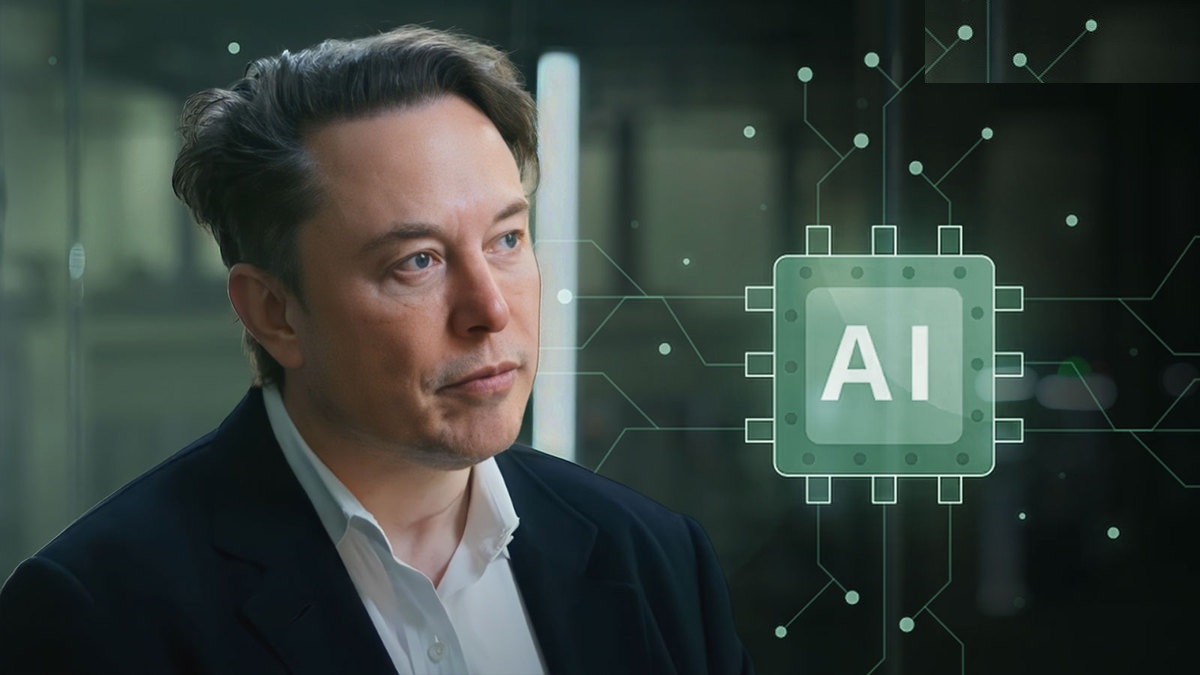
Elon Musk has raised the stakes on one of the decade’s boldest economic forecasts, predicting that the rapid advancement of artificial intelligence and robotics could more than double the global economy within the next decade.

The Tesla and SpaceX CEO believes increasingly capable AI systems and humanoid robots could reshape how goods and services are produced, potentially driving economic growth at a pace far beyond historical norms.

In a post on X, he wrote,

“AI+robots will more than double the global economy in less than 10 years.”

Musk’s comment came as a direct upgrade to his earlier prediction that artificial intelligence alone could expand the world economy significantly. Just days earlier, speaking remotely to the G20 Innovation Ministerial in Chapel Hill, North Carolina, he had offered a more measured projection.

He estimated that sophisticated AI would boost global GDP by 20 to 30 percent, adding roughly $20 trillion to $30 trillion in annual economic output. He added that AI would soon handle virtually any digital task that does not require physically shaping atoms, potentially by the end of 2027, and that human competition in software development would become effectively impossible as AI reached “Stockfish-level” performance.

Musk has repeatedly forecasted that humanoid robots such as Tesla’s Optimus will number at least one billion within ten years. Tesla’s Optimus is being developed as a general-purpose, bipedal humanoid robot designed to operate in environments built for humans.

Tesla says its long-term goal is for Optimus to handle work that is unsafe, repetitive, or boring, using AI systems for balance, navigation, perception, and interaction with the physical world.

Each of those robots, Musk argues, will deliver roughly five times the productivity of a human worker because they can operate around the clock without fatigue. Once robots begin manufacturing other robots, he expects a recursive, explosive scaling effect.

At that point, the combined output of a billion humanoids would exceed the productivity of all humanity. The arithmetic is striking. Global GDP currently sits near $100–110 trillion.

A full doubling in under a decade would require sustained growth rates far above historical norms, closer to 7–10 percent compound annual growth or higher, depending on the exact timeline.

Musk has previously suggested even more ambitious multiples, including the possibility that AI and robotics could expand the economy by a factor of ten or more over a longer horizon, leading to what he calls “universal high income” rather than mere basic income.

In that scenario, goods and services become so abundant that traditional employment becomes optional for many people. Supporters of the vision point to real momentum already visible in the humanoid robot sector. Shipments have been rising sharply, and Chinese manufacturers currently dominate early volumes.

Advances in AI software, specialized chips, and electromechanical dexterity especially in robot hands are improving simultaneously, and Musk frames usefulness as the product of those three factors multiplying together.

Tesla’s own roadmap envisions Optimus moving from factory tasks to broader commercial availability in the coming years.

Yet the path is far from guaranteed. Energy stands out as a critical bottleneck. AI data centers and large-scale robot fleets will demand enormous amounts of electricity, and Musk has warned that power constraints outside China could limit progress as early as 2027.

Regulatory environments also matter. Musk has urged policymakers to treat new technologies as “default legal” rather than “default illegal,” arguing that heavy regulation, particularly in places like the European Union, slows deployment.

Questions about job displacement, wealth distribution, and the social effects of widespread automation remain unresolved. While Musk frames the outcome as abundance that can eliminate poverty, critics note that transitions of this speed and scale have historically created significant short-term disruption.

Musk has described the coming period as the most interesting time in history. Whether AI and robots deliver a doubling of the global economy inside a decade will depend on continued exponential progress in software, hardware, energy, and manufacturing.

The prediction is characteristically ambitious, but it rests on trends that are already measurable. The next several years will test how quickly those trends can compound into the kind of transformative growth Musk now projects.

Dangote Refinery Shows Nigeria Has Capital—The Challenge Is Turning Savers Into Owners

0

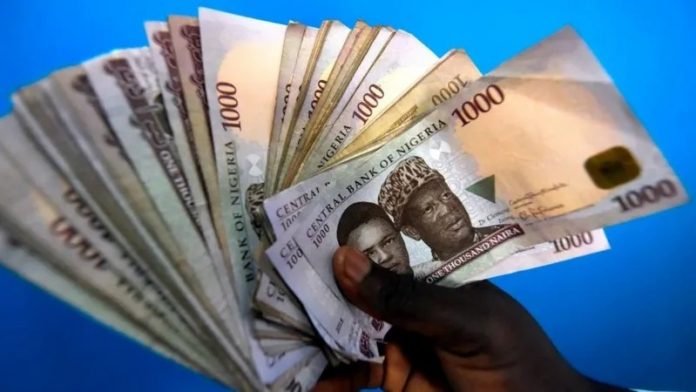
Nigeria’s capital market tells a striking story about who finances the country’s growth—and who gets to own a piece of it. Fewer than 600,000 Nigerians hold accounts capable of trading on the stock exchange.

In a country of more than 200 million people and with over 100 million bank accounts, that number is remarkably small. It reveals a deeper contradiction: Nigerians participate extensively in the financial system as savers and depositors, but far fewer participate as investors and owners.

The Nigerian stock market is worth only about 11 to 13 percent of the country’s GDP. That ratio matters because it suggests that a relatively small portion of the economy is directly accessible through public equity ownership.

Most Nigerians can work for companies, buy their products, deposit money in banks and pay taxes that support the economic system, yet remain largely disconnected from ownership of the businesses driving national production.

Now consider the Dangote refinery. The refinery represents one of Africa’s largest industrial investments and a landmark attempt to build domestic productive capacity at extraordinary scale. Its financing story is particularly revealing.

Nigerian banks participated heavily in syndicated lending for the project, meaning a significant portion of the capital ultimately came from within Nigeria’s own financial system.

Estimates that roughly 60 to 70 percent of the financing came from domestic sources underline an important reality: Nigerian savings can finance Nigerian ambition. The money did not simply materialize from international development institutions.

It was mobilized through banks operating on deposits and capital accumulated within the Nigerian economy. In other words, ordinary financial activity—savings, deposits, lending and balance sheets—helped provide the foundation for an industrial project with national and continental significance.

Yet there is a paradox here. Nigerians can collectively provide the capital without necessarily owning the asset through the capital market. The distinction between financing and ownership is fundamental. When Nigerians deposit money in banks, they become providers of liquidity to the financial system.

When banks lend that money to major businesses, those businesses gain access to capital. But unless citizens also have meaningful access to equity markets, pension investments, mutual funds or other ownership structures.

The average Nigerian remains several steps removed from the value created by the companies that capital helps build. This is where Nigeria’s capital-market development becomes more than a financial-sector issue. It becomes an economic participation issue.

A deeper equity culture could allow Nigerians to transform from passive participants in the economy into active owners of it. More retail investors, stronger financial literacy, easier market access and broader participation through pensions and investment funds could help distribute the wealth generated by corporate expansion.

The opportunity is enormous. Nigeria does not necessarily lack capital. It often lacks mechanisms that efficiently connect domestic savings with broad domestic ownership. The Dangote refinery therefore offers a powerful lesson. Nigerian money can finance globally significant infrastructure.

The next challenge is ensuring that Nigerian citizens can also participate meaningfully in the wealth such infrastructure creates. The question is no longer simply whether Nigerians can finance the economy. It is whether they can own enough of it.