DD
MM
YYYY

PAGES

DD
MM
YYYY

spot_img

PAGES

Home Blog Page 1400

Meta’s Metaverse Dreams Burn Another $4.2bn Amid Mounting Pressure and New Tariffs

0

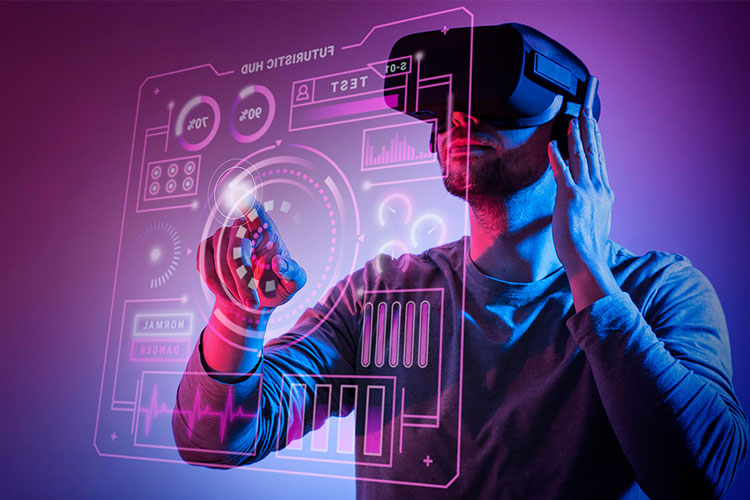
Meta’s foray into the metaverse is proving to be an increasingly expensive gamble. In its first-quarter earnings report released Wednesday, the company revealed that Reality Labs, the unit spearheading CEO Mark Zuckerberg’s vision of immersive digital worlds, posted an operating loss of $4.2 billion.

That’s a staggering burn rate for a business division that brought in just $412 million in revenue during the same period.

The numbers, while slightly better than Wall Street’s forecasts – analysts had anticipated a loss of $4.6 billion on revenue of $492.7 million — still underscore the long and costly road ahead for Meta as it tries to pioneer a new frontier in computing through virtual and augmented reality.

Reality Labs is the division behind the Quest VR headsets and the Ray-Ban Meta Smart Glasses, key pieces of Zuckerberg’s blueprint for a mixed-reality future where people work, play, and interact through immersive digital platforms. But so far, investors have seen little beyond losses. Since the company pivoted heavily toward the metaverse in late 2020, even rebranding from Facebook to Meta in 2021, Reality Labs has hemorrhaged more than $60 billion.

A Skeptical Wall Street Watches Closely

That sustained spending has raised eyebrows across Wall Street. While Meta’s core advertising business continues to perform well, buoyed by a rebound in digital ad markets and growing traction with AI tools that help drive engagement, its heavy investment in the metaverse remains a sore spot.

Zuckerberg has insisted that building the next computing platform will take time, patience, and billions in upfront capital. But as Reality Labs racks up quarterly losses north of $4 billion, the runway for such a vision appears increasingly narrow, especially in a macroeconomic environment where costs are rising and regulatory threats are mounting.

Trump Tariffs Add Fresh Headwinds

Those costs are set to rise further. President Donald Trump’s recent imposition of sweeping tariffs on Chinese-made electronics, including components used in VR and AR devices, is expected to pressure Meta’s already stretched hardware margins. While the company hasn’t disclosed exactly how much of its supply chain is China-dependent, analysts warn the tariffs could result in significantly higher production costs for the Quest headset line and the Ray-Ban smart glasses.

That added burden may force Meta to either absorb the cost increases, deepening its losses or pass them on to consumers — a move that could dampen demand in a market already struggling to go mainstream.

Layoffs Hit Oculus Studios

Meta is also quietly trimming its metaverse ambitions in other ways. Last week, the company confirmed layoffs within its Oculus Studios unit — the team tasked with creating first-party content and games for its VR platforms. While the number of affected employees remains undisclosed, the move adds to a growing list of cost-cutting measures inside Reality Labs.

“Some teams within Oculus Studios are undergoing shifts in structure and roles that have impacted team size,” a Meta spokesperson said in a statement. “These changes are meant to help Studios work more efficiently on future mixed reality experiences for our growing audience, while still delivering great content for people today.”

The cuts follow a broader trend of tech companies scaling back moonshot projects and headcount as they confront tighter capital markets and investor pressure for profitability. For Meta, which has laid off tens of thousands of workers over the past two years in a bid to “flatten” its structure, Reality Labs remains the largest and most conspicuous money sink.

Still Betting Big on a Future Few Can See

Despite the financial and political headwinds, Zuckerberg appears unwavering. In internal memos and public remarks, he continues to describe the metaverse as a long-term investment that could rival the smartphone era in its eventual impact. Yet many remain unconvinced that Meta’s version of the metaverse – centered on headsets, avatars, and virtual workspaces — will ever achieve the kind of mass adoption needed to justify the colossal expenditure.

Even within the tech community, there’s growing competition and philosophical divergence over what the future of digital interaction should look like. Apple has taken a more premium and restrained approach with its Vision Pro headset. Meanwhile, OpenAI and other AI developers are steering the narrative in a different direction entirely, toward seamless, intelligent interfaces that don’t require users to strap devices to their heads.

As AI reshapes how people interact with technology — and how companies envision the future of work, communication, and play — the question is whether Meta’s metaverse model will still fit that world, or be left behind by a more practical, less immersive paradigm.

Nvidia Jensen Huang Says China Is ‘Not Behind’ in AI, Calls Huawei a Formidable Force as U.S. Curbs Bite Deeper

0

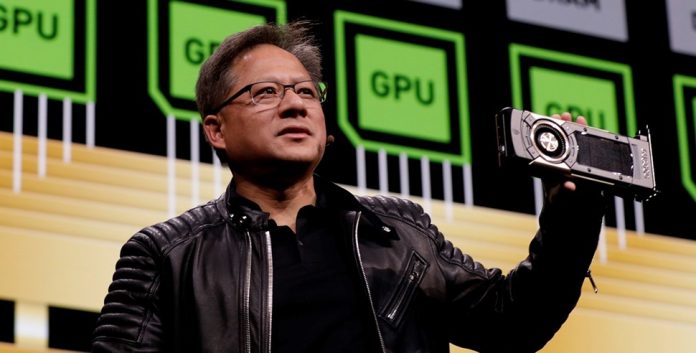
At a time when Washington is tightening the screws on China’s tech sector, Nvidia CEO Jensen Huang is striking a different tone — one that suggests the race for AI dominance isn’t as lopsided as U.S. policy might hope.

Speaking to reporters Wednesday at a technology conference in the U.S. capital, Huang offered a stark reality check: China is not trailing the United States in artificial intelligence, at least not by much.

“We are very close,” Huang said. “Remember, this is a long-term, infinite race.”

It was a moment of candor that clashed sharply with prevailing narratives in Washington, where policymakers are increasingly treating China’s AI ambitions as something to be thwarted rather than matched. For Huang, however, the threat isn’t just China’s growing capability — it’s the risk that the U.S. might hobble itself through overregulation and protectionism.

Huang, who has led Nvidia through its meteoric rise as the engine room of the AI revolution, didn’t mince words when he spoke of Huawei, the Chinese firm that has been a central target of U.S. sanctions.

“They’re incredible in computing and network technology,” Huang said. “They have made enormous progress in the last several years.”

Huawei, though largely cut off from American tech due to a trade blacklist, has reportedly been building its own AI chips for domestic customers — a move that speaks to Beijing’s push for self-reliance in strategic technologies. And while the U.S. has sought to curb those ambitions through export controls, Nvidia’s own experience shows the limits of that approach.

Earlier this month, the Trump administration imposed new restrictions on Nvidia’s H20 chips, a China-compliant version of its Hopper architecture, barring shipments without a license. That decision, Nvidia said, will cost the company an estimated $5.5 billion in revenue. The irony? The H20 was designed precisely to comply with prior U.S. curbs, underscoring how rapidly Washington is shifting the goalposts.

For Huang, the fallout highlights a deeper risk, not just to Nvidia, but to America’s tech leadership itself.

“This is an industry that we will have to compete for,” he said. “We should focus on making U.S. companies more competitive, not just limiting others.”

Nvidia is trying to do just that. The company recently announced plans to invest $500 billion in AI infrastructure in the U.S. over the next five years, part of a broader push to onshore manufacturing and strengthen its domestic footprint. Huang confirmed Wednesday that Nvidia intends to build its AI devices in the U.S., with Foxconn set to assemble AI servers near Houston.

“With willpower and the resources of our country, I’m certain we can manufacture onshore,” he said.

President Trump, speaking the same day, applauded Nvidia’s domestic push and referred to Huang as “my friend Jensen” — a sign that despite current regulatory hurdles, the company still commands political favor in Washington’s shifting sands.

But Wall Street remains wary. Nvidia’s stock has dropped more than 20% this year, erasing part of the staggering gains it posted in 2024, when demand for AI chips seemed insatiable. The stock fell nearly 3% on Wednesday, reflecting investor anxiety over tighter export rules, global market instability, and growing competition abroad — not just from AMD and Intel, but from homegrown Chinese challengers like Huawei.

As China races to replicate or leapfrog technologies it can no longer easily import, the landscape is beginning to fracture. The world is inching toward two AI ecosystems: one rooted in Silicon Valley, the other in Shenzhen. In such a world, Huang’s warning that this is an “infinite race” seems less like a metaphor, and more like the defining reality of a new tech Cold War.

Against this backdrop, Nvidia’s challenge now is to stay at the forefront of that race, without being tripped by the very country it calls home.

BONK Coin Bounces Back! Experts Say Ditch PEPE for Lightchain AI’s 100x Growth Potential

0

The meme coin market is undergoing a notable shift as BONK stages a strong rebound, renewing interest in high-risk, high-reward tokens. While traders continue to chase short-term profits with meme coins like PEPE, experts are encouraging a pivot toward projects with greater long-term potential.

One standout in this space is Lightchain AI, a groundbreaking blockchain platform that leverages artificial intelligence to enhance decentralization, scalability, and governance. With its presale currently priced at $0.007 and over $18.4 million already raised, Lightchain AI is positioning itself as a promising high-growth opportunity. Analysts are even forecasting a potential 100x surge, making it a compelling option for forward-thinking investors.

Uncertain Future of BONK and PEPE

?Bonk (BONK) and Pepe (PEPE) are the meme coins that have experienced a lot of roller coasters, though. Bonk has achieved a peak price level of $0.0000579 during the latest bull market yet followed it by a major 70% drop. Market experts anticipate that Bonk’s price may rise to $0.00004468 by April 2025, registering the growth of 232.08% in percentage terms.

Moreover, Pepe’s fluctuation has been in the price zone of $0.000013 to $0.00004468 by April 2025, a figure which experts were grappling with for a long time though. But analysts who deal with money are the most skeptical about these forecasts, saying that they are based on assumptions, and the future of these meme coins is also unclear because of their inherent volatility.?

Why Experts Choose Lightchain AI Over PEPE

Experts favor Lightchain AI over PEPE due to its Cross-Chain Integration, which allows seamless communication between different blockchain networks. In comparison, PEPE remains confined to its own ecosystem, limiting both its adaptability and scalability.

Additionally, Lightchain AI promotes adoption through its Ecosystem Growth Initiatives, offering grants and incentives to developers who build on its platform. This strategy encourages continuous innovation and supports long-term growth, positioning Lightchain AI as a major player in the ever-evolving blockchain landscape.

Could Lightchain AI Be Next 100x Crypto Superstar?

Lightchain AI is the talk of the crypto world—and for good reason. Its presale is gaining serious momentum, and unlike the fleeting hype of meme coins like PEPE, this project is built on real-world utility and game-changing innovation. If you’re on the hunt for the next big thing in crypto, Lightchain AI might just be your golden ticket.

Why is everyone buzzing about Lightchain AI? Because it’s more than just another coin—it’s a revolution. By fusing AI-driven blockchain technology with solid fundamentals, Lightchain AI isn’t just playing the game; it’s rewriting the rules. This project is shaping up to become a major driver of change in the crypto investment landscape.

The presale is already drawing big attention, with savvy investors eyeing it as the next breakout star. Forget speculative assets that fizzle out—Lightchain AI has the potential for explosive, long-term growth. For those looking for a project with real staying power, this could be the one to watch.

Meme coins come and go, but Lightchain AI is here to leave its mark. If you’re ready to invest in a project that combines innovation, utility, and vision, don’t let this opportunity pass you by. The future of crypto is evolving—make sure you’re part of it!

https://lightchain.ai

https://lightchain.ai/lightchain-whitepaper.pdf

https://x.com/LightchainAI

https://t.me/LightchainProtocol

Convert your BTC, ETH and DOGE into daily income with winnermining

0

Top cryptocurrency analyst Ali Martinez reports that miners have recently taken advantage of Bitcoin’s impressive price gains, realizing nearly $18.6 million in profits as the price surged above $94,000.

Data shows that Bitcoin is decoupling from the U.S. stock market and starting to trade more like gold, once again demonstrating Bitcoin’s growing role as a safe-haven asset against global economic turmoil. With the rapid development of the digital economy, cloud mining has become an important trend in the blockchain industry. As a leader in cloud mining investment, WinnerMining is committed to revolutionizing the way people mine cloud.

The charm of Winnermining

WinnerMining makes earning money easy and even fun with its simple and transparent approach to trading and investing. Users can easily mine cryptocurrencies with just a smartphone or internet-connected device, without having to invest in expensive hardware or deal with complex technical challenges. From guaranteed returns to a transparent, fee-free environment, Winner Mining is paving the way for profitable cloud mining, making it easier than ever to earn passive income in the cloud mining space.

Winnermining: Combining environmental protection and profits

WinnerMining was founded in 2021. The company uses recyclable wind and solar energy as the core to provide users with efficient and green energy so that users can easily and conveniently earn wealth in their spare time. Winnermining has more than 100 mines and more than 3 million mining equipment around the world. All equipment is powered by renewable energy cycles, and has won the recognition and support of more than 13 million users with stable income and safety.

Incredible profit opportunities

Winnermining is world-famous for its unique daily passive income, which can reach $70,370 or more, helping users become millionaires is no longer a dream. Imagine earning a considerable income without continuous efforts or complicated settings – this is the charm of Winnermining.

Safety and sustainability

Trust and security are of paramount importance in the cloud mining sector. WinnerMining operates in compliance with all corporate governance, legal and regulatory requirements. We have chosen to follow the principles of the 2018 UK Corporate Governance Code in our corporate governance framework, ensuring that your investment is protected and allowing you to focus on profitability. All mines use renewable energy, making cloud mining carbon neutral. Protect the environment from pollution and bring huge returns, so that every investor can enjoy opportunities and benefits.

Platform advantages: 

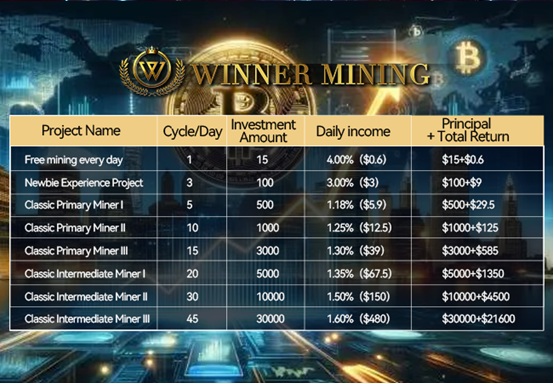
  1. Register to get an instant bonus of $15 ($0.6 for daily sign-in)?
  2. Purchase a cloud mining contract:
  3. Waiting for earnings:

For example: you purchase 100 USD, and the net profit earned from mining every day is 3 USD; you purchase 30,000 USD, and the net profit earned every day is 480 USD. The more you invest, the more you earn. You can get the profit the next day after purchasing the contract. When the profit reaches 100 USD, you can choose to withdraw it to your wallet or continue to purchase other contracts.

Affiliate Program

WinnerMining now has an affiliate program where you can earn 3%-1.5% commission by inviting new users. You can make money even if you don’t invest. Unlimited referrals, unlimited profit potential!

In short

Winner Mining subverts the world of cloud mining investment. The passive income it generates is the goal of every investor and trader. Our mission is to allow anyone, anywhere to conduct any transaction. To reduce people’s dependence on financial institutions, free themselves from the trouble of money, and embark on the road to wealth freedom.


For more information, please visit winnermining official website?https://winnermining.com

Or contact the company:  info@winnermining.com

Understanding The Startup Incentive Construct by Ndubuisi Ekekwe

0

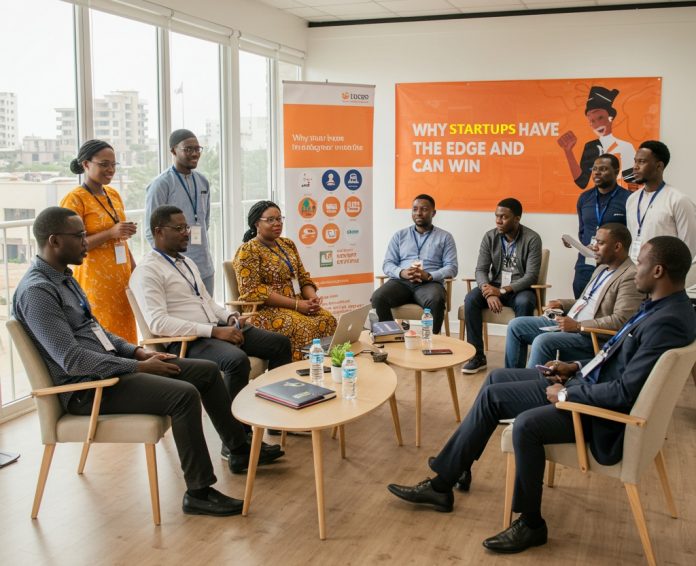
The Startup Incentive Construct explains why startups often outperform established companies despite having fewer resources. The central idea is that older companies, while having advantages like money and experience, often misalign their incentives when addressing problems. They tend to adapt problems to fit their existing incentives, causing them to focus on the wrong issues and lose out to startups. Startups possess different incentives, giving them inherent advantages. Established companies often experience an “Innovation Hangover,” making it difficult for them to sacrifice current revenue for new opportunities.

In this piece, I explain why startups win, despite the efforts of older companies who challenge them in new areas they are pioneering. The older companies can come with money, experience and technology, but most times, they are solving problems, with the wrong incentives.

Consequently, they adjust the problems to accommodate their incentives and in the process, solve an entirely different problem, resulting to a loss. You read it from me: African and specifically Nigerian startups, you can win over the big players. Your incentives are different, and those are inherent advantages for you.

The established companies have what I have called Innovation Hangover which is an inertia to cannibalize existing revenue sources for new opportunities. See it this way: If you run a treasury operation in a bank which will yield $5,000 profit but your fintech unit (a subsidiary) can do the same for $200, would you dismantle that treasury unit, and allow the fintech unit to serve the public because one fintech startup has started offering the service for $200?

That is not what we do most times because of the revenue/profit hangover. So, what happens is this: to fix that problem, the bank has to create a new market friction, and try to solve it. Possibly, that new problem can yield for the bank $1,000 profit, and it can feel that it has innovated, and has challenged the startup on pricing. Indeed, it could offer more features and services than what the fintech startup is offering for $200.

Yet, that is not the original friction which the standalone startup went for. Typically, over time, the startup can still win because the incumbent is hanging onto the established profits, and solving entirely new problems. I have called this Startup Incentive Construct.

Summary

  • In a video, Ndubuisi Ekekwe discusses why startups often outperform older companies in new areas they pioneer, despite the latter having more resources and experience.
  • Established companies can struggle with an “Innovation Hangover,” being hesitant to shift focus from existing revenue sources to new opportunities, leading them to solve different problems than startups.
  • African and Nigerian startups have inherent advantages over larger players due to different incentives, allowing them to potentially succeed in competition.
  • Ekekwe highlights a scenario where a bank’s treasury unit could make $5,000 profit, but a fintech subsidiary could do the same for $200, yet the bank may resist dismantling the treasury unit due to profit concerns.
  • This reluctance to disrupt existing revenue streams can lead established companies to create new market frictions and solve different problems, ultimately diverging from the original focus of startups.
  • Despite incumbents offering more features and services than startups at competitive prices, startups can still prevail over time due to their focus on original frictions and incentives, a concept termed the “Startup Incentive Construct” by Ekekwe.

Context

In video below by Ndubuisi Ekekwe, the discussion delved into the dynamic landscape of innovation and competition between startups and established companies. To grasp the essence of this dialogue, it is crucial to understand the startup ecosystem’s fundamentals and the challenges incumbents face in adapting to change.

Key themes explored include how startups leverage their agility and fresh perspectives to pioneer new frontiers, contrasting with established firms suffering from an “Innovation Hangover,” a reluctance to disrupt existing revenue streams hindering their ability to innovate effectively. The concept of a “Startup Incentive Construct” was introduced, emphasizing the unique incentives that drive success for startups in competitive environments.

Historical context plays a pivotal role in contextualizing this discourse, tracing the evolution of disruptive technologies and business models that have reshaped industries over time. Recent events showcasing startup successes against established players underscore the ongoing shift in power dynamics within various sectors.