DD
MM
YYYY

PAGES

DD
MM
YYYY

spot_img

PAGES

Home Blog Page 1414

Solana Price Prediction: What Analysts Are Secretly Saying About SOL and This New Viral Altcoin

0

Analytical opinions about Solana price predictions in April 2025 focus on whether the blockchain giant can bounce from its recent minimum yearly levels.

Solana looks to have kick-started its comeback during a period of market instability which has resulted from macroeconomic factors such as tariff wars combined with regulatory challenges.

Institutional investors who have offered bullish Solana price predictions are now also betting on a new Defi coin that is creating opportunities for new cross-border solutions to grow. Researchers observe SOL’s ability to maintain its market momentum while studying if this new Defi project will become the most profitable crypto asset of 2025.

Solana Price Predictions: Can SOL Break $160 Again?

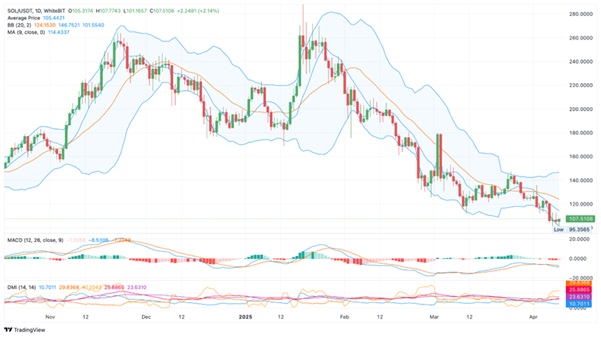
Solana price prediction for April suggests the asset can experience a relief rally following its recent bounce from $95 to $111. Analysts highlight the bullish divergence on Solana’s daily chart as the big indication of the move to the upside.

This divergence, characterized by lower lows in price and higher lows in RSI-14, has prompted traders to go long on SOL despite expectations of further downside volatility in the coming weeks.

Popular Elliot Wave commentators believe Solana is now beginning its “B” move—a corrective rally in the A-B-C pattern—that could push prices to $160–$200 before the asset resumes its broader downtrend.

For this uptrend to materialize, though, Solana must breach critical resistance levels at $120 and $140. Falling below these levels instead could send SOL retouching support at $95 or even falling as low as $90 in the worst-case scenario.

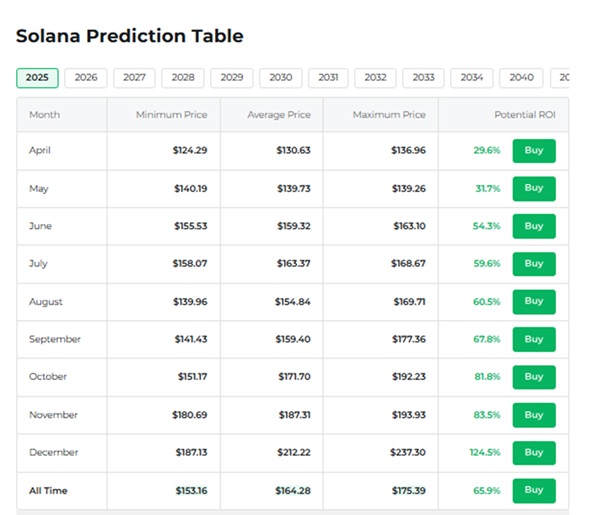
Long-term Solana price predictions remain split, with some analysts predicting an average price of $237 by the end of 2025, while others warn of potential dips due to macroeconomic pressures.
Remittix Presale Achievement Fosters Optimism Amid Regulatory Frenzy

Remittix presale has been among 2025’s highest-profile crypto events, with RTX tokens consistently selling out at each stage of its top ICO. This blazingly quick fundraising feat has seen 527 million tokens sold, amounting to over $14.4 million.

The presale success is driven by a series of innovative features that distinguish Remittix from the rest. Among them, Its Payfi tech featuring near zero-fee microtransactions is optimized for unbanked clients.

This allows transfers under $5 and head-to-head competition with established providers like Wise. Consequently, many investors are foreseeing potential 50x returns on RTX listing on top exchanges like Binance and Coinbase.

The intersection of path-breaking technical expertise, strong presale performance and competitive staking incentives is an indicator of the project’s potential to gain ground with entrenched market leaders like Ripple in the race for financial inclusion.

While regulatory obstacles persist for coins like Ripple, Remittix’s partnership progress with local Remittance systems across over 40 countries  has brought rest of mind to its stakeholders.

With robust up-front support and transparent use-case advantages, Remittix is in a good position to leverage the growing demand for secure, low-cost and convenient financial services in a more globalized world.
Why Remittix Is Perfect For The Future

In the long term, analysts are sure Remittix can translate its presale popularity into sustainable operational growth. The coming months will be crucial as the Defi company works towards securing strategic partnerships and finalizing its mainnet launch.

Remittix will be successful in addressing regulatory concerns and has demonstrated strong commitment to reaching its development milestones. Analysts say with this momentum, Remittix will not only disrupt traditional financial models but also redefine digital payments across the world. Join now and don’t get left out!

Discover the future of PayFi with Remittix by checking out their presale here:

Website: https://remittix.io/

Socials: https://linktr.ee/remittix

What’s Fueling Nexchain’s Momentum? AI, Blockchain, and a $0.022 Token You Can Still Catch

0

Linking AI and Blockchain for a Smarter Tomorrow

Blockchain is getting better, and exciting new ideas are changing the scene. A key development is adding artificial intelligence (AI) to blockchain systems. Nexchain.ai, a leading Layer-1 blockchain, is pushing this change by bringing together AI and decentralization. This creates a fast, advanced network. With its current presale, Nexchain offers a unique investment opportunity for those interested in the next stage of Web3 development.

Discovering Nexchain.ai: A New Chapter in Blockchain

Nexchain.ai uses AI to tackle problems like scalability, security, and flexibility, issues that traditional networks like Bitcoin (BTC) and Ethereum (ETH) have faced. Nexchain stands apart by using AI-driven smart contracts and an adaptive process for decision-making, speeding up transactions and improving efficiency.

Its structure combines Proof-of-Stake (PoS) with AI methods that enhance agreements and ensure smooth cross-chain operation. Using sharding and Directed Acyclic Graphs (DAG), Nexchain can process over 400,000 transactions every second, while keeping transaction costs low, around $0.001 each.

Boosting Blockchain Efficiency with AI

Nexchain.ai is more than just a blockchain; it continuously improves itself with AI, which helps in:

  1. Network Management – AI adapts block sizes and resource allocation for top performance.
  2. Fraud Prevention – Machine learning detects suspicious activities by analyzing patterns.
  3. Predictive Insights – AI forecasts congestion and trends, aiding in smart decisions.
  4. Automated Governance – AI assists in evaluating proposals and optimizing processes.
  5. Data Exchange – Users can securely handle and monetize AI data within the Nexchain system.

These features make Nexchain a versatile platform, benefiting developers, companies, and investors.

Nexchain Presale: High-Reward Opportunity for Early Backers

Nexchain’s presale is a chance to invest in a promising project before it launches. With a total token supply of 2.15 billion NEX, the sale is set up as follows:

  • Hard Cap: $50 million

  • Soft Cap: $20 million

  • Minimum Contribution: $10

  • Accepted Currencies: BTC, ETH, BNB, SOL, USDT, USDC, and more

Early investment brings benefits like discounted prices and exclusive rewards. With past hits like Solana (SOL) and Polygon (MATIC), Nexchain’s presale might offer significant returns for early investors, setting them up for growth.

Reasons to Invest in Nexchain: Market Insights

The blockchain world is quickly evolving, and AI-driven networks are gaining importance. Nexchain stands out by merging top-tier blockchain features while solving their issues. Nexchain’s AI use leads the competition, marking it as one of the most innovative blockchain projects. As the digital economy grows, demand for fast, smart, and collaborative networks will rise, positioning Nexchain well for sustained success.

Beyond Finance: Real-World Uses of Nexchain.ai

Nexchain’s AI-enhanced blockchain supports a variety of sectors, including:

  • Finance

Using AI for fraud detection, trading, and smart contract improvements in DeFi.

  • Healthcare

Secure data-sharing for patient records and research.

  • Supply Chain

Real-time monitoring and forecasts for logistics.

  • Internet of Things (IoT)

Reliable, speedy data transfer for connected devices.

  • Decentralized AI Services

Building and monetizing AI on a shared network.

By facilitating cross-sector adoption, Nexchain lays the groundwork for AI-integrated Web3 applications, increasing its future value.

Making Plans for Future

Nexchain has a solid growth plan, including:

  • Improving AI Layers – Constant upgrades to smart contract intelligence.
  • Cross-Chain Expansion – Building more links with major blockchain ecosystems.

  • Developer Ecosystem Expansion – Providing tools and APIs for easier AI integration.

  • Listing on Exchanges – Planning to launch on platforms like Coinbase, Bybit, OKX, KuCoin, and others.

The project’s goals align well with the global trend of investing in artificial intelligence, just like companies such as Microsoft, NVIDIA, and BlackRock. As the interest in smart blockchain systems grows, Nexchain is in an excellent position to become a key player in the AI-Web3 sector.

Nexchain.ai: Next Step in AI-Driven Blockchain

Nexchain.ai offers quick transactions, low costs, and AI-based security, and can connect with various blockchain systems, marking a significant advancement in blockchain technology. For those looking to invest in opportunities with high growth, Nexchain’s presale is a strategic way into the expanding AI-blockchain market.

As the industry increasingly moves towards AI-enhanced solutions, Nexchain’s innovative methods ensure its importance in the future of decentralized technology. Do not miss out on joining a major leap in Web3 development.


You can take advantage of the ongoing presale to help you gain exposure to one of the top AI crypto projects before it launches on major exchanges. See below for the presale link and the official website for interested parties. Here are the links to the social media pages:

https://x.com/Nexchain_ai

Facebook https://www.facebook.com/Nexchain_ai

Instagram https://www.instagram.com/Nexchainai/

Medium https://medium.com/@Nexchain

Coinmarketcap  https://coinmarketcap.com/community/profile/NexchainAI/

Tekedia Mid-Week Crypto and Blockchain Digest

0

FTX disqualified approximately 392,000 customer claims, valued at around $2.5 billion, because those users failed to complete the required Know Your Customer (KYC) verification process by the specified deadline. This action was part of the bankruptcy proceedings following the exchange’s collapse, with the U.S. Bankruptcy Court confirming the cancellation of these claims on April 2, 2025. The deadline to at least begin the KYC process was March 3, 2025, and those who didn’t comply had their claims expunged.

This reduced the total liabilities, potentially increasing the payout for verified claimants, with repayments set to be based on asset values from November 2022, when FTX filed for bankruptcy. The estate has between $12.6 billion and $16.5 billion available for distribution, and the next repayment phase is scheduled to begin May 30, 2025, for eligible creditors who meet the ongoing requirements.

The STABLE Act, formally known as the Stablecoin Transparency and Accountability for a Better Ledger Economy Act, advanced through the U.S. House Financial Services Committee with a 32-17 vote on April 2, 2025. This bipartisan support included six Democrats voting in favor alongside Republicans. The bill, introduced by Representatives French Hill and Bryan Steil, aims to establish a regulatory framework for payment stablecoins, such as those pegged to the U.S. dollar, by mandating transparency in reserves and business operations. It now awaits a full House floor vote, while a related Senate bill, the GENIUS Act, also progresses toward its own floor debate.

VanEck has taken a significant step toward launching the first Binance Coin (BNB) exchange-traded fund (ETF) in the United States. On March 31, 2025, the investment management firm registered a trust entity named the “VanEck BNB ETF” in Delaware under filing number 10148820, according to public records on the official Delaware state website. This registration marks the initial move in the process of creating a BNB ETF, with the next step being a formal application to the U.S. Securities and Exchange Commission (SEC) for approval. If approved, it would be the first U.S.-based ETF to track the price of BNB.

MicroStrategy has reported an unrealized loss of $5.91 billion on its digital assets for the first quarter of 2025, as disclosed in a filing with the U.S. Securities and Exchange Commission on April 7, 2025. This significant loss is primarily tied to its Bitcoin holdings, reflecting a sharp decline in the cryptocurrency’s market value during the quarter. Despite this paper loss, the company noted a $1.69 billion income tax benefit that partially offsets the impact, though it still expects a net loss for Q1. MicroStrategy, which has positioned itself as a major corporate holder of Bitcoin, did not purchase additional Bitcoin in the last week of the quarter (March 31 to April 6), amid heightened market volatility.

Grayscale recently launched two new exchange-traded funds (ETFs) focused on generating income from Bitcoin. The Grayscale Bitcoin Covered Call ETF (BTCC), and the Grayscale Bitcoin Premium Income ETF (BPI) were introduced on April 2, 2025. These funds are designed to leverage Bitcoin’s volatility to create regular income streams for investors through options strategies. The BTCC aims to maximize income by writing call options close to Bitcoin’s current market price, targeting high yield returns. This strategy prioritizes regular cash flow, making it suitable for investors seeking consistent income.

On the other hand, the BPI takes a different approach by writing call options at higher strike prices, further from Bitcoin’s current value. This allows investors to potentially benefit from Bitcoin’s price appreciation while still earning income from option premiums, balancing growth and income generation.

Alabama has introduced legislation to allow state investment in Bitcoin. In March 2025, House Bill 482 (HB482) was introduced in the Alabama House of Representatives, followed by its companion, Senate Bill 283 (SB283), filed in early April 2025 by Senator April Weaver. These bills propose that the Alabama State Treasurer be permitted to invest up to 10% of certain state funds in digital assets, provided those assets have a market capitalization exceeding $750 billion over the preceding 12 months. As of now, Bitcoin is the only cryptocurrency that meets this criterion, effectively making it the focus of the legislation, though it isn’t explicitly named in the bills.

Fidelity Investments recently launched a new product called the “Fidelity Crypto IRA,” allowing U.S. investors to trade Bitcoin (BTC), Ethereum (ETH), and Litecoin (LTC) within a tax-advantaged retirement account. This offering, introduced on April 2, 2025, provides options for a Roth IRA, Traditional IRA, or Rollover IRA, with no fees for account opening, maintenance, or crypto custody. However, a 1% spread is applied to buy and sell transactions. The service is available to U.S. citizens aged 18 and older in states where Fidelity Digital Assets operates, and it requires a linked Fidelity brokerage IRA for funding.

Treasure DAO, a decentralized gaming ecosystem, has indeed announced a significant restructuring that involves shutting down its game publishing operations and the Treasure Chain, its Layer-2 network. This decision, driven by severe financial challenges, was outlined by John Patten, the DAO’s chief contributor, in early April 2025. The organization faced an unsustainable annual burn rate exceeding $8 million, with only $2.4 million in stablecoins left in its treasury. Without these drastic measures, the treasury was projected to be depleted by mid-2025.

From Classroom to Career: Essential Resources Every Graduate Needs

0

Transitioning from the classroom to the professional world is an exciting yet challenging journey. For many graduates, stepping out of the academic environment and into a career can feel like a monumental shift. However, with the right tools, strategies, and mindset, this transition can be both smooth and rewarding. This article explores the essential resources that every graduate needs to succeed in the job market and build a fulfilling career.

Navigating the Job Market

The first step in your career journey is learning how to research potential job opportunities. Job boards and professional networking sites like LinkedIn are invaluable tools for discovering openings in your field. It’s crucial to stay informed about industry trends, as many sectors experience rapid changes in demands and skill sets. Familiarizing yourself with these trends will help you align your skills with what employers are looking for.

In addition to searching for jobs, crafting a standout resume and cover letter is crucial. These documents serve as your first impression, so making them as polished and professional as possible is essential. A resume should focus on your achievements, not just your responsibilities, highlighting skills and experiences that will set you apart from other candidates. A tailored cover letter, on the other hand, gives you the chance to explain why you’re the perfect fit for the role, allowing your personality and passion to shine through.

While navigating job opportunities, many may consider educational paths, such as working with younger children. For example, some individuals may explore careers related to creating educational resources, such as pre k worksheets, which offer valuable learning tools for early childhood educators.

Professional Networking

Networking is one of the most powerful tools you can use to kick-start your career. Many job opportunities are never advertised publicly, so making connections within your industry is vital. One of the first steps to take is building a strong LinkedIn profile. This professional networking platform allows you to showcase your skills, education, and experience, while also providing a way to connect with recruiters, hiring managers, and other professionals in your field. A well-optimized LinkedIn profile can make a significant difference when potential employers are searching for candidates.

In addition to LinkedIn, joining professional organizations within your industry can be incredibly beneficial. These groups provide opportunities to network with peers, attend seminars and workshops, and gain access to job listings. Professional organizations often host networking events, conferences, and webinars, all of which can give you a competitive edge in the job market.

Job fairs and networking events are also great ways to meet industry professionals and potential employers. These events offer an opportunity to make connections, ask questions, and gain insights into the industry. They are also an excellent place to practice your elevator pitch and refine your communication skills.

Skill Development and Continuous Learning

Once you enter the workforce, the learning doesn’t stop. Continuing to develop your skills is one of the most important things you can do for your career growth. Whether you’re aiming for a higher position in your current field or planning to pivot to a different career path, upskilling is a vital part of professional development.

There are numerous online platforms offering courses in everything from coding to project management to leadership. Websites like Coursera, edX, and LinkedIn Learning offer certificates that can help you acquire new skills or enhance existing ones. By staying current with industry standards and new technology, you’ll increase your value to employers and keep your career trajectory on the rise.

Mentorship also plays a significant role in skill development. A mentor can provide guidance, share their industry experiences, and help you navigate the complexities of the workplace. Finding the right mentor can give you insights that are not readily available through online resources or books. The mentorship relationship is a two-way street: it’s essential to approach it with an open mind, a willingness to learn, and a clear understanding of what you hope to gain from the partnership.

Financial and Personal Management

Entering the workforce comes with new financial responsibilities. Managing your finances as a recent graduate is a crucial step toward financial stability and independence. Creating a budget, understanding how to manage student loans, and starting to save for future goals are foundational elements of financial well-being.

When it comes to budgeting, it’s important to differentiate between needs and wants. While it may be tempting to spend your newfound income on luxury items or experiences, it’s crucial to prioritize essential expenses, including rent, utilities, and student loan payments. Setting aside money for savings, even if it’s a small amount, will help you build a financial safety net for the future.

Work-life balance is another essential aspect of personal management. Starting a career can be overwhelming, and it’s easy to become consumed by work. However, finding time to unwind, exercise, and spend time with loved ones is necessary to maintain both your mental and physical health. Stress management is vital as well, and many professionals benefit from mindfulness practices, meditation, or even hobbies outside of work to decompress.

Conclusion

The transition from classroom to career is a significant step in anyone’s life, and having the right resources and mindset can make all the difference. The journey may be challenging, but with the right tools and a proactive approach, you can navigate this exciting new chapter with confidence and purpose. Remember, your career is a lifelong journey, and the learning doesn’t stop after graduation—embrace continuous growth, and the opportunities will follow.

Factors Fuelling ETFs Daily Trading Surge in the United States

0

Reports indicate that United States exchange-traded funds (ETFs) have set a new record, with daily trading volume surpassing $600 billion. This milestone exceeds the previous high of $484 billion from 2022, reflecting significant activity and investor engagement in the ETF market. The surge could be tied to various factors, such as heightened market volatility, shifts in investor sentiment, or reactions to economic policies. The record-breaking trading volume of U.S. ETFs surpassing $600 billion in a single day, carries several implications for investors, markets, and the broader financial landscape.

This surge in ETF trading volume suggests a significant uptick in investor activity. ETFs, known for their low costs, diversification, and flexibility, are likely attracting both retail and institutional investors. The high liquidity—evidenced by such a massive trading day—points to growing confidence or, alternatively, heightened speculation in the markets. It could reflect a rush to capitalize on perceived opportunities or to reposition portfolios amid changing economic conditions.

A trading volume this large often correlates with strong market sentiment, whether bullish or bearish. It might indicate optimism, with investors piling into equity ETFs tracking indices like the S&P 500, or it could signal uncertainty, with traders using ETFs to hedge or shift into safer assets like bonds. Historically, such spikes can precede volatility, as large inflows or outflows amplify price movements in the underlying securities. The dominance of ETFs in this record suggests a continued move away from traditional mutual funds and individual stock picking toward passive or index-based investing.

With $600 billion traded in a day, it’s clear ETFs are a preferred vehicle, possibly driven by their tax efficiency and lower fees—averaging 0.50% for ETFs versus 1.01% for mutual funds. This could pressure active managers to adapt or risk losing more market share. ETFs are designed with an arbitrage mechanism to keep their prices aligned with the net asset value of their holdings. This record volume demonstrates robust liquidity, as market makers and authorized participants efficiently handle creation and redemption of shares. However, if concentrated in a few ETFs (e.g., SPY or QQQ), it might strain liquidity in underlying stocks, especially smaller-cap names, potentially distorting price discovery.

The timing—April 2025—could tie this surge to macroeconomic factors like interest rate changes, inflation trends, or geopolitical events. For instance, a Federal Reserve pivot or a major policy shift might spur investors to reallocate via ETFs. It’s also possible this reflects a “Trump bump” or similar political catalyst, as seen in past market reactions to U.S. elections, boosting sectors like technology or energy. With ETFs now holding trillions in assets—over $10 trillion by late 2024—such high trading volumes might highlight overreliance on a handful of funds.

If investors are crowding into the same ETFs, it could amplify systemic risks, especially if a sudden reversal triggers mass outflows, echoing concerns from the Inelastic Market Hypothesis about passive flows inflating bubbles. In short, this $600 billion milestone underscores ETFs’ growing centrality in modern finance, signaling robust activity but also raising questions about sustainability, market stability, and the broader shift toward passive investing.