DD
MM
YYYY

PAGES

DD
MM
YYYY

spot_img

PAGES

Home Blog Page 1417

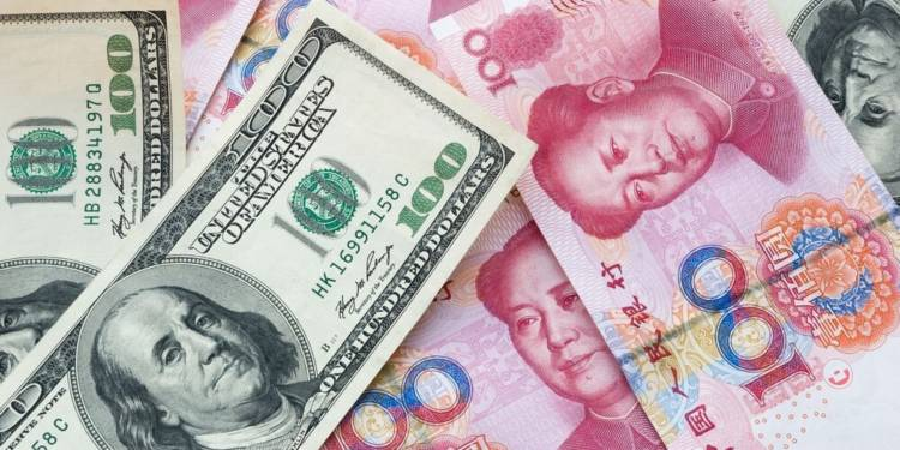
Chinese Yuan Plummeted Against the U.S. Dollar, Lowest in Two Years

0

The Chinese Yuan has weakened significantly, reaching its lowest level against the U.S. Dollar in over two years. This decline is largely attributed to a combination of factors, including escalating trade tensions with the United States, particularly following tariff threats, and a deliberate move by China’s central bank, the People’s Bank of China (PBOC), to set the yuan’s midpoint rate at its weakest since September 2023. For instance, on April 8, 2025, the PBOC set the reference rate at 7.2038 per dollar, allowing the onshore yuan to drop to around 7.33 and the offshore yuan to hit levels as low as 7.3677 before stabilizing slightly.

This marks a notable depreciation, with the currency losing about 1% against the dollar in April alone, reflecting pressures from U.S. trade policies and a strengthening dollar amid rising U.S. bond yields. Analysts suggest this could be a strategic move by China to bolster exports in response to economic challenges, though it raises concerns about potential capital flight and inflation. The Chinese yuan hitting its lowest level in two years carries several significant implications across economic, political, and global trade dimensions.

A weaker yuan makes Chinese goods cheaper on the global market, potentially increasing export competitiveness. This could help offset the impact of U.S. tariffs, which have been a pressure point amid ongoing trade disputes. However, this advantage might be limited if other countries retaliate with their own trade measures. Imports, particularly commodities like oil and food, become more expensive with a weaker yuan. Given China’s reliance on imported raw materials, this could drive up domestic inflation, squeezing consumers and businesses already grappling with economic slowdown.

A depreciating currency might spook investors, leading to capital flight as they seek safer assets elsewhere. This could force the PBOC to tighten capital controls or burn through foreign reserves to stabilize the yuan, both of which have costs—either to financial openness or to reserve buffers. Chinese companies with U.S. dollar-denominated debt (a significant amount exists) will face higher repayment costs as the yuan weakens, potentially straining corporate balance sheets and increasing default risks.

The yuan’s slide could escalate trade frictions, especially if the U.S. perceives it as deliberate currency manipulation to undercut American tariffs. This might trigger stronger rhetoric or policy responses from Washington, like labeling China a currency manipulator again, reigniting a cycle of retaliation. A weaker yuan, if it fuels inflation or erodes purchasing power, could stoke public discontent in China, challenging the Communist Party’s narrative of economic competence. The PBOC’s balancing act—letting the yuan weaken but not too much—will be under scrutiny.

A weaker yuan often pressures other emerging market currencies, as investors pull back from riskier assets. Countries in Southeast Asia or those competing with China in exports e.g., Vietnam, India might see their currencies weaken too, sparking a regional and global depreciation trend. Since China is a major consumer of commodities, a weaker yuan could dampen demand due to higher import costs, potentially softening global prices for oil, metals, and grains. This might benefit commodity importers but hurt exporters like Russia or Australia.

The yuan’s decline reinforces the U.S. dollar’s dominance, especially as U.S. bond yields rise. This dynamic could complicate monetary policy for other central banks, particularly those trying to avoid imported inflation from a strong dollar. The PBOC’s willingness to let the yuan weaken—evidenced by the midpoint rate dropping to 7.2038 and the currency hitting 7.33 onshore—suggests a calculated gamble. It’s a response to external pressures (tariffs, dollar strength) and internal needs (export support), but it risks amplifying volatility if markets lose confidence.

Historically, sharp yuan depreciations—like in 2015—have rattled global markets, and while controls are tighter now, the interconnectedness of trade and finance means the effects won’t stay contained to China. In short, this yuan slump could juice China’s exports short-term but at the cost of heightened domestic and international strain—economically destabilizing if mishandled and politically charged given the U.S.-China rivalry.

Why Elon Musk Urges Donald Trump to Reverse Tariffs

0

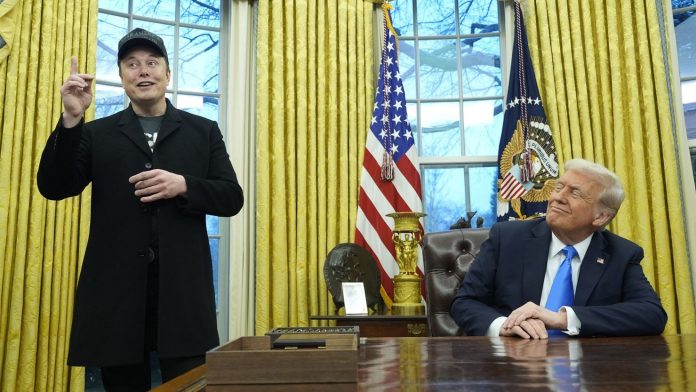
Elon Musk has publicly pushed back against President Donald Trump’s tariff policies, arguing they harm businesses and consumers. Musk, a key figure in Trump’s orbit and head of the Department of Government Efficiency, has called for a “zero-tariff situation,” particularly between the U.S. and Europe, emphasizing free trade as a driver of economic growth. He’s expressed concerns that tariffs, like the 10% baseline on imports and higher duties on countries like China, inflate costs for companies like Tesla, which rely on global supply chains. For example, Tesla imports components from China, and retaliatory tariffs could hit its sales in key markets.

Musk even posted a video of economist Milton Friedman praising free trade to underline his point. On the flip side, Trump’s tariffs aim to boost U.S. manufacturing by making foreign goods pricier, potentially creating jobs and reducing trade deficits. Supporters argue this protects American industries from cheap imports and counters unfair trade practices by countries like China. However, critics, including Musk, warn of higher consumer prices, supply chain disruptions, and risks of a trade war that could tank markets—global stocks already took a hit after Trump’s tariff announcements.

Musk’s stance isn’t just about Tesla’s bottom line; it reflects a broader clash between free-market ideals and protectionism. Despite his influence, reports suggest Trump hasn’t budged, doubling down with threats of 50% tariffs on Chinese imports. The tension highlights a rare rift between the two, though it’s unclear if Musk’s lobbying will shift policy. Tariffs are a gamble—potentially revitalizing U.S. industry or triggering economic chaos. Time will tell which side’s right.

Business interests (Tesla and Supply Chains), Tesla relies heavily on a global supply chain, importing components like batteries and electronics from China and elsewhere. Tariffs—such as Trump’s proposed 10% on all imports and 50% on Chinese goods—raise Tesla’s production costs. Higher costs could force price hikes, making Tesla vehicles less competitive, especially in markets like Europe or China, where retaliatory tariffs might hit back. Musk has said tariffs “hurt American companies more than they help,” pointing to this direct impact.

Musk aligns with free-trade advocates like Milton Friedman, whom he’s quoted approvingly. He believes tariffs distort markets, stifle innovation, and slow economic growth. His vision—whether for Tesla, SpaceX, or xAI—thrives on unrestricted global exchange, not protectionist barriers. He’s called for a “zero-tariff situation” between the U.S. and Europe, arguing it would boost prosperity on both sides. Musk warns that tariffs risk sparking trade wars, as seen when China retaliated to past U.S. tariffs with duties on American goods. This could disrupt Tesla’s massive market in China (over 50% of its global deliveries) and destabilize the broader economy—something Musk, as a Trump advisor, likely wants to avoid.

Reduced tariff threats could calm markets, avoiding the 2-3% stock drops seen after Trump’s tariff talks (e.g., November 2024). Strengthens U.S.-Europe ties and aligns with Musk’s vision of frictionless commerce. Industries like steel or automotive parts, which tariffs aim to protect, might lose ground to cheaper imports. Trump’s base, favoring protectionism, could see Musk as undermining “America First” goals, straining their alliance. Higher costs for imports could revive U.S. manufacturing, as seen with steel jobs under earlier tariffs (though gains were modest, ~1,000 jobs).

Less reliance on foreign goods might shrink the $800 billion U.S. trade deficit (2023 figures). High tariffs could force concessions on trade practices like IP theft. Everyday goods—electronics, clothing, cars—could rise 5-10%, per economic models, hitting lower-income households hardest. Tesla’s costs could jump $1-2 billion annually (analyst estimates), squeezing margins or forcing layoffs. China’s past retaliation (e.g., 25% tariffs on U.S. autos) could escalate, crashing exports and rattling global markets further (e.g., Dow fell 800 points after tariff news in late 2024).

Musk’s “why” is rooted in Tesla’s bottom line and a belief in open markets, but the impacts hinge on execution. Tariffs historically have mixed results—Reagan’s 1980s tariffs saved some jobs but raised prices; Trump’s 2018 tariffs added $80 billion in taxes but didn’t fully reshape trade. If Musk sways Trump, it’s a win for globalists; if not, protectionism might spark short-term gains but long-term chaos. Either way, the U.S. economy—and Musk’s empire—will feel the ripple effects by mid-2025.

Changpeng Zhao Joins Pakistani Crypto Council as Strategic Advisor

0

Changpeng Zhao (CZ), the founder and former CEO of Binance, has been appointed as a Strategic Advisor to the Pakistan Crypto Council (PCC). This development marks a significant step for Pakistan as it seeks to advance its digital finance and blockchain ecosystem. The announcement was made on April 7, 2025, during CZ’s visit to Islamabad, where he met with high-ranking officials, including Finance Minister Senator Muhammad Aurangzeb, the Prime Minister, and representatives from the State Bank of Pakistan and the Securities and Exchange Commission.

In his role, CZ is expected to provide guidance on cryptocurrency regulation, infrastructure development, education, and adoption, leveraging his extensive experience in building Binance into the world’s largest crypto exchange. Finance Minister Aurangzeb, who also chairs the PCC, described the appointment as a “landmark moment,” emphasizing Pakistan’s ambition to become a regional leader in Web3 and blockchain-driven growth. PCC CEO Bilal Bin Saqib echoed this sentiment, highlighting CZ’s pioneering role in the crypto industry and his potential to help Pakistan embrace the future of finance.

Changpeng Zhao’s (CZ) appointment as Strategic Advisor to the Pakistan Crypto Council (PCC) carries several significant implications for Pakistan’s cryptocurrency landscape, its economy, and its position in the global digital finance ecosystem. With over 60% of Pakistan’s 240 million population being under 30, a tech-savvy demographic, CZ’s expertise could drive widespread cryptocurrency adoption. His track record with Binance suggests he may push for user-friendly platforms and education initiatives to onboard millions. CZ’s involvement could accelerate the development of blockchain and crypto infrastructure, such as local exchanges, wallets, and payment systems, tailored to Pakistan’s needs.

This could reduce reliance on informal channels like P2P trading, which currently dominate due to regulatory uncertainty. CZ’s global perspective could help Pakistan craft a regulatory framework that encourages innovation while addressing risks like money laundering and fraud—issues that have historically slowed crypto progress in the region. His influence might align Pakistan’s policies with international standards, such as those from the Financial Action Task Force (FATF). Having a figure like CZ, a prominent name in the crypto world, advising the PCC could lend credibility to Pakistan’s efforts, reassuring both domestic users and foreign investors wary of regulatory ambiguity.

CZ’s appointment signals Pakistan’s seriousness about digital finance, potentially attracting investment from global crypto firms, including Binance itself. This could bring capital inflows, job creation, and technological know-how. Pakistan receives over $30 billion annually in remittances, often through costly traditional channels. CZ could advocate for blockchain-based solutions to lower fees and improve efficiency, a move that aligns with his past focus on financial inclusion. If successful, Pakistan could position itself as a regional hub for blockchain and Web3 innovation, competing with countries like the UAE or Singapore and diversifying its economy beyond traditional sectors.

Neighboring India has taken a cautious-to-hostile stance on crypto, with heavy taxation and regulatory hurdles. Pakistan, under CZ’s guidance, could leapfrog India by fostering a more welcoming environment, gaining a first-mover advantage in South Asia. Given CZ’s Chinese-Canadian background and Binance’s global reach, his involvement might subtly strengthen Pakistan’s ties with China, a key ally, in the digital economy space, especially as China explores blockchain despite its crypto ban. While CZ’s influence may push for progressive policies, resistance from conservative financial institutions like the State Bank of Pakistan, which banned crypto trading in 2018 (later partially eased), could create friction.

Crypto’s price swings and past scandals (e.g., FTX collapse) might make Pakistani authorities hesitant, even with CZ’s assurances, especially in a country with economic instability and high inflation. Though a crypto titan, CZ stepped down as Binance CEO in 2023 amid a $4.3 billion settlement with U.S. authorities over compliance issues. This history could raise skepticism about his advisory role, though his expertise remains undisputed. CZ’s emphasis on education (seen in Binance Academy) could lead to programs that demystify crypto for Pakistan’s youth, reducing scams and fostering a skilled workforce in blockchain technology.

With a significant unbanked population, crypto could empower rural and underserved communities, though this hinges on accessible internet and smartphone penetration. CZ’s role could catalyze Pakistan’s emergence as a crypto-friendly nation, driving economic growth and innovation while navigating regulatory and cultural challenges. Success depends on how effectively his vision aligns with local realities and government cooperation. If executed well, this could be a transformative move for Pakistan’s digital future.

Towards Nigeria’s “Contract with the World”

0

Prof. Ndubuisi Ekekwe will join the Global Strategy Nexus – Africa Summit in Lagos Nigeria in May 2025 (remotely). The Global Strategy Nexus 2025 is an exclusive event series designed to engage thought leaders and decision-makers in dialogues on the most pressing global challenges. It will center on themes such as governance, technology, sustainable economic development, financial inclusion, climate change, and digital innovation.

Drawing insights from the Global Strategy Outlook 2025 Report, the Nexus will explore the global risk landscape and provide actionable solutions to shape future policies, technological advancements, and international cooperation.

As the world looks rattled with the drums of tariffs and de-globalization beating, leaders have to be calm, and that calmness will come with having new ideas and deeper perspectives to help navigate the turbulent economic waters in the markets.

For Nigeria, we have an opportunity as one of the countries with a big population to reset the global equilibrium by inserting ourselves with a new mantra of leadership, offering a new charter and economic vision. Yes, “Contract with the World” to become an engine where all nations can trade and do business, with Nigeria as the fulcrum. Join us on the path to that unconstrained and unbounded future of abundance and opportunity.

But as America re-strategizes for its future, and both Europe and China adjust, one country could make a definitive decision, to become a haven of opportunity. Yes, Nigeria has the population and through “Contract With The World” could offer a destination for markets. That means we must find immediate solutions to the paralysis of insecurity, and deal once and for all with the turbulence of currency depreciation. Get a czar to run that “Contract with the World”, a theme for all nations with Nigeria as the nucleus.

Lagos May 8-9, 2025 | Four Points by Sheraton, Victoria Island, Lagos, Nigeria

Visit the 16th Council UK and register free here https://lnkd.in/eZCniMUY

Nigeria’s Opportunity in the Age of De-globalization

ARK Invest Buys $13.3M In Coinbase’s COIN Shares

0

Cathie Wood’s ARK Invest recently purchased approximately $13.3 million worth of Coinbase (COIN) shares during a market downturn. This acquisition involved 84,514 shares spread across two of ARK’s exchange-traded funds (ETFs). Specifically, the ARK Next Generation Internet ETF (ARKW) acquired 64,806 shares, valued at around $10.2 million, while the ARK Fintech Innovation ETF (ARKF) picked up 19,708 shares, worth about $3.1 million, based on the closing price on the day of the purchase. This move took place on Monday, April 7, 2025, amid a broader market slump that saw significant declines in both traditional equities and cryptocurrencies.

During the same period, ARK also sold off 159,496 shares of its ARK 21Shares Bitcoin ETF (ARKB), valued at approximately $12.4 million, indicating a strategic rebalancing of its portfolio. The purchase reflects ARK’s ongoing strategy of capitalizing on market dips to increase its exposure to high-growth, innovative companies like Coinbase, which remains a key player in the cryptocurrency exchange space. Despite Coinbase’s stock closing down 2.04% at $157.28 that day, it saw a slight recovery in after-hours trading, suggesting some resilience. This acquisition aligns with ARK’s long-term bullish outlook on the crypto sector, even as short-term volatility persists.

ARK Invest’s decision to buy $13.3 million in Coinbase shares during a market downturn, while simultaneously selling off $12.4 million in its ARK 21Shares Bitcoin ETF, carries several potential implications for investors, the crypto market, and ARK’s broader strategy. By increasing its stake in Coinbase, ARK is signaling confidence in the company’s role as a foundational player in the cryptocurrency ecosystem. Coinbase, as a leading exchange, benefits from trading volume and user adoption regardless of short-term crypto price fluctuations. This move suggests ARK sees value in Coinbase’s business model—revenue from transaction fees, custody services, and institutional offerings—over pure Bitcoin price exposure via the ETF.

Purchasing shares during a downturn reflects ARK’s characteristic strategy of acquiring assets at lower valuations, betting on a rebound. With Coinbase’s stock down 2.04% on the day of purchase, ARK likely views this as an opportunity to bolster its position at a discount. Selling ARKB (a direct Bitcoin proxy) while buying COIN could indicate a tactical shift away from raw cryptocurrency exposure toward companies poised to profit from the sector’s growth. Coinbase’s revenue streams are tied to market activity, not just Bitcoin’s price, potentially offering more diversified upside in a volatile market.

The near-equal dollar amounts of the sale ($12.4M) and purchase ($13.3M) suggest ARK is reallocating capital rather than making a net increase in crypto-related exposure. This could be a hedge against further downside in Bitcoin’s price while maintaining a foothold in the broader crypto economy. ARK Invest, under Cathie Wood’s leadership, is a high-profile player with a significant following. This move could bolster sentiment around Coinbase and the crypto sector, potentially encouraging other investors to view the downturn as a buying opportunity. However, the simultaneous Bitcoin ETF sale might temper enthusiasm for BTC itself in the short term.

The broader market slump—marked by a 2,000+ point drop in the Dow Jones and a 5%+ decline in Bitcoin—frames this as a contrarian bet. ARK’s actions might signal to the market that it believes the sell-off is overblown or temporary. Coinbase’s slight after-hours recovery post-purchase could hint at stabilizing investor interest, partly fueled by ARK’s vote of confidence. However, its stock has been volatile, and this purchase alone may not reverse broader macroeconomic pressures like interest rate hikes or regulatory uncertainty in the U.S.

Coinbase faces ongoing scrutiny, including its legal battle with the SEC. ARK’s investment might reflect optimism that Coinbase will navigate these challenges successfully, reinforcing its dominance in the U.S. market. The sale of a Bitcoin ETF alongside a Coinbase buy could suggest ARK anticipates a decoupling of crypto infrastructure stocks from cryptocurrency prices. If Bitcoin continues to slide but trading activity remains robust, Coinbase could still perform well. This move aligns with ARK’s focus on disruptive innovation. Coinbase represents a tangible business with earnings potential, unlike the more speculative nature of holding Bitcoin directly via an ETF.

If the downturn deepens, Coinbase’s stock could face further pressure, testing ARK’s thesis. Crypto stocks often correlate with Bitcoin’s price despite their operational independence. ARK’s ETFs have seen outflows in the past during prolonged bearish periods. High-profile trades like this could either attract new capital or amplify criticism if they underperform. ARK’s transaction reflects a calculated bet on Coinbase’s long-term growth potential amid short-term market weakness, while reducing direct Bitcoin exposure. It underscores a belief in the crypto sector’s maturation, with a preference for operational businesses over pure asset plays.