DD
MM
YYYY

PAGES

DD
MM
YYYY

spot_img

PAGES

Home Blog Page 142

Lloyds Banking Group Acquires Curve for £120 Million Amid Stakeholders Rumbling 

0

Lloyds Banking Group, the UK’s largest retail bank, has completed its purchase of Curve—a London-based fintech known for its digital wallet and all-in-one card solutions—for £120 million.

This deal marks a strategic move for Lloyds to bolster its digital payments ecosystem, allowing it to better compete with giants like Apple Pay and Google Wallet. The deal was first reported in early November 2025, with talks starting in July.

Curve notified investors of the signed share sale and purchase agreement earlier this week, and both companies confirmed the completion this morning—though Lloyds did not publicly disclose the exact valuation.

Curve founded in 2015 by Shachar Bialick, enables users to consolidate multiple bank cards into a single digital wallet for seamless payments, budgeting, and rewards management. It operates in over 30 markets across the UK and Europe and has raised more than £250 million in funding historically.

This is not the same as the Ethereum-based Curve Finance protocol. The acquisition integrates Curve’s technology including Curve Pay into Lloyds’ offerings, enhancing its mobile app which already serves 20.9 million users and digital sales processing 95% of retail transactions.

It’s part of Lloyds’ broader push into fintech to challenge neobanks like Monzo and Revolut while expanding in the growing digital wallet space. The deal hasn’t been without drama. Curve’s valuation—pegged at £100-120 million during initial talks—falls well short of its previous funding rounds, leading to widespread disappointment.

In a circular to shareholders, Curve’s board acknowledged the “disappointing” outcome but argued it’s the “best available path forward” to avoid running out of cash this year. The largest external shareholder 12% stake has vocally opposed the sale, citing concerns over management conduct, governance, and ownership disputes.

IDC, which invested six years ago, has hired lawyers Quinn Emanuel and reserves all legal rights, expressing surprise that Lloyds proceeded. Efforts to oust Curve’s chair and CEO were rejected last month amid the turmoil.

The deal, while strategically vital for Lloyds to enhance its digital payments amid competition from Apple Pay and Google Wallet, has been criticized for undervaluing Curve—far below its £250 million in historical funding and previous £133 million valuation—and for opaque governance practices.

Early backers, who poured over £250 million into Curve since 2015, face substantial losses as the sale price represents only about half that amount.

CEO Shachar Bialick warned investors that without the deal, Curve risked exhausting cash reserves in 2025. Recriminations center on how sale proceeds will be allocated, with fears that priority rights for certain investors could shortchange others.

This has fueled perceptions of unfairness in a tightening fintech funding environment marked by rising customer acquisition costs and regulatory pressures. IDC explicitly stated it “does not intend to support the proposed sale and does not believe that it is capable of being implemented without its support.”

IDC highlighted irregularities, such as the controversial reappointment of Chairman Lord Stanley Fink on July 31, 2025, just two days after his removal by the appointing shareholder. This has amplified calls for accountability from management.

Dissident shareholders, including IDC and others, demanded an Extraordinary General Meeting (EGM) in early October 2025 to oust Fink and Bialick over alleged mismanagement and lack of shareholder engagement. The motion was defeated last month, but it exposed deep rifts, with critics accusing the board of poor communication on financial health and sale progress.

The board maintains the process was “fair and in the interests of all shareholders,” but Curve’s silence on media queries has only heightened suspicions of opacity. Lloyds has faced indirect criticism for ignoring red flags, with IDC questioning how a “leading UK institution” could back a deal not in shareholders’ interests.

However, Lloyds views the acquisition as low-risk no material impact on 2025-2026 guidance and essential for modernizing payments, potentially positioning it against neobanks like Monzo and Revolut.

The deal awaits clearance, expected in H1 2026, but could draw scrutiny from bodies like the UK’s Payment Systems Regulator (PSR) and Financial Conduct Authority (FCA), which are probing digital wallet competition.

This saga underscores fintech sector woes: post-boom consolidation, where banks snap up undervalued startups amid funding droughts. While the deal advances, IDC’s legal threats could delay or alter terms, serving as a “cautionary tale” for similar transactions.


Monad ($MON) Presale on Coinbase is over 60% Filled As REKT Experiences Massive Decline 

0

The Monad public token sale kicked off on November 17 via Coinbase’s platform—the first of its kind there—and it’s indeed hovering around 60% filled after the initial day, with about $112.5M raised toward a $187.5M target 7.5B tokens at $0.025 each, implying a $2.5B fully diluted valuation.

As of now, two days in, it’s up to roughly 66% subscribed $123.7M raised, leaving $63.8M on the table before the November 22 cutoff. This “bottom-up” allocation prioritizes smaller bids to democratize access min $100, max $100K per user, which has kept whale dominance in check but also tempered the early frenzy compared to hotter sales like MegaETH.

Liquidity’s tight post-MegaETH funds unlocking Nov 21, and some retail hesitation at the FDV after recent L1 hype cycles. But conviction remains high—mainnet drops November 24, and bets on Polymarket peg the odds of hitting $400M+ at skewed upside.This isn’t the explosive FOMO of past L1 drops like Solana’s early days, but it’s a watershed: the first fully regulated token sale on a major CEX, open to U.S. users in 80+ countries with KYC baked in. Implications ripple wide.

Coinbase’s “bottom-up” model capping bids at $100K to favor retail normalizes compliant fundraising, potentially unlocking billions in traditional capital for chains like Monad.

It sidesteps the VC-heavy pitfalls that bloated FDVs in 2024’s cycle, but critics argue it caps upside for early backers—expect more CEX-led sales for projects like Berachain or MegaETH by Q1 2026.

Democratized access boosts grassroots adoption, but whales eyeing “struggling” presales are pivoting to edgier bets like AI-memes or RWA plays. Long-term: If MON hits $0.10+ by EOY, it validates CEX presales as a $10B+ annual channel; otherwise, it reinforces “Coinbase curse” memes.

If FOMO hits as unlocks free up cash, we could see a late surge; otherwise, it risks undershooting and pressuring post-TGE pricing amid airdrop/VC sells. Solid tech play parallel EVM execution for 10k+ TPS positions it as Ethereum’s high-speed cousin, but execution will be key for that “global scale” vision.

$REKT’s Wild Ride: Liquidation Carnage and a Gritty Bounce

$REKT got absolutely rinsed yesterday in a brutal cascade on the IMF lending platform, plunging from a ~$130M market cap to $40M in under an hour price dipping to ~$0.0004—wiping out leveraged positions holding up to 5% of supply as collateral.

A single large wallet 4.5% of tokens got liquidated, sparking a domino effect across Morpho/IMF, clearing leverage down to 0.25% and even dragging $JOE and $MOG into the mess. Volume spiked to $32M, but it was mostly pain—traders lost big, and a post-crash dump added 2.5% more supply before getting rekt again.

On a transparent X Spaces with CEO osf_rekt, no equity conversions to dodge SEC headaches, and outreach to whales/funds with a recovery one-pager. Liquidity’s stabilized 1.6M bids vs. 200K risk, governance filings incoming, and the community’s holding strong—dips were bought hard, flipping it back toward $110M before settling around $70-80M today.

Narratives shifting to “lessons in leverage” and $REKT’s independent path shared only via Mando with $YEET. This isn’t fatal for a meme with real-world tie-ins, but it underscores DeFi’s razor edge—voluntary leverage turned into a $90M wipeout.

As of today, it’s idling at ~$65M MC ($0.00065), with leverage ratios neutered to <0.3% post-event. That single 4.5% whale trigger exposed systemic frailties, with knock-ons still felt.

The cascade spiking volume to $32M, mostly pain amplified a market-wide $1B+ liquidation wave, dragging correlated memes like $JOE down 15% and foreshadowing 2025’s flash crashes.

Protocols like Morpho now mandate “circuit breakers”, curbing cascades but stifling degen yields—TVL in leveraged memes dipped 25% YTD, shifting flows to safer perps on Hyperliquid.

For $REKT, it birthed “lessons in greed” governance boosting community lock-in but capping moonshot potential. $REKT’s bounce—fueled by Spaces AMAs and Rekt Drinks tie-ins—proved meme resilience, but the event etched volatility into retail psyches, with 40% fewer leveraged meme positions in Q4 2024 surveys.

It accelerated “narrative fatigue,” where 2025’s $93K BTC dip triggered $1B+ liqs, hitting alts like XRP/STRK hardest and underscoring how meme cascades seed altcoin winters. Such resets clear weak hands, priming $REKT for a 3x if BTC reclaims $100K; bear: Perpetual “rekt” stigma keeps it sub-$100M forever.

With BTC fear at extremes, these events scream “position for asymmetry”—stack quality, derisk leverage. Bullish on the resilience; if BTC holds $90K, we could see ATH hunts by December.

Crypto’s in flux— BTC testing $90K support amid macro noise— but these micro-events highlight the chaos fueling alpha. MON’s a bet on infra maturity; REKT’s pure degen theater.

Democratic Senators Demand Probes Into Trump’s Crypto Activities

0

Democratic Senators Elizabeth Warren (D-MA) and Jack Reed (D-RI) demanded an investigation by the U.S. Department of Justice (DOJ) and the Treasury Department into World Liberty Financial (WLFI), a cryptocurrency firm closely tied to President Donald Trump and his family.

The probe focuses on allegations that WLFI sold governance tokens to entities linked to illicit actors, including North Korea’s state-sponsored Lazarus Group, Russian operatives, and sanctioned money-laundering services like Tornado Cash.

This marks the latest in a series of Democratic-led efforts to scrutinize Trump’s expanding crypto ventures amid concerns over conflicts of interest, national security risks, and potential corruption.

The senators’ letter highlights a report from the nonprofit watchdog group Democracy Defenders Action, which claims WLFI sold approximately 600,000 WLFI tokens valued at around $10,000 at the time to a wallet address “Shryder.eth” controlled by the Lazarus Group.

This North Korean hacking syndicate has been sanctioned by the Treasury’s Office of Foreign Assets Control (OFAC) for cybercrimes, including thefts funding weapons programs. Additional concerns include: Ties to Russia and Iran: Sales to addresses associated with Russian oligarchs and Iranian networks evading sanctions.

WLFI’s governance token model allegedly allows bad actors to gain influence without proper vetting, potentially enabling money laundering or foreign interference. The requests come as Congress debates crypto regulations that could exempt tokens like WLFI from scrutiny, coinciding with Trump’s 2024 financial disclosures showing his crypto holdings boosted his wealth by millions.

Warren, a longtime crypto critic and ranking member of the Senate Banking Committee, emphasized the need for enforcement actions by December 1, 2025, to address “staggering conflicts of interest” in Trump’s administration.

This demand is part of an ongoing pattern of investigations into Trump’s crypto activities since his January 2025 inauguration. Democrats, often outnumbered in Congress, have used letters, hearings, and ethics referrals to highlight potential violations of bribery laws, the foreign emoluments clause, and campaign finance rules.

House Oversight Democrats request probe into Trump’s business ties. Focus on WLFI and $TRUMP memecoin as “profound conflicts” amid pro-crypto executive orders. Cite WLFI’s $2B UAE deal with Binance as “quid pro quo” risking national security.

Request Treasury data on WLFI, $TRUMP, Elon Musk’s America PAC, and GOP platform WinRed for fraud/bribery. House Judiciary demands investor list from $TRUMP dinner. Probe private dinner for top $TRUMP holders as potential “pay-for-play” scheme.

35 House Democrats call for DOJ bribery investigation. Allege $TRUMP dinner violates ethics; note $320M in fees, foreign holders like Justin Sun. Senate probes Trump aides’ crypto-chip deals. Investigate UAE chip exports post-WLFI Binance deal; ethics violations for officials like Steve Witkoff.

Eight senators demand ethics disclosures. Question Witkoff’s WLFI stakes amid Middle East envoy role and UAE ties. Senate launches probe into CZ pardon. Scrutinize Trump’s October 23 pardon of Binance founder Changpeng Zhao after $30M WLFI investment.

These efforts have stalled some bipartisan crypto bills, like stablecoin regulations, as Democrats push for anti-fraud amendments. Critics, including former GOP ethics chair Charles Dent, warn of “foreign entities currying favor” with Trump.

No official White House comment as of November 19, but allies like Binance pardoned founder and UAE partners have dismissed probes as partisan. Crypto advocates argue regulations could stifle growth, especially with Trump’s pro-industry agenda.

If pursued, the DOJ/Treasury probe could lead to sanctions, asset freezes, or new laws targeting governance tokens. However, with Republican control of Congress and the administration, formal action remains unlikely without bipartisan support.

This scrutiny underscores tensions between Trump’s deregulatory push for crypto—projected to add billions to his wealth—and Democratic calls for accountability to prevent illicit finance.

Zoox Brings Its Robotaxi Fleet to San Francisco’s Public, Setting the Stage for a Bigger Fight in the Autonomous Ride-Hailing Arena

0

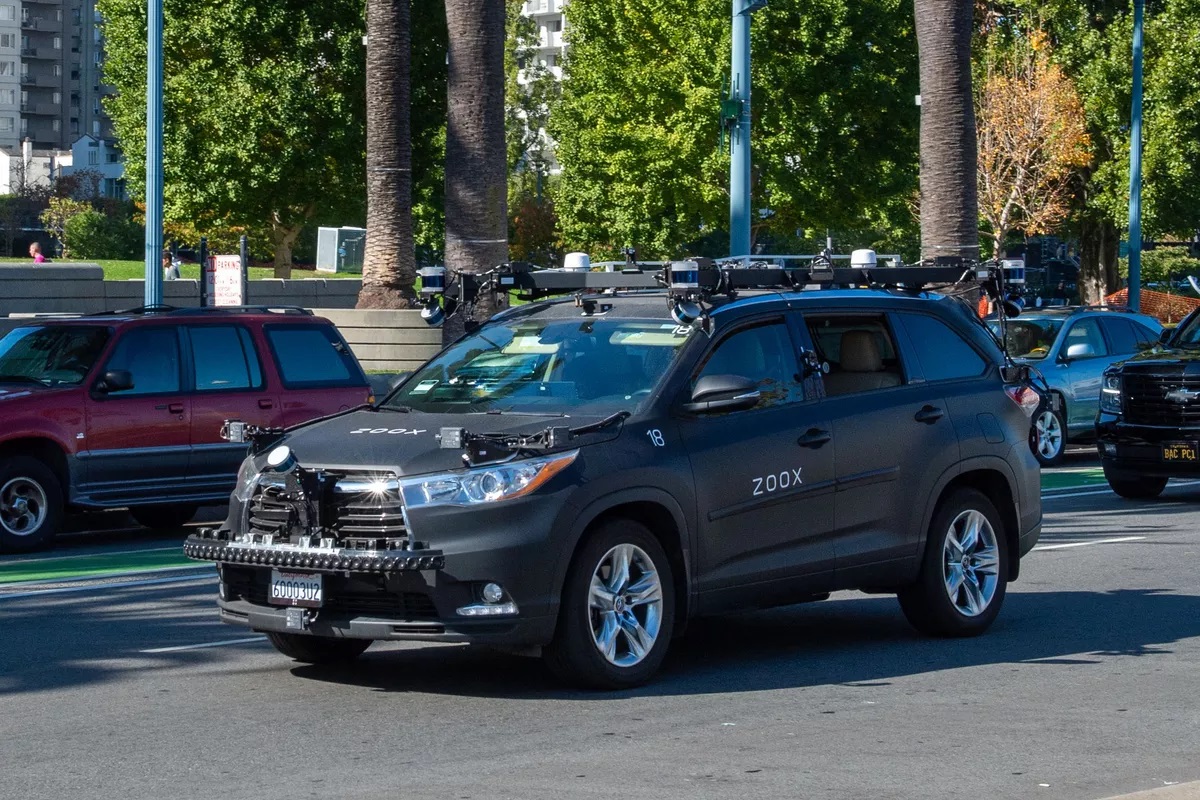
San Francisco is about to become even more crowded with autonomous vehicles as Amazon’s Zoox opens its robotaxi service to members of the public for the first time in the city.

Beginning Tuesday, selected users from the company’s waitlist gained access to free rides in Zoox’s distinctive, steering-wheel-free vehicles as part of its expanding early rider program.

Zoox CEO Aicha Evans said the rollout marks a major step forward. “We have seen incredible interest in Zoox in this market and are excited about this first step to bring our purpose-built robotaxi experience to more people,” she noted.

The company will remove people from the waitlist based on criteria such as location, with the first service zone covering the South of Market, Mission, and Design District neighborhoods. Zoox hasn’t disclosed how many riders will be admitted initially, but said more will be added as the fleet grows.

The company currently operates around 50 robotaxis, split between Las Vegas and San Francisco. It launched a free ride service on the Las Vegas Strip in September, where thousands of visitors have already tried the autonomous shuttles. Zoox says the reaction has been “overwhelmingly positive,” with riders consistently saying they prefer its group-oriented, lounge-style cabin to the feel of a conventional car.

A Different Kind of Robotaxi

Zoox’s vehicles stand out sharply from the rest of the industry’s offerings. Unlike Waymo, Tesla, or Cruise — whose autonomous systems are installed onto traditional car bodies — Zoox manufactures its vehicles from the ground up, removing everything associated with human driving. There is no steering wheel, no pedals, and no driver’s seat. Instead, passengers sit facing one another in a rectangular, gondola-like cabin with large windows and a compact exterior footprint.

The design reflects Zoox’s goal of building a shared mobility service rather than a modified consumer car. The company has been testing autonomous systems in San Francisco since 2017, but the robotaxi now being deployed represents years of reengineering toward a fully purpose-built experience.

A Growing, Heated Competition

Zoox’s arrival slots into a highly competitive and rapidly shifting robotaxi landscape — one that has seen triumphs, setbacks, and aggressive expansion across the past decade.

Waymo remains the dominant player in San Francisco, with more than 1,000 autonomous vehicles operating across the Bay Area as of November. Its fleet consists of Jaguar I-PACE SUVs retrofitted with sensors and computing hardware. Waymo now offers fully driverless rides in five major US cities, giving it the largest footprint of any autonomous ride-hailing service in the country.

Tesla has also moved into the robotaxi space, beginning a pilot program in Austin and the Bay Area. These rides still include safety operators, but the company says it is preparing for a future fleet based on its dedicated robotaxi vehicle, which is still under development.

Uber, after exiting its self-driving program in 2020, is attempting a comeback. It plans to launch a robotaxi service next year using vehicles from Lucid Motors and Nuro, marking a renewed push to compete in the market it once tried to dominate.

Cruise, the most prominent rival to Waymo until last year, saw its rapid expansion collapse after safety incidents forced it to suspend operations and eventually shut down its robotaxi program entirely under GM.

In this context, Zoox enters the field as a fresh but well-funded challenger with a radically different vehicle design — and the backing of Amazon, which bought the company in 2020. That financial muscle gives Zoox more room to scale than many smaller startups that burned out during the autonomous-driving boom.

How Zoox’s Entry Reshapes the Competition

Bringing more San Franciscans into its vehicles gives Zoox a chance to prove it can compete in a city that has become both the testing ground and the battleground for autonomous mobility. The move increases pressure on incumbents like Waymo, which has enjoyed near-monopoly visibility since Cruise’s collapse.

Zoox’s shuttle-like design also adds a new dimension to consumer choice. While Waymo and Tesla offer rides that feel like enhanced versions of traditional cars, Zoox promises a shared, cabin-style environment designed from scratch for autonomy. If San Franciscans find the design more comfortable or social, Zoox could carve out a distinct niche in a crowded market.

The expansion also intensifies competition over data — the lifeblood of autonomous driving. Every ride Zoox provides gives it more real-world training data to improve its systems. That advantage helped Waymo pull ahead earlier, and Zoox is now racing to close the gap.

On top of that, a thriving multi-player market benefits cities and regulators, who hold the belief that robust competition prevents any single company from dominating access, pricing, or public negotiations. Zoox’s rollout helps restore competitive balance in a city that previously saw two major players reduced to one after Cruise was sidelined.

Quora’s Poe App Introduces AI-Powered Group Chats, Unlocking Collaborative Experiences Across 200 Models

0

Quora’s AI platform Poe is expanding its functionality with the launch of group chat capabilities, allowing users worldwide to collaborate in real time with up to 200 participants and access more than 200 AI models in a single conversation.

The move transforms Poe from a one-on-one AI interaction tool into a collaborative environment that could reshape how individuals and teams use AI for creative, organizational, and entertainment purposes.

The new feature enables participants to engage with text, image, video, and audio-generating models simultaneously. Users can combine AI models such as Claude 4.5 Sonnet, Eleven Labs v3, Eleven Labs Music, Nano Banana, GPT-5.1, Kling 2.5 Turbo Pro, o3 Deep Research, Sora 2 Pro, Veo 3.1, and creator-made bots, giving groups unprecedented flexibility to collaborate across multiple AI tools in a single chat.

Quora suggested that group chats could facilitate practical, interactive applications for both personal and professional contexts. Families and friends could plan trips collaboratively using models like Gemini 2.5 for search and o3 Deep Research for information aggregation.

Creative teams might brainstorm visual concepts or generate mood boards using various image models, while groups could also play AI-powered games or quizzes together.

To start a group chat, users simply select the option from Poe’s home screen on the web platform at poe.com. Chat history syncs across devices in real time, allowing participants to move seamlessly between desktop and mobile without losing conversation continuity.

Quora noted that group chat development took six months and will continue to evolve based on user feedback.

“We think the space of potential group interactions mediated by AI and collaboration opportunities with AI is vast and currently under-explored,” the company shared in its announcement.

The platform also allows users to create custom bots and share them for use in group chats, further expanding possibilities for collaborative AI-driven experiences.

“The product we are opening up today also allows anyone to create a custom bot on Poe and share it for others to use in their own groups, and we are excited to see the use cases that everyone discovers,” the company added.

The launch positions Poe alongside competitors like OpenAI’s ChatGPT, which recently began piloting group chat functionality in markets including Japan, New Zealand, South Korea, and Taiwan. Analysts suggest this trend signals a shift in AI usage from individual experimentation toward interactive, community-driven workflows, where AI acts as both a collaborative assistant and creative partner.

Poe is aiming to redefine how users interact with artificial intelligence, encouraging experimentation, learning, and productivity in group settings by integrating multiple AI models into a single conversation. As more users adopt these features, the platform is expected to unlock innovative applications ranging from enterprise brainstorming to family travel planning, educational collaboration, and entertainment, illustrating the expanding role of AI in daily life.