DD
MM
YYYY

PAGES

DD
MM
YYYY

spot_img

PAGES

Home Blog Page 1425

Afreximbank Breaks New Ground with $299.9m Chinese Panda Bond, Opens Door for African Issuers

0

In a landmark step toward expanding its access to global capital, the African Export-Import Bank (Afreximbank) has raised $299.90 million (2.2 billion renminbi) through its debut Chinese Panda bond issuance, becoming the first African multilateral financial institution, and only the second African entity, to tap into China’s onshore bond market.

Issued with an interest rate of 2.99%, the bond was fully placed in China’s domestic capital market, with Bank of China Limited serving as the lead underwriter and bookrunner. The Exim Bank of China and the Industrial and Commercial Bank of China (ICBC) also participated as joint lead underwriters.

Afreximbank’s issuance comes at a time when African economies are grappling with volatile global markets, foreign exchange pressures, and growing debt servicing burdens. The successful bond sale not only provides a fresh pool of renminbi-denominated liquidity but also signals a widening door for African borrowers seeking to diversify their funding away from Western-dominated capital markets.

In its statement on Tuesday, Afreximbank emphasized that this latest move fits within its broader strategy of accessing diversified and cost-effective funding sources.

“The issuance followed Afreximbank’s successful navigation of the rigorous regulatory and approval processes for Panda bond issuance,” the lender said.

Setting a Precedent

This is only the second Panda bond by an African entity, the first being Egypt’s 2022 foray into the market, yet Afreximbank’s multilateral status, financial clout, and pan-African reach make this issuance especially significant. It is likely to encourage other African institutions to consider China’s local bond market as a viable platform for fundraising.

“This issuance highlights Afreximbank’s commitment to diversifying its funding sources and to tapping into new pools of capital,” said Chandi Mwenebungu, Afreximbank’s Head of Treasury and Markets Division. “This transaction is a culmination of years of work engaging with Chinese authorities and investors, and it marks a turning point in our engagement with the Chinese financial system.”

China has signaled a clear intent to deepen financial integration with Africa through initiatives like Panda Bonds. In recent years, Chinese regulators have stepped up efforts to allow more foreign issuers into their tightly controlled debt market, positioning it as a long-term funding alternative.

A Rigid but Rewarding Market

Panda bonds—renminbi-denominated bonds issued by foreign entities in China were introduced in 2005 with issuances from the Asian Development Bank and the International Finance Corporation, part of the World Bank Group. However, access remains highly restricted, requiring issuers to meet strict accounting, disclosure, and regulatory standards.

Afreximbank’s entry into this space underscores the bank’s financial sophistication and long-term ambition. The fact that the bond issuance was completed despite the complexities of operating in a market where the renminbi remains only partially convertible adds to the significance.

“Successfully issuing a Panda bond signals a high level of financial credibility,” said a fixed-income analyst familiar with African sovereign and supranational markets. “This isn’t just about the money raised. It’s a proof of confidence in Afreximbank’s balance sheet and its long-term strategic importance to African economies.”

Surging Demand for Panda Bonds

The broader market appetite for Panda bonds has grown significantly, with total issuance hitting a record 195 billion yuan in 2024, according to Deutsche Bank figures. That rise comes as China seeks to internationalize the renminbi and deepen its economic ties with developing regions—especially Africa.

Afreximbank’s bond not only gives it access to renminbi liquidity that can be used in trade finance operations involving Chinese partners, but it also helps reduce currency mismatch risks in projects funded in local currencies. That flexibility is becoming increasingly critical as African countries work to manage their debt profiles amid a stronger dollar and rising global interest rates.

The Timing And Africa’s Shifting Economy

The bond sale comes against a backdrop of shifting macroeconomic conditions across Africa. Many countries are facing tighter external financing conditions, and institutions like Afreximbank are being called on to play a greater role in economic stabilization, trade facilitation, and infrastructure development.

In that context, Afreximbank’s success in raising nearly $300 million through a non-traditional source is likely to be seen as a strategic win, especially as conventional eurobond markets remain largely out of reach for many African borrowers due to elevated yields and investor caution.

The issuance also adds momentum to China’s pledge to support African financial integration and infrastructure investment. While Chinese loans to Africa have slowed in recent years, initiatives like Panda bonds provide a less debt-heavy alternative to traditional lending.

Afreximbank’s foray into the Panda bond market could prompt similar moves by other African multilateral, national, or regional institutions. Analysts say more issuers may begin considering renminbi-denominated funding as a way to reduce dependency on dollar debt, especially as U.S. interest rates remain high.

Whether that wave materializes depends on how quickly China can ease access for more African issuers while maintaining its tight control over capital flows. But Afreximbank’s successful issuance has already pushed the door open—and other African entities may soon follow.
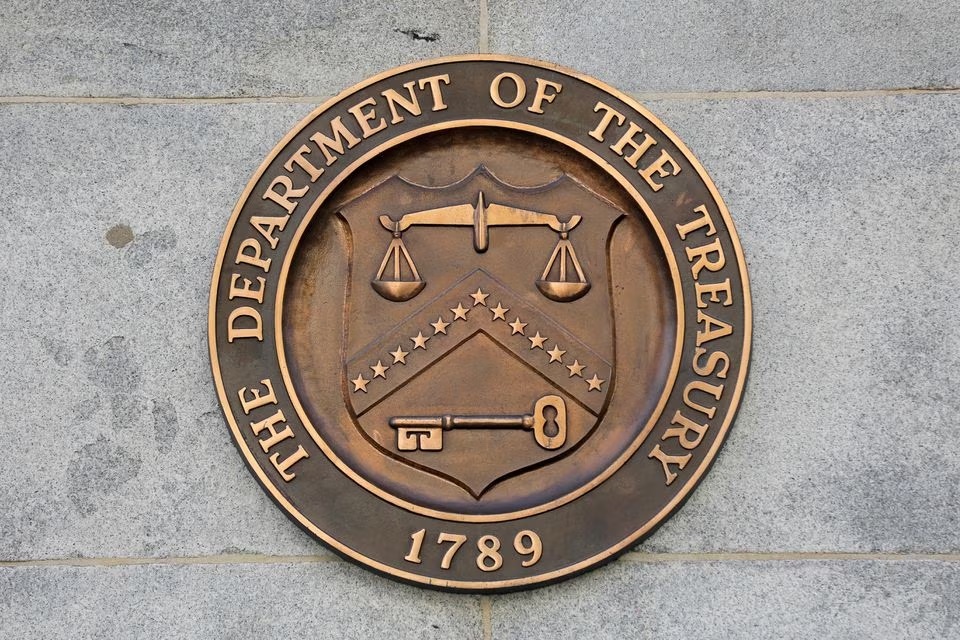
U.S. Treasury Secretary Bessent Says China Has More to Lose As Tariff War Escalates, Investors Disagree

0

U.S. Treasury Secretary Scott Bessent on Tuesday declared the United States holds a clear advantage in the increasingly fraught trade dispute with China, brushing off Beijing’s retaliation and portraying the latest escalation as a bluff in a game it cannot win.

“I think it was a big mistake, this Chinese escalation, because they’re playing with a pair of twos,” Bessent said during a CNBC Squawk Box interview. “What do we lose by the Chinese raising tariffs on us? We export one-fifth to them of what they export to us, so that is a losing hand for them.”

His remarks came on the eve of a fresh wave of tariff increases targeting China and dozens of other trading partners. The duties, described by the administration as “reciprocal tariffs,” are meant to pressure countries into fairer trade arrangements, Bessent said, while jumpstarting U.S. manufacturing and generating new revenue streams for the federal government.

“If we put up a tariff wall, the ultimate goal would be to bring jobs back to the U.S. But in the meantime, we will be collecting substantial tariffs,” he said. “There should be some level of symmetry between the taxes we begin taking in with the new industry from the payroll taxes as the tariffs decline.”

According to Bessent, the administration is already seeing signs of success. Japan, he said, has moved to the front of the line in initiating talks, and the White House expects several more countries—especially those running large trade surpluses with the U.S.—to follow.

“I think you are going to see some very large countries with large trade deficits come forward very quickly. If they come to the table with solid proposals, I think we can end up with some good deals.”

However, the idea that trade deficits are inherently bad and that tariffs are the right response is facing sharp criticism, not just abroad but also within U.S. policy circles. While the Trump administration argues that the tariffs are aimed at correcting long-standing trade imbalances, economists and trade analysts have pointed out that the U.S. economy has, in fact, flourished over decades of trade deficits.

Tom Giovanetti, President of the Texas-based Institute for Policy Innovation (IPI), noted that trade deficits have coincided with extraordinary growth.

“The United States has run trade deficits for 48 straight years, during which time the U.S. economy has grown by 255% in real terms,” Giovanetti said. “Decades of trade deficits have corresponded with increases in manufacturing output, wealth, and household incomes.”

He argued that the trade imbalance narrative misses the bigger picture: “In the United States, GDP per capita has increased more than in our top trading partners like Canada, China, the European Union, Japan, Korea, and Mexico, even though we tend to run trade deficits with them.”

Echoing that view with more pointed criticism, former Treasury Secretary and Harvard economist Lawrence Summers dismissed the Trump administration’s trade philosophy as “utterly confused.”

“While I support open markets and oppose protectionism, that is not my problem with the @realDonaldTrump Administration policies,” Summers wrote on X (formerly Twitter). “The problem is an utterly confused and incoherent doctrine that says bilateral deficits are a sign a country is exploiting us. Trump’s economic theory makes Laffer curve look like Newton’s law of gravity and Modern Monetary Theory look like Darwin’s theory of evolution. They are far beyond wrong.”

Also, investors have noted that the belief that the U.S. has less to lose in the tariff war is far from the truth.

“OK mashed potato brains. Let’s do the math slowly for you,” said Spencer Hakimian, founder of Tolou Capital Management.

He noted that China exports $400 billion worth of goods and services to the U.S., and $3.3 trillion to the rest of the world every year. But the U.S. exported $3.2 trillion to the world in 2024. That number is certain to go down in 2025.

“If that number just goes down by 12%, which is a very conservative estimate, and the rest of the world looks to fill that with Chinese product (which is cheaper than the U.S. and has less profit built in), then the U.S. gets completely boxed out here,” he said. “China replaces us easily (just as they have since we peaked our trading relationship in 2018). We sell less. The rest of the world moves on rather quickly.”

“Thinking we are invincible and have all the cards is a fatal mistake.”

Despite the chorus of dissent, neither Washington nor Beijing appears willing to back down. In a fiery post on Truth Social late Monday, Trump slammed China’s latest move to impose 34% retaliatory tariffs on American goods, accusing Beijing of decades of “tariff abuse” and vowing a severe response if the new levies aren’t rolled back.

“Yesterday [Sunday], China issued Retaliatory Tariffs of 34%, on top of their already record-setting Tariffs, Non-Monetary Tariffs, Illegal Subsidization of companies, and massive long-term Currency Manipulation,” Trump wrote. “Despite my warning that any country that Retaliates against the U.S. by issuing additional Tariffs … will be immediately met with new and substantially higher Tariffs.”

He said that unless China withdraws the increase by April 8, the U.S. will impose a fresh round of 50% tariffs effective April 9 and cut off all trade talks with Beijing.

“Additionally, all talks with China concerning their requested meetings with us will be terminated! Negotiations with other countries, which have also requested meetings, will begin taking place immediately,” Trump added.

The high-stakes back-and-forth comes as the U.S. continues to wrestle with a nearly $300 billion trade deficit with China, which accounted for roughly one-third of the entire U.S. trade imbalance in 2024. While the Trump administration views this as a glaring sign of unfair trade, many believe the deficit is the natural byproduct of a consumption-driven economy and a globally integrated manufacturing system.

In Bessent’s telling, however, tariffs are both a short-term revenue engine and a long-term lever for reshaping global trade, especially when it comes to elusive non-tariff barriers such as currency manipulation and regional tax regimes.

“Everything is on the table,” he said. “The academic literature shows that it’s actually the non-tariff barriers which are harder, both harder to quantify and more insidious because they’re hidden, they’re obfuscated.”

Stock market futures, already trending higher on Tuesday morning, climbed further after Bessent’s appearance, suggesting that investors are at least temporarily confident in the administration’s aggressive stance. But with new tariffs set to kick in and China vowing to hold its ground, the world’s two largest economies are barreling toward an economic showdown with no end in sight.

Crude Oil Crash Sparks Panic in U.S. Market, Spells Trouble for Nigeria’s Fragile 2025 Budget

0

The U.S. oil market staggered on Monday as West Texas Intermediate (WTI) briefly plunged below $60 per barrel, a psychologically and economically critical threshold for American producers.

It marked the first time in four years, since the peak of the pandemic in April 2021 that prices slipped this low. Though the market clawed back some losses to settle at $60.70, the damage to sentiment was done. Energy analysts, traders, and producers are now bracing for further volatility, driven largely by a mix of tariff fears, global demand concerns, and an OPEC move that blindsided many.

But the impact of this oil slump isn’t limited to American shale country. Thousands of miles away, in Nigeria, the news has triggered renewed anxiety over the country’s already fragile fiscal outlook. For Africa’s largest oil producer, the drop in global oil prices is more than a market movement – it is a direct threat to its 2025 national budget and economic stability.

Two-Front Crisis for Nigeria

Nigeria faces a dangerous squeeze on two major fronts. First is the direct threat to its 2025 budget benchmark, set optimistically at $75 per barrel. With Brent Crude tumbling to around $65, the gap between expectations and reality has thrown a wrench into federal projections. The country had already penciled in a staggering N14 trillion budget deficit at the $75 price point. Now, with crude dropping $10 below that mark, the shortfall may expand beyond what even the boldest budget drafters anticipated.

“Nigeria benchmark oil price in the 2025 budget is $75. Brent Crude today is $65,” economist Kalu Aja said. “The FGN proposed $70, Akpabio and the strong men took it to $75 a barrel.”

To make matters worse, the oil output assumptions are no longer holding. Nigeria’s oil production target for the budget was 2.06 million barrels per day (mbpd). But in reality, the country is producing less than 1.5mbpd—a shortfall of over 500,000 barrels per day that severely undermines revenue expectations.

“56% of the budget revenues is expected from the export of crude oil and gas. The budget deficit at the $75 per barrel price was a humongous N13 trillion, now it will widen,” Aja warned. “A responsible manager of resources will cut down spending to create a fiscal buffer. Not a DOGE-type waste reduction, but a complete austerity budget. Nigeria is spending like she has a rich uncle that can bail her out.”

Forward Sales, FX Crisis Looming

The second threat lies in Nigeria’s multi-billion dollar forward oil sale agreements, many of which are pegged to the same lofty $75 benchmark. If Brent continues its slide, some traders expect it to test lows not seen since the early pandemic days, it could push Nigeria into difficult conversations with off-takers who signed deals based on the earlier pricing.

“Scenes when Brent crude drops below the strike price for so many of the existing forward sale agreements,” said energy analyst Kelvin Emmanuel. “I warned in January that oil price benchmark at $75 is wishful thinking. There were no economists in the room when the budget estimates were made, apparently.”

Emmanuel added that anything below $60 for Brent “will be serious trouble for the Naira.” A drop of that magnitude would deal a severe blow to Nigeria’s foreign exchange earnings, triggering new pressure on an already weakening local currency. “Because how do you even manage your cash cascade?” he asked.

Widening Deficit, Mounting Debt

Nigeria is already juggling ballooning debt servicing obligations and a rising interest burden on its domestic and external borrowings. The Finance Ministry has insisted that oil revenue, coupled with limited tax reform and external funding, would close the gap. But those assumptions were rooted in a higher oil price and relatively stable output.

With both falling short, the government may be forced to seek more borrowing, possibly under worse terms, or resort to printing more naira, a move that could further fuel inflation.

Economists and analysts say this downturn offers a clear warning: Nigeria’s heavy reliance on a single commodity for its budget and forex inflow is a long-running vulnerability that must be addressed.

“If anything, it’s a fiscal warning to Nigeria,” Aja said. “This over-dependence on only one FX source has risks. Get serious about diversifying FX revenue flows.”

U.S. Producers Also Reeling

Meanwhile, U.S. shale oil producers aren’t cheering either. The price of $60 per barrel is widely considered the level at which operators start cutting back activity. Drillers may continue operating wells, but they’re likely to delay bringing new wells online unless prices recover.

“At $60, the U.S. is going to slow down. There’s no question,” said Marshall Adkins, head of energy at Raymond James. “Production is going to go down. It just won’t happen overnight.”

For American producers, anything below $50 would be catastrophic. But even the current level is far from sustainable. Rystad Energy pegs the average breakeven cost for U.S. shale at around $62 per barrel.

“With Lower 48 production growth already unlikely outside the Permian Basin, a downshift in the country’s most prolific oil basin would decelerate the rate of production growth in 2025,” said Rystad’s Matthew Bernstein.

Tariffs, Trade, and Fuel Price Swings

Driving the panic is renewed concern over the Trump administration’s escalating tariff push and its potential impact on global economic growth. OPEC’s move to unexpectedly raise output last week only worsened the oversupply fears. While natural gas remains relatively stable, analysts warn that a prolonged downturn in oil could hit refinery economics and fuel retail prices.

“There are plenty of drops to come,” said Patrick DeHaan, head of petroleum analysis at GasBuddy. “Tariffs are really the biggest driver for fuel prices right now.”

Gasoline prices, which typically rise in April during refinery maintenance, could instead drop below $3 per gallon nationwide by May if crude continues falling.

President Trump, reacting to the oil slump, struck a bullish tone: “Oil prices are down, interest rates are down… food prices are down, there is NO INFLATION,” he posted on Truth Social.

But analysts say lower oil prices aren’t necessarily a win for everyone.

“Trump wants cheap gasoline,” DeHaan said. “But cheap gasoline usually means the economy is under pressure.”

For Nigeria, the oil crash has pulled the rug from under key assumptions in the country’s 2025 budget. And unless there’s a sharp rebound in prices or a drastic rethink in spending, Nigeria could be staring at a larger deficit, more borrowing, and renewed currency volatility. Goldman Sachs analysts wrote in a Monday note that oil prices could slump to under $40 a barrel in a worst-case scenario, referring to Brent oil, the international benchmark.

South African Payments Gateway Peach Payments, Acquires PayDunya Expanding Into Francophone Africa

0

South African digital payments gateway, Peach Payments, has announced the acquisition of PayDunya, a West African payment platform, marking its first entry into Francophone Africa.

This move follows Peach Payments’ earlier expansions into Eswatini (2024), Mauritius (2021), and Kenya (2018). The digital payments gateway, known for enabling online payments for businesses of all sizes across Africa, is now poised to strengthen its pan-African presence through its strategic acquisition.

Based in Dakar, PayDunya began operations in 2015, sparked by founder Aziz Yérima’s realization in 2013 that no online payment solutions existed for a women’s community group he was assisting. After developing a prototype in 2014, Yérima co-founded PayDunya with fellow ESMT-Dakar students Youma Fall, Christian Palouki, and Honoré Hounwanou, hailing from Senegal, Togo, and Côte d’Ivoire, respectively. Their mission: to build payment infrastructure tailored for Francophone Africa.

Today, PayDunya operates in six West African Francophone countries which include, Senegal, Côte d’Ivoire, Benin, Burkina Faso, Togo, and Mali. The platform supports online payments for websites and mobile apps, as well as bulk payment collection and disbursement. Also, it serves notable enterprises like Jeune Afrique, VFS Global, SUNU Assurances, Dubai Port Dakar, Sky Mali, and Free Business (now Yas), alongside other fintech’s leveraging its payment rails.

From a modest €20k in bootstrap funding, PayDunya has grown into a profitable company, employing over 40 people, serving more than 4,000 B2B customers, and processing 70,000 transactions daily. Achieving profitability in its third year, the company has seen consistent revenue growth ever since driven by strong unit economics and a proven team of digital entrepreneurs.

Speaking on the acquisition, PayDunya founder Aziz Yérima said,

“We are thrilled to join forces with Peach Payments, a company that shares our vision of accelerating Africa’s digital transformation through innovative financial solutions. This acquisition marks a significant milestone for PayDunya as it enables us to make our expansion dreams to reach and enhance the value we bring to businesses across Francophone and Anglophone Africa come true. Together, we are poised to create a seamless, inclusive, and robust payment ecosystem that empowers African businesses to thrive in the digital economy.”

Peach Payments CEO and co-founder Rahul Jain views the acquisition as a key step in creating a continent-wide payment ecosystem. By integrating PayDunya, the platform is unlocking the UEMOA and CEMAC regions, giving merchants access to over 450 million people across our 12 operational markets and we’re not stopping there.”

“Success isn’t just raising funds, it’s about putting that capital to work. Our growth strategy rests on three pillars: expanding market share organically, launching new products and services, and leveraging mergers and acquisitions. PayDunya fits perfectly into our West African expansion and strengthens our offerings for cross-border and international merchants”, Jain added.

For its commitment to providing cutting-edge payment solutions to businesses of all sizes, Peach Payments was recognized as one of the most innovative fintech startups in 2024 by CB Insights, the leader in technology market intelligence. The platform is used by over 200+ people, operating in 3+ regions.

This latest acquisition of PayDunya by Peach Payments will see it expand into its sixth West African country, representing an exciting chapter in the company’s journey. The acquisition unlocks new opportunities for merchants who can now partner with Peach Payments and access over 450 million people across the markets they operate.

Looking Ahead

Pending standard closing conditions, the deal is expected to be finalized within months. By combining Peach Payments’ enterprise-grade solutions with PayDunya’s regional expertise, the partnership aims to drive digital payments adoption and empower businesses across Africa’s diverse markets.

Ripple (XRP) and Rexas Finance (RXS) Heat Up, While Dogecoin (DOGE) Might Experience a Slow Q2 2025

0

Due to volatility in the cryptocurrency market in 2025, Ripple and Rexas Finance have emerged as potential titans. While the market is anticipating a breakout surge from XRP, Dogecoin looks weak and shows signs of struggle. Let’s take a closer look at these tokens.

XRP Showing Overwhelming Bullish Signals and Breakouts

Analysts such as Ali Martinez have recently noticed the surge in XRP and given multiple reasons for the potential rally. Martinez shares one of the most important technical factors: The XRP token has created a symmetrical triangle since 2018. As per the available data, XRP has been stuck in consolidation, but it has recently broken out of the pattern, indicating a price increase is on the horizon. Martinez predicts that XRP could surge as high as $15. The importance of this possible increase is not only reliant on chart patterns. XRP’s presence in the market has been growing exponentially. One clear sign of this development is the increase in XRP wallets, which now stand at a record high of 6.87 million. As Martinez pointed out, the increasing number of wallets clearly reflects rising users, a positive sign of the market’s interest. With more users interacting with the token and the breakout from the symmetrical triangle, the chances that XRP will warm up for a bullish run are very high. XRP’s price movement has been positively impacted by expectations of clearer regulations supporting these broader market developments. With XRP’s partnerships in cross-border payments and its use in the financial industry, it has a credible value that will appeal to retail and institutional investors. Because of this, XRP is highly anticipated to surge significantly in 2025, with price action set to increase.

Rexas Finance (RXS): A New Challenger on the Block

As XRP prepares for what could be a powerful comeback, Rexas Finance (RXS) is already on the radar of many crypto enthusiasts. With a presale price of $0.20, Rexas Finance attracts investors and industry analysts due to its emphasis on tokenizing real-world assets. Many think its form of bridging traditional finance and decentralized finance (DeFi) will still be able to compete with well-known tokens like Cardano (ADA) and Ethereum (ETH). The DeFi ecosystem has always had a liquidity problem, and Rexas Finance’s promise comes from its capability to solve it with real-world use cases. By focusing on the tokenization of real estate, commodities, and other physical assets, RXS attempts to bridge the gap between decentralized markets and traditional finance. If successful, this strategy will create wide-scale adoption as more investors seek tokens that provide value and utility rather than just hype. In addition to that, the token’s presale has been highly successful, raising millions of dollars and selling hundreds of millions of tokens. With Withpresale ending, Rexas Finance is expected to be listed on major exchanges by June 2025, making it an attractive investment opportunity for those seeking to buy a token primed for explosive growth. With the continuous expansion of DeFi and the slow acceptance of tokenization by traditional markets, Rexas Finance could be a serious contender for significant returns and may outperform the rest of the market in the coming years, much more than other tokens have recently offered.

Dogecoin Faces Challenges Amidst Market Decline

While XRP and Rexas Finance are riding the wave of a bull market, DOGE finds itself in a precarious position. Unfortunately, the meme coin sector, especially Dogecoin, faces immense selling pressure, which has resulted in a sharp decline over the last few weeks. Dogecoin has fallen by a concerning 16% in the span of a single week. Currently, on March 18, 2025, Dogecoin’s value is sitting at $0.1683, making it a 4.28% decrease over the last day. Furthermore, these losses are compounded by the fact that DOGE is below its long-term support level- the 200 day moving average. In 2025, the RSI indicated a sharp correction after overbought conditions. Undoubtedly, the technicals for DOGE look dreadful. Analysts, such as Ali Martinez, have cited the next crucial support level for Dogecoin at $0.16; however, if this fails, DOGE can further plummet toward the lower bound at $0.125. Dogecoin’s price drop can also be related to how other meme coins perform in the market. The coin has not been able to gain bullish momentum without market-moving events or high-profile figures like Elon Musk. Compared to XRP or Rexas Finance, Dogecoin has less real-world utility, making it less appealing to investors looking for tokens with strong fundamentals and real-world applications.

Conclusion: Rexas Finance and XRP Are On The Rise As Dogecoin Stumbles

By 2025, Rexas Finance and XRP will be the strongest competitors in cryptocurrency as they are the most likely candidates to experience growth. There is a strong bullish case with XRP’s recent breakout from its symmetrical triangle formation and the increasing number of wallets. Some analysts even expect the token to hit $15 at some point. On the other hand, Rexas Finance’s new and advanced approach to DeFi and tokenizing real-world assets makes it a big contender with excellent growth potential. While this is good news for many, Dogecoin struggles to make itself relevant as it continues to experience losses until it manages to hold essential support regions. Its overdependence on social media trends and market speculation has caused it to have an extremely shallow fundamental value, which stagnates its price and cycles. Investors intent on achieving strong growth over the foreseeable future might become less interested in Dogecoin and focus on more promising projects, such as XRP and Rexas Finance. Both make sense from the perspective of utility and fundamentals.


For more information about Rexas Finance (RXS) visit the links below:

Website: https://rexas.com

Win $1 Million Giveaway: https://bit.ly/Rexas1M

Whitepaper: https://rexas.com/rexas-whitepaper.pdf

Twitter/X: https://x.com/rexasfinance

Telegram: https://t.me/rexasfinance