DD
MM
YYYY

PAGES

DD
MM
YYYY

spot_img

PAGES

Home Blog Page 1427

Apple Stock Continues to Plunge, Drops 3.7% Impacted by Trump’s Tariff Policies

0

Tech giant Apple is reportedly facing a turbulent period, as its stock continues to plunge, dropping 3.7% on Monday, as fears intensified over the potential impact of President Donald Trump’s tariff policies.

The Cupertino giant’s stock has now plunged 19% over three consecutive trading sessions, erasing a staggering $638 billion in market value. Analysts warn that Apple remains one of the most vulnerable companies in the escalating trade war, largely due to its heavy dependence on China, which is now subject to tariffs as high as 54%.

Reports reveal that Trump on Monday stated that the U.S. will apply an additional 50% tariff on imports from China if the Asian nation doesn’t withdraw its plan to impose a retaliatory 34% import fee on American products. Although Apple has diversified its production footprint to include India, Vietnam, and Thailand, these nations are also caught in the net of new U.S. tariffs under Trump’s sweeping trade plan.

Among the seven major tech giants, Apple is bearing the brunt of the market’s anxiety. On Monday, it was one of only three megacap tech stocks to decline, alongside Microsoft and Tesla.

Analysts at JPMorgan Chase predict that Apple could raise its prices by 6% across the world to offset the U.S. tariffs. Also, Barclays analyst Tim Long noted that he expects the tech giant to increase the prices of its products, or it could suffer as much as a 15% cut to earnings per share.

Recall that last week, Morgan Stanley analysts stated that Apple could absorb additional tariff costs of about $34 billion annually. Analysts believe that Apple may be forced to choose between raising prices or absorbing the additional costs brought on by the tariffs. According to UBS estimates, the price of Apple’s top-tier iPhone could jump by roughly $350, or about 30%, from its current price of $1,199 if the full weight of the tariffs is passed on to consumers.

Tim Long, an analyst at Barclays, noted that while Apple could consider raising prices, the alternative could be a significant 15% hit to its earnings per share. He also suggested that the company might look to restructure its supply chain, sourcing more imports from countries facing lower tariff rates.

In the broader tech space, other giant tech companies are also feeling the pressure of the new tariff policies. Last week, Meta Platforms and Amazon fell about 9% each, while Nvidia dropped nearly 8%. Giant EV maker, Tesla, slumped more than 5%, while Microsoft and Alphabet both fell about 2% and 4%, respectively.

Notably, analysts predict that makers of PCs and AI servers will be hit hard as well. It is understood that the U.S. imported nearly $486 billion in electronics last year, the second-biggest sector for imports, after machinery, according to Census Bureau data. Therefore, in line with Trump’s recent tariff policies, PC makers, including Dell and HP, could face cost increases of about 10% – 25%, adding between $200 and $500 in costs per unit.

Amidst the chaos from his controversial Tariff policies that sent shockwaves to stock markets across the globe, Trump has held firm on his aggressive global tariff plans, with an initial unilateral 10% tariff went into effect last week Saturday. Meanwhile, Wall Street hoped for progress on negotiations between the administration and other countries or news of a possible delay in reciprocal tariffs slated for April 9.

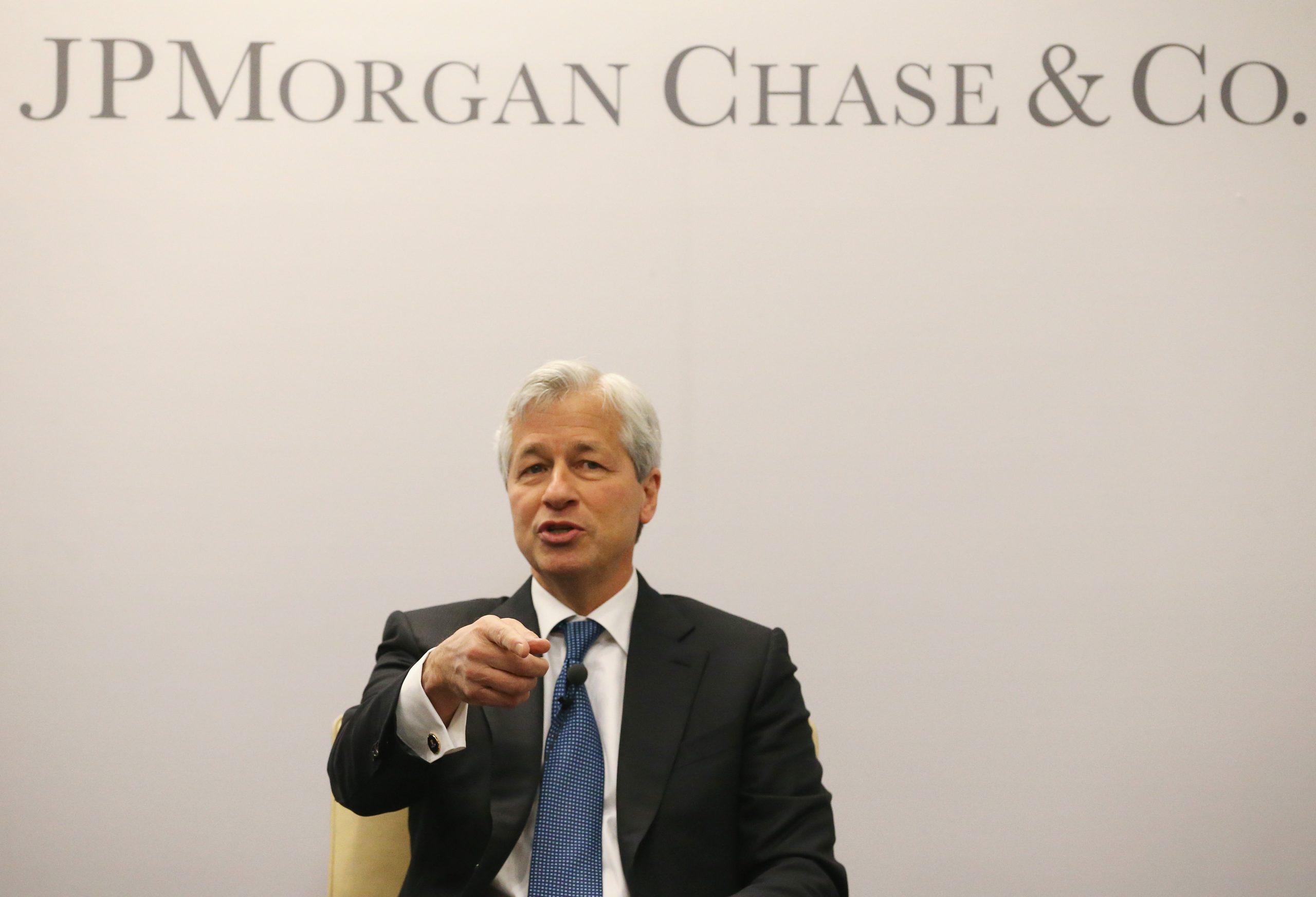
The plan has already received widespread backlash in corporate America. JPMorgan Chase CEO Jamie Dimon said Monday that the new levies will hike prices on domestic and imported goods and pressure the slowing U.S. economy. Also, many car companies have already announced a pause in shipments, price hikes, and other measures.

Nissan Motor’s luxury Infiniti brand has indefinitely paused production of two Mexico-built crossovers for the U.S. in response to the newly imposed 25% tariffs on imported vehicles by Trump. Also, in a memo to the brand’s retailers, Infiniti Americas Vice President Tiago Castro said QX50 and QX55 output for the U.S. is halted “until further notice” due to the tariffs.

“I don’t want anything to go down, but sometimes you have to take medicine to fix something,” Trump told reporters on Sunday night, downplaying the recent market meltdown.

The tariffs, which threaten to destabilize the world trade order and unsettle businesses, mark a sharp reversal from just a few months ago when hopes of business-friendly policies under the Trump administration pushed U.S. stocks to record highs.

Looking Ahead

With the imposed Tariff policies, Donald Trump sees an opportunity to “change the fabric” of the United States.

But even as the president, administration officials, and key allies say he will not back down from his tariff plan. However, they are looking for ways to ease the concerns of wary supporters. Two administration officials confirmed that members of the administration were taking calls from business groups and setting up private meetings to allay concerns. 

“The Trump administration maintains regular contact with business leaders, industry groups, and everyday Americans, especially about major policy decisions like President Trump’s reciprocal tariff action,” White House spokesman Kush Desai said in a statement.
MTN Group to Launch Africa-Centric Streaming Platform in Strategic Push Against Netflix, Amazon

0

MTN Group, Africa’s largest mobile network operator, has announced a bold move to launch its own video streaming platform across the continent, positioning itself as a homegrown alternative to foreign giants like Netflix and Amazon Prime Video.

The new platform, to be deployed in partnership with global video software company Synamedia, is set to deliver a mix of live TV and on-demand content through both mobile and broadband and marks a major step in the telecom giant’s digital transformation under its Ambition 2025 strategy.

The announcement comes amid a growing fallout between Multichoice and its Nigerian subscribers, following a controversial upward review of its subscription tariffs. The South African pay-TV operator, which owns DStv and GOtv, has faced widespread backlash after it increased tariffs for the third time in 12 months, citing inflationary pressures and currency devaluation. The result has been a steep decline in its Nigerian subscriber base, particularly among middle- and low-income households, many of whom say they can no longer afford the service.

With Multichoice now under pressure and foreign streamers like Netflix struggling to localize content effectively across diverse African markets, MTN’s entrance signals an opportunity to capitalize on a shifting landscape, but only if it gets the pricing right.

MTN says its upcoming platform will offer a blend of subscription-based services, ad-supported content, and free streaming channels with targeted ads, tailored to the economic realities and content preferences of different African regions.

“We see a unique opportunity to transform video consumption in Africa with high-quality, accessible, and relevant content,” said Selorm Adadevoh, MTN Group’s Chief Commercial Officer. “This partnership enables us to leverage cutting-edge technology and deep customer insights to enhance entertainment experiences and drive digital inclusion.”

Synamedia, the technical partner, will provide the platform’s backend infrastructure—including content management, user personalization, and scalable cloud delivery—optimized for Africa’s unique digital terrain.

“Thanks to MTN’s leadership and innovation, smartphone owners across Africa will be able to enjoy innovative linear TV and on-demand video,” said Paul Segre, CEO of Synamedia. “MTN will be able to create a groundbreaking set of offerings for customers that will drive new revenues.”

The Price Trap: Can MTN Avoid Multichoice’s Mistake?

However, cost remains a looming challenge, especially in Nigeria, MTN’s largest market. Just weeks before the announcement, telecom operators across the country implemented a massive 50% increase in the cost of internet data and voice calls, prompting an outcry from users already struggling with economic hardship.

Subscribers say they’re paying more for less—faster data depletion, spotty network quality, and no clear value-add. Many worry that MTN’s streaming platform could follow the same path, especially if content is locked behind high paywalls or expensive data bundles.

Analysts believe the platform’s success will depend on pricing flexibility, the availability of data-lite viewing options, and smart bundling with MTN’s telecom services to reduce cost barriers.

Why MTN Might Succeed Where Others Struggle

MTN’s greatest asset is its control over infrastructure. Unlike Netflix or Multichoice, it owns the pipes through which content flows. That means it can bundle streaming services with data, offer zero-rated access for specific content, or create tiered pricing depending on region and income levels.

It also helps that MTN already has more than 290 million subscribers across 19 African countries, including over 87 million in Nigeria alone, giving it the scale needed to push content efficiently and quickly gain traction.

The company said the platform will rely heavily on localized content, using language, culture, and viewing habits to curate programming that resonates in each country.

This comes as African audiences increasingly demand content that reflects their own realities, and as global streaming platforms face criticism for either failing to invest in local content or producing tone-deaf material that alienates viewers.

A Race for Africa’s Digital Viewers

Streaming platforms are now in a race to dominate Africa’s digital space, and MTN’s move could redefine the competition. Showmax, now under the control of Comcast’s NBCUniversal, has ramped up its African original programming. Netflix has invested millions in Nigerian Nollywood content and opened local offices. Amazon Prime Video is also eyeing deeper penetration through partnerships with local filmmakers.

But none of these platforms own the mobile data highway, a fact that gives MTN a potentially unrivaled advantage, if it doesn’t repeat Multichoice’s errors.

For now, MTN has not revealed the name of the platform or the exact launch date, but insiders say pilots could roll out in select markets before the end of the year, starting with Nigeria and South Africa.

Implications of Tether Launching a U.S. Focused Stablecoin

0

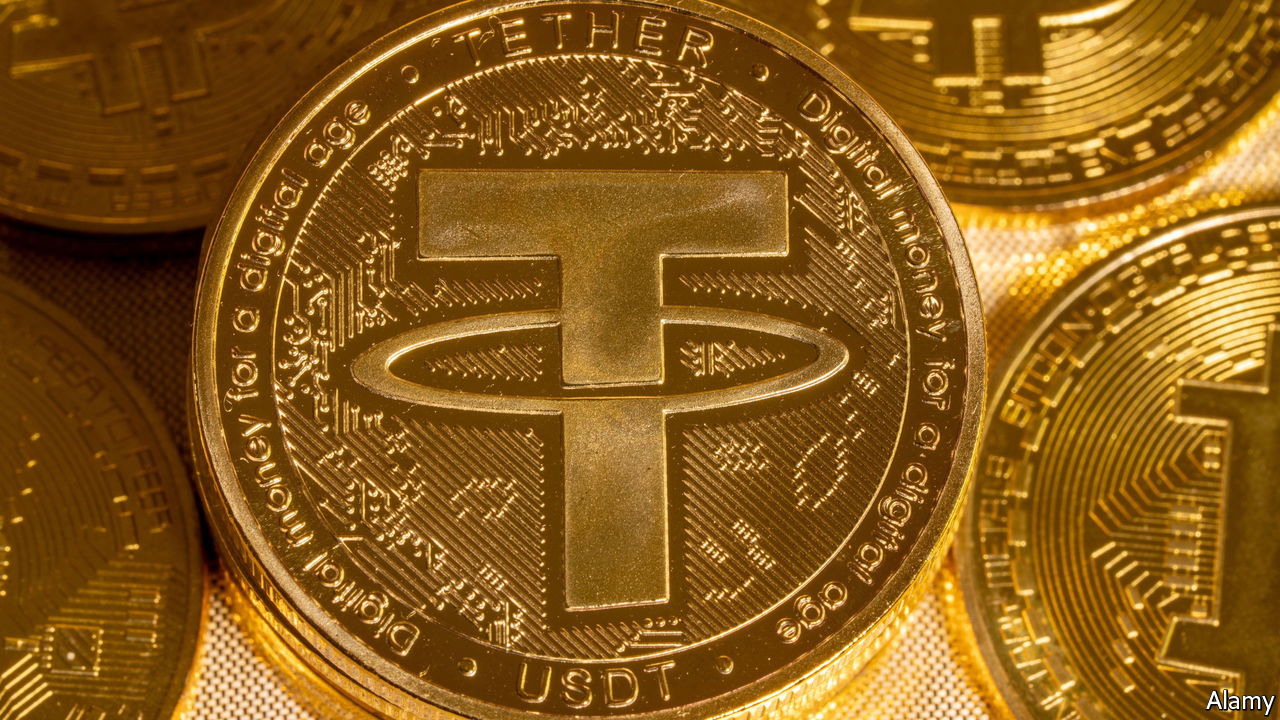
Tether has indeed signaled its intent to launch a new stablecoin tailored for the U.S. market. This move comes as a strategic response to evolving regulatory pressures in the United States, where lawmakers are advancing legislation to impose stricter oversight on stablecoins, such as requirements for regular audits and greater transparency regarding reserves. Tether’s CEO, Paolo Ardoino, has indicated that the company is prepared to adapt by creating a new U.S.-domiciled stablecoin that complies with these emerging laws, distinct from its flagship USDT, which dominates the global stablecoin market with a market capitalization exceeding $144 billion as of early 2025.

The new stablecoin aims to address concerns raised by U.S. regulators while maintaining Tether’s foothold in the American market, though specific details like a launch date or blockchain platform remain undisclosed. This development reflects Tether’s broader strategy to navigate regulatory challenges while continuing to serve its vast user base, particularly in regions where USDT remains a key financial tool.

The implications of Tether launching a new stablecoin for the U.S. market are multifaceted, touching on regulatory, economic, and competitive dynamics. A U.S.-specific stablecoin suggests Tether is proactively aligning with anticipated regulations, such as those in the works from Congress and the Treasury Department. This could involve maintaining dollar reserves in U.S. banks, submitting to regular audits, and adhering to anti-money laundering (AML) and know-your-customer (KYC) rules. It’s a bid to appease regulators who’ve criticized USDT’s opaque reserve practices.

By tailoring a product to U.S. standards, Tether might shed some of the skepticism that has dogged USDT, potentially gaining favor with institutional investors and traditional financial players wary of its past controversies. Success here could pressure other stablecoin issuers—like Circle (USDC)—to further refine their compliance strategies, accelerating the mainstream adoption of regulated digital assets. A fully compliant U.S. stablecoin could reduce volatility risks tied to USDT’s dominance, especially if it reassures markets about reserve backing. This might stabilize crypto trading pairs and DeFi ecosystems heavily reliant on Tether. It reinforces the U.S. dollar’s role in crypto markets, potentially countering efforts by other nations e.g., China with its digital yuan to challenge dollar hegemony in digital finance.

If the new stablecoin gains traction, it could attract more U.S.-based capital into crypto, though strict regulations might limit its appeal for users seeking the pseudonymity USDT often provides offshore. Circle’s USDC, already a darling of U.S. regulators, might face stiffer competition. Tether’s brand recognition and global liquidity could give its new stablecoin an edge, especially if it offers lower fees or broader integration. Introducing a separate U.S. stablecoin might split Tether’s liquidity between USDT and the new asset, potentially weakening its global position unless both coexist seamlessly. This could spark a wave of innovation among stablecoin providers, pushing advancements in transparency, interoperability, or yield-generating features to win over users.

A regulated Tether product might bridge crypto and traditional finance further, drawing in hesitant U.S. businesses and consumers. However, overregulation could alienate the crypto-libertarian crowd that values decentralization. By bowing to U.S. rules, Tether might strain its appeal in markets hostile to American oversight, like Russia or parts of Asia, where USDT thrives as a dollar proxy. In short, Tether’s move could solidify its U.S. presence and influence stablecoin norms, but it’s a high-stakes gamble balancing compliance, market share, and user trust. The crypto community—and regulators—will be watching closely to see if it pays off or backfires.

Visa Makes $100m Bid to Replace Mastercard as the Payment Network for the Apple Credit Card

0

Visa has offered Apple Inc. approximately $100 million to replace Mastercard Inc. as the payment network for the Apple Credit Card, the Wall Street Journal reported.

This bid is part of a broader competition among major payment networks, including American Express, to secure a partnership with Apple as Goldman Sachs, the current issuer, exits its consumer lending business. The Apple Credit Card, launched in 2019 with Mastercard as its network and Goldman Sachs as its issuer, represents a significant opportunity due to its $20 billion in customer balances and over 12 million users in the United States.

Background

The Apple Credit Card was a collaboration between Apple, Goldman Sachs, and Mastercard. It aimed to deepen customer loyalty and generate revenue through transaction fees and high-yield savings accounts. However, Goldman Sachs’ foray into consumer lending has proven unprofitable, with its platform solutions unit, which includes the Apple Card, reporting an $859 million net loss in 2024.

This financial strain, coupled with operational challenges, such as an $89 million fine from the Consumer Financial Protection Bureau in late 2024 for poor customer service and unclear terms, prompted Goldman Sachs to seek an exit from the partnership, originally set to run until 2030.

As Goldman Sachs withdraws, Apple is seeking both a new issuer and a payment network. Major banks like JPMorgan Chase, Synchrony Financial, and Barclays have been in talks to replace Goldman Sachs, while Visa, Mastercard, and American Express vie for the network role. Apple is expected to select a network before finalizing an issuer, amplifying the stakes in this contest.

Visa’s $100 Million Bid

Visa, the world’s largest payment network, has made an aggressive move by offering Apple $100 million upfront to switch the Apple Card from Mastercard. This payment is atypical for payment networks, which typically earn revenue through transaction fees rather than large initial payouts.

However, the Apple Card’s scale, $35 billion in annual transaction volume, and $20 billion in balances make it a lucrative prize. Visa’s bid reflects its strategy to secure a foothold in Apple’s ecosystem, particularly given Apple Pay’s prominence and the potential for future payment innovations.

Visa’s strategic implications include winning the Apple Card to bolster its transaction volume and strengthen its relationship with Apple, a key player in mobile payments. Visa’s advanced tokenization technology and extensive issuer partnerships give it a competitive edge over rivals like American Express, which operates as both a network and issuer but has less universal acceptance.

In terms of stock performance context, as of April 7, 2025, Visa’s stock price stands at $301.282, down 14% from $350.0 on March 27. This decline may reflect market uncertainty about the bid’s outcome or broader economic pressures, but a successful deal could reverse this trend by signaling growth potential.

Mastercard’s Position

Mastercard, the incumbent network, is “fiercely” defending its role, according to The WSJ. With the Apple Card currently processing transactions over its rails, Mastercard benefits from its $35 billion annual volume. Losing this partnership with Visa or American Express would dent its market share and prestige, particularly in the high-profile fintech space.

The financial stakes for Mastercard show its stock has fallen 15% from $557.57 on March 27 to $473.18 on April 7, 2025. The potential loss of the Apple Card could exacerbate this decline, though Mastercard’s global dominance and diversified revenue streams provide resilience. Retention efforts remain undisclosed in specifics, but Mastercard’s actions likely include competitive fee structures or enhanced technological offerings to retain Apple’s business.

American Express Dual Bid

American Express is pursuing an ambitious strategy by seeking to serve as both the payment network and issuer for the Apple Card. This dual role leverages Amex’s integrated business model, distinguishing it from Visa and Mastercard, which rely on third-party issuers. Amex previously explored taking over the card from Goldman Sachs in 2023, indicating long-term interest.

Advantages and challenges for Amex include its premium brand and rewards programs aligning with Apple’s customer base, but its smaller network, less widely accepted globally than Visa or Mastercard—could limit its appeal. A shift to Amex might also disrupt the card’s seamless integration with Apple Pay, a critical feature for users. Market impact shows Amex’s stock has dropped 16% from $270.8995 on March 27 to $226.325 on April 7, 2025.

Securing the Apple Card could boost its valuation, though the upfront costs of replacing Goldman Sachs (estimated to be significant due to the portfolio’s $20 billion in balances) pose a risk.

Goldman Sachs’ Exit and Investor Pushback

Goldman Sachs’ decision to exit consumer lending stems from mounting losses and strategic missteps. CEO David Solomon noted that the Apple Card reduced the bank’s equity return by 75 to 100 basis points in 2024, though he anticipates improvement in 2025 and 2026 as the unwind progresses. JPMorgan Chase is a leading contender to replace Goldman Sachs as the issuer, having been in talks with Apple since 2024.

Shareholder concerns are evident as Institutional Shareholder Services (ISS) and another proxy advisor have urged Goldman Sachs investors to reject a proposed $160 million stock award for Solomon and COO John Waldron, citing its lack of performance-based criteria.

Solomon’s 2024 compensation of $39 million and an $80 million retention bonus (vesting over five years) have fueled criticism, especially given the consumer banking setbacks. Stock movement for JPMorgan Chase has declined 18% from $248.12 on March 27 to $202.263 on April 7, 2025, reflecting broader sector pressures.

JPMorgan CEO Dimon Breaks Silence on Trump’s Tariff Policy, Warns of Inflation and Slowdown as Markets Reel

0
JP Morgan Chase puts contents through its CEO account, it goes viral. But the same content via JPMC account, no one cares (WSJ)

JPMorgan Chase CEO Jamie Dimon has warned that the sweeping tariff measures introduced by President Donald Trump will likely trigger inflation and further slow down an already weakening U.S. economy.

In his annual shareholder letter released Monday, Dimon struck a cautionary tone, outlining several economic risks he believes are converging at a time of increasing global instability.

The remarks mark the first time a major Wall Street CEO is publicly weighing in on Trump’s April 2 tariff announcement, which sent global financial markets into a tailspin, triggering the worst week for U.S. equities since the early days of the Covid-19 pandemic.

“Whatever you think of the legitimate reasons for the newly announced tariffs – and, of course, there are some – or the long-term effect, good or bad, there are likely to be important short-term effects,” Dimon wrote. “We are likely to see inflationary outcomes, not only on imported goods but on domestic prices, as input costs rise and demand increases on domestic products.”

He cautioned that while it remains to be seen whether the tariff package will cause a full-blown recession, it will certainly act as a drag on growth.

Dimon’s tone marks a notable shift from his position in January when he dismissed tariff concerns, saying they were justified for national security. At the time, discussions were centered around far milder tariff levels. Trump’s latest round of tariffs, which cover hundreds of billions of dollars in goods, appears to have caught markets and business leaders off guard.

“The quicker this issue is resolved, the better,” Dimon said, adding that prolonged uncertainty would make the economic impact harder to reverse. “In the short run, I see this as one large additional straw on the camel’s back.”

The 69-year-old banker said the U.S. economy had already begun to weaken in recent weeks, even before the tariff bombshell. Fueled by nearly $11 trillion in government borrowing and pandemic-era spending, the American economy had managed to stay buoyant, but the momentum is now showing cracks.

Inflation, he said, is proving more stubborn than many have assumed, and this could keep interest rates elevated even as growth falters, a scenario few investors appear to be pricing in.

“Markets still seem to be pricing assets with the assumption that we will continue to have a fairly soft landing,” Dimon warned. “I am not so sure.”

Quiet Critique of Trump’s Approach

Though Dimon’s 59-page letter never mentions Trump by name, the subtext was unmistakable. He appeared to support the idea of addressing trade imbalances and the need for stronger immigration policy, two pillars of Trump’s economic platform but challenged the president’s method of reshaping the global order.

Instead of retreating into protectionism, Dimon made a case for deepening America’s role in the global system it helped build after World War II, a system he says has underpinned decades of global peace and prosperity.

“If given the opportunity, that is exactly what our adversaries want to happen: Tear asunder the extensive military and economic alliances that America and its allies have forged,” he said. “In the multipolar world that follows, it will be every nation for itself – giving our adversaries the opportunity to set the rules.”

He also warned that global capital flows, the strength of the U.S. dollar, and corporate profits could all be impacted as countries respond to Washington’s increasingly unilateral approach to trade.

Stark Prescription for American Renewal

Dimon’s shareholder letter often serves as a state-of-the-nation essay as much as a bank report, and this year’s version is no different. He painted a picture of a country at a “critical crossroads,” simultaneously juggling high asset prices, sticky inflation, large fiscal deficits, geopolitical tension, and market volatility.

Still, he struck a note of patriotism, arguing that the challenges facing the United States can be met with pragmatic reform, not isolation. He emphasized restoring civic pride, maintaining a strong military “at whatever cost,” and tackling issues like immigration and trade with “common sense.”

“Economics is the longtime glue, and America First is fine,” Dimon said, “as long as it doesn’t end up being America alone.”

A Nervous Market Watches Closely

Under Dimon’s leadership, JPMorgan has become the country’s largest bank by assets and market value, and 2024 marked its seventh straight year of record revenue. But the tone of this year’s letter stands in contrast to previous years, with the CEO sounding less certain about the durability of the American growth story.

His concerns land at a time when investors, already rattled by rising borrowing costs and signs of weakness in the labor market, are bracing for what comes next. Dimon, known for his prescient warnings, including before the 2008 crisis, is once again telling markets not to underestimate the risks.

Whether the White House intends to make any revisions to its tariff plan remains unclear. But with Dimon adding his voice to the growing list of business leaders expressing concern, pressure is mounting on the administration to make amends before more damage is done.