DD
MM
YYYY

PAGES

DD
MM
YYYY

spot_img

PAGES

Home Blog Page 1437

This Major Move By Grayscale Could See Cardano And XRP ETFs Debut Soon, Why WallitIQ (WLTQ) Is Leading

0

Grayscale is one of the largest digital asset managers with $15.9 billion AUM and is moving for approval for Cardano (ADA) and XRP exchange-traded funds (ETFs). With regulatory approval in the pipeline, the possibility of these ETFs debuting soon is becoming more realistic. This news could lead to an uptick in the price of these tokens, as seen when the Bitcoin ETF debuted.

However, while Cardano and XRP’s ETFs are still under consideration, another digital token is attracting interest from institutional and retail investors—WallitIQ (WLTQ). The AI-powered crypto wallet and investment platform is in the news for its advanced AI-driven trading strategies, superior security, and impressive presale performance.

Grayscale’s Influence on Potential Cardano and XRP ETFs

According to Grayscale on X, the asset management company has filed an updated S-3 registration statement for its Digital Large Cap ETF (GDLC). The GDLC ETF aims to provide crypto exposure for its tokens, including Bitcoin (BTC), Ethereum, XRP, Solana, and Cardano.

As part of the approval process, NYSE Arca submitted a 19b-4 application in October 2024 to list GDLC, with the SEC set to decide by July 2. With this, Cardano and XRP ETFs could open the floodgates for institutional investments, driving up liquidity and market stability if approved.

Meanwhile, co-founder of ETF Institute Nate Geraci sees a high likelihood of index-based crypto ETFs emerging before year-end. If approved, GDLC’s conversion from a private fund to a public ETF would improve accessibility for retail and institutional investors.

Despite the news, XRP and  Cardano showed little price reaction as the market gears up for upcoming trade tariffs. Cardano is trading at $0.6693, a 1.0% drop in the past day, reflecting a 34% drop in the past month. Similarly, XRP is trading at 2.11, a 0.7% drop in the past day and a 21.8% drop in the past month.

WallitIQ (WLTQ): Leading The Institutional Interests Race

While Cardano and XRP ETFs are closer to regulatory approval, WallitIQ (WLTQ) is leading the race in attracting institutional investments. Unlike traditional crypto projects, this project uses advanced AI-driven technology to power trading decisions, minimize risks, and maximize profitability.

Recent downtime wiped out billions in the market, affecting major assets such as Bitcoin and Ethereum. However, WallitIQ (WLTQ) has defied the odds, maintaining investor interest and demonstrating resilience. Analysts attribute this to the platform’s innovative AI-driven features, which include market trend analysis, risk assessment tools, and automated trading strategies.

Why Investors Continue to Flock to WallitIQ (WLTQ)

WallitIQ’s (WLTQ) empowers users to trade effectively despite extreme volatility.  The platform’s AI-powered analytics help users identify profitable opportunities even during bearish conditions. This resilience makes the project a top choice among investors seeking long-term gains.

Additionally, institutions care about where they invest funds, and security is one of their concerns. WallitIQ (WLTQ) excels here as it recently underwent a smart contract audit by SolidProof. This cements the project’s commitment to transparency and user protection. Moreover, anomaly detection, biometric authentication, and motion-sensitive security measures allow this platform to set new standards for crypto wallet safety.

WallitIQ’s (WLTQ) mobile app is also one of the top reasons for its bullish narrative. The app integrates real-time price tracking through CoinGecko, interactive candlestick charts, and a transaction simulation feature that allows users to practice crypto trading in a risk-free environment. Including an AI chatbot further improves the user experience by providing intelligent recommendations based on real-time market data.

WallitIQ (WLTQ) has shown exceptional growth potential. The project’s presale has already witnessed a significant influx of investors, with early adopters securing gains of over 200%. The presale is selling faster among Institutional investors, outpacing retailers. Meanwhile, the current price of $0.0420 serves as a juicy entry as the price is set to surge in days.

WallitIQ’s (WLTQ) Future Projections

While Grayscale’s push for ADA and XRP ETFs is a major milestone for the industry, WallitIQ (WLTQ) is already making an impact with institutional interest. Its AI-driven investment tools, robust security measures, and up to 180 APY staking rewards make it a leading project in the current market.

Investors seeking high returns and long-term stability should invest now at a low entry price of $0.420, as analysts project a 7000% run in the second quarter of 2025.


Join the WallitIQ (WLTQ) presale and community:

Website: https://wallitiq.io/

Whitepaper: https://wallitiq.gitbook.io/wallitiq

 Telegram: https://t.me/wallitiqofficial

 Twitter/X: https://x.com/wiqnetwork

Instagram: https://www.instagram.com/wallitiqnetwork

 

Implications of Argentina-USA Zero Tariff Frameworks

0
TOPSHOT - Argentine presidential candidate for the La Libertad Avanza alliance Javier Milei waves to supporters after winning the presidential election runoff at his party headquarters in Buenos Aires on November 19, 2023. Libertarian outsider Javier Milei pulled off a massive upset Sunday with a resounding win in Argentina's presidential election, a stinging rebuke of the traditional parties that have overseen decades of economic decline. (Photo by Luis ROBAYO / AFP) (Photo by LUIS ROBAYO/AFP via Getty Images)

Argentine President Javier Milei has expressed intentions to negotiate a trade deal with the United States that could eliminate tariffs on certain exports, aligning with his libertarian free-market policies and his ideological affinity with U.S. President Donald Trump. Reports suggest that discussions have focused on achieving a zero-tariff framework for 50 Argentine export products, aiming to enhance bilateral trade. Currently, the U.S. has imposed a baseline 10% tariff on Argentine goods as part of a broader reciprocal tariff policy announced by Trump, effective April 5, 2025, with higher rates applied to other countries.

Argentina’s government views its placement in the minimum tariff bracket as a diplomatic success and is leveraging this position to push for an exemption or a full zero-tariff deal. Milei has highlighted progress in resolving trade barriers, with negotiations reportedly addressing regulatory adjustments to meet U.S. reciprocity demands. While no official agreement has been signed yet, the groundwork is being laid through high-level meetings, such as those between Argentine Foreign Minister Gerardo Wertheim and U.S. Secretary of State Marco Rubio, as well as Milei’s planned discussions with Trump.

Eliminating tariffs on key Argentine products—potentially including agricultural goods like beef, soybeans, and wine, or industrial items—would make them more competitive in the U.S. market. This could increase export revenues, critical for Argentina’s economy, which has been grappling with high inflation and foreign currency shortages. American consumers might see lower prices for Argentine imports, particularly in food and raw materials, enhancing purchasing power and diversifying supply chains away from other global suppliers.

A trade deal could encourage U.S. companies to invest in Argentina, drawn by cheaper access to the U.S. market and Milei’s pro-business reforms (e.g., deregulation, tax cuts). This could spur job creation and economic growth in Argentina. Argentina might reduce its trade deficit with the U.S. if exports surge, though this depends on whether the U.S. also gains tariff-free access to Argentina, potentially increasing American exports like machinery or tech goods. A zero-tariff deal would signal a deepening alliance between Milei and Trump, rooted in shared ideological principles like free-market capitalism and anti-socialism. This could elevate Argentina’s geopolitical standing as a favored U.S. partner in

For Milei, securing this deal would bolster his domestic credibility, proving his unconventional approach delivers results. For Trump, it could showcase his “America First” policy adapting to strategic partnerships, countering criticism of isolationism. Argentina’s pursuit of a bilateral deal risks straining relations with Mercosur partners (Brazil, Paraguay, Uruguay), who may see it as a violation of the bloc’s common external tariff rules. This could lead to diplomatic friction or even Argentina’s exit from Mercosur, a move Milei has hinted at favoring. A U.S.-Argentina deal might pressure other Latin American countries to seek similar arrangements, potentially reshaping regional trade patterns. Brazil, a Mercosur heavyweight, could view this as a competitive threat, prompting counter-negotiations.

Argentina’s pivot toward the U.S. could weaken China’s economic foothold in the region, where Beijing has been a major buyer of Argentine commodities and an investor in infrastructure. This aligns with U.S. efforts to counter Chinese dominance in the Global South. If successful, this could inspire Trump to pursue zero-tariff deals with other ideologically aligned nations, shifting U.S. trade policy from broad tariffs to selective partnerships. However, it might also provoke retaliatory tariffs from excluded countries.

Risks and Uncertainties

Regulatory alignment, U.S. Congressional approval (if required), and Mercosur’s response could delay or derail the deal. Argentina’s economic instability might also undermine its capacity to sustain increased trade. If the deal heavily favors U.S. exports or specific Argentine sectors (e.g., agribusiness), it could exacerbate inequality within Argentina or strain U.S. domestic industries facing cheaper imports. The agreement’s longevity could hinge on Milei and Trump remaining in power, as successors might not prioritize or honor it. A zero-tariff pact could turbocharge Argentina’s economy and cement a strategic U.S. partnership, but it risks regional backlash and depends on navigating complex trade-offs.

If successful, this could mark a significant shift in trade relations, potentially making Argentina the first country to secure a zero-tariff arrangement with the U.S. under Trump’s administration. However, challenges remain, including Argentina’s obligations under Mercosur, which restricts individual members from negotiating bilateral free trade agreements outside the bloc. For now, the zero-tariff goal remains aspirational pending formal ratification and resolution of these regional constraints.

What Nigeria Can Do To Save Naira Right Now

0

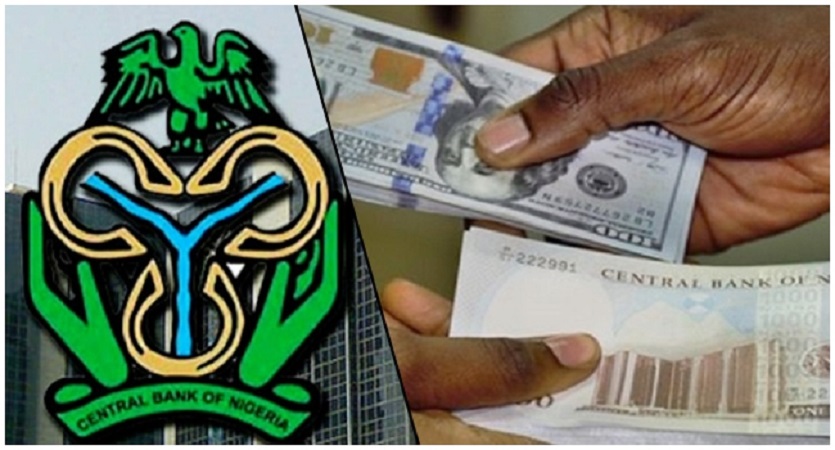
Nigerian Naira again: “The Central Bank of Nigeria (CBN) on Friday injected $197.71 million into the foreign exchange (FX) market in a bid to restore calm as the naira crashed to N1,600 per dollar—its weakest official exchange rate since December—under growing pressure from global economic shocks, including a 14% import tariff recently imposed on Nigeria by the United States.”

Ideally, Nigeria should not inject funds to stabilize Naira since it is floated. A floating regime will require the market forces to do the job.  That we are still injecting funds after two years does imply Naira cannot swim in a sea of global currencies when floated. Simply, Naira does not have the productive life jackets to float!

Mr. Governor, save Naira: peg it to N1,200/$ and allow it be. I have an Excel sheet where I’ve tracked the gains and losses as a result of the float. My data showed me that Naira is still being subsidized, not by the government, but by the private sector. That subsidization by the private sector is costing the government massive revenue. So, companies like MTN which used to send tons of money as tax have nothing to send.

My data shows that the opportunity cost (revenue, investment, asset value, etc) and the extra borrowing associated due to the loss of revenue from the private sector is close to the amount the government was originally spending on the Naira subsidy before the float. By the time I modeled asymmetric impacts like loss of venture funding for startups which was triggered by the floating, it becomes a negative policy on national economic competitiveness and growth.

I am an investor and I speak with dozens of global investors yearly. The #1 Naira problem is the volatility and not necessarily the exchange rate. But since we are still injecting funds to stabilize Naira because the US sneezed tariffs, why not just peg it? Mr. President is rational as an accountant, and will see this from the numbers. As always, my highest respect and I close from my June 2023 post: ‘Nigeria’s floating of its currency, while progressive, will cause severe perturbations in the economy – and a stable state may not come as most experts have predicted.” This injection of funds means the system is still unstable after 2 years.

CBN Injects $197.71m to Stabilize FX Market as Naira Falls to N1,600/$ Under Pressure From Trump’s 14% Tariff on Nigeria

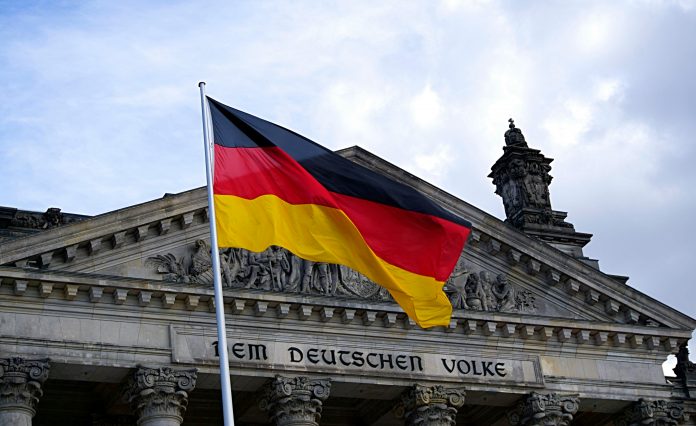
Exploring the MGCS Tank Project Between Germany and France

0

German authorities have approved the German French Tank Project, specifically the Main Ground Combat System (MGCS). On April 4, 2025, Germany’s Federal Cartel Office, the country’s antitrust authority, gave the green light to a joint venture between defense companies KNDS Deutschland, KNDS France, Rheinmetall, and Thales to develop this next-generation battle tank. This approval marks a significant step forward for the project, which aims to replace Germany’s Leopard 2 and France’s Leclerc tanks by the 2040s.

The MGCS is a collaborative effort between France and Germany, initiated in 2017, to create a cutting-edge tank system incorporating advanced technologies like artificial intelligence, laser weapons, and modular designs. The project had faced delays due to disagreements over work distribution and industrial priorities, but a breakthrough was achieved in March 2024 when the two nations agreed to split tasks equally.

This was followed by a formal agreement signed on April 26, 2024, in Paris by German Defense Minister Boris Pistorius and French Armed Forces Minister Sebastien Lecornu, setting the stage for development to proceed under German leadership. The recent antitrust approval ensures that the joint venture can move forward without competition concerns, allowing the companies to begin negotiations and work toward a contract in 2025.

The MGCS will replace aging Leopard 2 and Leclerc tanks, providing NATO and European forces with a state-of-the-art platform by the 2040s. Its advanced features—AI, laser technology, and modular designs—could give European militaries a significant edge in future conflicts. As a joint Franco-German project, the MGCS will standardize equipment between two of Europe’s largest armies, improving coordination in joint operations and potentially setting a template for other European nations to adopt.

By developing its own advanced tank, Europe reduces reliance on U.S. or other foreign defense systems, bolstering its ability to act independently in global security matters, especially amid uncertainties like shifting U.S. foreign policy priorities. The project will generate high-skilled jobs in Germany and France, particularly in the defense sectors of companies like KNDS and Rheinmetall. This could stimulate local economies and reinforce. A successful MGCS could become a competitive export product, challenging tanks like Russia’s T-14 Armata or the U.S. Abrams.

The collaboration spreads the high development costs (estimated in the billions of euros) between France and Germany, making it more financially viable than if either nation pursued it alone. However, delays or mismanagement could still strain budgets. The MGCS reinforces the Franco-German axis as the backbone of European integration. Overcoming past disputes over workshare and leadership signals a commitment to deeper defense cooperation, potentially inspiring broader EU defense initiatives. The project could push the European Union toward a more unified defense strategy, though it also highlights tensions—other nations might feel sidelined unless invited to join later, as has been suggested.

Amid Russia’s ongoing aggression in Ukraine and rising global tensions, the MGCS sends a message of European resolve to deter threats and compete with military powers like China and Russia, who are also advancing their armored capabilities. The integration of AI, laser weapons, and lighter, modular designs positions Europe at the forefront of military technology. Success here could spill over into civilian sectors like robotics and energy systems. The project will drive research and development, fostering advancements in materials science (e.g., for lighter armor) and electronics, with potential dual-use applications beyond defense.

The MGCS will force competitors—such as the U.S. with its Abrams upgrades or Russia with the T-14—to accelerate their own innovations, intensifying the global arms race in armored warfare. Past hiccups in Franco-German cooperation (e.g., disagreements resolved only in 2024) suggest risks of further setbacks, which could inflate costs or push timelines beyond the 2040 target. Changes in government in either France or Germany could disrupt funding or priorities, as seen with other joint projects like the Future Combat Air System (FCAS).

Export success depends on how allies and neutral nations perceive the MGCS compared to cheaper or more established alternatives. The MGCS project promises to modernize European militaries, strengthen economic and political ties, and drive technological progress, but its success hinges on sustained cooperation and execution. It’s a bold step toward a more self-reliant and competitive Europe on the global stage. The MGCS is expected to feature a lighter, more advanced platform—potentially with a 130mm gun—and aims to enhance Europe’s defense autonomy while competing with global players like Russia, the U.S., India, and China.

CBN Injects $197.71m to Stabilize FX Market as Naira Falls to N1,600/$ Under Pressure From Trump’s 14% Tariff on Nigeria

0

The Central Bank of Nigeria (CBN) on Friday, injected $197.71 million into the foreign exchange (FX) market in a bid to restore calm as the naira crashed to N1,600 per dollar—its weakest official exchange rate since December—under growing pressure from global economic shocks, including a 14% import tariff recently imposed on Nigeria by the United States.

The intervention, confirmed in a statement released Saturday by Dr. Omolara Omotunde Duke, Director of the Financial Markets Department, marks one of the most direct responses by the apex bank to the turmoil triggered by the U.S. government’s sudden hike in tariffs on a wide range of imports, including goods originating from Nigeria.

“In line with its commitment to ensuring adequate liquidity and supporting orderly market functioning, the CBN facilitated market activity…with the provision of $197.71 million through sales to Authorized Dealers,” the statement read.

The Bank said the move aligns with its broader objective of fostering a stable, transparent, and efficient foreign exchange market and reiterated its resolve to maintain market integrity amid rising volatility.

Trump’s Tariff Hitting Nigeria?

But beyond the routine policy language lies a deeper concern: the naira’s sharp depreciation is being increasingly tied to Trump’s decision to impose new tariffs on several countries—including Nigeria—as part of a broader trade overhaul that is beginning to reverberate across global markets.

According to economists, the U.S. president’s announcement of a sweeping 10% baseline tariff on most imports, and a separate 14% tariff on certain products from Nigeria, has directly contributed to the decline of the naira. The impact has been swift. Nigeria, which depends heavily on oil exports and dollar remittances, now finds itself squeezed between falling crude prices and rising trade barriers.

Analysts say Nigeria is particularly vulnerable to external shocks due to its over-reliance on imports and its narrow export base. With U.S. tariffs raising costs for Nigerian goods abroad—and reducing Nigeria’s competitiveness—dollar inflows are expected to decline further. That, in turn, has made it harder for the CBN to defend the naira without depleting its already strained reserves.

Naira Drops to N1,600/$1—Worst Since December

Data from the CBN shows that the naira ended Friday at N1,600 per dollar, down 1.9% from N1,569 recorded the previous day. It marks the weakest official exchange rate since December 4, 2024, when the currency closed at N1,608.

Intra-day trades suggest even wider instability. The naira briefly touched a high of N1,625 before retreating, while some trades settled as low as N1,519—highlighting a broad range of uncertainty in dealer pricing. The Nigerian Foreign Exchange Market (NFEM) average rate, which smoothens out day-to-day spikes, closed at N1,567—the softest level so far in 2025.

In just the first four trading days of April, the naira has already lost 3.9% of its value, after closing March at N1,537.

The market’s volatility has renewed questions about the effectiveness of Nigeria’s FX reform strategy, which had aimed to allow the naira to float more freely in line with market demand and supply dynamics. Economists believe that without buffers, such a system leaves the currency dangerously exposed to external headwinds.

Economists Call for Urgent Action

The dramatic weakening of the naira has prompted fresh warnings from economists who say Nigeria must urgently revise its economic playbook in light of the new global realities. Several experts have urged the government to immediately set up a high-level response team focused on mitigating the effects of Trump’s trade policies on Nigeria’s already fragile economy.

There is growing support for a mix of policy responses. Economists have urged the federal government to fast-track export diversification, especially in non-oil sectors like agro-processing, solid minerals, and services. They are also advocating for Nigeria to begin exploring bilateral trade talks with the U.S. to negotiate relief or possible exemptions from the newly introduced tariffs.

In addition, some have suggested rebuilding foreign exchange buffers through diaspora bonds and concessional loans to strengthen Nigeria’s short-term liquidity. There are also calls for a reassessment of the 2025 budget assumptions, particularly around oil benchmarks and projected dollar inflows, which may no longer be realistic given recent developments.

Another line of thought is for the CBN to offer more structured FX support to key import-dependent sectors of the economy to avoid further supply chain disruptions that could fuel inflation. In parallel, there is also mounting pressure for the CBN to step up transparency around its FX intervention strategy, with clear and predictable signals to prevent panic in the financial markets.

While the CBN has not committed to a daily defense of the naira, the tone of its latest statement suggests it is prepared to act again should market conditions worsen. Dr. Duke noted that the Bank would continue to closely monitor both global and domestic financial conditions and stands ready to intervene further as necessary to maintain market order.

The CBN also called on all authorized dealers to uphold the Nigeria FX Market Code, urging strict compliance and high ethical standards in all transactions with clients and counterparties.