DD
MM
YYYY

PAGES

DD
MM
YYYY

spot_img

PAGES

Home Blog Page 1441

Top Crypto to Watch in 2025: This One Just Got Backed by a $7.5M VC Deal

0

Every market cycle, traders and investors set out to identify the top crypto to watch for maximum gains and 2025 is no exception. While different projects compete for this top spot, RCO Finance (RCOF) is already setting the pace after the project secured a groundbreaking $7.5 million venture capital funding.

This level of investment signals more than just hype; it clearly indicates that something big is brewing beneath the surface. In this article, we dive into the top crypto to watch in 2025, with the spotlight on RCOF, which just secured a multi-million-dollar VC deal.

We’ll explore what makes this project stand out, the technology behind it, and why institutional investors like venture capitalists are betting big. Whether you’re a seasoned trader or just crypto-curious, this information is needed to stay ahead of the curve.

Why The $7.5 Million VC Backing For RCO Finance?

While many projects are positioning for the top crypto to watch in 2025, a globally renowned Venture Capital firm just pumped $7.5 million into RCO Finance. This move has reverberated across the crypto community, with market experts and analysts citing RCOF’s high-profit potential as the driving factor for the VC backing.

Venture Capital always flows to projects with strong potential for significant growth and profitability. If VCs are investing big in RCO Finance (RCOF), it only means that they have done their due diligence and concluded that RCOF is the top crypto to watch in 2025 with massive upside potential.

The project is already in its sixth presale stage, with the token priced at %0.13, a 919% growth from the first presale price of $0.01275. Right from the first presale stage, the token price has followed an upward trajectory, and top market experts strongly believe the token will achieve historic growth of over 39,680% post-launch.

VCs and institutional investors are seeing the potential and are flocking in. Don’t sit on the sidelines while others make life-changing returns from the RCOF presale. RCOF is not just the top crypto to watch in 2025 due to the $7.5 million VC backing; the team has been working round the clock, launching a series of innovative products.

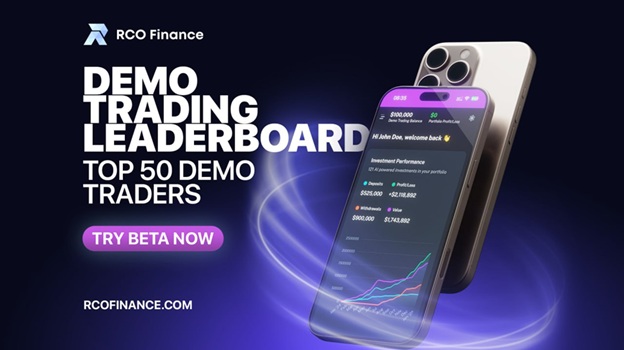
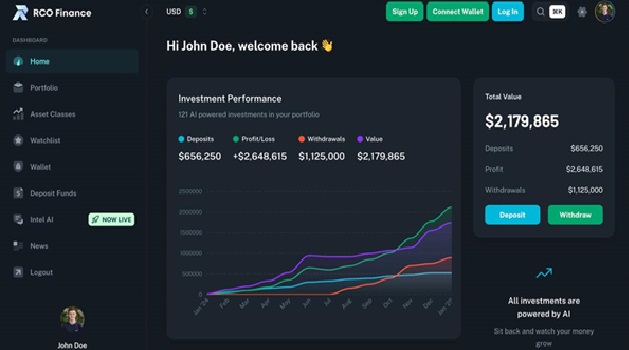
Over the past 4 months, the team has launched an AI-powered dashboard, Smart Portfolio Management, Multi-Asset Class Support, Wallet Management, AI Investment Advisor, Custom Watchlist, and Demo Trading Environment.
Why RCO Finance Is the Top Crypto To Watch

With the DeFi market worth over $450 billion, RCO Finance (RCOF) is rapidly carving out a significant share with its breakthrough AI Robo Advisor. This intelligent tool scans the market in real-time, identifying high-potential trades before they become mainstream headlines.

For instance, while many traders missed the HEGIC token’s explosive 78% surge within a single day, RCOF users would have received early alerts, positioning them to take action before the crowd.

Similarly, when the ZEREBRO token plummeted by over 27%, the Robo Advisor’s risk-detection capabilities could have helped users avoid costly losses. This real-time market foresight empowers RCOF traders to make data-driven moves rather than relying on guesswork or luck.

But RCOF’s innovation doesn’t stop there. The platform boasts access to a vast catalog of over 120,000 assets, with data sourced from reputable outlets like Bloomberg and Reuters. With unique features like fractional ownership and no-KYC trading, RCOF blends accessibility with advanced security, creating an inclusive space for all.

Despite being an emerging project, RCOF has already delivered a robust suite of tools, including immersive demo trading environments and AI-powered market insights. Plus, entry into exclusive Private Syndicate ETF Funds, that were previously exclusive for institutional investors.

Add in its automated market maker (AMM) functionality for earning passive income, and it’s clear why many analysts consider RCOF as the top crypto to watch in 2025.

RCOF’s Groundbreaking Beta Platform

RCO Finance (RCOF) is breaking new ground in the DeFi space by launching its Beta Platform during its presale phase, something few projects have dared to attempt. In just a matter of days, over 10,000 users signed up, and that number has surged past 285,000 within weeks.

This early momentum highlights the massive interest and growing trust in what RCOF is building. The Beta platform’s unique value proposition and fully functional AI-driven features stood out.

Traders gained early access to over 100,000 global assets, paired with smart tools like the Robo Advisor for real-time strategy and insights. This hands-on rollout allowed the team to gather critical user feedback fine-tuning performance, and user experience (UX) well before the official launch.

With real-world usage already proving its value, many crypto experts now view RCOF as the top crypto to watch in 2025 for historic gains.

Upcoming Features That Further Consolidate RCOF’s Position As the Top Crypto To Watch

According to the RCOF team, they have lined up a series of groundbreaking new products for the second quarter of 2025. In Q2 2025, they will launch AI-powered simulated trading to enable users to compare manual trades and AI-executed trades before going live.

There will also be a Demo trading leaderboard that allows 50 demo traders to be ranked in real-time based on their profit growth. The In-Depth Trade Performance Analytics will empower users to optimize their strategies using hard data.

In May 2025, three new products will go live, including CRM Sync and User Behaviour tracking, Calendar-Based Profit and Loss Tracking, and Crypto-Funded Demo Trading. The mobile number collection feature will also go live, allowing users to receive SMS alerts.

The AI-trading indicator will be launched in June 2025, with expansion to stocks, bonds, FX, and commodities scheduled to go live by August 2025. Top analysts strongly believe these new products will help consolidate RCOF’s grip as the top crypto in 2025.
Join the RCOF Presale For Massive Gains

RCO Finance (RCOF) is currently in Stage 6 of its presale, and interest is accelerating rapidly. More than 16.8 million tokens have already been sold, amounting to over 40% of the allocation, and investors are buying into the vision. So far, the presale has brought in over $17 million, signaling strong market confidence.

At just $0.13 per token, RCOF is still accessible, but that price won’t hold for long. Once the next phase hits, the cost rises to $0.15. Analysts are forecasting a staggering potential increase of over 39,680%, meaning a $1,000 investment today could balloon to $396,800 by Q3 2025.

Beyond its impressive presale success and low entry price, the project has passed a rigorous audit by SolidProof, adding another layer of credibility. Early investor incentives are also heating up, with news of a $100,000 giveaway once the next milestone is unlocked.

With powerful built-in leverage features, a $7.5 million injection from a venture capital firm, and a roadmap already delivering results, RCOF is more than just the top crypto to watch in 2025; it’s a serious contender in the altcoin space.

With momentum building and supply shrinking, you could miss out entirely if you wait too long. If you want to get in before the next surge, now’s the moment to move. Join the RCOF presale and position your portfolio for massive gains.

For more information about the RCO Finance (RCOF) Presale:

Visit RCO Finance Presale

Join The RCO Finance Community

Growth Journey and Winning the Future | Ndubuisi Ekekwe

0

It is Tekedia Mini-MBA Graduation Week. Join us today for the first lecture titled “Growth Journey and Winning the Future ”. After our co-learning process over the last 13 weeks, it is now time for execution. When we execute, we grow our businesses and careers.

Indeed, organizing and optimizing the pillars of people, processes and tools, to turn the elemental factors of production – knowledge, labour, capital and entrepreneurial vision – into products and services, in order to fix market frictions, is a journey to growth. Doing that consistently will help us win the business future.

Indeed, there can never be a GREAT company without a great product or service. We solved the equations of market in the last 13 weeks:

  • Innovation := invention + commercialization.
  • Great Company := Awesome Products + Superior Execution.

Today, I will connect all the elements, providing tools for us to take that journey to growth. Grow in your career. Grow in your business. Good luck.

Tue, Apr 29 | 7pm – 8pm WAT | Growth Journey and Winning the Future – Ndubuisi Ekekwe | Zoom Link

To join the next edition of Tekedia Mini-MBA, go here and beat the early deadline for discounts https://school.tekedia.com/course/mmba17/

The Role of Security in Lottery Software

0

Lottery games have come a long way from paper tickets and weekly draws. Today, everything happens through advanced software – helping players buy tickets, draw numbers, and even claim prizes from anywhere in the world.

Security isn’t just a feature in lottery software. It’s the foundation that keeps everything running smoothly and fairly.

Why Security Matters So Much

Think about it: lottery platforms handle a lot of sensitive stuff – your name, payment details, and potential winnings. One weak link and that personal info could end up in the wrong hands.

There’s also the issue of trust. Players need to feel confident that the games aren’t rigged and that their data is protected. If they don’t trust the system, they’ll stop playing. Good lottery software needs strong security – it keeps the game fair and players safe.

Most countries require lottery operators to follow strict security standards, so the software has to be up to the task.

Common Security Threats in Lottery Software

Unfortunately, as tech improves, so do the tricks that hackers and scammers use. Some try to break into systems to steal money or manipulate results. Others try to grab personal data for things like identity theft.

For example, your personal info could be exposed if a platform doesn’t use strong encryption. Or if admin accounts aren’t protected well, someone could sneak in and mess with the numbers.

This is why picking the right lottery software provider matters so much. A reliable provider will build the system with strong security from the ground up – things like secure logins, monitoring tools, and safe storage of sensitive information. In other words, they think like the bad guys so they can stop them before they even try.

What Good Security Looks Like

Strong security doesn’t have to be flashy – it just has to work. The best lottery platforms are built with multiple layers of protection to keep everything safe behind the scenes. That means encrypting all personal and payment data so no one can snoop on it, using two-factor authentication so only the right people can access accounts, and relying on certified random number generators to ensure every draw is entirely fair. On top of that, providers keep their systems updated regularly to fix any weak spots before they can be exploited. It’s a quiet protection, but it makes all the difference.

What Providers Do Behind the Scenes

Security isn’t just about setting it up once and forgetting it. Good providers are constantly testing and improving their systems.

They run security checks, look for weak spots, and ensure that they meet international standards like ISO 27001 or PCI DSS (if they handle payments). These aren’t just buzzwords – they’re proof that the provider takes security seriously.

They also train their team to be cautious. Sometimes, it’s not hackers but human mistakes that cause problems. So, keeping staff educated and alert is a big part of the puzzle, too.

Real-Life Lessons

There are real-world examples that show both sides of the coin. In one case, a provider caught a hacker trying to break in by spotting strange login behavior and quickly shutting it down. The problem was avoided.

But there have also been stories where poor security led to big scandals. One involved someone on the inside who rigged the system to win jackpots. It only happened because the software wasn’t secure enough and took years to uncover.

Wrapping Up

Lottery software is about more than flashy games and big prizes – it’s about trust. Players are more likely to play and stay When they know a platform is safe and fair.

So, if you’re choosing a lottery software provider, don’t just look at the features. Ask the hard questions about security. Because in this business, peace of mind is worth more than the jackpot.

The $330M Bitcoin Hack and Subsequent 50% Monero (XMR) Spike Carry Significant Implications

3

On April 28, 2025, a suspected theft of 3,520 Bitcoin (BTC), valued at approximately $330.7 million, led to a 50% surge in Monero (XMR) prices, with the privacy coin reaching an intraday high of $339-$391, according to various sources. Blockchain investigator ZachXBT flagged the suspicious transfer from a potential victim’s wallet (address: bc1qcrypchnrdx87jnal5e5m849fw460t4gk7vz55g), noting that the stolen BTC was rapidly laundered through over six instant exchanges and converted into XMR to obscure the trail.

Monero’s privacy features, such as stealth addresses and ring signatures, make its transactions untraceable, which likely prompted the hacker to use it for laundering.
The large-scale conversion caused a supply-demand shock in Monero’s market, given its lower liquidity compared to Bitcoin, driving the price spike. Trading volume surged by up to 500%, with open interest in XMR futures hitting a yearly high and over $1 million in short positions liquidated.

However, XMR later retraced, trading between $263-$295 by the end of the day, still up 15-25% over 24 hours. ZachXBT dismissed speculation that North Korea’s Lazarus Group was involved, suggesting independent hackers targeted a longtime Bitcoin holder, likely an “OG Bitcoiner.” The incident has reignited debates about privacy coins, with some sources noting Monero’s growing retail adoption (e.g., Spar supermarkets in Switzerland accepting XMR) and upcoming upgrades (EP159 and EP160) aimed at improving compliance without sacrificing privacy.

However, the hack highlights Monero’s appeal to cybercriminals, raising concerns about regulatory scrutiny, especially as authorities like Finland’s National Bureau of Investigation have traced XMR transactions in past cases. Analysts warn of potential short-term volatility, with XMR’s Relative Strength Index (RSI) indicating overbought conditions and possible price corrections toward $230-$199 if support levels break.

The hack, targeting a presumed “OG Bitcoiner,” underscores the risks faced by long-term Bitcoin holders with significant assets in single wallets. Poor wallet security or phishing attacks can lead to catastrophic losses, eroding trust in self-custody.

The use of instant exchanges for laundering highlights potential weaknesses in Know Your Customer (KYC) and Anti-Money Laundering (AML) protocols at smaller platforms, prompting calls for stricter regulations or audits. High-profile hacks can deter retail and institutional investors, reinforcing perceptions of crypto as a high-risk asset class, potentially slowing adoption. The hacker’s use of Monero for laundering reinforces its reputation as the go-to privacy coin, potentially driving legitimate and illicit demand. Retail adoption (e.g., Spar supermarkets in Switzerland accepting XMR) may accelerate as privacy becomes a valued feature.

Monero’s untraceable transactions make it a target for regulators. The hack could intensify scrutiny, with governments potentially pushing for bans or delistings from exchanges, as seen in jurisdictions like Japan and South Korea. Upcoming Monero upgrades (EP159/EP160) aim to balance compliance and privacy, but their effectiveness remains uncertain. The 50% price surge and subsequent retracement highlight Monero’s susceptibility to supply-demand shocks due to its lower liquidity. Overbought conditions (high RSI) suggest short-term corrections, impacting traders and speculators.

Monero’s privacy features (stealth addresses, ring signatures) complicate tracking, but not entirely. Cases like Finland’s National Bureau of Investigation tracing XMR show that law enforcement is adapting, potentially through off-chain data or exchange cooperation. Authorities may demand stricter monitoring of XMR conversions, forcing exchanges to implement advanced analytics or limit privacy coin trading, which could reduce Monero’s accessibility.

The hack triggered a 500% surge in XMR trading volume and liquidated short positions, signaling heightened speculative interest. However, futures open interest at yearly highs suggests over-leveraging, risking sharp corrections if sentiment shifts.While Bitcoin’s price remained relatively stable, large-scale thefts could increase selling pressure if victims liquidate remaining holdings or if market sentiment sours.

Other privacy coins (e.g., Zcash, Dash) may see increased interest, but Monero’s dominance in this niche could solidify. The hack may accelerate demand for decentralized exchanges (DEXs) and privacy-focused protocols, as centralized platforms remain vulnerable to regulatory pressure and hacks.

The incident fuels the ongoing debate between crypto’s potential for financial freedom and its misuse by criminals, shaping public perception and policy debates. Rising hack frequency could boost demand for crypto insurance products and institutional-grade custody services to mitigate risks for high-net-worth holders.

The absence of state-backed actors like Lazarus Group suggests independent hackers are growing more sophisticated, potentially increasing the frequency of such attacks. Monero’s role in enabling financial privacy for legitimate users (e.g., in authoritarian regimes) clashes with its utility for criminals, complicating the moral case for privacy coins.

The hack exposes systemic risks in crypto security, amplifies Monero’s dual-use nature, and could catalyze regulatory and market shifts. While short-term volatility is likely, the incident may drive innovation in privacy and security solutions, though at the cost of heightened scrutiny and potential restrictions on privacy coins.

Mastercard to Support Stablecoin Payments Globally

0

Mastercard announced a comprehensive global initiative to support stablecoin payments, enabling seamless transactions from digital wallets to merchant checkouts at over 150 million locations worldwide. This “360-degree approach” includes wallet enablement, card issuance, merchant settlement, and on-chain remittances.

Key partnerships with crypto platforms like MetaMask, Kraken, Gemini, Bybit, Crypto.com, Binance, Monavate, Bleap, OKX, Nuvei, Circle, and Paxos facilitate this ecosystem. Consumers can spend stablecoins via Mastercard-branded cards, such as the OKX Card, and withdraw them to bank accounts.

Merchants can receive payments in stablecoins like USDC and USDP, regardless of payment method. Mastercard’s Multi-Token Network (MTN), launched in 2023, supports real-time settlements across currencies. This move positions Mastercard as a leader in bridging traditional and digital finance amid growing stablecoin adoption.

Mastercard’s stablecoin payment support, significantly impacts crypto payments and DeFi by bridging traditional finance and blockchain ecosystems. Enabling stablecoin payments at over 150 million Mastercard-accepting merchants globally mainstreams crypto use. Consumers can spend stablecoins like USDC and USDP directly from digital wallets (e.g., MetaMask, OKX) via Mastercard-branded cards, making crypto a practical payment option.

Integration with platforms like Binance, Kraken, and Crypto.com simplifies spending, with features like card issuance and ATM withdrawals. This reduces friction for non-crypto-native users, encouraging broader adoption. Merchants can accept stablecoin payments without needing blockchain expertise, as Mastercard handles settlement in stablecoins or fiat. This expands crypto’s utility in retail, e-commerce, and remittances.

By supporting regulated stablecoins, Mastercard mitigates volatility concerns, making crypto payments more appealing for everyday transactions compared to volatile assets like Bitcoin. Partnerships with Circle, Paxos, and others leverage Mastercard’s Multi-Token Network (MTN) for real-time, cross-currency settlements, enhancing efficiency in global crypto transactions.

Mastercard’s infrastructure connects DeFi wallets to traditional payment rails, enabling DeFi users to spend on-chain assets in real-world scenarios. This integration could drive DeFi protocol usage for payments and remittances. Increased stablecoin circulation through Mastercard’s network enhances liquidity in DeFi ecosystems, as users move funds between DeFi platforms and merchant payments seamlessly.

Support for on-chain remittances via stablecoins reduces reliance on centralized intermediaries, aligning with DeFi’s ethos of decentralization while leveraging Mastercard’s global reach. Partnerships with DeFi-adjacent platforms (e.g., MetaMask, Bybit) may spur new financial products, such as DeFi-based lending or yield farming tied to stablecoin payment flows.

Mastercard’s focus on compliant stablecoins (e.g., USDC, USDP) could push DeFi projects toward regulatory frameworks, fostering trust but potentially limiting fully decentralized protocols. Mastercard’s move may pressure competitors like Visa (already active in crypto) to accelerate their blockchain initiatives, intensifying innovation in crypto payments.

Stablecoin transaction volumes could surge, benefiting issuers like Circle and Paxos. However, non-stablecoin cryptocurrencies may see reduced payment use due to volatility. While integration boosts DeFi’s reach, reliance on centralized players like Mastercard could raise concerns about centralization among DeFi purists.

Increased stablecoin use may influence monetary policies, as central banks monitor their impact on fiat systems, potentially accelerating CBDC development. Mastercard’s initiative accelerates crypto payment adoption by making stablecoins a viable, mainstream option while enhancing DeFi’s real-world utility. However, it may favor regulated, centralized stablecoins over fully decentralized DeFi protocols, shaping the ecosystem’s evolution.