DD
MM
YYYY

PAGES

DD
MM
YYYY

spot_img

PAGES

Home Blog Page 1442

Lifted Ram Trucks: The Ultimate Guide to Performance, Style, and Off-Road Capability

0

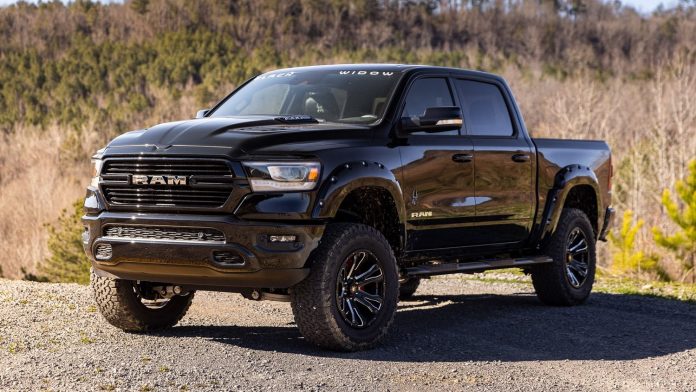
When it comes to trucks that offer unparalleled power, durability, and style, Ram trucks are in a league of their own. A rising trend among truck enthusiasts is the modification of these vehicles through lifting. Lifted Ram trucks are highly sought after for their aggressive appearance, enhanced performance, and superior off-road capabilities. Whether you’re looking to conquer tough trails, upgrade your truck’s look, or improve its performance, lifting a Ram truck offers a wide range of benefits.

Performance: Maximizing Power and Handling

Lifting a Ram truck enhances both its appearance and performance. With the right upgrades, it can achieve optimal power, handling, and durability on various terrains.

Engine and Powertrain Modifications

Larger tires from a lift can strain the engine and drivetrain. To compensate, performance upgrades like cold air intakes, exhaust systems, and engine tuners can boost power and fuel efficiency. Upgraded transmissions and engine control unit (ECU) recalibration may also be necessary for smoother shifts and improved handling, especially off-road.

Suspension and Handling

Upgraded suspension systems, such as heavy-duty shocks and coilovers, improve ride quality and handling on rough terrain. These systems enhance wheel travel and articulation, helping the truck navigate rocky trails. However, it’s crucial to balance comfort with performance to avoid an overly stiff ride on paved roads.

Tires and Wheels

Larger tires increase traction, crucial for off-road driving, but may reduce fuel efficiency. All-terrain or mud-terrain tires offer the best grip for lifted trucks. Stronger wheels, like aluminum alloy, help support larger tires, and custom wheels with a wider offset can improve the truck’s appearance and stance.

Braking System Upgrades

Larger tires and increased weight can strain the braking system. Upgrading to larger rotors and calipers ensures adequate stopping power for lifted Ram trucks.

Style: Enhancing the Look of Your Lifted Ram Truck

One of the most exciting aspects of modifying a Ram truck is the ability to customize its appearance. Lifting your truck gives it a bold, aggressive look that stands out on the road, and there are plenty of ways to enhance this look further.

Exterior Design and Customization

The visual appeal of a lifted Ram truck is undeniable. When the truck is raised, it takes on a more muscular and commanding presence. To complement the lift, truck owners often install aftermarket bumpers, grille guards, and fender flares. These accessories not only add to the truck’s rugged look but also offer protection against off-road hazards like debris and rocks.

Another popular upgrade is custom lighting, such as LED light bars and fog lights, which enhance both the aesthetics and functionality of the vehicle. These lights are particularly useful for off-roading at night, providing better visibility on dark trails.

Lighting and Accessories

Lighting plays a significant role in the overall style and practicality of a lifted Ram truck. Many owners install off-road LED lights, light bars, and spotlights to illuminate their path when navigating through rough terrain. Additionally, accessories like running boards, roof racks, and tow hooks can be added to increase both style and functionality.

Interior Customization

While the exterior of a lifted Ram truck gets most of the attention, interior customization is just as important. Upgrading the truck’s interior can significantly improve comfort and luxury. Popular upgrades include leather seats, custom dashboards, and advanced infotainment systems.

For those who plan to use their truck for off-road adventures, adding durable floor mats, a high-quality sound system, and custom upholstery can make the ride more comfortable and enjoyable.

Off-Road Capability: Dominating the Trails

Lifting a Ram truck not only enhances its performance on the road but also significantly improves its off-road capabilities. Increased ground clearance allows it to navigate obstacles like rocks, deep mud, and uneven surfaces without getting stuck. A lifted Ram truck can cross streams, crawl over boulders, and glide through snow, all while avoiding undercarriage damage.

Upgraded suspension components, such as long-travel shocks and reinforced control arms, enable the truck to maintain stability on rugged terrain. These modifications provide superior wheel articulation, ensuring that all four wheels stay in contact with the ground, even on uneven surfaces.

Larger, aggressive tires are another key advantage for off-roading. Mud-terrain and all-terrain tires offer superior traction on various surfaces, making them ideal for lifted trucks. Additionally, protective accessories like skid plates and rock sliders shield the truck’s undercarriage from damage caused by rough trails.

Considerations Before Lifting Your Ram Truck

Before deciding to lift your Ram truck, there are several important factors to consider.

Lifting a truck is an investment, and it’s important to understand the costs involved. Lift kits, larger tires, suspension upgrades, and other accessories can add up quickly. While there are budget-friendly options, high-performance kits and premium upgrades can be more expensive.

Each state has different laws regarding vehicle modifications, including the height of your truck. It’s essential to check local regulations to ensure that your lifted truck complies with road safety and height requirements. Failing to do so can result in fines or the inability to register the vehicle.

Lifting a Ram truck may void certain aspects of its manufacturer’s warranty, especially when modifications affect the suspension or drivetrain. Additionally, it’s a good idea to check with your insurance provider to see how lifting your truck might impact your premiums or coverage.

Conclusion

Lifting your Ram truck is one of the best ways to improve its performance, off-road capabilities, and overall aesthetic appeal. Whether you’re looking to tackle tough trails, enhance your truck’s style, or simply enjoy a smoother ride on rough terrain, a lifted Ram truck can meet all of your needs. By understanding the benefits and modifications that come with lifting a truck, you can ensure that your Ram is optimized for both on-road and off-road adventures.

Poor Bitcoin, Illusion of Digital Gold and the Fear of Tariffs

0

Mike Tyson famously said, “Everyone has a plan until they get punched in the face.” Bitcoin was a digital gold until when it was expected to behave like gold.  JP Morgan laughs: “JPMorgan’s recent analysis, as of April 2025, highlights mounting pressure on Bitcoin’s “digital gold” narrative amid the escalating U.S.-China trade war and market turmoil. The bank points to Bitcoin’s sharp reversal—dropping from $84,600 to $83,000 on April 4 after China’s 34% tariff retaliation—as evidence that it’s behaving more like a risk asset than a safe-haven store of value.

“Unlike gold, which climbed 1% to $2,700 amid the chaos, Bitcoin shed $37 billion in market cap in 20 minutes, tracking the S&P 500’s 4.9% plunge and pre-market 4% slide rather than decoupling as a hedge. JPMorgan argues this undermines the long-held pitch by crypto advocates that Bitcoin mirrors gold’s role as a non-correlated asset in times of economic distress.”

Now, the next theory for Bitcoin!

JPMorgan Highlights Mounting Pressures on Bitcoin as Tariffs Intensify

0

JPMorgan’s recent analysis, as of April 2025, highlights mounting pressure on Bitcoin’s “digital gold” narrative amid the escalating U.S.-China trade war and market turmoil. The bank points to Bitcoin’s sharp reversal—dropping from $84,600 to $83,000 on April 4 after China’s 34% tariff retaliation—as evidence that it’s behaving more like a risk asset than a safe-haven store of value. Unlike gold, which climbed 1% to $2,700 amid the chaos, Bitcoin shed $37 billion in market cap in 20 minutes, tracking the S&P 500’s 4.9% plunge and pre-market 4% slide rather than decoupling as a hedge. JPMorgan argues this undermines the long-held pitch by crypto advocates that Bitcoin mirrors gold’s role as a non-correlated asset in times of economic distress.

The bank ties this to macro dynamics. Trump’s 54% tariff on Chinese goods and China’s counterpunch have spiked recession fears—Goldman Sachs now sees a 60% chance—driving investors to traditional havens like Treasuries (yields down to 4.1%) and gold, not Bitcoin. JPMorgan notes Bitcoin’s correlation with equities has risen to 0.6 in 2025 from 0.3 in 2023, per their data, reflecting its sensitivity to liquidity crunches and risk-off sentiment. With traders pointing to crypto’s sell-off alongside tech stocks (e.g., Nvidia -7%) as proof it’s not yet a crisis asset. The firm also flags structural pressures: U.S. miners face higher costs from tariffed Chinese hardware, and institutional flows—key to Bitcoin’s 2024 rally—may dry up if volatility persists.

JPMorgan doesn’t fully dismiss the narrative. Bitcoin’s finite supply (21 million cap) and decentralization still appeal as a long-term inflation hedge, especially if trade wars weaken fiat currencies. Gold’s $14 trillion market cap dwarfs Bitcoin’s $1.6 trillion, but the BTC-gold ratio’s recent dip suggests room for catch-up if sentiment shifts. For now, though, the bank sees downside risks dominating—potentially testing $70,000—unless a stabilizing catalyst (e.g., Fed cuts or trade de?tente) reframes it as “digital gold” again. The pressure’s real, but the story’s not dead yet.

JPMorgan’s observation that Bitcoin’s “digital gold” narrative is under pressure carries significant implications for its role in markets, investor perception, and the broader crypto ecosystem as of April 42, 2025. Bitcoin’s failure to rally alongside gold ($2,700) during the U.S.-China trade war—dropping $2,000 instead—challenges its marketed status as a safe-haven asset. With the S&P 500 down 4.9% and pre-market futures signaling another 4% slide, Bitcoin’s 0.6 correlation with equities (per JPMorgan) ties it to risk assets like tech stocks, not uncorrelated hedges like gold or Treasuries (yields at 4.1%).

This dents the narrative pushed by advocates like Michael Saylor, who’ve pitched it as a shield against inflation and economic chaos. If Bitcoin can’t decouple in a crisis—unlike gold, which thrives on uncertainty—its appeal as “digital gold” weakens, especially for institutional investors who drove its 2024 surge past $80,000. Short-term, this pressures Bitcoin’s price. JPMorgan’s $70,000 downside risk aligns with technical levels (200-day moving average) and reflects a potential 15% drop from $83,000 if risk-off sentiment deepens. The $37 billion market cap wipeout in 20 minutes shows how fast capital flees when macro fears—60% recession odds per Goldman Sachs—dominate.

Retail traders lament the sell-off, while hedge funds may pivot to gold or bonds, shrinking Bitcoin’s $1.6 trillion market cap further. Long-term, though, a sustained trade war could revive its hedge case: if tariffs spike inflation (Morgan Stanley’s 2-3% CPI forecast) or erode dollar trust, Bitcoin’s 21 million cap might draw inflows, narrowing the gap with gold’s $14 trillion valuation. The narrative’s strain hits more than just Bitcoin. Altcoins, often tethered to BTC’s momentum, face amplified losses—Ethereum and Solana dipped 5-7% in sympathy. U.S. miners, already squeezed by tariffed Chinese rigs (e.g., Bitmain), could see margins collapse, dragging hash rate and network security down post-halving.

Crypto stocks like Coinbase (-6%) and MicroStrategy (-9%) mirror this pain, signaling a sector-wide confidence hit. Stablecoins like Tether, backed by Trump’s dollar-dominance push, might gain traction as a crisis bridge, but only if Bitcoin’s volatility doesn’t taint the broader asset class. The trade war’s fallout—Trump’s 54% tariff in China, China’s 34% retaliation—fuels this pressure. If the Fed cuts rates (four expected in 2025) to offset a GDP drag (JPMorgan’s 1% estimate), liquidity could prop Bitcoin up, but persistent inflation fears favor gold’s proven track record. China’s rare earth export controls and WTO filing add geopolitical noise, yet Bitcoin’s lack of tangible utility (unlike gold in tech) limits its crisis appeal.

Politically, a faltering “digital gold” story might cool Trump’s crypto-friendly stance—his administration’s Tether nod aimed to rival China’s digital yuan—but only if voter backlash from market losses grows. This moment tests Bitcoin’s maturity. A drop to $70,000 could shake out weak hands, but a V-shaped recovery—say, to $85,000 resistance—might restore faith if triggered by a Fed pivot or trade talks (Xi-Trump call rumors swirl). The BTC-gold ratio’s decline suggests a potential inflection: gold’s stability wins now, but Bitcoin’s 160% five-year gain (vs. gold’s 50%) hints at upside if macro shifts favor risk. For the crypto narrative, it’s adapted or fade—either Bitcoin proves its hedge credentials in this chaos.

China Retaliatory Tariffs on U.S. Goods Holds Broader Effects

0

On April 4, 2025, China announced it will impose an additional 34% tariff on all U.S. goods starting April 10, as a countermeasure to President Trump’s escalation of tariffs on Chinese imports to 54%. This move, confirmed by China’s finance ministry, follows Trump’s “Liberation Day” announcement on April 2, which included a 10% baseline tariff on all U.S. trading partners and an additional 34% on China, stacking atop existing 20% duties. Alongside the tariffs, China has requested a World Trade Organization (WTO) consultation, filing a lawsuit claiming the U.S. measures violate international trade rules, undermine WTO members’ rights, and destabilize the global economic order. Beijing labeled the U.S. actions “unilateral bullying,” per a Commerce Ministry statement.

This retaliation targets $164 billion in annual U.S. exports to China, hitting sectors like agriculture (soybeans, pork), aerospace (Boeing), and energy hardest. It’s paired with non-tariff measures: export controls on rare earths critical for tech and defense, bans on 16 U.S. firms from accessing dual-use goods, and customs blocks on certain U.S. poultry and sorghum imports. The WTO consultation request aims to challenge the legality of Trump’s tariffs, invoked under a “national emergency” via the International Emergency Economic Powers Act (IEEPA), a move critics argue stretches the law’s intent beyond external threats to domestic policy.

Markets reacted sharply—S&P 500 futures dropped over 4% pre-market today, after a 4.9% plunge yesterday, signaling recession fears as the trade war deepens. China’s response, while sweeping, is seen by some as restrained given its $439 billion export reliance on the U.S.; analysts like Julian Evans-Pritchard from Capital Economics note Beijing’s limited leverage due to this imbalance. The WTO process could take months, but with Trump’s April 9 deadline for the 54% tariff looming, near-term escalation seems likely unless talks—potentially via a rumored Trump-Xi call—yield a de?tente. For now, global trade norms are buckling under the strain.

The 34% tariff slams $164 billion in U.S. exports to China, amplifying pressure on an already rattled U.S. economy. Agriculture takes a direct hit—soybeans ($14 billion annually) and pork ($1.5 billion) face steep price hikes, threatening farmers in states like Iowa and Illinois, key Trump constituencies. Aerospace (Boeing’s $10 billion in China sales) and energy (LNG exports) also buckle, with ripple effects on jobs and supply chains. U.S. consumers, meanwhile, brace for higher costs as Trump’s 54% tariff on $439 billion in Chinese imports—electronics, apparel, machinery—kicks on April 9.

Goldman Sachs now projects a 2-3% CPI spike by Q3 2025, risking stagflation as growth slows (GDP forecasts cut to 1.8% for 2025). China’s economy isn’t unscathed. Its $275 billion trade surplus with the U.S. shrinks as tariffs bite, and domestic firms like Huawei, already squeezed by U.S. tech bans, face tighter margins. Beijing’s rare earth export controls—covering 70% of global supply—aim to weaponize its leverage, but risk alienating other trade partners like Japan or the EU if overplayed. The WTO filing signals a long game, but with consultations often dragging six months and enforcement weak (the U.S. has ignored past rulings), it’s more symbolic than immediate relief.

Market Turbulence

The S&P 500’s 4.9% drop yesterday and 4%+ pre-market slide today reflect a market in panic mode. The tariff tit-for-tat wipes out $2.4 trillion in S&P value already, with tech (Apple -9%) and industrials (Caterpillar -6%) leading losses. China’s non-tariff moves—banning 16 U.S. firms and blocking poultry—deepen the rout, pushing the VIX to 30 and 10-year Treasury yields down to 4.1% as investors flee to safety. Bitcoin’s $2,000 dip and gold’s $2,700 peak underscore a risk-off shift, though crypto could rebound if dollar weakness emerges from trade imbalances. Global markets echo the pain: Nikkei (-2.77%), Hang Seng (-1.52%), and STOXX 600 (-2%) signal a synchronized sell-off.

This escalation marks a new peak in U.S.-China rivalry, fraying globalization further. China’s WTO play aims to rally multilateral support, framing the U.S. as a trade rogue—potentially swaying BRICS or neutral players like India. But Trump’s “national emergency” justification via IEEPA sidesteps WTO rules, daring China to escalate beyond tariffs (e.g., currency devaluation, a 2019 tactic). The rare earth chokehold targets U.S. defense and tech—think F-35 jets and Tesla batteries—hinting at a broader economic war. If Xi and Trump don’t talk (a call’s rumored), allies like Canada or the EU might face pressure to pick sides, risking a tariff domino effect.

The trade war’s entrenchment could reshape global supply chains permanently. U.S. firms may accelerate reshoring or pivot to Vietnam and Mexico, but that’s years off—near-term, costs soar. China’s stimulus ($1.4 trillion planned for 2025) and non-U.S. trade pacts (e.g., RCEP) aim to offset losses, though its export-driven model creaks. The WTO’s relevance wanes if both powers ignore it, hastening a fragmented, bloc-based world economy. For markets, a 5,300 S&P floor looms unless de-escalation or strong U.S. jobs data (tomorrow) shifts sentiment. Politically, Trump faces a bind: his base cheers tariffs, but Wall Street’s bloodbath and farmer pain could force a rethink by midterms.

Could Humanoid Robots Become Esports Players

0

Artificial intelligence and robotics are transforming industries, and esports could be next. With Australia’s gaming sector generating over A$4 billion annually, AI-driven competitors are sparking debate. According to the Australian National University, machine learning efficiency has surged 60 percent over the past decade, enabling AI to process strategies at unmatched speeds. Online platforms such as payid pokies already use AI-driven features, improving user experience and gameplay. As AI advances, could humanoid robots soon compete alongside or against human players in professional gaming? This evolution may redefine competitive esports and gaming dynamics.

Hellspin Casino Features and AI Integration

As AI reshapes gaming, Hellspin Australia integrates advanced technology to enhance player engagement. Hellspin game library offers over 3200 titles, including AI enhanced drop and win titles and 250+ live croupier options. AI also powers fraud detection for cryptocurrency transactions, ensuring secure payments and fast withdrawal processing for transactions.

Hellspin Casino crafts its promotions to suit a variety of players, offering match bonuses with clear entry points. This structured approach of Hellspin highlights its strategic planning, organically catering to casual punters and high-stakes enthusiasts alike while keeping weekly intrigue alive.

Promotion Bonus Details Minimum Deposit Extras
Welcome Bonus 100% match up to A$270 A$25 100 free spins
Highroller Bonus 100% match up to A$1,150 A$495 None
Secret Bonus (Mon) Varies (details undisclosed) A$65 None

Notably, the free spins at Hell Spin are credited in two batches: 50 spins immediately upon deposit and the remaining 50 spins 24 hours later. The Secret Bonus for Hellspin pokies is available every Monday, whereas specific details are provided upon eligibility.

Popular high RTP games on Hell Spin include Big Bass Hold and Spinner and Big Bass Mission Fishin’, alongside classics like 5 Lions Megaways. As the online casino sector continues to expand, platforms like HellSpin Australia are likely to prioritise game selection strategies that balance high RTP rates with engaging bonus mechanics to sustain competitive advantage. The mobile friendly website allows smooth access across iOS and Android-powered devices, thus downloading HellSpin app is obsolete.

With AI already playing a key role in refining Hellspin game experiences, the prospect of robotic competitors in esports seems increasingly plausible. As AI technology continues to evolve, HellSpin Casino’s adoption of machine learning models and predictive analytics is poised to further refine its player experience, security infrastructure, and market competitiveness.

Advancements in Humanoid AI Competitors

As AI evolves, humanoid robots improve at processing game strategies. A 2023 study on AI-powered Go programs found AI decision-making enhanced human move quality, especially early in gameplay. Players following AI made fewer errors.

AI Development Function Potential Esports Application
Machine Learning Enhances strategic decision-making AI players adapting to opponents in real time
Neural Networks Simulates human cognitive processes Predicting opponent moves and refining tactics
Robotic Interfaces Physical controls for humanoid robots Automating gameplay for AI-driven competitors

These advancements suggest that AI-powered humanoid competitors could soon participate in strategy-based esports tournaments, challenging human reflexes and cognitive skills.

Challenges in AI Driven Esports

Despite rapid technological advancements, integrating humanoid robots into esports competitions presents challenges. The Australian Esports Association highlights concerns regarding fairness, programming ethics, and audience engagement. As AI develops, esports groups must handle critical challenges like:

  • Balance and Fairness: AI competitors process vast amounts of data in real time, creating an unfair competitive landscape where human reflexes cannot match machine efficiency.
  • Regulatory Oversight: Governing bodies must define clear ethical frameworks to regulate AI participation and prevent unfair advantages.
  • Spectator Appeal: Viewership may decline if AI controlled competitors lack the personality, unpredictability, and emotional depth human players bring.

While AI can enhance strategy based gaming, maintaining a level playing field remains a concern for esports regulators worldwide. Effective policies and adjustments will be necessary to ensure AI integration does not undermine competition.

Future Prospects of AI in Competitive Gaming

The Australian Technology Council predicts that AI-driven competitors could enter esports tournaments within the next decade. As automation becomes more sophisticated, esports may need to accommodate AI players in various ways:

  • AI-Only Leagues: Dedicated tournaments where humanoid robots compete against each other.
  • Human-AI Hybrid Teams: Mixed squads where human players collaborate with AI teammates.
  • AI-Assisted Training: Human athletes use AI-powered coaching programs for strategy.

These developments could bring esports into an era where human intelligence and artificial intelligence blend to change the competitive world of gaming.

The gaming industry continues evolving as Humanoid robots move closer to esports. AI is already integrated into platforms like Hellspin Casino to enhance player experiences, reflecting a larger shift in competitive gaming. Whether embraced or restricted, AI competitors will inevitably shape the future of esports.