
DD
MM
YYYY

PAGES

DD
MM
YYYY

spot_img

PAGES

Home Blog Page 1453

Nigeria to Face 14% U.S. Tariff on Exports As Trump’s New Tariff Policy Reshapes Global Trade

0

In a landmark shift in global trade policy, U.S. President Donald Trump has announced a sweeping 10% baseline tariff on all imports, alongside sharper, country-specific reciprocal tariffs targeting nations that impose higher duties on American goods.

The move, described by Trump as a long-overdue correction to an “unfair” global trade system, has sent shockwaves across international markets, with developed economies vowing retaliation and developing nations scrambling to assess the impact.

Among the countries affected is Nigeria, which will now face a 14% U.S. tariff on exports—a direct response to what Washington claims is a 27% duty imposed by Nigeria on U.S. goods. The decision could have significant consequences for Nigeria’s trade sector, particularly as exports to the U.S. have recently shown an uptick after years of stagnation.

Data from the National Bureau of Statistics (NBS) shows that between 2015 and 2024, Nigeria’s total trade with the U.S. amounted to N31.1 trillion. Of this, N16.4 trillion represented Nigerian imports from the U.S., accounting for 8.7% of the country’s global exports. Over the past year, Nigeria has begun expanding its non-oil exports, with increased shipments of agricultural produce, textiles, and manufactured goods to the U.S. under preferential trade arrangements like the African Growth and Opportunity Act (AGOA).

However, the imposition of a 14% tariff threatens to reverse these gains, making Nigerian exports less competitive in the American market. Analysts warn that if the U.S. tariffs dampen demand for Nigerian goods, businesses that rely on U.S. trade could see declining revenue, forcing them to explore alternative markets that may not offer the same profitability.

Trump’s “Liberation Day” Speech Signals a New Era of Protectionism

During a Rose Garden event branded as “Liberation Day,” Trump declared an end to what he called America’s exploitation under unfair trade deals.

“This is one of the most important days in American history. We will supercharge our domestic industrial base, we will pry open foreign markets, and we will break down foreign trade barriers,” he proclaimed.

His administration’s reciprocal tariff policy applies to over 50 countries, including major economic powers like China, the European Union, India, and Japan, as well as several developing economies across Africa, Asia, and Latin America.

The White House justified Nigeria’s inclusion on the list by pointing to the country’s 27% tariff on U.S. goods, arguing that a 14% countermeasure was necessary to establish “fair trade.”

The move raises uncertainty for Nigerian policymakers, who did not appear to anticipate the tariff hike. While some affected countries—including Canada, the EU, and China—have vowed immediate retaliation, it remains unclear whether Nigeria will respond or attempt to renegotiate trade terms with Washington.

Global Retaliation Grows Against U.S. Tariffs

Many developed economies have reacted with fury to Trump’s announcement, branding it a reckless act of economic aggression. Canada, China, and the European Union have already signaled plans for countermeasures, with some officials warning of an impending global trade war.

The European Commission condemned the move as “an unjustifiable assault on multilateral trade” and vowed to impose retaliatory tariffs on American exports. Canadian Prime Minister Justin Trudeau dismissed Trump’s claims of unfair trade practices, stating that “Canada will defend its industries and workers with proportional measures.”

China, which is one of the largest targets of Trump’s tariff policy, has also promised harsh retaliation, with Beijing warning that it “will not tolerate U.S. economic bullying.”

These reactions suggest that Trump’s move could trigger a wave of retaliatory tariffs, creating instability in global supply chains and potentially harming American businesses that rely on international markets.

Africa’s Trade Preferences at Risk

For African economies, the situation is particularly delicate. Many countries, including Nigeria, Kenya, and Ethiopia, benefit from trade preferences under AGOA, which grants them duty-free access to the U.S. for certain goods. However, Trump’s new tariffs undermine these agreements, raising concerns that African exports may soon face further restrictions.

Mauritius, which the U.S. claims impose an 80% tariff on American goods, has been hit with a 40% U.S. tariff in return—one of the highest in Africa. Other affected nations include:

  • Algeria, which now faces a 30% U.S. tariff in response to its 59% tariff on American imports.
  • Namibia, where the U.S. will impose a 21% tariff to counter a 42% duty on U.S. goods.
  • Lesotho, which has been hit with a 50% U.S. tariff, the steepest in Africa.
  • Kenya, Ghana, and Ethiopia, all of which now face 10% reciprocal tariffs matching their own duties on U.S. imports.

The African Union has yet to respond, but analysts suggest that the continent’s trade bloc may need to push for urgent negotiations to prevent further disruptions to exports.

What This Means for Nigeria

For Nigeria, the decision to impose a 14% tariff on exports to the U.S. could have serious economic consequences. Key industries—especially those seeking to expand beyond crude oil—may struggle to maintain competitiveness.

While some experts suggest Nigeria should retaliate by imposing higher duties on U.S. imports, others warn that such a move could backfire, further complicating trade relations with Washington.

According to some analysts, Nigeria has a few difficult options:

  • Maintain its current tariff regime and absorb the new 14% U.S. duty, risking reduced exports.
  • Retaliate by imposing higher tariffs on American imports, potentially provoking trade tensions with Washington.
  • Seek to renegotiate trade terms in hopes of securing better arrangements.

The big question now is whether Nigeria will revise its tariffs to avoid these new trade barriers.

If Nigeria chooses to lower its tariffs on U.S. goods, it could prompt a policy shift that benefits American businesses but limits Nigeria’s revenue from import duties.

Alternatively, Nigeria could maintain its existing tariff structure, absorb the new 14% duty, and shift its export focus to other regions. However, given that the U.S. remains a key global market, ignoring the changes could be a costly decision.
Tekedia Capital Portfolio Startup, Corgi, Is Pioneering AI-Powered Insurance at Scale

0

This is the fastest ever growing startup I have ever been associated with: “Corgi is building an AI insurance company”. Good People, it is super-amazing and they’re hiring, with starting grad salary of $100k to $180k. Check and apply

But note this: “(We work 7 days a week)”. Yes, they work 7 days a week. (Leave that comment with yourself as there are other companies. But this one is 7 days action).

Tekedia Capital is proud to be an investor in Silicon Valley-based Corgi, the world’s first AI insurance and reinsurance carrier company!

And when Forbes finally decides to put a village boy on its cover page (I will likely be representing all the village boys and girls), Corgi (YC S24) is expected to be one of the anchors. So proud of the team, on the uncommon tenacity and execution mindset.

Comment on Feed

Comment: 180k, 7-day-week in California is synonymous to receiving 400k-a-month, 7-day-week in Ikoyi. Both life-altering jobs. California tax is on another level and the cost of living makes six-figure salary look like five-figures.

My ResponseAnywhere in America, $180k is a top range. If you ask ChatGPT or use the dept of Labour data, that $180k in CA may be at least $100k in 99% of American states/cities. So, I do not know what your theory is. Give me a city and I will tell you what $180k equates to. That will be top range.

Also, on taxes. You can live in CA and NY with no need for a car because they provide public amenities. Even if the state takes say $10k on that $180k, with available public transport, you are better than someone who owns and maintains a car in Alabama but pays $2k state tax on an equivalent salary (say $90k) for the same standard of living.

In Alabama, you keep your money but get not much from the state. But in CA, they take your money and will provide lots of things. Statistically, you are better in CA because by pooling those resources, everyone becomes better. When I came, I was in Alabama. I needed a car the next day and had to buy a car. But when I moved to Maryland, I did not need a car for 4 years because public transport was there. I would have been better off paying AL state government more taxes to avoid owning a car!

On the Ikoyi, that is totally off, respectfully. I think it is a joke, so, no comment.

Sterling Bank Introduces Zero-Transfer-Fee Policy, But Will Other Banks Follow?

0

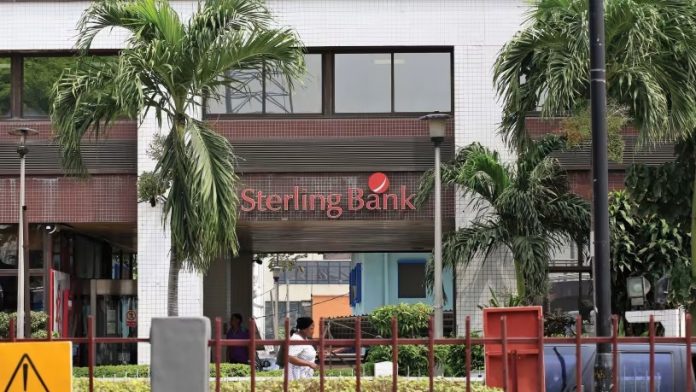
Sterling Bank has announced a zero-transfer-fee policy, making it the first Nigerian commercial bank to eliminate charges on online transfers. The move, which takes effect immediately, is expected to ease the financial burden on customers who have long complained about excessive banking charges.

For years, Nigerian depositors have expressed frustration over the weight of bank fees on their savings, as banks deduct various charges instead of paying interest on deposits. Many customers argue that instead of seeing their money grow, their balances shrink due to transfer fees, SMS alert charges, account maintenance fees, and other deductions imposed by financial institutions.

Sterling Bank’s announcement initially sparked skepticism, as the policy was unveiled on April 1, 2025—April Fools’ Day. Many assumed it was a marketing gimmick rather than a genuine policy shift. However, the bank quickly reassured customers that the move was real and permanent.

The bank has since clarified that any customers charged transfer fees on April 1 between midnight and 8 a.m. would be refunded. Sterling Bank explained that the policy officially took effect on Tuesday at 8:00 a.m. and that any charges before that time were unintentional.

Sterling Bank’s Growth Executive, Obinna Ukachukwu, said the bank’s decision was based on a commitment to fairness and inclusivity rather than financial gains.

“We believe access to your own money shouldn’t come with a penalty. This is more than a financial decision; it’s a values-based one. It reflects our commitment to making banking fair, inclusive, and truly customer-focused,” he stated.

Ukachukwu also acknowledged that while Sterling Bank is not the largest bank in Nigeria, it is bold and forward-thinking, aiming to set a new standard in digital banking.

Nigerian Banks Profit Heavily from Customer Fees

Banking fees have become a significant revenue source for Nigerian banks, generating billions of naira annually. In their 2024 full-year financial reports, two of Nigeria’s biggest banks—Zenith Bank and United Bank for Africa (UBA)—earned staggering amounts from banking fees alone.

Zenith Bank made N208 billion in banking fees income, while UBA earned an even higher N350 billion. To put this in perspective, these figures exceed the total annual profit of many publicly traded Nigerian companies.

For instance, MRS Oil Nigeria Plc, a major petroleum marketing company, made less than N10 billion in profit after tax in 2024—a tiny fraction of what UBA and Zenith Bank earned from fees alone. This highlights the dominance of banking fees as a key profit driver in the financial sector, making it unlikely that banks will willingly let go of these charges.

Will Other Banks Follow Suit?

Despite the positive reception from customers, there is little hope that this move will compel other banks to stop charging online transfer fees. The policy is entirely at the discretion of each bank, and since the Central Bank of Nigeria (CBN) has officially approved transaction charges, banks are not violating any regulations by imposing them.

With billions being made annually from fees, most Nigerian banks have little incentive to follow Sterling Bank’s lead. Instead, competitors might continue their current practices, confident that most customers will hesitate to switch banks over transfer fees alone.

Sterling Bank’s initiative, a rare move in an industry that heavily profits from customer fees, has been met with enthusiasm on social media, with many customers tagging rival banks and urging them to adopt similar policies. While some viewed Sterling Bank’s decision as a potential game-changer, the reality is that it may not force other banks to follow suit.

However, as long as the CBN continues to allow banks to impose these fees, other financial institutions are unlikely to abandon them voluntarily. It is believed that banking in Nigeria is structured to benefit financial institutions more than depositors, and a single bank’s decision—no matter how groundbreaking—may not be enough to shift the industry’s approach.

African Startups Raised $460m in Q1 2025

0

African startups have collectively raised a total of $460 million in the first quarter of 2025, through deals exceeding $100,000, excluding exits, marked by a promising start in January.

According to a report by Africa: The Big Deal, despite a burst of promise from the beginning of the year, the funding could not maintain the momentum, after a significant slowdown in March.

January’s Strong Start

The year began on a high note, with startups securing approximately $289 million in January alone. This figure represents a 240% increase compared to the $85 million raised in January 2024, making it the second-best January for startup funding since 2018.

Notable deals during this period included LemFi’s $53 million Series B round to support its expansion into Asia and Europe through the acquisition of a European firm, PowerGen’s over $50 million to develop scalable renewable energy solutions across Africa, South African Insurtech firm Naked $38 million Series B round to enhance its offerings, investing further in AI and automation, expanding its product offerings and market reach, and bolstering advertising efforts to grow its customer base, and Enko Education’s $24 million funding led by Africa Capitalworks (ACW), with continued support from returning investor Adiwale Fund I, to expand its network of schools across the continent.

February and March Records Decline in Funding

February saw a decline in funding, with startups raising $119 million. The downturn continued into March, with only $50 million in announced funding, a figure among the lowest monthly tallies since late 2020. This decline was not due to a decrease in the Q1 2025.

Despite the sluggish performance in February and March, the total funding for Q1 2025 amounted to $460 million, a slight 5% decrease from the $486 million raised in Q1 2024. While the number of startups announcing at least $1 million in funding during Q1 2025 was 52, aligning with the 2023-2024 average, the overall funding amount positions this quarter as the second lowest since late 2020.

Geographical and Sectoral Distribution

The “Big Four” countries Kenya, Nigeria, South Africa, and Egypt continued to dominate the funding landscape, collectively attracting 83% of the total investments. Kenya, Nigeria, and South Africa each secured approximately $100 million (24%, 24%, and 22% of the total, respectively), while Egypt garnered $61 million (14%). Togo also made a notable appearance in the top five, primarily due to Gozem’s $30 million Series B funding round.?

Sector-wise, fintech startups led the way, accounting for 46% of the total funding, with significant deals such as LemFi’s $53 million and Naked’s $38 million. The energy sector followed, attracting 18% of the investments, while logistics and transportation secured 10%.?

Gender Disparity in Funding Persists

A concerning trend observed during Q1 2025 was the minimal funding allocated to female-led startups. Only about 2% of the total funding, approximately $10 million, was raised by companies with female CEOs. The largest such round was a $6.2 million grant to South African biotech firm African Biologics.

Excluding grants, the share of funding raised by female CEOs would fall to 0.7%. In contrast, startups led by solo male founders or male-only founding teams received 79% of the total funding, while diverse founding teams attracted 20%. Solo female founders or female-only founding teams received a mere 1% of the investments.?

Looking Ahead

While Q1 2025 presented a mixed bag of outcomes for African startups, the strong start in January indicates underlying resilience and potential within the ecosystem. Addressing the observed funding disparities and building on the momentum from early in the year could pave the way for more robust performance in subsequent quarters.

Trump’s Media Company Stock Falls as President Signals He Could Sell His $2.3bn Stake

0

Shares in Trump Media & Technology Group (TMTG) plunged 7.4% on Wednesday, adding to a steep decline that has erased much of the early frenzy surrounding the company.

The latest drop followed a filing with the Securities and Exchange Commission (SEC) late Tuesday, revealing that President Donald Trump is preparing to sell his entire $2.3 billion stake in the company.

The filing showed that TMTG plans to sell more than 142 million shares, including Trump’s personal stake of 114 million shares, which is currently held in a trust controlled by his son, Donald Trump Jr. While the company insisted in a statement that this was a “routine filing” and that Trump was not yet selling, the prospect of the president cashing out rattled investors, deepening the company’s ongoing stock slide.

TMTG’s Downward Spiral: From Frenzy to Freefall

TMTG, which operates Truth Social, has been in a steady decline for months, shedding more than 40% of its value in 2024. The company, once seen as a key pillar of Trump’s post-presidency business empire, has struggled to maintain momentum after an initial surge of enthusiasm among retail investors.

When Trump first launched Truth Social in 2022, it was presented as an alternative to major social media platforms that had banned him following the January 6, 2021, attack on the U.S. Capitol. The company quickly attracted investors eager to support Trump’s vision of a free-speech platform. However, enthusiasm has since waned, as the company continues to post financial losses and struggles to attract a mainstream audience.

TMTG reported a net loss of $19.2 million in the third quarter of 2023, and despite having roughly 650,000 shareholders, it has failed to gain institutional support. The vast majority of its shareholders are small retail investors, with only about 2,100 investors holding more than 5,000 shares.

Trump’s Return to X Raises Questions About Truth Social’s Future

A major factor that accelerated TMTG’s decline was Trump’s return to X (formerly Twitter), the platform where he once had over 80 million followers. After owner Elon Musk lifted Trump’s ban in late 2022, speculation swirled that the president would abandon Truth Social in favor of the far larger platform.

For months, Trump remained exclusive to Truth Social, but as his 2024 reelection campaign intensified, the need to reach a wider audience became apparent. In August 2023, Trump made his highly anticipated return to X, posting for the first time since being reinstated. The move was widely interpreted as a sign that he was distancing himself from Truth Social.

Trump’s Exit from TMTG?

Trump’s potential stock sale is the latest indication that he may be pulling away from the company he founded. While he has not officially announced any plans to abandon Truth Social, his re-engagement with X suggests that he no longer sees it as his primary online megaphone.

In September, Trump reassured investors that he had no plans to sell his shares, causing TMTG’s stock to surge temporarily. However, trading was halted twice by Nasdaq that day due to extreme volatility. At the time, Trump lashed out at the exchange, accusing it of “taking orders from” the SEC and interfering with his business.

Now, with the prospect of him offloading his entire stake, investors fear that TMTG could face an uncertain future. The company has yet to demonstrate it can be viable without Trump’s direct involvement, and if he cashes out, it could signal a loss of confidence in the platform’s long-term prospects.

Market Uncertainty Grows Amid Trump’s Tariff Announcement
The stock drop also comes at a precarious time for financial markets, as investors brace for Trump’s new “reciprocal” tariffs, which he is set to unveil in a White House Rose Garden ceremony later Wednesday. The tariffs, which he has dubbed “liberation day” trade measures, are expected to target foreign imports with aggressive new levies, further roiling market sentiment.

Amid this backdrop of uncertainty, TMTG’s troubles appear far from over. The company’s fate remains closely tied to Trump’s political and business decisions, and as he inches closer to a possible exit, the stock’s downward spiral may only accelerate.