DD
MM
YYYY

PAGES

DD
MM
YYYY

spot_img

PAGES

Home Blog Page 1458

How Frequency Range Causes Competition, Audience Floating in Ibadan Radio Market

0

Tunde, a taxi driver in Ibadan, starts his morning with his favourite radio station. As he navigates the bustling streets, he listens intently to a lively talk show on current affairs. But just as he gets deeply engaged, an ad break interrupts the flow. Instinctively, he reaches for the tuner, searching for another station with a more engaging conversation or perhaps a hit song to liven up the ride. Within minutes, he has switched stations multiple times, a habit he barely notices but one that deeply affects the dynamics of radio broadcasting in Ibadan.

This common phenomenon is known as audience floating, where listeners frequently switch between stations rather than remaining loyal to one. In a city like Ibadan, where numerous radio stations operate within close frequency ranges, competition for listeners is intense. But why does this happen, and how does the frequency spacing of radio stations contribute to this trend?

The Magnetic Pull of Nearby Stations

In Ibadan, FM radio stations are packed closely together on the frequency spectrum. Some are separated by as little as 0.4 MHz, a minuscule gap that makes it incredibly easy for listeners to drift from one station to another. Unlike television, where channels are deliberately spaced apart and require more effort to switch, radio listeners can change stations almost effortlessly with a simple turn of the dial.

For example, if Tunde finds himself bored with a political discussion on 100.1 FM, he may scan upwards and land on 100.5 FM, where an Afrobeats playlist is playing. If that station enters a long commercial break, a quick adjustment brings him to 101.1 FM, which features a comedy skit. Without any strong loyalty to a single station, he floats through the available options, finding entertainment in snippets rather than committing to one station for an extended period.

Exhibit 1: Stations and their differential frequency range
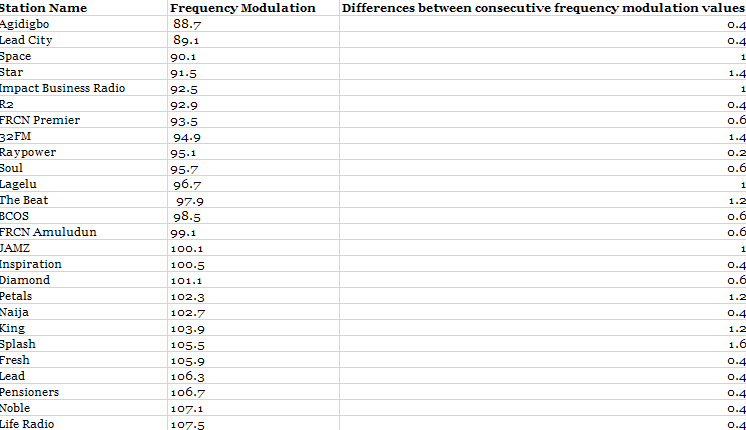
Ibadan radio market
Source: World Radio Map, 2025; Infoprations Analysis, 2025

The Battle of Content and Listener Preferences

One of the reasons audience floating is so prevalent in Ibadan is the similarity in programming across many radio stations. Several stations feature morning talk shows, news discussions, and popular music segments, making it difficult for any broadcaster to hold onto an audience for too long. If a listener hears a familiar discussion on multiple channels, they are more likely to jump between them to find a different perspective or a more engaging host.

Moreover, advertising plays a major role in audience floating. Long ad breaks often drive listeners away, as soon as a station cuts to a commercial, the temptation to switch becomes almost irresistible. Radio stations that heavily depend on advertising revenue must strike a delicate balance between monetization and keeping their audience engaged.

The Role of Signal Strength and Interference

Another overlooked factor in audience floating is signal strength. In certain parts of Ibadan, some stations broadcast with lower transmission power, leading to weak reception or interference from nearby stations. For example, if Tunde drives into an area where his favorite station’s signal starts to fade, he may instinctively switch to a clearer frequency, even if the content isn’t exactly what he was looking for. In cases of overlapping frequencies, two stations may even bleed into each other, creating a frustrating experience for the listener and increasing the likelihood of floating.

The Impact on Radio Stations

For broadcasters, audience floating presents a significant challenge. Listener loyalty is crucial for sustaining advertising revenue, as advertisers prefer stations with consistent and engaged audiences. If a station struggles with high audience turnover, it may find it difficult to attract premium advertisers. Additionally, floating behavior makes accurate audience measurement more complicated. Traditional methods of tracking listenership rely on surveys and listener diaries, but when people switch frequently, it becomes harder to gauge a station’s true reach and influence.

Strategies to Keep Listeners Hooked

To combat audience floating, radio stations in Ibadan must be strategic in their programming and delivery. Our analyst notes that stations that offer unique programming, such as investigative journalism, niche music genres, or interactive listener-driven segments, are more likely to retain audiences. It is also important that managers of these stations stagger popular programmes so that competing stations aren’t airing similar content simultaneously. This will help in retaining listeners.

Shorter, more spaced-out ad breaks, or integrating ads seamlessly into content, can keep audiences engaged longer. Investing in better transmission technology ensures that listeners don’t leave due to poor reception. Call-ins, social media polls, and listener participation would create a sense of belonging. This will make audiences feel more connected to a station.


The leading software providers at Sky Crown Casino – who’s among the best

0

Sky Crown Casino, accessible at Skycrown, partners with top-tier software providers that dominate the online gaming industry. Notable names like Microgaming, known for its innovative slots and high-quality graphics, and NetEnt, which offers exceptional live dealer experiences and immersive gameplay, stand out. Additionally, Evolution Gaming specializes in live casino solutions, providing an authentic gambling atmosphere. Players can also find offerings from Playtech, offering a wide array of games from both classic slots to expansive progressive jackpots. Understanding these providers will enhance your gaming strategy and ensure a rewarding experience at Sky Crown Casino.

The leading software providers at Sky Crown Casino: who’s among the best

At Sky Crown Casino, the quality of gaming experience heavily relies on the software providers behind the scenes. These providers develop the games, ensuring they are visually appealing, fair, and engaging. Knowing who these key players are can significantly enhance your decision-making when choosing which games to play.

Some of the top software providers at Sky Crown Casino include Microgaming, NetEnt, and Play’n GO. Each company brings unique features and benefits, impacting gameplay, variety, and overall user experience.

Key Providers and Their Impact on Games

  • Microgaming 
    • Founded in 1994, Microgaming is a pioneer in the online gaming industry.
    • Known for a vast library of over 1,200 games, including popular titles like “Thunderstruck II” and “Mega Moolah.”
    • Their games feature high payout percentages, increasing your chances of winning.
  • NetEnt 
    • NetEnt specializes in high-quality visuals and innovative gameplay.
    • They are renowned for slot games like “Starburst” and “Gonzo’s Quest,” which incorporate unique mechanics like cascading reels.
    • NetEnt’s mobile optimization ensures smooth play across devices, enhancing accessibility.
  • Play’n GO 
    • Known for their engaging storytelling and theme integration, Play’n GO offers popular titles such as “Book of Dead.”
    • They focus on user-friendly interfaces, making games easy to navigate.
    • Regular updates with new titles keep their library fresh and exciting.

Understanding these providers allows players to choose games that align with their preferences. Whether you prefer high volatility slots, strategic table games, or immersive live dealer experiences, the software provider is crucial in shaping that experience. Selecting games from reputable providers like those mentioned can enhance your overall gameplay and potentially increase your winnings.

Licenses and Integrity: How to know if a provider is reliable

Reliable software providers in the online gaming industry should always prioritize transparency and integrity. One of the first indicators of a trustworthy provider is their licensing status. Licenses are issued by regulatory bodies that enforce gaming laws, ensuring that operators adhere to strict standards to protect players. Providers with licenses from well-respected authorities can generally be considered more reliable than those without.

To determine a provider’s reliability, players should research the specific licenses held by the software provider. The presence of licenses from recognized regulators such as the UK Gambling Commission, the Malta Gaming Authority, or the Gibraltar Regulatory Authority often signifies a commitment to fairness and player protection.

Key Factors to Evaluate

  • License Verification: Always check the licensing information on the provider’s official website. This information is usually located in the footer and should include a license number.
  • Regulatory Compliance: Review the regulations stipulated by the licensing body. Ensure the provider adheres to them, which can be confirmed through official reports or audits.
  • Reputation and Reviews: Look for player feedback and expert reviews regarding the provider. Third-party sites are excellent for getting an unbiased view of the provider’s reliability.
  • Game Fairness: Providers that use Random Number Generators (RNGs) verified by independent testing labs demonstrate a commitment to fair gameplay.

In addition to licenses, the integrity of software providers is often reflected in their operational history and customer service responsiveness. Long-standing providers with a positive reputation often exhibit traits of reliability.

  1. Confirm the licensing status on official websites.
  2. Evaluate the provider’s history and reputation through player experiences.
  3. Ensure the provider uses certified RNGs for fair gaming.
  4. View customer support responsiveness to gauge reliability.

By following these steps, players can effectively assess the reliability of software providers at Sky Crown Casino and confidently enjoy their gaming experience.

How to Choose a Provider: A Mini Guide for Beginners

Selecting the right software provider for online gaming platforms like Sky Crown Casino is crucial for ensuring a seamless experience. With a plethora of options available, new operators may feel overwhelmed. However, by focusing on specific criteria, you can make an informed decision that meets your needs.

Start by evaluating the range of games offered by the provider. It’s essential to choose a company that has a diverse portfolio, encompassing slots, table games, and live dealer options. Here are some key factors to consider:

Key Criteria for Selecting a Software Provider

  1. Reputation: Research the provider’s background and reviews from existing clients. Reliable providers often have a history of maintaining high standards.
  2. Game Variety: Ensure the provider offers a wide selection of games. Look for categories such as: 
    • Video Slots
    • Table Games
    • Live Casino Games
    • Progressive Jackpots
  3. Licensing and Compliance: Verify that the provider operates under a valid gaming license from a reputable authority. This ensures that they adhere to industry regulations.
  4. Technology and Innovation: Assess the technology stack used by the provider. Modern features like mobile compatibility and provably fair gaming increase player engagement.
  5. Customer Support: Check the availability and quality of customer support. Reliable providers should offer 24/7 assistance through multiple channels.

By considering these factors, you can narrow down your options and find a software provider that aligns with your operational goals and enhances the gaming experience at Sky Crown Casino.

The Range of Providers at Sky Crown Casino

Sky Crown Casino boasts a diverse collection of software providers that significantly enhance the gaming experience. Each provider brings unique game portfolios, innovative gameplay mechanics, and distinct visuals that cater to different player preferences. This variety ensures that users can always find something new and exciting to engage with.

Among the prominent software providers featured at Sky Crown Casino are:

  • Microgaming – A pioneer in online gaming, known for its vast selection of slots and progressive jackpots.
  • NetEnt – Renowned for high-quality graphics and immersive gameplay, particularly in video slots.
  • Evolution Gaming – A leader in live dealer games, offering a real-time gaming experience that mimics the atmosphere of a land-based casino.
  • Play’n GO – Famous for their creative and engaging slot games with unique themes and features.
  • IGT – Offers a solid mix of classic and modern games, including popular branded slots.

Players looking for specific game types should consider the specialties of each provider. For instance, if you enjoy live casino games, Evolution Gaming is the top choice. On the other hand, if you’re in search of innovative slots, exploring titles from Play’n GO or NetEnt would be advisable.

To make the most out of your experience at Sky Crown Casino, it’s beneficial to try games from various providers. This not only gives players the chance to discover their favorite genres but also provides an opportunity to benefit from different promotional offers associated with specific games or providers.

New and Independent Providers: Who’s Worth a Look

The gaming industry is continuously evolving, with new providers emerging to challenge the established giants. These independent developers are increasingly gaining recognition for their innovative approaches, diverse game offerings, and commitment to quality. At Sky Crown Casino, several of these newcomers have made their mark, providing players with fresh experiences that stand out from the mainstream.

Investing time in discovering the work of these independent developers may yield exciting new favorites. Let’s explore some notable names that are worth considering:

  • Thunderkick – Known for their unique graphics and quirky themes, Thunderkick offers engaging slot games that appeal to a wide range of players.
  • Push Gaming – This provider focuses on mobile-optimized games and high-quality graphics, making their titles enjoyable on any device.
  • Red Tiger Gaming – With a strong emphasis on innovative features and exciting gameplay mechanics, Red Tiger has quickly gained a loyal following.
  • Yggdrasil Gaming – Yggdrasil is celebrated for its exceptional visual design and immersive gaming experiences, along with their focus on player engagement.
  • Slotmill – A newer player in the market, Slotmill offers a range of unique slot games characterized by sleek designs and exciting gameplay.

Players should keep an eye on these developers as they introduce fresh content and creative concepts. Trying out games from these independent providers can enhance your gaming experience, allowing you to discover hidden gems that may become your new favorites.

Shiba Inu Is Stuck Meanwhile, RCO Finance Is Blazing a New Path

0

Shiba Inu has had its moment in the spotlight, but its growth has slowed, leaving investors wondering if it can rise again. Meanwhile, a new contender, RCO Finance, is rewriting the script with AI-powered tools and real utility.

While Shiba Inu struggles to reclaim past moves, RCOF is blazing ahead, offering smarter investing and real profits.

Shiba Inu Price Prediction – What Lies Ahead for Shiba Inu?

Shiba Inu was once a sensation, rallying thousands of percent in its early days and making overnight millionaires. But times have changed. While some analysts predict that Shiba Inu could surge to reclaim its all-time high, the reality is that the token has been struggling to break key resistance levels.

At its peak in October 2021, Shiba Inu soared to $0.000048845, but its journey since then has not been exciting. As of now, the token is hovering around $0.00001245, making small moves that barely excite investors.

Technical analysts point to the $0.00002033 level as a critical barrier. If it manages to push through, it could trigger a breakout. But Shiba Inu has been in a three-year downtrend, and despite occasional spikes, it has yet to prove that it can sustain long-term momentum.

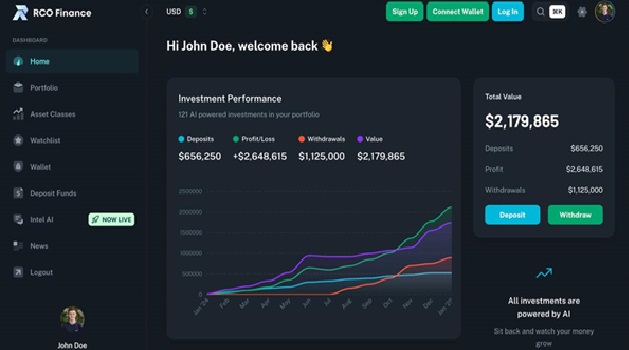
Investors are getting impatient. The days of easy meme coin profits are fading, and traders are shifting toward projects that solve real-world problems. This is where RCO Finance (RCOF) is blazing a new path. Unlike Shiba Inu, RCOF is building cutting-edge AI-driven financial tools that will always be in demand.

RCO Finance’s AI-Powered Trading Sets It Apart

At the heart of RCO Finance is its Robo Advisor. This AI-powered tool does what no human trader can: it scans the market 24/7, analyzing real-time data from sources like Bloomberg and Reuters to identify the best entry and exit points for your investments.

The VINE token quietly gained traction yesterday. Most traders had no clue, but RCOF’s Robo Advisor would have picked up on early signals. The AI would have alerted users to buy before the surge. This can be the difference between turning $500 into $5,000 or completely missing out.

The crypto market is filled with these opportunities every day, but retail investors are often too late. RCOF’s Robo Advisor levels the playing field, giving users an edge that was once reserved for hedge funds and institutional traders.

The AI also protects your portfolio from downturns. If the data shows a sharp drop in liquidity, a sudden whale sell-off, or weakening market sentiment, the Robo Advisor will flag it and secure your profits before the crash.

Beyond crypto trading, RCO Finance offers diversification across 120,000 investment options. Stocks, ETFs, bonds, tokenized real estate are all available on the same platform. No KYC, no frustrating sign-up process. Just seamless investing, plus a crypto debit card that lets you spend your holdings instantly without conversions.

RCO Finance Presale Is Taking Off as Demand Surges

Most presale projects are just hype with no actual product. RCO Finance is different. It has already launched its Beta Platform, and over 10,000 users are actively testing it. While the current features are still in beta, the Alpha phase is already in testing, promising even more upgrades.

The presale is now in its 5th stage, with the token priced at $0.10. The next stage will see the price jump to $0.13, a 30% increase in just a few weeks.

Investors are taking advantage of this limited-time window. So far, over $15 million has been raised, and as word spreads, the price will only go up. If you invest $1,000 now, that becomes $1,300 by the next stage.

If RCOF follows its projected trajectory, early investors could see 10,000% gains upon listing; turning that same $1,000 into $100,000+.

Security is another reason why confidence in RCOF is growing. The project has been audited by SolidProof, a leading blockchain security firm, confirming that there are no vulnerabilities and it’s safe to invest.

Why RCO Finance Is the Clear Winner for 2025 Gains

While Shiba Inu struggles to reclaim its past glory, RCO Finance is just getting started. Meme coins like SHIB have already peaked. The hype has faded, and while some gains are still possible, they pale in comparison to the explosive potential of a new, AI-powered altcoin that is solving real-world problems.

Investors who got into RCOF’s earlier stages have already made gains. Those who wait will see diminishing returns. Even waiting for the next presale stage means losing an instant 30% profit opportunity. And once RCOF hits major exchanges, the window for massive returns will close fast. This is the moment when early believers lock in life-changing profits.

For more information about the RCO Finance Presale:

Visit RCO Finance Presale

Join The RCO Finance Community

Jim Cramer: “Trump Doesn’t Care About Investors” as Stocks Plunge Amid Sweeping Tariffs

0

The stock market suffered a sharp sell-off on Wednesday after President Donald Trump announced new tariffs ranging from 10% to 49% on imported goods from more than 180 countries and territories.

The sweeping move sent shockwaves through Wall Street, with technology stocks, semiconductor firms, and major exporters bearing the brunt of investor fears.

Veteran market analyst Jim Cramer, speaking on CNBC, delivered a blunt assessment of the situation, arguing that Trump’s priority is punishing America’s trading partners, not stabilizing markets or ensuring investor confidence.

“Ultimately, I think we’ve been looking at this president all wrong,” Cramer said. “This president turns out to be an equal-opportunity hater. He doesn’t care what these countries do. Ultimately, he thinks they can’t really hurt us. Why? Because they don’t buy much of our stuff anyway.”

Cramer suggested that investors need to recognize that Trump is willing to disrupt everything—including Wall Street—in his pursuit of what he calls “fair trade.”

The tech sector was hit hardest following the announcement. Apple, which relies heavily on manufacturing in China and other Asian countries, slid more than 6% in late trading, leading to a broader decline among technology firms. Nvidia, which produces its advanced semiconductor chips in Taiwan and assembles AI systems in Mexico, dropped 4%, while Tesla, which has global supply chains spanning China and Germany, fell 4.5%.

Other major tech stocks, including Alphabet, Amazon, and Meta, declined between 2.5% and 5%, reflecting broader fears about increased production costs and supply chain disruptions. Microsoft, which manufactures hardware components in China, also dropped almost 2%.

The stock market’s reaction was swift and severe. The S&P 500 closed down 2.3%, while the Dow Jones Industrial Average plummeted 680 points, marking its biggest single-day decline since October 2023.

Cramer, acknowledging the market panic, said that like everyone else, he wants clarity on how the Trump tariffs will eventually end. But for now, investors have to accept that prices will rise and companies’ bottom lines will get hurt.

“He’s not trying to make investors happy. He’s not about happiness for us,” Cramer said. “He’s about making these countries bend to his will, and if it causes inflation, then it causes inflation.”

Trump, speaking at a White House Rose Garden event branded as “Liberation Day,” dismissed concerns over the market turmoil and defended his decision as a necessary step to correct decades of trade imbalances.

“This is one of the most important days in American history,” Trump declared. “We will supercharge our domestic industrial base, we will pry open foreign markets, and we will break down foreign trade barriers.”

His administration’s reciprocal tariff policy applies to over 50 countries, including major economic powers like China, the European Union, India, and Japan, as well as several developing economies across Africa, Asia, and Latin America. Under this framework, the U.S. is imposing duties on imports equivalent to half the tariff rates those countries apply to American exports.

The move has drawn immediate condemnation from U.S. trading partners, with many already vowing to retaliate. China has threatened new tariffs on U.S. agricultural and tech exports, escalating the trade war between the two superpowers. The European Union called Trump’s move “economic sabotage” and is reportedly preparing countermeasures against key U.S. exports. Canada has dismissed the claim that its tariffs on U.S. goods are unfair, warning that retaliatory duties will be imposed within weeks. Japan and South Korea, both major exporters to the U.S., are also considering WTO action against Washington.

For corporate America, the uncertainty is creating serious risks. Many multinational companies rely on overseas manufacturing and now face steep tariffs that could erode profits. Apple, which assembles most of its iPhones and MacBooks in China, may be forced to raise prices or relocate its supply chain—an expensive and time-consuming process.

Automakers such as Tesla and Ford, which import critical components from Europe, Asia, and Mexico, face higher production costs that could either be passed on to consumers or result in thinner margins. Retailers like Walmart and Target, which import massive amounts of consumer goods, may have to raise prices on everything from clothing to electronics.

Cramer advised investors to shift their focus to domestic-facing companies that are less exposed to international trade disruptions. Businesses that cater to small and medium-sized enterprises within the U.S. may be better insulated from the fallout. However, he warned that inflation is now a major concern, as rising costs from tariffs will eventually hit American consumers.

He concluded with a sobering warning: “Prices are going up, corporate profits are going down, and supply chains are about to get more complicated.”

For those hoping Trump will change course to protect the stock market, Cramer suggested they forget about it. With Trump doubling down on his protectionist trade policies, markets are bracing for more volatility, and investors may need to prepare for a prolonged period of market downturn.

CPPE Warns Against Solar Panel Import Ban, Citing Energy Crisis and Economic Risks

0

The Centre for the Promotion of Private Enterprise (CPPE) has warned the federal government against imposing a ban on the importation of solar panels, arguing that such a move could worsen Nigeria’s energy crisis, increase the cost of renewable energy, and deter investment in the sector.

The warning follows a statement from the Minister of Innovation, Science, and Technology, Uche Nnaji, in which he announced the government’s intention to halt the importation of solar panels as part of an effort to promote local manufacturing and drive the country’s transition to renewable energy. The decision aligns with a presidential directive aimed at prioritizing local content in science, engineering, and technology.

Speaking at the launch of the NEV T6 electric buses in Abuja last week, Nnaji emphasized that Nigeria has the capacity to produce solar panels locally, citing the National Agency for Science and Engineering Infrastructure (NASENI) as an example of an institution already engaged in local production.

Nnaji projected that as domestic manufacturing scales up, more Nigerian households and institutions would transition to off-grid solar power solutions, ultimately enhancing energy security. He also highlighted that Nigeria has abundant lithium reserves, which he said would be processed into batteries for electric vehicles and renewable energy storage.

Beyond solar panel production, the minister pointed to the government’s investment in mini-grid solutions aimed at powering hospitals, schools, and businesses. He reassured the public that budget allocations have already been made, with implementation expected to be visible within three to four months.

However, while the government’s ambitions to boost local development of clean energy appear bold and progressive, industry experts and stakeholders have expressed concerns that banning imports at this stage could do more harm than good, given Nigeria’s current energy challenges and the country’s limited capacity for large-scale solar panel production.

CPPE’s Strong Opposition to the Proposed Ban

Dr. Muda Yusuf, the Chief Executive Officer of CPPE, has been one of the most vocal critics of the proposed ban. He warned that Nigeria is not yet ready for such a drastic policy shift, emphasizing that the country has one of the lowest electricity consumption rates in the world. He pointed out that Nigeria’s per capita electricity consumption is just 160kWh, significantly lower than the Sub-Saharan Africa average of 350kWh.

Yusuf said: “It would worsen the problem of energy access as it would make the cost of solar energy solutions prohibitive, putting it beyond the average Nigerian.”

He argued that the adoption of solar energy solutions has gained remarkable traction in recent years and that a sudden ban on imports would severely disrupt the sector, making solar energy unaffordable for millions of Nigerians. He described the move as a contradiction of the government’s policy to expand renewable energy access, which has been a key strategy to address the energy crisis, particularly for households, small businesses, rural communities, and government institutions.

Beyond the impact on affordability, Yusuf stressed that the economic consequences of an abrupt ban would be dire. He explained that solar panels and related equipment are crucial for businesses that rely on off-grid solutions to operate, especially amid the rising cost of diesel and unreliable electricity supply. The restriction of imports would increase the cost of solar installations, discouraging the adoption of clean energy at a time when Nigeria desperately needs alternatives to fossil fuel-based power sources.

Investment Risks and Market Uncertainty

The CPPE’s concerns extend beyond energy access. The organization has warned that the announcement of the proposed ban has already triggered anxiety among investors, businesses, and international partners who have been supporting Nigeria’s renewable energy transition. Yusuf emphasized that the uncertainty surrounding government policies is making the investment climate more volatile, reducing the confidence of both foreign and local investors.

He noted that multilateral organizations, development partners, and renewable energy firms have invested heavily in Nigeria’s solar market in recent years, and any abrupt changes in trade policy could undermine these investments. The fear of policy instability has become a major deterrent for businesses looking to expand their operations in the sector.

“This should be avoided because of the adverse impact on investors’ confidence. Urgent clarification of the government’s position is needed to restore that confidence,” he said.

The CPPE also highlighted that such a decision should not be taken unilaterally by the Ministry of Science and Technology, as trade policy is a multi-sectoral issue that requires input from the Coordinating Minister of the Economy, the Minister of Industry, Trade, and Investment, and the Minister of National Planning and Budget. Yusuf urged the government to engage in broad-based consultations with industry stakeholders before making such a significant policy shift.

“The conception, formulation and implementation framework for such policy should normally be driven by the coordinating minister of the economy in collaboration with the industry, trade and investment minister and the minister of national planning and budget,” he said.

The Misinterpretation of Executive Order 5

A key argument in favor of the ban has been the government’s reference to Executive Order 5, which was introduced to promote local technology development and increase indigenous participation in government procurement. However, Yusuf clarified that the order is not a trade policy and does not mandate a ban on imports. Instead, it directs government agencies to prioritize local service providers in their procurement processes.

He explained that misapplying this order to restrict private sector imports would be a fundamental policy misstep, as it goes beyond the scope of the directive and could create unintended economic disruptions.

CPPE’s Alternative Recommendations

Rather than banning imports outright, CPPE has recommended a more strategic approach that would encourage local production without jeopardizing energy access. Yusuf called on the government to provide incentives to investors in solar panel manufacturing through:

  • Tax incentives for companies setting up solar panel production facilities
  • Tariff concessions on imported components needed for local manufacturing
  • Single-digit interest rate loans for solar manufacturers to help scale production

The CPPE also suggested a reduction in import duties on essential renewable energy components such as batteries, inverters, and wind turbines, bringing the duty down to 5% to make solar solutions more affordable.

Yusuf stressed that the government should be focused on affordability rather than escalating costs for consumers. He noted that Nigeria is still in the early stages of renewable energy adoption, and imposing a ban without first ensuring sufficient local production capacity would be counterproductive.

As concerns over the proposed ban continue to grow, there is mounting pressure on the federal government to reconsider its approach and engage with industry players to develop a more sustainable transition strategy.

Yusuf urged policymakers to prioritize evidence-based decision-making, including rigorous assessments of domestic production capacity, market demand, and the availability of critical raw materials before implementing any restrictive trade policies.