DD
MM
YYYY

PAGES

DD
MM
YYYY

spot_img

PAGES

Home Blog Page 1462

U.S. Treasury Department to Disclose Its Bitcoin Holdings on 5th April

0

The U.S. Treasury Department, along with other federal agencies, is expected to disclose its Bitcoin and cryptocurrency holdings on April 5, 2025, following a directive from President Donald Trump. This announcement will also clarify the government’s stance on whether XRP, Solana (SOL), and Cardano (ADA) will be included in a national digital asset reserve. The move stems from Trump’s March 6, 2025, executive order establishing a strategic Bitcoin reserve, with a subsequent directive on March 11 requiring agencies to report their crypto holdings to the Treasury Secretary within 30 days—culminating in this week’s reveal.

Reports suggest the U.S. currently holds around 200,000 BTC, valued at roughly $17 billion as of early April 2025, primarily from criminal and civil forfeitures over the past decade. The audit will confirm these figures and detail any additional crypto assets seized. The inclusion of XRP, Solana, and Cardano—first named by Trump in a March 2 Truth Social post about a “Crypto Strategic Reserve”—remains uncertain. While Trump later emphasized Bitcoin and Ethereum as the “heart” of the reserve, the Treasury’s position on these altcoins could signal broader acceptance or rejection of diverse digital assets in official reserves.

The U.S. Treasury’s planned revelation of its Bitcoin holdings and its stance on including XRP, Solana (SOL), and Cardano (ADA) in a national digital asset reserve on April 5, 2025, could have wide-ranging implications across financial, regulatory, and geopolitical spheres. Confirmation of the U.S. holding ~200,000 BTC ($17 billion at current prices) could spark a market rally, especially if XRP, SOL, and ADA are included. These altcoins, tied to U.S.-based projects, might see sharper gains—XRP surged 33%, SOL 25%, and ADA 60% after Trump’s initial March 2025 mention—potentially pushing Bitcoin past its $108,268 peak and lifting altcoin valuations.

Official disclosure and reserve inclusion signal government endorsement, likely boosting institutional investment. BlackRock’s $50 billion IBIT and Circle’s $4-5 billion IPO could see accelerated inflows, reinforcing crypto’s financial legitimacy. If Bitcoin and altcoins join reserves alongside the dollar, it might dilute demand for USD amid Larry Fink’s warning of its reserve status eroding. With U.S. debt at $36.6 trillion, this could raise borrowing costs as investors hedge with crypto. Including XRP, SOL, and ADA could resolve long-standing regulatory ambiguity—e.g., XRP’s SEC battle since 2012. A pro-crypto stance might soften oversight, aligning with Trump’s anti-Biden crypto attack narrative, though it risks backlash from figures like Elizabeth Warren, who may push for stricter consumer protections.

Formalizing a crypto reserve could inspire legislation beyond Trump’s executive order, which expires with his term unless Congress acts. Senator Tuberville’s retirement fund bill might gain traction, embedding crypto deeper into U.S. policy by mid-2025. Other nations, like Brazil exploring Bitcoin reserves, might follow suit, accelerating global crypto adoption. This could pressure the U.S. to refine its stance, especially if altcoins are excluded, reinforcing Bitcoin’s dominance. Holding a diversified crypto reserve could position the U.S. as a blockchain superpower, countering China’s digital yuan push and fulfilling Trump’s “crypto capital” vision. Excluding altcoins, however, might cede ground to nations backing broader digital ecosystems.

A Bitcoin-heavy reserve could weaken dollar-based sanctions if adversaries adopt crypto, as seen with Russia’s pivot post-SWIFT bans. Including XRP (cross-border focus) or SOL (fast transactions) might offer strategic flexibility, though it risks diluting centralized control. With debt servicing nearing $952 billion in 2025, a crypto reserve might be framed as a hedge against fiscal instability. Critics could argue it’s a distraction from addressing the $36.6 trillion debt, especially if altcoin volatility undermines stability. A Bitcoin-only reserve would cement its “digital gold” status, potentially sidelining XRP, SOL, and ADA. Inclusion of altcoins could diversify the ecosystem, boosting their utility—e.g., SOL in DeFi, ADA in smart contracts—though purists like Coinbase’s Brian Armstrong argue for Bitcoin exclusivity.


Rexas Finance (RXS): All You Need To Know About The Crypto Tipped To Replace Cardano, Including Price Predictions

0

The evolution of blockchain technology has investors looking for new cryptocurrencies that could potentially overhaul the market. Cardano (ADA) has cemented itself as a top blockchain project; however, Rexas Finance (RXS) is looking to surpass ADA’s adoption and utility. Rexas Finance’s advanced tokenization, comprehensive DeFi ecosystem, and overperforming presale set the stage for the platform to be branded as a next-gen blockchain solution. RXS has introduced a new approach by integrating real-world asset tokenization, allowing users to buy fractions of real estate, commodities, and even intellectual properties, unlike other cryptocurrencies, which focus on smart contracts or payments. Due to the surge in investor interest, successful presale in progress, and predictions indicating Rexas Finance’s price growth, Rexas Finance is now being touted as the potential successor to Cardano.

Rexas Finance vs. Cardano: What Sets RXS Apart?

Despite Cardano’s pioneering work in blockchain creation with its peer-reviewed system and smart contracts, it has received criticism for the slow pace of network upgrades and the sluggish evolution of the DeFi ecosystem. Conversely, Rexas Finance takes an overly efficient approach to real-world scenarios, concentrating on asset tokenization, DeFi, and a broad-based participation framework.   The two differ greatly regarding real-world utility. Cardano is more focused on smart contract functioning and the efficiency of the underlying blockchain. At the same time, Rexas Finance allows users to invest in tokenized real estate, art, and other commodities. RXS’s practical benefits include modernizing blockchain technology for adoption by existing financial markets and institutional investors seeking exposure to digital assets. Besides that, Rexas Finance is in the process of expanding its DApps to include real estate investment platforms, AI-based NFT creation, multi-chain staking and DeFi swaps. With its ecosystem aimed at speed, accessibility, and worldwide financial inclusion, RXS is proving to be a serious challenger to Cardano’s foothold in the blockchain sphere.

Presale Success and Market Excitement Around RXS

Rexas Finance follows the trend in blockchain investments since its presale performs quite well. It sold over 91% of its tokens and raised more than $47 million. Investors’ great interest demonstrates their confidence in RXS, especially its capacity to lead the blockchain industry after its launch.  Several experts have drawn comparisons between Rexas and Cardano, considering the prospect of an RXS token, which will launch with an initial price of $0.25. If RXS achieves the same level of growth as Cardano, then RXS could achieve widespread acceptance, bringing incredible rewards for early adopters willing to take risks. Another contributing element to the excitement is the forthcoming listing of RXS on significant exchanges. In the past, cryptocurrencies that sparked considerable presale interest have had explosive price surges upon listing, as witnessed with Solana (SOL) and Polygon (POL) during their initial phases. This makes RXS a prime candidate for investment for those looking to find an ideal right before the market frenzy begins.

Price Predictions: How High Can RXS Go?

Given the strong fundamentals and high presale demand, market analysts are making bold price predictions for RXS in the coming years. Short-term estimates suggest that RXS could reach $1.50 to $2.00 shortly after its exchange listing, depending on market conditions and trading volume. If adoption accelerates, RXS could fall slightly over $5 in the upcoming year.   Analyst suggestions highlight that RXS can reach multi-digit prices, with some estimating it could be at least $10 in the coming years. This optimism stems from Rexas Finance’s potential to revolutionize established economic systems using blockchain tokenization, which is worth trillions of dollars. For comparison, Cardano (ADA) started at fractions of a cent and eventually reached over $3 at its peak market cap of $90 billion. If RXS follows a similar growth pattern, early investors could see exponential gains as adoption increases. As interest from institutions in tokenized assets and DeFi services grows, Rexas Finance stands to benefit from this growth.

Conclusion

With its advanced asset tokenization features, nascent DeFi ecosystem, and robust investor support, Rexas Finance (RXS) is set to compete head-on with Cardano (ADA). Having marked a successful presale, RXS stands poised to emerge as one of the leading cryptocurrencies in terms of performance, with predictions marking exorbitant growth, and alongside strong security provided through Certik audits.


For more information about Rexas Finance (RXS) visit the links below:

Website: https://rexas.com

Win $1 Million Giveaway: https://bit.ly/Rexas1M

Whitepaper: https://rexas.com/rexas-whitepaper.pdf

Twitter/X: https://x.com/rexasfinance

Telegram: https://t.me/rexasfinance

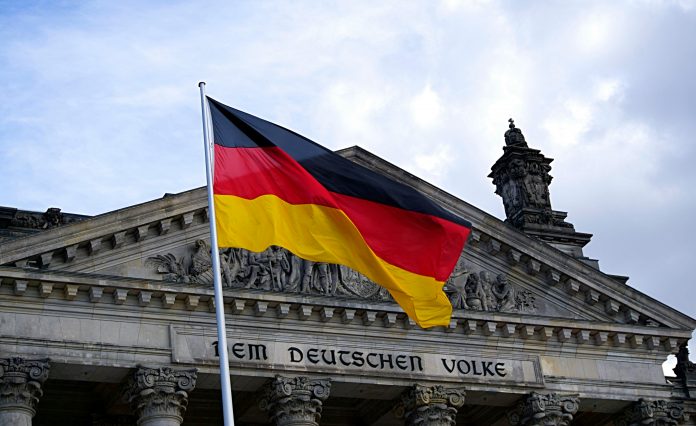
Germany Demands Russia Accepts Ceasefire Without Preconditions

0

German Foreign Minister Annalena Baerbock demanded that Russia accept a ceasefire in Ukraine without preconditions during a visit to Kyiv. Speaking alongside Ukrainian Foreign Minister Andrii Sybiha, Baerbock emphasized that Ukraine has demonstrated its willingness to agree to an unconditional ceasefire, urging Russia to follow suit. She accused Russian President Vladimir Putin of feigning interest in peace while pursuing further destruction, pointing to ongoing attacks on Ukrainian civilian and energy infrastructure as evidence of his true intentions. Baerbock warned against falling for Putin’s tactics in negotiations, stating, “Suggesting peace is not peace,” and stressed that real dialogue cannot hinge on escalating demands.

This visit, her final one as Germany’s outgoing foreign minister before coalition changes, included a pledge of €130 million ($140 million) in humanitarian aid for Ukraine, underscoring Germany’s continued support amid stalled U.S.-led ceasefire talks, which she described as “deadlocked.” Her call contrasts with Russia’s stance, as the Kremlin has rejected unconditional terms, tying any truce—such as a proposed Black Sea ceasefire—to sanctions relief and other concessions. Baerbock’s call, backed by Germany’s €130 million aid pledge, intensifies Western diplomatic pressure on Putin.

However, Russia’s rejection of unconditional terms—linking peace to sanctions relief—suggests a stalemate persists, especially as Kremlin spokesperson Dmitry Peskov reiterated on April 2 that talks without concessions are “unrealistic.” This could prolong the conflict into late 2025. As Germany’s outgoing foreign minister, Baerbock’s stance reinforces Europe’s hardline support for Ukraine, aligning with France and the UK. Yet, her exit and coalition shift in Berlin might weaken this cohesion if a less hawkish successor emerges, potentially softening Germany’s role by mid-2025.

With U.S.-led ceasefire talks “deadlocked,” Germany’s push highlights a European bid to lead peace efforts. This could strain transatlantic coordination, especially as the U.S. focuses inward on its $36.6 trillion debt and Trump’s crypto reserve reveal on April 5, diverting attention from Ukraine. An unconditional ceasefire could stabilize Ukraine’s energy grid, hit hard by Russian strikes, easing Europe’s reliance on costly alternatives—Germany spent €55 billion on energy imports in 2024. Russia’s refusal, however, sustains uncertainty, keeping gas prices volatile (up 20% since January 2025) and threatening Germany’s industrial output.

Russia’s demand for sanctions relief ties into its economic survival, with GDP projected to shrink 2.5% in 2025 (IMF estimates). A ceasefire rejection could prompt tighter EU sanctions, further isolating Russia but risking blowback—e.g., reduced fertilizer exports spiking global food prices. The U.S. Treasury’s April 5 crypto disclosure could intersect here. If Russia leverages Bitcoin or altcoins (e.g., XRP for cross-border payments) to evade sanctions, as seen in 2024, Baerbock’s demand might indirectly push Moscow toward crypto reliance, challenging Western financial leverage.

Humanitarian Implications

An unconditional ceasefire would halt attacks on Ukrainian infrastructure, where 50% of energy capacity was damaged by March 2025 (Ukrainian Energy Ministry). Germany’s €140 million aid could then shift from emergency relief to rebuilding, though Russia’s stance dims this prospect, prolonging displacement—6.5 million refugees remain abroad. Baerbock’s framing of Putin’s “false peace” aims to rally global support for Ukraine, potentially swaying neutral nations like India or Brazil. Yet, without Russian buy-in, humanitarian crises deepen, with 14 million Ukrainians needing aid in 2025 (UN estimates). With spring underway, a ceasefire now could avert a brutal 2025-2026 winter for Ukraine. Russia’s refusal risks a repeat of 2024’s blackouts, testing Germany’s aid capacity as EU budgets strain under inflation and debt.

Baerbock’s demand tests NATO’s unity as Trump’s administration, post-January 2025, pivots to domestic priorities like crypto reserves. A Russian rebuff could push Germany and France to boost military aid—Germany’s 2025 defense budget is €52 billion—escalating tensions. Russia’s defiance might draw China closer as an economic lifeline, with bilateral trade hitting $240 billion in 2024. Beijing could exploit a prolonged conflict to weaken Western cohesion, especially if U.S. focus splits between Ukraine and crypto policy.

Alibaba Prepares to Launch Qwen 3 as Domestic and Global AI Race Heats Up

0

Alibaba Group is preparing to launch Qwen 3, the next iteration of its flagship AI model, as early as this month, according to a Bloomberg report citing sources familiar with the matter.

While the exact timing remains fluid, the move underscores Alibaba’s determination to keep pace in the intensifying AI race, both within China and on the global stage.

This development comes as competition in artificial intelligence reaches a fever pitch, fueled by the disruptive entrance of DeepSeek, a Chinese AI company that has rapidly emerged as a formidable challenger to both Western tech giants and China’s established AI players.

Alibaba has been among the most aggressive Chinese tech firms in rolling out new AI models. Since committing fully to AI development in early 2025, the company has launched multiple new products at an accelerated pace.

Just last week, Alibaba introduced a new Qwen 2.5 series model, capable of processing text, images, audio, and video, with optimizations that allow it to run efficiently on mobile devices and laptops.

In March, Alibaba also updated its AI-powered Quark assistant, further strengthening its position as a leader in China’s AI ecosystem.

With Qwen 3, Alibaba is signaling that it intends to remain at the forefront of China’s AI push. However, it is not just about competition within China—the battle for AI dominance is also geopolitical, as China and the US jostle to lead the next wave of AI advancements.

DeepSeek’s Rise and the Global AI Race

The AI landscape shifted dramatically in early 2025 when DeepSeek unveiled DeepSeek-V3, a model that took the industry by surprise. Marketed as being developed at a fraction of the cost of its Western counterparts—reportedly for just about $6 million—DeepSeek-V3 outperformed several well-established models, triggering a new wave of urgency among AI firms.

DeepSeek’s success forced companies across China and the United States to accelerate their AI strategies. In response, OpenAI, Google, and Anthropic rushed out new models in the first quarter of the year, while Chinese firms, including Alibaba, intensified their AI expansion plans.

Alibaba reacted swiftly to DeepSeek’s rise, launching Qwen 2.5-Max just days after DeepSeek-V3’s release. In an unusual move, Alibaba unveiled Qwen 2.5-Max on the first day of China’s Lunar New Year holiday, a time when most businesses are shut down. The timing underscored the pressure DeepSeek has placed on its rivals, forcing them to make drastic adjustments to their AI rollouts.

DeepSeek’s rapid progress has not only disrupted China’s AI market but has also prompted fears among US tech firms that they may lose ground in the global AI race.

China vs. US’ Race to AI Supremacy

The unveiling of DeepSeek earlier this year has stimulated a fresh AI race, both in China and the US. While companies are scrambling to maintain their positions within their respective domestic markets, the broader contest is between two global superpowers—China and the US—each seeking to establish itself as the leader in AI innovation.

In the US, OpenAI, Microsoft, and Google have all been forced to accelerate their AI roadmaps in response to China’s advancements. OpenAI recently announced the release of a more “open” AI model that mimics human reasoning, a direct response to the growing popularity of open-source AI systems in China.

Meanwhile, in China, tech giants Alibaba, Tencent, and Baidu are in fierce competition to capture domestic market dominance while simultaneously challenging US firms on the global stage.

With Alibaba preparing to launch Qwen 3 and DeepSeek planning to release its next-generation model before May, the AI race is set to enter a new phase. The battle for AI supremacy is no longer just about individual companies—it is about national competitiveness.

Nigeria Sovereign Investment Authority Posts Record N1.86tn Profit for 2024, Expands Infrastructure Investments Amid Pressures for Greater Returns

0

The Nigeria Sovereign Investment Authority (NSIA) has announced a record-breaking profit of N1.86 trillion for the 2024 fiscal year, marking another milestone in its financial performance.

This represents a significant rise from the N1.17 trillion recorded in 2023, driven by a combination of strong returns from its diversified investment portfolio, gains from infrastructure projects, foreign exchange movements, and derivative valuations.

The agency’s audited financial results, released on Monday, reveal a 59% increase in Total Comprehensive Income (TCI), which surged to N1.89 trillion in 2024 from N1.18 trillion in the previous year. Even when foreign exchange gains and derivative valuations are stripped out, Core TCI still recorded an impressive 148% growth, reaching N407.9 billion. This was largely attributed to strong returns from NSIA’s investments in private equity, hedge funds, and Exchange-Traded Funds (ETFs).

The Authority’s total net assets almost doubled, increasing by 96% to N4.35 trillion as of December 2024 from N2.22 trillion in 2023. Meanwhile, cumulative retained earnings reached N3.74 trillion.

While these numbers paint a picture of financial strength, the NSIA continues to face scrutiny. The agency, established in 2011 to serve as Nigeria’s sovereign wealth fund and a vehicle for investing government resources, has long been criticized for its failure to place Nigeria’s money in highly lucrative investments. Though its financial performance has improved in recent years, there is growing expectation for the NSIA to deliver even stronger returns for the country.

The NSIA was created during the administration of former President Goodluck Jonathan as a strategic investment agency responsible for managing Nigeria’s excess oil revenues. Unlike many sovereign wealth funds globally, which aggressively pursue high-yield investments in global markets, NSIA initially adopted a conservative investment approach, focusing on stabilizing funds and financing critical infrastructure.

Over the years, critics have accused the agency of failing to maximize Nigeria’s sovereign wealth potential. Unlike wealth funds in countries like Norway, Saudi Arabia, or the UAE—which have successfully built multi-trillion-dollar investment portfolios by investing in high-yield assets—NSIA has historically been slow in making bold investment moves. For instance, across the Middle East, funds controlled by the UAE, Qatar, and Saudi Arabia invested a record $82 billion in 2024, a rise of more than 10 percent from 2023.

For much of its existence, the NSIA’s profits were seen as modest compared to Nigeria’s economic needs. Some financial experts argue that the government has failed to empower the agency to operate at the scale required to make significant wealth-generation strides, as seen in other oil-rich nations. Instead of aggressively investing surplus revenues during Nigeria’s oil boom years, successive administrations either depleted the country’s savings or channeled them into infrastructure projects with longer-term return horizons.

However, the narrative has shifted in recent years. The NSIA has ramped up its investment activities, diversifying into key financial assets, private equity, hedge funds, and real estate, among others. This recent uptick in investments has contributed to its record-breaking profits in 2024, but expectations remain high for the agency to deliver even greater value.

Beyond financial gains, NSIA has played a crucial role in infrastructure development across Nigeria. The agency has been instrumental in financing and executing major national projects, including the Lagos-Ibadan Expressway, the Second Niger Bridge, and the Abuja-Kaduna-Zaria-Kano Road. These projects, which are essential to Nigeria’s economic expansion, have been partially funded by $342.8 million in recovered funds, including $311.8 million from the Abacha family.

While these infrastructure investments are vital for Nigeria’s long-term development, some believe that the NSIA has focused too much on domestic projects with slow return cycles rather than pursuing more aggressive investment strategies in global markets. Many sovereign wealth funds worldwide use excess national revenues to invest in high-growth industries such as technology, renewable energy, and global real estate.

NSIA’s Managing Director and CEO, Aminu Umar-Sadiq, defended the agency’s approach, stating that the latest financial results reflect disciplined execution and strategic investment choices.

“We are excited about this super result, I must tell you. And it’s an outcome of actual core work done by our team… not forex gains, not revaluation, but actual hard work,” he said in an interview with BusinessDay.

Umar-Sadiq emphasized that the agency’s projections for 2025 look even stronger and reassured stakeholders that the NSIA is committed to transparency and accountability.

“More importantly, every money is accounted for,” he added.

Under a newly appointed Board, chaired by Olusegun Ogunsanya, the NSIA has pledged to strengthen its governance framework and ensure that all investments align with the country’s economic priorities. The Board is expected to oversee a more aggressive expansion of the NSIA’s investment footprint, both locally and internationally.

However, the NSIA remains under pressure to improve its returns further as Nigeria’s economy continues to struggle with high inflation, weak revenue collection, and an over-reliance on borrowing. With a more ambitious strategy, it is believed the sovereign wealth fund could serve as a vital buffer against economic shocks.

There are calls for the agency to explore more diversified investment options beyond traditional assets and domestic infrastructure. Some analysts believe that NSIA should expand its global footprint by investing in emerging industries, especially in high-tech sectors and renewable energy.