DD
MM
YYYY

PAGES

DD
MM
YYYY

spot_img

PAGES

Home Blog Page 1463

Jensen Huang and Michael Dell Fall Out of the $100 Billion Club as AI Stock Rout and Trump’s Tariffs Erode Wealth

0

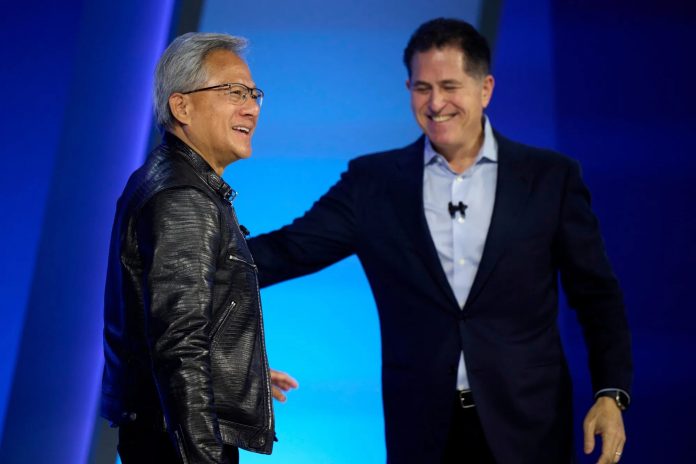
Jensen Huang and Michael Dell are no longer part of the exclusive $100 billion club, as a brutal first quarter for global markets erased billions from their fortunes.

At the start of the year, 16 individuals had net worths exceeding $100 billion, but that number has now shrunk to 13, as an aggressive sell-off in equities wiped out billions in wealth. The first quarter of 2025 marked the worst market performance since 2022, with a combination of AI sector fatigue, regulatory challenges, and trade tensions rattling investors.

Among the casualties is Amancio Ortega, the Spanish billionaire behind Zara-owner Inditex, whose net worth has also fallen below $100 billion.

One of the key drivers of this market decline was the sudden rise of DeepSeek, a Chinese AI company that shocked investors with its cost-effective generative AI models. DeepSeek’s breakthrough not only introduced a serious competitor to US-based AI giants like OpenAI and Nvidia but also triggered a panic-driven sell-off in AI stocks, as investors feared that companies would be forced to slash their AI infrastructure costs to remain competitive.

The unveiling of DeepSeek in early 2025 came just as Nvidia, Microsoft, and OpenAI were preparing for another year of aggressive AI expansion. However, DeepSeek’s cost advantage immediately raised concerns about the profitability of high-priced AI training models—a sector Nvidia dominates with its expensive GPUs. As a result, Nvidia shares plummeted 18 percent, marking a record one-day loss in market capitalization, and wiping out almost $600 billion in market value. This dragged down Huang’s fortune by $19.2 billion to $95.2 billion, according to the Bloomberg Billionaires Index. His net worth, which peaked at $130 billion in November 2024, has now dropped significantly.

Michael Dell, whose Dell Technologies has been positioning itself as a major AI infrastructure provider, was not spared either. Despite reporting strong earnings in February, Dell Technologies’ stock has tumbled 22 percent, as investors worry that AI infrastructure spending is not growing as fast as expected. The Bloomberg rich list shows that Dell’s fortune declined by $24.5 billion, leaving him just below the $100 billion threshold in 14th place globally.

Trump’s Tariff War Compounds the Market Decline

Just as AI stocks were already under pressure, President Donald Trump’s renewed trade war escalated the crisis. The administration’s decision to impose heavy tariffs on Chinese tech imports and European goods triggered a wave of retaliatory measures, causing supply chain disruptions and further rattling investor confidence.

Trump’s aggressive tariff strategy, which he has openly embraced as a long-term economic weapon, has intensified inflationary pressures and raised fears of a global slowdown. Several major corporations, including Tesla, Apple, and semiconductor manufacturers, have already issued warnings about the impact of rising costs on their bottom lines.

The stock market reacted sharply to these developments, with the S&P 500 and Nasdaq experiencing their worst quarterly performance since 2022. Investors are now bracing for a turbulent year as Trump has doubled down on his commitment to tariffs, despite warnings from economists that such measures could tip the US into a recession.

With Trump’s determination to continue using tariffs as a tool of economic warfare, leading economists have warned that a recession is now more likely than ever. A Deutsche Bank survey now puts the chances of a U.S. economic downturn at 43% over the next 12 months. The combination of trade disruptions, AI market volatility, and high interest rates has put corporate earnings under immense pressure, leading to job cuts across several industries.

A recession would have significant consequences for millions of Americans, with rising unemployment, weaker consumer spending, and an even greater cost-of-living crisis. Analysts predict that many companies—particularly those reliant on global supply chains—will struggle to maintain profitability in the face of higher costs and declining demand.

The AI sector, which has been a major driver of economic growth in recent years, now faces a critical test. If companies pull back on AI investments due to cost concerns, it could have a ripple effect on startups, semiconductor manufacturers, and cloud computing giants, all of which have bet heavily on continued AI expansion.

Zara Founder Amancio Ortega Also Drops Below $100 Billion.

Amancio Ortega, the 89-year-old Spanish billionaire who built the Inditex fashion empire, saw his net worth drop by $2.5 billion.

Shares of Inditex, the parent company of Zara, have slid 7 percent this year, leaving Ortega with a net worth of $98.8 billion and placing him in 15th place on Bloomberg’s list.

The decline comes as weaker consumer spending and unfavorable foreign exchange conditions weigh on Inditex’s sales. While Zara remains a dominant force in fast fashion, macroeconomic challenges and inflationary pressures have led to lower-than-expected revenue growth.

Market Turmoil Hits Other Billionaires, Except Buffett and Gates

Huang, Dell, and Ortega are not the only ultra-wealthy individuals facing massive declines in fortune.

Elon Musk, the world’s richest man, has seen his wealth plummet by $116 billion this year, though he still sits at the top with $316 billion. Larry Ellison, the Oracle co-founder, is down $30.3 billion to $162 billion. Jeff Bezos, Amazon’s founder, has lost $27.1 billion, bringing his net worth to $212 billion.

However, not all billionaires suffered losses. Warren Buffett has been the biggest winner so far in 2025, adding $24.3 billion to his fortune thanks to a strong rally in Berkshire Hathaway stock. His net worth now stands at $166 billion, placing him fifth on Bloomberg’s list. Bill Gates has also seen his wealth increase by $2 billion, largely due to his massive cash holdings of $78 billion and a Microsoft stake valued at $24.3 billion.

The sharp declines in billionaire wealth reflect wider market turbulence, with AI stocks cooling off after a multi-year boom and geopolitical uncertainties—particularly Trump’s aggressive trade policies—fueling market volatility.

With Trump not ready to back down on his tariff-as-a-weapon strategy, the rest of 2025 could see even more reshuffling among the world’s richest individuals.

Nigeria’s Bond Subscriptions Shrink to N2.83tn in Q1 2025, as Government Seeks to Moderate Borrowing

0

The Federal Government of Nigeria has scaled back its domestic borrowing in the first quarter of 2025, with investors subscribing to N2.83 trillion in FGN bonds, down from N3.12 trillion in Q1 2024, according to data released by the Debt Management Office (DMO).

This reduction follows a deliberate cut in bond offerings, as the government seeks to temper its borrowing amid elevated interest rates and mounting concerns over the country’s rising public debt. The move comes against a backdrop of escalating external debt pressures, as highlighted by the Central Bank of Nigeria (CBN) in its Fourth Quarter 2024 Economic Report, published Monday.

The CBN report revealed that Nigeria’s external debt reached N66.14 trillion—equivalent to $43.03 billion—as of Q3 2024, up 0.30% from $42.90 billion in Q2 2024. This persistent increase underscores the nation’s growing reliance on foreign loans, a trend that has intensified the debt-servicing burden.

By September 2024, Nigeria had paid $1.34 billion to service its external debt, comprising $0.72 billion in principal repayments (53.73%) and $0.62 billion in interest (46.27%). These figures have amplified public and policy concerns, and are believed to have prompted the government to adopt a more cautious stance in the bond market.

Details of FGN Bonds

In Q1 2025, the Federal Government offered N1.10 trillion in FGN bonds, a significant 66.8% decrease from the N3.31 trillion offered in Q1 2024. The DMO allotted N1.94 trillion, a 23% drop from the N2.52 trillion allotted a year earlier. The reduced offerings reflect a strategic shift aimed at moderating domestic debt accumulation while enhancing liquidity in existing bonds, a response to the high cost of borrowing in the current interest rate environment.

The bond market’s performance varied across the quarter. In January 2025, the government offered N450 billion across three instruments: the 5-year 19.30% FGN APR 2029, the 7-year 18.50% FGN FEB 2031, and a new 10-year 22.60% FGN JAN 2035 bond. Subscriptions totaled N669.94 billion, with N601.04 billion allotted through competitive bidding—no non-competitive allotments were recorded.

In comparison, January 2024 saw an N360 billion offer attract N604.56 billion in bids, with N418.2 billion allotted. Marginal rates in January 2025 ranged from 21.79% to 22.60%, a sharp rise from 15.00% to 16.50% in January 2024, reflecting the higher cost of funds.

February 2025 saw a reduced offer of N350 billion, split between the 5-year and 7-year bonds. Investor demand surged to N1.63 trillion, far exceeding the offer, though the DMO allotted N910.39 billion, exercising restraint. By contrast, February 2024 featured a N2.5 trillion offer, with N1.495 trillion allotted, marking the quarter’s peak activity. In March 2025, the government offered N300 billion across two bonds: a re-opened 5-year 19.30% FGN APR 2029 and a 9-year 19.89% FGN MAY 2033.

Subscriptions reached N530.31 billion, with N423.68 billion allotted, including N152.45 billion in non-competitive bids, signaling strong institutional interest. In March 2024, a N450 billion offer drew N615.01 billion in bids and N475.66 billion in allotments. Marginal rates eased to 19.00%–19.99% by March 2025, suggesting a slight softening of rate pressures.

A Shift Amid Debt Concerns

The decline in bond offerings signals a broader effort to manage Nigeria’s fiscal challenges. The CBN’s report underscores the stakes, which saw external debt rise 3.40% year-on-year from $41.59 billion in Q3 2023, with servicing costs consuming significant resources. The $1.34 billion paid by September 2024 highlights the strain, particularly as public frustration grows over the lack of visible returns from borrowed funds.

The government’s more measured approach in 2025 aims to balance immediate financing needs with long-term debt sustainability, a critical task in an era of high interest rates.

Despite the reduced supply, investor appetite remains robust, particularly for medium- and long-term bonds like the 7-year and 10-year instruments, which appeal to institutional players such as pension funds aligning assets with liabilities. The DMO’s strategy also supports secondary market liquidity and maintains benchmark bonds across key tenors, facilitating price discovery.

Analysts note that while the government is borrowing less aggressively, the underlying debt stock—N66.14 trillion externally alone—continues to grow, albeit at a slower pace.

BRICS’ De-Dollarization Agenda: A Tough Sell for Nigeria

0

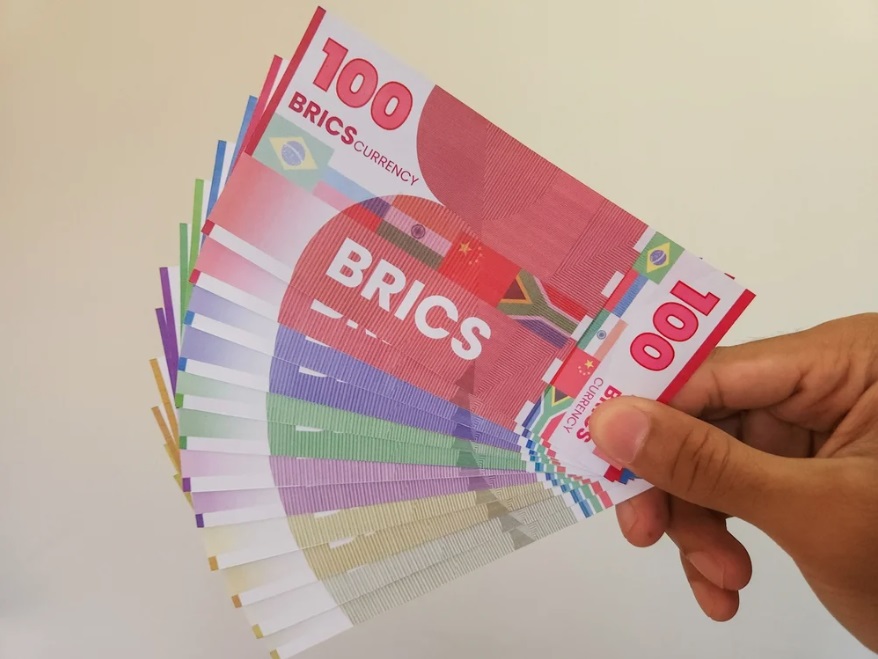
The depreciation of the Naira continues to shake Nigeria’s economic landscape, impacting various sectors, including oil trade. Nigeria, Africa’s largest oil producer, has found itself at the center of the ongoing global debate over de-dollarization, particularly within the BRICS coalition. Despite earlier interest in joining BRICS and supporting local currency transactions, Nigeria is now resisting the push to settle oil payments in anything other than the US dollar.

Nigeria’s Oil Trade and the Naira-for-Crude Framework

In an attempt to strengthen the Naira and reduce reliance on foreign currencies, the Nigerian government introduced a Naira-for-crude transaction framework. However, this move has been met with strong opposition from key stakeholders in the oil sector. According to Olufemi Adewole, Executive Secretary of the Depot and Petroleum Products Marketers Association of Nigeria (DAPPMAN), settling oil transactions in Naira could destabilize the foreign exchange market and deter much-needed foreign direct investment (FDI).

“The naira-for-crude oil transaction framework presents significant risks that could affect Nigeria’s foreign exchange stability and deter foreign direct investment. The global oil market operates in US dollars due to its stability,” Adewole stated.

This sentiment echoes the broader challenges faced by BRICS in pushing for de-dollarization. Even Saudi Arabia, which had previously expressed openness to accepting local currencies for oil payments, continues to conduct most transactions in US dollars.

How Naira’s Depreciation Fuels This Standoff

Traders Union argues that the volatility of the Naira makes it an unattractive option for international trade, especially in the energy sector, where stability is crucial. Over the past year, Nigeria’s currency has suffered significant losses, leading to increased import costs, inflation, and economic uncertainty. If oil marketers were to accept the Naira for crude exports, they would expose themselves to high risks of currency depreciation, making transactions unpredictable and costly.

Moreover, Nigeria’s dependence on oil revenue means that any policy affecting oil trade has direct consequences on government earnings. With the Naira weakening against the dollar, accepting local currency payments for crude would further strain foreign reserves, making it difficult for the country to meet external obligations.

BRICS’ De-Dollarization Agenda: A Tough Sell for Nigeria

Despite BRICS’ push to challenge US dollar dominance, Nigeria is now aligning with other developing nations that view de-dollarization as a risky endeavor. The country’s economic stability remains closely tied to the dollar, making it difficult to adopt BRICS’ vision of trading oil in local currencies.

While BRICS has made strides in reducing dollar reliance, its oil trade policies are yet to gain widespread acceptance. Nigeria’s reluctance to trade oil in Naira highlights the practical challenges of de-dollarization—without a stable alternative, the greenback remains king in global oil markets.

Conclusion

Naira’s depreciation is a key factor in Nigeria’s rejection of local currency oil trade. The risks of currency instability, inflation, and declining FDI outweigh the potential benefits of de-dollarization. As BRICS continues its mission to challenge dollar dominance, Nigeria’s stance signals that transitioning to local currencies in global oil markets may take longer than expected. For now, the US dollar remains the preferred medium for oil trade, reinforcing its stronghold over international finance.

Solana Price Faces Consolidation While This Altcoin Prepares for a Major Move

0

The Solana price is at a crossroads, consolidating around the $127 mark as traders weigh their next moves. While some investors remain hopeful for an upside breakout, growing concerns over weak on-chain activity and selling pressure suggest a potential pullback.

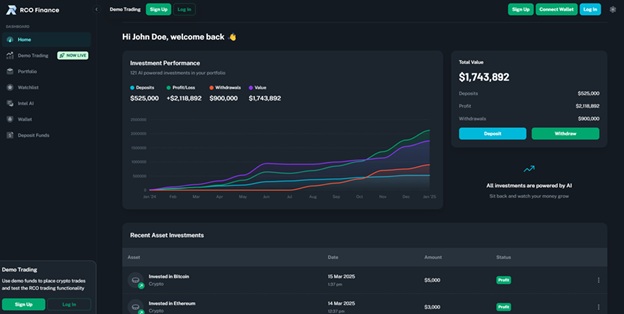
As Solana stalls, attention is shifting to a rising altcoin rapidly gaining traction, RCO Finance (RCOF). Unlike the Solana price, which is battling resistance, RCO Finance is expanding its ecosystem and preparing for a major breakout.

Solana’s Price Consolidation: A Precursor to a Deeper Pullback?

The recent Solana price action suggests consolidation could be masking an impending downturn. Currently battling resistance at $127, the Solana price has struggled to break higher, despite bullish sentiment surrounding its long-term potential.

Weak DeFi activity and a decline in on-chain engagement compound the inability to move decisively past this level. Adding to the bearish signals, large investors have begun unstacking their SOL holdings, with one whale recently unloading over 60,000 SOL at the $127 mark.

This has reinforced the area as a strong supply zone, increasing selling pressure. Moreover, the SOL/BTC trading pair has hit a two-year low, signaling a shift in investor preference toward alternative assets.

With trading volume contracting by over 32% and derivatives positions at risk of liquidation, the Solana price consolidation could soon give way to a sharper correction. If bearish momentum continues, SOL may dip toward the $110–$115 range, setting the stage for a volatile Q2.

RCO Finance (RCOF): The Altcoin Poised for a Breakout Amid Solana’s Price Consolidation

As the Solana price faces resistance at $127, investors are looking for alternatives with stronger upside potential. RCO Finance (RCOF) is a next-generation altcoin that combines artificial intelligence and decentralized finance to create a robust trading ecosystem.

At the core of RCO Finance’s innovation is its AI-powered Robo Advisor, a sophisticated trading assistant designed to optimize investment strategies. Unlike traditional crypto trading, which often relies on speculative momentum and market sentiment, RCOF’s AI system continuously analyzes vast amounts of financial data, identifying emerging trends before they go mainstream.

This real-time intelligence enables investors to make data-driven decisions, reducing the risks of volatile market movements. By pulling insights from multiple financial sources, RCOF’s AI doesn’t just follow market trends—it anticipates them, offering users early entry into high-growth opportunities.

Beyond its advanced AI capabilities, RCO Finance stands out with its expansive financial ecosystem. Unlike most DeFi platforms that restrict users to cryptocurrency trading, RCOF broadens the investment landscape by granting access to over 120,000 assets.

Investors can trade cryptocurrencies and traditional financial instruments such as stocks, bonds, commodities, and tokenized RWAs like real estate and precious metals. This diversification allows users to hedge their positions across multiple asset classes, mitigating risk while maximizing profit potential.

Regulatory compliance and ease of access are also at the forefront of RCO Finance’s appeal. While many blockchain projects struggle with restrictive onboarding processes, RCOF operates with a streamlined, KYC-free framework.

Security remains a top priority, with RCOF’s smart contracts undergoing rigorous audits by SolidProof, a leading blockchain security firm. These audits confirm the resilience of RCO Finance’s infrastructure, reducing vulnerabilities and reinforcing investor confidence.

The platform’s rapid adoption speaks volumes about its growing market dominance. Since launching its Beta version, RCO Finance has amassed over 10,000 active users and secured more than $14.5 million in investments.

With the upcoming Alpha launch set to introduce even more advanced features like minute-by-minute monitoring, analysts anticipate an influx of institutional and retail investors eager to capitalize on the project’s growth potential.

Experts predict RCO Finance is Positioned for Exponential Growth

RCO Finance is in its fifth presale stage, offering RCOF tokens at $0.10. As the presale progresses, the price will rise to $0.13, giving early investors an immediate advantage before RCOF enters the open market.

Investors taking part in the presale also benefit from promotional offers, such as the WELCOME40 discount, which provides additional incentives to accumulate RCOF tokens before demand surges. Moreover, they get access to higher APYs, trading discounts, cash rewards and priority customer support.

Market analysts predict that once RCO Finance secures listings on major exchanges, its value could rise to $0.60, translating to a 600% ROI for presale participants. However, the long-term projections are even more bullish, with forecasts suggesting that RCOF could hit an over 7,500% surge.

With the Solana price facing consolidation and investor sentiment shifting, RCO Finance has positioned itself as a strong alternative for those seeking high-growth opportunities. Now is the perfect time to invest in RCOF and secure your position in DeFi’s future.


For more information about the RCO Finance (RCOF) Presale:

Visit RCO Finance Presale

Join The RCO Finance Community

Net FX Inflow to Nigerian Surged to $17.39bn in Q4 2024 – CBN

0

The Central Bank of Nigeria (CBN), has revealed in its Fourth Quarter 2024 Economic Report, released on Monday, that the country’s net foreign exchange (FX) inflow surged to an impressive $17.39 billion in Q4 2024.

This upswing, driven by a flood of autonomous sources like foreign investments, remittances, and export earnings, signals a bolstered forex market—a critical buoy for an economy grappling with the decline of its once-dominant oil revenues. Against this backdrop, Nigeria has increasingly leaned on its diaspora’s remittances to shore up its foreign reserves, a shift that’s proving vital as oil’s revenue tanks.

According to the CBN’s data, total FX inflows climbed 20.62% to $27.81 billion in Q4 2024, up from $23.06 billion in Q3, propelled by a remarkable 47.55% leap in autonomous inflows—from $11.03 billion to $16.27 billion. These funds, flowing from private channels rather than official coffers, include a potent mix of diaspora remittances, foreign portfolio investments, and non-oil export proceeds.

Meanwhile, inflows through the CBN itself dipped slightly, falling 4.05% to $11.54 billion from $12.03 billion, a decline hinting at softer official receipts—perhaps from reduced foreign direct investment (FDI), grants, or government-channeled remittances. Despite this, the net inflow rose 14.99% to $17.39 billion from $15.13 billion, with autonomous sources delivering a hefty $14.84 billion (up from $10.40 billion) and the CBN contributing a more modest $2.56 billion (down from $4.72 billion in Q3).

This forex surge comes as Nigeria grapples with an economic downturn that has seen FX reserves depreciate significantly. For decades, crude oil has been the bedrock of its FX earnings, fueling reserves and stabilizing the naira. But declining oil revenues—masterminded largely by low oil output, insecurity, vandalism, and theft—have exposed the fragility of this reliance. In response, the government has doubled down on diversifying its FX streams, with diaspora remittances being prioritized.

The CBN reported a staggering 130% surge in remittance inflows to $553 million by July 2024, a figure that underscores the growing heft of Nigeria’s 15-million-strong diaspora.

In November 2024, Finance Minister Wale Edun announced a $2.35 billion net inflow into CBN reserves, crediting it with steadying the naira amid market turbulence.

“This boost to reserves is a game-changer,” Edun said, pointing to improved liquidity and a narrowing gap between official and parallel exchange rates.

Posts on X from analysts echo this optimism, with many linking the naira’s relative calm in late 2024 to these inflows. Yet, the Forex story tells of a troubled economy. Outflows spiked 31.37% to $10.42 billion in Q4 from Q3 levels, driven by a 22.98% rise in CBN outflows to $8.99 billion and a jaw-dropping 129.59% jump in autonomous outflows to $1.43 billion. These exits—likely tied to import payments, debt servicing, and capital repatriation—highlight the pressure on Nigeria’s FX gains. Still, the net inflow of $17.39 billion offers breathing room, a buffer against the outflows that once drained reserves dry.

Oil, though waning, hasn’t bowed out entirely. The federal government’s push to ramp up crude production hit its mark in 2024, achieving a target of 2 million barrels per day (bpd).

“Oil remains our fiscal anchor,” Edun reiterated, framing it as a backstop for revenue shortfalls.

This milestone, paired with rising non-oil exports, has kept export earnings in the autonomous inflow mix. But it’s remittances that steal the spotlight, their 130% growth by mid-2024 signaling a shift in Nigeria’s FX playbook.

Policies like the Electronic Foreign Exchange Matching System (EFEMS), introduced for FX transactions in the Nigerian Foreign Exchange Market (NFEM), and designed to match buy and sell orders automatically, have also curtailed volatility in the market.

However, economists have warned that reliance on external inflows will never boost Nigeria’s foreign reserves to stabilize the FX market,