DD
MM
YYYY

PAGES

DD
MM
YYYY

spot_img

PAGES

Home Blog Page 1465

Congrats VaultPay for Receiving your Full Central Bank of Congo DRC License

0

They pitched to us. I asked them – are you sure you would leave Google and Airbnb, in North America, and return to Congo DRC for this business? The response was YES. We invested  tons of money in VaultPay, CongoDRC pioneering fintech company.

Ntambwa Basambombo and Christel Ilaka showed an unalloyed passion for a country and a continent. Today, Tekedia Capital congratulates both for receiving a FULL license from the central bank of Congo DRC to execute the playbook.

And to all investors, we welcome you to this party. The license covers agency banking, card issuing, aggregator, payment, etc.  We will need your partnership. The Africa we desire must be funded, and I ask you to connect with the team, and see how you can join us at this party. They’re opening a new funding round.

I put out this post because people will tell you “risk” here, “risk” there. But note this: everywhere has risks including New York, London, Kinshasa and everywhere. Kinshasa is open for business and Central Africa will deliver alpha. Do it and together we will create a unicorn because VaultPay is on the path for one.

Bertelsmann Bracing Up for Escalation of Trump’s Tariff Policies in Germany

0

The German media conglomerate Bertelsmann, headquartered in Gu?tersloh, is bracing for potential disruptions due to the escalating U.S. tariff policies. With the U.S. and Canada recently overtaking other regions as Bertelsmann’s top revenue sources—marking a historic shift for the company—the stakes are high. The Trump administration’s imposition of 20%+ tariffs on $1.5 trillion in imports from 25+ countries, including key European nations, threatens to ripple through Bertelsmann’s operations, particularly given its significant U.S. market exposure.

Bertelsmann’s U.S.-focused subsidiaries, like Penguin Random House (publishing) and BMG (music), rely heavily on the American market. Reports indicate that in 2024, the U.S. and Canada accounted for the majority of its revenue, surpassing Europe. Tariffs could raise costs for imported goods (e.g., paper, production materials) or dampen U.S. consumer demand, squeezing profit margins. The company’s 2026 revenue target, already downgraded to €21 billion from €24 billion in 2024 due to divestitures, might face further pressure. The 25% tariffs on steel and aluminum (effective March 12, 2025) and broader reciprocal tariffs slated for April 2 could increase costs for physical media production, such as books or vinyl records.

While Bertelsmann’s digital offerings (e.g., streaming, e-books) might mitigate some impact, physical goods remain a core segment. EU countermeasures, targeting $28 billion in U.S. goods starting mid-April, could further complicate transatlantic supply chains. The S&P 500’s $2.5 trillion drop over three days reflects investor jitters, which could reduce U.S. advertising budgets—a key revenue stream for Bertelsmann’s RTL Group and other media arms. Goldman Sachs notes that European firms like Bertelsmann could see a 5-10% earnings hit from 10% U.S. tariffs; a 20%+ rate amplifies this risk. Uncertainty might also delay investments, a concern echoed in the company’s cautious 2026 EBITDA forecast of €3.4 billion.

On March 12, 2025, the European Commission unveiled plans to impose counter-tariffs on $28 billion (€26 billion) of U.S. goods, matching the scale of U.S. tariffs on EU steel and aluminum (25% effective March 12). These measures, set to fully activate by April 13 after a phased rollout starting April 1, target iconic U.S. exports like bourbon, motorcycles e.g., Harley-Davidson, beef, poultry, and jeans—echoing strategies from Trump’s first term to hit politically sensitive Republican states. Initially split into two phases ($8 billion on April 1, $19.6 billion on April 13), the EU delayed the first wave to align both sets for mid-April, as announced on March 20. This adjustment, per Trade Commissioner Maros? S?efc?ovic?, allows more time for member state consultations and U.S. negotiations while refining the 99-page list of targeted goods.

Bertelsmann’s shift to North American dominance makes it vulnerable to Trump’s protectionism. Unlike 2018-2019, when tariffs were narrower, the current broad scope (covering $1.5 trillion in imports) hits harder. The Bundesbank’s Joachim Nagel warned that Germany could lose 1% of GDP from such tariffs, indirectly pressuring German firms like Bertelsmann. While not directly tied to Bertelsmann, the tariff-induced market volatility could boost crypto interest (e.g., Marathon Digital’s Bitcoin play). If Bukele’s White House visit in April 2025 solidifies a U.S.-El Salvador Bitcoin pact, it might indirectly influence media narratives Bertelsmann covers, though this is speculative.

Bertelsmann has experience navigating tariff turbulence from Trump’s first term, having leaned into digital transformation. It could shift sourcing to U.S. suppliers or accelerate digital revenue (e.g., via Fremantle’s content production), but physical goods exposure remains a weak spot. The EU’s negotiation window before April counter-tariffs offers hope, yet Bertelsmann’s silence on specific plans (unlike vocal firms like Siemens Energy) suggests a wait-and-see approach. Disruption seems inevitable, with the scale hinging on tariff duration and retaliation intensity.

Now Is The Time To Buy Sui (SUI), Solana (SOL) & The Wildcard: Panshibi (SHIBI) – The Experts Tips Here!

0

Sui (SUI) and Solana (SOL) are showing strong momentum, with bullish price action and growing investor confidence. But while these established tokens offer solid returns, analysts say the real wildcard is Panshibi (SHIBI) With its viral meme appeal, powerful tokenomics, and presale pricing still at early-stage levels, SHIBI is gaining serious traction. Experts agree—now is the moment to accumulate all three before the next major market leg up begins.

Panshibi (SHIBI) Shows Massive Growth Potential

Panshibi offers a rare opportunity for investors to join a fresh, culturally inspired meme coin that’s already gaining traction ahead of its official launch. Blending panda symbolism with Asian cultural themes, Panshibi has positioned itself as one of 2025’s top trending tokens. But this isn’t just about fun—real utility is built into the project through Social-Fi features, AI-driven quests, and a community rewards system.

With staking rewards up to 1,200% APY and exclusive access to the Bamboo Private VIP Members Club, $SHIBI holders are incentivized to stay long term. Currently in Stage 4, each new stage brings a token price increase—meaning early buyers secure the best entry point.

Security and transparency are also central. Panshibi’s smart contract has been audited by Coinsult, and ownership will be fully renounced post-presale to ensure community governance.

With analysts projecting a 145,000% price surge post-launch and an estimated 20,000% ROI for early adopters, Panshibi is quickly becoming the breakout meme coin to watch in the coming bull cycle.

Solana Price Gains as BlackRock and Fidelity Drive Fresh Institutional Momentum

The Solana price  is trading at $125 after posting a 1% gain in the last 24 hours, fueled by a wave of institutional interest. The catalyst? Two major developments: BlackRock launched its $1.7 billion BUIDL fund on the Solana network, and Fidelity filed for a spot Solana ETF. These moves by legacy financial giants signal growing long-term confidence in Solana’s infrastructure and utility.

A spot ETF would serve as an important market milestone by drawing both institutional investors and enhancing Solana’s market position. The growing adoption and combination of speed and scalability make Solana stand as a vital participant in blockchain’s upcoming development stage.

Sui (SUI) Holds Above Key Support as Bullish Momentum Builds

Sui (SUI) is showing strength as it holds firmly above its $2 support level, signaling a potential breakout. Over the past week, SUI has gained nearly 18%, reflecting growing bullish sentiment and setting the stage for further upside. The broader market’s shift from bearish to bullish has also lifted SUI, with investors showing renewed confidence.

SUI trades at $2.36, with a 24-hour volume of $748 million and a market cap of $7.50 billion. The token is up 3.67% in the past 24 hours, reinforcing the ongoing bullish momentum and pointing toward the possibility of higher price targets in the near term. If momentum continues, SUI could be gearing up for a major rally.

Analysts Project 20,000 ROI for Panshibi: Buy Now!

Solana and Sui offer steady upside through solid tech and utility-first models, but for investors chasing exponential growth, Panshibi (SHIBI)  stands out. With a projected 20,000% ROI, Panshibi combines community-powered momentum with smart tokenomics designed for long-term value.

It’s more than a meme coin—it’s a movement with serious upside. The presale is still open, giving early participants a chance to secure SHIBI at low prices before demand and listings push it higher.


You can participate in the Panshibi presale here:

Twitter: https://x.com/panshibi_

Website: https://panshibi.com

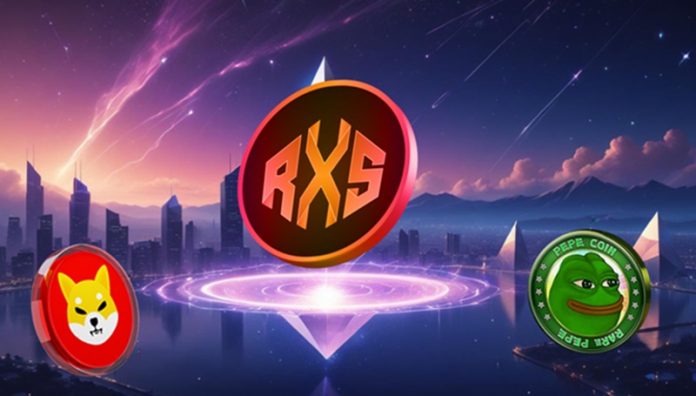
REVEALED: Why Investors Have Been on a Shiba Inu & Pepe Coin Selling Spree Since 2025 Began, While Stacking Rexas Finance (RXS)

0

As 2025 unfolds, a notable shift is occurring in the cryptocurrency market: investors are offloading meme coins like Shiba Inu (SHIB) and Pepe Coin (PEPE), priced at $0.000014 and $0.0000067 respectively, and gravitating towards Rexas Finance (RXS). Currently in its 12th and final presale stage, Rexas Finance is priced at $0.20 per token, with a remarkable 91% of this stage already sold out. This surge in interest is largely attributed to Rexas Finance’s innovative approach to asset tokenization and the overwhelming success of its presale, signaling a potential paradigm shift in investor preferences within the crypto market.

Meme Coin Sell-Off: The Decline of Shiba Inu and Pepe Coin

Since the start of 2025, investors have been rapidly offloading Shiba Inu (SHIB) and Pepe Coin (PEPE), signaling a shift in sentiment towards meme coins. SHIB, currently priced at $0.000014, and PEPE, at $0.0000067, have both struggled to maintain investor confidence amid market volatility and a lack of strong utility. While these tokens once thrived on hype and community-driven momentum, their appeal appears to be fading as traders look for projects with tangible real-world applications. This has fueled the growing preference for more utility-focused alternatives, most notably, Rexas Finance (RXS).

Rexas Finance: Leading the Evolution of Asset Tokenization

Rexas Finance is at the forefront of transforming asset tokenization by integrating blockchain technology with traditional finance. This innovation makes high-value assets, such as real estate, fine art, and commodities, more accessible, transparent, and liquid. By bridging decentralized finance (DeFi) with real-world investments, Rexas Finance provides investors with secure, efficient, and asset-backed financial opportunities.

The Rexas ecosystem is built for seamless tokenization and trading. The Rexas Token Builder offers a no-code solution for creating asset-backed tokens, while the Rexas Launchpad facilitates secure multi-chain token sales. Rexas GenAI expands the potential for digital creativity by enabling AI-generated NFTs. Beyond tokenization, Rexas Estate introduces fractional ownership of real estate, allowing investors to earn passive income through stablecoin rewards. With cross-chain trading enhancing both liquidity and interoperability, Rexas Finance is redefining asset-backed DeFi.

Presale Success & Major Exchange Listings Ahead

Rexas Finance’s presale has outperformed expectations, raising $47.5 million and selling 457 million tokens across 12 funding rounds. The token price has surged from $0.03 to $0.20, delivering nearly 7x returns for early investors. Unlike projects controlled by venture capital firms, Rexas Finance champions a community-first approach, ensuring retail investors take center stage in the asset tokenization revolution. Now in its final presale phase, with 91% of tokens already sold, anticipation is growing around its confirmed listings on three major exchanges.

$1 Million Giveaway & Global Expansion

In celebration of its rapid growth, Rexas Finance has launched a $1 million giveaway, where 20 winners will each receive $50,000. Recent listings on top data tracking platforms CoinMarketCap and CoinGecko have further boosted its global presence, attracting heightened investor interest. As blockchain adoption accelerates, Rexas Finance continues to unlock new financial opportunities, shaping the future of digital asset ownership for the next generation of investors.

Investors are shifting away from Shiba Inu (SHIB) and Pepe Coin (PEPE) in favor of high-utility projects, with Rexas Finance (RXS) leading the charge. The final presale stage has already sold 91% of its tokens at $0.20, raising $47.5 million and delivering nearly 7x returns for early investors. By integrating real-world asset tokenization with blockchain, RXS is redefining decentralized finance and attracting strong market demand. With major exchange listings approaching and a $1 million giveaway underway, this is a prime opportunity to secure RXS before its official launch.


For more information about Rexas Finance (RXS) visit the links below:

Website: https://rexas.com

Win $1 Million Giveaway: https://bit.ly/Rexas1M

Whitepaper: https://rexas.com/rexas-whitepaper.pdf

Twitter/X: https://x.com/rexasfinance

Telegram: https://t.me/rexasfinance

Amazon Unveils Nova Act, an AI Agent That Controls Web Browsers and Automates Online Tasks

0

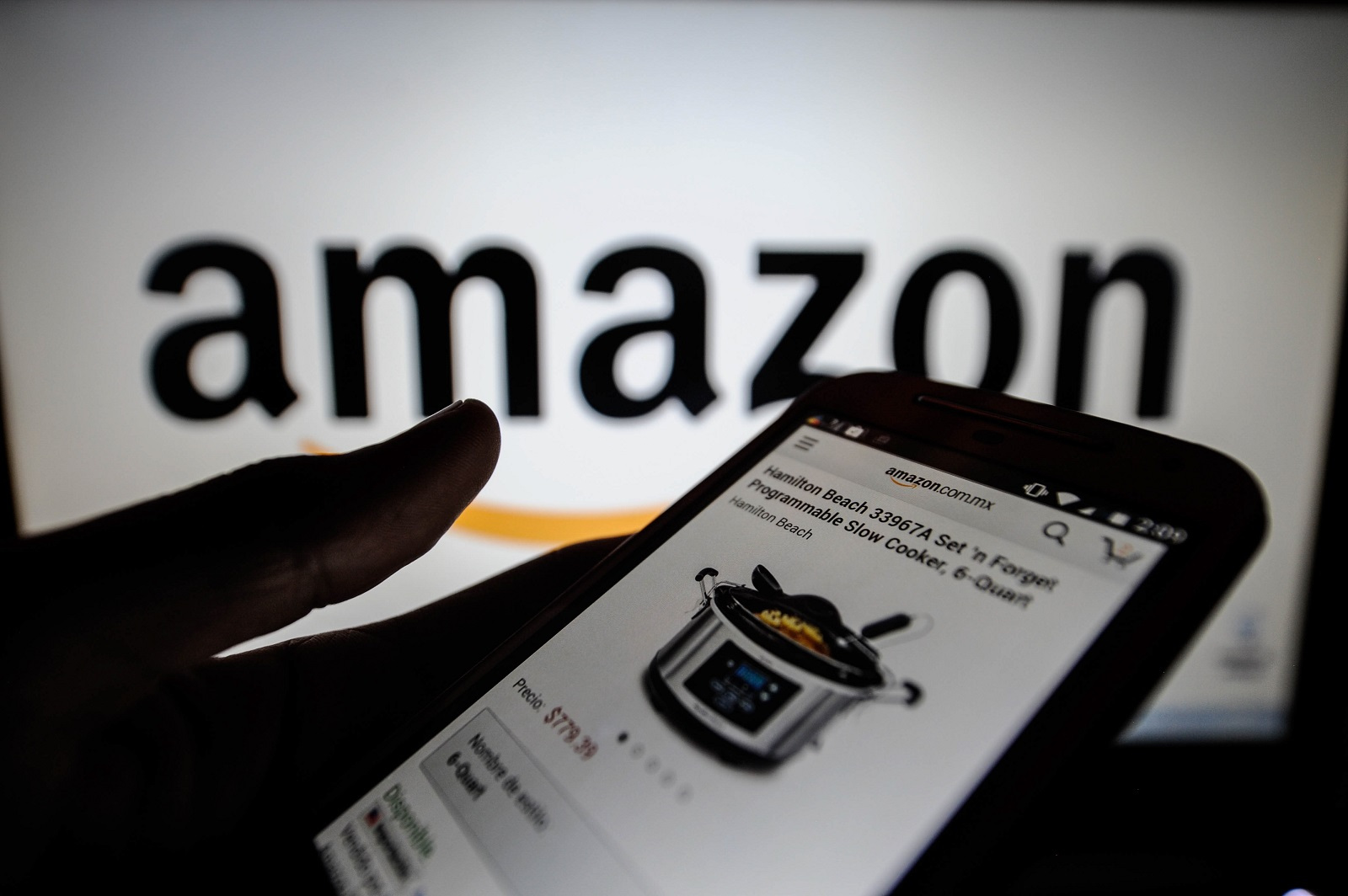
Amazon has introduced Nova Act, a general-purpose AI agent designed to autonomously navigate web browsers and perform routine online tasks. The unveiling marks a major leap in Amazon’s push into artificial intelligence, as the company seeks to keep pace with others like OpenAI and Anthropic, which have been developing similar agentic AI technologies.

Developed by Amazon’s San Francisco-based AGI lab, Nova Act is expected to power key features of the upcoming Alexa+, a generative AI-enhanced version of Amazon’s voice assistant. Alongside Nova Act, Amazon is also releasing the Nova Act SDK, a developer toolkit aimed at enabling businesses and programmers to build custom AI-powered agent applications.

Nova Act’s launch comes amid an intensifying AI arms race among major US technology firms, each striving to develop more advanced, autonomous AI systems. The industry has already seen leading tech companies roll out their own AI models and agents, and Amazon’s entry further underscores the growing push by firms to stake their claim in the AI-driven future.

Nova Act’s launch comes amid an intensifying AI arms race among major US technology firms, each striving to develop more advanced, autonomous AI systems. The industry has already seen leading tech companies roll out their own AI models and agents, and Amazon’s entry further underscores the growing urgency for firms to stake their claim in the AI-driven future.

Several US companies have already launched their own AI models, with most big players expected to introduce agentic AI systems in the near future.

OpenAI, through its ChatGPT platform based on GPT-4, has been at the forefront of the AI revolution while also working on Operator AI, an agent designed to enhance automation in web navigation. Google has introduced Gemini AI, its flagship large language model, and is actively developing AI agents capable of operating autonomously in web environments. Anthropic, backed by investments from Amazon and Google, has developed Claude 3 AI, a direct competitor to ChatGPT, alongside its Computer Use AI agent for digital task execution.

Meta (Facebook) is integrating Llama AI models across its ecosystem, including WhatsApp, Instagram, and Messenger, while also working on AI-driven personal assistants. Microsoft, as a major investor in OpenAI, is embedding AI copilots across its products, including Office 365, Bing, and Windows, signaling a broader push toward agentic AI. Apple, though relatively quiet, is reportedly developing its own AI models, likely to be integrated into Siri and iOS-powered applications. X, a social media platform owned by Elon Musk has developed xAI in competition with OpenAI.

The AI race among these tech giants is expected to intensify in the coming months as each firm develops AI-powered assistants capable of automating digital tasks and redefining human-computer interaction.

Amazon is betting big on Nova Act, positioning it as a direct competitor to OpenAI’s Operator and Anthropic’s Computer Use AI. The agent is designed to take control of web browsers, fill out forms, make reservations, and automate simple digital interactions, eliminating the need for manual web navigation.

The e-commerce giant claims Nova Act outperforms rivals on internal tests, particularly on ScreenSpot Web Text, which measures how AI agents interact with text on screens. Nova Act reportedly scored 94%, compared to OpenAI’s 88% and Anthropic’s 90%. However, Amazon has not yet benchmarked Nova Act on broader AI agent evaluations like WebVoyager, making external comparisons difficult.

While Amazon is late to the AI assistant race, its Alexa+ integration could give Nova Act the largest reach among mainstream consumers. With over 100 million Alexa-enabled devices worldwide, Nova Act could have an advantage in real-world adoption if Amazon successfully integrates it into home automation, shopping, and online services.

Nova Act’s debut comes amid challenges with AI agents. Early AI models from OpenAI, Google, and Anthropic have struggled with reliability, often making mistakes that a human would not. Slow performance, inconsistencies, and difficulty in executing multi-step tasks remain barriers to widespread adoption.

For Amazon, the key question is whether Nova Act can overcome these hurdles. If successful, Nova Act could reshape digital interactions, making AI-powered web browsing, online transactions, and personal automation a mainstream reality. However, if it suffers from the same flaws as competitors, it could deter its adoption.

However, Nova Act represents Amazon’s most ambitious AI push yet, and its performance could determine whether the company emerges as a serious AI contender or remains a step behind OpenAI, Google, and X in the battle for AI dominance.