DD
MM
YYYY

PAGES

DD
MM
YYYY

spot_img

PAGES

Home Blog Page 1472

Here’s Where The Shiba Inu (SHIB) And WallitIQ (WLTQ) Prices Will Be By December 2025 If The Price Doubles Every Month

0

Shiba Inu (SHIB) and WallitIQ (WLTQ) are drawing attention as the crypto market shifts, with both assets showing strong potential. If prices double every month, Shiba Inu (SHIB) could reach $0.007, while WallitIQ (WLTQ) may surge to $21.50 by December 2025. With growing investor interest, WallitIQ (WLTQ) might be the one to watch.

Can Shiba Inu (SHIB) Hit $0.007 By December 2025?

As of March 29, 2025, Shiba Inu (SHIB) is trading at $0.000012, still far below its all-time high of $0.00009. Despite recent losses, CoinCodex predicts Shiba Inu (SHIB) could reach $0.000028 by April 1, 2025, a 96.26% increase from its current price. While this suggests growing investor interest, the Shiba Inu (SHIB) price remains volatile, and market sentiment is mixed.

If Shiba Inu (SHIB) were to double in price every month, it could reach around $0.007 by December 2025—a level that would mark a massive breakout and bring significant gains to early investors. However, this exponential growth is highly speculative, especially given the lack of major ecosystem developments.

Despite bearish pressure, whale activity has been notable. Between March 18 and 20, large holders moved 6.26 trillion SHIB into whale addresses, signaling possible accumulation ahead of a price rally.

Technical indicators also show mixed signals—68% remain bearish, but the RSI crossing above 50 hints at short-term bullish momentum. If SHIB can break above key resistance levels, such as the 50-day EMA ($0.0000142) and 200-day EMA ($0.00001915), it could trigger a stronger upward trend.

WallitIQ (WLTQ): The Next-Generation Crypto Wallet

WallitIQ (WLTQ) is leading a new era in crypto with its AI-powered decentralized wallet, transforming how users interact with digital assets. With smart AI-driven suggestions, it provides real-time recommendations on the best times to execute transactions and identify high-potential opportunities. This smooth automation simplifies trading strategies, making it easier for investors to maximize gains.

The ongoing WallitIQ (WLTQ) presale offers a major opportunity for early investors. The token is currently priced at $0.0420. Analysts project it could emerge as a dominant force in the crypto industry, and if its price doubles every month, it could reach an impressive $21.504 by December 2025. Investors who act early could secure massive returns as adoption grows.

WallitIQ (WLTQ) remains a priority for security, with its fully SolidProof-audited smart contract for safe transactions. The platform also provides 0% swap fees, making trading more cost-efficient by eliminating unnecessary charges. Meanwhile, staking rewards offer an attractive 180% APY, allowing users to generate passive income simply by holding their tokens.

WallitIQ (WLTQ) also improves convenience with its Scan-to-Pay QR system, allowing users to effortlessly make everyday purchases like Spotify and Starbucks transactions. Its multilingual AI chatbot provides 24/7 real-time assistance, making crypto interactions smooth and accessible for users worldwide. With AI-powered predictive analytics, traders can stay ahead of market trends and make informed decisions.

With a beta platform already launched and the project listed on CoinMarketCap, WallitIQ (WLTQ) is rapidly proving its potential. The ecosystem’s governance participation, real-time push notifications, and smooth DeFi integrations make it a future-proof investment. As adoption accelerates, early investors stand to benefit significantly from its long-term success.

WallitIQ (WLTQ): The Investment Opportunity You Can’t Afford To Miss

Shiba Inu (SHIB) continues to attract attention, with analysts predicting potential price increases. If Shiba Inu (SHIB) doubles monthly, it could reach $0.007 by December 2025. However, market volatility remains a challenge, and despite growing whale activity, Shiba Inu’s (SHIB) ability to sustain long-term growth is uncertain. Still, investors remain hopeful as Shiba Inu (SHIB) fights for a breakout.

Meanwhile, WallitIQ (WLTQ) is making waves with its AI-driven crypto wallet, currently priced at $0.0420. With its beta platform launched and presale ongoing, early investors could see massive returns. Don’t miss out—this could be the investment that changes everything. Act now to secure a spot in the presale.


Join the WallitIQ (WLTQ) presale and community:

Website: https://wallitiq.io/

Whitepaper: https://wallitiq.gitbook.io/wallitiq

Telegram: https://t.me/wallitiqofficial

Twitter/X: https://x.com/wiqnetwork

Instagram: https://www.instagram.com/wallitiqnetwork
This Crypto Is Set to Outperform Shiba Inu (SHIB) and Dogecoin (DOGE) in the Next Market Run

0

For investors looking for quick gains, Shiba Inu (SHIB) and Dogecoin (DOGE) have been the go-tos, delivering explosive gains thanks to their viral appeal and strong community backing. However, the market is evolving and investors are shifting to more utility-driven assets instead of hype-driven ones.

While DOGE and SHIB falter, a new contender is gaming momentum, RCO Finance (RCOF). This innovative AI-powered crypto offers advanced investment automation, investment tools and access to real world assets.

As the next market rally approaches, RCOF is positioning itself as a top crypto to watch, with analysts predicting it could significantly outperform Shiba Inu and DOGE in the coming months.

Why Shiba Inu (SHIB) and Dogecoin (DOGE) May Struggle in the Next Market Run

As the top two largest memecoins, Shiba Inu and Dogecoin have historically relied on viral social media trends and celebrity endorsements to drive price movements. These strategies were successful in previous bull cycles, but since the current market favors projects with strong fundamentals and real utility, they are losing ground.

Similarly, both memecoins have failed to make significant technological advancements. While Shiba Inu has made some strides with ShibaSwap and the Shibarium, Dogecoin has remained primarily a payment token. As such, both memecoins struggle to capture the same enthusiasm they did before.

Dogecoin’s massive circulating supply makes significant price increases harder to achieve. This inflationary model introduces a steady issuance of new DOGE tokens, gradually diluting Dogecoin’s value.

As the crypto market matures, investors are shifting focus from speculative assets to projects with stronger fundamentals and growth potential like RCO Finance. This trend is increasing competition and leaving Shiba Inu and Dogecoin struggling to maintain their market positions in the next bull run.

RCO Finance (RCOF): The AI-Powered Altcoin Set to Lead the Next Bull Run

Where Dogecoin and Shiba Inu rely on hype, RCOF outdoes them by offering tangible utility and an advanced AI-powered ecosystem. This crypto integrates cutting-edge technology and real-world asset exposure, making it a top choice for investors seeking long-term value and high-growth potential.

RCOF’s core offering is the robo-advisor. You can think of this AI tool as your smart investment wingman. It analyses market conditions and your preferences, like your financial targets and risk appetite, to create personalized investment and trading strategies.

If you are an aggressive investor, it can recommend high-reward but higher-risk assets. However, it can readjust its recommendations to include mid-to-low-risk assets if you are more conservative. By adapting your investment to your personal investment style, it can provide better recommendations aligned with your goals.

Instead of sifting through endless financial data, the robo-advisor acts as a trusted guide, filtering out the noise and spotlighting opportunities that align with your needs. Imagine getting an alert about a crypto on the rise, like FARTCOIN, which has gone up by 104% in the last week. With the robo-advisor, you can easily flag and quickly capitalize on such opportunities.

This tool also manages your portfolio, readjusting your assets based on market conditions and evolving user preferences. Essentially, it transforms investing from a daunting task into a hands-off experience designed to help you stay ahead in an ever-changing financial landscape.

To offer its users more, this crypto has tokenized real-world assets like real estate, commodities, ETFs, bonds, and more. This inclusion opens doors to new investment opportunities, unlocking liquidity and allowing you to capture benefits traditionally out of reach. It also gives retail investors exposure to high-value assets previously unavailable to them through fractional ownership.

This crypto has made it easier for users to participate by eliminating cumbersome identity verification processes. Its KYC-free ecosystem opens the door for the global community to participate while maintaining high-security standards without demanding sensitive personal data. This approach also appeals to privacy-focused investors who want to maintain their anonymity while online.

RCOF’s SolidProof audit thoroughly vetted its smart contracts and codebase to ensure that every facet of the platform meets the highest security standards. Beyond compliance, this audit reinforces RCOF’s promise of transparency and reliability.

The recently launched beta platform is giving users a front row seat to this crypto’s innovation by providing hands-on experience where you can engage with its cutting-edge features. Since this is something very few DeFi projects do, the release has been a big hit, with the platform already garnering over 10,000 active users.

Every interaction on the beta version is helping iterate and perfect the experience ensuring the final product is robust and user-centric. Access the beta platform here.

Capitalize on RCOF’s Market-Breaking Potential

As the market evolves, RCO Finance represents the next wave of high-utility digital assets, outperforming Shiba Inu and Dogecoin. With its innovative features and real-world utility, RCOF presents savvy investors with a lucrative opportunity to earn massive returns.

At its current presale price of $0.100 during the 5th stage, RCOF presents an extraordinary entry point for early investors. Demand is soaring, with over 51% of the tokens set for this stage already sold. Don’t let this opportunity pass you by. Act now, and you can snap up the 40% bonus only available during this stage.

By acting now, you are making smart money moves and capitalizing on this incredible opportunity. Join the RCOF movement today for exponential gains.

For more information about the RCO Finance (RCOF) Presale:

Visit RCO Finance Presale

Join The RCO Finance Community

BlockDAG’s Beta Testnet Goes Live With $6K Rewards in BDAG— Solana Gains Polymarket Hype and ADA Battles EMA Resistance

0

Real testing backed by real rewards changes the game. While Solana and Cardano aim to improve their market positions through platform tie-ins and chart patterns, BlockDAG (BDAG) is choosing a different direction—one that gives back to those taking part.

Solana’s engagement with Polymarket and Cardano’s attempt to break past resistance contrast with BlockDAG’s decision to introduce $6,000 in BDAG rewards to encourage direct participation. This method doesn’t just welcome user involvement—it relies on it. With smart contract features already live and presale proceeds hitting $209.5 million, BlockDAG is showing that true activity leads to more than market talk.

Polymarket’s Solana Integration Sets Stage for $170M Growth

Polymarket, a major crypto prediction platform, has added support for Solana (SOL) deposits, improving speed and lowering costs for its users. This decision uses Solana’s fast and low-fee blockchain to create an appealing option compared to Ethereum’s slower, pricier network.

The move is expected to bring in more users to Polymarket, boosting liquidity on the platform. It also confirms Polymarket’s push toward supporting multiple chains, allowing it to stay competitive in Web3 spaces.

As for SOL’s performance, the coin has shown strength. After facing resistance at $144, it found support around $138. Indicators such as the RSI reaching oversold levels suggest sellers may be losing control. If SOL stays above $138, it might retest $141–$142 and could climb back into the $144–$146 range.

ADA Hints at Breakout Possibilities Amid Tight Trading Range

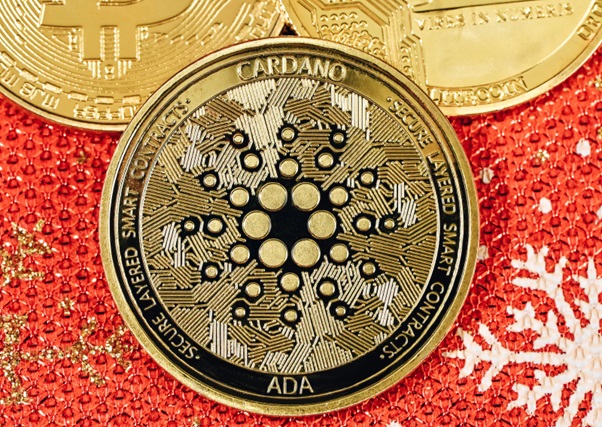
Cardano’s ADA has been moving within a narrow window of $0.695 to $0.75, showing signs of price stability. A daily candle close above $0.756 could open the door to a 12% increase toward $0.85. On the other hand, if ADA dips below $0.69, it might slide to $0.65.

From a technical angle, ADA is currently pushing against the 200-day Exponential Moving Average (EMA), a known resistance zone. Still, sentiment in the market leans positive, with $17 million locked in long positions. A recent 40% surge in trading volume also points to increasing interest from market participants.

BlockDAG Beta Testnet Opens Real Earnings of $6,000 in BDAG

BlockDAG’s Beta “Primordial” Testnet isn’t just a glimpse of what’s coming—it gives users a way to earn BDAG rewards before the mainnet even launches. A total of $6,000 in BDAG is up for grabs. The top 10 most active wallets, the 10 highest-performing miner nodes, and the 10 wallets with the largest holdings will each receive $2,000 worth of BDAG, set at a value of $0.05 per coin. Crucially, these aren’t just trial tokens—winners will receive actual mainnet BDAG, offering real-world value.

For those building on the platform, this Testnet is more than just testing. It gives coders the chance to launch smart contracts, push scalability tests, and gain recognition. The system includes helpful tools such as a built-in IDE, block explorer, and full EVM compatibility to ensure a smooth development process.

This reward-based approach is driving wider momentum. BlockDAG’s crypto presale has already raised $209.5 million. Now in its 27th batch, BDAG’s price sits at $0.0248—an increase of 2,380% from its earliest phase. Over 19 billion coins have already been sold, showing strong participation and growing support behind the project.

Set to continue through May 31, the Beta Testnet is more than a trial—it gives users and builders a role to play before the full network goes live. Whether testing code or running nodes, those involved today are being directly rewarded for their early contributions.

Wrapping Up!

While Solana moves ahead with integrations and Cardano works through resistance levels, BlockDAG is bringing attention to what truly matters—hands-on action and real output.

By tying rewards directly to what people do on the testnet—and with over 19 billion BDAG coins sold so far—the project focuses on practical use instead of just future promises. With the May 31 cutoff getting closer, those building, mining, or testing aren’t sitting back—they’re actively helping shape what’s next. And in a space where results speak loudest, BlockDAG is giving people the tools to show what they can do.


Presale: https://purchase.blockdag.network

Website: https://blockdag.network

Telegram: https://t.me/blockDAGnetworkOfficial

Discord: https://discord.gg/Q7BxghMVyu

NEITI Recovers $4.85bn from Oil Companies, Raises Concerns Over Unpaid Liabilities Amid Nigeria’s Budget Deficit

0

The Nigeria Extractive Industries Transparency Initiative (NEITI) said it has successfully recovered $4.85 billion from unpaid liabilities owed by oil and gas companies in Nigeria, marking a significant step in the agency’s ongoing efforts to promote transparency and accountability in the extractive sector.

The recovered sum is part of a larger $8.26 billion in outstanding obligations identified in NEITI’s 2021 oil and gas audit report. However, despite this recovery, billions remain unpaid, raising concerns about revenue leakages and the financial burden on the government as it struggles to fund critical projects.

Speaking at a press conference in Abuja, NEITI’s Executive Secretary, Dr. Orji Ogbonnaya Orji, stated that while significant progress has been made in recovering funds, unresolved financial liabilities continue to pose a major challenge.

“So far, over $4.85 billion was recovered from the disclosures of $8.26 billion made by NEITI in its 2021 oil and gas report. In the 2023 industry reports released in September 2024, NEITI disclosed liabilities of $6.175 billion and N66.378 billion, showing a significant decline from the liabilities of the 2021 reports, yet worrisome because of the need for government to find resources to fund its 2025 budget,” Orji said.

He lamented that despite NEITI’s continuous efforts to ensure financial accountability, several oil and gas companies still default on their payments. He urged the Federal Inland Revenue Service (FIRS) and the Nigerian Upstream Petroleum Regulatory Commission (NUPRC) to adopt more stringent enforcement measures against defaulters to prevent further revenue losses.

“NEITI is therefore calling on relevant agencies responsible for collecting these revenues to do the needful and support our governments at all levels to provide the much-needed infrastructure for our citizens,” Orji stated.

To highlight the economic significance of these unpaid debts, Orji provided an analysis of how the funds could impact national development if fully recovered.

“Analyses of how these liabilities, when paid, could support the federal government’s domestic revenue mobilization reveals that the liabilities, when converted at N1,500 to one dollar, would amount to N9.33 trillion.

“The sum is more than the federal government’s total budget for health, education, agriculture, and food security, which totaled N8.73 trillion. Further analyses show that the sum is also more than the total budget for national security at N6.11 trillion, health at N2.48 trillion, and social welfare of N724 billion all put together. The liabilities can also knock off about 72% of the federal government’s budget deficit of N13 trillion for 2025,” he explained.

Orji stressed that the urgency of revenue recovery could not be overstated, as Nigeria faces mounting fiscal challenges. He called on relevant government agencies to ensure that oil companies meet their financial obligations, noting that improved revenue mobilization is essential for the country’s economic stability.

In a related development, NEITI announced plans to review a series of oil block divestments worth $6.03 billion, involving 26 assets sold by five International Oil Companies (IOCs). The divestments include major deals such as Shell’s $2.4 billion sale to Renaissance, ExxonMobil’s $1.28 billion transfer to Seplat, and TotalEnergies’ $860 million sale to Chappal Energies. Orji stated that these transactions are reshaping Nigeria’s oil and gas landscape, making it imperative to ensure that they are conducted transparently and in line with regulatory requirements.

“NEITI recognizes the urgent need for transparency in these transactions to protect national interests, host communities, and revenue flows. To achieve this, NEITI will expand industry reports to include dedicated sections on divestments and intensify collaboration with NNPC Ltd. and other government agencies to disclose forward sales data,” Orji said.

He explained that NEITI would work closely with the Nigerian Upstream Petroleum Regulatory Commission (NUPRC) and the Nigerian National Petroleum Company Limited (NNPC Ltd.) to oversee these divestments and ensure full disclosure of all financial, social, and environmental aspects of the transactions. The agency will expand its industry reports to include detailed sections on divestments while intensifying collaboration with government agencies to disclose forward sales data.

Beyond financial transparency, Orji raised concerns about the environmental impact of these divestments. He cautioned that some oil firms might have exited their operations without adequately addressing the environmental damage caused by their past activities.

“NEITI will work with regulatory agencies, including the Ministry of Environment, to ensure oil firms are held accountable for clean-up costs and remediation efforts,” Orji said.

He stressed that host communities must not be left to suffer the consequences of oil exploration and that proper clean-up efforts must be enforced before companies are allowed to complete their exits.

In addition to the divestment review, NEITI is set to examine Nigeria’s forward sales of crude oil, particularly transactions where oil is exchanged for loans. The decision comes amid growing concerns from local refineries about inadequate crude oil supply, which has affected domestic refining operations.

Providing a broader industry overview, Orji revealed that Nigeria had earned $831 billion from oil and gas revenues since NEITI began sector audits 23 years ago. He also disclosed that over $4.85 billion had been recovered from the disclosures of $8.26 billion made in NEITI’s 2021 oil and gas report.

“As we commence the 2024 Oil, Gas, and Solid Minerals Reports, we will expand our reporting framework to address forward sales and pre-export financing transactions,” he stated.

While acknowledging Nigeria’s progress in promoting transparency within the extractive sector, Orji noted that institutional constraints and funding limitations continue to pose challenges to achieving full accountability.

NEITI’s findings come at a time when the Nigerian oil industry is experiencing a shift, with IOCs exiting onshore and shallow-water operations due to security concerns.

Earlier this year, Shell completed the sale of its Nigerian onshore subsidiary, Shell Petroleum Development Company (SPDC), to Renaissance, a consortium of mostly local companies. The move was part of Shell’s broader strategy to focus on deepwater and integrated gas assets. Similarly, TotalEnergies sold its 10 percent stake in 15 oil mining leases and the Forcados and Bonny export terminals to Mauritius-based Chappal Energies for $860 million.

Experts attribute these exits to the growing insecurity and vandalism of oil infrastructure in the Niger Delta. With pipeline attacks and crude theft becoming more rampant, multinational oil companies have found it increasingly difficult to sustain onshore operations. This has led them to shift focus to offshore fields, where security risks are significantly lower.

NEITI’s latest report underscores the urgent need for stricter enforcement of financial accountability in Nigeria’s oil sector. With billions in unpaid obligations, the government faces a critical challenge in ensuring that oil companies fulfill their financial responsibilities while also addressing the economic consequences of IOC divestments.

Mali, Burkina Faso, and Niger Impose 0.5% Levy on ECOWAS Imports, Risking Economic Backlash

0
Empty white clear flag waving against clean blue sky, close up, isolated with clipping path mask alpha channel transparency

Mali, Burkina Faso, and Niger have announced a 0.5% levy on imported goods from the Economic Community of West African States (ECOWAS) member nations, including Nigeria, in a move that is expected to further strain relations with the regional bloc.

The levy, which takes effect immediately, is aimed at funding the newly formed Alliance of Sahel States (AES)—the three-nation military bloc that broke away from ECOWAS earlier this year.

The decision marks a significant departure from the long-standing free trade agreements within West Africa and signals a new phase in the economic realignment of the three Sahel nations, which have been governed by military juntas since their respective coups.

While junta leaders claim the levy is necessary to sustain their alliance, economic analysts warn that this new tariff could backfire, ultimately harming their fragile economies by driving up prices and discouraging cross-border trade.

The Alliance of Sahel States was initially established in 2023 as a security pact to combat Islamist insurgencies, but it has since expanded its ambitions into the economic sphere. Military rulers in Mali, Burkina Faso, and Niger have pushed for deeper financial and trade integration, including plans to introduce a common biometric passport and other policies to boost internal cooperation.

Under the newly announced trade policy, all imports entering the three countries from ECOWAS nations will be subject to a 0.5% levy, excluding humanitarian aid. The funds generated from the tariff, according to officials, will help finance the operations of the Alliance of Sahel States. However, no specifics have been provided on how the funds will be allocated, raising concerns about transparency and economic sustainability.

Potential Economic Backlash

While the junta governments see the tariff as a means to raise funds for their economic independence, analysts warn that the measure could hurt the very economies it is meant to support.

The three Sahel nations are among the poorest in the world, heavily reliant on trade and imports for essential goods, particularly from coastal ECOWAS states like Nigeria, Ghana, Côte d’Ivoire, and Senegal. People are concerned that besides disrupting the economic objective of the African Continental Free Trade Area (AfCFTA), the new levy could drive up the cost of goods in Mali, Burkina Faso, and Niger, exacerbating inflation and worsening living conditions for their already struggling populations.

Additionally, businesses that rely on importing materials from ECOWAS nations could see their profit margins shrink, potentially leading to job losses and further economic stagnation. The World Bank has previously warned that trade restrictions in West Africa could reduce economic growth, particularly in landlocked nations like Mali and Burkina Faso, which depend on external trade routes.

Impact on Nigeria and Regional Trade

Nigeria, which has long been one of Niger’s top trading partners, is among the countries likely to be affected by this tariff. In 2022, Nigeria exported $290 million worth of goods to Niger, but by 2023, exports had already declined to $209 million, reflecting the strain in economic ties. Major Nigerian exports to Niger include:

  • Petroleum Gas ($44.6M)
  • Electricity ($41.5M)
  • Cement ($32.8M)

The introduction of the 0.5% levy could further discourage Nigerian exporters from trading with Niger, as additional costs may make it less profitable to do business in the region.

Beyond Nigeria, the broader ECOWAS trade network could face disruptions, particularly for Burkina Faso and Mali, which depend on coastal nations for access to seaports. If trade slows down due to the new tax, the supply of crucial goods like food, fuel, and raw materials could be impacted, leading to higher prices and economic hardship for local populations.

Deepening Rift Between ECOWAS and the Military Juntas

The imposition of this tariff is the latest move in the ongoing standoff between ECOWAS and the Alliance of Sahel States. The three countries officially withdrew from ECOWAS earlier this year, citing frustration over what they described as the bloc’s failure to support their fight against Islamist insurgents.

ECOWAS had imposed economic sanctions on these nations following their military coups, hoping to pressure them into returning to democratic rule. However, rather than giving in to the pressure, the juntas have doubled down on their independent political and economic strategies, effectively cementing their breakaway from the regional bloc.

With relations between ECOWAS and the Sahel bloc at an all-time low, experts say the introduction of the levy further reduces the chances of reconciliation. Some observers warn that if the Sahel countries continue down this path, they risk isolating themselves economically, which could worsen their financial and security challenges in the long run.

Uncertain Future for the Alliance of Sahel States

Despite the juntas’ ambitions to create an alternative to ECOWAS, it remains unclear whether the Alliance of Sahel States has the financial and institutional capacity to sustain itself. The economies of Mali, Burkina Faso, and Niger are weak and heavily dependent on foreign aid, and their access to international credit markets has been severely limited since their respective military takeovers.

With the introduction of the 0.5% tariff, the military leaders are betting on trade revenues to keep their governments afloat. However, if economic activity slows down and foreign businesses pull out of the region, the move could ultimately backfire, leaving the countries in a deeper financial crisis.

Analysts say that while the juntas are trying to project economic strength and self-reliance, they may have underestimated the long-term consequences of alienating ECOWAS and imposing additional barriers to trade.

For businesses operating in West Africa, the new levy is a clear sign that the region’s political and economic landscape is shifting rapidly, with growing uncertainty over the future of regional cooperation.