DD
MM
YYYY

PAGES

DD
MM
YYYY

spot_img

PAGES

Home Blog Page 1476

Panama City’s Council Approved Tax Payments For Residents Via Cryptocurrencies

0

Panama City’s council approved a measure allowing residents to pay taxes, fines, fees, and permits using cryptocurrencies, specifically Bitcoin (BTC), Ethereum (ETH), USD Coin (USDC), and Tether (USDT). This makes Panama City the first public institution in Panama to accept crypto payments. Mayor Mayer Mizrachi announced the initiative, noting that it bypasses the need for new legislation by partnering with a bank to instantly convert crypto payments into U.S. dollars, ensuring compliance with legal requirements for dollar-based transactions.

The system is expected to be fully implemented later in 2025, with the banking agreement to be finalized soon after the announcement. This move aligns with global trends, as jurisdictions like Colorado, Lugano (Switzerland), and Vancouver have also embraced crypto for public payments, though Panama City’s approach focuses on local governance and optional use without mandating crypto acceptance.

Accepting Bitcoin, Ethereum, USDC, and USDT, Panama City legitimizes cryptocurrencies as a payment method, potentially encouraging broader adoption among residents and businesses. This could normalize crypto use in everyday transactions and inspire other municipalities in Panama or Latin America to follow suit. Crypto payments could provide access to government services for unbanked or underbanked individuals who hold digital assets, fostering inclusivity in a region where traditional banking access can be limited.

The move signals Panama City’s intent to position itself as a forward-thinking, tech-friendly hub, potentially attracting blockchain businesses, crypto investors, and tourists. This aligns with Panama’s history as a financial and trade center. Partnering with a bank to instantly convert crypto to U.S. dollars minimizes volatility risks and simplifies accounting for the city. This could streamline payment processing and reduce reliance on traditional financial intermediaries, potentially lowering costs.

By bypassing the need for new legislation, Panama City sets a practical model for integrating crypto into public finance within existing legal frameworks. This could influence national policy or encourage other jurisdictions to adopt similar workarounds, though it may also prompt regulatory scrutiny to ensure compliance with anti-money laundering (AML) and know-your-customer (KYC) standards. While the instant conversion to dollars mitigates price volatility, the city must ensure robust cybersecurity and reliable banking partnerships to prevent fraud, hacks, or transaction errors, which could undermine public trust.

As one of the first public institutions in Panama to accept crypto, Panama City joins a growing list of global jurisdictions (e.g., Colorado, Lugano) embracing digital currencies. This could enhance Panama’s reputation in the global crypto community and pressure other governments to innovate. Not all residents may be familiar with or have access to cryptocurrencies, potentially creating a learning curve or exclusion for those reliant on cash or traditional banking. The optional nature of crypto payments mitigates this but highlights the need for education and infrastructure.

As residents use Bitcoin, Ethereum, USDC, and USDT for municipal payments, local businesses may feel incentivized to accept these cryptocurrencies to capture this growing market. This could lead to more point-of-sale crypto integrations, especially in retail, hospitality, and services. Businesses that adopt crypto payments could attract tech-savvy residents, tourists, and investors who prefer using digital currencies. Panama City’s reputation as a crypto-friendly hub may draw more blockchain-related visitors, boosting sectors like tourism and real estate.

Businesses accepting crypto will need to invest in payment infrastructure, such as crypto wallets or third-party processors, and train staff to handle transactions. They may also need to implement accounting systems to manage crypto volatility and comply with tax reporting, potentially increasing initial costs. Early adopters of crypto payments could gain a competitive edge, appealing to a niche but growing demographic. This could be particularly impactful for small businesses or startups looking to differentiate themselves in a crowded market.

If crypto payments streamline municipal transactions, businesses may benefit from faster or cheaper government services (e.g., permits or licenses). Increased economic activity from crypto-friendly policies could also drive demand for local goods and services. Not all businesses, especially small or cash-based ones, may have the resources or expertise to adopt crypto. This could create a divide between crypto-ready businesses and those left behind. Additionally, businesses must navigate cybersecurity risks and ensure compliance with AML/KYC regulations to avoid legal issues.

The city’s banking partnership for instant crypto-to-dollar conversion could inspire similar private-sector collaborations, enabling businesses to accept crypto without holding volatile assets. This could lower barriers to entry for smaller businesses. Overall, local businesses could see opportunities for growth and innovation but will need to weigh the costs of adoption, technological upgrades, and regulatory compliance. Those that adapt effectively could position themselves as leaders in Panama City’s emerging crypto economy.
Tekedia Crypto and Blockchain Weekend Roundup

0

Mantra’s OM token crashed ~90% on April 13, 2025, dropping from ~$6.30 to below $0.50, wiping out over $5 billion in market cap. MANTRA attributes the collapse to “reckless forced liquidations” by centralized exchanges during low-liquidity hours, denying insider selling. Co-founder John Mullin suggested one exchange’s sudden closure of positions without warning triggered the cascade. However, community skepticism persists, with some alleging insider dumps due to large pre-crash token deposits (e.g., 3.9M OM to OKX). No conclusive evidence confirms either narrative, and investigations are ongoing.

Michael Saylor, a prominent Bitcoin advocate and Strategy chairman, has predicted Bitcoin could reach a $500 trillion market cap, implying a per-coin price of roughly $23.8 million to $25.2 million, given its 21 million total supply or 19.84 million circulating supply. His reasoning hinges on Bitcoin absorbing value from traditional assets like gold, real estate, and other stores of value, which he argues will be demonetized as capital shifts to digital assets. He sees Bitcoin as the next evolution of money, driven by its fixed supply and growing institutional adoption, potentially causing a supply shock.

This prediction assumes a 29,000%+ increase from Bitcoin’s current $1.67 trillion market cap, a scenario many view as speculative. Critics argue it would require an unrealistic reallocation of global wealth, dwarfing world GDP. Saylor’s track record shows bold forecasts—he previously predicted $13 million per coin by 2045—but skeptics note his heavy Bitcoin investments may bias his outlook. While some see his vision as plausible in a hyper-digital future, others call it exaggerated, citing practical limits to adoption and valuation.

Binance executives reportedly met with U.S. Treasury officials to discuss easing regulatory oversight, particularly around anti-money laundering compliance, while also exploring a deal with the Trump family’s crypto venture, World Liberty Financial. The talks involved potentially listing a new dollar-pegged stablecoin, USD1, which could leverage Binance’s massive user base and trading volume for adoption, potentially generating significant profits for the Trump family. Discussions about a Trump family stake in Binance.US have also surfaced, though details remain unclear.

These moves align with Binance’s efforts to re-enter the U.S. market after a $4.3 billion settlement in 2023 for violating anti-money laundering laws. Meanwhile, Binance’s founder, Changpeng Zhao, has been linked to seeking a pardon, though he denied involvement in specific deal talks. The Treasury meeting reflects Binance’s broader push to navigate a shifting regulatory landscape under a crypto-friendly administration.

Oklahoma’s Strategic Bitcoin Reserve Act, House Bill 1203, failed to advance in the Senate Revenue and Taxation Committee on April 14, 2025, with a 6-5 vote against it. The bill, introduced by Rep. Cody Maynard, aimed to allow the state treasurer to invest up to 10% of public funds, including the State General Fund, Revenue Stabilization Fund, and Constitutional Reserve Fund, in Bitcoin and other digital assets with a market capitalization over $500 billion, as well as stablecoins. It had previously passed the House Government Oversight Committee (12-2) on February 25 and the full House (77-15) on March 24.

Opposition came from a bipartisan group of senators: Todd Gollihare (R), Chuck Hall (R), Brent Howard (R), Dave Rader (R), Julia Kirt (D), and Mark Mann (D). Despite a last-minute vote switch by Sen. Christi Gillespie, who was swayed by constituent outreach, the bill fell short. Critics likely raised concerns about Bitcoin’s volatility and the risks of investing taxpayer funds, as seen in other states like Montana, where similar bills were rejected.

Brazilian fintech Méliuz has taken steps toward adopting Bitcoin as a primary treasury asset. In March 2025, the company allocated 10% of its cash reserves, about $4.1 million, to purchase 45.72 bitcoins at an average price of $90,926 per coin, becoming the first publicly traded Brazilian firm to adopt a Bitcoin treasury strategy. The move, approved by its board, aims for long-term returns, with Méliuz viewing Bitcoin as a store of value to counter Brazil’s high inflation and interest rates (13.75% benchmark). A Bitcoin Strategic Committee was formed to explore further expansion, potentially making Bitcoin the main treasury asset.

Binance completed its 31st quarterly BNB token burn on April 16, 2025, destroying 1.57 million BNB tokens valued at approximately $916 million. This event, executed on the BNB Smart Chain (BSC), reduced the total BNB supply to 139.3 million tokens. The burn included 1.46 million BNB via the Auto-Burn mechanism, calculated based on BNB’s price and BSC block production, plus 110,000 BNB through the Pioneer Burn Program, which compensates users for lost tokens.

Binance aims to halve the initial 200 million BNB supply to 100 million, enhancing scarcity and potentially supporting long-term value. Despite the significant burn, BNB’s price remained stable, reflecting a focus on gradual supply reduction rather than immediate market impact.

Ru Haiyang, co-CEO of HashKey, Hong Kong’s largest licensed crypto exchange, suggested that China could follow the U.S. strategy by retaining forfeited Bitcoin as a strategic reserve, with the central government consolidating asset disposals. This idea aligns with discussions in China about managing its growing pile of seized cryptocurrencies, estimated to involve 430.7 billion yuan ($59 billion) in crypto-related crimes in 2023.

While China currently bans crypto trading and does not recognize digital tokens as legal assets, local governments have been selling seized coins through private companies to bolster public funds, a practice some experts argue conflicts with the trading ban.

The Trump family is reportedly launching a blockchain-based real estate game inspired by Monopoly GO!, set for release in late April 2025. Led by longtime Trump associate Bill Zanker, the game features mechanics where players earn in-game currency and build digital properties on a virtual board, integrating crypto elements like NFTs and possibly meme coins. While sources compare it to Monopoly, Hasbro, the owner of the Monopoly franchise, has denied licensing its IP for this project. Zanker also attempted to reacquire rights to “Trump: The Game,” a 1989 Monopoly-style board game, but Hasbro no longer holds those rights.

This venture is part of the Trump family’s broader crypto portfolio, including NFTs, a stablecoin USD1, decentralized finance World Liberty Financial, and Bitcoin mining. The crypto community has expressed skepticism, citing unclear tokenomics and potential legal issues with Hasbro over gameplay similarities.

Solana has surpassed all other blockchain chains in 7-day decentralized exchange (DEX) trading volume, achieving a total of $15.7 billion, as reported on April 16, 2025. This milestone highlights Solana’s dominance in on-chain activity and liquidity, driven by its high transaction throughput and low fees, which make it a preferred platform for DeFi and memecoin trading. Solana’s DEX volume accounted for a 39.6% market share in Q1 2025, growing from $217.0 billion in Q4 2024 to $293.7 billion.

Key DEXs like Raydium and Orca have fueled this surge, with memecoins such as Dogwifhat and Bonk attracting significant trading activity. While Solana has previously outpaced Ethereum in specific metrics like monthly DEX volume ($55.8 billion vs. Ethereum’s $53.8 billion in July 2024), Ethereum still leads in longer-term metrics like 30-day transaction fees. Solana’s recent performance underscores its growing adoption, though its lead can fluctuate as seen with BNB Chain briefly overtaking it in daily fees earlier in 2025.

Shiba Inu (SHIB) to $0.000120 in 5 Months? This Crypto Will Make You More Money With a 23044% Price Explosion

0

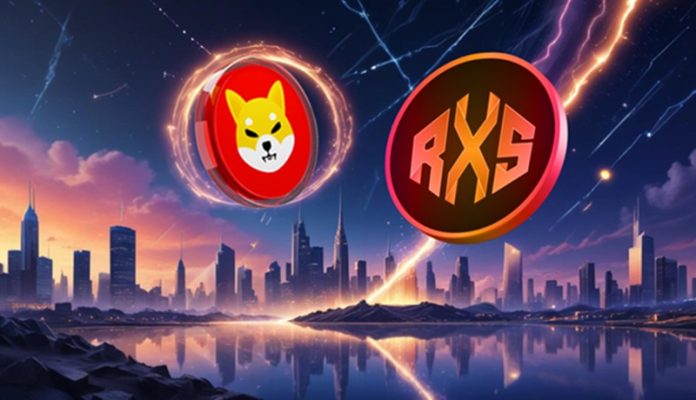
At $0.00001432 right now, SHIB has seen some significant price swings.  Its market capitalization, which falls between $8.43 billion and $9.08 billion, together with a 24-hour trading volume of $190 million to $547 million, show its excellent market presence.   The fundamental concern is whether SHIB could rise to $0.000120 during the following five months.  With a forecasted 23044% price explosion, another cryptocurrency is already positioned to make investors much more money, even if such a price leap would call for notable catalysts.

Shiba Inu (SHIB) Price Outlook and Potential Surge

SHIB has attracted between 4.24% and 14.38% during the past 24 hours, showing traders’ fresh interest. With a range from 10.97% to 22.30%, its price rise over the past seven days has been even more remarkable. This momentum points to a positive trend that can drive SHIB nearer to its ambitious aim of $0.000120.  Still, there are many difficulties on the road to this pricing point. SHIB has to increase by more than 738% from its present price to reach $0.000120. Such an increase is only conceivable under very favorable circumstances—an exponential surge in adoption, major burns of its token supply, and a more significant market rally.  Although the SHIB development team concentrates on extending the token’s value through initiatives like Shibarium, the meme currency mostly depends on market speculation. The ability of SHIB to achieve $0.000120 will also be significantly influenced by external market elements, including Bitcoin’s price behavior and general investor attitude. Though it is possible, the degree of risk involved makes it dubious.

Rexas Finance (RXS): The Crypto That Will Make You More Money

Although many investors are excited about SHIB’s aggressive price forecast, another cryptocurrency is expected to yield even more profits. Rexas Finance (RXS) is rising as a powerhouse in the crypto scene with a new platform that links actual assets with blockchain technology. Unlike meme currencies that depend on hype, RXS offers genuine value by letting users tokenize and trade real estate, commodities, and intellectual property.  Rexas Finance (RXS) is valued at $0.20, and it is currently in its final presale stage after an astonishing 6x spike from its starting presale price. With more than 91.71% of the last stage occupied, the presale has been an incredible success, generating almost $47.70 million. As excitement grows, the official launch price is $0.25; the token will first appear on June 19, 2025.  One of the most reputable blockchain security companies, CertiK, has audited RXS, unlike speculative meme coins, guaranteeing openness and increasing investor confidence.  Its ecosystem links decentralized finance (DeFi) with conventional finance, enabling smooth, efficient, borderless asset ownership and trading. This practical use provides RXS with a strong basis for long-term continuous development.

The Unstoppable Momentum of Rexas Finance (RXS) and the 23044% Price Explosion

With its continuous $1 million giveaway, Rexas Finance (RXS) has become rather popular beyond its successful presale. With over 1.80 million entries, this project has raised awareness and involvement significantly and given 20 fortunate winners $50,000 worth of RXS each. This increasing demand is driving conjecture that RXS is destined for one of the most notable price swings on the market. Leading crypto specialists estimate that RXS will soar by 23044%, far more than the possible increase of SHIB.  Early investors should make significant gains from the token, which is rising to an impressive $46.288 per RXS at this pace. Unlike meme coins, whose long-term value is unknown, RXS’s real-world asset tokenizing technique guarantees it stays relevant past market speculation.

Although SHIB is still a common choice among crypto aficionados, high supply and market instability restrict its possible expansion. The return on investment of SHIB at $0.000120 is meager compared to what RXS presents.  Blockchain technology allows RXS to redefine asset ownership, providing a competitive advantage over speculative tokens. Long-term investors drawn to RXS are seeing its ability to transform conventional finance. Its CertiK audit also guarantees that security and dependability take front stage, strengthening project credibility.  With its 23044% price explosion, RXS offers a considerably more profitable possibility as SHIB continues towards $0.000120. As RXS is ready for its official launch, early investors stand to make transforming gains in life. Rexas Finance (RXS) is the next primary cryptocurrency you should search for if you want one that will increase your income.


For more information about Rexas Finance (RXS) visit the links below:

Website: https://rexas.com

Win $1 Million Giveaway: https://bit.ly/Rexas1M

Whitepaper: https://rexas.com/rexas-whitepaper.pdf

Twitter/X: https://x.com/rexasfinance

Telegram: https://t.me/rexasfinance

As Naira Struggles, Long-Term Investments Fade, Making Economic Development Harder. What Nigeria Can Do To Help Naira [video]

0

Many asked “how can we stabilize the naira?” after I shared my experience how Naira deterioration dislocated  my entry career level playbook to invest 15% of my earnings in the Nigerian stock exchange, and how that decision has turned out to be sub-par. If you did not watch the video, it is here.

In this video, I try to answer. But of course, you can also read my inaugural presidential address which I have hypothetically written since 2018 on how we can fix some issues in Nigeria. Lol (Do not read too much into it since as a teacher, I am not sure I can afford to buy pure water for the national delegates. Let us just have fun!)

Yet seriously, I do believe that private capital is the vehicle to save Nigeria as the government does not have the capacity to build the platforms of commerce which will enable fundamental innovation and productivity. My thesis is for the government to explore what will make the private capital to LIKE and LOVE Nigeria because that is the hope right now.


5 Ways to Send Money to Ecuador

0

There are different options that you can see in the market, but how would you know which one is better and your loved ones can easily receive the money in a short period of time? In this blog, we will discuss the top 5 ways that will help to send money to Ecuador so that your family can live the better life that they deserve.

So, let’s get started.

1. Western Union

It is one of the best ways that you can use to send money to Ecuador. It provides different options like a direct person or through an agent, via bank, and mobile app. You can use a convenient way that is more suitable for you and your family can receive money in a short period of time.

Further, you can send money through Western Union without facing extra or hidden charges. When you need to send money, you clearly see the service charging fee so that you can send money with peace of mind. With this transparency, you may not face any other charges that you may not see on your screen. Additionally, you can track your money transfer with live updates or a unique tracking number.

2. Bank Transfer

When you need to send money to your loved ones in Ecuador, a bank transfer is one of the best options that you can use. Further, it provides the safest way for you to protect your confidential information. Additionally, you will also face low service charges as compared to other methods that you may use to send money to Ecuador.

Safely sending money to your family will help them to upscale their lifestyle and get good food to live a healthy life. So, in this way, you can easily send the money and properly care for your family.

3. The Wise

The most popular, reliable, and affordable way to send money to Ecuador. With this, you can easily send money without facing extra charges. Further, you can download their application or visit their website to make an account so that you can easily send money to your family. After making an account, enter the amount that you want to send to your loved ones by paying through credit, debit, or online banking. Further, add on the recipient details, and your loved one will receive the money in a short period of time.

Showing the service charging fee makes this process transparent and makes you comfortable so that you can use this method with peace of mind.

4. The Xoom

It is a PayPal service that helps to send money to Ecuador. With the affordable and reliable service, you can easily send money to your loved ones so that they can improve their lifestyle and get good food.

The Xoom also allows to send money by using their application. For sending money and create an account you can download their mobile app.

5. The WorldRemit

It is also one of the best way that help to send money. To send money, you can make an account on the application or their website.

After making an account, you can easily send money by paying the low service charging fee to your family so that they can get a better life.