DD
MM
YYYY

PAGES

DD
MM
YYYY

spot_img

PAGES

Home Blog Page 1488

Modern Business Model: Fractionalization of Real Estate Investment | Tekedia Mini-MBA

0

Omo vs Ariel detergent.

Scottrade vs Robinhood.

Peak milk vs Cowbell. |

What happened there?

Fractionalization and tokenization: “a process of breaking down a single asset into smaller, tradable units. These units represent a portion of the original asset’s ownership and allow multiple investors to share ownership”.

And sachetization: refers to the “practice of offering products in small, affordable sachets, primarily in emerging markets where low-income consumers have limited access to goods. This approach allows companies to reach a wider customer base and increases market share by making products more accessible to price-sensitive segments”.

Today, join us at Tekedia Mini-MBA as we discuss this concept which has evolved to be used  in the context of assets like real estate, artwork, and digital assets like bitcoin.

Omo went, Ariel rose. Scottrade crashed, Robinhood ascended. Peak ignored the bottom of the pyramid, Cowbell took some. Join us today.

Starlink Granted License Approval to Launch Services in Somalia

0

Elon Musk-owned satellite internet constellation, Starlink, has officially been granted operational license approval to launch its services in Somalia.

The launch of the satellite internet service provider in the East African country, is expected to enhance internet coverage and significantly improve digital inclusion nationwide.

Speaking on the launch of Starlink, the Director General of the National Communications Authority (NCA) of Somalia, said,

“Starlink’s entry into Somalia represents a significant milestone in our efforts to bridge the digital divide in our country, this partnership will especially benefit individuals and institutions in rural areas, where internet access has been extremely limited.”

Also speaking, the Minister of Communications and Technology, H.E. Mohamed Mo’allim said,

“We welcome Starlink’s entry to Somalia. This initiative aligns with our vision to deliver affordable and accessible internet services to all Somalis, regardless of where they live.”

Somalia’s internet landscape has evolved rapidly from near-isolation to growing connectivity. In the past, decades of civil conflict and minimal infrastructure left Somalia largely offline. Today, internet access is increasingly recognized as vital for economic recovery, social development, and security.

The impact of improved internet connectivity cannot be overstated. For many Somalis, particularly those residing in rural and underserved areas, reliable internet access has remained elusive. The Somali government and its partners have recognized that improving internet access is crucial for national development, and they have started several policies and initiatives to foster the ICT sector.

However, Somalia’s internet penetration remains relatively low and uneven. Average mobile download speeds hover around 17 Mbps, which, while modest, enables basic broadband services for users. By contrast, traditional fixed-line broadband is virtually absent for residential consumers only about 1% of Somalis have a fixed internet subscription.

Only about 1% of the population has a high-speed fixed connection (>256 kbps), as most households rely instead on mobile broadband or community Wi-Fi hubs. It’s worth noting that until recently, each region had its dominant provider, and interconnection between networks was lacking. Now, with regulatory efforts, all major operators are interconnected and collectively expanding services. Overall, Somalia’s current internet landscape can be summarized as mobile-centric, rapidly improving in urban areas, but still facing gaps in rural connectivity and fixed broadband penetration.

Starlink’s low-latency, high-speed satellite internet aims to bridge this digital divide. The introduction of Starlink in Somalia represents more than just a technological advancement. It’s about empowering communities, fostering economic growth, and facilitating access to essential services like education and healthcare.

In a nation where traditional infrastructure faces significant challenges, satellite internet offers a viable and efficient solution. Starlink’s Somali launch is part of a broader African strategy that began in Nigeria in 2023 and now includes Kenya, Rwanda, Zambia, and others. With a subscriber base exceeding 1.5 million globally and a valuation surpassing USD 150 billion, SpaceX is leveraging emerging markets to fuel growth.

Notably, Somalia’s 2025 Digital Inclusion Policy, which prioritizes rural access and telemedicine, aligns with Starlink’s capabilities, potentially attracting further foreign investment in energy, logistics, and mining. As Somalia joins the global satellite broadband market, projected to hit USD 83 billion by 2030 with a 22% CAGR, Starlink’s launch underscores a broader truth, that connectivity is no longer a luxury but a foundation for economic and social progress.

Whether it leapfrogs Somalia’s infrastructure challenges or falters under cost and security pressures remains to be seen, but the potential to unlock opportunities for millions is undeniable.

Binance’s Involvement With Trump’s Family World Liberty Financial Might Erode Skepticism

0

Binance executives reportedly met with U.S. Treasury officials to discuss easing regulatory oversight, particularly around anti-money laundering compliance, while also exploring a deal with the Trump family’s crypto venture, World Liberty Financial. The talks involved potentially listing a new dollar-pegged stablecoin, USD1, which could leverage Binance’s massive user base and trading volume for adoption, potentially generating significant profits for the Trump family.

Discussions about a Trump family stake in Binance.US have also surfaced, though details remain unclear. These moves align with Binance’s efforts to re-enter the U.S. market after a $4.3 billion settlement in 2023 for violating anti-money laundering laws. Meanwhile, Binance’s founder, Changpeng Zhao, has been linked to seeking a pardon, though he denied involvement in specific deal talks. The Treasury meeting reflects Binance’s broader push to navigate a shifting regulatory landscape under a crypto-friendly administration.

Binance’s discussions with the Treasury suggest a push to loosen anti-money laundering and compliance restrictions, potentially allowing re-entry into the U.S. market. Success here could set a precedent for lighter crypto regulation, benefiting Binance but raising concerns about financial oversight and illicit activity risks. A partnership with World Liberty Financial, particularly listing a USD1 stablecoin, could amplify the Trump family’s financial stake in crypto. Binance’s global reach might drive adoption, funneling profits to the Trumps, which could spark debates over political influence in markets, especially given the administration’s crypto-friendly stance.

Binance’s involvement could boost the credibility and liquidity of World Liberty Financial’s stablecoin, potentially challenging existing players like Tether or USDC. However, it risks market skepticism due to Binance’s past legal issues and the Trump brand’s polarizing nature. Talks of a Trump family stake in Binance.US or a pardon for Changpeng Zhao raise red flags about conflicts of interest, especially under a Trump-led administration. Such moves could erode public trust in regulatory impartiality and fuel accusations of cronyism.

Binance’s U.S. strategy could influence other jurisdictions. If it secures favorable terms, competitors might push for similar deals, reshaping global crypto regulation. Conversely, failure could tighten scrutiny on Binance elsewhere. Aligning with a politically charged project like World Liberty Financial might alienate some Binance users or regulators, complicating its global operations. Public perception of Binance cozying up to power could also harm its reputation. These developments signal a high-stakes gamble for Binance, balancing regulatory relief and market expansion against political and reputational risks.

A potential deal with Binance to list WLF’s USD1 stablecoin could amplify Trump Family’s influence by tapping Binance’s 235 million users and $3 trillion in annual trading volume (2024 figures). This partnership might drive significant profits, especially if WLF secures a favorable revenue-sharing model. Beyond economics, the Trumps’ involvement could sway market sentiment, attracting supporters while alienating critics, given their polarizing profile. Rumors of a stake in Binance.US further suggest a deeper financial foothold, potentially intertwining their interests with a major crypto player.

However, this raises concerns about political leverage, as their influence could pressure regulators for favorable treatment, especially under a Trump administration, risking perceptions of market favoritism or conflicts of interest. Binance faces steep regulatory challenges in the U.S. following its 2023 $4.3 billion settlement for violating anti-money laundering (AML) and sanctions laws, which led to its exit from the U.S. spot market. Re-entering requires navigating stringent Treasury and SEC oversight, particularly on AML compliance and know-your-customer (KYC) protocols.

Discussions with the Treasury to ease these rules suggest Binance is seeking a lighter touch, possibly capitalizing on a crypto-friendly administration. However, any deal tied to the Trump family complicates matters—regulators may scrutinize it for impartiality, fearing political pressure. Approving a WLF partnership or Binance.US stake could trigger backlash from Congress or advocacy groups, citing risks of regulatory capture. Additionally, Binance’s global operations face varying rules, so U.S. concessions might not shield it from stricter jurisdictions like the EU.

CBN Says Bank Recapitalization Crucial to Achieving $1tn Economy, But Experts Warn Power Crisis Undermines Vision

0

The Central Bank of Nigeria (CBN) on Monday declared that recapitalizing the banking sector was inevitable if the country intends to build a $1 trillion economy by 2030.

CBN Deputy Governor, Corporate Services, Ms. Emem Usoro, who delivered a keynote address at the opening of the 36th CBN seminar for finance correspondents and business editors in Abuja, emphasized that improving banks’ capital base would ensure resilience and enable them to finance the country’s development projects. She stated that recapitalization would also position Nigerian banks to compete more effectively with their global counterparts.

Speaking through the acting Director, Corporate Communications Department, Mrs. Sidi Ali-Hakama, Usoro said the time had come to pay significant attention to the recapitalization of banks, especially as Nigeria targets an ambitious economic expansion from its current estimated size of $250 billion to $1 trillion in less than a decade.

“The push for a recapitalization of banks would no doubt improve the strength and health of the financial system, deepen financial intermediation, and promote healthier competition that would strengthen our payment system,” she said.

She noted that the 2004 banking reform, which raised the minimum capital base to N25 billion and reduced the number of banks from 89 to 25, proved successful in its time. A similar decisive move, she argued, is now needed as Nigeria plans to multiply its economic size fourfold.

“The 2004 banking sector consolidation and recapitalization exercise, which set a limit of N25 billion minimum capital base for banks, brought the Nigerian banks from 89 to 25, was a noble idea that the Central Bank of Nigeria implemented in line with emerging developments at that time.

“Today, our economy is valued at approximately $250 billion. As we aspire to build a $1 trillion-economy, all hands must be on deck…This gathering is essential to bring to the fore the bank’s efforts and policy direction,” she said.

However, outside the walls of the seminar, the consensus among economic experts is far more sobering. Many have warned that without a stable power supply, the dream of a $1 trillion economy remains a mirage. According to them, the country’s chronic power crisis poses a far greater threat to growth than capital inadequacy.

According to a study, for every 1% increase in electricity supply, an economy is expected to grow by 3.94%. Inversely, a 1% increase in real gross domestic product leads to a 0.34% increase in electricity supply and consumption.

Currently, Nigeria generates about 4,000MW to 5,000MW of electricity, a figure that has remained stagnant for years despite decades of policy shifts, billions of dollars in spending, and successive power sector reforms. Experts argue that this level of generation is not even sufficient for Lagos alone, let alone an entire country.

“With a current installed capacity of about 14,000 megawatts, and utilization ranging between 3500 to a maximum 4000, over 11 years post privatization, the government’s aim to boost electricity access from 45% to 90% by 2030 is not feasible without a bench markable framework backed by credible data,” Dr. Joy Ogaji, managing director, Association of Gencos, said late last year.

Nigeria needs an estimated 30,000MW of stable power to grow its economy significantly, yet, there is no actionable plan in place to raise its power generation to even 10,000MW in the next ten years.

Against this backdrop, the talk of a $1 trillion economy feels out of touch with reality.

The power deficit continues to cripple productivity across sectors. Manufacturing plants operate at a fraction of their capacity, small businesses rely on expensive diesel generators, and foreign investors routinely cite electricity as a major disincentive.

Over the years, Nigeria has rolled out different interventions to reform the power sector, including privatizing generation and distribution assets, signing power purchase agreements, and setting up regulatory bodies. But none of these efforts has led to significant or sustained improvement in electricity supply.

The current administration, like those before it, has promised to “fix power.” Yet there is no clear roadmap to ramp up generation, expand transmission, or overhaul the comatose distribution companies. Experts have therefore called for the federal government to declare a state of emergency in the power sector.

How Layer 1 Blockchains may be best

0

I recently read content from Moralis ‘Academy’. Some of you may already be familiar with Moralis due to the ‘SDK’ product.

They have a perplexing summary on the differences between Blockchains by Layer types 1, 2 & 3.

‘Layer-2 (L2) networks help the blockchain industry to scale by taking computations off-chain and minimizing fees and latency. That said, layer-2 networks don’t address the issue of interoperability. Thankfully, layer-3 (L3) networks exist to enable various blockchains and protocols to communicate.

Though the concept of a “layer-3 network” is mainly theoretical, the umbrella term refers to protocols that supplement layer-1 (L1) and layer-2 (L2) networks. In the future, many expect layer-3 networks to play an essential role in connecting the Web3 ecosystem and facilitating the mass adoption of blockchain technology. In addition, the ability of layer-2 networks to reduce congestion and layer-3 networks to facilitate interoperability between protocols enables the interconnectivity the Web3 landscape needs to flourish.’

A lot of content about Web3 presumes the ‘to-market’ consumer/collectible end, almost as if there is no other aspect to blockchain integration.

In this area, most especially, consumers should be more concerned with security, and with keeping highly personalized virtual content safe, which underlies a need to focus on security and decentralization aspects of the blockchain trilemma, not transaction speed or cost.

The main use case for high transaction rates, and super low cost, is mass data being managed at scale, industrially, commercially, and in organisations. Excluding exchange activity, this is usually not of transferable value, and is often ‘soulbound’.

If we are to believe any of the content being created out there, the consumer tradeable area is the one of most concern to ordinary individuals.

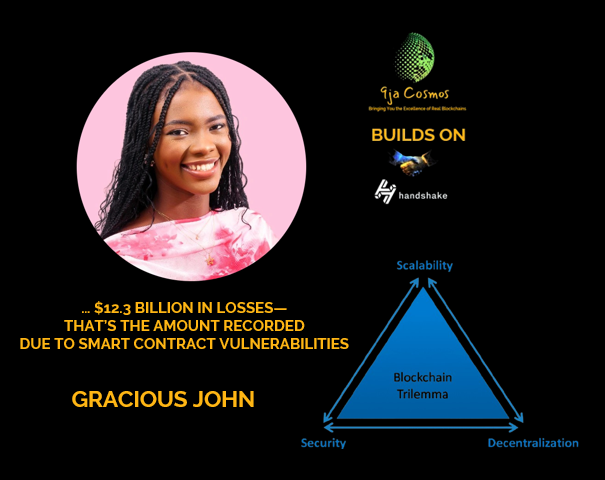
The Blockchain Trilemma features the conundrum of the variable features of a Blockchain – Security, Scalability and Decentralization. They are like a 3 sliced pie, making any slice bigger, diminishes the slice of the other two.

The Moralis perspective mentions interoperability and interconnectivity, but fails to highlight any progress in the Security or Decentralization credentials of infrastructure beyond L1 at all.

We’re not specifically ‘Moralis Bashing’ here ; this is a widely held perspective.

I remind myself of a statement by Gracious John, which I extracted from an online post more than a year ago –

… $12.3 BILLION IN LOSSES—  THAT’S THE AMOUNT RECORDED DUE TO SMART CONTRACT VULNERABILITIES

Smart Contracts and Bridges should be kept very far away from Web 3 tradeable and collectible retail, in particular when it comes to highly liquid assets like memecoins and fungible tokens for retail-end networks.

But the centralization problem isn’t only about Technical Structure. It is also about ownership. Owners can be incentivized through tokenomics to take an initial share as ‘just’ return for the birth of an ecosystem. But then they should walk away and leave it operate autonomously.

People are greedy. They are prone to want more than they deserve. They are also vulnerable to coercion by criminal elements or heavy handedness from regulatory powers. Autonomous public structures operating with ZKP (Zero Knowledge Proof), mitigate against these challenges.

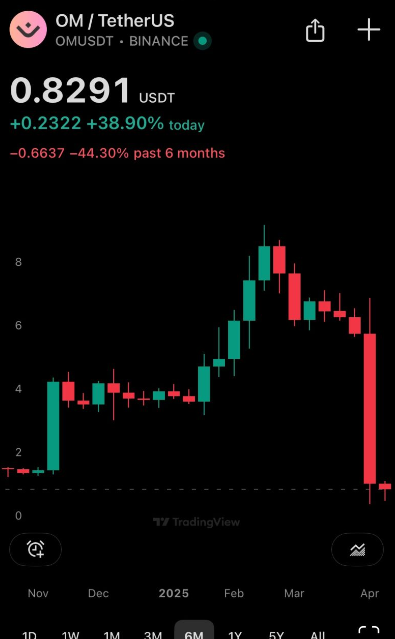
New coin issuances are getting wiped superfast, and the most recent demise – Mantra OM has shown a spectacular demise, although most recent news is that an OM Buyback & Burn Program is incoming after the wild price dip, ref: owner – J.P. Mullin.

But all that just leads to one issue, if ecosystem autonomy could prevent these insider ‘mishandling’, in the first place, wouldn’t systems be more decentralized and robust?

One of the redeeming aspects of FIAT currencies, is that every nation can have only one of them, and there is only roughly 190 of them there. New slap-together coins/tokens are coming out all the time and there seems no end to the pump and dump.

Perhaps the new discomfort with these ‘disposable’ cryptos will see a resurgence in authentic PoW BTC styled architectures like ERG, HNS and RVN, with their autonomous nature, mining communities, and with lots more appreciation headroom than Bitcoin?

They were expensive and time consuming to make, made fairer division between community and creators, and share an enduring maximum circulation and robust decentralized build structure with Bitcoin, which hasn’t been seen in releases since 2020.

9ja Cosmos is here…

.9jacom Domains

.det0x Domains

Detoxant 3 Tokenized Artworks

Opaque Emotion Pathways Tokenized Artworks

Preview our Sino Amazon/Sinosignia releases (Ente)

Visit 9ja Cosmos LinkedIn Page

Visit 9ja Cosmos Website

Follow 9ja Cosmos on X