DD
MM
YYYY

PAGES

DD
MM
YYYY

spot_img

PAGES

Home Blog Page 149

Japan Proposes Crypto Tax Reform From 55% to 20%

0

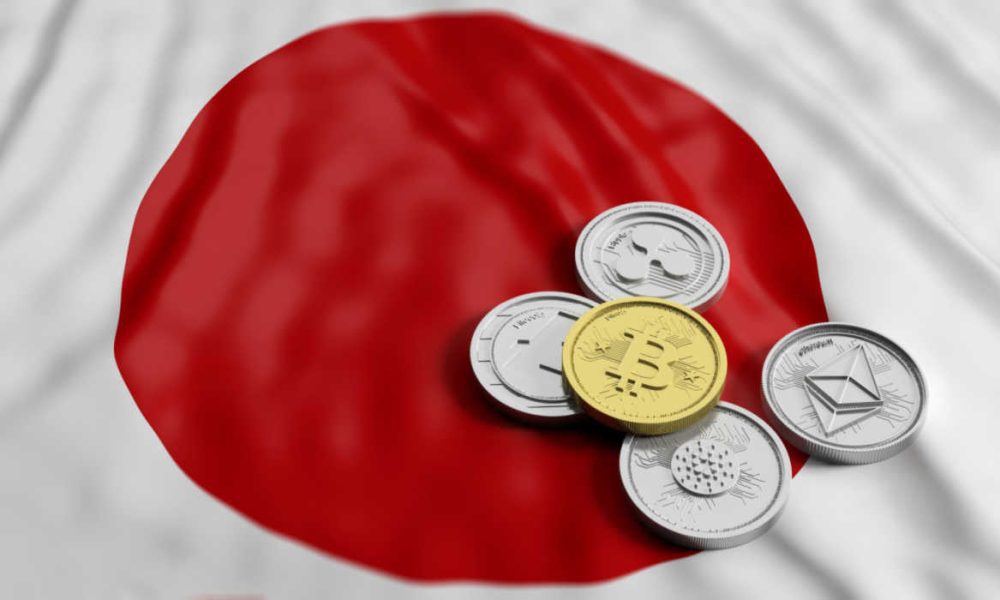
Japan is actively advancing a major overhaul of its cryptocurrency taxation framework, proposing to slash the tax rate on crypto gains from a progressive rate of up to 55% to a flat 20%.

This change aims to treat digital assets more like traditional financial instruments, such as stocks, to encourage investment, foster Web3 innovation, and boost institutional participation. However, the reform is not yet finalized—it’s pending parliamentary approval and is slated to take effect in the 2026 financial year starting April 2026.

The proposal has gained significant momentum following recent announcements from Japan’s Financial Services Agency (FSA). In Japan Under the existing system:Crypto gains are classified as “miscellaneous income” and added to your overall income.

They’re taxed at progressive national rates of 5%–45%, plus a flat 10% local inhabitant tax, resulting in a combined top rate of 55% for high earners (e.g., those with annual income over ~¥40 million or about $260,000 USD).

This has been criticized as punitive, driving some traders offshore and hindering market growth compared to equities, which are taxed at a flat 20%. The high rates apply to disposals like selling, trading, or using crypto for payments, but not to simple transfers between your own wallets.

A flat 20% capital gains tax on profits from approved cryptocurrencies, aligning with stock taxation. This would apply to the 105 tokens listed on licensed Japanese exchanges (e.g., Bitcoin, Ethereum), but initially exclude many altcoins, NFTs, or speculative tokens, which may remain under the old 55% regime.

Crypto would shift from “property” under the Payment Services Act to “financial products” under the Financial Instruments and Exchange Act (FIEA). This enables:Three-year loss carry-forward provisions (offset losses against future gains, similar to stocks).

Insider trading bans and mandatory disclosures for listed tokens to enhance market fairness. Banks and insurers could offer crypto trading and custody via subsidiaries, potentially unlocking ¥5 trillion ~$33 billion in institutional and retail capital.

Public feedback and guidelines are expected by early 2026, with full implementation in FY2026. Corporate taxes currently ~30% on unrealized gains may see separate adjustments. Primarily 105 listed tokens; others may stay at 55%

Lower taxes could spur retail participation—over 11 million crypto accounts exist in Japan already—and make holding long-term more attractive. However, stricter reporting and exclusions for niche assets might limit benefits initially.

Analysts predict a surge in on-chain activity, corporate Bitcoin buying (e.g., by firms like Metaplanet), and even Bitcoin ETF approvals by mid-2026. This positions Japan as a competitive global hub, though rates like 20% are still higher than in places like Germany 0% for long-held assets or Singapore (l0% on capital gains.

Volatility concerns, enforcement of new rules, and expanding coverage to more tokens will be key hurdles. The Japan Blockchain Association has long advocated for this, citing growth stifled by the old regime.

If you’re a Japanese taxpayer or investor, consult a professional for personalized advice, as rules could evolve. This reform signals Japan’s pivot toward embracing crypto as mainstream finance—watch for Diet approval in early 2026.

By reclassifying approved cryptocurrencies like Bitcoin and Ethereum as “financial products” under the Financial Instruments and Exchange Act (FIEA), the reforms aim to integrate digital assets into mainstream finance. This could unlock ¥5 trillion (~$33 billion) in pent-up institutional and retail capital, fostering innovation while introducing safeguards like insider trading rules and mandatory disclosures.

High earners currently face a combined 55% rate 45% national + 10% local, which has deterred trading and driven activity offshore. The flat 20% aligns crypto with stocks, potentially saving investors millions on large gains. For example, a ¥10 million profit taxed at 55% costs ¥5.5 million; at 20%, it’s just ¥2 million—freeing up capital for reinvestment.

A new three-year offset for losses absent in the current system provides a safety net in volatile markets, encouraging long-term holding over short-term speculation. With 13.2 million crypto accounts already (e.g., 3.4 million via Mercari), lower barriers could push retail ownership from its current ~12% of the population toward global averages, accelerating mainstream use for payments and savings.

Banks and insurers can now offer crypto trading/custody through subsidiaries, drawing in conservative players. Analysts forecast ¥5 trillion in new inflows by mid-2026, as seen in early moves like Metaplanet’s addition to the FTSE Japan Index and its BTC purchases totaling 18,991 coins.

While individuals benefit most, corporations taxed at 20-30% may see indirect gains from clearer rules, though unrealized gains taxation persists. Startups could thrive with easier funding, but stricter FIEA compliance (e.g., risk disclosures) raises operational costs.

Licensed exchanges like SBI VC Trade and Mercari are expanding services, potentially repatriating traders from abroad and boosting liquidity. Expect heightened on-chain activity, ETF approvals and a 15-20% BTC price lift from Japanese demand alone. This addresses the “capital flight” caused by high taxes, positioning Japan as a Web3 hub.

Aligning with the “New Capitalism” initiative, reforms could inject vitality into Japan’s stagnant economy, promoting blockchain for payments (e.g., JPYC stablecoin) and reducing cash reliance. 20% flat tax + loss offsets = more affordable trading; easier reporting.

Initial exclusions for altcoins/NFTs keep some at 55%; stricter KYC/enforcement, ¥5T inflows; bank-integrated services. Higher compliance costs under FIEA; volatility risks amplified by new entrants. Web3 hub status; capital retention. Revenue dip for govt ~¥100B/year?; need for robust anti-fraud measures.

Lower taxes may fuel speculation, raising bubble risks. FIEA’s insider trading bans and disclosures aim to mitigate this, but enforcement on 105 tokens leaves others (e.g., speculative alts) vulnerable. Parliamentary approval in early 2026 is likely but not guaranteed—delays could temper optimism.

Tax authorities must handle increased filings, and global treaties ensure offshore compliance. Benefits skew toward high-volume traders; low-income users see minimal change, and corporate taxes remain unchanged.

Overall, this reform signals Japan’s evolution from crypto pioneer 2017 regulations to global leader, potentially adding billions in economic value while modeling balanced regulation.

Early market reactions—like Metaplanet’s BTC buys—show momentum building. For personalized impacts, consult a tax advisor, as details may evolve. If approved, 2026 could mark Japan’s “Satoshi era.”


Adam Back Speaks on Quantum Computing Risks to Bitcoin

0

Adam Back, the cypherpunk cryptographer and Blockstream CEO whose work on Hashcash is cited in Satoshi Nakamoto’s original Bitcoin white paper, recently addressed growing concerns about quantum computing threats to Bitcoin’s security.

In a November 15, 2025, exchange on X formerly Twitter, Back downplayed the near-term risk, estimating that Bitcoin is unlikely to face a “cryptographically relevant” quantum attack for at least 20–40 years. This stance contrasts with more alarmist predictions, such as venture capitalist Chamath Palihapitiya’s claim that quantum computers could break.

Bitcoin’s SHA-256 hashing in as little as 2–5 years with around 8,000 qubits. Back’s comments were prompted by a user sharing Palihapitiya’s video, sparking a thread on Bitcoin’s vulnerability. No serious risk for 20–40 years or longer.

Current quantum computers are “too noisy and too small” to execute algorithms like Shor’s which targets elliptic curve cryptography in Bitcoin signatures or Grover’s which could speed up brute-force attacks on hashes like SHA-256. Today’s systems, such as Google’s Willow chip or Atom Computing’s 1,000+ qubit machines, fall far short of the millions of logical qubits needed for practical attacks.

The Network can upgrade seamlessly via soft forks. Bitcoin uses signatures (e.g., ECDSA and Schnorr), not encryption, making it more resilient. Post-quantum (PQ) standards like NIST’s SLH-DSA standardized in 2024 are ready for integration.

Taproot activated in 2021 already enables “quantum-ready” commitments to alternate spending paths, allowing users to migrate without halting the network or paying premium fees for oversized PQ signatures today.

SHA-256 is “fairly robust” against quantum attacks. Grover’s algorithm could theoretically halve the search space from 2^256 to 2^128 possibilities, but that’s still computationally infeasible. Back noted that key sizes provide additional buffer.

Fears are often overhyped for marketing or during market dips. Back has consistently dismissed quantum FUD (fear, uncertainty, doubt) as exaggerated, calling it “quantum over-marketing.” In past posts, he’s joked about it being used to “load up on cheap Bitcoin” during price wobbles.

He advocates proactive “quantum readiness” (e.g., adding PQ options in the next 5 years) to calm markets without rushing unvetted tech. The discussion reignited amid Bitcoin’s price volatility and broader crypto debates on long-term security. While governments (e.g., US NIST) plan to deprecate ECDSA by 2030–2035 for federal systems.

Back argues Bitcoin’s decentralized, conservative development process—relying on peer-reviewed proposals (BIPs) and economic incentives—allows for measured upgrades without panic. He even speculated in an April 2025 interview that a real quantum threat might inadvertently reveal if Satoshi Nakamoto is alive, by forcing a move of their untouched ~1 million BTC to a PQ-secure address.

Critics like Palihapitiya highlight risks like “harvest now, decrypt later” storing encrypted data for future cracking, but Back counters that Bitcoin’s on-chain nature and upgradeability mitigate this.

Ongoing research, including hash-based signatures like SPHINCS+ basis for SLH-DSA, positions Bitcoin ahead of the curve.Back’s history of quantum skepticism dates back years; in 2020–2025 X posts, he repeatedly urged calm, emphasizing Bitcoin’s multi-decade lead time for defenses.

For now, Adam Back’s message: Focuses on fundamentals—quantum hype is noise, not signal. If you’re holding BTC, this reinforces the “HODL” ethos with a technical backstop.


Tether to Invest $1.5B in Neura Robotics, as Aster Team Delays Token Unlocks

0

Tether, the issuer of the world’s largest stablecoin USDT, is reportedly in advanced talks to invest $1.15 billion in Neura Robotics, a German startup specializing in AI-powered humanoid robots. This deal, if finalized, would value Neura between $9.3 billion and $11.6 billion, marking one of the largest crypto-to-AI investments to date.

The move signals Tether’s aggressive expansion beyond stablecoins into cutting-edge hardware, potentially leveraging its vast reserves over $120B in assets to fuel robotics innovation.

Neura, founded in 2023, focuses on “cognitive robotics” for industrial and consumer applications, and this funding could accelerate its development of versatile AI bots. Industry watchers see this as a strategic pivot, blending crypto liquidity with real-world tech amid booming AI interest.

Cardano Whale’s Costly Slippage Blunder

In a stark reminder of DeFi’s liquidity pitfalls, a long-dormant Cardano whale—inactive for five years—attempted to swap 14.45 million ADA worth ~$7.08M at the time for USDA, a stablecoin on the Cardano network, but ended up with just 847,694 USDA due to razor-thin liquidity pools.

This resulted in an immediate ~$6.2M loss from slippage, where the trade’s size overwhelmed the available liquidity, causing the effective exchange rate to plummet from ~$0.49/ADA to an effective $0.059.

The botched swap even triggered a temporary depeg of USDA from its $1 anchor. Experts attribute this to the whale likely using a one-click aggregator without checking pool depths, highlighting risks in emerging ecosystems like Cardano’s DeFi scene.

On-chain sleuths like Lookonchain flagged it as a “nuke” moment, underscoring the need for better tools or simulations for large trades.

Implications of Tether’s $1.15B Investment in Neura Robotics

Tether becomes a major AI/hardware player overnight A $1.15B check would make Tether one of the largest corporate investors in humanoid robotics globally, rivaling Tesla’s Optimus and Figure in firepower.

It instantly legitimizes Neura a relatively unknown 2023-founded German startup and catapults its valuation into the $10B+ unicorn club — higher than Figure’s $2.6B and only slightly below Apptronik or Agility Robotics combined.

Tether holds >$120B in assets mostly short-term Treasuries. Deploying even 1% into robotics signals a new phase: stablecoin issuers becoming sovereign-like investment funds that build physical infrastructure instead of just holding paper.

This could set a precedent for other stablecoin giants (Circle/USDC, Paxos, etc.) to follow into AI, energy, or manufacturing. A crypto-linked entity funding advanced dual-use robotics in Germany will attract intense scrutiny from EU and U.S. regulators, especially around export controls and AI safety.

Expect questions about whether Tether’s profits estimated $10B+ in 2024 alone should face stricter oversight if they’re being funneled into strategic technologies. Bullish signal for the entire humanoid sector If Tether is willing to pay $10B+ for a robotics company with almost no revenue yet, it confirms that deep-pocketed investors now view humanoids as the next trillion-dollar category after EVs and LLMs.

Implications of the $6.2M Cardano Whale Slippage Incident

Brutal reminder that Cardano DeFi is still extremely fragile Cardano’s TVL is ~$300M–$400M. A single $7M trade should not move the needle, yet it obliterated an entire stablecoin pool and depegged USDA. This exposes how thin real liquidity remains despite years of hype.

The incident is being memed heavily “Cardano whale rugpulled himself”. It reinforces the narrative that Cardano is research-heavy but practically underdeveloped compared to Solana, Base, or even TON for real DeFi activity.

Forces the ecosystem to finally prioritize liquidity solutions Expect accelerated development or import of: Better DEX aggregators with slippage simulation. Deeper stablecoin pools possibly USDC.e or USDT bridges

Native concentrated-liquidity models like Plutus v3 or partner chains. Teachable moment for the entire industry Even “dormant” whales waking up after 5 years can nuke pools if tools are bad. Highlights why large holders on any chain now prefer OTC desks, private liquidity providers like Wintermute, GSR, or gradual DCA instead of one-click DEX swaps.

We’re seeing the two ends of crypto’s maturation spectrum in real time: Tether using its war chest to buy into the physical AI future at billionaire scale. Cardano still suffering growing pains that Ethereum solved in 2020–2021.

One story shows crypto money flowing aggressively into the real world; the other shows how far some ecosystems still have to go before they can safely handle that money.

Aster Team Delays Token Unlocks

The Aster team, behind the decentralized perpetuals exchange Aster DEX, recently announced adjustments to its ASTER token release schedule, postponing several unlocks originally planned for 2025.

This move has sparked both positive market reactions and some community confusion, particularly after updates on platforms like CoinMarketCap (CMC) and Binance dashboards. ASTER’s tokenomics included monthly ecosystem unlocks starting from the token generation event (TGE) in September 2024.

This was meant to gradually release tokens for ecosystem development, rewards, and liquidity over 20 months, with larger vesting for airdrops— 80 months and team allocations 1-year cliff + 40-month vest. Approximately 75% of 2025 unlocks around 183 million ASTER, or ~11% of current market cap delayed to summer 2026.

Some portions pushed even further to 2035 (e.g., 3.86 billion and 1.6 billion tokens). A smaller airdrop unlock on December 15, 2025 ~200 million ASTER. Projected circulating supply: ~70 million ASTER in 2025, growing to over 600 million by 2035.

Unused ecosystem tokens which have never entered circulation since TGE will be moved to a dedicated public wallet for independent tracking. The team emphasized no plans to spend from this address.

Reasons for the Delay

The Aster team cited a lack of immediate demand and usage plans for the ecosystem tokens as the primary driver. Monthly unlocks were part of the original plan, but with no operational need (e.g., for development or rewards), they were never executed and remained locked.

This adjustment aims to:Avoid unnecessary selling pressure and market dilution. Promote long-term price stability and investor confidence. Align releases with actual ecosystem growth, reflecting a broader DeFi trend toward flexible vesting to reduce volatility.

The team has described this as a “strategic move” rather than a fundamental tokenomics overhaul, and they’ve actively incorporated community feedback on issues like airdrop distribution and buybacks.

Many holders and analysts view the delays as bullish, reducing near-term supply risks. ASTER’s price surged ~10% immediately after the announcement, trading around $1.13 up 24% from Binance founder CZ’s entry point of $0.91. Posts on X highlight it as a “long-term hold” signal, with some calling it a “healthier token” for the next 8 years.

An initial CMC update showing the delayed dates led to speculation of major changes, with some users questioning the project’s utility planning (e.g., “Why launch without a token utility plan?”). Earlier X discussions showed frustration over perceived insider control and withdrawal limits ahead of unlocks.

The team quickly clarified via X that tokenomics are “unchanged” and apologized for the “miscommunication.” This fits Aster’s launch strategy, which prioritized on-chain usage before wider exchange listings (e.g., delayed to October 2024).

Community posts note ongoing developer buybacks and a 50% burn program as supportive measures. Analysts predict potential upside for ASTER in 2025–2026 due to reduced dilution, but long-term unlocks (e.g., 6.35 billion tokens or 79% of supply still locked) could create uncertainty.

Bullish factors include Aster’s competitive edge in on-chain perps and rivalry with platforms like Hyperliquid. However, sustained growth depends on delivering token utility and avoiding further miscommunications.

Monthly ecosystem releases ~183M total. Mostly delayed; only Dec 15 airdrop remains. Reduced sell pressure; +10% price boost. Larger batches (e.g., 3.86B + 1.6B). Promotes stability but risks future dumps if utility lags.

Crypto ETPs Record $2 Billion in Weekly Outflows

0

The cryptocurrency market is experiencing a significant pullback, with exchange-traded products (ETPs) seeing their largest weekly outflows since February—totaling approximately $2 billion for the week ending November 15, 2025.

This marks the third consecutive week of net withdrawals, bringing cumulative outflows to $3.2 billion over the past three weeks. The trend reflects heightened investor caution amid macroeconomic uncertainties, including U.S. monetary policy ambiguity and heavy selling from large “whale” holders.

Total assets under management (AUM) in crypto ETPs have now declined 27% from their early-October peak of $264 billion, settling at around $191 billion. Uncertainty surrounding potential U.S. Federal Reserve rate decisions has prompted a broader “risk-off” shift, with investors favoring safer assets like bonds over volatile crypto exposure.

Large crypto holders have offloaded positions, exacerbating the downturn and contributing to price weakness across major assets. The U.S. dominated the exodus, accounting for 97% of outflows ($1.97 billion). Switzerland and Hong Kong followed with $39.9 million and $12.3 million in withdrawals, respectively, while German investors bucked the trend with $13.2 million in inflows.

Bitcoin and Ethereum bore the brunt of the redemptions, highlighting concentrated pressure on the market’s blue-chip tokens. Largest absolute hit; U.S. spot BTC ETFs saw $1.1 billion in outflows, the fourth-largest weekly withdrawal on record. BlackRock’s IBIT ETF alone recorded a one-day outflow of $463 million on November 14.

Proportionally steeper losses than BTC, amid broader ETH price declines of ~11% last week. Smaller redemptions despite a 15% price drop. Modest pullback in dedicated products. In contrast, diversified strategies showed resilience. Multi-asset ETPs attracted $69 million in inflows over the past three weeks, as investors sought broader exposure to mitigate single-asset risks.

Short-Bitcoin products gained $18.1 million, indicating bearish hedging bets. This outflow streak coincides with sharp price corrections: Bitcoin dipped below $92,000 last week erasing some 2025 gains before rebounding to around $95,000, while Ethereum touched $3,000.

Analysts like CoinShares’ James Butterfill warn of potential sustained pressure if no positive catalysts emerge, such as clearer Fed signals or improved liquidity. However, some see this as a healthy correction after 2024’s $44.5 billion in record inflows.

On X, discussions echo this sentiment, with users debating if the bull run is over or merely pausing amid volatility. Longer-term, institutional interest persists—Harvard recently tripled its stake in BlackRock’s IBIT to 6.8 million shares—suggesting the outflows may be tactical rather than a full retreat.

Watch for upcoming U.S. economic data and crypto policy updates, including Japan’s plans to reclassify crypto as financial products with a 20% flat tax rate, which could influence global flows. If you’re holding ETPs, consider diversifying into multi-asset funds for now.

IBIT has rapidly become the largest and most successful product in its category, amassing over $72 billion in assets under management (AUM) by November 17, 2025. It tracks the CME CF Bitcoin Reference Rate – New York Variant benchmark, holding physical Bitcoin in cold storage via Coinbase Prime as custodian.

This structure simplifies access for traditional investors, bridging cryptocurrency with conventional finance. However, recent outflows amid Bitcoin’s price volatility highlight short-term pressures, even as long-term institutional adoption signals strength.

IBIT operates as a grantor trust, issuing shares that represent fractional ownership of Bitcoin. Authorized participants (APs) create or redeem shares in-kind by exchanging Bitcoin baskets currently 22.69 BTC per basket, valued at ~$2.08 million. This minimizes cash drag and enhances tracking efficiency.

Down from ~$99.4B peak in early October due to sustained outflows; still dwarfs peers. High liquidity with 30-day avg. volume of 62.55 million shares. Fell 2.57% on Nov 17 to ~$52.10, mirroring Bitcoin’s dip below $92,000.

Trades at -0.70% premium/discount, indicating slight undervaluation. Competitive; generates ~$245 million in annual fees for BlackRock, making IBIT its most profitable ETF.

IBIT’s low fees and seamless integration into brokerage accounts (e.g., IRAs, 401(k)s) have driven its dominance, capturing ~50% of total U.S. spot Bitcoin ETF inflows since launch.Performance OverviewIBIT’s returns closely track Bitcoin, with minimal tracking error (~0.3% lag since inception).

As a young fund, it lacks long-term history, but its performance has outpaced traditional assets like the S&P 500 YTD +22.5% vs. IBIT’s +22.53% and gold. A $10,000 investment at launch would now be worth ~$19,870, nearly doubling the Nasdaq 100’s gains.

Underperforms 2024’s +150% peak but resilient amid macro headwinds. Rebound from October’s -15.51% drawdown. Volatility annualized at ~38% down from 45% earlier in 2025. Captures Bitcoin’s mid-year surge to $112,000.

Outshines equities; cumulative since inception: +160.52%. Bitcoin’s correlation to equities has hovered near zero during stress events (e.g., +30% during 2023 SVB crisis), positioning IBIT as a diversifier rather than a “risk-on” tech play. However, recent equity-like dips (e.g., -10% YTD for BTC) have tested this narrative.

These outflows reflect profit-taking post-Bitcoin’s 2025 highs ~$120,000 equivalent for IBIT entry and rotation to bonds/equities. Analysts view it as a “healthy correction” rather than capitulation, with 71% of BTC supply still in profit and hedge fund exposure at 55%.

Fidelity’s self-custody option; similar performance but lower inflows. High fees deter inflows; legacy Grayscale product with $25B redemptions since 2024. Cheaper fees; smaller scale limits liquidity. IBIT outperforms on inflows and AUM growth, with $37.48 billion cumulative vs. FBTC’s $12.17 billion.

Grayscale’s outflows highlight fee sensitivity. Bitcoin’s 38% annualized volatility could amplify losses; recent equity correlations (~0.4) question its hedge status. Custody risks Coinbase hack potential, fork resolution sponsors vote the “valid” chain, and tax treatment capital gains on sales.

ETFs now hold 6.3% of BTC supply, raising centralization concerns—e.g., on-chain volume down 15% as holdings migrate to vaults. Fed ambiguity, potential rate hikes, and U.S. shutdown risks could prolong outflows.

No distributions; redemptions may trigger gains. In-kind transfers enable tax deferral but tie investors to ETF structure. BlackRock emphasizes: Past performance isn’t indicative; shares may trade at premiums/discounts.

Harvard’s Bet: Q3 filings show a tripling to $443 million in IBIT—now Harvard’s largest U.S. equity position, surpassing Microsoft/Amazon. Signals “FOMO” from endowments. Record $463 million redemption on Nov 14 amid BTC’s sub-$92,000 dip; X users call it “capitulation” or “rotation” to safer assets. Broader ETFs saw $867 million exodus that day.

Mixed—bearish on short-term pain “tail wagging the dog” via shorts, bullish on long-term “buying opportunity” post-flush. Threads highlight IBIT’s profitability for BlackRock and institutional stacking (e.g., Metaplanet +$600M BTC).

CME gap filled at $91-92K; Fear & Greed at 21 extreme fear. Stablecoin volumes $2.82T in Oct suggest dry powder. Bitcoin integration, with BlackRock’s Robbie Mitchnick noting low correlations as key to allocation aiming 2-5% portfolios. Short-term: Outflows may persist if BTC tests $80,000 support, but Fed cuts 70% odds Dec and QT end could spark relief.

Projections eye $170,000 BTC by 2026, pushing IBIT AUM to $100B+ via $60B annual flows. Hybrid strategies 50% self-custody, 50% ETF balance sovereignty and liquidity. For investors: IBIT suits diversified portfolios seeking BTC exposure; monitor correlation and custody risks. The bull engine is ON—but patience rewards the conviction holders.

Yala’s YU Stablecoin Depegs Again Amid Market Uncertainty 

0

Yala’s Bitcoin-backed stablecoin, $YU, suffered a dramatic second depeg from its $1 USD peg, plummeting over 50% to as low as $0.41 within 24 hours.

This marks the project’s second major stability failure in just two months, raising serious questions about its over-collateralization model, liquidity management, and overall resilience in the DeFi ecosystem.

As of November 18, 2025, $YU is trading around $0.44, with its market cap slashed to approximately $39.6 million and 24-hour trading volume cratering 98.7% to just $11,600—indicating severe loss of confidence and liquidity.

The collapse began early on November 17, with $YU briefly recovering before sliding again to $0.42. Unlike algorithmic stablecoins that rely on incentives, $YU is over-collateralized by Bitcoin deposits, allowing users to mint $YU for use in cross-chain DeFi protocols.

However, the depeg was triggered by runaway borrowing that drained liquidity pools on platforms like Euler Finance, where markets hit 100% utilization and borrow caps were set to zero to prevent further withdrawals. Liquidity pools on Ethereum Virtual Machine (EVM) networks are now over 90% composed of $YU itself, making swaps to USDC nearly impossible and trapping lenders.

DeFi analysts from YAM a syndicate of power users flagged “red flags” two days prior, highlighting abnormal borrowing by a Yala-linked address that collateralized $YU against itself at rates as high as 80%, despite consistent non-repayment.

They also noted thin liquidity across EVM chains and unresolved issues from a prior exploit. The Yala team has been largely unresponsive on social channels and Discord, with reports of team members quietly exiting.

Yala’s Response: In a terse X post, the team acknowledged “recent community concerns” and promised updates, but no concrete recovery plan has emerged. Bitcoin reserves remain unaffected and fully collateralized, per their claims, but retail panic has driven mass withdrawals.

On Solana, where ~$1 million in USDC liquidity exists, the peg holds temporarily—but this isolates the issue rather than resolving it. This isn’t Yala’s first brush with instability. Launched as a “Bitcoin-native liquidity protocol” backed by heavyweights like Polychain Capital, Galaxy Digital, and Amber Group, $YU aimed to bridge BTC’s liquidity into yield-generating DeFi and real-world assets.

Bridge exploit via faulty LayerZero OFT setup on Polygon; attacker minted 120 million unauthorized $YU and swapped ~$7.6M for USDC. Depeg to $0.20–$0.70; temporary shutdown of bridge functions. Partial fund recovery claimed; peg restored to ~$0.94 after team intervention and law enforcement involvement. Market cap dipped to $130M.

Runaway borrowing drains Euler pools; liquidity crisis amid warnings. Depeg to $0.41 54% drop; volume evaporates; markets frozen. Ongoing; $5.5M injected for liquidity support, but no full rebound. Peg unstable across chains.

The September hack exposed off-chain security lapses, while this latest event points to internal liquidity mismanagement rather than external malice—though some speculate an “inside job” given the borrowing patterns.

$YU’s collapse is part of a grim 2025 trend for experimental stablecoins, where even “over-collateralized” designs falter under stress: Thin pools amplify sell-offs; $YU’s EVM liquidity was illusory, dominated by its own token.

Recent depegs include $deUSD (-95% to $0.05), $USDX (-60%), $xUSD, and $dnUSD (-57%), eroding trust in yield-bearing and synthetic models. Total stablecoin market TVL outflows hit record highs in yield-bearing variants.

Events like this fuel calls for better collateral audits and redemption mechanisms, especially for BTC-backed assets in a post-TerraUSD world. No systemic crash yet, but it heightens caution around low-cap stablecoins. Investors are fleeing to battle-tested options like USDT or USDC.

Yala’s fate hangs on swift transparency and liquidity injections—failure could lead to permanent irrelevance, wiping out backers’ investments FDV now ~$30M, below raise prices. If exposed, prioritize redemptions where possible (e.g., Solana pools) and diversify.

This underscores a harsh DeFi truth: “Stable” is relative, and over-collateralization isn’t foolproof without deep, diverse liquidity.