DD
MM
YYYY

PAGES

DD
MM
YYYY

spot_img

PAGES

Home Blog Page 1492

Ferrari to Raise Prices by 10% in Response to U.S. Tariffs, Adding Up to $350,000 on Some Models

0

Luxury automaker Ferrari announced a 10% price increase on several of its models following President Donald Trump’s decision to impose a 25% tariff on imported cars. The move, which takes effect after April 1, could add as much as $50,000 to the price of a typical Ferrari, with the most exclusive models seeing increases of over $350,000.

Trump’s latest tariff escalation has drawn sharp criticism from financial analysts, with Gary Black, investment adviser and managing partner at The Future Fund, warning that the move could worsen economic conditions.

“Trump (aka Tariff Man) found further ways to push the economy into recession today (Thursday), signing a proclamation to implement a 25% tariff on auto imports, expanding a trade war designed to bring more manufacturing jobs to the U.S. and setting the stage for an even broader push on levies next week,” Black said.

Many car brands with factories in the US, including Tesla, are expected to be impacted by the tariff, due to the import of raw materials from targeted countries.

Ferrari’s Price Hikes: What Buyers Should Expect

In a statement released Thursday, Ferrari confirmed that prices will remain unchanged for all vehicles imported before April 2. However, for cars arriving afterward, the Ferrari 296, SF90, and Roma will maintain their current pricing, while other models will see substantial hikes.

The Purosangue SUV, which starts at $430,000, will now cost an additional $43,000, while the limited-edition F80, priced at over $3.5 million, will see a $350,000+ increase due to tariff-related adjustments.

Will Tariffs Affect Ferrari Sales?

While Trump argues that the tariffs will encourage automakers to build cars in the U.S., Ferrari—like many other foreign luxury car manufacturers—produces all its vehicles in Maranello, Italy, and has no U.S.-based production. Despite the added costs, Ferrari’s business model, which relies on exclusivity and high demand, is unlikely to see an immediate drop in sales.

With a one-year waiting list for most Ferrari models, the company remains in a strong market position, even with rising prices. However, the tariff policy could have broader implications for the luxury auto sector and global trade relations.

Ferrari CEO Benedetto Vigna, in a recent interview with CNBC, acknowledged the wealth of Ferrari customers but insisted the company must be cautious about passing on too much of the tariff burden.

“When we look at the client, we consider that these people, to buy a Ferrari, they have to work,” Vigna said. “We have to respect them. Because for us, the most important thing is the client. So we need to make sure that we treat them in the right way.”

Ferrari reaffirmed its financial targets for 2025 but warned that the tariffs pose a potential risk of 50 basis points on its profit margins. Following the announcement, Ferrari’s stock saw slight gains, while shares of the U.S. “Big Three” automakers—General Motors, Ford, and Stellantis—trended lower.

Trump’s tariff decision is expected to have ripple effects across the global auto industry, particularly as speculation grows that further trade restrictions could be introduced in the coming weeks. Meanwhile, Ferrari is preparing to launch its first all-electric model in October, a milestone that could shift its pricing strategy amid increasing regulatory pressures.

Wyoming Planning to Launch WYST Stablecoin

0

Wyoming is planning to launch its own stablecoin, called the Wyoming Stable Token (WYST). Governor Mark Gordon has indicated that the state aims to introduce this cryptocurrency as early as July 2025, following a testing phase. The WYST will be a U.S. dollar-pegged stablecoin, fully backed by reserves such as cash, U.S. Treasuries, and repurchase agreements, with a requirement to maintain at least 102% collateralization for stability. This initiative, supported by the Wyoming Stable Token Commission, is being developed in partnership with LayerZero, a blockchain interoperability protocol, allowing the token to operate across multiple blockchains like Ethereum, Solana, Avalanche, and others.

The move is part of Wyoming’s broader effort to lead in blockchain innovation, with potential profits from the stablecoin earmarked to support the state’s school system. This would mark the first state-issued stablecoin in the U.S., though it has sparked some debate, with critics like Rep. Tom Emmer labeling it a state-issued central bank digital currency (CBDC) by another name. Testing is currently underway, and if successful, the launch could set a precedent for other states.

Unlike volatile cryptocurrencies like Bitcoin or Ethereum, stablecoins are pegged to a stable asset, typically the U.S. dollar, at a 1:1 ratio. This minimizes price fluctuations, making them practical for everyday transactions, savings, or as a reliable store of value in the crypto ecosystem. Stablecoins enable fast, low-cost transfers on blockchain networks, bypassing traditional banking delays and fees. For example, cross-border payments that might take days and incur high costs through banks can be near-instant and cheaper with stablecoins, benefiting businesses and individuals alike.

They provide a digital dollar alternative that’s accessible to anyone with an internet connection and a compatible wallet. This is especially valuable in regions with limited banking infrastructure or for unbanked populations, democratizing access to financial tools. Built on blockchain platforms like Ethereum or Solana (as with WYST), stablecoins can integrate with smart contracts. This enables automated, transparent financial applications—think lending, insurance, or escrow—without intermediaries, cutting costs and boosting efficiency.

Stablecoins act as a gateway, allowing users to easily move between traditional currencies and the crypto world. Traders use them to park funds during market volatility without cashing out to fiat, while businesses can accept them as payment without worrying about crypto’s wild price swings. Some stablecoin systems, like Wyoming’s, aim to generate profits from reserve investments (e.g., U.S. Treasuries). Wyoming plans to funnel excess returns into its school system, showing how stablecoins can fund public goods while maintaining their peg through over-collateralization (102% in WYST’s case).

When issued by a state like Wyoming, with its pro-blockchain laws, stablecoins can offer more legal certainty compared to private issuers. Wyoming’s framework, requiring full backing and audits, aims to build trust and reduce risks like those seen in past stablecoin failures (e.g., TerraUSD). In Wyoming, the WYST could streamline state financial operations, attract blockchain businesses, and position the state as a crypto hub—all while offering residents and users a stable, practical digital currency. That said, benefits depend on execution, maintaining the peg, managing reserves, and ensuring security are critical to delivering on these promises.

Altcoin Season Dead? Not for Solana (SOL), Sui (SUI) & Rexas Finance (RXS), Here’s What’s Coming

0

The crypto market is obsessed about the end of altcoin seasons, but Solana (SOL), Sui (SUI), and Rexas Finance (RXS) defy the narrative. Analysts project 500% rallies for Solana and Sui, fueled by growing institutional interest and regulatory developments. Meanwhile, Rexas Finance dominates headlines as its presale rockets toward completion, raising over $47 million and selling 91.25% of its allocated tokens. While Solana eyes $200 and Sui leverages partnerships with Trump-backed entities, Rexas Finance steals the spotlight by merging blockchain with real-world assets—a $16 trillion market spanning real estate, gold, and art. Here’s why these tokens remain pivotal in a shifting market.

Solana’s Race to $200

Solana continues attracting attention as analysts debate its potential to reclaim $200. Its high-speed transactions and low fees keep it competitive in decentralized applications and NFTs. Inclusion in Donald Trump’s proposed crypto reserve has bolstered credibility, positioning it as a viable Ethereum alternative. Market sentiment hinges on sustained trading volume and network upgrades, but resistance levels and macroeconomic factors could test its momentum. While short-term hurdles exist, Solana’s ecosystem growth keeps it in the altcoin race.

Sui’s Strategic Moves

Sui’s recent 4.7% dip to $2.42 hasn’t dampened optimism. Its partnership with World Liberty Financial, a DeFi project linked to Trump, highlights its institutional appeal. The collaboration focuses on stabilizing volatility and funding emerging projects, backed by a $388 million reserve. A potential Sui ETF, filed by Canary Capital, adds momentum. Approval could enhance liquidity and reduce supply, though SEC scrutiny looms. Despite regulatory uncertainty, Sui’s alliances and ETF prospects position it for long-term relevance.

Rexas Finance Redefining Real-World Asset Ownership 

While Solana and Sui navigate market dynamics, Rexas Finance reshapes how investors interact with tangible assets. Rexas Finance bridges blockchain and real-world assets, enabling fractional ownership of property, gold, and art through tokenization. Imagine a retail investor in Nigeria owning a stake in a Tokyo apartment or a European café—all managed via blockchain. This innovation unlocks access to trillion-dollar markets, democratizing opportunities once reserved for the wealthy. The platform’s ERC-20 token standard ensures compatibility across networks, while tools like the Quickmint Bot simplify asset tokenization.

Tools Driving Mass Adoption

Rexas Finance equips users with a Token Builder for creating asset-backed tokens and a Launchpad for fundraising. The AI Shield and GenAI tools enhance security and streamline processes, eliminating technical barriers. These features empower anyone to tokenize assets or launch projects, fostering a decentralized ecosystem. By prioritizing user-friendly solutions, Rexas accelerates blockchain integration into mainstream finance.

Unmatched Presale Momentum 

Rexas Finance’s presale has surged 6.6x from $0.03 to $0.20, with Stage 12 nearing completion. Over 456 million tokens (91.25%) have sold, raising $47.2 million of its $56 million target. Unlike projects reliant on venture capital, Rexas opted for a public presale, letting everyday investors join its revolution. The CertiK-audited platform guarantees secure smart contracts, while listings on CoinMarketCap and CoinGecko boost visibility.

Further, 2,000,000 RXS ($400k) was acquired, underscoring whale confidence in Rexas Finance.  A $1 million giveaway—offering 20 winners $50,000 each—fuels community excitement. With a confirmed $0.25 listing price and plans to launch on three top-tier exchanges in 2025, analysts forecast a 50x surge post-launch.

The Final Word 

Altcoin seasons may fluctuate, but Solana, Sui, and Rexas Finance prove resilience through innovation and strategic growth. While Solana and Sui leverage partnerships and ETFs, Rexas Finance stands out by merging blockchain with real-world value. Its presale’s explosive demand, coupled with tools democratizing asset ownership, positions RXS as a cornerstone of the tokenized future. With the presale’s final stage underway, the window for early access narrows—a reality investors keen on exponential gains can’t ignore.


For more information about Rexas Finance (RXS) visit the links below:

Website: https://rexas.com

Win $1 Million Giveaway: https://bit.ly/Rexas1M

Whitepaper: https://rexas.com/rexas-whitepaper.pdf

Twitter/X: https://x.com/rexasfinance

Telegram: https://t.me/rexasfinance

Shiba Inu Secures Listing on BingX As Meme Coin Adoption Grows, As WallitIQ (WLTQ) Steals Investor Spotlight, Find Out Why

0

Shiba Inu (SHIB) has recently experienced a significant surge in trading volume and market interest. This rally comes when meme coin adoption steadily increases, especially following its listing on BingX Futures. At the same time, WallitIQ (WLTQ) is gaining momentum, with its advanced functionalities attracting growing attention from investors, who have the potential to outrun Shiba Inu despite the BingX listing.

Shiba Inu’s Momentum and Recent Developments

Shiba Inu’s price rose significantly, with a 10% rally observed on the BingX futures optimism in a single day. According to data from Shiba Inu’s on-chain metrics, whale transactions surged by 73%, suggesting strong interest from large investors. Daily user transactions have also been steadily increasing, further indicating growing confidence in SHIB.

In a recent development, Shiba Inu (SHIB) secured a listing on BingX Futures, which provides more than 10 million traders with leveraged access to SHIB. This BingX Futures exposure increases liquidity and attracts new participants to the Shiba Inu ecosystem, potentially driving further growth in the token’s value.

Furthermore, despite the BingX Futures listing, the Shiba Inu (SHIB) team has teased the launch of Shib Finance, a decentralized finance (DeFi) upgrade that could offer advanced financial tools.

Why Is WallitIQ (WLTQ) Gaining Investor Attention

While Shiba Inu (SHIB) remains in the spotlight due to the listing of BingX Futures, WallitIQ (WLTQ) is emerging as a new and innovative player in the crypto space. This wallet offers unique features to ease the user experience and security within the cryptocurrency market.

One of WallitIQ’s (WLTQ) standout features is its advanced crypto wallet management mobile app. The app integrates real-time market data from CoinGecko, allowing users to manage their wallets easily, track crypto prices, and execute transactions. The app also features an interactive candlestick chart with adjustable timeframes, offering investors a valuable tool for monitoring the market’s movements.

Another key component of WallitIQ (WLTQ) is its Physical to Digital (P2D) feature, which allows users to tokenize physical assets. This feature bridges the gap between traditional real-world assets and blockchain technology, unlocking new possibilities for decentralized finance (DeFi) and NFT-based ownership verification.

WallitIQ (WLTQ) also strongly emphasizes security. The platform uses its AI-Einstein layer to analyze potential threats and vulnerabilities in dApps and Web 3.0 platforms before users interact with them.

This added security guarantees that users’ assets remain protected from phishing attacks and malicious activities. SolidProof’s smart contract audit further boosts confidence in the platform’s safety and reliability. This commitment to security is a key selling point, particularly as concerns around crypto fraud and hacks continue to rise.

WallitIQ (WLTQ) Multilingual Chatbot and QR Code Payment Technology

Another important feature of WallitIQ (WLTQ) is its multilingual chatbot, which offers real-time assistance in multiple languages. This feature helps to improve user engagement and accessibility, particularly for users in different regions of the world.

By integrating this functionality, WallitIQ (WLTQ) guarantees that users from diverse backgrounds can easily interact with the platform.

Additionally, WallitIQ (WLTQ) has integrated QR code payment technology, simplifying transactions and promoting broader adoption of cryptocurrencies in everyday commerce.

This feature allows users to send and receive payments with ease, making crypto transactions more accessible for both merchants and consumers. This integration is a crucial step in expanding the practical uses of cryptocurrencies in daily life, enabling faster and safer transactions.

WallitIQ (WLTQ) Presale Opportunity and Future Prospects

WallitIQ (WLTQ) is currently in the presale phase, with its token priced at $0.0420. Early investors can participate in what is expected to be a high-growth platform, as the presale continues to draw attention due to its unique features.

Beyond its wallet management features, WallitIQ (WLTQ) has also launched its Beta platform, which promises easier functionalities and an intuitive user interface. This updated version aims to simplify users’ experience and provide a more robust solution for managing their digital assets.

Investors are advised to secure a stake in this groundbreaking token’s presale today to position themselves for life-changing gains.

Join the WallitIQ (WLTQ) presale and community:

Website: https://wallitiq.io/

Whitepaper: https://wallitiq.gitbook.io/wallitiq

Telegram: https://t.me/wallitiqofficial

Twitter/X: https://x.com/wiqnetwork

Instagram: https://www.instagram.com/wallitiqnetwork

North Carolina Introduced Legislation for State Pension Funds to Invest on Bitcoin

0

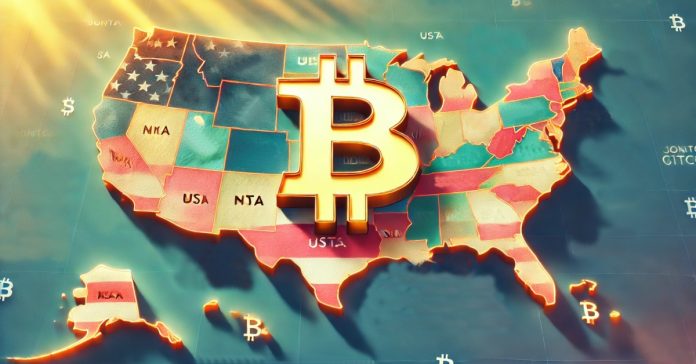
North Carolina has introduced legislation to allow state pension funds to invest in Bitcoin and other digital assets. As of March 28, 2025, multiple bills have been proposed in the North Carolina General Assembly to facilitate this. One notable proposal is House Bill 92, the “North Carolina Digital Assets Investments Act,” introduced on February 10, 2025, by House Speaker Destin Hall. This bill authorizes the State Treasurer to invest up to 10% of various state funds, including the pension plan, into Bitcoin exchange-traded products (ETFs). The legislation specifies that eligible digital assets must have an average market capitalization of at least $750 billion over the previous 12 months, effectively limiting investments to Bitcoin at this time. The state’s pension fund, part of the $127 billion in retirement systems, could see a significant portion allocated to Bitcoin if this bill passes, with supporters arguing it could diversify investments and potentially yield higher returns. More recently, on March 24 and 25, 2025, two identical bills—House Bill 506 (the Investment Modernization Act) and Senate Bill 709 (the State Investment Modernization Act)—were introduced.

These bills propose creating the North Carolina Investment Authority, an independent body under the state Treasury, to manage digital asset investments. Unlike HB 92, these bills do not set a market cap threshold and allow up to 5% of state pension funds to be invested in a broader range of digital assets, including cryptocurrencies, stablecoins, and NFTs, after a risk-reward analysis. The focus here is on flexibility and modernization rather than mandating a specific Bitcoin reserve. Additionally, Senate Bill 327, the “Bitcoin Reserve and Investment Act,” introduced on March 18, 2025, takes a more targeted approach. It allows the State Treasurer to allocate up to 10% of public funds specifically into Bitcoin, to be held in multi-signature cold storage as a long-term strategy. This bill emphasizes Bitcoin as a “financial innovation strategy” and includes strict conditions for liquidation, such as requiring a two-thirds vote from the General Assembly during a severe financial crisis. These legislative efforts reflect a growing trend among U.S. states to explore cryptocurrency investments for public funds. However, the proposals have faced mixed reactions.

Supporters, including Hall and State Treasurer Brad Briner, highlight potential gains and North Carolina’s chance to lead in technological innovation. Critics, like the State Employees Association of North Carolina (SEANC), express concerns over Bitcoin’s volatility and the risk to retirees’ pensions. For instance, SEANC lobbyist Flint Benson has called it a “roller coaster” unfit for promised benefits. As of now, these bills are under consideration. HB 92 saw initial skepticism in the House Commerce Committee in early March 2025 but advanced after pressure from Hall. HB 506 and SB 709 are in early stages, while SB 327 is also pending further debate. The outcome remains uncertain, but North Carolina is clearly positioning itself as a potential player in state-sponsored crypto investment.

Proponents argue that allocating up to 5-10% of the $127 billion pension fund to Bitcoin or digital assets could diversify the portfolio and hedge against inflation. Bitcoin’s historical annualized returns—around 230% over the past decade—far outpace traditional assets like stocks (10-12%) or bonds (3-5%). If this trend holds, even a small allocation could boost long-term returns for retirees. Critics highlight Bitcoin’s extreme price swings—e.g., dropping 50% in 2022 alone—as a threat to pension stability. A sudden crash could erode funds meant for guaranteed payouts, putting pressure on taxpayers to cover shortfalls. The lack of a long-term track record for crypto in pension portfolios amplifies this concern. Bills like SB 327 propose holding Bitcoin in cold storage, which prioritizes security but limits liquidity. This could complicate quick responses to market shifts or emergencies. Conversely, HB 92’s focus on Bitcoin ETFs offers more flexibility but introduces counterparty risks tied to fund managers.

If successful, this could open the door to broader alternative investments (e.g., gold, real estate) in state funds, challenging traditional allocation models heavily weighted toward equities and fixed income. North Carolina could position itself as a pioneer among U.S. states in embracing cryptocurrency, potentially attracting blockchain businesses and talent. This aligns with a broader trend—e.g., Texas and Wyoming have crypto-friendly policies—but puts North Carolina ahead of larger states like California or New York, which have been more cautious. The bills’ fates may hinge on political dynamics. House Speaker Destin Hall (R) and Treasurer Brad Briner (R) back the measures, but opposition from groups like SEANC, which leans toward public-sector interests often aligned with Democrats, could stall progress. A polarized General Assembly might delay or dilute the proposals. State-level crypto adoption could draw scrutiny from federal regulators like the SEC or Treasury Department, especially if pension losses trigger calls for oversight. Conversely, success might pressure Congress to clarify crypto’s legal status, currently a gray area.

Retirees and state employees may feel uneasy about gambling their pensions on what some view as speculative “internet money.” Trust in state leadership could erode if investments sour, especially given SEANC’s vocal resistance. On the flip side, success could normalize crypto among older demographics. High returns could benefit retirees, but critics argue crypto gains often concentrate among early adopters—wealthy investors or tech-savvy elites—potentially exacerbating wealth gaps if pension funds merely ride their coattails rather than drive broad economic growth. Embracing Bitcoin could signal North Carolina as a forward-thinking state, appealing to younger, tech-oriented residents and countering brain drain to coastal tech hubs. It might also spark educational initiatives around blockchain literacy.

North Carolina’s move follows states like Arizona (vetoed crypto pension bill in 2023) and Virginia (allowing banks to custody crypto). Success here could embolden others, creating a domino effect. Sovereign funds in places like Norway or Singapore have dipped into alternatives, but none have formally adopted Bitcoin. North Carolina could set a unique example—or a cautionary tale. Bitcoin appreciates significantly (e.g., hitting $150,000 by 2030), pension funds grow, and North Carolina gains a reputation as a visionary state. A crypto crash wipes out billions, retirees face cuts, and political backlash kills future experimentation.  Modest gains or losses occur, the experiment is deemed a wash, and the state refines its approach without major disruption. The outcome depends on market performance, legislative execution, and public tolerance for risk. It’s a high-stakes bet—whether it pays off or flops, it’ll shape how states view crypto for years.