DD
MM
YYYY

PAGES

DD
MM
YYYY

spot_img

PAGES

Home Blog Page 1495

BlockDAG’s SpaceDev Deal & $30M Grants Draw Massive Attention — Ethereum Price Analysis Shows Recovery & PI Coin Declines

0

The charts for Ethereum are beginning to show potential recovery signs, as detailed in the latest Ethereum (ETH) price analysis. This analysis suggests a possible upcoming trend reversal, at a time when some assets are encountering difficulties, such as the PI coin price decreasing after being omitted from a crucial Binance listing poll.

Meanwhile, BlockDAG (BDAG) is gaining momentum in a distinct sector, initiating a $30 million program for developer grants and collaborating with SpaceDev. These developments are attracting significant talent and market interest, pushing BlockDAG’s presale revenues over $207 million, making it one of the top crypto gainers to monitor.

Ethereum (ETH) Price Analysis: Closing in on Bear Trap Conclusion?

Ethereum (ETH) price analysis indicates the cryptocurrency might be nearing the conclusion of an extended bear trap. Observations by analysts like CryptoGoos and Merlijn The Trader suggest ETH’s current pattern is reminiscent of one from 2020, which preceded a significant price surge. Presently consolidating around the low $2,000s following a consistent decline, Ethereum could be setting up for a breakout.

Technical indicators, including a low Relative Strength Index and pricing within a crucial demand zone, back the potential for an upward move. Ethereum (ETH) price analysis also points to a rally possibility, provided it holds above the $2,000 mark as the month concludes.

PI Coin Price Declines Following Exclusion by Binance

The PI coin price faces challenges after a significant 31% drop last week, now valued around $1.16. This decrease followed Binance’s decision to exclude the Pi Network from its latest “Vote to List” initiative, based on eligibility criteria related to the BNB Smart Chain.

Currently just under the crucial $1.20 resistance level, the market is watching to see if PI coin can rebound. Surpassing this level might lead to price movements towards $1.40 or even $2. However, failing to maintain its current position could push the price down to the $1.05–$1.02 range shortly.

BlockDAG and SpaceDev Collaboration: Pioneering Advances in Blockchain

BlockDAG is steadily establishing itself in the blockchain domain with a distinct approach that blends Proof-of-Work and DAG technologies, enhancing both scalability and security. Its new collaboration with SpaceDev, a notable name in blockchain development, is poised to elevate its impact. This partnership is set to enhance BlockDAG’s ecosystem, catalyzing expanded developer involvement and enriched community interactions.

A significant advantage of this collaboration is SpaceDev’s involvement in enhancing community and developmental initiatives. They are playing a pivotal role in leading BlockDAG’s Hackathon Series and Ambassador Program, which are instrumental in integrating thousands of developers, mentors, and regional supporters.

Moreover, SpaceDev is pivotal in managing the $30 million Grants Program, taking charge of applications, integrating, and mentoring developers. This arrangement is unique for a Layer 1 blockchain, providing direct resources and support to its builders.
This partnership’s influence is evident in the presale achievements, with over $207 million accumulated and more than 18.9 billion BDAG coins distributed. The price per coin in batch 27 is $0.0248, marking a significant rise of 2,380% from the initial $0.001. This upward trajectory places BlockDAG among the top crypto gainers, with significant developments expected with its mainnet launch and upcoming major exchange listings, indicating a shrinking window for early involvement as the market’s response grows increasingly favorable.

Prospects and Challenges for ETH, PI, and BlockDAG

Ethereum (ETH) is receiving renewed focus, with ETH price analysis indicating a possible surge, though its sustainability above critical thresholds remains uncertain. Meanwhile, the PI coin price faces challenges, struggling to recover after missing out on Binance’s listing initiative, highlighting the swift loss of opportunities when support diminishes.

Conversely, BlockDAG is accelerating its growth through the $30M Grants Program and its strategic alliance with SpaceDev, transcending mere financial support to provide hands-on assistance, technical advice, and viable routes to market.

This strategy not only affords developers essential resources, often scarce, but also fortifies BlockDAG’s ecosystem with new capabilities and applications. With $207 million already secured, BlockDAG’s influence is expanding, positioning it as a potential top crypto gainer.

Presale: https://purchase.blockdag.network

Website: https://blockdag.network

Telegram: https://t.me/blockDAGnetworkOfficial

Discord: https://discord.gg/Q7BxghMVyu

 

Explore the Thrilling World of BC GAME

0

BC GAME has revolutionized the online gaming industry by offering an exciting and diverse selection of casino games. Whether you are a seasoned player or just getting started, BC GAME provides an engaging and immersive experience for all users. With cutting-edge technology, a user-friendly interface, and a secure platform, this online casino has become a top choice for gaming enthusiasts worldwide.

The Balloon Game Casino Experience

One of the most thrilling games available on BC GAME is the Balloon game casino. This game offers an adrenaline-pumping experience where players must decide when to cash out before the balloon pops. The game’s simple mechanics combined with high-payout potential make it a favorite among casino enthusiasts. The unpredictability and excitement make it an ideal choice for those who love high-risk, high-reward games.

What sets the Balloon Game apart is its engaging nature. Players can develop their own strategies, balancing risk and reward while aiming for the highest possible payout. Whether you prefer to play conservatively or take daring chances, this game provides endless entertainment. Additionally, BC GAME ensures that players experience seamless gameplay with fast-loading speeds and smooth animations.

Unlock Exclusive BC GAME Bonuses

To enhance your gaming experience, BC GAME offers a variety of promotions and rewards. By exploring the BC Game Bonus, players can access deposit bonuses, free spins, and other lucrative offers. These bonuses provide additional chances to win big while enjoying a wide selection of casino games. Regular players can also benefit from loyalty rewards and VIP perks, making every session more rewarding.

BC GAME frequently introduces limited-time offers and seasonal promotions, allowing users to take advantage of additional rewards. The VIP program is another highlight, providing exclusive benefits such as cashback, personalized assistance, and tailored bonuses to high-rollers. These incentives make BC GAME an attractive platform for both casual players and serious gamblers looking for extra value.

Dive Into the Exciting World of BC GAME

For those looking to explore the exciting world of BC GAME, the platform offers a seamless and secure environment to enjoy top-tier gaming experiences. With a vast range of games, innovative features, and generous rewards, BC GAME continues to captivate players worldwide. The live casino section allows users to interact with real dealers, enhancing the authentic casino atmosphere right from the comfort of their homes.

BC GAME also supports multiple cryptocurrencies, making transactions fast, secure, and convenient. The platform provides transparency and fairness through blockchain technology, ensuring that players have a trustworthy gaming environment. With an active community, regular updates, and responsive customer support, BC GAME consistently enhances the user experience.

Why Choose BC GAME?

  • Wide variety of games – From slots to table games and live dealer options.
  • Generous bonuses – Frequent promotions and loyalty rewards.
  • Secure platform – Ensuring fair play and data security.
  • User-friendly interface – Easy navigation and smooth gameplay.
  • Innovative gaming features – Unique game mechanics and thrilling experiences.
  • Crypto-friendly transactions – Fast and secure payments using various cryptocurrencies.
  • 24/7 customer support – Dedicated assistance for players at any time.
  • Live casino excitement – Play with real dealers for an authentic casino experience.

Join BC GAME today and experience the thrill of online gaming like never before! Whether you’re looking for high-stakes action, innovative gameplay, or rewarding promotions, BC GAME has everything you need for an unforgettable casino adventure.

The Limit of Labour and Why Capital/Equity Builds Empires

0

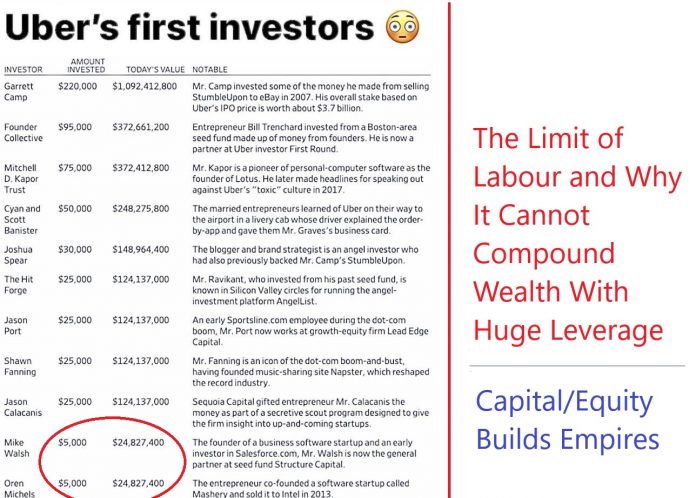
When it works, it is magical. In South Africa, it worked for one company named Naspers, Africa’s most valued company across all subsidiaries. Naspers’ greatest investment, based on current valuation, is its early investment in the Chinese technology firm Tencent, which was valued at over $175 billion at one point, stemming from an initial investment of $32 million. A few years ago, I wrote about it: “The World’s Greatest Venture-Capital Investment Ever, is Africa’s”

But it did not stop there as when Uber went public, people who invested $5k saw that to become $24.8m. In other words, $5,000 became $24,800,000!

We expect the IPO season to return and as that happens, financial lives would be transformed. Oliver de Coque sang “good music comes from God”; my friends, wealth comes from equity and not just labour. Labour weakens and retires as we become older, capital/equity does not. That inherent ability of capital/equity is the most powerful component of its leverageability because unlike labour, it can earn income from generations to generations. In a more zen-like statement, drawing from my junior secondary school courses, labour has diminishing returns while capital/equity enjoys accelerating compounding returns.

So, do not be confused due to the effervescence of promotions which companies reward labour with.  Note this: great wealth belongs to capital/equity because labour serves capital when you evaluate factors of production. Simply, with capital, you can purchase labour, and that is why most agile HR organizations call labour a “human capital”. Let me drop these words: capital/equity builds empires, and it has been like that for centuries; plan to own something!

The Limit of Labour and Why It Cannot Compound Wealth With Huge Leverage

GameStop Has A New Game “Buy BTC” As It Makes Bitcoin A Reserve

0

The new game in town for struggling companies is to load up with Bitcoin: “GameStop Corp announced that its board of directors unanimously approved an update to its investment policy, allowing Bitcoin to be included as a treasury reserve asset. This decision marks a significant shift in the company’s financial strategy, aligning it with a growing trend among corporations to diversify their reserves with cryptocurrency.

This move follows the example set by Strategy (formerly MicroStrategy), a company that has become the largest corporate holder of Bitcoin after investing billions into the cryptocurrency. GameStop’s decision comes amid a broader context of increasing institutional interest in Bitcoin, highlighted by U.S. President Donald Trump’s executive order earlier in March 2025 to establish a national strategic reserve of cryptocurrencies. The announcement has sparked optimism among investors, with GameStop’s stock surging over 6% in after-hours trading following the news, though it later moderated.

“GameStop, a video game retailer known for its role in the 2021 meme stock frenzy, plans to use a portion of its cash reserves—reported at nearly $4.8 billion as of February 1, 2025—or future debt and equity issuances to invest in Bitcoin.”

Simply, GameStop has stopped for a new game called “Buy BTC”

Implications of Trump’s 25% Tariff on Foreign Automobiles

0

President Donald Trump has indeed escalated tensions in the ongoing trade war by announcing a 25% tariff on vehicles and foreign-made auto parts imported into the United States, a move set to take effect on April 3, 2025. This decision targets major trading partners, including the European Union (EU) and Canada, which are significant suppliers of automotive products to the U.S. market. In response to potential retaliation from these allies, Trump has threatened to impose even steeper tariffs if they collaborate to “do economic harm” to the U.S., as he stated in a post on Truth Social on March 27, 2025. He warned that such actions would lead to “large scale Tariffs, far larger than currently planned,” aimed at protecting U.S. economic interests.

The initial 25% tariff on vehicles and auto parts is designed to bolster American manufacturing, with Trump asserting it will lead to “tremendous growth” in the domestic auto industry by incentivizing production within the U.S. However, this policy has sparked immediate pushback from affected nations. Canadian Prime Minister Mark Carney labeled it a “direct attack” on Canada’s auto sector, which employs around 500,000 people and relies heavily on exports to the U.S., accounting for about 80-90% of its production. The EU, through European Commission President Ursula von der Leyen, has expressed regret over the measure and indicated that it is evaluating its options for a potential response.

Trump’s threat of further escalation hinges on his perception that the EU and Canada might coordinate retaliatory measures, such as counter-tariffs, to offset the economic impact of the U.S. policy. This comes amid already strained relations, with the EU planning retaliatory tariffs on $28 billion worth of U.S. goods effective April 13, 2025, in response to earlier U.S. steel and aluminum tariffs, and Canada imposing 25% tariffs on $20.7 billion of U.S. imports starting March 13, 2025. The interconnected nature of North American and transatlantic supply chains, particularly in the auto industry, means that these tariffs could raise costs for U.S. consumers—estimates suggest an additional $6,000 per imported vehicle—and disrupt production, potentially leading to job losses rather than gains, contrary to Trump’s stated goals.

Tariffs increase the cost of imported goods. For example, a 25% tariff on a $30,000 imported car would add $7,500 to its price, assuming the full cost is passed on. In practice, importers might absorb some of this, but studies e.g., from the U.S. Trade Representative suggest consumers often bear 70-90% of tariff costs. With vehicles, this could mean an average price hike of $5,000-$6,000 per imported car. Higher costs might push some foreign manufacturers out of the U.S. market, limiting options for buyers. If EU brands like Volkswagen or Canadian-assembled models become too expensive, consumers may be left with fewer models or forced to buy domestic alternatives, even if they’re less suited to their needs.

The goal of Trump’s tariff is to boost U.S. auto manufacturing by making foreign cars less competitive. Companies like Ford or GM might see increased demand if consumers shift to American-made vehicles. However, this assumes they can ramp up production quickly, which isn’t guaranteed—supply chain constraints and labor shortages could limit gains. EU and Canadian automakers (e.g., BMW, Toyota Canada) face a tough choice: absorb the tariff to stay competitive (cutting profits) or pass it on and risk losing market share. In 2024, Canada exported about $40 billion in vehicles to the U.S., and the EU sent $60 billion—both stand to lose significantly.

The U.S. auto industry relies on cross-border parts. A 25% tariff on Canadian or EU components (e.g., engines, transmissions) raises production costs for U.S. manufacturers too. The USMCA NAFTA’s successor integrates North American supply chains tightly—about 40% of a “U.S.-made” car’s value comes from imported parts. Higher costs could mean layoffs or plant closures, offsetting any job creation. Tariffs on widely used goods like cars (Americans bought 15 million vehicles in 2024) can drive up overall prices. If auto costs rise, related sectors (insurance, financing) might follow, contributing to inflation—already a concern with U.S. CPI at 3.2% in early 2025.

The EU and Canada aren’t sitting still. Canada’s 25% tariffs on $20.7 billion of U.S. goods (e.g., steel, whiskey) and the EU’s planned $28 billion hit e.g., Harley-Davidson bikes, bourbon hurt U.S. exporters. In 2018, similar tit-for-tat tariffs cost U.S. farmers $27 billion in lost exports, per the USDA. History suggests this could repeat, with rural states feeling the pinch. Proponents argue tariffs create jobs by protecting domestic industries. The Tax Foundation estimated Trump’s earlier tariffs (2018-2019) saved 31,000 manufacturing jobs but cost 166,000 jobs elsewhere due to higher costs and retaliation. For autos, the Center for Automotive Research predicts a net loss of 40,000 U.S. jobs if tariffs disrupt supply chains and raise consumer prices, reducing demand.

International Relations

Trump’s threat of “large scale Tariffs” if the EU and Canada push back signals a willingness to double down. This could fracture alliances like the USMCA or NATO’s economic cooperation, as allies see the U.S. as prioritizing short-term gains over long-term stability. Tariffs unsettle investors. After Trump’s March 27, 2025, announcement, auto stocks (e.g., Stellantis, Honda) dipped 3-5%, per Bloomberg, reflecting fears of profit squeezes. Currency markets might also shift— retaliatory tariffs could weaken the U.S. dollar if export losses mount. U.S. steelmakers or parts suppliers might benefit if automakers source more domestically. Small, U.S.-focused manufacturers could gain a competitive edge.

Consumers face higher costs, importers lose profits, and export-dependent U.S. industries (agriculture, tech) suffer from retaliation. Canada and the EU, heavily reliant on U.S. trade, could see GDP dips—Moody’s estimates a 0.4% hit to Canada’s economy in 2025. In short, tariffs like this aim to protect domestic industries but often come with trade-offs: higher prices, disrupted supply chains, and retaliatory measures that can offset gains. The net impact depends on how businesses adapt, how consumers respond, and whether this escalates into a broader trade war.

Historically, tariffs deliver mixed results—look at the 2002 Bush steel tariffs, which saved 1,700 jobs but cost 200,000 elsewhere, per the Consuming Industries Trade Action Coalition. The situation remains fluid, with Trump signaling flexibility in some areas (e.g., a temporary exemption for USMCA-compliant goods until April 2, 2025) while doubling down on his aggressive trade stance. Whether the EU and Canada will escalate their responses or seek negotiation remains unclear, but Trump’s rhetoric suggests he’s prepared to intensify the trade war if he perceives their actions as a challenge to U.S. economic dominance.